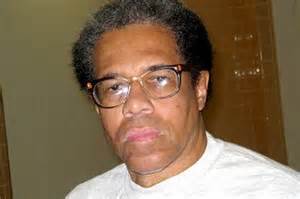
Albert Woodfox freed


Today, Louisiana prisoner Albert Woodfox walked free, 44 years after he was first put into solitary confinement.

[We are publishing this case from Amnesty USA.  The Salisbury group has campaigned on behalf of this man so we are delighted to see his release after all this time.]

albert woodfoxHe was the United States’ longest serving prisoner held in isolation. Nearly every day for more than half of his life, Albert Woodfox woke up in a cell the size of a parking space, surrounded by concrete and steel. Tomorrow morning, for the first time in more than four decades, he will be able to walk outside and look up into the sky. Over the course of nearly five years working on Albert Woodfox’s case at Amnesty, I heard many times that the odds were insurmountable. But I always knew that Albert Woodfox would go home. I have seen the incredible power of our movement when we work together. I have seen the courage humility, and determination of so many of you who have played big and small roles to help this historic human rights victory come to fruition. I have seen the unbelievable strength of the Angola 3: Robert King, Herman Wallace, and Albert Woodfox himself—all three of whom endured nightmares but persevered with humor, dignity, and resolve to wage a relentless fight against the cruel, inhuman and degrading practice of prolonged solitary confinement in the United States. With the knowledge of his release, Albert had this message for those who have helped him secure his freedom:

I want to thank my brother Michael for sticking with me all these years, and Robert King, who wrongly spent nearly 30 years in solitary. I could not have survived without their courageous support, along with the support of my dear friend Herman Wallace, who passed away in 2013. I also wish to thank the many members of the International Coalition to Free the Angola 3, Amnesty International, and the Roddick Foundation, all of whom supported me through this long struggle. Lastly, I thank William Sothern, Rob McDuff and my lawyers at Squire Patton Boggs and Sanford Heisler Kimpel for never giving up. Although I was looking forward to proving my innocence at a new trial, concerns about my health and my age have caused me to resolve this case now and obtain my release with this no-contest plea to lesser charges. I hope the events of today will bring closure to many.

I’m carrying those words with me today as we celebrate this victory. Today Albert Woodfox walks free—February 19, 2016, his 69th Birthday. In Solidarity, Jasmine Heiss Senior Campaigner, Individuals at Risk Program Amnesty International USA

February meeting minutes


The minutes of the meeting held on Thursday 11th February are available thanks to Lesley.

February (pdf)

twitter image Follow us on Twitter and Facebook


Death penalty summary


The death penalty summary for the last month is published below with thanks to group member Lesley forNo to the death penalty compiling it.  It contains some good news with four more abolitionist countries and modest progress in USA.  Set against that is the dire situation in Saudi, Iran and Pakistan.  China is the worlds leader in executions but the figures are a state secret.

Many of the items in the summary are covered in greater detail elsewhere on this blog.

Death penalty summary

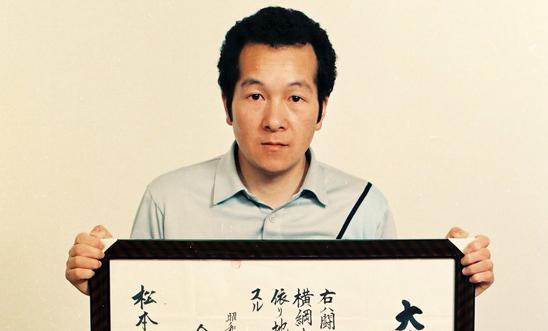
Sixteen years on death row in Japan


Facebook

Making a Murderer and Matsumoto Kenji: The truth can be stranger than fiction
Matsumoto Kenji Matsumoto Kenji © Private
  • A man from a poor background, with an IQ below 70; a score so low that he has difficulty comprehending what is happening to him.
  • His implication in a serious crime, in which a dominant older relative was the prime suspect.
  • A confession extracted by police after hours of intense interrogation, a confession which was subsequently described as ‘coercive’ by the man’s lawyers.

Well, if you’ve been watching the Netflix documentary ‘Making a Murderer’ you may be thinking of the case of Brendan Dassey who, at the age of 16, confessed to assisting his uncle in a rape and murder after hours of intense police questioning.  No lawyer was present during the interrogation, nor was his mother, despite the fact that he was a minor.

Dassey later recanted his confession and one Wisconsin lawyer who assisted on the case on seeing the video of the ‘confession’, described “feeling physically sick as I watched it (sic), he just didn’t understand what was going on”.  No physical evidence linked him to the crime and jurors have stated that his conviction was heavily influenced by the confession.

Brendan Dassey is not the only young man spending a very long time in prison after being convicted of a crime following a confession extracted in contentious circumstances.

In 1993 Matsumoto Kenji – along with his older brother – was arrested and charged with a double murder in Japan. Kenji has an IQ of between 60 and 70, allegedly caused by Minamata disease (mercury poisoning) which was common in the prefecture in which he was born, around the time he was born. As a result of the condition Kenji suffered from seriously hampered cognitive function.

Amnesty has serious concerns about Kenji’s treatment at the hands of the police.  His interrogation has been described at coercive, as officers offered him food if he talked and told him to “be a man” during the interrogation.

Upon learning of a warrant being issued for his arrest, his brother killed himself and Kenji was left to face trial alone.  During his trial it was accepted by the court that he was totally dependent upon his brother and was unable to stand up to him.  Following his conviction he was sentenced to death, a sentence which has been repeatedly upheld in subsequent appeals.

In Japan, death row patients are held in solitary confinement and are not allowed to speak to other inmates, only receiving occasional visits from family or lawyers.  When they are in their cells they are forbidden from moving, being punished severely if they do.  They are also given no prior warning before they are executed, leaving death row patients suspended in an endless state of anxiety.

Unfortunately, Kenji’s mental health has deteriorated significantly on death row, to the point that he has developed a delusional disorder.  His lawyers have argued that he is currently unable to communicate or understand information pertinent to his case and they further believe that his isolation has contributed significantly to his deteriorating mental health condition.

No to the death penaltyThese two cases, so similar, illustrate the vulnerability of individuals with serious learning difficulties in the face of major criminal charges, and the difficulty they face in ensuring their right to fair treatment at the hands of authorities in the criminal justice system.

Under international laws around use of the death penalty, it is illegal to execute someone with serious mental or intellectual disabilities.  At Amnesty, we continue to oppose the death penalty in all instances and in all cases as it’s a violation of the right to life and to be free from torture.

Call for justice for Kenji on his birthday

Today is Kenji’s 65th birthday. It’s the 16th birthday he has spent on death row.Kenji’s case is currently under review for appeal and the Minister of Justice will be the key decision-maker. If you have a moment, please write to him and call for him not to execute Kenji.

What to say

Please write to Justice Minister Matsuhide Iawki, urging him:

  • Not to execute Matsumoto Kenji and to introduce a moratorium on executions in Japan;
  • To commute Matsumoto Kenji and all other prisoners’ death sentences;
  • To Improve the treatment of death row inmates, including an end to solitary confinement;
  • To promote debate on the abolition of the death penalty in Japan.

You can also write to Health Minister Yasuhisa Shiozaki and ask him to:

  • Ensure that Matsumoto Kenji’s health is regularly assessed and he is provided with any necessary treatment.

Whom to contact

Minister of Justice, Matsuhide Iawki
Ministry of Justice
1-1-1 Kasumigaseki
Chiyoda-KU
Tokyo 100-8977
Japan

Twitter: @MOJ_HOUMU

Minister of Health, Yasuhisa Shiozaki
1-2-2 Kasumigaseki
Chiyoda-ku
Tokyo, 100-8916
Japan

Follow us on Twitter and on Facebook


Urgent Action: Belarus


Death sentence in Belarus
President Lukashenko

We are highlighting the case of Gennadii Yokovitskii in Belarus and asking that you find time to write to the relevant authorities please.  Belarus is the last country in Europe which exercises the death penalty and as much of what goes on is secret, there is a lack of an informed debate within the country.

The justice system is flawed with many convictions based on forced confessions.

When the executions actually happen is unknown to the victim, his or her family or their legal representative which adds considerably to the stress the family is suffering.  After the executions have taken place, the authorities will not release the body or even say where it is buried.

Amnesty is opposed to the death penalty in all cases.  There is no available image of Gennadii.

Urgent Action

twitter imageFollow us on Twitter and Facebook


No to the death penalty

Urgent Action: Sheik Nimr Al-Nimr’s body


Plea to return body

This urgent action concerns the body of Sheikh Nimr al-Nimr’s which, despite repeated requests, has still not been returned to the family.  This followed his execution along with 46 others.  The Saudi’s are showing signs of irritation at the negative publicity they are getting following the mass executions which took place recently and at the increasing numbers of executions generally.

Hardly surprising.  Because, in addition to execution itself, there are a number of other matters which are No to the death penaltytroubling about his arrest, trial and subsequent treatment.  Namely:

  • The family was not informed of his exection
  • the authorities have so far refused to return his body
  • the court hearings took place without his family or his lawyer being present
  • he was denied access to the court documents
  • the officers who arrested and interrogated him gave evidence but were not allowed to be cross-examined.

Not exactly a fair system.  Full details of this is contained on the urgent action below and we would be grateful if you could find the time to write to the authorities.  Why does it matter?  Because the UK government continues to turn a blind eye to the human rights violations in that country and would prefer to carry on being a major arms supplier.  This is a time of change in Saudi with a new generation taking over.  The rapprochement with Iran is troubling them and the decline in the oil price is going to cause major problems.  Carrying our executions of the Shia minority who were demonstrating not engaged in violence is not a productive way forward.

Urgent Action


twitter imageFollow us on Twitter and Facebook.  If you would like to join us please go to the ‘Joining’ link on the home page for details.  It is free to join the local group.

Group minutes for January


The group met for a business meeting yesterday and the Minutes are now completed.

Ex Ambassador to Saudi Arabia speaks


On the occasion of Saudi National Day, I am reminded of the great history of Saudi Arabia. Today, the Saudi people can be rightly proud of their nation, of their history and their developments. Saudi Arabia is a strong nation, an important player in the world and a key partner of the UK. The development of this nation began with unification.

Sir John Jenkins, September 2014

Sir John Jenkins was the Ambassador to Saudi Arabia and has been in the news recently following the mass execution of 47 people in that country.  He was interviewed on the Today programme on the BBC and was asked if he wished to condemn the executions.  This question seemed to vex him and prompted him to write a three page piece in the New Statesman (8 – 14 January 2016) in which he attempted to explain the quandary he found himself in.  He wrote:

I understand the point of the question.  But I have been wondering since then what exactly it is that I and others hare being invited to condemn.  The fact of the execution its nature, the Shia identity of the victim [Sheikh Nimr al-Nimr] his status as a cleric, that the Saudis still practise capital punishment, the nature of their judicial system, the timing of the act, the suspicion that it might undermine the peace process in Syria or infuriate Iran – or perhaps all of this and more?

 He then goes into a long explanation of the history of the country and its tortuous relationship with Iran and other neighbours.  At the heart of the article is the assumption is that most of those executed along with al Nimr were terrorists.  He then goes on to say that one might still think it is an act of state brutality and should be condemned as such but that this position is not a policy.  The signal the Saudis sought to send out was that they will enforce the judgement of the courts on those who seek to undermine the stability of the kingdom.

The article begs a number of questions not least of which is the fact that most of those executed were not terrorists but people who are protesting at the iniquities of the state itself.  Nothing like fair trials took place which is not unusual.  Torture is routine and prisoners are denied access to lawyers.

His response and the subsequent article attracted some interest and a biting piece in Private Eye (No 1409).  They pointed out that Sir John was now executive director of the International Institute of Strategic Studies.  A quick look at their web site reveals who it is who funds the charity.  It is an interesting list and includes Lockheed Martin; BAE Systems; HSBC; British American Tobacco; Exxon; Raytheon; Ministry of Defence; Ministry of defense (Saudi Arabia) and so on, all organisations with a vested interest and substantial business interests in Saudi.  It also receives substantial funding from FCO. Once again we see the interests of arms and other companies exercising undue influence over the opinion makers.  Private Eye makes the point that it is a pity the BBC did not mention to its listeners the funding behind the institute when interviewing people like Sir John.  Many might have been misled into thinking that they were hearing the wisdom of a former Ambassador not someone speaking for a range of arms firms and other business interests.  No wonder Sir John was in such a quandary.  He wants us to believe that Saudi is a strong nation.  It is a long way from that.  It is deeply corrupt and far from progressing seems by its recent actions, to be regressing.

Urgent Action: Florida


This is the latest urgent action, this time for the ‘sunshine’ state of Florida.  Urgent Actions are a key part of Amnesty activity and we ask that people spare a moment or two to write a letter or letters to the people texas executionconcerned.  You can try emailing but these are frequently blocked.  You can read the details in the attachment below.  If you can write it would be appreciated.  Our monthly death penalty report is available.

Urgent Action


Death penalty report


No to the death penaltyThe latest death penalty report is now available and thanks to group member Lesley for assembling it.  The full year summary has already been posted.  It has been a particularly difficult month with a rash of executions in Saudi Arabia and Pakistan has been active as well.  In earlier posts we have discussed the feeble response by the Foreign and Commonwealth Office to the execution of 47 individuals in Saudi recently and we have argued that the government is more concerned with arms sales than with the human rights in that country.

We have a small team which responds to urgent actions many of which are connected to the death penalty.  You are welcome to join us and we will forward you details and cases from time to time.

Follow us on Twitter and on Facebook

Report


Blog at WordPress.com.

Up ↑