Members of the Salisbury Group will be at the Cathedral cloisters from around 10 o’clock on Sunday for our annual Write for Rights and people in Salisbury are invited to come and sign. We must not forget that many people are in prison or at risk of execution often for no more than disagreeing with the powers that be in their country. They have committed no crime but have may said something disobliging or critical of a president, king or other leader and frequently without trial, can end up in prison for many years. Human Rights defenders, lawyers or journalists are all caught up in this activity.
United Kingdom
The situation in the UK is fast approaching a kind of crisis concerning the issue of deporting people to Rwanda. The government will be tabling a bill next week to disapply sections of the Human Rights Act to enable the deportation of immigrants to Rwanda. Previous plans were blocked by the Supreme Court because the human rights situation in Rwanda is unsatisfactory. Refugees sent there were at risk of refoulement that is being sent back to a country where they would be at risk of bad treatment of some kind. A plan last June to despatch a plane load from Boscombe Down, an airfield a mile or so from where this is being written, was halted by the European Court.
The issue of the ‘boat people’ has become a major issue for the government being one of the Prime Minister’s 5 objectives. Although only a small part of the overall level of immigration, it has assumed huge significance to the point where there might be a confidence vote next week if the bill is not passed. Ostensibly, it is partly due to anger around the gangs involved in organising the crossings. The hope is that if the Rwanda deportations can get underway, this will act as a disincentive to people wishing to cross the Channel. There are many who view this as wishful thinking.
Critics, including Conservative politicians, point out that the bill – even if it becomes law – will not prevent claimants appealing to Strasbourg thus delaying the deportation process until way beyond the likely date of the General Election. This is leading some politicians to demand that we leave the European Court as well.
A leading proponent of this is Danny Kruger the MP for Devizes in Wiltshire, who is co-founder of the ‘New Conservatives’ whose ten point plan is built around immigration matters.
The whole matter has reached almost absurd levels. The Supreme Court looked carefully at the evidence and concluded that Rwanda is not a safe country. Critics and journalists are frequently detained and tortured in detention. Opposition is effectively banned. There are disappearances. A new treaty has been signed between the UK and Rwanda a few days ago which claims to overcome these human rights problems identified by the Supreme Court and clear the way for deportations to take place.
It is almost an example of national hysteria combined with false promises coming home to roost. It was claimed that Brexit would enable the UK to regain its sovereignty a benefit of which was to stop boat crossings and reduce immigration generally. Yet recent figures show immigration at a record 745,000. The vast majority are here legitimately and are needed in a range of sectors such as health, horticulture and care homes. These organisations would find operating without them almost impossible. Yet hysteria has been ratcheted up by the media with its focus on the boat crossings. New proposals will prevent family members joining those already here which will cause great anguish in many, many cases.
We have now arrived at a situation where the government wished to disapply parts of the Human Rights Act and even contemplate departing from the European Convention to join Russia which was ejected in 2022. The statements around this matter by local MP Danny Kruger are to be regretted.
Human Rights Watch warn of risk of authoritarianism in the UK
November 2023
The latest Daily Brief from HRW warns of a deteriorating situation with regard to human rights in the UK which they say is ‘worsening’. The right to protest peacefully is under threat as we saw recently with the Palestinian march which the then Home Secretary was keen to ban. She attempted to force the police to ban the march which they declined to do.
They say that we are beginning to move towards a place where the government feels it can undermine the integrity of the judiciary, undermine or scrap human rights laws that don’t serve the current political agenda and to create new laws that do. It is ‘beginning to look very much like authoritarianism’.
A lot of this activity has been driven by two forces: the arrival of the ‘boat people’ across the Channel and the activities of climate protestors. The Palestine marches have recently reinforced this. In all cases, there has been a major outcry from the right wing media joined recently by Talk TV and GB News and this may have led the government to respond the way they have. There is an inherent dislike of protest and the publicity it is able to generate. Despite the march being largely peaceful, it did not stop them being described as ‘hate marchers’ by some. Members of the governing party, including the deputy chair, and soon Boris Johnson, have their own programmes on these channels to promote their views.
Danny Kruger, MP for Devizes in Wiltshire, is joint leader of the ‘New’ Conservatives pressing for the abolition of the HRA and for our departure from the European Convention.
Supreme Court declares government’s Rwanda plan ‘unlawful’
November 2023
This morning, 15 November, the Supreme Court in the UK gave its unanimous decision on the government’s plan to send asylum seekers to Rwanda, declaring it unlawful. This puts a flagship policy in jeopardy and it is not clear what will happen next. Huge political capital has been vested in this decision and it had massive, if totemic, significance for the government. One of its motivations was that it would act as a deterrent to the huge numbers crossing the Channel in small boats, something it was never likely to do.
The first flight was planned in June this year and it was due to take off from Boscombe Down airfield (pictured) in Wiltshire just a mile or so from where this post is being written. At the last moment, the European Court ruled it unlawful and the aircraft took off empty the following day.
The court’s decision was based on the human rights situation in Rwanda. The key principle is refoulement: thatsomeone should not be sent back to their country of origin if there is a risk of mistreatment. The situation in Rwanda is poor with extrajudicial killings, use of torture and enforced disappearances a regular feature. The court also took into account that individuals from Yemen, Syria and Afghanistan have all been returned to their home country where they will be at severe risk of mistreatment or death. Other individuals have been clandestinely moved out of the country.
This decision and the whole vexed story of immigration, refugees, the boat crossings, use of hotels and related issues is extremely high profile in the UK. Considerable anger is expressed by many on the subject and it is a regular source of hostile front pages of the tabloid press and outlets such as GB News. It is said to be as a result of the public’s anger on the subject but this is not altogether true. Many it is true, are angry and want the government to deport the boat people forthwith. Other views are more nuanced. It is not always clear whether the ceaseless headlines on the subject and the somewhat one-sided treatment is itself stimulating the public to its hostile attitudes.
This decision, and the previous one to halt the flight in June, will add to those in the Conservative party who have been seeking our departure from the European Convention. This was a threat expressed by the previous Home Secretary who lost her post on Monday. However, the court made clear that it wasn’t just the European Convention that was the key law in this regard. They pointed out there were other aspects of law, as well as international treaties which the UK has signed, all of which had a bearing on the question of refoulement. This has not prevented – in the words of Open Democracy – the ‘marginally less deranged’ members of parliament who are calling for us to abandon all international covenants. One such is Danny Kruger the member for Devizes in Wiltshire, another is the deputy chair of the party Lee Anderson.
It is important to recognise that the court ruled that the policy of deporting asylum seekers is not unlawful. What was at issue was the human rights in Rwanda itself. So the policy lives on and the Prime Minister Rishi Sunak said in the Commons today that he was willing to “revisit domestic legal frameworks” in their desire to pursue this policy. This might mean the Human Rights Act (one of the acts the high court referred to) comes under attack again, a long time goal of the Conservative Party.
Such is the level of political capital involved in this issue and its place in the Prime Minister’s five priorities that they cannot allow it to go away quietly. We will have to see what emerges in the coming days and weeks. If the decision to remove ourselves from the aegis of the European Court, that will be a retrograde step. We will have to leave the Council of Europe, it will weaken our voice internationally and will hinder our efforts at improving the rule of law around the world.
Photo: Boscombe Down. Salisbury Amnesty
UPDATE: Prime Minister announces they will conclude a new treaty with Rwanda which will override the Supreme Court decision (which he does not agree with) and will enable refugees to be sent there.
The risk to human rights legislation and specifically the Human Rights Act seem to have risen in past week. This concern has come about because of some equivocal statements by ministers in a recent House Of Commons debate. Dislike of the HRA by some members of the government is well known and there have been plans to abolish it for some time. They seem to have been kicked into the long grass because of the all consuming nature of the Brexit process and also because it has proved difficult to introduce a fresh piece of legislation – HRA2 we might say – that would get through parliament.
The recent row has emerged because a junior minister, Edward Agar, said the HRA ‘would be reviewed post Brexit’. SNP politician Tommy Sheppard was quoted as saying at the end of a 90 minute debate:
[he] felt he was “left without the unequivocal and categorical assurances I was seeking, in terms of the commitment to the existing Human Rights Act and the protection that it affords” Source; RightsInfo 13 February 2019
So it seems that once we leave, a review of the Act and its possible replacement is a possibility. This story has a long genesis going back to when David Cameron was prime minister. Theresa May was a keen abolitionist as home secretary.
The problem that some politicians have with it are several. Firstly, a failure to appreciate the positive effects it has had on various issues large and small. In countless cases, involving individuals and their dealings with government or local authorities, the act has been a key element in the defence of their rights. Only rarely do these get reported and frequently, the role of the act in the proceedings is omitted.
Secondly, there is a belief that British rights are somehow superior to anything Europe could do and go all the way back to Magna Carta. The imperfections of the British system are brushed aside. Before the HRA was in place there was a steady procession of litigants going to Strasbourg to get justice denied them in the UK. These judgements were often embarrassing to the British legal system.
Thirdly, the issue of human rights has got caught up in the Brexit debate and a belief among those wishing to leave that anything with a European tag to it is to avoided. As Anthony Lester QC puts it:
Because the Human Rights Act use the [European] Convention rights as a substitute for homegrown constitutional rights, it arouses the hostility of euro sceptics, our system has come under increasing onslaught, not from activist judges but from political opportunists supported by right-wing newspapers that have made ‘human rights’ a dirty word. Five Ideas to Fight For, One World, 2016 p39
Finally, and perhaps crucially, the HRA alters, in a quite fundamental way, the balance of power in our society. For the first time in our history, the people have a set of rights. Since we do not have a written constitution, this is a significant development. It is perhaps not surprising that those – especially from the privileged classes – who enjoyed the power and influence it gave, feel a little resentful at its loss.
What happens after Brexit we will have to see. Perhaps there are people who think coming out of Europe will mean coming out of the Convention. They are in fact two different bodies and the Convention stems from the Council of Europe which we entered long before we entered the EEC. It will still be in place. It is possible that some will be disappointed to discover that we are still in the Council post March 29.
The local Amnesty group will, along with Amnesty International itself, be keeping an eye of events and will be campaigning if the plans to repeal the act become real.
An article in the current edition of Prospect by Vernon Bogdanor entitled ‘Brexit will erase your rights’ (May 2018) discusses
in detail the effects of leaving the jurisdiction of the European Court, the avowed government policy. One of the important effects is that the ability of judges to disallow legislation which conflicts with the EU Charter of Fundamental Rights will no longer be possible. Bogdanor makes the point that we shall be moving away from a codified and protected system to an unprotected one. This is probably the first time this has happened.
For people keen on the sovereignty issue and see all things European to be harmful, then this is what they seek. For them the supremacy of parliament is a key principle. But what has been happening over many decades – and preceding our entry into what was then called the Common Market – was that judges were becoming more willing to interfere in some aspects of legislation. Because we have signed up to the European Charter, where our legislation conflicts with that, then judges are willing to rule against it. The fundamental problem the UK has is a lack of a constitution. The charter was a kind of stand-in constitution against which the legislative process could be tested.
The Human Rights changed that. In regards to the HRA, Professor Gearty stated that:
In the breadth of its ambition and in the potential reach of its terms, British Law has never seen anything like this piece of legislation’. The way in which the Human Rights Act 1998 changed the legal landscape was by inserting a new method of interpretation into British Law which required the courts to read and give effect to legislation in a way which is compatible with the Convention rights ‘so far as it is possible to do so’(s3); requiring that the courts take into account decisions of the Strasbourg Court when determining a question concerning a Convention right (s2); allowing the Court to make a declarations of incompatibility (s4); making it unlawful for public authorities to act incompatibly with the Convention (s6); and by creating a cause of action for breaches by a public authorities and providing for remedial damages for breaches. (s7 and s8). (Church Court Chambers)
For critics of the involvement of the European Court, there is a kind of misty eyed reverence to the British system which does of course have many strengths and has evolved over many centuries. This was particularly noticeable during the Magna Carta celebrations two years ago. But historians will know that it has been a struggle for some simple rights and laws of benefit to ordinary people, to be enacted. Legislation such as the factory acts and public health for example, took decades to enact against fierce resistance by vested interests in parliament. Full enfranchisement itself did not happen until 90 years ago in 1928.
Recent events surrounding the Windrush scandal have shown a legislature and an executive all too willing to inflict misery on thousands of people. The idea that parliament is there to protect the welfare of ordinary people such as those who came here in the ’50s, does not stand up to examination. There is thus a real concern that once we exit the ECJ and the Withdrawal Bill becomes law then some of our rights will be taken away. This will not happen straight off but over time using the infamous Henry VIII powers. The role of the courts will be weakened. The Charter of Fundamental Rights will no longer apply and we will be at the whim of parliament. The key issue behind the scandalous treatment of the Windrush generation was that although there were two immigration acts, a lot of the day to day nastiness was done administravely. So the idea that parliament is sovereign is flawed.
One of the curious anomalies of our political discourse is that people do not usually trust politicians. If someone at a public meeting said ‘I think we should trust politicians’ it would likely engender laughter and ridicule. But by removing our country from the aegis of the charter we will be giving power to politicians and the executive which amounts to trusting them with our rights. Since parliament is rife with self-interest, secretive lobbying by special interest groups, the revolving door enabling ministers and others to take up lucrative positions with organisations which they were supposedly in control of, and behind closed door influence from powerful media barons: to expect it to take interest in the rights of ordinary individuals is a big ask. There are honest politicians and many with consciences but they are few against the party machines.
Bognador ends his piece by saying that ‘the tide of history is towards greater protections, but the coming change threatens to make us more lawless. And it may well be that a country, which wasn’t primed for this sort of change, will not be content with that.’
The arguments over the role of European law and the remit of the ECJ might seem esoteric, the sort of thing lawyers get enthused about and no one else is the least bit interested in. But the effects of a loss of control over the executive and a dysfunctional parliament will eventually be experienced by all and there won’t be anyone to protect us.
Update: See the Amnesty blog post on the reaction of young people to the threat to human rights post Brexit.
*Amnesty has no position on whether to remain or leave the EU: this blog is just about human rights if we leave
Minutes of our July meeting are available thanks to group member Lesley for compiling them. We discussed the death penalty report (see the full version here); North Korea; the forthcoming film evening; the summer BBQ and plans for a Celebration of Human Rights event in 2018 in partnership with the Cathedral. This has come about because of the governments desire to take us out of the European Court of Justice and abolish the Human Rights Act. Although it is doubtful if either will actually come about, it does reveal a mindset in the government which is very worrying for the future of human rights in the UK. It also goes hand in hand with our increasing deals with dubious regimes abroad who are serial human rights offenders such as Saudi Arabia.
If you live in the Salisbury area and would like to join us, then the best thing is to come to one of our events and make yourself known. At the end of the minutes you will see a list of planned events or you can keep an eye on Twitter and Facebook.
The news yesterday that the Metropolitan Police are looking into evidence of war crimes by the Saudis in the Yemen is encouraging. It comes at a time when the prime minister, Theresa May is touring the middle East, including Saudi Arabia, in an effort to promote trade. She is not alone as Liam Fox is in the Philippines with president Duterte and Mr Hammond is in India. Mr Fox has received widespread condemnation having spoken of this country’s ‘shared values’ with a regime which has extra-judicially killed around 7,000 of its citizens as part of a war on drugs.
There has been a lot happening this week with the awful news of possible use of Sarin nerve agent in Syria allegedly by the Syrian government.
Starting with Yemen: the British government has authorised £3.2bn or arms sales to the Saudis a fair proportion of which have been used to bomb schools, hospitals and wedding ceremonies in Yemen. The result has been a humanitarian disaster with nearly 10,000 killed and a million displaced. RAF personnel are involved in the control room of the coalition although their direct involvement in the bombing is denied. The Campaign Against the Arms Trade is currently pursuing a case against the government.
One would think that as we are selling arms to the Saudis to enable to continue the carnage in Yemen, that our politicians would be a circumspect in criticising others. Yet both the Foreign Secretary Boris Johnson and Theresa May were voluble in criticising Bashar Al-Assad for the terrible events in Syria seemingly oblivious to our own activities in Yemen.
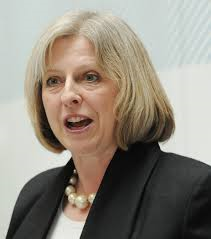
Teresa May
The activities of the prime minister, the foreign secretary and the secretary for international trade have all been widely criticised by a wide range of commentators and organisations. It is becoming increasingly clear that to promote the idea of a ‘Global Britain’ we are going to have to deal with a wide range of unsavoury regimes. This means that any vestige of an ‘ethical foreign policy’ is long dead. The emphasis is now on business with any country and few questions are asked about their human rights.
To take Saudi as an example. In addition to its activities in Yemen, it is an autocratic regime, torture is routine, its treatment of minorities and women is deplorable and it executes people in public after highly dubious trials. But to our government none of this matters and getting them to buy more arms and list their oil company, Aramco, on the London Stock Exchange are the real prizes.
These activities go to the heart of what we are as a nation. The European Union, for all its faults and shortcomings, is a union of countries which believe in the rule of law, democracy and liberal values. We want to leave this union and no sooner have we sent in the letter triggering our departure, than four of our senior politicians dash off to dubious regimes grubbing around for any deal they can get. It is deeply shaming and added to which, they want to come out of the European Convention of Human Rights, the convention we were so instrumental in setting up.
It has quickly become clear that securing trade deals is now paramount, with no questions asked. In defence of our turning a blind eye to the Saudi regime’s lack of human rights, the prime minister says the state is crucial in saving British lives by providing valuable intelligence information, an assertion impossible to prove and extremely convenient. The abandonment of our British values is much lamented. Paradoxically, one of the driving forces for leaving the EU was the desire to reassert British values. The decision to leave seems to mean that we shall have to dump them quickly to enable us to trade with a range of disreputable regimes.
Economically it makes little sense as the amount of trade with these regimes is tiny in comparison to the EU. From the moral point of view, it lowers our standing in the world and reduces our influence. It sets a poor example to other countries wishing to promote their arms sales.
We would welcome anyone in the Salisbury area wishing to join us in our campaigns for better human rights. The best thing is to come to one of our events and make yourself known. Look on this site, on Twitter or Facebook for details of events. We look forward to meeting you.
On Monday March 19 the Romsey group of Amnesty hosted a most interesting talk by Dr Claire Lugarre who is a lecturer in Human Rights Law at the Southampton Law School, part of Southampton University.
An element of the desire of those who wish for the UK to come out of Europe is a wish to regain our (i.e. the UK’s) sovereignty. There is also a desire, expressed most strongly by some members of the Conservative Party, to abolish the Human Rights Act and replace it with a British Bill of Rights. This has been promised in the party’s manifestos and has been talked about for about a decade but details of what the BBoR will look like and how it will differ from the existing HRA is still largely opaque. It seems to be a solution in search of a problem.
The Conservatives are not alone in wanting us to come out of the European Convention along with Brexit: most of the media have kept up a barrage of criticism and denigration of the Court and all its doings. As the example on the right of the Daily Mail shows, there is talk of a ‘triumphant week for British values,’ the ‘crazy decision’ making by European Court judges – usually referred as ‘unelected’ judges and the ‘human rights farce’.
The talk
Claire Lugarre explained some of the background issues surrounding the issue of the European Court and what it might mean for the country if we left.
Her first point is that the notion of human rights is not just a western construct and similar ideas are seen throughout history even if they were actually called that at the time. She also emphasised that the European Convention on Human Rights (ECHR) had a utilitarian purpose not just a moral one. There was an urgent desire after the carnage of WWII to construct a legal basis of good behaviour between states.
States have to comply with European Court judgements. The Human Rights Act – often referred to by critics as ‘Labour’s’ Human Rights Act which it isn’t as it received all party support – incorporates the ECHR into British law thus removing the need for litigants to go to Strasbourg to get justice.
One matter is the vexed question of prisoner voting she said. The European Court rejected the Government’s case which banned all prisoner voting and said that to ‘prescribe general, indefinite and automatic deprivation of a right to vote’ infringed a prisoner’s article 3 rights. Thus far the government has ignored the ruling. The issue was one of proportionality.
She spent some time on the often confusing difference between the Council of Europe and the European Union the latter being what we wish to leave (it was announced yesterday that the Article 50 notice to depart will be served on 29th of this month). The Council of Europe consists of 47 states and within which the European Court sits. This deals with human rights issues. The European Union consists – at present – of 28 states and is a political and economic union. There seem to be many who think that Article 50 means we will no longer be subject to ‘crazy decisions’ of the European Court. To do that we have to leave the European Convention. There have been reports that the prime minister Theresa May wishes to do that as well.
All legislation and legal judgements have to be in accordance with the HRA she said. Indeed, the number of judgements already made by the courts represent a considerable body of precedent based on the HRA and the European Court. Even if we come out of the European Convention the effects will be present for a considerable period. It is also forgotten that the European Court is not the only thing which binds us, we are also signatories to a host of other treaties which will still be in existence.
BBoR
One of the arguments frequently heard is that it is not just about rights but also about responsibilities. It was this principle which led to the desire to have a British Bill of Rights and Responsibilities. This is a difficult argument to fathom. Sometimes, people talk about responsibilities in terms of the government’s responsibilities to its citizens to uphold the Act. Others argue that the citizen has responsibilities not just rights. There are other arguments about the need to fight terrorism because the act has undermined this ability, it is claimed, and this requires responsibilities in some ill-defined way. Claire was unclear what the BBoR would contain.
The relationship between rights and responsibilities needs to be understood. Most rights are qualified in any event and, in practical terms, depend on the responsibility of everyone in society to respect one another’s freedoms (so that one party’s right to free expression, for example, does not impinge too far on another’s right to a private and family life). These rights cannot be subjected to any all-encompassing limitation, such as that they are legally contingent on performance of set of duties and responsibilities. Their application regardless of such considerations is precisely the point of their existence.
It is often claimed by critics that the European Court was ‘imposed’ on the UK. It wasn’t and the UK was a key participant in its formation after the war with many British lawyers involved. It is also argued that the HRA should only be used for the most serious of cases but what this would mean in practice is not clear. Who would decide on seriousness?
If, as is threatened, we do come out of the European Convention the effects could be traumatic. At present countries like Russia and Turkey are part of it. Russia’s human rights record is already poor and Turkey has arrested tens of thousands of judges, lawyers, academics and police. If the UK pulls out of the Convention, of which it was a founder member, the effects could be even more serious in those countries.
The HRA has had a steady and beneficial effect on many people’s lives in this country. In countless day to day decisions by authorities of various kinds, its provisions have to be adhered to and lawyers regularly use it to defend their client’s interests. Perhaps its chief problem is that it shifts some power down to the individual, a fact which those who were in control find uncomfortable.
This was a most interesting evening about a subject which is bound to be in the news for some time to come.
Follow us on Twitter and Facebook – salisburyai
If you would like to join the Salisbury group you would be very welcome. We meet once a month for a planning meeting and perhaps the best thing is to come along to an event and make yourself known.
Letter in the Observer (19 February) from a group of lawyers stressing the importance of ECHR
Theresa May has repeatedly stated her feelings that Britain would be better served by leaving the European convention on human rights than it would leaving the European Union. As we enter Brexit negotiations, there is now every possibility that both these scenarios could easily come to pass. The ECHR has been the bedrock of peace in Europe since the Second World War and was instrumental in the remarkable growth of democracy in Eastern Europe after the fall of the Berlin Wall. It is no coincidence that the one state that is not part of the convention, Belarus, is known as “Europe’s last dictatorship”. The withdrawal of Britain from the EU and the ECHR in succession could embolden populist leaders in countries such as Hungary and Poland to abandon domestic and international commitments to human rights.
We face the threat of a human rights crisis with the UK trading away protections against torture for grubby trade deals with foreign tyrants. We are calling for the EU to make Britain’s membership of the ECHR a legally binding requirement for any future free trade deal with the UK. The rule of law and human rights are non-negotiable when new countries join the EU; they should be non-negotiable when countries leave and desire a free trade deal.
As parliament scrutinises the bill on withdrawing from the EU and further legislation on Brexit, MPs, peers and the EU itself must make sure that Britain’s membership of the ECHR is a requirement of any future trade deal with the EU.
Signed Sashy Nathan, Baroness Kennedy QC, Lord Lester QC, Sir Geoffrey Bindman QC, Alex Bailin QC, Alex Grigg, Ali Naseem Bajwa QC, Alistair Polson, Amos Waldman, Anya Lewis, Ben Cooper
Caoilfhionn Gallagher QC, Celia Graves, David Jones, Dr Leslie Thomas QC, Grainne Mellon, Top of Form
Greg Ó Ceallaigh, Harriet Johnson, Helen Foot, James Wood, Jelia Sane, John Halford
Jules Carey, Keir Monteith, Louise Hooper, Malcolm Hawkes, Mark Stephens CBE, Navita Atreya, Nerida Harford-Bell, Paramjit Ahluwalia, Patrick O’Connor QC, Phil Haywood
Prof. Fergal Davis, Prof. Francesca Klug OBE, Professor Steve Peers, Ravi Naik, Sadat Sayeed, Sally Ireland, Sarah Forster, Sean Horstead, Sir Paul Jenkins KCB QC, Stephen Lue
We should add that our MP Mr John Glen, is in favour of this policy.
There are many reasons to be pessimistic about human rights in the year ahead. The election of Theresa May and Donald Trump are both bad omens and the rise in importance of China and Russia is also a bad sign. On almost every front, the post-war ideal of steady improvement in both democracy and human rights around the world now seems under assault. In the UK, the majority of the media keep up a relentless attack on human rights painting them as a threat to justice and social order. It is hard to believe that we are now debating the merits or otherwise of torture following President Trump’s remarks this week. How have we come to this?
Post war
Graphic: Linkedin
Perhaps the most important factor, and one difficult to discern, is the recent decline in optimism which was visible following WWII. That war and the terrible events which took place with the murder of Jews, Gypsies and homosexuals, led the world to say ‘never again’ and led to the Universal Convention on Human Rights. This led in time to the European Convention on Human Rights a convention strongly driven by Winston Churchill. There was a feeling in the years that followed, with such conventions and other subsequent treaties, that the world was on an improving path and the horrors of the Second World War would not be repeated. Improvements included a steady reduction in the number of countries using the death penalty. The cold war eventually came to an end. On the other hand, the use of torture around the world is still widespread with 141 countries still practising it according to Amnesty and this is specifically banned by the Universal Convention.
It was not of course plain sailing and we now realise that Chairman Mao murdered many millions of Chinese and there have been other monsters such a Pol Pot. Nevertheless, there was this feeling that things were steadily improving and the UN provided a forum for nations to settle disputes short of going to war. There was an assumption of western values of fairness, justice, free speech and the rule of law were becoming the norm.
Following Syria it is clear that this is no longer the case. Human rights in China are poor in the extreme. Thousands are executed and torture is routine. There is no free press and it is a one party state. Things are also deteriorating in Russia under President Putin. Russia’s ‘victory’ in Syria has changed the dynamic.
UK
Last year, we celebrated the 800 years since the signing* of Magna Carta. This was an attempt by the barons of the day to wrest some powers from the king. It would be unwise to summarise British history in a paragraph, but an element of our history has been a steady attempt – sometimes peaceful, sometimes not – to secure rights for ordinary people against whoever was the elite or in power at the time. It might be landowners or it might be factory owners for example. They had the wealth and the power and were extremely reluctant to release any of it to the benefit of those at the bottom of the social order. The lives of farm workers and those in factories was grim indeed and attempts to form unions was fiercely resisted. The legal system did little to ameliorate the plight of the powerless in society.
The modern day Human Rights Act incorporated the ECHR into British law and meant that every citizen could defend his or her rights in the courts and that public organisations had to treat everyone with fairness, dignity and respect.
But we would argue that the fundamental thing the act did was to spell out what those rights are and it represented a major shift from rights being grudgingly given to the people to them being theirs as of right. As Gearty expresses it in his book On Fantasy Island;
The Human Rights Act has a enables a range of individuals to secure legal remedies that in pre-act days would never have been achieved, perhaps even contemplated. […] it has been particularly valuable for those whose grip on society is fragile, whose hold on their lives is precarious, whose disadvantage has robbed them of means of adequate engagement with adversity. (Conor Gearty, OUP, 2016, p131)
[…] it is clear that the human rights act is a documents that is profoundly subversive of the partisan national interest . To put it mildly some people – often quite powerful people – do not like this. (op cit, p8)
It is this shift of power that is so deeply resented and ‘some people,’ which includes some politicians, have grown to dislike the loss of power and assumed patronage that they had become used to. The virtual ending of legal aid in the UK was a symptom of this desire to remove the ability of ordinary people to achieve redress or argue for their rights.
Picture: Left Foot Forward
Others of the ‘some people’ include chunks of the media. The HRA created a right of privacy and this represented a huge problem for the ‘kiss and tell’ end of the media world. These stories depended on substantial infringements of privacy, by phone hacking, not to expose corruption, but to find intimate details of politicians, celebrities and people in the public eye. Owners of newspapers – all of whom live overseas – were exempt from this scrutiny and intrusion of course.
The result of this assault on their business models is of great concern to them and this is most probably the main reason why they have produced relentless series of negative stories about Europe and the HRA. Rupert Murdoch was famously quoted in the Evening Standard as saying:
I [Stephen Hilton] once asked Rupert Murdoch why he was so opposed to the European Union. ‘That’s easy,’ he replied. ‘When I go into Downing Street they do what I say; when I go to Brussels they take no notice.
It must also be why there are few political champions for the Act or the ECHR. Any politician speaking up for it risks at best being ignored or at worst, having his or her private life raked over for something with which to denigrate them. There is instead an almost unseemly rush to join in the claims to ‘bring sovereignty back’ or to take control of our laws.
Brexit
Graphic: Huffington Post
A real worry has to be Brexit. The plan is to seek trade deals around the world sufficient to counter the effects of losing our access to the European market. This is likely to be tough as we will no doubt soon learn from the USA. To achieve these trade deals it is likely that our insistence on human rights will be weakened or even jettisoned altogether. As we have noted in many previous blogs concerning Saudi and Yemen, our principal interest there has been in selling them weapons. Despite considerable and irrefutable evidence of infringements of international humanitarian treaties, selling weapons is the primary aim of policy.
Until very recently, ministers have not needed to worry too much about the atrocities in Yemen. Most attention was on Syria. We did not even know British personnel were involved until it was blurted out by a Saudi prince. In the last few months however, there have been two debates in the Commons and press interest is now at a slightly higher level. The two debates revealed ministers more interested in promoting arms sales because of the economy and the jobs created, rather than in promoting human rights.
Public reaction
Perhaps the greatest worry of all however is the attitude of the public at large. How concerned are they about human rights issues? There seems little evidence that they are. The Investigatory Powers Bill – referred to as the ‘Snooper’s Charter’ – passed easily through parliament with little public outcry. Kate Allen, director of Amnesty said:
The UK is going in the wrong direction on rights, protections and fairness. Public safety is paramount but not at the cost of civil liberties. [Said in connection to the Snooper’s Charter]
It is hardly surprising when the major part of our media has carried out a sustained campaign against all things European leading, some might argue, to the decision to leave it. It is truly ironic that for many years the Daily Mail has carried out a campaign against what it calls ‘Frankenstein Foods’. The introduction of genetically modified foods has been seriously restricted by the European Union. The trade deal with USA is likely to involve the import of GM foods of varying kinds as ministers will be unwilling or unable to resist the pressure if we want to continue to export to them.
The general tone of press coverage has been that we do not need the act. It’s only of benefit to terrorists and assorted criminals who escape justice because of it (they argue). The benefits of the act to ordinary people are rarely mentioned and often one can scour a story for any mention it where it was used.
Putting all these elements together, the sense that the steady progress of western values has come to an end, a hostile media keen to bad mouth human rights and to denigrate the Human Rights Act, the Conservative government’s prolonged threat to abolish it, the decision to leave the EU needing a concerted effort to secure trade deals at any cost, and many of the public who are not concerned about such matters, means that the prospect for human rights does not look promising.






 Amnesty in Salisbury & South Wiltshire