Türkiye: Acquittal of Taner Kılıç


Equited after eight-year ordeal comes amid new wave of repression of rights defenders 

February 2025

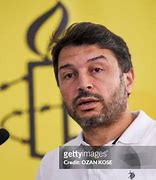
The dire human rights situation in Türkiye has largely dropped out of the news in recent years but repression of rights defenders, journalists and academics continues. The case of Taner Kılıç, who was finally acquitted today after a judicial process that has lasted almost 8 years, is a stark example of the Turkish authorities’ politically motivated attempts to criminalize human rights defenders, said Amnesty International. We first mentioned his arrest in a post on this site in 2019.

Taner Kılıç, a refugee rights lawyer and former Chair of Amnesty International’s Türkiye section, was arrested in June 2017 and detained in prison for more than 14 months. Despite a complete absence of any credible evidence, in July 2020, he was convicted of “membership of a terrorist organisation” and sentenced to more than six years in prison. The end of the almost eight year ordeal for Taner Kılıç comes amid a new wave of detentions in which rights defenders, journalists, political activists and others have been targeted. 

His acquittal follows the Court of Cassation’s rejection of the prosecution’s appeal against its previous decision to overturn Taner’s baseless conviction.  

“Today, as we mark the end of Taner’s agonizing ordeal, our feelings are bittersweet. The cruelty inflicted on Taner – the years stolen from him and his family – can never be forgotten. His tenacity and resilience, coupled with our determination to undo this injustice, demonstrates that when we come together, we can move mountains,” said Agnès Callamard, Amnesty International’s Secretary General who spoke with Taner by video call today. 

For me this nightmare that has gone on for almost eight years is finally over. My imprisonment for more than a year has caused great trauma to my family. This unfair trial was like a sword of Damocles hanging not just over me but over the head of the entire human rights community in Türkiye. While it was for the prosecution to prove my guilt, this case went on for years despite my repeatedly proving my innocence,” said Taner Kılıç. 

The ordeal has created huge uncertainty in my life. The only thing I was sure of throughout this process was that I was right and innocent, and the support from all over the world gave me strength. I thank each and every one who stood up for me.” 

In May 2022, the European Court of Human Rights reaffirmed that the authorities in Türkiye did not have “any reasonable suspicion that Taner Kılıç had committed an offence” when they remanded him in pre-trial detention for over 14 months in 2017/18. It found that his imprisonment on terrorism-related charges was “directly linked to his activity as a human rights defender”.  

In November 2022, the Court of Cassation in Turkey ruled to overturn the conviction of Taner Kılıç on the grounds that the investigation was “incomplete”. The trial court agreed with the Court of Cassation ruling in June 2023, but the prosecutor appealed the decision, insisting that Taner Kılıç’s conviction should stand. With this latest and final decision, the Court of Cassation rejected the prosecution’s appeal, ending the ordeal for the human rights defender.  

Courts used to silence critics

“Taner’s protracted prosecution is emblematic of how Turkish courts have been weaponized to silence critical voices and of the ongoing crackdown by Turkish authorities on rights and freedoms and those who defend them. The flagrant miscarriage of justice he was subjected to for so long is sadly just one of many. But we will take strength from Taner’s acquittal in our fight against the curtailing of human rights in Türkiye, and on behalf of those who refuse to be silenced by the authorities’ threats,” Agnès Callamard.

The acquittal comes amid a crackdown in which more than 1,600 people have reportedly been investigated for their alleged links to the Peoples’ Democratic Congress, a platform for civil society organizations and political parties. Last week, at least 50 people were detained in several provinces and 30 among them unlawfully remanded in prison on ‘terrorism’ related allegations after being questioned about their peaceful activities dating from more than a decade ago. 

Background 

Taner Kılıç is a founding member of Amnesty International Türkiye. Over the last 20 years, he has played a crucial role in defending human rights as part of the organization and the wider human rights community in Türkiye.  

We are grateful to Amnesty UK for the bulk of the text in this post.


Latest posts

Human Rights Watch critical of UK


HRW’s World Report for 2024 critical of the UK on several fronts

January 2025

It comes as a shock when a respected international human rights organisation produces a report containing a number of criticisms of the UK government over its human rights record. There are some in this country who think that our role in developing the Universal Declaration in 1948 and incorporating that into the Human Rights Act fifty years later, somehow gives us some kind of moral status as champions of rights. HRW’s report disabuses us of that. The UK is a cause for concern on several fronts it says.

There are others who think the opposite and consider the act to have gone too far, enabling murderers, rapists and terrorists not getting their just deserts presenting spurious arguments based on the act. The Conservative government has in its various manifestos promised to abolish it and more recently has suggested it wants a bill of rights to replace the act. There has been a concerted press and media campaign over many years arguing for it to be abolished and which has, arguably, engendered in many people that the idea that the legislation is somehow against them. The positive benefits of the legislation are seldom mentioned.

There are still many who want the UK to come out of the European Convention including the MP for East Wiltshire, Danny Kruger.

The World Report discusses several areas of concern where it considers the UK to be falling short on human rights issues.

Poverty

Poverty means people are less able to live fulfilling lives, have poorer health outcomes, and often cannot afford to heat their homes adequately. The UK has the one of the highest levels of income inequality in Europe. It notes that the Labour government has not abolished the two-child limit a factor driving up child poverty. There is a cost of living crisis. It often means people cannot pursue their rights in the courts, not only because the system is hideously expensive and legal aid has all but vanished, but because of years of delay before a case can be heard.

It notes that 7 years have passed since the Grenfell Tower fire yet no one has been brought to justice. It might also have noted that years have gone by following the publicity concerning grooming gangs – more accurately called rape gangs – with little sign of serious action and no one brought to account. And there is the Post Office scandal and what has happened in the Anglican church and the resignation of the Archbishop of Canterbury. There has been a spate of hospital scandals.

Curtailment of freedoms

Several laws introduced to curtail freedoms. They point to the 2023 Public Order Act and the 2022 Police, Crime, Sentencing and Courts Act which have increased police powers of arrest. They express concern about increasing surveillance including of peaceful protests. Facial recognition is being introduced apace amounting to mass surveillance of the populace. We are more like China than perhaps we like to think. They draw attention to the UN rapporteur’s concerns about clampdown on environmental protests.

There are other matters of concern in the UK and these can be seen in the full report starting on page 505. The past year has once again highlighted an often-disregarded reality: liberal democracies are not always reliable champions of human rights at home or abroad.

They discuss the role of the United States in connection to Gaza and note that “US President Joe Biden’s foreign policy has demonstrated a double standard when it comes to human rights, providing arms without restriction to Israel despite its widespread atrocities in Gaza, while condemning Russia for similar violations in Ukraine, and failing to address serious rights abuses by partners like the United Arab Emirates, India, and Kenya. Donald Trump’s return to the White House not only threatens rights within the US but will also affect, by commission and omission, respect for human rights abroad. If the first Trump administration’s attacks on multilateral institutions, international law, and the rights of marginalized groups are any indication, his second term could inflict even greater human rights damage, including by emboldening illiberal leaders worldwide to follow suit.”

This is probably the key message of the report as a whole. The promise of the Universal Declaration and the hope of ‘never again’ seems to be dead in the water. If countries like the US and the UK cannot give a lead, acting honourably and taking full account of human rights both at home and in their foreign policies, there is slender hope that countries led by a variety of despots will take any heed. As we noted in our last post on arms sales, the selling of arms to whomsoever causing death and terrible harm to millions seems to matter over any kind of moral consideration. The HRW report is a sober read.

Good news!


Toomaj Salehi has been released

December 2024

Members of the Salisbury group took part in a campaign for the release of an Iranian rapper and he has been released. The joint voices of nearly 27,000 people —Toomaj, an Iranian rapper, activist, and advocate for justice, has been finally released. Iran is an operates an oppressive state with many basic freedoms denied to its citizens.

Together, we sent a clear message to Iranian authorities: The world is watching, and we won’t stay silent when freedom and human rights are at stake.

Toomaj has been a powerful supporter of the Woman, Life, Freedom movement, sparked by the death of Mahsa Zhina Amini, a young woman who died in police custody for defying abusive forced veiling laws in Iran. Through his music, Toomaj called for justice, equality, and an end to the violent crackdown on protests in Iran. His release is proof that when we unite for what’s right, we can create change

Image: Tribune on line


Starmer’s wish to see more facial recognition technology


The prime minister wishes to see more facial recognition technology following riots in Southport and elsewhere

August 2024

Following the terrible murder of three little girls and the wounding of eight others in Southport last week, riots have broken out in various parts of the UK. A mixture of extremists and far right groups have assembled outside mosques and refugee centres to engage in violent acts including attacks on the police. These groups have claimed links to asylum seekers and immigrants to the murders and this has led them to take these violent actions. Several people phoning in the the BBC’s Any Answers programme on Saturday 3 August, made claims linking the murders to boat people even though the young man who has been charged is from Cardiff and is not a boat person.

People have been rightly outraged by the high-jacking of the tragic deaths of the three little girls by large numbers of far right groups many of whom travel to the area with the intention of engaging in violence. There is a natural desire to see these people to be identified, arrested and brought to justice. There is great pressure on the new government to ‘do something’ and the Home Secretary and the Prime Minister have made statements. The latter has called for the greater use of facial recognition technology (FR) in the task of identifying ‘thugs’.

We should be very wary of going down this path. It has echoes of Jeremy Bentham’s idea of a panopticon in the nineteenth century: a prison where prisoners could be watched at all times. It fed into the idea of complete control by governments or their agents as a means of social control.

There are several reasons for being wary of introducing more FR. Although it could be used to locate and arrest those involved in the current mayhem or any future outbreaks, it would introduce into the public realm greater powers for the police and politicians. The last decade has seen a number of laws enacted to prevent or seriously limit protests and demonstrations. Britain has had a history of such protests and they have led to improvements in the role of women in society, better housing, an end to slavery and a range of social improvements and rights for ordinary people. This technology would however, give police considerably enhanced powers to clamp down on protests. We may deplore the sometimes extreme actions of the climate protestors, but without such protests, the government would be unlikely to take action of climate change.

To tackle the violence and riots in other words, we would be giving the government enhanced powers over other forms of legitimate protest. There is also the vexed issue of control. The various scandals we have seen in recent years including the Post Office, the biggest one of all, have shown an inability by the vast range of controls, audits, select committees, etc. etc. to exert any kind of realistic control over these organisations. They achieve lives of their own and seem impervious to moral principles or honest dealings. Do we really want to give them yet more technology?

Another objection is that it would give yet more power to the tech giants over our lives. A feature of the riots is how easy it has been for rioters to assemble by using such media as X and Telegram. These are American firms and are more of less completely outside anyone’s control. It was Elon Musk who decided to allow Tommy Robinson back onto X for example. So we have politicians and journalists making speeches, statements and writing opinion pieces, when it was the decision by one man on the other side of the pond which has provided a key weapon for the far right groups. Although Sir Keir is making noises about the tech giants, will the government actually do anything?

Finally, it sees the solution to these problems in technological terms: we have problem, lets install some more kit and problem solved. The issues are much deeper than simply arresting some thugs. Poverty, low wages, poor housing, inflation and a host of other issues have led to groups of people feeling left behind or ignored by the politicians and to an extent the media.

We should think very carefully before giving politicians yet more power to intrude into our lives. Even though it may mean some of the rioters escaping justice. China has this system installed offering the government almost complete control over its citizens. They have 700 million such cameras used widely as a means to monitor its citizens and to repress minorities. Perhaps we should remember the Chinese proverb ‘a journey of a thousand miles begins with just a single step’. Our liberties are fragile and we should be extremely cautious of giving government’s powers to limit them further. It has the power to be the biggest threat to human rights and civil liberties in the UK.

Salisbury group minutes


January 2024

We are pleased to attach the minutes of our last meeting held on Thursday 11th January with thanks to group member Lesley for preparing them. They give details of forthcoming activities. New members are always welcome and perhaps the best thing if you are thinking of joining is to come to one of our events and make yourself known. It is free to join the local group but if you wish to join Amnesty International UK there is a fee. 

Group minutes and reports


The group’s minutes and reports for October 2023

October 2023

We are pleased to attach the minutes of the group’s meeting on 12 October 2023 thanks to group member for compiling them.

Human rights: progress report


Report on the current situation with human rights legislation in the UK

October 2023

It has been distressing to see the steady erosion of rights in the UK with limits on protests, campaigning and access to judicial review all incorporated in legislation. Police powers have also been increased. The war in the Middle East has seen the Home Secretary urge the police to take action against supporters of the Palestinian position.

A disappointing lack of resistance has been seen with the introduction of these new laws and other bills in parliament. There has been opposition in the House of Lords but this has been bypassed or simply ignored. The main resistance has come from outside organisations such as Each Other and Open Britain. The Labour Party has been disappointingly quiet.

At the recent Labour Party conference in Manchester there was a fringe event Human Rights for a better Britain. An Amnesty member, Elena Auer, attended this event and reported:

I attended a Labour Party fringe event held jointly by Amnesty and The Labour Campaign for Human Rights. It was an interesting networking event with opening remarks robustly setting out our defense of human rights. The Labour party representative set out their belief that human rights should remain at the heart of Labour’s policy and practice. We were given a copy of Amnesty’s new ‘Human Rights Manifesto which was launched this week (W/c 9th October) [we have been unable to locate this online but an older version can be accessed here]. The good news was there was a ground-breaking speech from Emily Thornberry committing the a future Labour government to review all anti-rights legislation. I am hopeful that both Amnesty and Liberty would hold the Labour party to account on this if they do form the next government”.

Whether the party – should it form a government – will do more than ‘review’ the legislation remains to be seen. Review by itself commits the party to nothing and it will have to find parliamentary time to debate and drive through alternative legislation. In view of other pledges and changes it wants to make (if the conference speeches are to be believed) then this time may be limited. These more restrictive laws are likely to be a feature for some considerable time.

As previously reported, The Home Secretary, Suella Braverman, visited Washington DC recently and gave a speech in which she referred to the Human Rights Act as the Criminal’s Rights Act. Liberty has gained permission from the High Court to take criminal action against the government for introducing new anti-protest legislation which has been democratically rejected by parliament just a few months previously.

They say that the Home Secretary has acted unlawfully by using a statutory instrument to give the police more powers to impose restrictions on protests that cause ‘more than minor’ disruption. Statutory Instruments are a way to bring new laws in without having to create a whole new bill. Liberty argues the Home Secretary was not given the power by parliament to take this action, making her action a serious overreach which inviolate he constitutional principle of the separation of powers because the measures have already been rejected b parliament. By bringing in these new powers, the government has been accused of breaking the law by giving the police ‘almost unlimited’ powers to shut down protests due to the vagueness of the new language.

Status of Acts

Briefly, the current status of acts which negatively impact on human rights are:

Nationality and Borders Act 2022Royal assent: May 2022
Judicial Review and Courts Act 2022Royal Assent May 2022
Police, Crime, Sentencing Courts Act 2022Royal Assent July 2022
Public Order Act 2023Royal Assent May 2023
Anti-Strike (Minimum Service Levels) Act 2023Royal Assent July 2023

We are grateful for group member Mike for the work in facilitating this post.

Wine and rights


The Wine Society (UK) is paying special attention to human rights in its supply chain

September 2023

The Wine Society was formed in 1874 and flourishes today with many thousands of members and an enviable reputation for seeking out and supplying quality wines from around the world. In its latest newsletter to members (Issue 12, Autumn 2023) it has an article Announcing the fair treatment of workers in our supply chain explaining what the Society proposes to do to ensure human rights are observed throughout the supply chain.

Globalisation has produced many advantages for consumers in the West. Products and produce from around the world have arrived on our shores and into our high street stores to enable people to enjoy cheap clothes, out of season produce and a wide range of manufactures which, if made in the UK, would be many times more expensive.

But globalisation has come with some serious disadvantages for those far away who toil in the fields or work in sweatshops for minimal pay.  They have no rights, and suffer many abuses which would be unacceptable in the UK.  For many this is out of sight and some companies like it that way.  Recently, companies – and quite respectable (?) high street names – have shown to be using cotton picked by Uyghur forced labour in China.  We can remember the Rani Plaza collapse in Bangladesh in which several thousand died working in a vast sweatshop producing cheap clothes for several well-known high street UK stores. 

Many firms now pay attention to the issue of how things are produced and the labour abuses happening far away across the world.  However, after every incident which is discovered, we see those same firms express shock at the revelations and claim in written statements (noticeably: few actually appear on screen to face interviews) that they knew nothing and state their company policy which is that they take seriously the issue of human rights. 

The Wine Society is cautious in its approach recognising that policing what growers and vignerons do in far flung parts of the world is not easy. Their requirements include no use of forced labour or children; promoting worker participation; decent standards of accommodation where this is offered; paying a living wage and recognising the rights of local communities to clean air and water. They are about to roll out an independent whistle blowing line across their entire global supply chain. They are also supporting The Sustainable Wine Roundtable a global collaborative platform. The Society’s overall aim is to have the world’s most socially and environmentally sustainable wine supply chain by 2030.

This is a welcome development and a recognition that importers in the UK have a direct responsibility to ensure, as far as they can, that those producing their wares in far away places are treated decently and their human rights observed. It is all too easy to place a contract with a supplier containing well-meaning clauses which in turn sub-contracts to someone else and so on down the chain ultimately to families living in squalor, paid a pittance – if that is they are paid at all – with children working instead of going to school, all with complete deniability.

And the Society supplies very good wine.

A change in the political climate for human rights


The post war human rights ideology is arguably now over and there is a need for new thinking

July 2023

The post war settlement and the introduction of a ‘rules based order’ for international affairs is arguably now in terminal decline. The creation of the United Nations and the introduction of the Universal Declaration seemed to usher in – many thought – a new way that governments would deal with each other and settle disputes through negotiation. The carnage of the Second World War in which millions of lives were lost was supposed to be a cathartic moment in world history, an event no one wanted to see repeated. Respect for human rights would be a core feature of how people lived around the world.

Recent history casts doubt on this idea and the rise of countries such as China, a post Stalinist Russia and the wealth of Saudi Arabia are beginning to show that the comforting idea of the rules based order is under considerable threat. More and more countries are showing that they can exist quite happily in the world by ignoring nearly all considerations of human rights and a democratic norms. China’s treatment of its Uighur minority has received wide coverage with nearly a million people being subject to so-called ‘re-education’ in an attempt to mould an entire population away from its beliefs and culture. They have almost eliminated any semblance of a free democracy in Hong Kong. Myanmar has brutalised its Rohingya minority forcing huge numbers out of the country. The treatment of Palestinians in Israel and the creation of what is effectively an apartheid state, shows that even a country with a powerful democratic system can behave badly towards those they wish to marginalise. We could quote other examples including Türkiye, Syria, Libya and more recently, Tunisia where in their different ways, human rights and the treatment of its citizens are a long way from the intentions of the Universal Declaration.

Sportswashing

We have discussed sportswashing in several previous posts and in particular, Saudi Arabia with its funding of Newcastle United football club for example, and hosting a Grand Prix, tennis and golf tournaments and other sporting investments. Since early 2021, they have invested at least £4.9bn ($6.3bn) in various sporting events and are currently seeking to purchase the footballer Kylian Mbappé from Paris St Germain for a reported €300m. For them it buys kudos. The sums are so large that a significant number of sports stars are willing to overlook any considerations of human rights and sign up for the various lucrative deals on offer. The extent of their denial of rights can be seen in a report by grant Liberty.

Commercial activity

It would be unfair to heap blame on sports stars alone. After a brief lull following the murder and dismemberment of Adnan Khashoggi, western firms are all too willing to get involved in the many deals and contracts on offer from the kingdom. Even architectural practices are lured to the many contracts of offer as part of the massive half a trillion dollar Neom development being proposed in south west Saudi. We have been happy to supply Saudi with a variety of weapons and personnel to enable it to carry on its war in Yemen creating what, according to the UN, is the worst humanitarian disaster in modern history. In addition to football clubs, the Saudi investment fund is being eagerly welcomed to Teesside.

The significance of the change has not really been taken on board. Saudi’s enormous wealth, China burgeoning power and the increasing post-colonial confidence of countries like South Africa, means there has been a shift away from the ‘Washington consensus’. Human rights have little if any role to play in most of the Gulf states. Opposition is banned, torture is widely practised, human rights activists harassed or arrested and media tightly controlled. A similar story exists in China which operates as a one party state and where human rights norms are largely ignored.

Countries like the UK seem almost to have given up on any pretence that human rights form part of their decision making and in our relations with these countries. In a sense, it is part of our national decline particularly economically. In a word, we can no longer afford to pick and choose. If we want investment in our country, especially in less popular areas (economically speaking) then if a country like Saudi has the money then so be it. If we want sell arms then we must hold our noses and sell to more or less anyone who needs them. Noises are made about export controls and end user certificates, but the pressure is to steer round them not to use them as a force to limit their sale. The recent loss of the court case concerning arms sales to Yemen is a case in point. It is not just the government’s failure to properly consider human rights issues and the terrible effects of bombing in Yemen, but the judges seemed also to push reason to one side in their judgement.

Post war consensus

Post war and in the half century or so which followed, was a period of hope and a belief that human rights could be encouraged around the world. It was not all plain sailing and it took a long time for oppressive states like East Germany to collapse along with other east European states to gain freedom from the Soviet Union. Many countries achieved independence from the colonial powers, France and the UK principally. The UN and its various agencies was able to pursue policies and programmes of benefit to millions of people, tackling polio for example.

In recent times, the leadership of US is coming under strain. Internally, it is struggling with the very concept of democracy. European states are far from united and although there has been some unity in the response to the invasion of Ukraine, they seem far from making the weather as far as human rights and the rule of law are concerned.

What is interesting about sport is the lack of conscience or morality among a significant number of sporting people. If the money is sufficient, they accept the gig, with seemingly no compunction. That women are treated as second class citizens, executions are carried on at an horrific rate, sometimes in public, torture is routine and LGBTQ people are punished or imprisoned, seems not to trouble them. The question is whether this reflects the zeitgeist of the population at large? Are people no longer interested in human rights considerations in our sporting and commercial actions? Have we reached a point in our history where we no longer believe in things which were always said to be a key part of the British character: decency, fair play and respect for the underdog? It would seem so. If the public is more concerned with entertainment and the success or otherwise of their team or sporting hero, who can blame the sportsmen and women taking the millions of riyals on offer?

There does need to be a rethink of our approach to human rights. The belief in largely state led approaches, through treaties, declarations, legal actions and the like, is no longer sustainable especially if the states concerned are more concerned with economic pressures than with the rights of people often far away. The centre of gravity has to a large degree shifted away from the West to countries like China, the Gulf states, Russia and non-aligned countries like Brazil. Some of these countries have a different concept of rights and see Western countries only too willing to turn a blind eye if contracts and sufficient money is on offer. It would seem a little foolish to continue pursuing the post-war ideology in a world which has substantially moved away from those ideas.

Sources include: Amnesty International; New Statesman; Guardian; CAAT, Grant Liberty

Minutes of November group meeting


We are pleased to attach the minutes of the group’s November meeting with thanks to group member Lesley for the work in compiling them. They contain a lot of interesting material including information about future events, planned or actual, as well as reports on refugees and the death penalty.

Note that the next meeting is December 8th at 2pm. We welcome new members and we hope to see returning ones now that we have shifted to an afternoon slot. We remain concerned about the range of bills and laws the government is planning to pass which will limit our rights to protest and its increasingly authoritarian tone. Refugees remain a live issue receiving much coverage in the media particularly about the boat crossings but who fail to mention the full facts.

Blog at WordPress.com.

Up ↑