Uyghur solidarity month


Salisbury MP’s activity on this topic is poor

August 2026

It is often suggested we write to MPs on matters of concern and this can achieve something but too often it doesn’t. An MP receives a lot of messages from constituents most of which concern local matters. Indeed, it is a criticism of the system that much of their postbag are issues more properly the concern of local councilors. MPs feel obliged to engage in these matters however, because it is clearly the expectation of their constituents that they should.

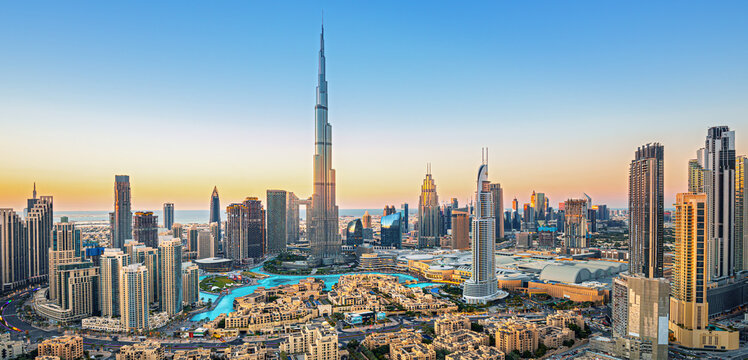
Salisbury has two MPs, Mr Danny Kruger (Reform) who represents East Wiltshire which runs down to the northern part of the City, and Mr John Glen (Conservative) who represents the City itself and most of south Wiltshire. Their involvement in Chinese human rights issues is slight.

Mr Kruger asked the prime minister (then Sir Keir Starmer) the following question in February:

“The Prime Minister is very full of the abstract virtue of engaging with China and getting in the room with them. He used to say that Britain should not even sign a trade deal with China because of the persecution of the Uyghur people. Having now got into the room with the Chinese leader, can he tell the House a single thing that he achieved on behalf of the Uyghurs, or indeed on behalf of the security of this country?

“[Starmer] Yes. Engaging is really important for the security of this country. Just for clarity, we did not sign a trade deal on the visit; we simply looked at the ways in which we can open the opportunities for businesses. There were 60 big businesses with us on the visit, and they are absolutely clear about the advantages to them. I would much rather take their view on the advantages than the nonsense that is being spouted on the other side of this House”.

A good question receiving a complete non answer. The prime minister talks vaguely about engagement and then on to talk about the trade talks. He does not answer the Uyghur point at all. In the same session, Jim Shannon (DUP) also asks about, inter alia, the Uyghurs:

[…] what steps forward remain in terms of the Chinese treatment of Christians, Uyghur Muslims, Falun Gong and other religious minorities? Was the Prime Minister able to use diplomatic soft power to bring about the changes required to provide human rights protection, to stop religious persecution and to enable successful trade between the two nations?

“[Starmer] The hon. Gentleman is right to raise these really important issues. I raised them myself during the course of the visit, and I thank him”.

With what result we do not know. Danny Kruger asked again about the Uyghurs in March and a junior minister simply replied that “[the government] continues to engage with the Chinese on human rights and religious freedom”. The results do not look to be that impressive.

There is one speech by Mr John Glen which mentions the Uyghurs in part of a long speech much of which was devoted to the treatment of Christians. A mention of Uyghurs is as follows:

“[…] It is not a binary question; it is not that we cannot talk about what is happening with the Uyghur Muslims in China while recognising that China is an important economic actor in the world that needs to be respected. We need to find ways of interacting well together and respecting, as far as we can, what common ground exists. It troubles me sometimes that when we have statements in the House, we revert to a binary: “It’s all good or it’s all the opposite.” The hon. Member for North Northumberland [David Smith, Labour] grasps the right way to approach this”.

The full speech can be accessed on the They Work for You website. It is not clear what ‘common ground’ exists with repression, torture and cultural genocide or where we could find it. On the subject of China generally, Mr Kruger has mentioned it 14 times and Mr Glen on no less than 41 occasions. We can conclude that the issue of persecution of Uyghurs is not high on either MP’s concerns. Both are Christians and seem more concerned about how they are treated rather than Muslims. According to They Work for You, Mr Glen ‘generally votes against laws to promote human rights’ and Mr Kruger ‘consistently votes against equality and human rights’.

Overall, both MPs do not seem to concern themselves with human rights issues. They are concerned about problems experienced by Christians and about political issues to do with China with little recognition of the plight of Uyghurs. We were unable to find anything relevant on their websites.


Uyghur solidarity month


Bringing the plight of Uyghurs to a wider audience

August 2026

We noted in our last post on the Uyghurs that their plight had slipped out of the news in the last year or so. With war in Iran and the closure of the Straight of Hormuz, and continuing conflict in the Middle East including Gaza, giving attention to a far off land where contact with its people is almost impossible is not altogether surprising.

But we need to do our best to bring people’s attention to what is going on there. We should always remember desperate governments do desperate things. The UK is up against it politically and economically. This leads it to pursue arrangements with overseas powers with highly dubious human rights records such as Saudi and UAE, to promote arms sales with almost any country while claiming to have a ‘robust policy’ not to, supporting Israel overtly and covertly despite its destruction of Gaza and mounting violence in the West Bank. Economic needs trump concerns about human rights. Jobs in the UK count for more than rights half way across the world.

Write a letter

We are asking that people write to their local newspaper to highlight the dreadful way the Chinese are treating these people. The campaign organisers have provided a sample letter which unfortunately exceeds the word limit of local papers. We have amended the letter which could be the basis of your own contribution:

I want to draw the attention to people in Salisbury of the dire human rights situation facing the Uyghur people in Xinxiang province, China.

the UN High Commissioner for Human Rights concluded there were credible allegations that the Chinese government had carried out arbitrary detention, torture, forced labour, family separation, and severe restrictions on religious and cultural freedoms on a vast scale on the Uyghur people. They stated that these violations may constitute crimes against humanity. In 2021, the independent Uyghur Tribunal, chaired by Sir Geoffrey Nice KC in London, concluded that the Chinese government had committed genocide against the Uyghurs through measures intended to prevent births, and had also committed crimes against humanity.

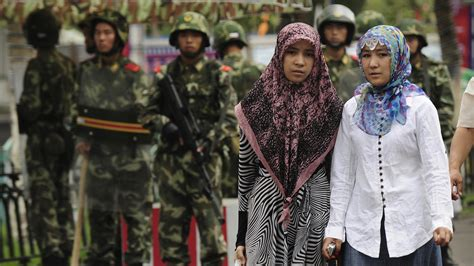
Despite these findings, the suffering of the Uyghur people continues while the world looks away. More than a million Uyghurs are reported to have been detained, and countless families have been torn apart. Survivors have described detention camps, torture, rape, forced labour, coercive birth-control measures, and the removal of children from their families. Behind every statistic are innocent individuals whose lives have been destroyed for ever.

This month, Amnesty International’s Uyghur Solidarity Month is trying to raise awareness of the continuing crisis but also to celebrate the rich culture, language, and heritage now under such severe threat.

Whether one views this issue through the lens of international law, freedom of religion, cultural preservation, or basic human dignity, the plight of the Uyghur people deserves continued public attention and informed discussion. Uyghur Solidarity Month reminds us that protecting a people’s culture is inseparable from protecting their human rights.

Public awareness alone will not end this crisis, but silence only makes it easier to ignore. We all have a responsibility to ensure that the voices of the Uyghur people continue to be heard.

[NAME]

Provide name and address.

You might be tempted to think that what has this to do with me? It’s sad that a people are being persecuted in a far off land but there are so many other problems nearer to hand, why there? But you are involved. You will have in your wardrobe, or be wearing, many items made of cotton. It is highly likely that some of them have been made with cotton from this region using virtual slave labour – the Uyghurs. A quarter of cotton comes from there. You may have bought these garments from a well known and reputable store in the high street or online. Despite their fine words and protestations about the integrity of their supply chains, they still use this cotton. So you are wearing the evidence. You are involved.

Please write.


Thought of subscribing?

The vigils continue


Vigil number 137 held on July 18th

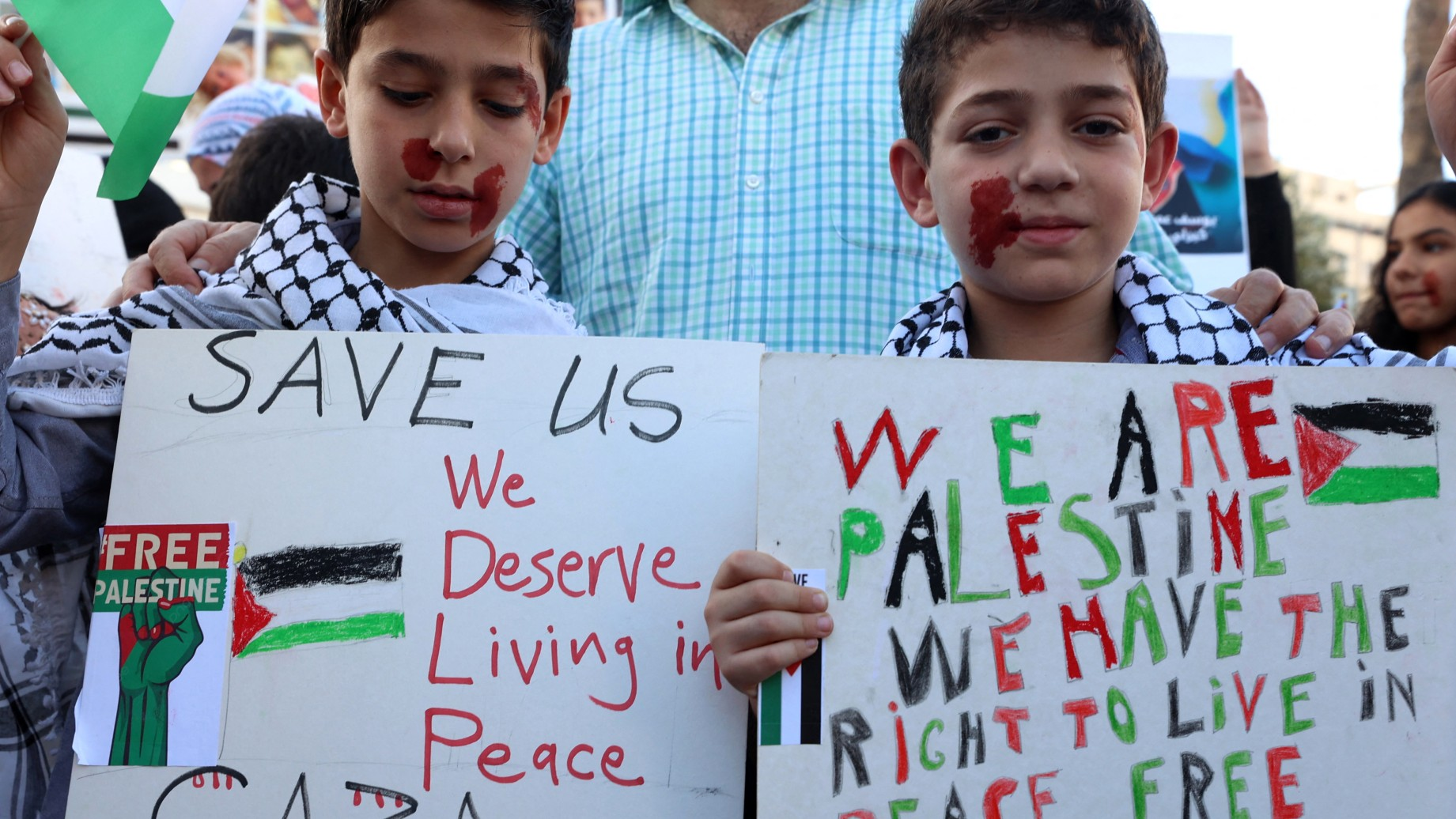
We continue to hold vigils in Salisbury’s market place on Saturday evening. Last Saturday was the 137th such event. Thinly attended this time but we were briefly joined by 26 Brazilian students which was a delight.

We continue because the situation in the Middle East gets no better. We await how the new prime minister handles the situation in Gaza but he has already apologised for the party’s response and approach to the conflict which was very damaging. Sir Keir Starmer was so desperate to lay the ghost of ‘anti-Semitism’ that his response to Israel’s violence and destruction of the territory was distorted. Now David Lammy has made statements about the mistaken approach but it has to be noted that there was little sign of this up till now. He did not feel the need to resign.

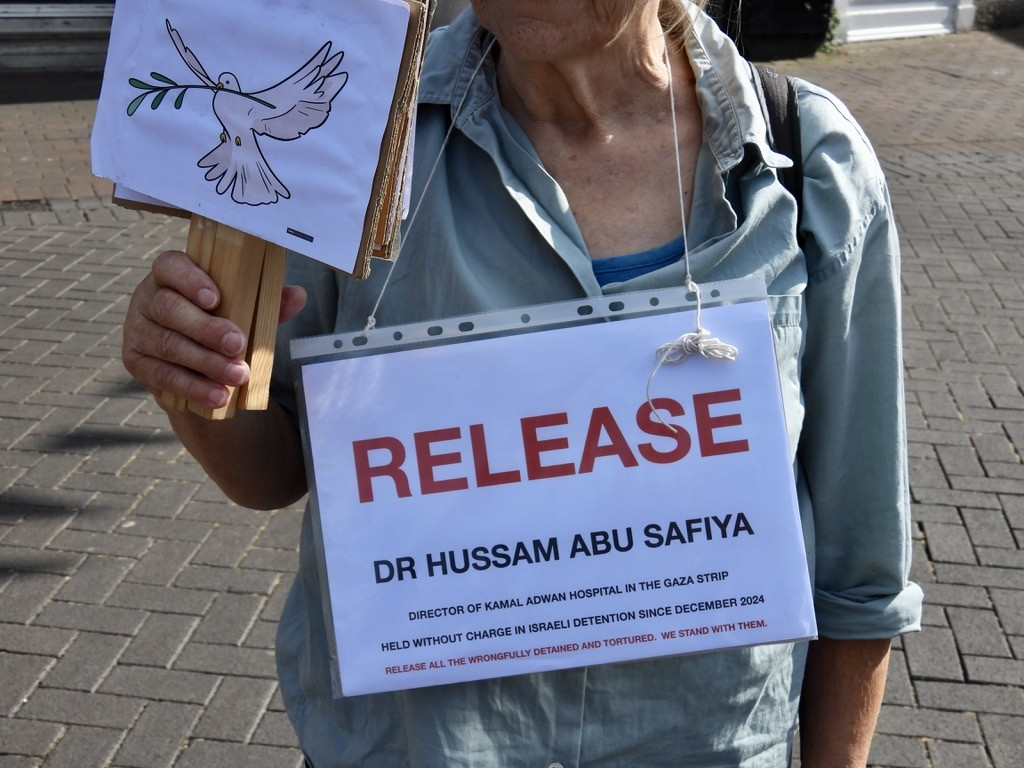
Dr Hussan Abu Safiya

The UN said in a report last month:

“The UN Independent International Commission of Inquiry on the Occupied Palestinian Territory, including East Jerusalem, and Israel expresses its grave concern at credible reports that Dr. Hussam Abu Safiya, a Palestinian doctor and Director of Kamal Adwan Hospital in the Gaza Strip, has been subjected to continued and severe abuse since his detention by the Israeli authorities in December 2024.

“The Commission calls for the immediate, unconditional and safe release of Dr. Abu Safiya and of all medical personnel held in arbitrary detention by Israel. It also urges the Israeli authorities to provide immediate independent medical care for Dr. Abu Safiya.

“The continued arbitrary detention of Palestinian medical personnel and the severe mistreatment they are subjected to are deplorable and flagrant violations of international law. The actions of the Israeli Prison Service guards towards Palestinian detainees raise grave concerns of violations of international law that likely amount to international crimes. Dr. Abu Safiya’s medical condition is the direct result of these actions. The Commission underscores that persons deprived of liberty are protected against murder, torture and cruel, inhuman or degrading treatment and sexual violence”.

He is held in an underground prison.

Israeli forces now occupy 65% of the Gaza strip in contravention of Trump’s peace plan. The number of Palestinians killed is 73,770 of whom 20,000 or more are children. The total is likely to be much higher with thousands buried and unaccounted for under rubble. 1,144 have been killed since the ceasefire in October.

Sources: Guardian, BBC, Al Jazeera, Copilot Search, UN,

Image courtesy Peter Gloyns


Britain’s support for the arms trade


The UK hosts a major international arms fair

July 2026

UPDATE: Journalists attending the Fair from Declassified and Byline Times faced threats from the personnel on the Elbit Stand and other Israeli weapons stands. We are grateful for Salisbury Concern for Israel Palestine for bringing this link to our attention.

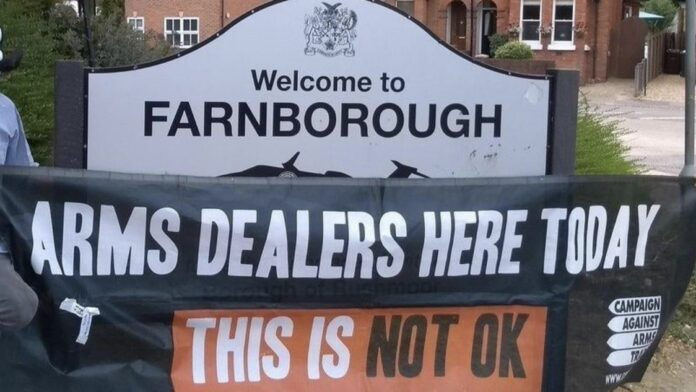
The UK is an enthusiastic supporter of the arms trade, organising a fair at Farnborough ever other year in Hampshire. A thousand firms will attend and the ‘strategic sponsor’ is Barclays. It is curious to note in passing that the bank was founded by two Quakers and their early history was supporting Quaker businesses in the New World. Now they are supporting weapons firms. One of their values is ‘[being] passionate about leaving things better than we found them‘. One wonders what someone who has had a weapon dropped on them or a limb blown off feels about this value?

The firms themselves supply weapons to a range of conflicts around the world including the genocide in Gaza, Yemen, Lebanon and Syria. Some of UK weapons find their way to Sudan via the UAE one of our largest customers. Our old friends Elbit Systems are in evidence as well as Rafael, Israel’s largest missile maker.

Government support

The fair depends crucially on British government support which includes a dedicated arms sales unit in government, organisation of the fair, providing insurance cover in case firms do not get paid and finally, ready access to ministers and civil servants through what is called the ‘revolving door’. This is the highly dubious process by which ex ministers, former civil servants and ex military officers secure lucrative consultancy work or directorships with the firms to help lobby for their activities.

The insurance is provided by Exports Credit Guarantees and the amount may surprise readers. A total of 20 countries have defaulted on payments: some you might expect like Iraq, Cuba and Serbia because of conflicts, but others include Pakistan, Egypt and Argentina. The total is just under £3 trillion which is added to the national debt. It is worth pondering this for a moment because one of the hotly disputed political debates at present is over the welfare bill and some politicians and pundits are arguing for it to be cut to enable tax cuts. The quite staggering level of funding support for arms companies is never mentioned by these same politicians. Three trillion is £3,000,000,000,000. This figure may be an underestimate because the report makes clear some data has been lost.

Establishing facts difficult

Discovering quite what is being exported is not easy. The government likes to claim it has a robust arms sales policy but the facts seem to suggest otherwise. One has only to look at the countries to which we sell to see that ‘robust’ is not a word one would use. It issues what are called Standard Individual Export Licences [SIEL] of which there were 10,400 in 2025. The problem is approximately half of sales are under ‘open license’ making the reporting unreliable.

Ministers cannot always be trusted. David Lammy MP said in parliament that sales to Israel were being reduced once the destruction of Gaza became too great to ignore. Later analysis of Israel’s import data showed sales by the UK had in fact increased.

When we speak of arms sales, the photographs often show fighter jets, missile systems and other items of large scale military kit. We must not overlook that it is the millions of small weapons such as rifles, machine guns, grenades and so forth which cause so much damage to ordinary people. It is these weapons which kill and maim especially women and children.

Our continued support for the likes of Elbit Systems who make the drones which have killed many and made the lives of the people of Gaza such a misery, is shaming. Huge efforts have been made to stamp down on protests and hundreds of protestors have been arrested and gaoled.

There will be much glad-handing at Farnborough and no doubt a minister will speak about the contribution to our economy and jobs created. But we cannot escape the plain fact that this is an industry who’s products are designed to kill people. It could be argued that we need to defend ourselves and our partners in NATO for example. While that may be true, firms are busy supplying weapons to unstable, undemocratic and often brutal regimes who are using them to inflict misery on millions of people. Few questions are asked and the notion of a ‘robust regime’ is for the birds. The revolving door is alive and well – a process so steeped in corruption it is astonishing it has survived so long.

Sources: CAAT, SIPRI (Sweden), MoD, Barclays Bank, Salisbury CND

Picture: Dorset Eye


Death penalty in Florida


Should Florida become known as the ‘Death State’ in place of the Sunshine State?

July 2026

Two more executions are scheduled for same day – July 28th – in Florida as Governor Ron DeSantis pursues his mania for the policy. DeSantis said he believes the death penalty could be a “strong deterrent” to crime. “My view is it’s an appropriate punishment for the worst offenders,” he said. The evidence does not support his statement. Indeed the Death Penalty Project concludes:

‘Overall, homicide rates have been declining since the early 1990s across all US states. And increasing rates of homicide have not followed in those states which have abolished the death penalty during the past two decades. In fact, over the last 20 years, homicide rates in US states which retained the death penalty have been higher than those without it.

‘One study found that between 1974 and 2009, 447 executions occurred in the state of Texas, 13 occurred in California and none occurred in New York, yet rates of homicide followed similar patterns of fluctuation throughout this period across all three states, clearly influenced by factors other than punishments.’

Aping the President

Florida executed more than ever before in 2025. The State accounts for 40% of all executions in the US, a shocking statistic. The increase in the national statistic is almost entirely due to this one state. One commentator reflects in a Tampa Free Press article that DeSantis is aping the President “it matters to the President [Trump] so it matters to them.” It has also been suggested that the execution spree is part of the Governor’s desire to become the president at the end of President Trump’s term of office.

One of those due to be executed at the end of the month is 80 years old, Dominick Anthony Occhicone and his attorneys say he is in their opinion, too old to be executed.

There are still 246 individuals on death row in the state.

If these executions proceed, Florida will carry out two executions in a single day — the first time this has happened in the modern era of Florida’s death penalty. That fact alone should stop us in our tracks.

Amnesty opposes the use of use of the penalty in all circumstances. It is not a deterrent. It perpetuates violence. Mistakes cannot be rectified (and there have been 30 exonerations in this state alone). The US is the only state in the Americas continuing to execute its citizens.

Another case

Another truly shocking case involves a man called Eddie Suggs who is on death row. Reading the astonishing story you learn that the evidence is so weak and flawed it’s a wonder that the case ever came to court. But he may lose his life. There is a petition to sign and we’d be grateful if you’d add your voice.

Sources: Death Penalty Information Center, Floridians for Alternatives to the Death Penalty, Florida Today, Tampa Free Press, AP News.


Government signs trade deal


Sir Keir says deal with Gulf States a ‘huge win’ for British business but …

May 2026

The government proudly announced a trade deal with the Gulf States this week which will increase trade with UK firms by many millions. The fly in the ointment however is the human and worker’s rights in those countries which are dire. Take UAE as an example. The country commits a wide range of abuses against its citizens. There is little freedom of expression with a number of individuals given long sentences following mass trials which are transparently unfair.

Women have few rights and experience inequality in education, employment and legal rights. The kefala system is widely employed which ties foreign workers to one employer and effectively denies them any meaningful employment rights.

Torture and other abusive actions are frequent with prisoners kept for long periods in solitary confinement. Human rights defenders are harassed.

The country is accused of providing military equipment to the RSF in Sudan who have committed a range of atrocities. A similar range of failures could be listed among the other countries included in the agreement, Saudi Arabia for example.

Values free

None of this seems to matter. Any mention of human rights has been omitted from the agreement and the government claims these matters are best pursued outside it. The TUC has criticised it arguing that we should ‘not be doing deals with countries which abuse human rights and worker’s rights‘. It is claimed to be a ‘values free agreement’.

Any notion of limiting trade with oppressive regimes which practise a range of abuses against its citizens seems a distant prospect. We are sufficiently desperate for trade that such matters are no longer part of the political landscape. Yet ministers will often claim their belief in human rights. Sir Keir himself told his biographer “There is no version of my life that does not largely revolve around me being a human rights lawyer”. Being a lawyer is not the same as having principles and acting on them. Wouldn’t it be more honest simply to admit we will trade with anyone? There is a podcast of this and other recent posts – see below:

Sources: Amnesty, HRW, American Democracy and Human Rights in Bahrein

Minutes and newsletter


Contains a number of interesting items about human rights today

May 2026

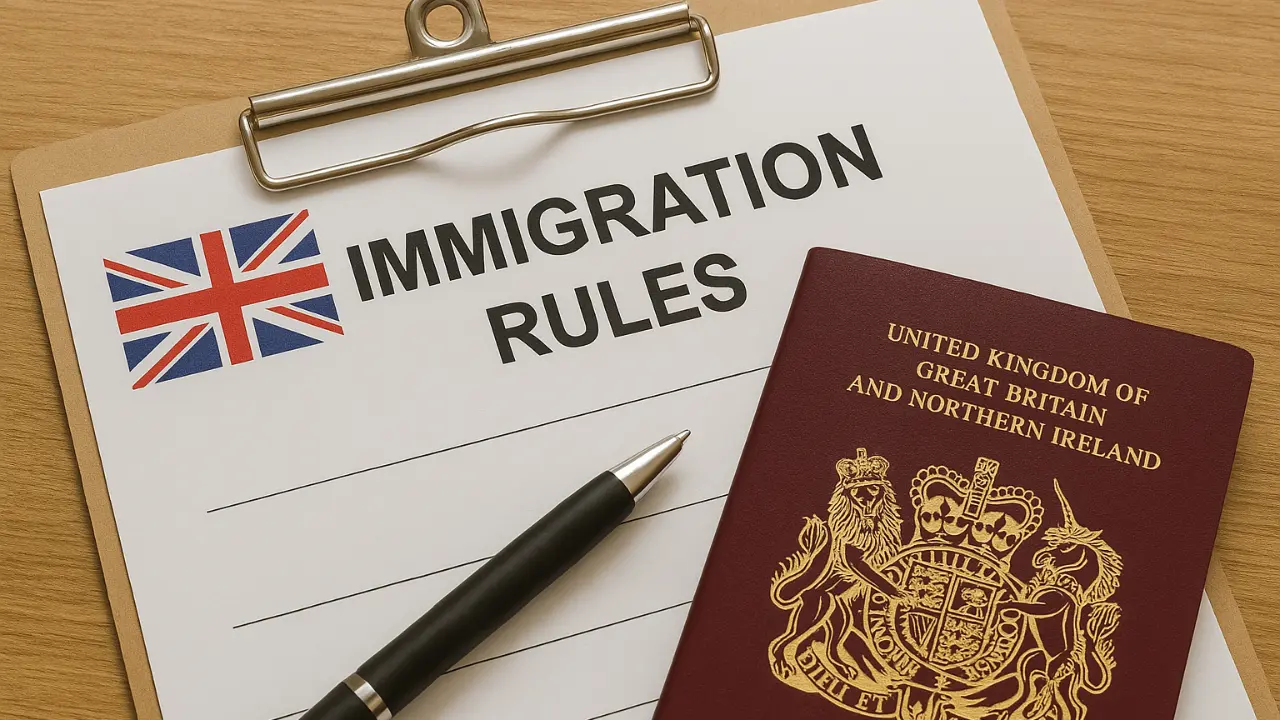
We are pleased to attach our latest minutes and newsletter. We do not publish a newsletter as such but the minutes double as one. They contain pieces about immigration, the death penalty and the slowly deteriorating state of rights in the UK. Towards the end you will find details of forthcoming activities if you were interested in making contact.


Latest posts:

Risks to our rights steadily increasing


Our monthly report on trends in the UK is worrying

May 2026

Government appeal against Palestine Action ban

Good Law Project warns that if the Home Secretary Shabana Mahmoud wins her appeal against the lifting of the ban on Palestine Action th the combination of the Online Safety Act 2023 and the Terrorism Act 2000 could be used to silence support for anti-genocide campaigners.

The problem lies in the very broadly drafted offences which even the police have found hard to apply. Online platforms might share this difficulty and fear heavy fines if they don’t remove references to action for Palestine. The Online Safety Act obliges platforms to remove “priority illegal content” from the internet in the UK. At the top of this list is “terrorism content” which includes posts that relate to section 12 of the Terrorism Act, such as “inviting support” for a terrorist organisation or “expressing an opinion or belief that is supportive of a proscribed organisation” while being “reckless as to whether a person to whom the expression is directed will be encouraged to support a proscribed organisation”. See also a previous post on this site pointing out the risks inherent in using this firm.

Palantir Data Privacy Concerns continue

The Good Law Project is supporting Democracy for Sale to raise a challenge about the information commissioner’s decision to keep secret documents sent to Wes Streeting Health Secretary and Health and Social Care Minister Karin Smyth that will reveal truths about the risks of Palantir’s data platform. The British Medical Association has expressed concern about handing sensitive health data to the company which has ties with the Israeli Military and ICE. See our previous post about the threats to our rights from this firm. Statements by the firm’s chief executive are illuminating.

Equality and Human Rights Commission

Following the Good Law challenge in the Supreme Court, the Equality and Human Rights Commission (EHRC) has been obliged by Education Secretary Bridget Phillipson to revise its guidance on the application of the Sex definition in order to provide ‘legally accurate, practical guidance’ and ensure ‘all service users are treated with dignity and respect’. Parliamentary approval will be sought in May. Recent testimonies from trans patients suggest that their health concerns are sidelined by some doctors.

Democratic decline

Amnesty International warns the UK is increasingly reflecting, rather than resisting, global trends towards weakening of democratic norms. The 2026 report can be accessed here and download the full report which is divided into countries.

In 2025 – 2026 the UK has:

– used counterterrorism powers to restrict peaceful protest

– overseen the mass arrest of peaceful protesters, with courts ruling aspects unlawful

– intensified hostile policies towards migrants and people seeking asylum

– increased surveillance and policing powers

– continued arms transfers to Israel despite clear risks of use in serious violations of international law

– cut international aid amid escalating global humanitarian need

– defended the use of national security vetoes in legacy Troubles cases, undermining truth, accountability and justice for victims and families

– pursued economic and social policies that risk pushing more people into poverty, weakening protections for economic and social rights.

As we have noted on several occasions before, successive governments have got themselves ensnared with various unpleasant regimes because of their desire to maintain arms exports. We continue to arm UAE despite their support for the rebels in Sudan and other destabilising actions in Libya and Yemen for example, and as noted, we continue to arm and support Israel despite the genocide in Gaza.


Minutes and Newsletter


February 2026

We attach the group’s minutes of its February meeting thanks to group member Lesley for the work in compiling them and for other members Fiona and Andrew for their contributions. We do not produce a newsletter so these minutes, although longer than normally the case with minutes, contain items of wider interest.

Human rights shot to the top of the agenda this week following the High Court’s decision concerning Palestine Action which has been another blow for the government.

Recent posts:

Review of 2025


… and things do not look much better for 2026

December 2025

We have published 192 posts so far this year on a wide variety of subjects concerned with human rights. A key feature of the year has been the continuation of our vigils. We have held over 109 since the current conflict started and although there is some kind of cessation of hostilities, peaceful reconciliation between Israel and the Palestinians seems a far away dream. Some food aid is getting in but Israel has seized almost all the cultivable land leaving those in Gaza hemmed into an even smaller part of their territory. We have commented on the poor reporting of events there and the unsatisfactory nature of so many interviews.

Arms sales

A feature of this conflict and other conflicts around the world is the role of the arms trade. It appears that this trade seems to determine British policy: truly the tail wagging the dog. The government frequently trots out that it has a ‘robust policy’ whilst granting licences – and in particular open licenses – to almost all who come. The effects on people at the receiving end of these weapons sales does not seem to worry the Foreign Office or government ministers. Recent government’s policies have focused on growth and if growth means selling arms to Israel and to the UAE so be it. There is considerable evidence that the latter are supplying the RSF in Sudan who are alleged to commit many atrocities.

At the height of the Yemen war we highlighted the role of British arms firms and their weapons sales to the Saudis. RAF personnel were involved just short of being labelled ‘mercenaries’.

Sport

Sport has featured in several of our posts and the ever increasing use by states with abysmal human rights records to use sport to burnish their images. Virtually all sports are involved, but especially football, boxing, motor sport, golf, tennis and cycling. The driver is money. China and the Gulf states are among those with almost unlimited resources to pour into sporting events with seemingly no difficulty in attracting sportsmen and women to compete in their countries with no moral qualms. They also invest in our football clubs again with no concerns about how tainted the money is.

It has become so part of the furniture now that it engenders little comment. Whereas some years ago a nation which executes significant numbers of its citizens – often after confessions extracted under torture – which imprisons or ‘disappears’ human rights defenders and journalists and treats its women as second class citizens denying them many rights, would raise eyebrows when seeking to sponsor or host a sporting event. Not today.

Refugees

And it is not just sport where issues of human rights have seemed to take a back seat. People entering this country by various means have generated a massive amount of political controversy here in the UK. It is probably true to say that immigration in one form or another is one of the dominant political forces at work. It is deciding elections. A number of politicians are using the ‘crisis’ to their political advantage (they hope). Egged on by sections of our media, they have created the impression that there is a crisis particularly around the numbers arriving in small boats across the Channel. Any concern for those in the boats and why they are risking their lives to get here does not seem to feature. The impression is sometimes created that if we could deport the migrants (however defined) our problems would be over. The connection between our arms sales and the instability of the countries they have fled from does not seem to enter their thinking.

The contribution by immigrants (again however defined) is scarcely recognised. That large sections of our economy (horticulture and the food industry for example), the health service, hospitality and transport, would cease to function without them seldom seems to enter the consciousness of our senior politicians. We have commented on the strange fact that many of our senior politicians, including Rishi Sunak, Suella Braverman, Priti Patel, Shabana Mahmood, Kwasi Kwarteng and Danny Kruger are all descended from recent immigrants but are among the most aggressive about deporting those coming after them. We can offer no explanation.

Rights at home

Which brings us to another theme concerning the government and its own attachment to UK human rights. It was once hoped that the arrival of Sir Keir Starmer – an ex human rights lawyer and past Director of Public Prosecutions – would see an improvement in the human rights climate. Sadly, it has not come to pass. Laws against protests introduced by the Conservatives to clamp down on protestors, have not been modified or repealed and have even been added to. A more humane policy towards immigrants and refugees has not happened. Arrests have continued and as this is being written, those arrested on pro-Palestine marches are close to death on hunger strike. His continuing support for Israel has been shaming. He has issued critical comments but they have not been backed up by action, cutting arms supplies for example. No believable explanation for the hundreds of RAF flights over Gaza has been forthcoming. His most disgraceful comment that ‘Israel was right to withhold power and water from Gaza’ was widely condemned.

This year we have introduced a new regular feature reviewing the human right situation in the UK itself. This is probably something we would never have contemplated doing say, twenty years ago but a combination of poor leadership, aggressive home secretaries and many MPs with little interest in protecting human rights, has led to this move. Both Danny Kruger (MP for East Wiltshire) and John Glen (MP for Salisbury) are listed on They Work For You as generally voting against human rights is another factor. Mr Glen, who is listed as a member of the well-funded lobby group Conservative Friends of Israel has never once visited the Saturday peace vigil nor mentioned it in his weekly column in the Salisbury Journal.

Ukraine, Sudan, China, Palestine …

The world situation does not seem to get any better. The situation in Ukraine is critical and not just for the Ukrainians. We have one member of the Security Council, Russia gratuitously attacking an independent nation while another member, the US seems indifferent to their plight. The warm greeting by President Trump of President Putin on the tarmac in Alaska must be one of the more grizzly images of the past year. European nations have become almost powerless, in part because of their collective failure to invest in defence (defense) but also because they have become kind of vassal states to the US.

We must not forget that human rights in Russia are poor. There is no opposition and a leader who was a threat to Putin, Navalny, was probably murdered in Siberia. Others have been arrested or murdered along with many journalists. Children have been abducted from Ukraine. Ukrainian prisoners have been tortured.

We could devote a whole page to China. A million Uyghurs are persecuted and are forced to work while their culture is systematically destroyed by the Communist Party. Some call it genocide. Tibet has had a similar treatment and its culture largely eliminated. They are believed to execute more of its citizens than all the rest of the world combined. Freedom has been snuffed out in Hong Kong. Chinese nationals are intimidated overseas.

The future

The future is unpromising. The ‘New World Order’ created after the war is well and truly dead. Powerful interests act at will. Despotic leaders act in their own interests not in the interests of ordinary people. Europe is too feeble to act. It looks as though things will continue as they are. There is no hint that the current conflicts will end equitably but based on the whims of a handful of profoundly flawed men.

A large number of MPs of all parties are members of the Friends of Israel group and many also receive money from them. How can they be expected to act honestly, with integrity and in the best interests of the country (to be clear, the UK whose residents voted them in not a foreign state) if they are members of a powerful and well funded lobby group? Arms companies continue to sell their wares with few controls so desperate is the government for growth. The BBC has been cowed into silence on important topics.

In June of last year, the Institute for Government, recognising the serious loss of trust in the government, published its 7 steps to restore trust. One was the publication of an independent ministerial code. Another was to ensure lobbying was built on a clear coherent and transparent system. It has not happened. There is no rigorous or proper system of controlling the ‘revolving door’ which is a passport for corruption by ministers, ex-civil servants and military people retiring into lucrative appointments with arms companies.

Hope

The weekly vigils and the many hundreds of protests around the country for an end to the killing and genocide in Gaza is a heartening sign. It shows a significant number of people who care about what is happening, care that is not reflected by the government nor by chunks of the media. Despite their numbers, reporting is thin with a media all too keen gleefully to report flag waving disturbances outside hotels or army camps. If hope is to be found it lies with ordinary people who simply say ‘this isn’t right, this is not what I believe in’. Rutger Bregman in his Reith Lectures (2025) argues just this: that small committed groups can make a difference. However, whether they can achieve this at the international level is debatable. We can cite climate which will be having harmful effects on more and more of the world’s population and where progress if anything is going backwards.

We shall continue to campaign and we always welcome new members to the team.


Best wishes for the New Year to our small band of readers!

Blog at WordPress.com.

Up ↑