Nobel Peace Prize winner Liu Xiaobo has liver cancer
June 2017
Liu Xiaobo who has liver cancer and was serving 11 years for ‘inciting subversion of state power’ which means any activity which seeks to undermine communist power. Liu was seeking reforms in China and improved democracy. He is now out of prison but essentially under arrest. Since his diagnosis, the Chinese did not want a Nobel Lauriat dying in prison, so released him to a hospital where he is expected to die. It is alleged the poor state of medical attention in prisons in China meant he did not get treatment earlier enough and this may have hastened his end.
China is accused of many failings to do with human rights. Activists and lawyers are targeted and frequently arrested. There has been a crackdown on lawyers. People with religious convictions are persecuted. The internet is heavily restricted and press freedom is also extremely limited. The country is a heavy user of the death penalty and executes more of its citizens than all the rest of the world put together. The precise number not known since it is a state secret.
The country is extremely sensitive to outside criticism and were furious when Liu was awarded the Peace Prize. Trade with Norway was curtailed which probably did not concern them too much since they are a wealthy country. The Beijing government summoned the Norwegian ambassador in protest. It called Mr Liu a “criminal”, saying the award violated Nobel principles and could damage relations with Norway. The Norwegian Nobel committee said Mr Liu was “the foremost symbol” of the struggle for human rights in China. It took six years before relations were normalised between the two countries according to the New York Times.
In some respects China is a powder keg. As long as prosperity increases then many people are happy to go about their lives and not bother too much about issues of freedom and human rights. They will not have access to sites or information which discuss or promote such issues (such as Amnesty International) and so the ruling communists need not worry too much about a restive population. Step by step they are securing hegemony over Hong Kong. Some ‘below the line’ comments in the press stories suggest that the Confucian tradition also plays a part and that, unlike Western nations, this tradition of loyalty to the state is more a feature of political life.
Another factor is that it is said by some observers that the Chinese rather resent being subjected to Western moral codes, in which they had no part in formulating, being applied to them. This does have some force except that they were a member of the Security Council when the Universal Declaration was signed in 1948. It does overlook the fact that the Declaration caused the Western nations some discomfort as well: the British and French with their treatment of the colonial peoples and the USA with its treatment of black people.
If China wishes to become a leading world nation then it is going to have to accept the norms the rest of the world tries to live by. The treatment of Liu Xiaobo (and many, many others) has been disgraceful.
And what of our Foreign and Colonial Office? It says:
Minister for Asia and the Pacific Mark Field said:
I am pleased that the 24th Round of the UK-China Human Rights Dialogue has taken place. Senior officials discussed the full range of our human rights concerns, including freedom of expression, freedom of religion or belief, access to justice and ethnic minorities’ rights. They also discussed areas where the UK and China could collaborate more closely, including modern slavery and women’s rights.
The UK strongly believes that respect for human rights is vital for growth and stability, and that these regular talks are an important part of our relationship with China. The dialogue has, once again, been held in a constructive and open manner. I am grateful for the valuable contribution made by civil society organisations before and during this exchange. [accessed 29 June]
Post Brexit the emphasis is going to be on trade and the UK government is unlikely to raise difficult issues with the Chines government or risk being treated like Norway.
Sources: Amnesty International, New York Times, BBC, Guardian.
Follow us on Twitter and Facebook, salisburyai. If you live in the Salisbury area and are interested in promoting human rights please get in touch. The best thing is to come along to one of our events and make yourself known.
Taner Kuliç who is the chair of Amnesty International in Turkey, has been detained by the Turkish authorities having been wrongly accused of being a member of a terrorist group. This is further evidence of just how shockingly widespread the arbitrary nature of post crackdown Turkey has become.
The crackdown since the failed government coup on 15 July 2016 has been astonishingly widespread. The numbers reported by CNN as of April 2017 are as follows:
Detentions: 113,260
Arrests: 47,115
Journalists dismissed: 2,708
Media outlets shut down: 179
We expect these numbers to have risen even higher since.
Please follow the link and send a message to the Turkish government. Thank you.
If you live in the Salisbury area we would welcome new members to our group. The simplest thing is to come to one of our events and details of what we are doing can be found at the end of our minutes or by keeping an eye on Twitter. You can also enter ‘Salisbury amnesty’ into a search engine.
This is the death penalty update report for mid March to mid April thanks to group member Lesley for compiling it. Some good news – even in China – where the statistics on the use of the penalty are a state secret, tempered by heavy use in Pakistan, Saudi Arabia, Vietnam and Iran.
Group minutes for the March meeting are now available thanks to group member Lesley for compiling them. We covered a lot of ground and there are a number of events including a talk by Jihyun Park this Thursday at the Five Rivers Leisure Centre, Hulse Road, Salisbury at 7:30.
Letter in the Observer (19 February) from a group of lawyers stressing the importance of ECHR
Theresa May has repeatedly stated her feelings that Britain would be better served by leaving the European convention on human rights than it would leaving the European Union. As we enter Brexit negotiations, there is now every possibility that both these scenarios could easily come to pass. The ECHR has been the bedrock of peace in Europe since the Second World War and was instrumental in the remarkable growth of democracy in Eastern Europe after the fall of the Berlin Wall. It is no coincidence that the one state that is not part of the convention, Belarus, is known as “Europe’s last dictatorship”. The withdrawal of Britain from the EU and the ECHR in succession could embolden populist leaders in countries such as Hungary and Poland to abandon domestic and international commitments to human rights.
We face the threat of a human rights crisis with the UK trading away protections against torture for grubby trade deals with foreign tyrants. We are calling for the EU to make Britain’s membership of the ECHR a legally binding requirement for any future free trade deal with the UK. The rule of law and human rights are non-negotiable when new countries join the EU; they should be non-negotiable when countries leave and desire a free trade deal.
As parliament scrutinises the bill on withdrawing from the EU and further legislation on Brexit, MPs, peers and the EU itself must make sure that Britain’s membership of the ECHR is a requirement of any future trade deal with the EU.
Signed Sashy Nathan, Baroness Kennedy QC, Lord Lester QC, Sir Geoffrey Bindman QC, Alex Bailin QC, Alex Grigg, Ali Naseem Bajwa QC, Alistair Polson, Amos Waldman, Anya Lewis, Ben Cooper
Caoilfhionn Gallagher QC, Celia Graves, David Jones, Dr Leslie Thomas QC, Grainne Mellon, Top of Form
Greg Ó Ceallaigh, Harriet Johnson, Helen Foot, James Wood, Jelia Sane, John Halford
Jules Carey, Keir Monteith, Louise Hooper, Malcolm Hawkes, Mark Stephens CBE, Navita Atreya, Nerida Harford-Bell, Paramjit Ahluwalia, Patrick O’Connor QC, Phil Haywood
Prof. Fergal Davis, Prof. Francesca Klug OBE, Professor Steve Peers, Ravi Naik, Sadat Sayeed, Sally Ireland, Sarah Forster, Sean Horstead, Sir Paul Jenkins KCB QC, Stephen Lue
We should add that our MP Mr John Glen, is in favour of this policy.
There are many reasons to be pessimistic about human rights in the year ahead. The election of Theresa May and Donald Trump are both bad omens and the rise in importance of China and Russia is also a bad sign. On almost every front, the post-war ideal of steady improvement in both democracy and human rights around the world now seems under assault. In the UK, the majority of the media keep up a relentless attack on human rights painting them as a threat to justice and social order. It is hard to believe that we are now debating the merits or otherwise of torture following President Trump’s remarks this week. How have we come to this?
Post war
Graphic: Linkedin
Perhaps the most important factor, and one difficult to discern, is the recent decline in optimism which was visible following WWII. That war and the terrible events which took place with the murder of Jews, Gypsies and homosexuals, led the world to say ‘never again’ and led to the Universal Convention on Human Rights. This led in time to the European Convention on Human Rights a convention strongly driven by Winston Churchill. There was a feeling in the years that followed, with such conventions and other subsequent treaties, that the world was on an improving path and the horrors of the Second World War would not be repeated. Improvements included a steady reduction in the number of countries using the death penalty. The cold war eventually came to an end. On the other hand, the use of torture around the world is still widespread with 141 countries still practising it according to Amnesty and this is specifically banned by the Universal Convention.
It was not of course plain sailing and we now realise that Chairman Mao murdered many millions of Chinese and there have been other monsters such a Pol Pot. Nevertheless, there was this feeling that things were steadily improving and the UN provided a forum for nations to settle disputes short of going to war. There was an assumption of western values of fairness, justice, free speech and the rule of law were becoming the norm.
Following Syria it is clear that this is no longer the case. Human rights in China are poor in the extreme. Thousands are executed and torture is routine. There is no free press and it is a one party state. Things are also deteriorating in Russia under President Putin. Russia’s ‘victory’ in Syria has changed the dynamic.
UK
Last year, we celebrated the 800 years since the signing* of Magna Carta. This was an attempt by the barons of the day to wrest some powers from the king. It would be unwise to summarise British history in a paragraph, but an element of our history has been a steady attempt – sometimes peaceful, sometimes not – to secure rights for ordinary people against whoever was the elite or in power at the time. It might be landowners or it might be factory owners for example. They had the wealth and the power and were extremely reluctant to release any of it to the benefit of those at the bottom of the social order. The lives of farm workers and those in factories was grim indeed and attempts to form unions was fiercely resisted. The legal system did little to ameliorate the plight of the powerless in society.
The modern day Human Rights Act incorporated the ECHR into British law and meant that every citizen could defend his or her rights in the courts and that public organisations had to treat everyone with fairness, dignity and respect.
But we would argue that the fundamental thing the act did was to spell out what those rights are and it represented a major shift from rights being grudgingly given to the people to them being theirs as of right. As Gearty expresses it in his book On Fantasy Island;
The Human Rights Act has a enables a range of individuals to secure legal remedies that in pre-act days would never have been achieved, perhaps even contemplated. […] it has been particularly valuable for those whose grip on society is fragile, whose hold on their lives is precarious, whose disadvantage has robbed them of means of adequate engagement with adversity. (Conor Gearty, OUP, 2016, p131)
[…] it is clear that the human rights act is a documents that is profoundly subversive of the partisan national interest . To put it mildly some people – often quite powerful people – do not like this. (op cit, p8)
It is this shift of power that is so deeply resented and ‘some people,’ which includes some politicians, have grown to dislike the loss of power and assumed patronage that they had become used to. The virtual ending of legal aid in the UK was a symptom of this desire to remove the ability of ordinary people to achieve redress or argue for their rights.
Picture: Left Foot Forward
Others of the ‘some people’ include chunks of the media. The HRA created a right of privacy and this represented a huge problem for the ‘kiss and tell’ end of the media world. These stories depended on substantial infringements of privacy, by phone hacking, not to expose corruption, but to find intimate details of politicians, celebrities and people in the public eye. Owners of newspapers – all of whom live overseas – were exempt from this scrutiny and intrusion of course.
The result of this assault on their business models is of great concern to them and this is most probably the main reason why they have produced relentless series of negative stories about Europe and the HRA. Rupert Murdoch was famously quoted in the Evening Standard as saying:
I [Stephen Hilton] once asked Rupert Murdoch why he was so opposed to the European Union. ‘That’s easy,’ he replied. ‘When I go into Downing Street they do what I say; when I go to Brussels they take no notice.
It must also be why there are few political champions for the Act or the ECHR. Any politician speaking up for it risks at best being ignored or at worst, having his or her private life raked over for something with which to denigrate them. There is instead an almost unseemly rush to join in the claims to ‘bring sovereignty back’ or to take control of our laws.
Brexit
Graphic: Huffington Post
A real worry has to be Brexit. The plan is to seek trade deals around the world sufficient to counter the effects of losing our access to the European market. This is likely to be tough as we will no doubt soon learn from the USA. To achieve these trade deals it is likely that our insistence on human rights will be weakened or even jettisoned altogether. As we have noted in many previous blogs concerning Saudi and Yemen, our principal interest there has been in selling them weapons. Despite considerable and irrefutable evidence of infringements of international humanitarian treaties, selling weapons is the primary aim of policy.
Until very recently, ministers have not needed to worry too much about the atrocities in Yemen. Most attention was on Syria. We did not even know British personnel were involved until it was blurted out by a Saudi prince. In the last few months however, there have been two debates in the Commons and press interest is now at a slightly higher level. The two debates revealed ministers more interested in promoting arms sales because of the economy and the jobs created, rather than in promoting human rights.
Public reaction
Perhaps the greatest worry of all however is the attitude of the public at large. How concerned are they about human rights issues? There seems little evidence that they are. The Investigatory Powers Bill – referred to as the ‘Snooper’s Charter’ – passed easily through parliament with little public outcry. Kate Allen, director of Amnesty said:
The UK is going in the wrong direction on rights, protections and fairness. Public safety is paramount but not at the cost of civil liberties. [Said in connection to the Snooper’s Charter]
It is hardly surprising when the major part of our media has carried out a sustained campaign against all things European leading, some might argue, to the decision to leave it. It is truly ironic that for many years the Daily Mail has carried out a campaign against what it calls ‘Frankenstein Foods’. The introduction of genetically modified foods has been seriously restricted by the European Union. The trade deal with USA is likely to involve the import of GM foods of varying kinds as ministers will be unwilling or unable to resist the pressure if we want to continue to export to them.
The general tone of press coverage has been that we do not need the act. It’s only of benefit to terrorists and assorted criminals who escape justice because of it (they argue). The benefits of the act to ordinary people are rarely mentioned and often one can scour a story for any mention it where it was used.
Putting all these elements together, the sense that the steady progress of western values has come to an end, a hostile media keen to bad mouth human rights and to denigrate the Human Rights Act, the Conservative government’s prolonged threat to abolish it, the decision to leave the EU needing a concerted effort to secure trade deals at any cost, and many of the public who are not concerned about such matters, means that the prospect for human rights does not look promising.
Over a thousand refugees and migrants are being exposed to disease and inhuman living conditions by the Serbian authorities who are failing to provide accommodation, food and healthcare to them. They are being forced to endure the extreme cold winter temperatures by lighting fires and squatting in derelict warehouses in the capital.
If you can find time to write that would be appreciated.
A Salisbury based firm, Gamma TSE, has been accused of supplying spyware to enable Bahraini activists to be arrested
UPDATE 15 March 17
Extract from a recent University of Toronto report:
[…] Far from using this spyware solely to track what might be considered legitimate targets, these countries and their shadowy agencies have repeatedly used them to get inside the computers of human rights activists, journalists, opposition politicians, and even health advocates supporting a soda tax in Mexico. Some of the victims of these campaigns have found themselves arrested and tortured. Leaked emails from certain companies reveal that, despite public assurances by executives, the vendors seem cavalier about these type of abuses, have few internal checks in place to prevent them, and, indeed, knowingly court the clandestine agencies responsible for such abuses. Despite these alarming incidents, however, the dynamics of and participants in the market at large remain opaque.
While arguments rage in the USA concerning the alleged interference by Russia of the
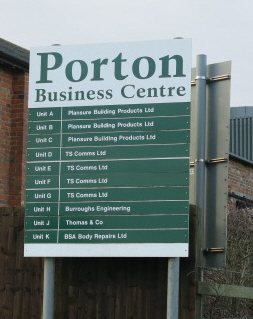
Porton Business Centre
presidential elections, a secretive Salisbury based firm, Gamma TSE, has been accused by the Organisation for Economic Cooperation and Development of supplying software called FinFisher or FinSpy to the authorities in Bahrain and elsewhere. This software enables intelligence agencies to insert Trojan software into computers and mobile phones. This in turn enables people critical of the regime to be tracked and if necessary arrested by the security services. The University of Toronto’s Citizen Lab is documenting the widespread use of this spying software.
Our involvement with repressive states – especially those in the Gulf – is well-known and Theresa May recently visited Bahrain to promote business interests in the kingdom. As we have noted many times before, there seems little interest in the consequences of our arms and security companies activities on the ordinary people who live in those countries, the death and destruction in Yemen being particularly awful.
Part of the units occupied by Gamma in Porton
Gamma is again in the news today (9 January 2017, p13) in a Times article entitled ‘No 10 linked to spyware in human rights row’ which reveals that despite the criticism by the OECD, they have been invited to the Home Office sponsored International Security and Policing exhibition in London. Amnesty reports show that the human rights situation in Bahrain is very poor with reports of torture and other forms of abuse:
[it] details dozens of cases of detainees being beaten, deprived of sleep and adequate food, burned with cigarettes, sexually assaulted, subjected to electric shocks and burned with an iron. One was raped by having a plastic pipe inserted into his anus.
It said the report showed torture, arbitrary detentions and excessive use of force against peaceful activists and government critics remained widespread in Bahrain.
The OECD report was not conclusive about Gamma as it was a ‘reluctant participant in the proceedings refusing to productively engage in a September 2013 mediation and employed stalling efforts.’
Privacy International say:
Gamma has proven itself to be and irresponsible corporate actor that is indifferent to the human rights impacts of its activities.
The government [of Bahrain] continued to curtail freedoms of expression, association and assembly and cracked down further on online and other dissent. Opposition leaders remained imprisoned; some were prisoners of conscience. Torture and other ill-treatment remained common. Scores were sentenced to long prison terms after unfair trials. Authorities stripped at least 208 people of their Bahraini nationality. Eight people were sentenced to death; there were no executions.
A firm helping regimes with a record of mistreating its citizens and regularly using torture, is based in the village of Porton, near Salisbury, Wiltshire.
Prime minister’s trip to Bahrain gives a hint to what will happen to human rights after Brexit
Picture: Express
The prime minister, Theresa May, is on an official to Bahrain amid controversy about the poor state of human rights in the kingdom. It is really quite difficult to grasp quite what the Prime Minister means when she says the ‘UK must not turn our back on the human rights abuses of foreign countries’ as she prepares to sign various trade deals which does precisely that. There is a growing hint of riddle like statements from her including the meaningless ‘Brexit means Brexit’.
There now seems to be a desperate urge to secure trade deals ahead of our departure from the EU and the Gulf states are fertile ground. She is quoted in the Guardian (5 December 2016)
There will be some people in the UK who say we shouldn’t seek stronger trade and security ties with these countries because of their record on human rights. But we don’t uphold our values and human rights by turning our back on this issue. We achieve far more by stepping up, engaging with these countries and working with them.
So the argument is that Bahrain has a questionable human rights record and that by working with them, and doing business, we can exert some kind of influence to encourage them to stop torturing or otherwise mistreating their people. Since we have been trading there for some time, we would expect that the country would be slowly improving as a result of our influence. The problem is that it isn’t. As Human Rights Watch and Amnesty have said:
On December 4, Human Rights Watch and others wrote to Prime Minister May to complain about the British government’s ‘abject failure to exert any positive influence’ in Bahrain. We didn’t call on the UK to end trade or security ties, but rather to use the UK’s influence to help put a stop to an orchestrated attack on rights that has badly undermined any prospect of the reform that the UK claims to support.
What exactly “working with” Bahrain to “encourage and support” reform amounts to, remains to be seen. But one thing is clear – human rights will not be at the center of the UK’s relationship with Bahrain.
This is especially worrying in the context of the post Brexit world. The UK will be in a tough position trying to develop trade outside the EU. We will not be in a position to exert any kind of influence on countries like Bahrain if we want to continue to sell them weapons. There will be lip service of course and meaningless phrases from the prime minister and other ministers to assure us that persuasion has been applied to improve human rights. The reality is we will have to accept what’s on offer and be thankful for it. In the context of the Gulf states for example, we export more to them than to China, a situation unlikely to change anytime soon.
Ministers cannot quite bring themselves to say that in reality, there is little they can do and often little they want to do. We must remember also the ‘revolving door’ through which ministers, senior civil servants and top military brass, pass to secure lucrative directorships with the very companies doing the deals in countries like Bahrain. There is little incentive to upset the apple cart.
Our first video film is here which concerns the dire human rights situation in North Korea. A first attempt at a longer video. Our thanks to those who took part which included members of the Romsey and Mid Glos groups of Amnesty and to Fiona Bruce MP who agreed to be interviewed. We will be publishing other versions of this video soon.