Saudi blackmails UN


Saudi Arabia has successful blackmailed the UN to remove itself from a blacklist
Source: youthhealthmag.com

Human rights groups around the world have condemned the decision by the U.N. to remove Saudi Arabia from a blacklist of countries which are accused of abusing children’s rights.  This arises from their bombing activities in the Yemen conflict but also the general treatment of children in Saudi.  In Yemen, 1,953 children were killed and it is estimated that 60% of these deaths are as a result of Saudi bombing.  Britain is a major supplier of weapons to the regime and British service personnel are advising the Saudis.

The kingdom, who routinely violates their own citizens’ human rights on a daily basis, threw a fit when the UN published its report and threatened to withhold funding from the organisation.

Foreign Policy reported that:

senior Saudi diplomats told top U.N. officials Riyadh would use its influence to convince other Arab governments and the Organization of Islamic Cooperation to sever ties with the United Nations.

On Monday, Ban Ki-moon said

The Saudi coalition would be removed from the list, pending a review. Saudi U.N. Ambassador Abdallah Al-Mouallimi insisted the removal was “irreversible and unconditional.”

Human rights groups, including Amnesty, have rightfully condemned and blasted the UN for their reversal:

It appears that political power and diplomatic clout have been allowed to trump the U.N.’s duty to expose those responsible for the killing and maiming of more than 1,000 of Yemen’s children,

Sajjad Mohammad Sajid, Oxfam’s country director in Yemen, said in a statement:

The decision to retract its finding is a moral failure and goes against everything the U.N. is meant to stand for.

Philippe Bolopion, Human Rights Watch deputy director for global advocacy, said that the office “has hit a new low by capitulating to Saudi Arabia’s brazen pressure” and “Yemen’s children deserve better.”

Amnesty International’s UN office claimed:

…if the U.N. doesn’t start standing up for human rights and its own principles then they will become part of the problem rather than the solution.

Saudi Arabia will not be the first country to browbeat the UN – at one time or another all countries have done it especially where embarrassing national interest is a stake.  This does seem to have been an especially egregious example however as the Saudi state’s crimes against children, and others, is well documented.  Combined with the bizarre election of the Saudi’s onto the Human Rights Council of the UN – supported shamefully by the UK Government – it begins to make a mockery of this international body.

Follow us on Twitter and Facebook

Brexit and human rights


Human rights will be diminished if we leave Europe

Human rights have not directly figured much in the vexed debate about whether to remain or leave the European Union.  The arguments seem to have settled on immigration, which has become a toxic topic, with the Brexiters claiming that a leave vote will enable us to regain control of our borders.  The Conservative government has promised to repeal the Human Rights Act but progress has been slow so far.  Reporting on the many issues has been poor with the main focus on the scrapping between the Tory party factions rather than on a measured debate.

The crucial question on how our rights will be affected after a vote to leave – if that should happen on Friday – has received little coverage.  Partly this is because of the complexity of the subject and also detailed discussions of legal judgements does not make for racy copy.  As ever, Rights Info has done an excellent job of discussing the issues with a link through to the Independent newspaper (now only online) which has also done a detailed analysis.

Despite its faults, the European Convention, which in turn led to the Human Rights Act, has been of considerable benefit to ordinary people.  For many this will come as a surprise and for readers of the right wing press in the UK, a statement at variance to the facts as they know them.  And this has been a large part of the problem: a deliberate and sustained attack on the act which has included misreporting, non-reporting and the running of scare stories many of which have no foundation in fact.  For readers of the Daily Mail in particular but also the Sun, the Daily Telegraph and the Daily Express, they are treated to lurid stories of terrorists going free, criminals living the high-life in prison and murderers demanding pornography as their ‘human right’ (they didn’t).

Why the right wing media should be so hostile to the act (as opposed to airing proper criticism of it) is discussed by Francesca Klug in her book A Magna Carta for all Humanity (Routledge, 2015).

As the late, great former Lord Chief Justice Lord Bingham put it: there is ‘inherent in the whole of the ECHR … a search for balance between the rights of the individual and the rights of the wider society.’  For the press to mention this inherent approach would not only spoil a good story, it could draw attention to an inconvenient truth: that Article 10 ECHR, the right to free expression, explicitly states that free speech comes with ‘duties and responsibilities’.  This is not a very popular statement with many journalists.  But, I suppose – with notable exceptions – the press is hardly alone in thinking that responsibilities apply to everyone but themselves.  (p265)

She goes on to explain that there was little legal remedy against press intrusion before the act was passed.  Common law provided no real protection.  An example was Gordon Kaye, the star of the TV series Allo, Allo who was recovering in hospital after a car accident.  Two Sunday Sport journalists entered his hospital room and interviewed and photographed him.  In view of his medical state it is unlikely he knew what was happening.  Under existing English law he had no redress.

Brexiters like to portray English law as some kind of noble construct which has been diminished by Europe and that by leaving, we will be able to get rid of all this interference by ‘unelected European judges’ and get back to the way we were.  Europe is presented in purely negative terms and acting to diminish our rights.  British law is indeed a fine system in many respects, but without the HRA we would never have had the investigation into the activities of the press and phone hacking; no Leveson enquiry and the Murdochs (father and son) being asked to come before a select committee.

The benefits of the act to ordinary people in their struggles for justice against the police or public authorities are seldom mentioned.  The use by the media themselves to defend their sources or to prevent unjust interference by the police or security services is likewise rarely mentioned.  The rights ordinary people enjoy have almost in every case been achieved after a struggle and the current government is keen to erode these rights still further.  Access to the courts and the availability of legal aid has been seriously curtailed; further legislation to diminish the – already limited – rights of trades unions is planned, and the Snooper’s Charter is well on its way to becoming law.

The idea therefore that we will be better protected if we leave is not supported by the evidence.  If we leave Europe and the process begins to abolish the Human Rights Act (which our MP, Mr John Glen is keen to do) and other treaties, it will only result in diminished rights for the ordinary people of this country.


Follow us on Facebook and Twitter


F1 in Azerbaijan


F1 to take place in Azerbaijan this weekend where human rights are seriously restricted
Baku F1 circuit.  Picture: racerviews.com

It’s called ‘sportswash’ and it is the present day attempt by tyrannical regimes to get themselves some positive publicity by hosting a sporting event, in this case, motor racing.  And they do not seem to have any difficulty in persuading sponsors, drivers and others involved to come to their country and lend support to the host however poorly they behave.

Bernie Ecclestone, when questioned about the dismal human rights record in Azerbaijan said:

The moment someone tells me that human rights are, then we can have a look at it, and see when and where it applies.  (Source – Daily Mail)

One could mention the UN Declaration or the European Convention on Human Rights as a starting point but one gets the impression there wouldn’t be much interest.

But Kerry Moscogiuri, director of campaigns at Amnesty International UK, said:

The arrival of Formula One in Baku must not steer attention away from the Azerbaijani authorities’ human rights crackdown.

Behind the glitz the authorities are locking up their critics, have shut down NGOs and arrested or harassed their leaders.  The recent release of some of those jailed on trumped-up charges should not fool anyone into thinking that the wind in Baku is blowing in a different direction.

Azerbaijan has courted big international sports events to improve its image abroad and the Grand Prix is no different.  While the world’s fastest drivers take to the streets of Baku in this spectacle of speed, there are many who will not be able to enjoy the show.

F1 is in pole position to influence positive change in Azerbaijan.  We would like to see them publicly urge President Aliyev to end this crackdown and free all prisoners of conscience.

Rebecca Vincent of Sport for Rights commented:

Bernie Ecclestone’s attitude to human rights is an embarrassment for Formula One.  The Sport For Rights coalition has repeatedly raised the cases of political prisoners in Azerbaijan with those in the F1 world, without anything resembling a sufficient response. The sport and its sponsors should be ashamed to allow themselves to be used as a propaganda tool for repressive governments such as President Aliyev’s.

They also claim that media outlets critical of Aliyev’s government have been harassed and intimidated and subsequently forced to close, while four journalists have also died in custody since 2005, according to Sport for Rights.

It all seems a long way from the Greek idea which informed their philosophy behind the idea of athletics and sporting prowess.  This philosophy was that the success of a democratic government depended on the moral character of the citizenry and sport was part of that philosophy.  This was a large part of the motivation for the combined athletic/moral training.  Now that sport is a business it only seems to matter who can pay the most.  Sport is now part of the apparatus of repression rather that something which uplifts the soul.  Thus any regime which oppresses its citizens and ignores human rights can host a football tournament, motor racing event or some other sporting attraction at will.  The people who take part in these events seem unconcerned at the misery which surrounds them and they are guaranteed uncritical coverage of their exploits in the media.


Meeting


Monthly Meeting

The group  meets this Thursday 9 June at 7.30 at 4, Victoria Road as usual.  The agenda is below:

1             Apologies

2             Minutes of last meeting

3             Treasurer’s report

4             Update on Campaigns

  • Death Penalty  (inc World Day v DP 10/10)
  • North Korea (inc video)

5             Social Media

6             Market Stall  (Saturday)

7             Monthly Action

8             Arts Centre Film (15/12)

9             School Citizenship day (October)

10           Other forthcoming events (inc possible venue for coffee morning, barbecue)

11            AOB


Follow us on Twitter and Facebook


The Maldives


Running with the hare, hunting with the hounds

The Campaign Against the Arms Trade CAAT, has recently shared with the Observer some research it has done into the record level of arms sales to countries with dubious human rights records (Britain sells record £3bn of weapons in a year to regimes that violate human rights, 29 May 2016).  We have over recent months posted several blogs concerning these arms sales to countries such as Saudi Arabia and also the involvement of British Service personnel in the bombing of civilians in Yemen.

We have also highlighted the government’s steady watering down of its human rights policies to enable more arms sales to take place.  The CAAT’s statistics show that more than £3bn of British-made weaponry was licensed for export to 21 of the Foreign Office’s 30 ‘human rights priority countries’ that is countries where the worst of the human rights violations take place.

Countries such as Saudi and Bahrain are familiar to us but less attention has been paid to the Maldives which does have a Salisbury connection.  The first elected leader of the Maldives Mohamed Nasheen (pictured) – who went to school in the city – has been sentenced to 13 years in prison allegedly for terrorist offences.  Amnesty has said the sentence was ‘politically motivated’.  It released a report in February which said that the government had been:

effectively undermining human rights protection by failing to strengthen the independent institutions of the state.

A local NGO, Transparency Maldives, issued a statement expressing concern about ‘irregularities’ in the legal process.

The MP for Salisbury Mr John Glen has also been busy making speeches, writing in the Salisbury Journal and on his blog about the situation there.  He says that Nasheed’s sentence was ‘illegal’ (Time to promote freedom in the Maldives, 17 May 2016).  He goes on to say:

Last year, Nasheed was put on trial on politically-motivated and completely false charges of “terrorism”, found guilty and sentenced for 13 years.  In the course of his trial Nasheed was prohibited from presenting any evidence or calling witnesses, with the court pre-emptively concluding that no testimony could refute the evidence submitted by the prosecution.

Another 1,700 people face criminal charges for peaceful political protest or speech, and journalists have been assaulted, arrested or disappeared.  Attacks on the Maldives’ independent press have intensified in recent weeks to the extent that the Maldives’ oldest newspaper, Haveeru, has been prohibited by court order from publishing its daily print edition.

He concludes his blog by arguing that pressure should be applied to the Maldivian government:

Pressure must be increasingly and continually applied to compel the Maldives Government to release its political prisoners and allow freedom of the press. I hope that CMAG [Commonwealth Ministerial Action Group] will be able to greatly improve the situation but if not we should not be afraid to countenance targeted sanctions, such as travel bans and asset freezes, on the leadership of the Maldivian Government.

All this is commendable and it is good to see an MP arguing forcefully for human rights in a place such as the Maldives.  The problem however is the arms sales.  As the Observer article makes clear, quoting Andrew Smith of CAAT ‘These arms sales are going to countries that even the Foreign Office accepts are run by some of the most brutal and repressive regimes in the world.’

So while we may praise Mr Glen for raising this matter in Parliament and in the Journal and on his blog, the fact remains that the department granting these licenses is the Department for Business Innovation and Skills in which Mr Glen is the PPS to the Minister.  The Ministry simply says that the department

The Government takes its arms export responsibilities very seriously and operates one of the most robust arms export controls regimes in the world.

Some may argue that Mr Glen’s position is inconsistent:  making speeches about human rights violations in the Maldives while working for a department which is busy allowing the sale of arms to them.  Others may choose to use a harsher word.


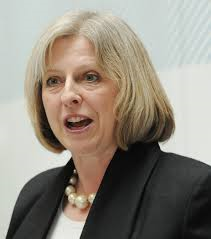
“Leave the European Convention” Home Secretary


Teresa May, Home Secretary

Theresa May, the Home Secretary said in a speech today that the UK should leave the European Convention on Human Rights.   We have been waiting for some time now for this announcement – or something like it – and it was expected to be made by the Justice Secretary.

Rachel Logan, Amnesty’s legal programme director, said:

Mrs May’s proposal to tear away from the European Convention on Human Rights would strike at the very architecture of international protections, and betray the British people who built the convention at the end of the Second World War.

The Convention has done so much for the rights of the free press, gay people, women, people with disabilities and other ordinary people here and across Europe.

Some see this as part of Mrs May’s pitch to become prime minister if and when David Cameron quits the scene.  There is considerable media pressure to quit the convention often based on misleading information.  We shall have to see how this develops and we still await the Bill of Rights long promised but slow to appear.

As one of the countries which promoted the convention after the war it would be a tragedy if we left it.  As the Amnesty spokeswoman says it has done so much to promote rights not only in this country but elsewhere in Europe.  It is a surprise to many people when told what a beneficial effect it has had in countries such as Russia.

A spokesman from Liberty called the speech ‘desperate’.

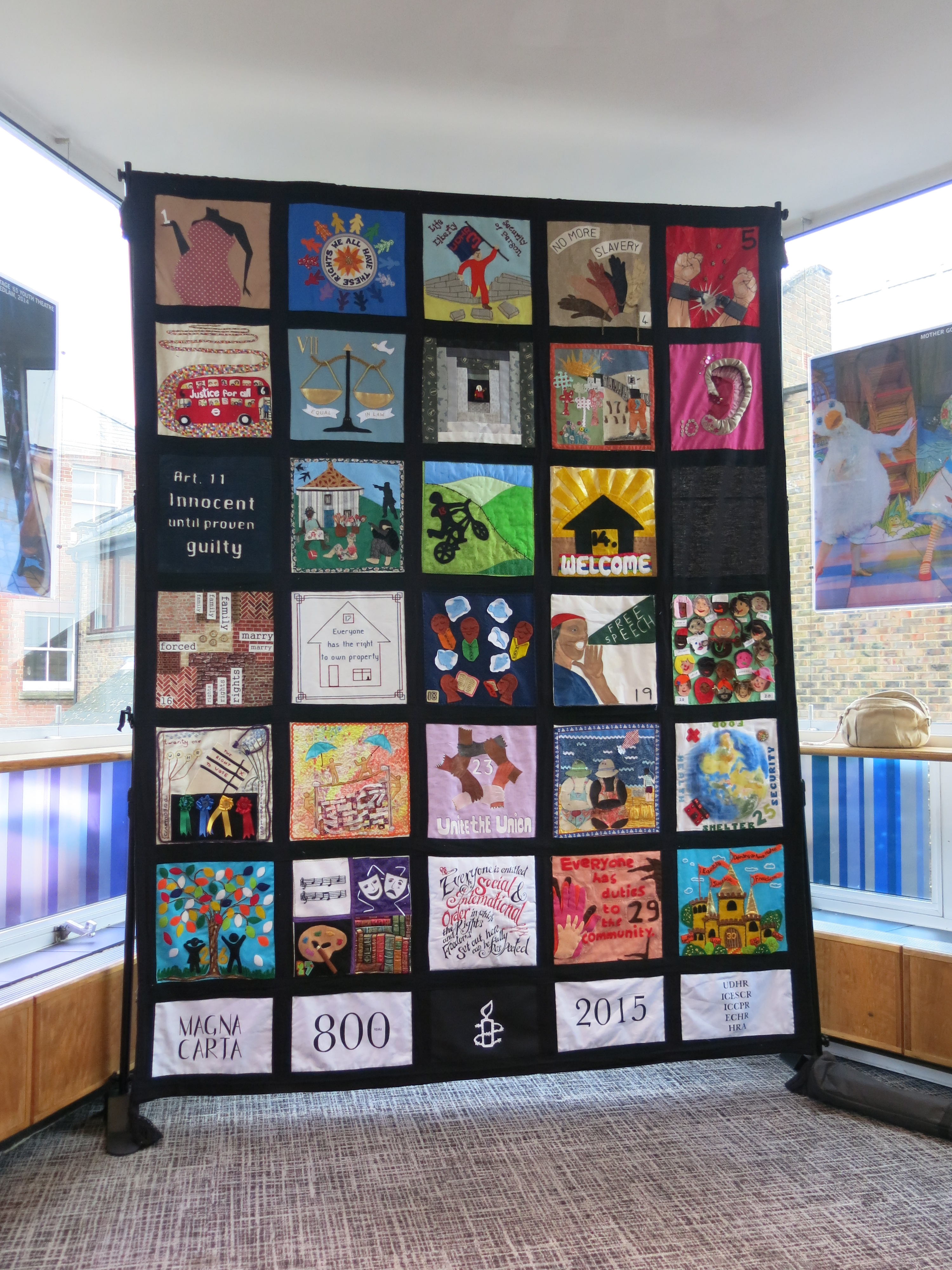
Tapestry in the Playhouse

Illustrated left is the tapestry made by Amnesty groups in the south region currently on display in the Cathedral Chapter House, which shows the clauses of the Un Convention on Human Rights on which the ECHR was based.


Follow us on Twitter and Facebook

Unpublished letter


Text of letter sent to Salisbury Journal

The following letter was sent to the Journal in Salisbury but regrettably for space or other reasons it was not published (14th April).  We do not know at present what the current situation is with the promised bill to abolish the Human rights Act and replace it with a British Bill of Rights (or whatever it is to be called).  It is a manifesto promise and a draft was to be published in the Autumn but has not yet appeared.  It is possible that the arrival of Michael Gove into the Justice Dept. had something to do with it.

Now that we are in full swing with the debate about leaving the European Union, it is possible that this has been shelved for the moment.  Mr Gove is a leading proponent for the Brexit camp who – if current polls are to be believed – are doing well at the moment.  The calculation may therefore be that if they win then the scene is set to dump the HRA as well.

On the other hand, there will be a heavy workload in managing our exit and carrying out the negotiations to secure access to the European market once we leave, so there will be limited civil service and parliamentary time to spend on a new Bill of Rights.

But back to the letter and our local MP John Glen is keen to abolish the HRA and it would be a pity if he is given space in the Journal again to put forward his views and the opportunity is not given to those who disagree with him.  The unpublished letter:

Britain has had a proud history of leading the charge on human rights progress from the aftermath of the Second World War when we were key drafters of the European Convention of Human Rights, to the suffragette movement, to gay rights and other equality legislation. We have often been champions of progress.
What a shame, then, that this year the UK was singled out for criticism in Amnesty International’s annual report on the state of the world’s human rights.  Amnesty is warning that the government’s plan to tear up the Human Rights Act is a gift to dictators all over the world.  Russia recently drafted legislation which allows it to ignore human rights rulings it doesn’t agree with. Far from being able to condemn that action and call on Putin to uphold basic human rights, the UK is actually talking about following suit.  Music to the Kremlin’s ears, no doubt.
Here in Salisbury, the local Amnesty group is campaigning to save the Human Rights Act.  Britain should be a world leader on human rights.  The Human Rights Act protects ordinary people – from the elderly to hospital patients, to domestic violence victims – and we want to see those protections spoken about with pride by our politicians.  We should be redoubling our commitment to enduring human rights principles in these troubling times, not undermining them.
Let’s hope next year’s annual report on the UK reads: “much improved”.

Follow us on Twitter and Facebook

Nineteen years on death row in Georgia USA


Has now been executed (12th)

Neglect, racial prejudice and a sleeping lawyer leaves a man on death row.  Execution imminent
Kenneth Fults and son

In May 1997, Kenneth Fults pleaded guilty to the murder of Cathy Bounds – shot at her home on 30 January 1996. After a three-day sentencing hearing, the jury voted to sentence Kenneth to death.

Eight years later, one of the jurors from the sentencing signed a sworn statement admitting that he voted for the death penalty out of racial prejudice:

I don’t know if he ever killed anybody, but that n***** got just what should have happened. Once he pled guilty, I knew I would vote for the death penalty because that’s what the n***** deserved.

When evidence of racist motivation among the jury was raised at an appeal hearing, the state argued that it was too late to review the issue and Kenneth’s death sentence should stand.  After 19 excruciating years on death row, Kenneth’s execution is now imminent. He is due to be executed on 12 April 2016.

Lawyer asleep during court

Former jurors on the case have since signed affidavits saying that Kenneth’s trial lawyer made little effort to save his client from the death penalty, and shockingly was seen to be asleep during the proceedings.

Mr Fults’s lawyer… was uninterested in what was happening, and it seemed like something was wrong with him. I saw him fall asleep repeatedly during the trial, and he would wake up, startled, when it was his turn to examine witnesses. I saw him sleeping off and on throughout the whole trial.   Former juror on Kenneth Fult’s case

A childhood of neglect

The jury heard some mitigating evidence – that Kenneth was a man with a very low IQ who suffered from depression and an inability to always understand the consequences of his actions – but not they did not get the full story.  His lawyer, Mr Mostiler, failed to give any background on Kenneth’s childhood of neglect and abandonment – born to a 16-year-old mother who later became addicted to crack cocaine.

I don’t believe he had a fair trial. Mr Fults’s current lawyers have told me about how Mr Fults was neglected and abandoned as a child and that he is mentally retarded. Mostiler didn’t bring this up at trial and he should have, so that we would have known more about Mr Fults before we talked about whether to give him the death penalty.

Another former juror on Kenneth Fult’s case In 2006 – a clinical psychologist assessed Kenneth as having an intellectual disability – with a low IQ.  International law bans use of the death penalty on people with mental or intellectual disabilities.

What we’re calling for

We are completely opposed to the death penalty – in all cases, with no exception. The death penalty violates the right to life and is the ultimate cruel, inhuman and degrading punishment.  We’re asking the State of Georgia authorities to stop the execution of Kenneth Fults and for his death sentence to be commuted.

Send your own appeal

If you would like to write your own appeal, please send via fax or email to ensure it reaches the Chairman of the Board of Pardons and Paroles by 12 April 2016.

Contact details:

Terry Barnard
Chairman, Georgia Board of Pardons and Paroles
Fax: +1 404-651-6670
Email: laqsmith@pap.state.ga.us
Salutation: Dear Chairman Barnard

And please send copies to:

Governor Nathan Deal
Office of the Governor
Fax: +1 404-657-7332
Email: Complete the form at http://gov.georgia.gov/webform/contact-governor-international-form or http://gov.georgia.gov/webform/contact-governor-domestic-form

Execution in the USA

Last year saw a dramatic rise in executions globally, with the highest number recorded in more than 25 few years.  However, the Americas is becoming a virtually death penalty-free region.

The USA is the only country in the region to still execute – and consistently one of the world’s top five executioners, behind only Saudi Arabia, Pakistan, Iran and China.

Last year 28 people were executed in the USA and almost 3,000 people remained on death row.

Racial inequality

In June 2015, US Supreme Court Justice Stephen Breyer noted that multiple studies have concluded that ‘individuals accused of murdering white victims, as opposed to black or other minority victims, are more likely to receive the death penalty’ in the USA.

African-American defendants receive the death penalty at three times the rate of white defendants in cases where the victims are white, according to a 2007 study in Connecticut conducted by Yale University School of Law.

From initial charging decisions to plea bargaining to jury sentencing, African-Americans are treated more harshly when they are defendants, and their lives are accorded less value when they are victims.

An irrevocable punishment

It may be an obvious point, but once somebody has been executed – there is no going back. And the risk of ending the life of an innocent person can never be overcome.  Over the last 46 years, 150 prisoners sent to death row in the USA have later been exonerated due to evidence of wrongful convictions.  The key factors leading to wrongful conviction include inadequate legal representation, police misconduct, racial prejudice and suppression of mitigating evidence.

China executes more people than all countries put together but the figures are a state secret.


Follow us on Twitter and Facebook

The Investigatory Powers Bill


Parliament debates security Bill

The Investigatory Powers Bill was debated in Parliament on 15 March in a lengthy second reading debate and there were many good quality contributions made by Members on all sides of the House.  Only days after the debate we had a terrible reminder of the terrorist threat with the attacks in Brussels on 22 March.  The need to maintain an intelligence system to find potential terrorists before they take action and to track them down afterwards was recognised by all the speakers in the debate.

There were several concerns about the Bill one of which was what Andy Burnham called the ‘point of balance’ between security and privacy (column 824).  This was occasioned by the concerns about mass surveillance and the desire to collect and store Internet Connection Records (ICR) for 12 months.  Dominic Grieve – although supportive of the Bill – said that it did not ‘include a clear statement on overarching privacy protections’ (836).

A similar point was made by the SNP MP Joanna Cherry who felt the Bill did not go far enough to ‘protect civil liberties’ (839).  The powers sought went beyond those of other western democracies and she worried that they set a dangerous precedent to Commonwealth countries in particular.

One concern in particular was the clause about economic well-being which could be used against trade unions (862).  In past eras, the security services had been found to use the powers and techniques they then had to frustrate trade union activity.

There was a lot of debate about the difference between ‘content’ data and ‘contact’ data (855).  Many say that the security services are mostly interested in the latter to help them track movements and contacts between criminals, they are less interested in the content which may be encrypted anyway.  David Davis pointed out that two law lords had expressed incredulity because the government had sanctioned illegal surveillance of discussions between a lawyer and his client (864).  This highlighted the issue of trust: that the Bill proposed that the sanctioning of interception would be by a minister and ultimately, can they be trusted?

To what extent are Ministers accountable?  One MP said that attempts to find out information are refused either because it is a criminal matter or, the information was a matter of national security.  Hence the argument was ‘misconceived’ (845).

One of the beliefs behind this activity is that bulk collection will help with finding intelligence.  Evidence from the USA concerning the activities of the NSA (American equivalent of GCHQ) was that the bulk collection of data had not led to the discovery of previously unknown terrorist plots or the disruption of a terrorist attack.  It was initially claimed that 50 such plots had been prevented but once they were examined in detail only one money laundering case was found.  In other words there is a lot of false claiming of success going on.

The notion that ‘the more privacy we sacrifice the more security we gain’ was challenged by more than one speaker (843).  This concept underpinned several speakers in favour of further intrusion citing cases of abducted children and paedophile activity in support of their case.

It was clear throughout the debate that members are struggling with the rapid increase in technology which is increasing the number of ways to communicate and the ability to store and sort vast amounts of data.  As the technology advances, so the issue of privacy and civil liberties comes into play because it is some much easier today to intrude into someone’s life.  The point was made that this intrusion can include digital cameras, games consoles and baby monitors (846).

A lack of clarity with some of the wording is a key issue.  The need for precision of language about what and how much can be intercepted was stressed (843).  Trust is an issue and it is important to remember that the debate may not have happened had it not been for the revelations by Edward Snowden.  We were blissfully ignorant of the sheer extent of the penetration of phones, emails and so forth and the relevant committee knew little of it either.

So the key issues appear to be the bulk collection of data and whether this is advisable or even achievable; the conflict between security and privacy and the control mechanisms to ensure that there is suitable oversight.  Linked to the latter is the issue of trust especially in the light of actions by previous governments for example intruding into Doreen Lawrence’s phone.

After the terrible events in Brussels, there will be an understandable desire for ‘something to be done’.  Had the debate taken place after that outrage then it might have taken on a different tone.  Politicians have to reflect the media and since much of our media is already ill-disposed towards the Human Rights Act, it is understandable that human rights and the free movement of people around Europe would be questioned.  It is more than ever necessary to keep a cool head.  Terrorism is about an attack on values and one of our key values is respect for individuals and the rule of law which includes basic rights enshrined in the HRA.

The Bill moves onto the committee stage and it will be interesting to see how the debate on control and oversight is played out.  Peter Curbishley


Follow us on Twitter and Facebook

Group minutes


The minutes of the last meeting are here thanks to group member Lesley for writing them up.  We discussed North Korea and the forthcoming video planned with Clare Moody; the Death Penalty report which highlights the events in Saudi, Pakistan and elsewhere; plans for the Human Rights Act, forthcoming events such as the stall in the market, and social media statistics including the success of the post about the war in Yemen and our role in arming and supporting the carnage, and several other topics.  The next meeting is on 14 April.

March


We have just added a link to an organisation, based in the USA, which campaigns for human rights of those who work in sometimes appalling factories for a pittance to bring us cheap clothes.  Called The Institute for Global Labour (sic) and Human Rights, it came to light in an article on the German retailer Lidl and its latest offering of a pair of jeans called ‘jeggings’ for the princely sum of £5.99 ($8.62).  The article alleges that the factories that make them in Bangladesh do so by paying a pittance to their workforce.  Source: The Observer 13 March 16

It’s sometimes easy to forget that human rights can be infringed in clothing factories as well.

Follow us on Twitter

Blog at WordPress.com.

Up ↑