Saudi executions imminent


“Saudi Arabia’s use of the death penalty to silence dissent sends a chilling message to anybody who dares to speak out against the authorities.” James Lynch
The families of three young men arrested for their involvement in anti-government protests while under the age of 18, fear their sons are among four people reported to be facing execution tomorrow, Amnesty International said today.
The family of Ali al-Nimr expressed fears on social media that he, along with Dawood Hussein al-Marhoon and Abdullah Hasan al-Zaher, is among the prisoners referred to in a government-run newspaper article published today. The article said the scheduled executions will complete a wave of punishments for terrorism offences that saw 47 people executed on the same day in January.

See the full story:

Executions

Urgent action: Iran


Possible execution of someone a juvenile when offence committed

We enclose an urgent action concerning a man who was a juvenile when the alleged offence was committed.  If you are able to write this would be appreciated.

Urgent action (pdf)

twitter imageFollow us on Facebook and Twitter

Amnesty’s Annual Report


Amnesty publishes annual review of human rights around the world

Amnesty’s annual report contains elements which will be very familiar to readers of this blog.  Overall the picture is bleak.  The use of torture and other forms of ill-treatment is still used in 122 countries around the world many of which will have signed the UN convention against its use.

Countries are using the threat of terrorism to clamp down on free speech and to arrest those who disagree or oppose them.  A culture of impunity is developing where human rights infringements go unpunished and have no effects on trade or government dealings.

Grim reading.


Excellent debate on the HRA


A debate on the Human Rights Act was held in Southampton

UPDATE: 12 March

A fuller version of the talk is now to hand and can be accessed here:

soton talk (pdf)

On Friday 19 February, the Southampton and Romsey groups of Amnesty hosted a debate on the HRA.  The speakers were Dr Clare Lougarre of Southampton University and Dr Alan Whitehead, the MP for Southampton Test.  A representative from the Conservatives was invited but did not take up the invitation.

Clare began by placing the HRA in its context as a natural consequence of the Euroean Convention on Human Rights [1950].  In the context of the debate on the current government’s manifesto commitment to annul the HRA, articles 2, 3 and 4 were significant.

  • art 2 says that court’s decisions must take into account the decisions, declarations or advisory opinion of the European Court
  • art 3 UK laws are compatible with the European Convention
  • art 4 says that if our laws are not in accordance with the convention they may issue a declaration of incompatibility.

She said there were two options for the government: they repealed the act but we stayed within the convention or, it withdraws its signature from the convention altogether.  In the first case, there would be little difference as we would ultimately be bound by the European Court.  In the second instance however there would be no recourse to the EC and the most likely affected by this are the vulnerable in society.

Dr Whitehead said he was puzzled by what the government wanted to do.  The animus against the HRA was based on myth, semi-truths and half truths he said.  One myth was that it was ‘Labour’s Human Rights Act.’  This was a frequent phrase used by conservative critics.   It simply wasn’t true he said, it was a cross party bill supported by many conservatives.  He was moved to ask ‘what part of the act don’t you like?’  He reminded the audience that it was a conservative – Winston Churchill – who was one of the prime movers in creating the ECHR in 1950.

One of the charges against it was that the court had ruled on areas which were never intended by the original convention, in other words there was ‘mission creep.’  This was inevitable since the articles were widely drawn and also, attitudes had changed over time with, for example, our approach to abortion.

The case that is frequently brought up is Abu Qatada.  This was presented as a failing of the HRA.  It was not.  The Home Office had made mistakes in its original paperwork and the reason he could not be sent back [to Jordan] was because either he, or the witnesses, would be subject to torture.  [He might have added that abolition of torture was subject to another treaty altogether.]

A further point made by Dr Whitehead was that it should not be for a single government to make law on something as important as this.  He did not think we would see anything before the end of the parliament and what would emerge would be a ‘mouse’ of a bill.

It was a lively and informed debate and all credit to the two Amnesty groups for organising it.  For further information on the HRA go to (among other sites) British Institute for Human Rights and Rights Info.  Now that the movement to come out of the EU is getting underway, the HRA will be a whipping boy for those that want us to leave the union.  Both these sites help counter the frequent flow of misinformation by some sections of the media and some politicians.


twitter imageFollow us on Twitter and Facebook

Human Rights Act guide published


A useful guide to the Act has just been published by the British Institute of Human Rights and can be accessed here either in e-book form or as a video.

Human Rights Act


Expect an announcement soon
Tapestry illustrating the UN Convention

Things have gone quiet with the plans to abolish the HRA and the promise of something before Christmas has not come to anything.  There is a glimmer of hope in that Michael Gove has taken over as Justice Secretary and seems willing to modify or drop completely some of the worst excesses of his predecessor.  However, the negotiations currently coming to some kind of conclusion concerning our role in Europe are likely to see a fresh assault on the act emerging soon.  The watch word is ‘sovereignty’.  Parliament wants to be sovereign and this is being presented as a good thing and it is implied we will be the better for it.  The right wing press will delight at this and there will be many articles about ‘bringing power back to Westminster’ with the implication that this will result in better laws for us all.  Salisbury MP John Glen is a keen advocate for abolition.

A parallel story over the past couple of weeks has been the tax situation of Google and other American behemoths who so manage their affairs that they pay little or only derisory levels of tax.  Here, our sovereign parliament (since Brussels has little to do with tax collection) has failed.  Indeed, successive chancellors have made numerous announcements about ‘cracking down’ but almost nothing seems to happen.  Hardly surprising since accountants from the big four firms are actually in the Treasury ‘advising’ the chancellor on tax policy.  So the idea that sovereignty is key and is some kind of magic bullet is clearly illusory and does not lead to better outcomes.

A useful guide explaining the HRA and what it does has just been published by the British Institute of Human Rights and is worth a look.  There is a short video as well.  No doubt we will be returning to this topic when the announcements are made.

Follow us on Twitter and Facebook


UK complicity in torture


Independent judge-led inquiry into UK complicity in torture needed
No one should be subject to torture
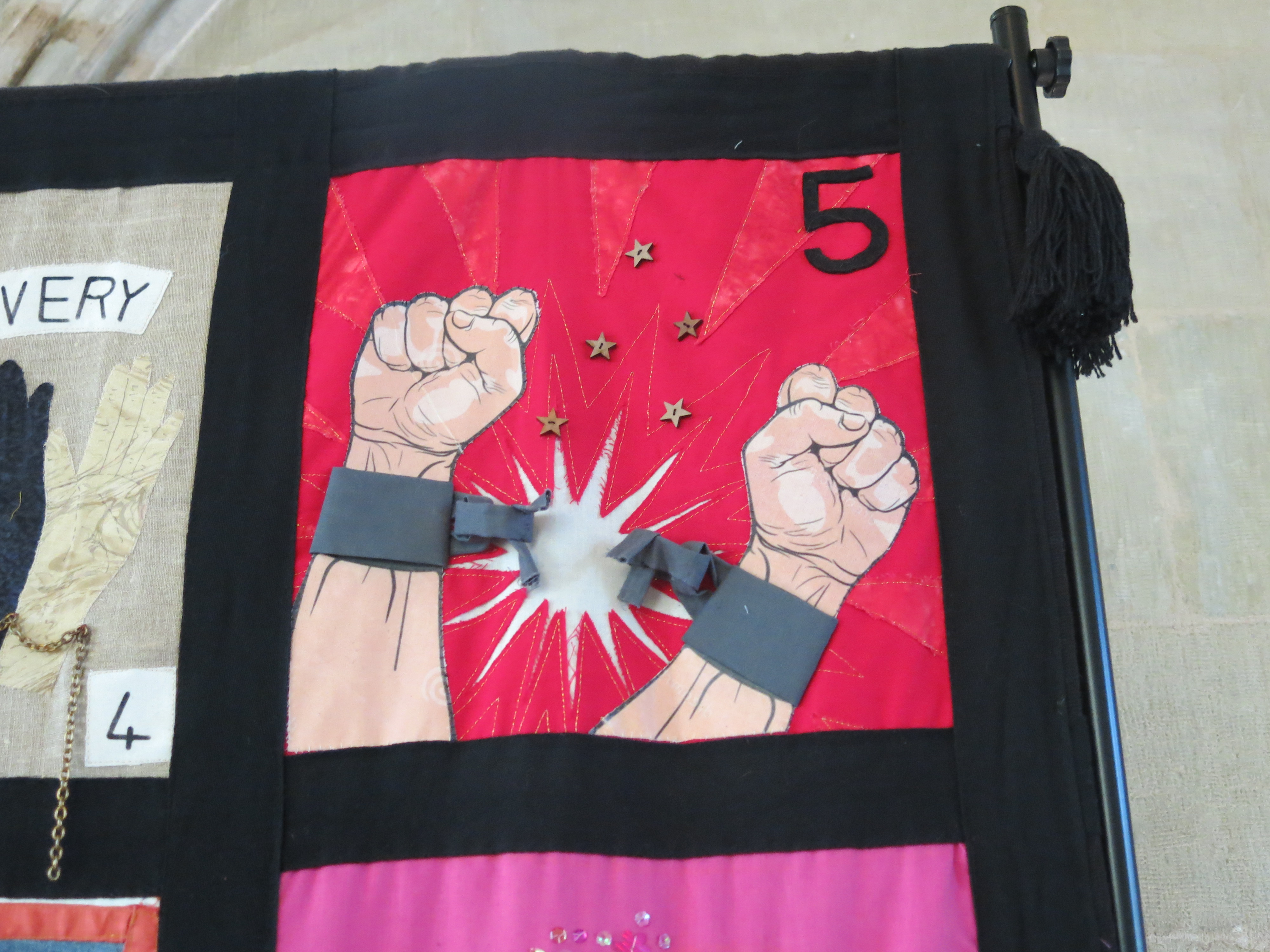
Article 5: No one should be subject to torture. Image from the tapestry

Amnesty International believes that there is credible evidence that the UK has been involved in grave human rights violations perpetrated against people held overseas by other authorities since the attacks in the USA on 11 September 2001.

The UN Convention Against Torture states that ‘no exceptional circumstances whatsoever, whether a state of war or a threat of war, internal political instability or any other public emergency, may be invoked as a justification of torture’.  It also states there should be a prompt and impartial investigation wherever there is reasonable ground to believe an act of torture has been committed.

The Human Rights Act 1998 also prohibits torture under any circumstances, and that obligation implicitly requires a prompt independent investigation of credible allegations – the more so when there appears to be a ‘systemic’ problem.   The existence of evidence requires the establishment of an independent, impartial and thorough judge-led inquiry, now.  Credible allegations implicate the UK in torture or other ill-treatment, unlawful detentions and renditions.  Over the years, Amnesty International and others have documented cases of the UK’s involvement in these abuses, including:

  • UK personnel were present at interrogations of detainees held unlawfully overseas in circumstances in which the UK knew, or ought to have known, that the detainees concerned had been or were at risk of being tortured and/or whose detention was unlawful and even that they participated in such interrogations  
  • UK personnel provided information (e.g. telegrams sent by UK intelligence personnel to intelligence services of other countries) that led the USA and other countries to apprehend and detain individuals when the UK knew or ought to have known that these people would then be at risk of torture and/or unlawful detention    
  • The UK was involved in the US-led programme of renditions and secret detentions through, for example, the use of UK territory (e.g. Diego Garcia) and/or airspace    
  • UK personnel forwarded questions to be put to individuals detained by other countries in circumstances in which the UK knew or ought to have known that the detainees concerned had been or were at risk of being tortured and/or whose detention was unlawful 
  • The UK systematically received information extracted from people detained overseas in circumstances in which it knew or ought to have known that the detainees concerned had been or were at risk of torture and/or whose detention was unlawful.

Testimony
A number of individuals – including former Guantánamo Bay detainees – have spoken publicly about UK involvement in their mistreatment.  Shaker Aamer, who was released from Guantánamo in October 2015, after nearly 14 years without charge or trial, has said for example that a UK official was in the room when his head was beaten against a wall.

Binyam Mohamed
Binyam Mohamed

In 2008 the High Court confirmed that the UK, through its security service MI5, had facilitated the interrogation of Binyam Mohamed in the knowledge that his initial detention in Pakistan was unlawful. Then, during a two-year period, the UK continued to facilitate interviews conducted on behalf of the US authorities when it must have realised that Binyam Mohamed was being held unlawfully by a third country and knew or ought to have known that there was a real risk that he was being tortured.

Proper investigation needed

stop torture
Image: Amnesty Paris

The Intelligence and Security Committee (ISC) has now been given the task of investigating allegations of UK complicity in torture, but Amnesty International, along with many other anti-torture organisations including the UN, believes that the ISC is wholly unsuited to the task in hand.  The structural limitations of the ISC, particularly its lack of power and independence from government, means that any investigation the ISC conducts is unlikely to get to the truth, and cannot satisfy the UK’s human rights obligations. The ISC is not a traditional Parliamentary committee, even though it is made up of parliamentarians.  Ministers ultimately decide what evidence the Committee can see, with the Prime Minister controlling what it can publish and even who can be a member. Crucially, the government retains the right to withhold information considered to be “sensitive” or on grounds of national security from the ISC.  The definition of what constitutes sensitive information is extremely broad and notably includes information provided by a foreign intelligence agency which can object to further disclosure of that information.  Any Secretary of State can determine material is sensitive and in the interests of national security should not be disclosed to the ISC.

Poor record
The ISC has a poor record in holding the intelligence services to account. In 2007, three years after the rendition of the Libyan families, the ISC produced a report which said that there was “no evidence that the UK Agencies were complicit in any “Extraordinary Rendition” operations.”

Historical context
In July 2010, the Prime Minister promised to establish an independent inquiry into allegations of UK involvement in torture and other human rights violations with respect to individuals detained abroad in the context of counter-terrorism operations.  At the time, David Cameron specifically ruled out the possibility of the ISC carrying out the investigation, recognising that an inquiry led by a judge who is “fully independent of Parliament, party and Government” was required “to get to the bottom of the case”.

In 2011 the Detainee Inquiry was established, led by the retired judge Sir Peter Gibson.  Amnesty International and a number of other organisations felt that the Detainee Inquiry fell short of the UK’s international human rights obligations and domestic obligations under the Human Rights Act to fully and independently investigate allegations of UK involvement in torture and other ill-treatment.  Of most concern was that the government retained final say on what material could be disclosed to the public and that the protocol did not provide for an independent mechanism to decide on disclosure of national security material.

In January 2012 the Detainee Inquiry was suspended, after Scotland Yard announced a criminal investigation into joint UK/Libyan operations which had resulted in the rendition of Libyan opposition figures. Those investigations are ongoing.

In December 2013 the Detainee Inquiry interim report was published.  It highlighted that the evidence it had received indicated that UK agents were aware of abuse of some detainees by other governments and that the UK government may have been involved in rendition.  It outlined 27 separate issues that should be subjected to further investigation. Amnesty and others expected this to be followed by a proper full judge led inquiry.

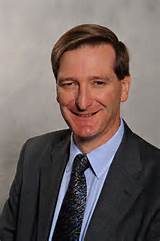
Dominic Grieve QC MP

Instead, on 19 December 2013, it was announced that the ISC had been tasked with examining allegations of UK complicity in torture and other ill-treatment of detainees held overseas, which had previously been the subject of the Detainee Inquiry.  In September 2015 Dominic Grieve was appointed as the new Chair of the ISC.  There is as yet no news on its work in this area.


Follow us on Twitter and Facebook

Saudi Arabia and Yemen


Further extraordinary developments
Tobias Ellwwod MP
Tobias Ellwood MP

Last year we wrote to our local MP Mr John Glen to ask his government to be more assertive with the Saudi government in view of their appalling human rights record.  This was prompted by the death penalty group which was concerned by the mounting tide of executions in that country.  We received a bland reply from both Mr Glen and from Mr Tobias Ellwood of the Foreign Office (FCO) saying that behind the scenes, representations were being made.

No sooner had we posted details of the letters from the two politicians, when news was received of plans to drop the requirement of ministers to obey foreign treaties.  Also, explicit reference to the abolition of the death penalty was removed from government policy.  We have in previous blogs pointed to the continuing sale of arms to Saudi Arabia despite their role in the war in Yemen.  Then came the astonishing news that British and American service personnel were present in the control centre for Saudi military actions.

All the while, the human rights record in Saudi remains dire and the year started with the mass execution of 47 people.  When Mr Ellwood was asked in Parliament to condemn the mass execution he declined to do so.  Today, we learn from the Independent newspaper that Mr Ellwood is reported in various Saudi and middle eastern newspapers as having urged Saudi Arabia to ‘do a better job at trumpeting its human rights successes’.  He was addressing the Saudi Arabian National Society for Human Rights [an English version is available] in Riyadh and added that ‘British people were unaware of the notable progress being made.’  Many human rights groups have said that Mr Ellwood’s remarks are astonishing.  FCO has denied that such remarks were made by him and the matter could easily be cleared up by publishing his speech.

Today, the Guardian newspaper published extracts from a leaked UN report into the airstrikes carried out by the Saudis on Yemen.  The report said that:

…many of the attacks involved multiple civilian objects [and that] of the 119 sorties the panel identified 146 targeted objects. There were three alleged cases of civilians fleeing residential bombings and being chased and shot at by helicopters.

So far, 5,800 people have been killed in the conflict.  On Wednesday, the leader of the opposition Mr Jeremy Corbyn asked the Prime Minister for an independent inquiry into the policy on arms exports to Saudi Arabia in view of the UN report.  As the weeks have gone by, the drip, drip of revelations, the continued sale of arms to the Saudis, the presence of our military personnel in the control centre of the Saudi operations, our help in getting a Saudi to get onto the UN’s Human Rights Council, and speeches by a FCO minister, has painted a picture of complicity in a brutal conflict in Yemen and connivance in the politics of repression in Saudi itself.

From Mr Glen there has been silence.  His column in the Salisbury Journal this week refers to the Maldives [YouTube] and his involvement and concern about human rights abuses there is of course to be welcomed and applauded.  But when, we may ask, is he going to express concern about the much greater level of human rights violations and killings taking place in Saudi Arabia and Yemen?


Follow us on Twitter and Facebook.  If you would like to join us, go to the ‘Joining’ tab at the top of the home page.  twitter image

Sources: The Independent; Belfast Telegraph; Amnesty International; Guardian

Legal action against soldiers


There has been a great deal of coverage in the last few days concerning legal actions against British soldiers.  Mr Cameron – the British Prime Minister – wants to put an end to them.   This is an edited version of the sermon given by the Reverend Lieutenant Colonel N J Mercer at the Amnesty International service held on Thursday 17 October 2013 at Salisbury Cathedral It was first published two years ago.


Two weeks ago in our Benefice we had a week of fasting for “Stand Fast For Justice.”  Stand Fast for Justice is a campaign which is currently being sponsored by the Charity Reprieve.  In this week of Benefice Fasting, parishioners – aged 12 to 90 – fasted in sympathy with the prisoners at Guantanamo who are currently on hunger strike and being force fed.  In particular we remembered Shaker Aamer.  Shaker Aamer is British and has been cleared twice by the Guantanamo authorities for release.  Once by George Bush and once by Barak Obama.  Yet he remains in custody.  It appears that he was nothing more than an innocent bystander, caught up in the fog of war, for which he has lost eleven years of his life.

Most alarming is his claim that he was tortured at Bagram Airbase and at Guantanamo and that MI5 have been complicit in his torture.  The reason for his delay – some allege – is that if he is released he will reveal details of his treatment.  The authorities want him sent back to Saudi Arabia even though he is British Resident.  His family live in South London and he has a son whom he has never seen

My background

The service this evening is the Amnesty International Service which remembers, in particular, prisoners of conscience.  These are individuals who are held in prison for their conscientiously held beliefs and who lose their liberty for no other reason than holding the wrong opinions or beliefs. They are wholly innocent of any crime.  And it this category of wholly innocent prisoner which is my own nexus for me being asked to preach this evening.

For there is another category of wholly innocent prisoner, and that is the prisoner of war.  As their title suggests, these individuals are imprisoned for no other reason that they were on the opposing side in an armed conflict.  As the Geneva Conventions state, they become prisoners of war when they fall “into the power of the enemy” and for no other reason (Art 5 1949 GCIII).

Some of you may know my background, but I was the senior legal adviser in Theatre for the Iraq War in 2003.  I had legal responsibility for all operations in the field, and this included the difficult issue of prisoners of war.  I became embroiled with this issue which arose quite by chance whilst visiting the Prisoner of War camp in Um Qsar in March 2003.  I went down to visit the camp – on a totally unrelated matter – and as I entered the facility, I glanced down a hessian corridor at the entrance. Unknowingly, I was looking at the Joint Force Interrogation Unit and to my horror, I saw about thirty – forty Iraqi prisoners, hooded and in stress positions, kneeling in the sand in 40% heat and with a generator running outside the interrogation tent

As a soldier, I knew exactly what was going on.  The interrogators were trying to intimidate the prisoners.  I intervened and demanded to know what was going on.  The Officer Commanding replied that he didn’t take his orders from me but “direct from London”. I was told that such practises were “in accordance with UK doctrine”.  Needless to say, I was unable to change the situation there and then but I reported matter to the British Commander that evening.  It led to an unseemly row between lawyers the interrogators and higher Headquarters.  It was only the intervention of the Red Cross which turned the tide in my favour.

The ‘5 techniques’

There was, as many have remarked, a general indifference to prisoners.  Six months later however, a prisoner called Baha Mousa was beaten to death during tactical questioning.  The whole episode was examined first at Court Martial and then in the Public Inquiry that followed.  It was revealed that not only were prisoners hooded and in stress positions, but were also being deprived of food and sleep and were probably being subjected to what is termed “white noise”.  Indeed, one prisoner had been chained to a generator whilst it was running and belching out carbon monoxide.

These so called 5 techniques were banned in 1978 after the United Kingdom was taken to the European Court of Human Rights (Ireland v UK) – yet somehow they had remained in use.

This episode was to have a profound effect on my life.  Like so many pivotal moments in our lives, it set me on a journey that I neither expected nor desired.  I left the Army in 2011.  Not long afterwards however, a book called “Cruel Britannia” dropped through my letter box.  The publishers (Portobello Books) asked me to review the book and I felt flattered as I had never been asked to review a book before.  The book horrified me.  It revealed a catalogue of torture by the British from the end of the Second World War and throughout the colonial campaigns of Malaya, Kenya, Cyprus and Aden.  Then onto Northern Ireland and Iraq and to the episodes which are described above.

There was one particular quote I want to share with you about the treatment of Mau Mau prisoners in Kenya:

Men were whipped, clubbed, subjected to electric shocks, mauled by dogs and chained to vehicles before being dragged around.  Some were castrated.  The same instruments used to crush testicles were used to remove fingers.  It was far from uncommon for men to be beaten to death (Cruel Britannia p 81)

The assistant chief of police in Kenya at that time (Duncan MacPherson) said that:

The conditions I found existing in some camps were worse, far worse, than anything I experienced in my four and a half years as a prisoner of the Japanese

 The British myth

The British narrative is that we are a people who pride themselves on decency and fair play, except it is a myth.  We have been unspeakably cruel to our prisoners in the post war period and that includes Iraq and Afghanistan.

I recently spoke at a dinner hosted by the Tablet where I met a young SAS Trooper called Ben Griffin.  You may or may not have heard of him.  But he was first in the Parachute Regiment and then the SAS and a thoroughly decent soldier.  However, he was so appalled by the treatment of prisoners in Iraq and Afghanistan that he refused to soldier on.  He said that Coalition Forces were treating prisoners as “sub-humans” and that we were “accepting illegality as the norm.”  Rather than Court Martial him, he was discharged honourably from the SAS.  His Commanding Officer described him as a “balanced and honest soldier who possesses the strength and character to genuinely have the courage of his convictions.”

He now lives under a High Court injunction.  If he reveals what he knows about prisoners and he will go to jail.  But he is not the only one whose silence has been wrought.  Those former prisoners, like Shaker Aamer, who seek to bring a claim against the British Authorities, now have to do so in a secret court where they can neither have their own lawyer, see the evidence against them nor challenge the witnesses or judgement against them.  This is thanks to the “Justice and Security Act” which was skilfully managed through Parliament this year.

I recently preached on the Roman Persecutions in the Early Church where the historian Tertullian – a lawyer and a priest – wrote in his Apology (197) how the Roman Authorities similarly rigged the trials of the early Christians.  Now we rig the trials of prisoners and silence those who seek to speak out on their behalf.

As an Army Officer, I expected the State to behave honourably.  What I stumbled upon was what one commentator described as “Britain’s dirty little secret”.  What the Telegraph journalist Peter Oborne recently described as a “ghastly cloud” which overshadows this country.  We have as a nation kidnapped innocent men and women and we have been complicit in their torture.  Then we have covered it up; wholly innocent prisoners, be they prisoners of war or prisoners of conscience, it amounts to the same thing.

In this service, in this beautiful Cathedral, in this rural idyll of Salisbury, most are oblivious to our own sordid history.  The psalmist tells us that God “hears the groans of the prisoners” (Psalm 102:20).  The United Kingdom still actively supresses those groans on threat of imprisonment or injunction.  This, of course, happens all over the world, but if it can happen so easily in one of the world’s oldest democracies – on our watch – just think how easily it can flourish elsewhere.


twitter imageYou can follow us on Twitter and Facebook.

Group minutes for January


The group met for a business meeting yesterday and the Minutes are now completed.

Blog at WordPress.com.

Up ↑