We are pleased to attach the latest report on the use of the death penalty around the world for the period
mid-June to mid-July thanks to group member Lesley for its production. Note that China does not appear because although it is believed to execute more of its citizens than the rest of the world put together, details are a state secret.
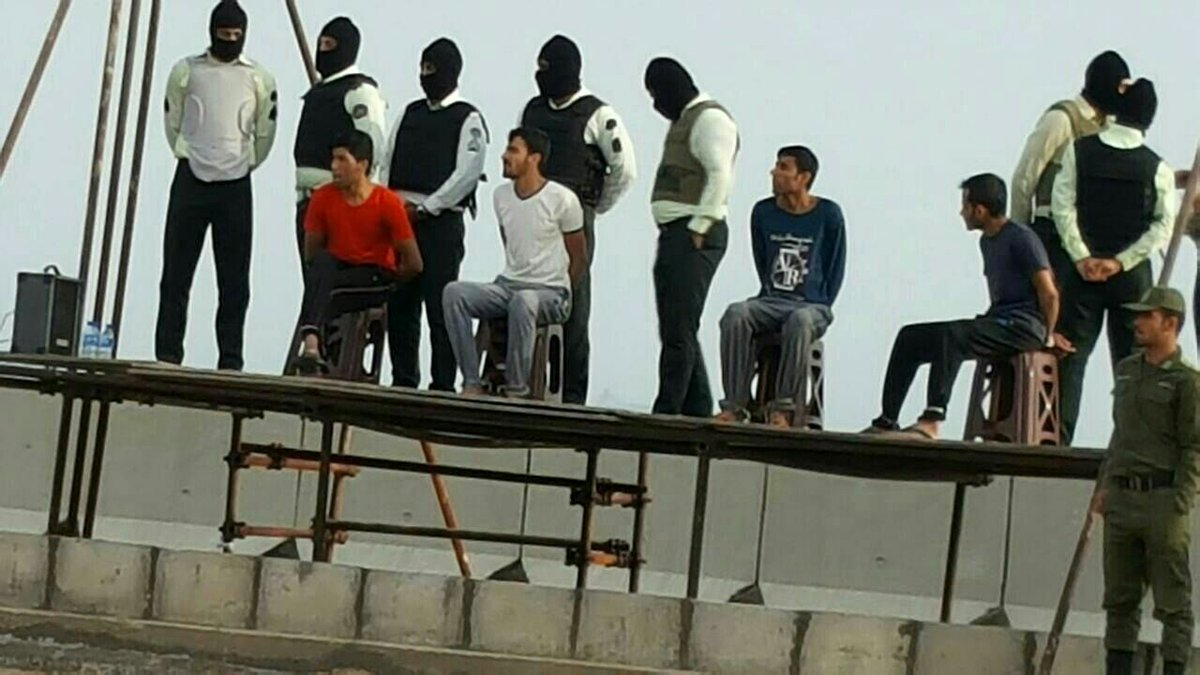
Picture of prisoners lining up to be executed in Iran.
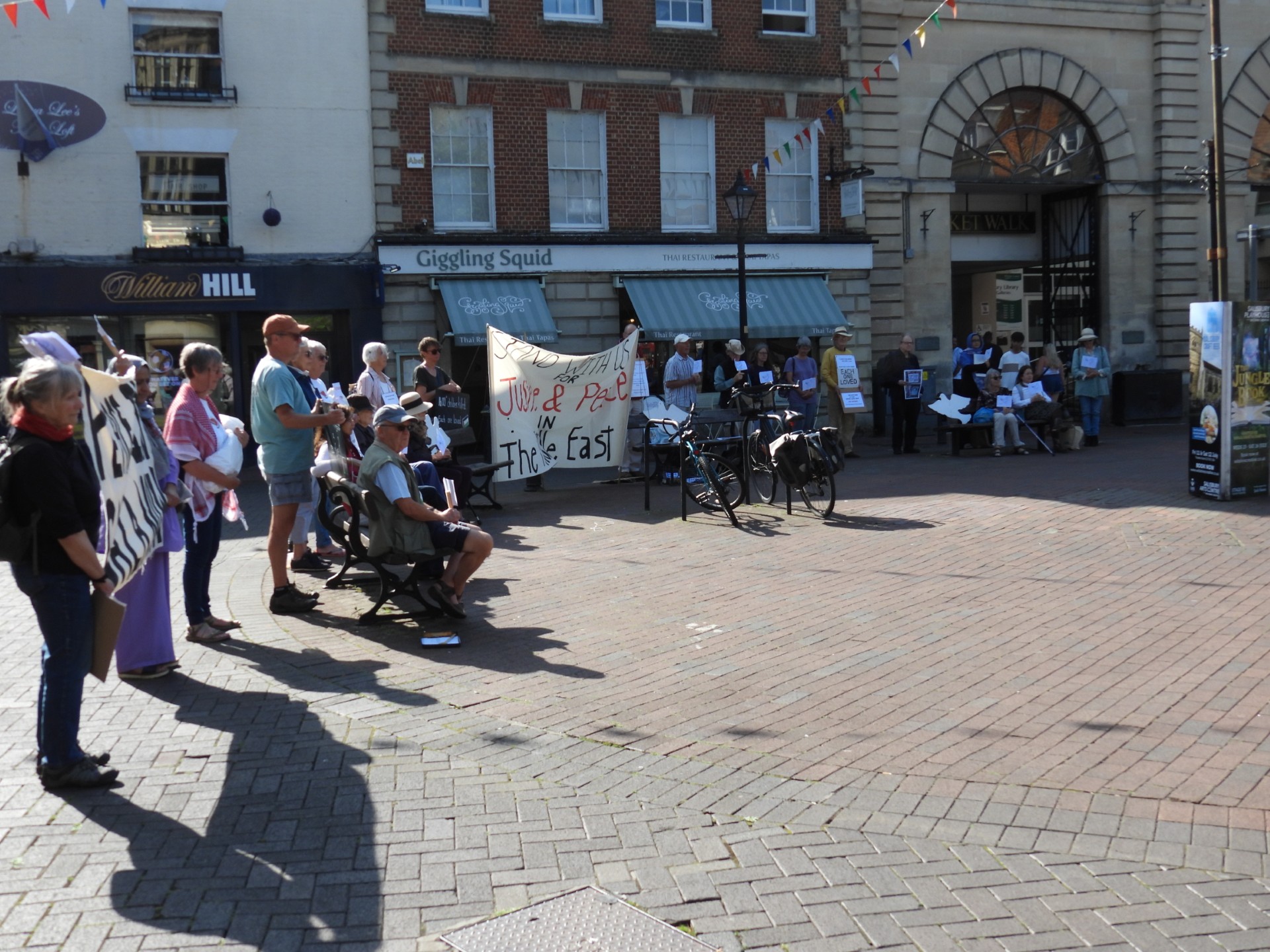
It seems incredible that we turn out each Saturday in Salisbury to express our concern about the continued violence in Gaza. This week, Israel attacked Iran which retaliated in kind but much less effectively. Supported by America and to a lesser extent other nations such as the UK, Israel is the local superpower. It claims to have control of the skies over Tehran.
The world’s attention has switched to this latest conflict but it is important that we don’t lose sight of the death toll which continues in Gaza where it now exceeds 55,400 with more dying every day.
We are pleased to attach the report for the period mid-May to mid-June thanks to group member Lesley for the work in compiling it. It is longer than usual reflecting the increasing activity in the US following President Trump’s actions on the use of the penalty. As ever, we must point out that the world’s biggest user of the penalty – China – who is believed to execute thousands of its citizens, is not present in the report because details are a state secret.
This year has seen a further increase in executions in Iran
May 2025
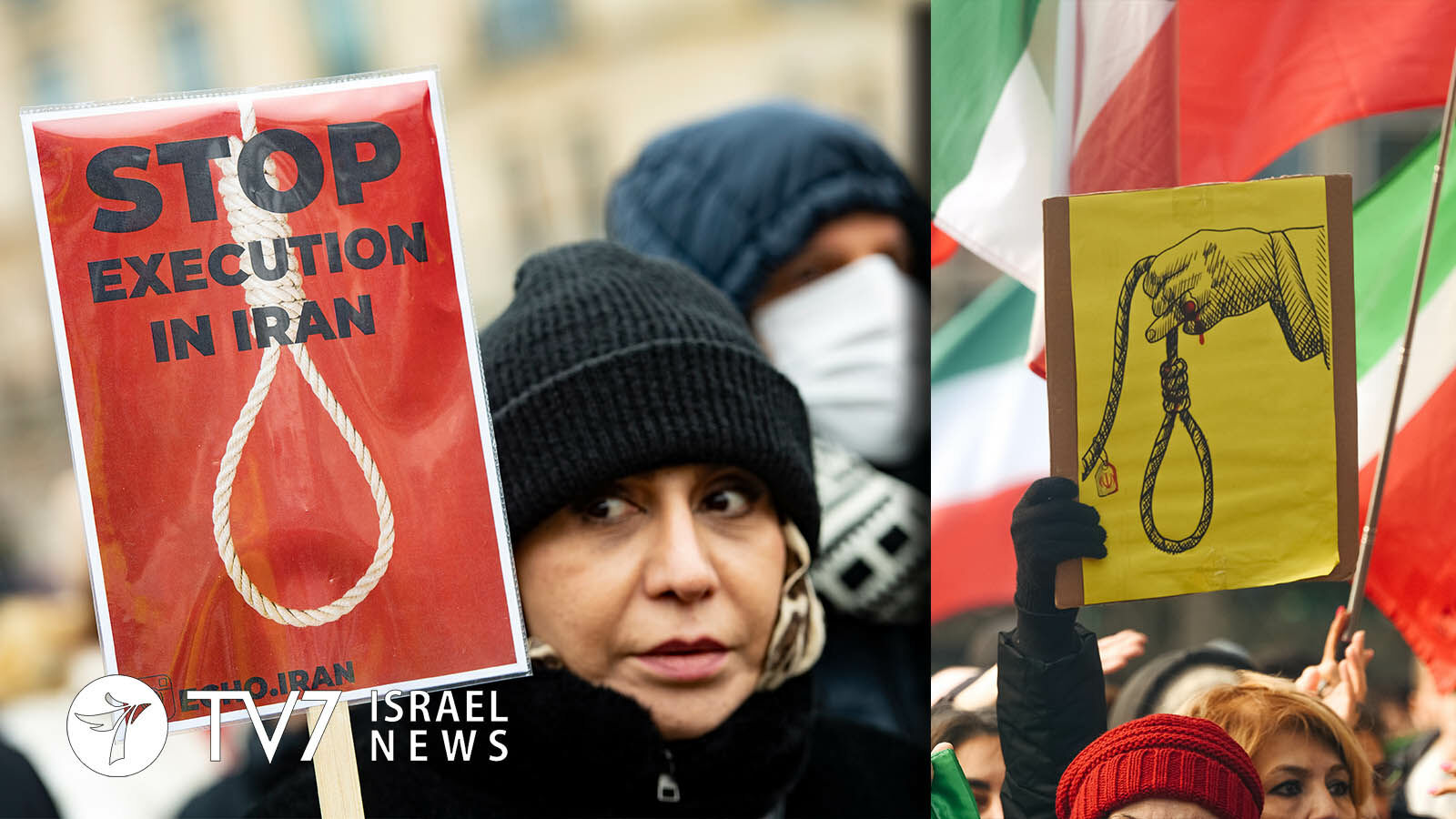
The BBC reported that in 2024, 901 people were believed to be executed in Iran representing a 6% increase over 2023 when 853 were put to death. 31 were women. The chosen method is hanging often in public. The main reasons are murder, rape and drug crimes but also the vague ‘corruption on earth’ used to describe people opposed to he theocracy. Minority groups are also hard hit.
There seems no let up with 343 put to death in the first four months of this year representing a significant increase over the same period in 2024.
Iran joins other countries like China, North Korea and Vietnam which use the penalty extensively. Details of numbers are a secret in those countries. In China it is believed to be thousands. The killing spree has been widely condemned by a range of agencies.
We are pleased to attach the monthly death penalty report thanks to group member Lesley for the work in compiling it. As ever we remind our readers that China is believed to execute more of its citizens than the rest of the world combined but information is a state secret.
The report highlights a sharp increase in numbers executed – the highest level since 2015 – but the number of countries holds steady. Amnesty has recorded 1,518 executions in 2024 a 32% increase over the previous year. A problem with producing statistics of this nature is that countries who are major users of the penalty, keep their figures a secret. China for example, believed to be the world’s largest executioner with thousands of its citizens executed each year – does not publish figures regarding them as a state secret. Another secretive nation is Vietnam where, similarly, the numbers are a state secret, and Belarus and Laos who release limited information. The figures are accordingly a minimum estimate of the actual numbers executed. The full report can be accessed here (pdf).
The penalty is not solely used to put to death people who have committed serious crime, but is used as a repressive tool. Saudi Arabia (image), and Iran, for example use the penalty to stifle dissent, targeting human rights defenders, protestors, dissidents and political opponents. There is also a disproportionate use of the penalty against minorities particularly religious minorities. Iran, which executed no less than 972 individuals last year, uses the penalty to execute those who challenge, or who are perceived to challenge, the Islamic Republic. It is also noted that these regimes have poor levels of justice. Defendants are often tortured to secure confessions and are denied access to lawyers. It is highly likely, not to say probable, that many wholly innocent people lose their lives.
Another trend is the use of the penalty as part of drugs programmes against dealers and users.
There is little sign, and very little evidence, that the penalty is some kind of deterrent, an argument frequently put forward for its retention or return. The leader of UK’s Reform party for example recently called for its reintroduction following the dreadful murder of three little girls which took place in Southport*. YouGov surveys show mixed views among Britons about the penalty. Generally, people are opposed but there is more support for its use among Conservative voters. The strongest support comes from the 65+ age group. Attitudes do change however, following a particularly unpleasant murder of a child, a policeman or as a result of terrorist activity. It was last used in 1964, suspended in 1965, abolished in 1969 and completely abolished in 1998 when treason was removed (different dates in Northern Ireland).
We are pleased to attach our minutes (and almost a newsletter) from the March meeting of the group thanks to group member Lesley for compiling them. They contain details of future events (towards the end) as well as items on the death penalty, refugees and other items of interest. The meeting took place on 12 March.
Talk by Nazanin Zaghari-Ratcliffe inspiring for those who heard it
March 2025
UPDATE, 12 March: For those who would like to revisit the talk, the Cathedral has produced a recording, available until 17th March.19 March: now removed.
Nazanin Zaghari-Ratcliffe was interviewed in Salisbury Cathedral by the Rt Revd Bishop of Sherborne, Karen Gorham, about her experiences of being imprisoned in Iran and life after her release. Unfortunately, the sound system was such that many could not hear large chunks of what was said, some claiming only being able to hear a quarter of the discussion.
The local group was pleased that the Bishop, Nazanin and her husband all mentioned the role played by Amnesty and the introducer mentioned the local group in particular.
The event was a sell-out with nearly 1,000 people in attendance. It took place on International Women’s Day.
Nazanin made the point that there was a difference between being political prisoner and a hostage.
Being a hostage brought with it a different set of rules since what the legal case was did not matter. She also said you only appreciate freedom when you don’t have it for a long time. After release she found ‘adjustment quite difficult’. For a long time she said ‘my body was free but my mind was in prison’. Even meals were difficult because she found the rush of having to eat in prison was difficult to shake off.
She discussed the Boris Johnson affair. Johnson blurted out that Nazanin was in Iran to ‘train journalists’ which was untrue: she was there on holiday. This was used by the Iranian authorities against her. It took a long time for Johnson to meet her and he failed explicitly to apologise for his error despite the effect it had on her confinement. Both have been extremely critical of the British government during her ordeal.
Richard, her husband spoke about the ‘of the kindness of strangers’ . He also spoke of the role of Amnesty and of the symbolic nature of the Amnesty logo of a candle in a coil of barbed wire.
We apologise for the partial nature of this post for reasons outside our control.Image, Amnesty International.
Nazanin Zaghari-Ratcliffe in conversation at the Cathedral
February 2025
Nazanin will be in conversation with the Bishop of Sherborne on Saturday 8th March in the Cathedral. This is a free event. Details and booking are on the Cathedral site. Members of the Salisbury group and other Amnesty groups around the country campaigned on behalf of Nazanin over a long period of time. We were delighted when she secured her released from prison in Iran. Members of the local group were a little disappointed therefore not to be invited to play a part in the event.
Death penalty sentence against Pakhshan Aziz has been upheld
January 2025
Iran is a country which executes a large number of its citizens and possibly as many as 1000 have been put to death last year, some in secret [WARNING: the link has distressing details]. This followed an estimated 853 executed in 2023. This makes Ian one of the world’s leading executioners. We attach details of one recent case which is an urgent action. It concerns Pakhshan Aziz (pictured) who’s appeal has been turned down and is at risk of execution. She was tried for peaceful humanitarian and human rights activities. She is from the oppressed Kurdish minority and received a grossly unfair trial. She only met her lawyers at the trial itself. There are allegations of torture which have not been investigated. Full information and a suggested letter are attached.
Following the Women, Life, Freedom uprising, the authorities have increased the number of executions. It includes executions of ethnic minorities including Baluchis and Kurds. You can write to Embassy in Brussels remembering to add your address on the back of the envelop. Ignore the September date on the Action. We hope you find time to write using the sample letter or your own words.





 Amnesty in Salisbury & South Wiltshire