Human Rights Act


Expect an announcement soon
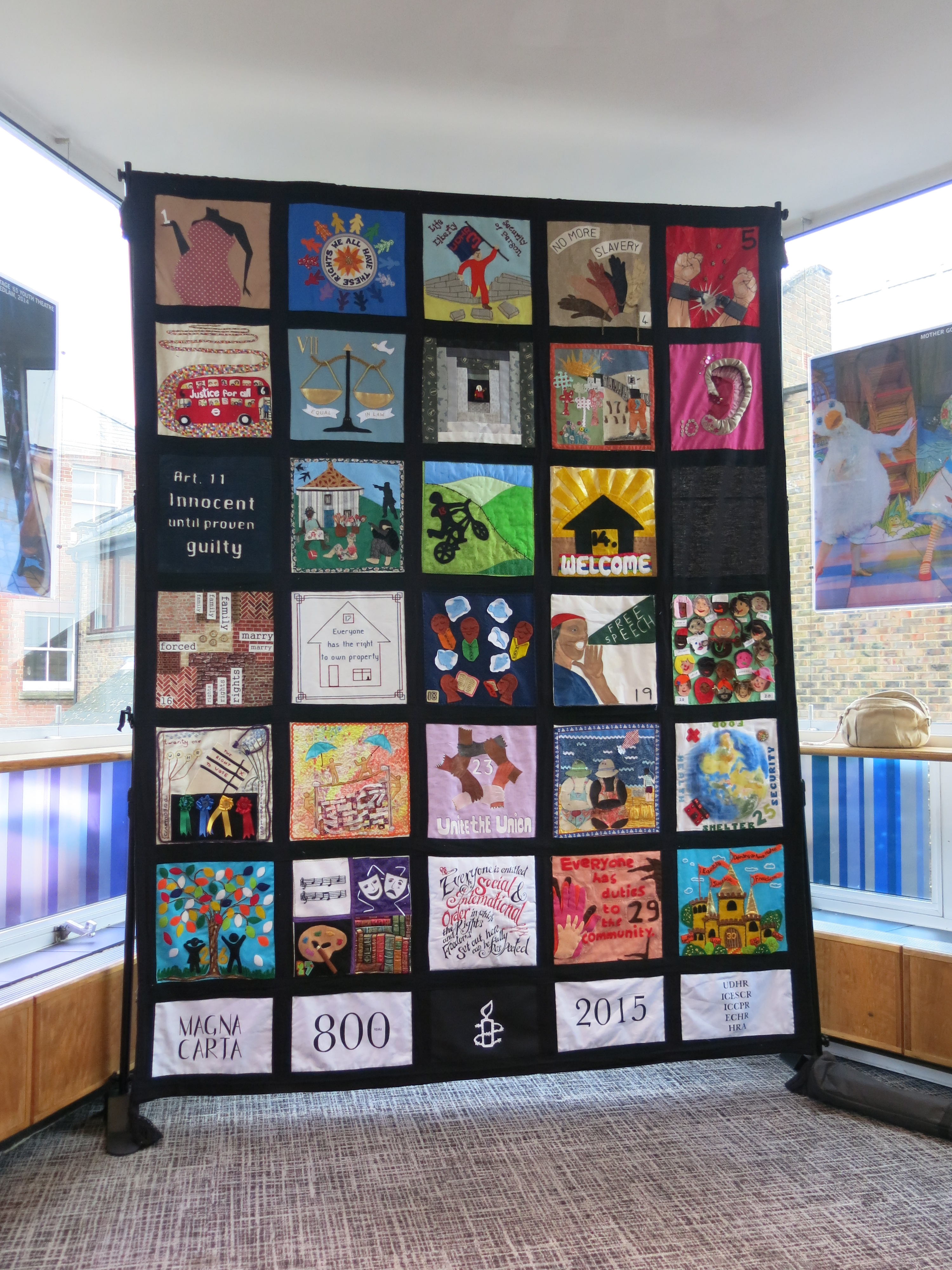
Tapestry illustrating the UN Convention

Things have gone quiet with the plans to abolish the HRA and the promise of something before Christmas has not come to anything.  There is a glimmer of hope in that Michael Gove has taken over as Justice Secretary and seems willing to modify or drop completely some of the worst excesses of his predecessor.  However, the negotiations currently coming to some kind of conclusion concerning our role in Europe are likely to see a fresh assault on the act emerging soon.  The watch word is ‘sovereignty’.  Parliament wants to be sovereign and this is being presented as a good thing and it is implied we will be the better for it.  The right wing press will delight at this and there will be many articles about ‘bringing power back to Westminster’ with the implication that this will result in better laws for us all.  Salisbury MP John Glen is a keen advocate for abolition.

A parallel story over the past couple of weeks has been the tax situation of Google and other American behemoths who so manage their affairs that they pay little or only derisory levels of tax.  Here, our sovereign parliament (since Brussels has little to do with tax collection) has failed.  Indeed, successive chancellors have made numerous announcements about ‘cracking down’ but almost nothing seems to happen.  Hardly surprising since accountants from the big four firms are actually in the Treasury ‘advising’ the chancellor on tax policy.  So the idea that sovereignty is key and is some kind of magic bullet is clearly illusory and does not lead to better outcomes.

A useful guide explaining the HRA and what it does has just been published by the British Institute of Human Rights and is worth a look.  There is a short video as well.  No doubt we will be returning to this topic when the announcements are made.

Follow us on Twitter and Facebook


Britain’s role in the Yemen war


Britain’s involvement in Yemen war described in detail

February 2016

In this blog – our longest yet – we reproduce an article published in Dissident Voice which discussed in detail the role the British government is playing in supporting the Saudi government, by supplying arms and providing personnel, in its war in the Yemen.   Most of the material here will be familiar to readers but it is useful to have a separate voice.  Our local MP Mr John Glen has, so far, been silent on these matters. 

It is more than possible to speculate why Prime Minister David Cameron has declared it his mission to scrap the Human Rights Act – which is incorporated into the European Convention on Human Rights – it appears he simply does not believe in human rights.

For example, the fact that Saudi Arabia executed – including beheadings – forty seven people in one day last month, displaying their bodies from gibbets, failed to deter him from having British military experts to work with their Saudi counterparts, advising on which targets – and which people, it seems – to bomb in Yemen. Parliament has not been consulted, thus, without a chance to debate and vote, democracy too has been suspended.

The fact that in May 2013 Saudi also beheaded five Yemenis, then used cranes to display their headless bodies against the skyline (Al-Akhbar, May 21st, 2013) also did not trouble him.  Neither did that by November 10th, 2015, the year’s total executions had already reached one hundred and fifty one, the highest for twenty years, in what Amnesty International called “a bloody executions spree.”

But why care about human rights or outright savagery when there are arms to be sold?  As written previously, in one three month period last year UK arms sales to Saudi soared by 11,000%.  From a mere nine million pounds the preceding three months: “The exact figure for British arms export licences from July to September 2015 was £1,066,216,510 in so-called ‘ML4’ export licenses, which relate to bombs, missiles, rockets, and components of those items.”

Priority Countries

Cameron’s government treats such barbarism with astonishing sanguinity.  For instance, it has come to light that in 2011 the UK drew up a list of thirty: “‘priority countries’ where British diplomats would be ‘encouraged’ to ‘proactively drive forward’ and make progress towards abolishing the death penalty over five years.’ “

Saudi Arabia was not on the list, an omission which Amnesty International’s Head of Policy, Alan Hogarth called “astonishing.” (Independent, January 5th, 2016.)  However, a Foreign Office spokeswoman told the Independent that: “A full list of countries of concern was published in March 2015 in the (UK) Annual Human Rights Report and that includes Saudi Arabia and its use of the death penalty.”

Wrong.  In the Report under “Abolition of the Death Penalty”, there is much concentration on countries in the (UK) “Commonwealth Caribbean” and a casual, subservient nod at the US, but no mention of Saudi. Under “The Death Penalty”, Jordan and Pakistan, were mentioned, as was the “particular focus on two … regions, Asia and the Commonwealth Caribbean.”  Singapore, Malaysia, China and Taiwan, Japan (the latter, three executions in 2014) Suriname and Vietnam are cited. Saudi Arabia is nowhere to be found.

Under the heading Torture Prevention, there is a quote by David Cameron: “Torture is always wrong” (December 9th, 2014). Paragraph one includes: “The impact on victims, their families and their communities is devastating. It can never be justified in any circumstance.”  A number of countries are listed.  No prizes for guessing, in spite of medieval torture practices, which is not.

However, under “Criminal Justice and the Rule of Law” there is:

The Foreign & Commonwealth Office (FCO) issued revised guidance on the human rights aspects of OSJA (Overseas Security and Justice Guidance) in February 2014.  The guidance ensures that officials do their utmost to identify risks of UK actions causing unintended human rights consequences.

What an irony as David Cameron is currently moving heaven and earth to halt legal action against British soldiers accused of acts of extreme human rights abuses in Iraq.  As Lesley Docksey has written:

The said ‘brave servicemen’ are in danger of being taken to Court over their abusive treatment, and in some cases murder, of Iraqi detainees during the invasion of Iraq.  Hundreds of complaints have been lodged with the Iraq Historic Allegations Team (IHAT), which was investigating between 1,300 -1,500 cases.  Many are simple complaints of ill treatment during detention, but some are far more serious:

  • Death(s) while detained by the British Army
  • Deaths outside British Army base or after contact with British Army
  • Many deaths following ‘shooting incidents’.

Worse, the British government is considering taking action against one of the law firms dealing with some of the cases, Leigh Day, with another, Public Interest Lawyers, in their sights. When it comes to hypocrisy, David Cameron is hard to beat.

Arms sales

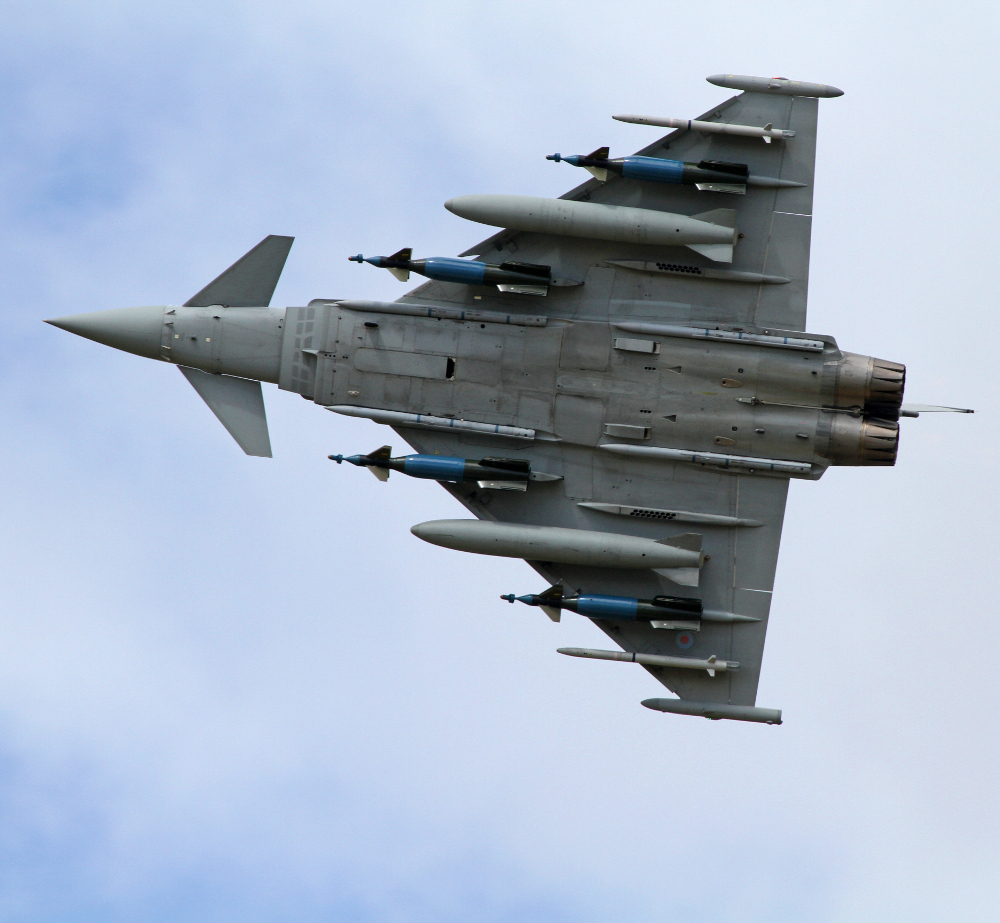
Worth noting is that in the UK government’s own list of “countries of humanitarian concern”, according to the Campaign Against the Arms Trade (CAAT), the UK has sold weapons to twenty four out of twenty seven of them, with Saudi Arabia in a deal to purchase seventy two Eurofighter Typhoon aircraft in a deal worth an eventual £4.5 Billion.

Aside from the purchase of the Typhoon jets, major deals between Saudi Arabia and British companies include a £1.6bn agreement for Hawk fighter jets and bulk sales of machine guns, bombs and tear gas.  [We can add here that Salisbury firm Chemring’s accounts show a high level of sales to Saudi sufficient to be separately identified under company law]

In fact, Saudi Arabia have access to twice as many British-made warplanes as the RAF does, while bombs originally stockpiled by Britain’s Armed Forces are being sent to Saudi Arabia” – to currently decimate Yemen.

The overriding message is that human rights are playing second fiddle to company profits,

said CAAT spokesperson Andrew Smith, adding:

The Government and local authorities up and down the country are profiting directly from the bombing of Yemen. Challenging them to divest from Saudi Arabia … is something people can do directly.

In the light of a fifty one page UN Report on the bombing of Yemen obtained by various parties on January 27th, Labour Leader Jeremy Corbyn called for an immediate suspension of arms sales to Saudi, pending the outcome of an independent Inquiry.  David Cameron stated, farcically, that: “Britain had the strictest rules governing arms sales of almost any country, anywhere in the world.”

However, in one of the key findings, the UN Report says:

The panel documented that the coalition had conducted airstrikes targeting civilians and civilian objects, in violation of international humanitarian law, including camps for internally displaced persons and refugees; civilian gatherings, including weddings; civilian vehicles, including buses; civilian residential areas; medical facilities; schools; mosques; markets, factories and food storage warehouses; and other essential civilian infrastructure, such as the airport in Sana’a, the port in Hudaydah and domestic transit routes.

It adds:

The panel documented 119 coalition sorties relating to violations of international humanitarian law.  It also reported cases of civilians fleeing and being chased and shot at by helicopters.  Moreover it stated that the humanitarian crisis was compounded by the Saudi blockade of ships carrying fuel, food and other essentials that are trying to reach Yemen.

The panel said that: “civilians are disproportionately affected” and deplored tactics that: “constitute the prohibited use of starvation as a method of warfare.” (Emphasis added.)

David Mepham, UK Director of Human Rights Watch commented:

For almost a year, Foreign Secretary Philip Hammond has made the false and misleading claim that there is no evidence of laws of war violations by the UK’s Saudi ally and other members of the coalition.

The UK Ministry of Defence, declining to say how many UK military advisers were in Saudi Command and Control Centres, said that the UK was: “… offering Saudi Arabia advice and training on best practice targeting techniques to help ensure continued compliance with International Humanitarian Law.” (Guardian, January 27th, 2016.)  Yet another quote from the “You could not make this up” files.

It has to be wondered whether the Ministry’s “best practice targeting techniques” includes the near one hundred attacks on medical facilities between March and October 2015, a practice which compelled the International Committee of the Red Cross, in November, to declare the organization: “appalled by the continuing attacks on health care facilities in Yemen …”

They issued their statement after:

Al-Thawra hospital, one of the main health care facilities in Taiz which is providing treatment for about fifty injured people every day was reportedly shelled several times …)

It is not the first time health facilities have been attacked … Close to a hundred similar incidents have been reported since March 2015. (Emphases added.)

Deliberate attacks on health facilities represent a flagrant violation of international humanitarian law (IHL).”

An earlier attempt to have the UN Human rights Council establish an Inquiry failed due to objections from Saudi Arabia, who, with help from Britain, currently Chairs an influential panel on the same Human Rights Council.  Farce is alive and well in the corridors of the UN.

Attacks on medical facilities

The repeated attacks on a targeted medical facility and other IHL protected buildings and places of sanctuary is a testimony to the total disregard for International Humanitarian Law, by the British, US and their allies and those they “advise”, from the Balkans to Afghanistan, Iraq, Syria, Libya and now Yemen.

However, in spite of the horrors under which Yemenis are suffering and dying, and Saudi’s appalling Tobias Ellwwod MPhuman rights deficit, UK Foreign Office Minister Tobias Ellwood, an American-born former soldier, in a visit to Saudi Arabia last month was quoted in the country’s Al Watan newspaper as revealing:

the ignorance of the British to the notable progress in Saudi Arabia in the field of human rights, confirming throughout the visit of a British FCO delegation… that he had expressed his opinion regarding the human rights situation in Saudi Arabia before the British Parliament, and that the notable progress in this area has been obscured.

The Foreign Office strongly denied that Ellwood had expressed such a view.

The Saudi led, British advised and US ”intelligence” provided coalition is reported to have formed “an independent team of experts” to assess “incidents” (which should be described as outrages and war crimes) in order to reach “conclusions, lessons learned …” etc. Thus, as ever, the arsonist is to investigate the cause of the fire.

Amnesty, Human rights Watch, Médecins Sans Frontières (who have had three medical facilities bombed) and The Campaign to Stop Bombing in Yemen have all called for an independent Inquiry with the power to hold those responsible for atrocities to account.  None of which, however, would bring back the dead, restore the disabled, disfigured, limbless, or beautiful, ruined, ancient Yemen – another historical Paradise lost.


Felicity Arbuthnot is a journalist with special knowledge of Iraq. Author, with Nikki van der Gaag, of Baghdad in the Great City series for World Almanac books, she has also been Senior Researcher for two Award winning documentaries on Iraq, John Pilger’s Paying the Price: Killing the Children of Iraq and Denis Halliday Returns for RTE (Ireland.) Read other articles by Felicity.

This article was posted on Wednesday, February 3rd, 2016 at 11:30am and is filed under Death Penalty, Human Rights, Militarism, Saudi Arabia, United Kingdom, United Nations, War Crimes, Weaponry, Yemen.

Follow us on Twitter and Facebook

Saudi Arabia and Yemen


Further extraordinary developments
Tobias Ellwwod MP
Tobias Ellwood MP

Last year we wrote to our local MP Mr John Glen to ask his government to be more assertive with the Saudi government in view of their appalling human rights record.  This was prompted by the death penalty group which was concerned by the mounting tide of executions in that country.  We received a bland reply from both Mr Glen and from Mr Tobias Ellwood of the Foreign Office (FCO) saying that behind the scenes, representations were being made.

No sooner had we posted details of the letters from the two politicians, when news was received of plans to drop the requirement of ministers to obey foreign treaties.  Also, explicit reference to the abolition of the death penalty was removed from government policy.  We have in previous blogs pointed to the continuing sale of arms to Saudi Arabia despite their role in the war in Yemen.  Then came the astonishing news that British and American service personnel were present in the control centre for Saudi military actions.

All the while, the human rights record in Saudi remains dire and the year started with the mass execution of 47 people.  When Mr Ellwood was asked in Parliament to condemn the mass execution he declined to do so.  Today, we learn from the Independent newspaper that Mr Ellwood is reported in various Saudi and middle eastern newspapers as having urged Saudi Arabia to ‘do a better job at trumpeting its human rights successes’.  He was addressing the Saudi Arabian National Society for Human Rights [an English version is available] in Riyadh and added that ‘British people were unaware of the notable progress being made.’  Many human rights groups have said that Mr Ellwood’s remarks are astonishing.  FCO has denied that such remarks were made by him and the matter could easily be cleared up by publishing his speech.

Today, the Guardian newspaper published extracts from a leaked UN report into the airstrikes carried out by the Saudis on Yemen.  The report said that:

…many of the attacks involved multiple civilian objects [and that] of the 119 sorties the panel identified 146 targeted objects. There were three alleged cases of civilians fleeing residential bombings and being chased and shot at by helicopters.

So far, 5,800 people have been killed in the conflict.  On Wednesday, the leader of the opposition Mr Jeremy Corbyn asked the Prime Minister for an independent inquiry into the policy on arms exports to Saudi Arabia in view of the UN report.  As the weeks have gone by, the drip, drip of revelations, the continued sale of arms to the Saudis, the presence of our military personnel in the control centre of the Saudi operations, our help in getting a Saudi to get onto the UN’s Human Rights Council, and speeches by a FCO minister, has painted a picture of complicity in a brutal conflict in Yemen and connivance in the politics of repression in Saudi itself.

From Mr Glen there has been silence.  His column in the Salisbury Journal this week refers to the Maldives [YouTube] and his involvement and concern about human rights abuses there is of course to be welcomed and applauded.  But when, we may ask, is he going to express concern about the much greater level of human rights violations and killings taking place in Saudi Arabia and Yemen?


Follow us on Twitter and Facebook.  If you would like to join us, go to the ‘Joining’ tab at the top of the home page.  twitter image

Sources: The Independent; Belfast Telegraph; Amnesty International; Guardian

Arms sales and human rights


Arms sales dictating policy in Saudi Arabia

Readers of this blog will be familiar with our argument that oil and arms sales dictate our policy to the kingdom of Saudi Arabia.  The execution of 47 people last week has caused an international outrage but not, predictably from our government.  Philip Luther of Amnesty said:

It is a bloody day when the Saudi Arabian authorities execute 47 people, some of whom were clearly sentenced to death after grossly unfair trials. Carrying out a death sentence when there are serious questions about the fairness of the trial is a monstrous and irreversible injustice. The Saudi Arabian authorities must heed the growing chorus of international criticism and put an end to their execution spree

A policy document published by the Foreign and Commonwealth Office in 2011 curiously omits mention of Saudi Arabia in its list of countries where diplomats will be seeking to ‘positively drive forward’ the government’s ultimate goal of abolishing the death penalty.  Countries such as China, the US, Iran and Belarus are among those listed, but not Saudi Arabia.

Philip Hammond the Defence Secretary said HMG was ‘disappointed’ in the actions of the Saudi authorities.  Disappointment seems to be a rather limp response to make to such an appalling act.  It was Mr Ellwood who responded to our message to John Glen MP last year in which we asked for a more robust response to the Saudi government.  Both he and Mr Glen assured us that these matters were being pursued but as the revelations keep appearing – altering the Ministerial code; dropping the death penalty abolition as a specific policy, and now the omission of Saudi from the list of countries to be targeted – we see that it is devoid of real intent.

Many human rights organisations have criticised the executions and the craven stance taken by the UK government.  Maya Foa of Reprieve said:

Saudi Arabia has consistently ranked in the world’s top five executioners, and a large proportion of beheadings carried out in the country have been for non-violent offences, including protest.

It is shocking that the Kingdom was absent from the counties targeted by the UK’s death penalty strategy over the past five years, when every other major executioner in the world – China, Iran, Iraq, the US and Pakistan – was included.

Amnesty said the omission was ‘astonishing’.

Does it matter?

Why does this matter?  Firstly, the middle east is fraught with much violence and tension.  Ministers – including the Prime minister – fulminate about the terrible events in the area controlled by IS but are noticeably reticent oven similar violence in Saudi.  Imagine the Prime Minister commenting on the latest gruesome execution IS video and saying it was ‘disappointing’.  By continuing to supply arms we are both helping to support the violence in the area and also aiding the bombing of neighbouring Yemen where women and children are dying.  Our policy should primarily be about seeking peaceful resolutions to problems not trying to sell yet more arms.

Eurofighter of the type sold to Saudi ArabiaSecondly, by being so dependent on arms sales, this becomes the main driver of our policy.  Not what is best for the region, or the people of the Saudi regime, or human rights, but what effect will it have on the bottom line of BAE Systems.  Our actions also lend them credibility.  Instead of applying pressure to encourage a more civilised approach to the Shia minority, to the rights of women and to foreign workers, we arrange for a Saudi to be elected onto the UN’s Human Rights Council and express ‘disappointment’ at mass executions.

We also lay ourselves open to charges of hypocrisy.  In seeking to promote civilised conduct around the world, to end the death penalty and stamp out torture, our approach to Saudi is both inconsistent and craven.  It weakens our international voice.

Malcolm Rifkind was interviewed on the radio and his argument was that the Saudis provide us with valuable intelligence.  Is the argument that we tolerate shocking behaviour so that – it is claimed – we get some intelligence?  This seems rather thin since no doubt the Saudis receive comparable intelligence from us.

The arms sales tail seems to wag the policy dog and by our actions we are not helping the Kingdom to adapt to the modern world.

Continue reading “Arms sales and human rights”

Death penalty: annual summary


Fuller version of the death penalty summary

No to the death penaltyCampaigning against the Death Penalty has continued to be a major focus for the Salisbury Group.  Regrettably, there has been no national campaign coordinated by Amnesty International in London.  We hope this might change in 2016 as we have taken part in a Survey currently being carried out by HQ confirming that we would like this important aspect of Amnesty’s work to be taken up again – particularly in the light of the recent changes in the priorities of the Foreign and Colonial Office (see later).

In the meantime, we have identified particular issues around the Death Penalty on which we have campaigned.  Throughout the year we have responded to all the Urgent Actions received in respect of individuals under threat of execution – 31 in total.  The majority of these have been for prisoners in Saudi Arabia, Iran and the USA.  We have worked on the cases of individuals sentenced to death within Amnesty’s Campaign against torture – most notably Moses Akatugba and Saman Naseem (see later), including them in letter writing, card signings and petitions, and have also continued to campaign on behalf of Reggie Clemons (see later).  In partnership with St Thomas’s Church, we held a Vigil as part of the World Day Against the Death Penalty.  This was our first such venture, and it has to be said that public support was disappointing, but the Group felt it had been very worthwhile.

2015 has been a challenging year:
  • We saw an unprecedented rise in executions in Saudi Arabia following the accession of King Mohammad bin Salman.   At least 151 had taken place by early November, and  executions are now at a 20 year high.  Disproportionate use is made against foreigners, particularly from poor countries, who do not understand arabic and are denied adequate translation in court.  Barbaric methods of execution are employed  – beheading, stoning and crucifixion.  Death sentences have been passed for a range of offences, including ‘apostasy’
  • There has been a rise in the number of executions in Iran – at least 694 in the first half of the year
  • There are considerable concerns at the numbers of countries now using the death penalty to deal with real or perceived threats to State security under the guise of terrorism – Pakistan, Tunisia, Chad and Egypt as well as Saudi Arabia and Iran.  Initial fears that the legislation would be used to include a wide range of ‘crimes’ other than terrorism were more than justified.  A report by Reprieve states that those executed in Pakistan have included individuals sentenced to death as children and victims of police torture
  • Concerns have been raised at the numbers being sentenced to death and executed for alleged crimes committed when children.  Countries with the worst records  for this are Saudi Arabia, Iran and Pakistan. This issue has been taken up by the Salisbury Group – as mentioned above, it was the focus of  our Death Penalty Vigil for this year’s World Day Against the Death Penalty.  We highlighted the case of Saman Naseem, a Kurd arrested at 17, tortured and sentenced to death for being a member of a banned organisation.  Reports earlier in the year of his execution proved to be unfounded, and he has now been granted a re-trial
  • There has also been the issue of the growth in sentences and executions for drug-related offences, particularly in Indonesia
  • China continues to refuse to publish details of the numbers of executions, but is believed to carry out more than the rest of the world combined.  There have, however, been some encouraging signs.  In January, a youth wrongly convicted of rape and executed 18 years ago received recognition of his innocence and a posthumous pardon. In May a number of Judges contributing to a Symposium on “Mistaken Cases” called for reforms which would go some way to meeting standards for a fair trial. Also in May, the sentence for a woman convicted of the killing of her abusive brother was commuted from death to life in prison
  • The year for the USA in respect of the death penalty has been mixed.   Its use continues to decline across America – the number of death sentences handed down dropped by a third in 2015 , with only six states – Texas, Missouri, Georgia, Florida, Oklahoma and Virginia – carrying out executions.  Public attitudes to the death penalty are also changing, partly because of concerns at costs incurred from keeping prisoners on death row for many years and the lengthy appeal process, but also because of an increasing recognition of the risk of unsafe convictions.  Almost 3,000 cases were identified involving unreliable or false testimony given by FBI Agents using a now discredited technique of hair analysis.  Following 28 years on death row, Anthony Ray Hilton was released from death row in Alabama when his innocence was confirmed through the use of ballistic tests
  • In 2015 Nebraska abolished the death penalty, and in Connecticut the death penalty abolished for new offenders in 2012, was abolished for the 11 inmates currently remaining on death row.  There remain, however, pockets within the States where the use of the death penalty is disproportionate to the numbers within the population.  Professor Frank Zimring of the University of Berkeley, California, believes the attitude of the district attorney to the death penalty to be a key factor
  • Here in the UK it is now 50 years since the abolition of the death penalty, and it is encouraging to note that for the first time support within the country for its use fell below 50%.  The Group have, however, been concerned at changes in our Government’s approach internationally to issues around human rights, and specifically to the use of the death penalty.  In June we wrote to Salisbury MP John Glen to ask why the British Government could not follow the lead of the French President, Francois Hollande, in speaking out publicly while in Saudi Arabia against the use of the death penalty.   His reply cited the value of behind the scenes diplomacy, seeing this as being more productive than speaking out publicly
  • In August we learned that the Foreign and Commonwealth Office had dropped explicit references to abolishing the death penalty from its global human rights work.  Despite the 2014 Human Rights and Democracy Report in which the Government claimed their work in this area was part of ‘sustained and long term efforts to to see an end to the death penalty world-wide’, all references to the death penalty were set to vanish from its stated priorities.  In reporting on this, The Times of India made a pointed reference to the British Government’s condemnation of the hanging last year of the convicted terrorist, Ajimal Kasab.   Mr Glen replied that the decision of the FCO to overhaul its approach to human rights had been made on the basis of feedback from diplomats who reported difficulties in relating our long list of human rights priorities with the issues they faced in real life.  He stated that the death penalty could come under all three of the broad categories listed in the new guidelines, and this approach would enable diplomats to ‘tailor them appropriately to local circumstances’.  As a group we are particularly concerned at what we see as a ‘fudged’ approach, and a serious threat to our country’s ability to be seen as promoters of human rights.

Economic prosperity was further up my list of priorities than human rights

Sir Simon McDonald, Head of the Foreign and Colonial Office in evidence to the Foreign Affairs Select Committee

This year has, however seen a number of successes in our campaigning: 
  • We have continued to campaign actively on behalf of Moses Akatugba, the young Nigerian accused of the theft of three mobiles and sentenced to death as a juvenile.  After ten years on death row, in June Moses was granted a pardon and released.  Over 34,000 had signed the petition, with more than 200 by people in Salisbury at last year’s stall for World Day Against the Death Penalty.  Amnesty have received a letter of thanks from Moses, describing his feelings on learning of an experiencing his release, and describing Amnesty activists as his ‘heroes’.  We were able to celebrate this success at our Vigil
  • Following our long term campaign for Reggie Clemons in Missouri, in December we received the news we had been waiting for.   After a long wait for a decision from the Court following the report of
    Reggie Clemons (picture Amnesty USA)
    Reggie Clemons (picture Amnesty USA)

    the Special Judge, Reggie’s conviction and sentence for first degree murder were ‘vacated’.  The Court had upheld his right to a fair trial, which was all that he had sought from the beginning.  We now await news of a date for his re-trial.

The Salisbury Group’s Campaigning Plans for 2016 
  • We will continue to write in response to individual Urgent Actions in respect of the death penalty
  • We will be continuing to campaign on behalf of Saman Naseem to ensure that he receives a fair trial
  • We will continue to campaign specifically on behalf of individuals sentenced for alleged crimes committed as juveniles.
  • We will await news of the date of Reggie Clemons’s new trial, and campaign to ensure this is fair and in accordance with internationally agreed standards.
  • We will await the outcome of the current AI Death Penalty Campaigning Survey, and will participate in any national campaign arising out of this.


2015: Review of the year


Year of achievement

This has been a busy year for the group.  A prevailing theme has been the Magna Carta celebrations and weTapestry enjoyed a fruitful relationship with the Cathedral where one of the extant copies of the charter is displayed.  We organised a talk in the Cathedral by Dominic Grieve – the former Attorney General – and 160 attended to hear him speak in favour of the Human Rights Act.  Kate Allen, Director of Amnesty, spoke at the Sixth Form Conference also at the Cathedral.  We mounted a display in the cloisters and we ended the year by displaying the tapestry, assembled by members of Amnesty groups in the south region, with two contributions from refugee groups.  Another event was at the Playhouse where we hosted a discussion with Kate Allen; Prof Guy Standing and Ben Rawlence – a first for us.  The Playhouse agreed to display the tapestry ahead of it moving to the Cathedral.

Films

For several years we have held a film night at the Arts Centre and this year we managed two, the first being the documentary BastardsSet in Morocco, this moving film showed an illiterate woman’s struggles with her family and the justice system on behalf of her illegitimate son.  We were delighted to welcome the director of the film, Deborah Perkin, to introduce it.  After the showing, we asked people to sign cards for Ali Aarrass who was returned to Morocco from Spain, held incommunicado, denied access to a lawyer and tortured for 12 days.  An enquiry into his allegations was promised but has not happened.  He still seeks justice and has recently ended a prolonged hunger strike.  Campaigning for Prisoners of Conscience like Ali are a core aspect of Amnesty’s work.

The second film was Timbuktu which was timely in view of the problems with terrorism and Islamic extremism.  We are grateful for the continuing support of the Salisbury Arts Centre in this enterprise and to the many people stopped after the showings to sign cards.

Saudi Arabia and arms sales
Paveway missile sold to the Saudis

Saudi Arabia formed a backdrop during the year with their continuing and increasing use of the death penalty and a host of human rights violations.  In July, we wrote to our local MP, Mr John Glen, to urge his government to take a more robust line with the Saudis.  We received a reply from him and a minister in the Foreign and Commonwealth Office assuring us that diplomacy was proceeding behind the scenes.  We had not long received the letter when it was revealed that the FCO had just removed references to the abolition of the death penalty from its policy.  It was also revealed that the requirement to adhere to international law and treaty obligations had been removed from the ministerial code.  We then discovered the astonishing news that the UK government had been active in securing a seat for a Saudi man on the UN’s Human Rights Council.  Together with the continuing support the government offers to sellers of arms to Saudi Arabia, this shows that claims to be interested in better human rights in countries like Saudi was a sham.  It was depressing to note the new college in Salisbury being supported by a range of arms companies.

Economic prosperity was further up my list of priorities than human rights

Sir Simon Mc Donald, head of the Foreign and Colonial Office in evidence to the Foreign Affairs sub-Committee

Our all too close relationship with the Saudi government was exposed at the end of the year when the Independent revealed details of the secret security pact signed between the two governments.  Human rights groups, the Independent reported, expressed alarm at the secretive nature of the deal with a regime which has been condemned for its human rights record.  Kate Allen, Amnesty’s Director, called it a ‘murky deal’.

Yemen

Later in the year there was a great deal of interest in Syria and the decision to bomb ISIS.  A major debateArms-Fair---share-assets-email-Sep-2015 was held in Parliament with impassioned speeches on both sides.  We noted that no such passion was evident in the case of Yemen where British arms supplied to Saudi are being used to bomb civilians and kill children.  The government remains to keen to sell arms to whoever seemingly unconcerned where they end up.  They support the annual arms fair in London and, no doubt mindful of previous revelations about the sale of torture equipment, banned a representative from Amnesty attending.

It is extraordinary that so much heat and righteous indignation is engendered by the barbaric activities carried out by ISIS, but beheadings, crucifixions, floggings and torture carried out on an increasing scale in Saudi Arabia result not in condemnation, but visits by ministers and by members of the royal family.

Good news
Moses Akatugba
Moses Akatugba

But is was not all bad news.  The Salisbury group, in common with others around the world, campaigned for the Nigerian man Moses Akatugba who was brutally tortured by the Nigerian police and forced to sign a confession to murder.  We are pleased to note that many Salisbury people signed our petitions and cards with the result (with world wide campaigning as well) that Moses was released after 10 years on death row.  This was a notable success.  Over 34,000 people around the world signed petitions.  Amnesty have received a letter of thanks from Moses describing his feelings on learning of his imminent release and describing Amnesty activists as his ‘heroes’.

Another success was the decision by the state authorities in Missouri to give Reggie Clemons a retrial.  After a long wait for a decision from the Court following the report of the Special Judge, Reggie’s conviction and sentence for first degree murder were ‘vacated’.  The Court had upheld his right to a fair trial which was all that he had sought from the beginning.  This is a campaign which the local group has been pursuing actively for many years and again we are pleased to record our thanks to many hundreds of Salisbury people who signed cards and petitions.

Locally, the group undertook two Citizenship talks, one at South Wilts and one at the Shaftesbury School.  These are popular with young people and well attended.

Death penalty

Campaigning against the Death Penalty has continued to be a major focus for the Salisbury Group.  Regrettably, there has been no national campaign coordinated by Amnesty International in London.  We hope this might change in 2016 as we have taken part in a Survey currently being carried out by HQ confirming that we would like this important aspect of Amnesty’s work to be taken up again – particularly in the light of the recent changes in the priorities of the Foreign and Colonial Office.

In the meantime, we have identified particular issues around the Death Penalty on which we have campaigned.  Throughout the year we have responded to all the Urgent Actions received in respect of individuals under threat of execution – 31 in total.  The majority of these have been for prisoners in Saudi Arabia, Iran and the USA.  We have worked on the cases of individuals sentenced to death within Amnesty’s Campaign against torture – most notably Moses Akatugba and Saman Naseem (see below), including them in letter writing, card signings and petitions, and have also continued to campaign on behalf of Reggie Clemons (see above).  In partnership with St Thomas’s Church, we held a Vigil as part of the World Day Against the Death Penalty.  This was our first such venture, and it has to be said that public support was disappointing, but the Group felt it had been very worthwhile.

One of our concerns are the numbers of being sentenced to death and executed for alleged crimes committed when children.  Countries with the worst records for this are Saudi Arabia, Iran and Pakistan.  This issue was taken up by the Salisbury group and it was the focus of the Vigil for this year’s World Day Against the Death Penalty.  We highlighted the case of Saman Naseem, a Kurd, arrested aged 17, tortured and sentenced to death for being a member of a banned organisation.

The group continues to publish a monthly death penalty report which collects information from around the world on the use of this barbaric and ineffective practice.  At the bottom of this blog you will find other sites which provide information.  While countries like the USA, Saudi and Iran feature frequentlyy in these reports, it has to be recognised that China executes more than the rest of the world put together but keeps the statistics a state secret.

A full report on the death penalty is on a later blog.

China

This year saw the state visit by the Chinese president to these shores.  There was considerable discussion about human rights in China – or the lack of them – including the denial of free speech, the use of torture, thousands executed after brief trials and continued suppression in Tibet.  It was revealed by the Chinese media that George Osborne – who is keen to replace David Cameron as Prime Minister – on his visit to China, failed to mention human rights at all to the surprise of his hosts.  What was said to the president on his visit here, if anything, is unknown.  Protestors in London were mysteriously kept well away by armies of Chinese.  This was a clear demonstration that the current government is almost exclusively concerned with economic matters and not about human rights.

North Korea
Group campaign event, Saturday 8 November

During the year we continued to highlight where we can, the continuing state of human rights abuses in North Korea.  The situation there remains dire and the role of the Chinese is crucial.  People fleeing the country are frequently handed back to face a terrible future in a forced labour camp the condition of which are unimaginable.  They also try and obstruct efforts by the UN.  Their fear is that instability in North Korea could be the trigger for unrest in China itself.  There is now greater awareness of what is going on the country and the story has moved away from border skirmishes to the appalling human rights situation: progress of sorts.  Clip from the video made in 2014 available on YouTube The message reads ‘Close the Camps’ 

Stop torture

We have campaigned throughout the year on behalf of individuals who have been subjected to torture.  This abhorrent practice is still very common around the world with an estimated 141 countries still practising it.  This is despite signing various UN protocols to the contrary.

Human Rights Act

We have reported on many occasions the desire by the government to do away with, scrap or abolish the HRA.  Our local MP, Mr John Glen is on record as wanting this.  Part of the reason – perhaps the major part – is the continuing dislike of things European.  ‘Brussels’ has become shorthand for anything bad and for interference in our affairs and the HRA is caught up in that.  It doesn’t help that the majority of newspapers publish seemingly endless stories of dubious decisions which are the result – it is claimed – of the workings the act.  Stories about benefits for ordinary people almost never make it onto a tabloid page.

A second reason (we have speculated) is that much press activity nowadays involves the intrusion into the private lives of celebrities and politicians using hacking, buying information from the Police and other sometimes illegal means.  Article 8 of the HRA includes a right to privacy which would seriously curtail this activity.  We are currently awaiting the review of the act (promised in the Autumn) and how the government proposes to change it.  Perhaps we can be encouraged by the appointment of Michael Gove MP as Justice Minister, who has shown himself willing to overturn some of the worst excesses of his predecessor such as iniquitous court fees and banning books from prisons.

During the year we were pleased to welcome the formation of Rights Info which was established to counter the misinformation regularly pumped out by our media.  It analyses the various cases and stories which make the news and presents the facts.

Snoopers’ charter

The investigatory powers bill is currently in the report stage.  It proposes giving increased powers to the security services to intercept private messages, phone calls, Skype, emails and social media.  People are rightly concerned and fearful of terrorist activity and mostly take the view that as I’ve got nothing to hide, losing a bit of liberty is a price I’m willing to pay for greater security.  There is a trade off here: we give up some liberty and the right to our privacy to enable the security services to invade emails and the like in their hunt for terrorists, drug smugglers and people traffickers.  But we expect our politicians to exert oversight and to ensure the security services are properly accountable.  The revelations by Edward Snowden exploded that and showed that the relevant parliamentary committee had little or no idea of what was happening.  We have also noted the strange dichotomy between the publics’ distrust of politicians on the one hand and trusting them when it comes to intruding into our private lives on the other.

Peter Wright’s book Spycatcher (Viking Penguin) first revealed the inside story of the MI5 which he alleged had burgled its way around London.  More recent books such as Seamus Milne’s The Enemy Within (Verso) revealed the underside of the security services and their (successful) attempts to undermine the miners’ strike and Nick Davies’s Hack Attack (Chatto and Windus) which told the story of the media’s involvement with politicians, senior Metropolitan Police officers and the security services.  All these books, and others, show the importance of strong independent control of what these services are up to.  Unfortunately, the unholy link between some newspaper groups, politicians and the police makes achieving this very difficult.

David Davis MP with Kate Allen, Salisbury CathedralSo although we do not mind the security services penetrating terrorist cells, we might mind them listening in to solicitors discussing their client’s cases,  journalists’ phone calls and bugging human rights groups, all things they have been shown to do.  Liberty is a precious thing and we need to be ever vigilant that their activities are closely monitored and are appropriate.  With the politicians we have today we cannot be sure of this.  One of the few exceptions is David Davis MP (seen here third from left at the Sixth Form Conference at the Cathedral, next to Kate Allen) who has regularly highlighted the dangers of this bill and of the creeping nature of intrusion being planned by the Home Office.

Conclusions

This has been a busy year for us with many achievements.  However, we look forward to next year with some forboding.  The desire to promote economic interests almost at any cost and the near abandonment of overseas human rights issues is a worry.  We want to go on selling arms to highly unstable regimes like the Saudis, seemingly with no concern with how or where they use them.  Claims of ‘quiet diplomacy’ are a sham when you are promoting one of their number onto the UN’s Human Rights Council.  At home, the combination of the ‘snoopers’ charter,’ a desire to end or abolish the Human Rights Act and to curtail the Freedom of Information Act are all steps in the wrong direction.

This has been an exceptionally busy year, as the report notes. We have succeeded in holding major headlining events, around the Magna Carta celebrations, while still carrying on our usual campaigning, and keeping awareness of Amnesty high in the city, all with a relatively small activist base. Our visits to schools have been valuable in this respect too, and thanks are due to all who have helped over the last year to keep us in the public eye and assisted in the success of the achievements noted here. I would conclude by wishing our readers an supporters a happy New Year, and hopes for freedom for those we are supporting.

Andrew Hemming, Chair of the Salisbury group

We continue to be heartened by the warm support we get at signings from people in the Salisbury area.  The support of the Cathedral in this Magna Carta anniversary year has also been particularly valued.

You can follow us on Twitter – http://www.twitter.com/salisburyai

peter curbishley


The Chinese President’s visit


President’s visit prompts human rights concerns

This week saw the visit to this country of President Xi Jinping with a president ji xinpinghuge amount of ceremony and including a meeting with the Queen.  His visit was surrounded with considerable controversy concerning the human rights record in China.

Our government stood accused of suppressing concerns about human rights because they want us to do more business with China and because the Chinese do not like questions being asked about their activities.  They view this as interfering with the internal affairs of their country.

Human rights in China are truly dire and may even have got worse since President Xi came to power.  The essential deal in China is that the communists stay in power and in return, they deliver growth and prosperity to their people who have little say over how the country is run.  To maintain this system, there is little in the way of free speech, the internet is closely controlled, minorities – including religious minorities – are hounded and arrested, torture is common and more Chinese are executed than the rest of the world put together.

Chen Guangcheng – who was a prisoner of conscience with Amnesty and on whose behalf, the local group campaigned – fled China following his house arrest and now lives in America.  He is personally well acquainted with the human rights situation in that country.  In an article in the Independent he says:

There is no doubt human rights have worsened in his home country in the decade since President Hu Jintao’s state visit and believes that the UK must publicly criticise the regime if it wants to improve human rights in China.

I don’t think all this trade and business should be carried out as the UK sacrifices human rights in exchange for these deals.

Amnesty has noted that during a nationwide crackdown, 248 lawyers and activists were detained in the summer of whom 29 are still in custody.  Then there is the continuing story of Tibet where freedom for Tibetans is a long-lost dream.

Our media is constantly predicting the time when the Chinese economy will overtake the USA to become the largest in the world.  Projections are frequent but have recently taken a knock with the acute fall in the Chinese stock markets and devaluation of their currency.  But the essential question is: can the Chinese Communist Party’s trick of providing continuous growth whilst maintaining a monopoly on power be maintained for ever? This question is important because it points to the fact that the Chinese needs the West as much as we need them.  We provide them with a market for their goods.  They need our technologies and our expertise.  They will increasingly need our consumer goods.  They want to be able to trade the remnimbi in London.  They want greater access to the European market.

This is why the craven approach by our government to the Chinese is so misguided.  The Chinese Ambassador has claimed that mentioning human rights would be ‘offensive’ to China.  But all the people who suffer in China from house arrests; deprivation of liberties; forced sterilisations; executions of loved ones after brief trials; loss of religious freedom and no freedom to look at the internet, might also feel ‘offended’ that the man at the top of the country responsible for all this repression and cruelty, is being fawned over and given the red carpet treatment in London without any of our leaders uttering a word about these goings on.  The only thing that seems to matter is the business and investment.

It seems clear that the Chinese were seriously worried about the protests which might have marred his visit here.  A large and apparently orchestrated series of demonstrations organised by the embassy largely drowned out the few protests which manage to break through.

And what of our local MP Mr John Glen?  In the Salisbury Journal (October 22) we read:

[…] The UK takes its human rights obligations very seriously. I do not believe for one moment that having a mutually beneficial commercial relationship prevents us from speaking frankly about issues of concern.

In fact, close relationships around economic, political and security interests have a track record of enhancing our ability to positively influence governments helping to promote democratic reform and raise human rights standards

As we noted in an earlier blog in connection with Saudi Arabia, we have enjoyed ‘close relationships’ with them for some decades but there is no let up in the tidal wave of torture, beheadings, floggings and amputations being carried on there.  It is simply wishful thinking to claim close economic relationships enhances our ability to help promote democratic reform.

The whole point of the controversy around President’s Xi visit is that human rights concerns are not being mentioned.  To say also that commercial relationships should ‘not prevent us from speaking frankly about issues of concern’ – one can only reply quite so!  They fact that there was no frank speaking seems to have escaped Mr Glen’s notice.

And is Mr Glen suggesting that signing these various contracts will ‘promote democratic reform and raise human rights standards [in China]?’  In which case he must be almost the only person to believe this.  The communist party has no intention of relinquishing power and signing a few deals in London will not alter that fact one iota.  Indeed, looking at the The Global Times, the communist party newspaper in China, reveals no mention of human rights or freedoms in their report of President Xi’s visit.  Anyone who saw the BBC’s Panorama programme on 19 October would be left in no doubt that the prospects for freedom and democracy in China under this president are exceedingly remote.

Trade and investment are of course important but not at the expense of all else.  There is something unsettling about our willingness to grovel to the Chinese for the sake of money.  Perhaps at long last we are learning the true meaning of ‘to kowtow’.

Sources

The Independent; Salisbury Journal; The Global Times; The Guardian; Human Rights Watch

Saudi arms sales and human rights


An about turn

Over the last three months we have been in correspondence with our local MP Mr John Glen over the issue of arms sales to Saudi Arabia.  This arose because the French President spoke out publicly against the increased use of the death penalty in Saudi and the barbaric way in which they are carried out.  We also expressed concerns about human rights generally, the use of torture and the dreadful treatment of women.

Mr Glen replied and arranged for a Foreign Office minister to reply as well.  The burden of their replies was that the government took the issue of human rights very seriously and raised the issue of human rights with the Saudis at every available opportunity.  It began to unwind because it was revealed that the Foreign Office had removed the abolition of the death penalty as one of its objectives.  This was only a matter of days following assurances to the contrary from one if its junior ministers in his letter to us.  Earlier this month Sir Simon McDonald, head of the FCO, told the Foreign Affairs Select Committee that:

economic prosperity was further up his list of priorities than human rights.

Following the news that a Saudi had been elected to the UN’s human rights council – an astonishing fact in itself – it was discovered shortly afterwards that our own government had facilitated this.  The British government had used its influence to secure the position of someone, patently against human rights, onto the human rights council.  This was a quid pro quo arrangement apparently but since no one was objecting to our application, why it should be necessary was never explained.

We noted that George Osborne had pleased and apparently surprised his Chinese hosts by not mentioning human rights on his recent visit there.  China executes more than any other country in the world and has been arresting and detaining large numbers of people involved in human rights in a major crackdown.  We are shortly to play host to the President of China, Xi-Jinping, who has expressed a wish that human rights are not mentioned during his visit.  Despite their lamentable human rights record he will get the red carpet treatment nevertheless.

Then came the news that a Briton, Karl Andree, was to receive 360 lashes for alcohol offences for which he has already served a prison term.  It might be thought that the Saudi administration would be sensitive to how this might play in the UK.  With the UK government falling over themselves to sell them arms and the Kingdom in an increasingly rocky state financially because of low oil prices, to flog a British national in public is not exactly good PR.

The government responded by cancelling a £9.5m contract to train prison staff.  Again, one might ask what on earth are we doing helping a regime which tortures its prisoners more or less as a matter of routine.  And it has to be noted that this is not an arms contract so its effect is unlikely to be keenly felt.  So it seems that where a Briton is involved the government is willing to react reportedly after a huge ministerial row.  Otherwise, it is business as usual.

On the BBC’s Profile programme (18 October) it was concluded that the deal is that Saudi provides oil and security information in exchange for legitimacy and keeping quiet on human rights abuses.

The statement ‘the government will continue to work towards the complete abolition of the death penalty using all the tools at its disposal’ is unconvincing in the light of these actions.

October minutes


The minutes of the October meeting are now available.  The group discussed the forthcoming Vigil at St Thomas’s; the tapestry and where that could be displayed; social media statistics; the death penalty; the forthcoming film at the Arts Centre and a report on the correspondence with John Glen concerning the government’s changes to its human rights policies.

October minutes (pdf)

Death penalty report for September


UPDATE: 8 October.  Richard Glossip has been given an indefinite stay of execution


We attach the monthly death penalty report for September thanks to group member Lesley for compiling it.  China remains the world leader in the use of the death penalty.

September report

CORRECTION: Philip Hammond is the Foreign Secretary

Blog at WordPress.com.

Up ↑