BBC ‘bias’ in Gaza conflict


Report reveals in detail how the BBC has misreported the conflict

July 2026

The BBC is widely trusted. It promotes itself as an independent media organisation dedicated to giving fair balanced news and comments about what is happening in the world. A report by the Centre for Media Monitoring analysed the BBC’s output on the Gaza conflict and found it to be anything but balanced. Indeed it concluded that the ‘BBC is systematically biased against Palestinians in Gaza war coverage‘. They echo conclusions by Peter Oborne in his book Complicit [OR Books, 2025] who was extremely critical of their reporting of the conflict.

Not that these conclusions are new. Tom Mills in his book The BBC: Myth of a Public Service [Verso, 2016] concluded that it has ‘always sided with the elite‘. Despite the constant accusations by right-wing media interests for its left-wing bias, in fact he argues ‘its journalism has overwhelmingly reflected the ideas and interests of elite groups‘.

Gaza coverage

CfMM analysed thousands of BBC pieces as part of its research and came up with 4 main conclusions:

  • Palestinian deaths are treated as less newsworthy. Despite there being 34 times more deaths among Palestinians, the BBC gave Israel deaths 33 times more coverage.
  • BBC used emotive terms 4 times more for Israeli victims, applied ‘massacre’ 18 times more to Israeli casualties, and used ‘murder’ 220 times for Israelis in contrast to once for Palestinians. We have noted that the word ‘hostage’ was applied (correctly) for those seized by Hamas after the October 7th massacre, but the word ‘prisoner’ is used for those seized by Israel and held without trial and tortured. Prisoner implies some kind of due process has taken place which it hasn’t.
  • BBC presenters shut down genocide claims in over 100 documented instances whilst making zero mention of Israeli leaders’ genocidal statements, including Netanyahu’s biblical Amalek reference. The moment an interviewee mentions the G word, a BBC person will immediately interrupt and say that there has been no conclusion to the claims despite the massive evidence to the contrary and blatant statements by Israeli politicians to that effect.
  • The BBC interviewed significantly fewer Palestinians than Israelis (1,085 v 2,350) on TV and radio, while BBC presenters shared the Israeli perspective 11 times more frequently than the Palestinian perspective (2,340 v 217). The interviews themselves are often weak and unchallenging.

The full report is available here.

Reasons

We can only speculate on the reasons for the bias. One is the myth of BBC independence. This much touted merit is not always true. The Board is appointed by Government ministers and the organisation is under constant funding threats. The Charter is up for renewal soon in 2028.

A second aspect is the charge of anti-Semitism. Anti-Semitism is of course to be condemned but it has become a cover for any and all criticism of Israel. When Amnesty and Human Rights Watch published their reports on Israel’s Apartheid policy for example, the immediate and knee-jerk response was the charge of anti-Semitism and anti-Israel. It has led the BBC we would argue to an approach of extreme caution and nervousness.

The policy of balance is also a factor. Balance does not always mean equal. This arose with debates about climate change. A scientist would be interviewed with facts and data followed by a denialist such as Lord Lawson. They received equal coverage even though Lawson was not a scientist and seldom had any evidence to support his views. Viewers were left confused. Scientists gradually refused to be interviewed. The BBC has now stopped doing this (after many protests) although it should be stressed scientists are not always right and should be challenged: but challenged by someone competent.

The tragedy is that there are many Jewish people in the UK who are concerned about the extreme violence and genocide taking place in Gaza and the increasing tide of violence against Palestinians living on the West Bank. On a recent Any Answers programme, two Jewish men phoned in with their views. They did not fit the narrative as expected and the presenter was audibly disconcerted and tried vainly to counter their views. The grim future of Israel is discussed in the Jewish academic Omar Bartov’s book Israel: What Went Wrong? [Fern Press, 2026].

Does it matter?

It matters because the BBC is a trusted source much needed in these days of mis- and disinformation and torrid material being produced by X and other online outlets. Generally, they perform well despite attempts at coercion and control. One has only to spend 10 minutes watching GBNews to witness what low standards mean.

It matters because they have a role in shaping public opinion. People were rightly angry at the seizing of hostages by Hamas and the frequent bulletins about the negotiations to secure their release increased that anger. The almost complete absence of reporting by the BBC of the seizure by Israel of medical staff and their incarceration, torture and sometimes death in an underground prison weakens their claims to be impartial.

It matters because this public opinion shapes political opinion and policies. The almost total failure by the BBC to report the hundreds of RAF overflights for example means a large chunk of British society is unaware of this help and other more covert help by our government for the regime. It means the government can continue selling arms with impunity thus playing a part in increasing the destruction of Gaza. It means the incarceration of those who support the Palestinian cause is made that bit easier because they have been labelled the ‘bad guys’. It means politicians like David Lammy can make provably misleading statements about reducing arms sales without being challenged. [David Lammy left government as this post was being written].

It matters because the distortion of language: for example selective use of words like ‘massacre’ and ‘hostage’ as we have noted above, means trust in the BBC is eroded.

The BBC fails to mention when interviewing various members of parliament, whether they are members of one or other of the Friends of Israel groups nor asks how much they have received for visits to the country. It does not ask them leaving the viewer or listener left in the dark. [To be fair, neither does the BBC nor other broadcasters ask interviewees if they are a member of one or other of the think tanks with their undeclared funding].

The organisation needs to shake off its fear of being called anti-Semitic and provide proper and balanced reports.

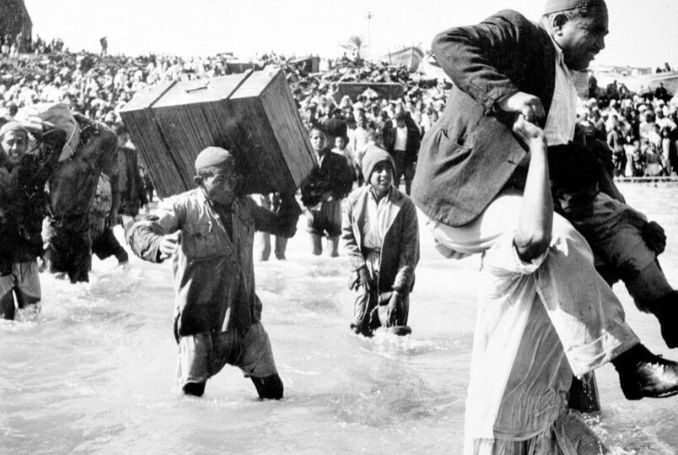
78th anniversary of the Nakba


Terrible events of 1948 which continue to have an effect today

May 2026

The Nakba took place in 1948/49 and resulted in vast number of Palestinians and Arabs being displaced from their homes or murdered by soldiers of the newly created Israeli state. Numbers vary but 750,000 is the approximate figure. Those who survived lived in camps in Jordan, Gaza and Lebanon. Survivors within the new borders of Israel were subject to manifold restrictions which are recognised as apartheid. The catastrophe has left lasting pain and hatreds which means the prospects for peace and reconciliation are remote. Palestinians living in the West Bank are subject to increasing levels of violence and destruction of their property.

There is a march in London tomorrow which no doubt elements of our media and some politicians will demonise calling it a ‘hate march’ or other accusations. Reporting will focus on any violence and very little on the causes. The Jewish Chronicle, quoting Labour Friends of Israel MPs, is calling for a ban.

Reporting

On the question of reporting and the bias of large parts of our media, our attention has been drawn to a piece Prince Harry wrote condemning anti-Semitic and anti-Muslim hatred in the New Statesman. Within days, nearly all the media removed the anti-Muslim element. It is an astonishing read and involves supposedly trusted outlets including the BBC; the Guardian, Sky News, CNN and others. The reasoning or the motives are not clear. It is recommended that you read the evidence provided in this link. Many find claims of media bias hard to accept and this is a clear cut example of altering the news to suit an agenda.

Some background is here concerning the Nakba. A report by Amnesty International on the right of Palestinians to return. Middle East News provide further stories.

We shall be holding our vigil – with others – tomorrow, Saturday 16th as usual. In the market place, Salisbury starting at 5pm for half an hour.


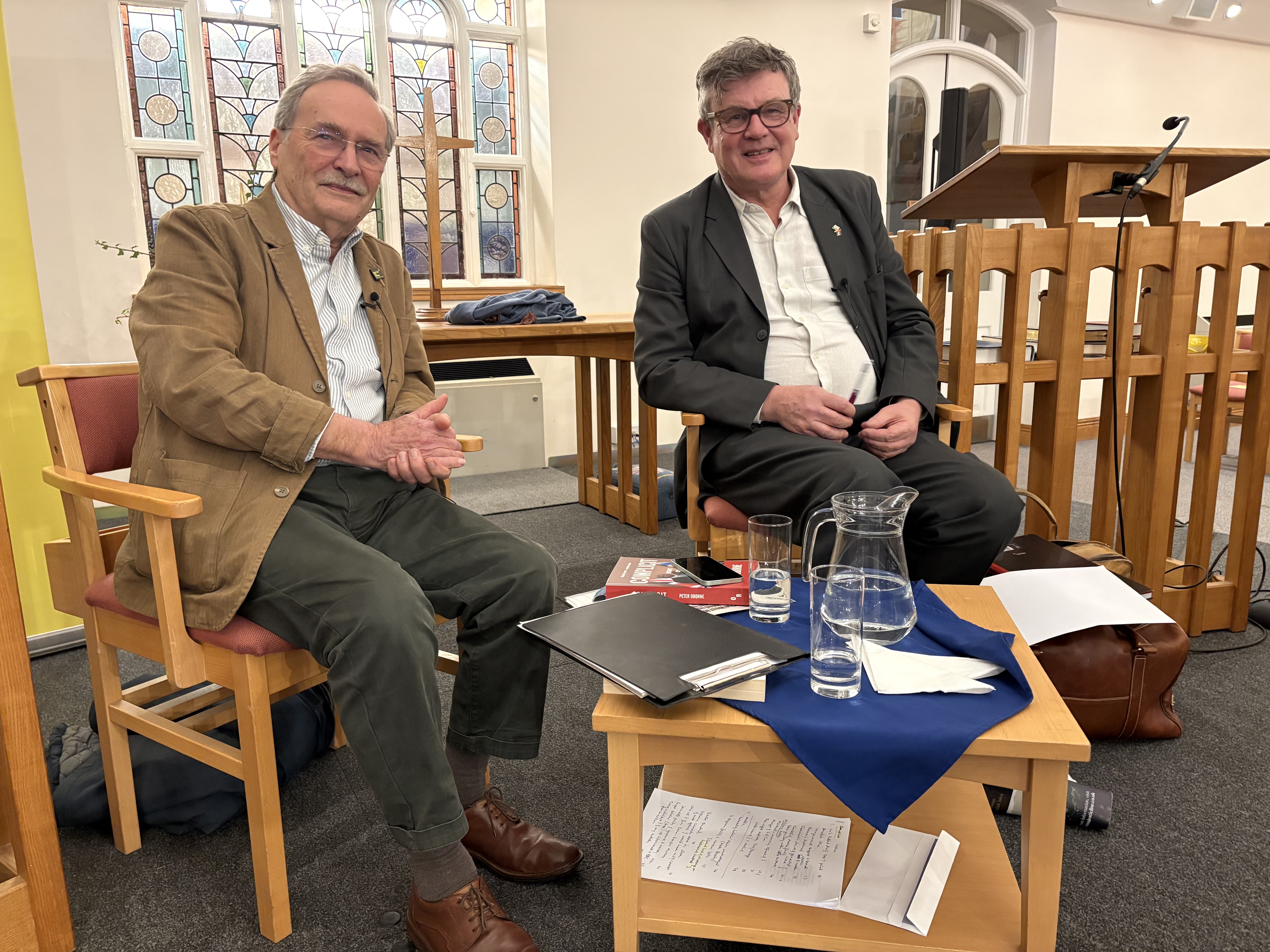
Author and journalist Peter Oborne visits Salisbury


Talk to the Salisbury group about his new book ‘Complicit’

January 2026

The Amnesty International Salisbury Group invited the noted journalist and author Peter Oborne to speak about his recently published book* ‘Complicit: Britain’s Role in the Destruction of Gaza’ which describes in detail the extent to which British governments and media have supported the Israeli government presentation of events in Gaza since the massacre in October 2023.  The event, held in the Methodist Church, was very well attended, with an audience of around 80.  Following his presentation there was an opportunity for the audience to ask questions.  Thirty copies of his book quickly sold out.

Asked about the motivation for writing the book, Mr Oborne (on the right of the picture) said that the drive came to him while in Nablus in October 23, as a continuation of his previous work as a political journalist and critic of lying in politics and the pro-Israel lobby. He noted that the former prime minister Rishi Sunak had declared unequivocal support for Israel, and the current prime minister Sir Keir Starmer notoriously agreed that the Israelis ‘had the right to deny fuel and water to the Gazans’. This brought them into an alliance with the far right and right wing media.

The role of the United States as a factor was considered. This has affected the language that is used in the conflict. Sir Keir Starmer, it was noted, was a human rights lawyer, and a Corbynite [reference to Jeremy Corbyn, a previous leader of the Labour Party], who changed as soon as he became leader.

Asked how influential the Conservative Friends of Israel were, Mr. Oborne noted that as MPs they must be compromised and should not be part of the debate if receiving funding from them (Note: the Salisbury MP Mr. John Glen is a member of this group).  The funding is significant and amount to around half a million pounds by some estimates.  He observed that during the committee stage of a related bill, only pro-Israeli MPs were called.

Media bias

The discussion moved on to the question of misrepresentation of events in the media.  The claim that Hamas had ‘beheaded babies’ was reported as fact in the Daily Mail and the Times, and such stories were used as a justification for deliberate targeting by the IDF.  In general, war has always led to misreporting historically: the first casualty in war is truth.  Lurid stories of baby killings were repeated in the Independent (!) and the Daily Express and repeated by the Israeli Ambassador and other politicians. 

Q: how many babies were killed and beheaded?  A: Two were killed, none beheaded.  In his book Peter Oborne quotes research by the Israeli paper Haaretz which revealed one had been shot through a door and a second infant had died after delivery by Caesarean section and the mother had died as well.  Terrible events but not the mass killing of babies which the British media had swallowed whole. 

Even the BBC and broadsheet newspapers were guilty of misreporting, sometimes by omission rather than commission.  In his book, Oborne describes the BBC’s coverage as ‘a reporting disaster and a moral calamity‘ (p51)

For example, no mention was ever made of the “Dahiya doctrine” of military destruction of civilian entities.  The doctrine itself calls for the deliberate targeting of civilians and civilian infrastructure in order to induce suffering and severe distress throughout the targeted population.  By targeting indiscriminately, the IDF hopes to deter further military attacks against Israel, destroy its enemies, as well as influence the population to oust the militants seen as the primary target.  This seems to contradict Israeli claims of targeting actions against Hamas not civilians, a claim endlessly repeated by the media.

Why did British media consistently misreport events in the Gaza war Peter was asked?  The fear of being called anti-Semitic is a factor in bias among reporters. The Israel lobby will respond immediately to critical comment and not all journalists recognize the rules of the game. The IDF will regularly challenge reporting of actual events. With most newspapers being pro-Israel, it is easier to report from that angle.

Israel accused UNRWA of employing and harbouring Hamas terrorists among its 17,000 staff. As a result, the British government immediately withdrew its support. UNWRA was the largest agency operating in Gaza and by closing their warehouses and distribution work it had a devastating effect on the lives of those living there.  In the past few days, their HQ was demolished by Israel, and, although the UK reinstated its connection, the myth of Hamas involvement was never rejected.

Questions from the floor

Questions from the floor included the makeup of the IDF (the Israeli national army, but one with a substantial number of foreign volunteers) and the influence of Israel had over the USA and UK policy.  He thought some but is was not overwhelming.  In answer to a question, Mr. Oborne praised Mrs. Thatcher for her support of international law, something not sustained today,  We are being let down by politicians, but some who have been supportive of the Palestinian cause were named along with alternative media. Asked about President Trump’s “Board of Peace”, it was considered to be not a serious venture, not least because there is still no genuine ceasefire.

On the question of whether the political classes will be held to account, the speaker’s view was that if not, then might would be right. If the International Court of Justice concludes that genocide has taken place, British politicians may be liable – although, since the Attorney-General was a government appointment he would have to take the case up and this is unlikely to happen.  The possibility remains that other countries might decide to prosecute.

Mr. Oborne was thanked for coming to Salisbury and discussing his book.

*OR Books (pub) ISBN: 9781682194263


Recent posts:

Peter Oborne now writes for Middle East Eye and Byline Times.

Why Labour Leaders Are Pushing for ECHR Revisions: A Political Analysis


Alarming stories that Labour leaders are wanting to reform the European Convention

June 2025

Alarming reports have emerged over the past few days that the current government is considering some kind of revision to the European Convention of Human Rights (ECHR). Figures such as the prime minister Sir Keir Starmer, the Justice Secretary Shabana Mahmood and the Attorney General Lord Hermer have made speeches suggesting disquiet concerning aspects of the Convention. In particular it is article 3: No one shall be subjected to torture or to inhuman or degrading treatment or punishment and article 8: Everyone has the right to respect for his private and family life, his home and his correspondence.

This story has history and the statements by politicians are more than usually disingenuous. To understand the story and the reasons for this recent slew of statements it is necessary to look at causes and why there is a clamour among politicians, some of the public and the media for change.

Stage 1the media

Much of the pressure has come from sections of the media so it is necessary to look at what is going on there. Newspaper readership has declined precipitately. Between 2000 and 2010, the decline was 65% and in the following decade up to 2020 a further 55%. Add in rising costs and declining advertising, and there is something of a crisis in the newsrooms. In this climate, it is cheaper to break into the emails, phones, bank accounts and even houses of the rich and famous, politicians and footballers to achieve a juicy front page, than to carry on the normal business of journalism.

Then came the hacking exposures and the Leveson enquiry which exposed the depth and extent of the hacking and criminal activity. It included senior police officers in the Metropolitan police in particular who sold information to the newspapers. This changed the dynamic of the industry and the notion of privacy was an anathema to their business models.

Over the last two decades there have been hundreds of stories alleging that criminals were not getting their just deserts because of their human rights either because of the ECHR or the domestic Human Rights Act. It was a ‘criminal’s charter’ they alleged. Photos of wanted criminals could not be circulated because of their human rights (they can), police could not evict an armed man until they provided him with a McDonalds hamburger because of his human rights (they could but it was normal practice to accede to requests to cool the situation). Abu Qatada was seriously misreported in the tussle over his deportation to Jordan.

Sadly, positive stories about the acts were almost entirely missing. The Daily Mail used the act to defend its journalist’s rights to protects their sources but strangely forgot to mention this to its readers.

Stage 2the politicians

Then the politicians began to join in perhaps sensing from the newspaper coverage that they were onto a popular winner. After all, if the voters were reading a never ending litany of stories about the evils of the human rights laws and Europe meddling in our affairs, it was a gift. It soon became part of the Conservative manifestos to abolish the act or later reform it. It became tangled up with the Brexit crusade and it is possible that many thought that coming out of Europe would mean that the ECHR would also be history. There was the famous cat story by Theresa May which was almost complete nonsense.

There was meant to be a Leveson part II to look at the unlawful conduct between the media and police but there were allegations that in return for a softer ride from the press, Keir Starmer agreed not to set it up. These allegations are denied. There are no plans for a part II.

Stage 3 – the boat people

As the means to arrive into the UK as a refugee or an asylum seeker diminished so the numbers who took to the boats to cross the Channel rose. This became a matter of massive political importance and the Reform party made huge progress with its promises to stop it. Media stories of asylum seekers being installed in hotels are constant. Despite boat crossings being only a small part of those coming to the UK, they loom large in the public imagination and politicians on the right have taken note of this.

The problem is that the government has obligations under the ECHR and other agreements, to treat asylum seekers in a proper way. Demands to simply ‘send them back’ are difficult to do particularly as ‘back’ can mean a county riven by war or where they can face dire consequences. But in simplistic terms human rights are standing in the way, as Mahmood says: ‘voters say international law stop them achieving the changes they want to see.

Stage 4 – the Reform party

Along came Reform and quickly began to made inroads into the political landscape. The overturning of a massive Labour majority of 14,700 in Runcorn and Helsby by Reform has shaken them badly. Reform has simple answers to matters like immigration which appeal to many and which has defeated both the Conservatives and now Labour. They would pick up boats in the Channel and return them to France. Asylum seekers would be processed off shore. These and other policies quick fix policies appeal to many and saying that they are difficult or impossible to do because of our international obligations carry little weight with many voters. They are even inflammatory particularly with those who have a deep distaste for anything European.

Stage 5 – today

So the Labour government is feeling under pressure. It has not ‘solved’ the Channel crossings problem. It has lost popularity for a variety of reasons quite apart from the discussion here. Reform is making great strides and even ahead in some polls with suggestions that Nigel Farage becoming a future prime minister was not the joke it might once have been. The Home Office remains dysfunctional and would take years to reform even under competent leadership. The party is becoming desperate to be able to counter the tide of dissatisfaction present in large parts of the kingdom particularly in the red wall seats.

So this brings into where we started and speeches about trying to reform elements of ECHR. The sadness is that they cannot. It would take years to carry through any reform in Strasbourg with little likelihood of success. If the government were to resile from either or both articles 3 and 8 would it solve its problems? Again sadly, no. The opposition to human rights laws and agreements have little to do with the people at the bottom of society so to speak. Almost no part of their speeches are about the victims of injustice which human rights are about.

As we have argued, it is sections of the media who have over decades created myths and disinformation about the workings of the laws. It is their business models which are under threat not the fate of asylum seekers. Why else would the Murdoch press spend over £1 billion in keeping the facts of its intrusion and criminality out of the courts? It is an irony – almost a supreme irony – that the much prized sovereignty that people apparently so desperately want is not in fact available to them. The Judiciary are all too happy to allow these hugely expensive legal actions to go ahead and thus subvert justice and free speech. There is no justice in any meaningful sense of the word. The rich and powerful can ‘buy’ silence by paying large sums into court that no one can afford to match.

These speeches appear to be preparing the ground at present in an attempt to match the rhetoric of Reform politicians. Instead of a proper concern for justice, establishing a Leveson II enquiry into the criminality of some of the media and their friends in the police, or tackling the rampant injustice of the defamation laws which serve to protect the rich from proper enquiry, our politicians seek to curry favour and favourable headlines in those very media outlets which have distorted the public’s attitudes to the laws which in truth protect them. The sadness is that the three politicians saying this stuff are experienced human rights lawyers who know it to be a distortion of the truth. A truly bizarre state of affairs.

Review of the year


Review of the year by Each Other

December 2024

A useful review of the year as far as human rights in the UK is concerned has just been produced by Each Other. They point to a number of human rights concerns in the UK. One issue were the calls for the country to leave the European Convention of Human Rights (ECHR). A leading proponent of this was the East Wiltshire MP Danny Kruger. According to Politics he says the ‘Conservatives will not get back into power unless they make a commitment to leave the Convention’. The anger felt by Kruger and some of his colleagues concerns the issue of immigration and how we deal with people arriving here.

Immigration has indeed been one of the hot political topics during the year and was a key feature during the July election. There was a long drawn out proposal to send people to Rwanda and the first flight with the first of the deportees was due to leave from nearby Boscombe Down airfield. At the last moment, the European Court stepped in. It said more time should be allowed to consider the issue. It was this intervention which angered so many in the then government. Rwanda was abandoned by the Labour government.

Another important development during the year was the effects of the Police, Crime, Sentencing and Courts Act 2022 which increased police powers to prevent or limit protests. We have the right to free speech and to assembly. Protests frequently anger governments of all stripes and it does not seem the Labour government is in any rush to repeal the act. The act has a deadening effect on protests – at least that was its intention. Protests have taken place with climate and the Palestine issue chief among them.

The Online Safety Bill is another contentious issue. It pits the right to free expression against guarding against hate speech. The murder of three little girls in Southport brought the issue to a head. Social media accounts alleged the alleged murderer was a Muslim and had arrived by boat. He is neither. It sparked widespread rioting and attacks on police and asylum hotels.

However, although most of the opprobrium was directed at social media, legacy media have maintained a prolonged campaign against immigrants, the boat people and Muslims. The Media Diversity Institute provides a number of examples and others are not difficult to find. They laid a groundwork for demonising ‘others’ and the response to the murders in Southport was arguably a result. Blame focused almost entirely on the rioters (correctly) and social media. The role of print media largely escaped censure.

Democracy and human rights are under threat in the UK. Elon Musk’s alleged major investment in a party in the UK will distort our politics if it happens. Musk is strongly against trade unions, for example. He has turned his X platform into a mouthpiece of far-right views. He regards the UK as a ‘tyrannical police state’. The point is not the expression of his views, which are shared by many, but that he has enormous wealth to put them into action.

Seasons greetings to our readers.

Shameful media coverage


British media coverage of the Gaza conflict has been shameful

December 2024

A major human rights organisation publishes a detailed report on the activities of the IDF in Gaza with copious evidence that it amounts to genocide. An Israeli academic, also in an extremely detailed and well referenced report, alleges the same thing. A UN report points in the same direction. Since the events in Gaza, with 44,000 dead and many thousands missing, are of international importance, how they are reported is of great concern. Yet the coverage by our mainstream media has been exceedingly poor and the journalism of a very poor standard.

Coverage is important in terms of shaping public opinion. Since our politicians pay very close attention to how they are regarded by the media it matters for the shaping of policy and how they react to events in conflicts such as Gaza. The UK continues to supply weapons and offer aid to the Israelis precisely because they can and there is precious little media opprobrium.

How then would you expect a report produced by Amnesty International to be reported by a responsible

newspaper or broadcaster such as the BBC? You might expect that they would first of all spend a few minutes on what the report actually said commenting on its detailed nature and the evidence it has produced. You might also note that key aspects of the report were sent to the Israelis to ask for their response ahead of publication. Then you might, for the sake of balance, speak to a representative of the Israeli government or the IDF for a response. You would also expect that the report was actually reported on since the horror of events there are all too evident. So how did our media measure up to these expectations? In short – poorly.

Reporting is seriously wanting

A piece by Media Lens examines the reporting of the genocide in the British media and finds it seriously wanting. They note that in a sane world politicians such as David Lammy and Sir Keir Starmer would be under severe pressure to take a more robust line with Israel. They would call what is going on ‘genocide’ and would find calls to end arms sales all but irresistible.

They note the Daily Telegraph began with Israel’s denunciation of the report which was not in any way a detailed point-by-point rebuttal, just an accusation that Amnesty were ‘fanatics’. Sketchy details of the report appeared at the end of the piece. The Daily Mirror placed it on page 8 or 10 (according to edition). The Guardian reported it online. However, and shamefully, the Daily Mail, The Sun, The Times, and the Daily Express ignored it altogether. The BBC was also poor giving more time to the perpetrators than to the report itself. Media Lens claim that ‘the BBC’s balance and impartiality: [was] a brazen attempt to to protect Israel’s reputation from the truth during an ongoing genocide’.

They claim that the BBC’s much-vaunted impartiality has been increasingly exposed as a charade. They also claim that the BBC’s complicity in genocide and failure to give more than a passing mention of the reports on their news bulletins should be a matter of very serious concern by senior BBC managers.

Israel’s response

It has to be wondered why, in the face of such non-reporting by sizeable chunks of the British media, they should feel the need to respond at all. Media Lens quotes Mark Goldfeder of the US National Jewish Advocacy Center as saying Amnesty redefined the legal term of genocide to suit their accusation, stripping the term of its actual meaning in the process. He claims that they admit this themselves halfway through the report. It did not. The bias in our media is a regular feature of articles in Byline Times.

The failure of British media to give a proper account of the detailed reports, particularly as their own reporters are not allowed into Gaza, is shameful. It means a chunk of the British population is largely unaware of the true horror of what is happening. They are led to believe the events were a direct result of the horrific attack by Hamas on 7th October 2023 when the origins are much deeper. They are regularly told when a hospital is flattened or a refugee camp is bombed, that Hamas is using it as a ‘human shield’ with almost no evidence provided to substantiate this, even after a year. We are told by reporters that there are miles of tunnels packed with arms yet no footage has appeared to evidence that. If it was true, would not the IDF be keen to display it? They are led to believe that the actions of the IDF are a response to violence when the reality – sometimes from the mouths of Israel’s politicians – is to drive out all the Palestinians from the territory.

The British public is being seriously let down.

Recent posts:

The State v. Trudi Warner


Interesting and troubling webinar by the Good Law Project on the case of Trudi Warner

June 2024

Readers will recall that earlier in the year, Trudi Warner stood outside the Inner London Criminal Court and held up a placard telling passers by that juries had the right to vote on their conscience. The trial was taking place of several climate activists and a key issue was that the judge in the case, Judge Silas Reid, prevented the defendants from mentioning that they were campaigning for action on the climate. The worry was that if the jury realised that this was what the defendants were doing, there was a probability that they would acquit. Many websites commenting on this case allege that the judge is against people protesting (which we cannot verify) hence his aggressive threats to defendants and others.

Trudi Warner was then arrested for contempt of court by displaying her placard which states a fact, long established in English law, that juries can indeed vote on their consciences. This was established in the Bushell (sometimes Bushel) case of 1670, where a judge locked up a jury and deprived them of food and water for disobeying his directions.

Jolyon Maugham of the Good Law Project, said that people had a ‘sweet notion’ of the law which this case cast into doubt. It was one of the factors in the Brexit debate where people often spoke of sovereignty and an aspect of that was hostility to Brussels (actually Strasbourg) telling us what to do. ‘We should have our own laws’ was a frequent refrain. This has re-emerged with the proposed Rwanda flights and a desire by some politicians to come out of the European Convention. There is a deep belief in the primacy of British Justice with its ancient traditions going back to Magna Carta. This and other cases demonstrate that this sanguine view of our justice system is misplaced.

Climate protests

The state has the power to lock people up and juries are a means of tempering this power he said. The plain fact was that the fossil fuel companies mounted well-funded campaigns to promote their activities and frustrate governments trying curb fossil fuel use. There is a close association between government, Big Oil and the media. Sections of the media refer to protestors as an ‘eco-mob’, ‘zealots’ or a ‘rabble’ among other epithets. Fossil fuel companies fund several Tufton Street think tanks with millions, yet TV companies, including the BBC and Channel 4, fail to ask interviewees from them, ‘who funds you?’

The various protest organisations including XR and Just Stop Oil angered government ministers by highlighting the shortcomings of government actions in dealing with the climate crisis. Their activities had also angered members of the public who were sometimes inconvenienced. As ever, a totally peaceful protest is ignored but glue yourself to the pavement and you achieve some publicity.

Arrest

So Trudi Warner was arrested for contempt of court and ended up in the Old Bailey for trial 8 days later. At a permission hearing which establishes whether there is an arguable case, it was thrown out by the judge who said that the ‘government had mischaracterised the evidence‘ and that it was ‘fanciful to suggest that Ms Warner’s actions fall into the category of contempt‘. The government said it is to appeal the decision [before the election was called]. It is ironic to note that a plaque celebrating the seventeenth century Bushell case is fixed to a wall in … the Old Bailey. To remind ourselves – the placard merely pointed out the plain fact that a jury has the right to decide a matter according to its conscience and to disagree with the judge’s direction.

Conclusion

The government has introduced a range of bills which all have an effect of making protest more difficult and risky. Police have been given more powers which they have used in preventing protests from taking place including, for example, at the Coronation. There is a kind of cosy alliance between Big Oil with its range of well-funded lobbyists; a government all too keen to restrict protest, and some media organisations who eagerly demonise protestors and deny climate science. In the process, rights and justice are trampled on. If, as is being predicted, a Labour government comes into power on 5th July, it will be interesting to see if they pursue the appeal. It will a quick test on whether they will follow in the authoritarian footsteps of their predecessors or adopt a more permissive regime. Early signs are not promising as they do not have plans to annul any of the existing legislation.


During the webinar, we saw clips of film of the protests prepared by Page 75 Productions who will be hosting a showing of the full film in September. A video can be accessed here.

Sources: Good Law Project; The Guardian; The Canary; Christian Climate Actions

Celebrate protest


Amnesty webinar on the state of protest in Europe

May 2024

It seems that the UK is not alone in its attempts to stifle protest and passing laws to restrict individual’s abilities to protest. Recent tensions with ministers and some of their media supporters concerned Extinction Rebellion, Rwanda and the related issue of the boat people and more recently, the events in Gaza and the treatment of the Palestinians. Amnesty International recently hosted a webinar to look at the issue of protest and some of the points made are discussed below.

Protest has a curious position in British culture and law since there is no direst right to protest: it is not a specific human right. There is a right to free speech and a right of assembly and these combine to enable people to come together to protest.

The value of protest is something that seems to be forgotten. The anger at the noise of disruption of a protest march overshadows the fact that this is a means to enable people to highlight a cause of concern. There are some who complain about the disruption and who say that they would not mind a peaceful protest, it’s the noisy and disruptive ones they object to. The problem with a peaceful and noiseless protest which causes no disruption is that no one takes any notice. Many people report that visiting one’s MP or writing letters to them is largely a waste of time. It is also forgotten that nearly all social reforms in the UK have come as a result of protest, some lasting decades. The positive history of protest is not generally known or recognised. It is seen as a nuisance and something to be curtailed or even better, stopped.

Webinar

The results of the survey will be published on July 9th and it will show some regional trends which include casting protest as a threat, claiming it is a privilege rather than a right and the increasing use of supposed public safety measures to curtail them. They conclude it is generally getting worse with a heavy police presence used to intimidate. Complaints against the police and the use of excessive force are difficult because of the lack of identification.

A lot depends on language and protestors are frequently described as ‘rioters’ with no justification. There are also attempts to cast protestors as ‘illegitimate’.

One speaker from Clidef – with a focus on climate protest – spoke about the ‘pincer movement’. This includes new legislation introduced by government together with the stretching of old laws. Police action and powers have been strengthened as already mentioned together with the greater use of prison sentences against alleged offenders: 138 Just Stop Oil protestors have been imprisoned for example. They are also trying to use conspiracy laws.

Secondly, private actors and the use of SLAPP actions [Strategic Litigations Against Public Protest] which are a means to use the law to intimidate those seeking to take action against wrongdoers. They are a means by the wealthy to use the law to silence critics since they can afford to effectively bankrupt them with costs.

Thirdly, the judiciary and he might have mentioned the legal system itself. Judges have been in the firing line for not allowing those on trial to say why they were protesting, fearful no doubt that once a jury realises that they were promoting a climate action, they would acquit. The final speaker asked ‘who are they protecting? The activists or the companies?’

The theme of the webinar and the speaker contributions was that governments are increasingly dumbing down on protest whether it be the climate, Palestine or anything else. They give the impression of not liking dissent in any form and are using increasingly draconian tactics to inhibit, arrest and imprison those to engage in it.

Media

A theme not explored was the role of the tabloid media who almost without fail demonise protestors calling them things like ‘eco-zealots’, ‘eco-mob’, ‘a rabble’, and their actions amounting to ‘mob rule’. Article after article describes protests in entirely negative terms and seldom give readers much (in fact next to nothing) in the way of an explanation of why they are protesting and the nature of their cause. It is to be presumed that they are reflecting public opinion and the views of their readers. Recent reports on the climate are extremely worrying. The fossil fuel companies are able to mount expensive lobbying campaigns to ensure their interests are looked after and extraction can continue. Protestors do not enjoy this privileged access to those in power and taking to the streets is the only way they can be heard. It is a shame that sections of the media are not able – or are disinclined – to reflect this imbalance of power and the inevitable effects it will bring to the climate.

Our right to protest is precious and should be defended.

The Salisbury group was established 50 years ago

Rwanda report


Cross party committee on human rights criticizes the government’s Rwanda policy

February 2024

The Rwanda (Asylum and Immigration) Bill ends its House of Lord’s stage today (12 February) and returns to the Commons. The Bill has been roundly condemned by many human rights and other organisations and the committee said that it is ‘fundamentally incompatible with Britain’s human rights obligations’.

The Supreme Court has already ruled that Rwanda is not a safe country and the government’s attempt to pass a law simply saying it is is bit like passing a law saying water can run uphill. The Committee went on to say ‘the Bill disapplies laws that might prevent and individual’s removal to Rwanda including many of the key provisions of the Human Rights Act.

‘It might also impact on Northern Ireland, that it would both undermine the Windsor Framework and the Belfast (Good Friday) Agreement’.

It also raises the point about UK’s reputation. We have they say, a reputation for respect for human rights of which ‘we should be proud’. 

Immigration, and most recently the Channel crossings, have generated a considerable degree of angst and hostile media coverage. This is not recent and goes back many years and started to emerge as a political force during the Blair years. In many respects it goes back further to various waves of immigrants such as the Huguenots from France, Flemings from the low countries and Jews fleeing Russia. All have been met with hostility of some degree. 

Recent immigrants are cast as not really refugees at all but economic migrants, are cheating the system, are living off benefits and so forth. Newspapers – and not just tabloids but the Daily Telegraph and the Independent – have carried hundreds of negative stories and helped keep the temperature high. The Sun even ran a story that swans were being stolen from the London parks and eaten by immigrants (invented). The raised media attention has increased public concern to which the politicians are obliged to reflect. 

Watch the Amnesty video

Anomaly

A curious anomaly is that people who’s offspring emigrate to live and work overseas (as ‘economic migrants’ no less) are spoken of in terms of pride. Emigrants good: immigrants bad. 

Another curiosity is that many of the politicians leading the hostility and proposing ever harsher measures including deportation to Rwanda, are themselves sons or daughters of immigrants. Priti Patel, Kwasi Kwarteng, Suella Braverman, Rishi Sunak, Danny Kruger and going back further, Michael Howard (Romania). 

The benefits of immigration to this country almost don’t get a look in. In November last year, the government’s own statistics show that around one in 5 of people working in the health service were not born in the UK. Indeed, the service would struggle to survive (even more than now) if these people were not working here. 

The entire debate is based on hysteria. Boat people have assumed a disproportionate sense of anger and fear even though they represent a small proportion of all immigrants to this country. The majority do go on to claim asylum. The hysteria and media mis- and disinformation has resulted in the plan to deport a few hundred to Rwanda, a policy which is performative rather than likely to be effective. 

Sources: Daily Mail, FullFact; Liberty; Hansard, Guardian (accessed 12 February 2024)


The Salisbury Amnesty group celebrates 50 years of existence this year

Bill of Rights consultation


August 2022

Government invites consultation on its Bill of Rights – but are they listening?

Dubbed by some as the ‘Rights Removal Bill’ the Bill of Rights is currently before Parliament and the government is inviting comments which can be accessed via the EachOther site. The bill has attracted considerable criticism and overall is likely to reduce the rights that people currently enjoy. A number of Conservative politicians have been unhappy with the Human Rights Act which they wish to see replaced with this Bill of Rights. Successive party manifestos have promised its abolition.

In a previous post we drew attention to a book published by the Justice Secretary Dominic Raab which goes someway to explaining the thinking and beliefs which led to this bill. We looked at some of the arguments in the book, Assault on Liberty (Harper Collins, 2009), which have led to the current bill. It claims that there is now an ‘arsenal of rights’ and this is reflected in the introductory remarks which refer to ‘mission creep’. We said that the history was of doubtful merit: the argument being that the country achieved greatness because of its freedoms and liberties and by inference, its decline came about because we have become rule bound of which the HRA is but one culprit. It is part of the small government and limited regulation which some conservative MPs desire. Significantly, the book is peppered with quotes from the Daily Mail which has carried a large number of stories critical of the act. The paper has also directly criticised judges on its front page, calling them ‘enemies of the people’ yet Liz Truss, when she was Justice Secretary, failed to support them until shamed into doing so.

Print media influence

The paper, along with others newspapers from time to time, have produced a series of stories critical of the act. Some are pure inventions and some claim the act is responsible when in fact it has been other legislation which has stoked their ire. Where positive stories appear, for example Hillsborough, the role of the act in achieving justice is downplayed or not mentioned. Readers of the Daily Mail where not told when it itself used the act to protect journalistic sources. The role of the media is important because over the years they have encouraged a negative view of the act to take hold claiming it aids criminals and help all sorts of undesirable people to escape justice by using, in a spurious way, some clause or other thus alleging justice cannot be served because it is their ‘human right’. It has enabled politicians to bring forward this bill safe in the knowledge that sections of the public have been primed over a period of decades to view the act as a thoroughly bad lot and the sooner it is done away with the better. Throw in Europe and the European Court overruling parliament and the scene is set.

If we look at the range of bills and acts, we see a pattern of thinking where laws are introduced to limit protest, restricting access to judicial review, proposals to limit the right to strike still further, and increased police powers amounting collectively to a real step backwards for the liberties of the individual. Taken with the Bill of Rights if it becomes law in its current form, the trend is worrying.

The Bill

The bill has a number of aims. It seeks to dilute ‘positive obligations‘ on public authorities. In view of the current state of the police – one such authority – where a number of forces have been hit by scandal after scandal and several are in special measures, this seems to be particularly inappropriate. It is claimed that the bill will further hurt women’s rights. The already abysmally low level of prosecutions for rape with an even lower level of convictions, will not be helped if the requirement for positive obligations is diluted.

It introduces a permissive stage, a kind of trial before a trial. Since the justice system is already in a state of crisis with extensive delays before a case can come to court, this will have the effect of delaying matters still further. It will also add to costs.

European Court judgements will no longer be part of domestic law. The Supreme Court will also have superiority over the Strasbourg court which is where we came in really. The problem was always that people failed to get justice in the UK courts and had to go to Strasbourg to get it. In a significant number of cases, Strasbourg overruled the UK courts and this became more and more embarrassing. Hence the introduction of the HRA. The Assault on Liberty referred to above is notable for its romantic view of the past and our justice system. The desire to remove Strasbourg from the scene relies on the fantasy of the British justice system being somehow superior. Yet many of our judges, being a product of a very narrow education and from a small part of society, have often shown themselves to be reactionary and out of touch. There was no glorious past which the Justice Secretary seems to think has been taken away. This is discussed in more detail in Conor Gearty’s book, On Fantasy Island (OUP, 2016).

Finally, the desire for rights and responsibilities to be introduced. This is connected in some way to the idea that rights are conditional on good behaviour and that irresponsible behaviour – however that is defined – makes someone less deserving.

The Chair of Joint Committee on Human Rights JCHR, Joanna Cherry QC MP has said that the bill is an ‘unfortunate regression in rights protection’ and has written to the Justice Secretary in those terms.

The local Amnesty group is opposed to the bill. The local Salisbury MP, Mr John Glen has stated he wishes to see the HRA abolished and will be supporting the new bill.

We urge people to submit their views to government while there is still time. As we write (2 August), Liz Truss, seems favourite to become the new prime minister in which case it is certain to become law.

Blog at WordPress.com.

Up ↑