We are pleased to attach our minutes and newsletter for September thanks to group members Lesley for compiling them and Fiona and Andrew for their contributions.
Somewhat longer than previously reflecting two months and also because a lot has been happening on the death penalty front. The piece on refugees is interesting because it reflects the fact that the numbers of boat crossings is down. The item on UK rights discusses some dubious legal decisions around Palestine Action cases where protestors have been locked up and some imprisoned for terrorism offences whereas masked protestors in Dover and Portsmouth haven’t.
There are some details of the Uyghur campaign last month which was extremely successful for us.
Refugees and asylum seekers still consuming political capital
September 2026
With the return of Parliament this month, the Immigration and Asylum Bill is back in action. The Bill has passed its second reading and is now in committee stage. The most contentious parts are the refusal of family reunions, the extended time frame for residence, and the modern slavery definitions. An August meeting of the Regulatory Policy Committee of the House considered the Home Office’s impact assessment to be “not fit for purpose”, and Article 8 on modern slavery to be “inadequate”.
Boat crossings
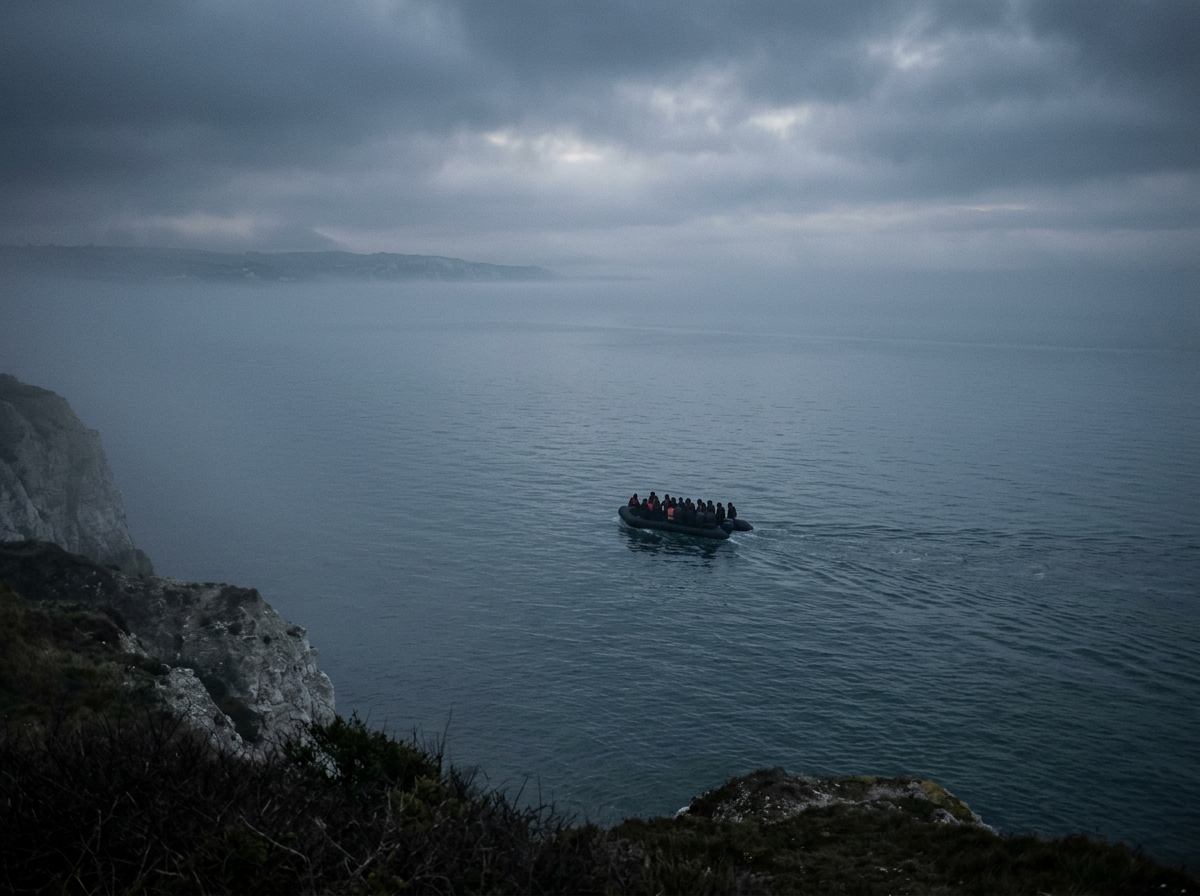
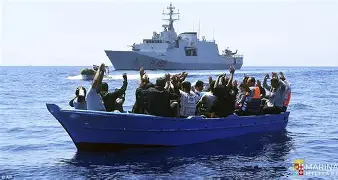
On the small boats front, numbers remain down (102 vessels between June and August, the lowest since 2019, but they are now much bigger boats, taking up to 230 people. Whereas in 2018, 7 was the average load, it is now 65). In 2026, 17,000 migrants have crossed the Channel so far. The backlog of pending cases continues to fall, down to 40,000, the lowest since June 2019, but the grant rate is falling as well, down to 38% acceptances (it had been up to 77%).
With the resultant increase in appeals, the 24-week target for hearing appeals may be hard to achieve. Concern has been widely expressed that the new Independent Immigration Appeals Authority will be free to use non-qualified legal staff to adjudicate the appeals.
40,000 migrants were returned in the year to June, three quarters of them were “voluntary”, mainly to Albania, Brazil, India and Poland. The fine weather over the summer did not materially affect the numbers of crossings, which remain lower than recent years. Other factors include more collaborative action with the French authorities, and seizure of 1100 boats, according to the National Crime Agency.
Migrants and asylum seekers who are already here continue to be the focus of interest. By the end of June only 16,021 claimants were in hotels, but the 69,000 were in other temporary accommodation.
Beyond the statistics, public attitudes in the UK may not be reflected in the mainstream media. A recent YouGov poll indicated that 75% of the public would distinguish between migrants and refugees and 59% thought that too much attention was paid to how migrants came rather than why. Nevertheless, another poll revealed that 40% believed that more small boats were arriving this year than last, and only 22% (correctly) believing there were fewer.
Immigrants and crime
The OECD has observed that there has been little evidence of change in crime figures despite the amount of immigration. In the UK, convictions among non-UK citizens come out at about 12%, the same level as for the adult UK population. Higher levels of lawbreaking were observed among Afghans (sexual offences) and Albanians (drugs) but not substantially. The Government’s advisory guide for asylum seekers on British culture has not had any significant effect thus far. A feature of recent unrest at Portsmouth and Dover has been claims of high crime rates by immigrants.
Across Europe a similar trend is noticeable. Despite the furore in Ceuta, numbers in the first quarter were down by 46% on 2025, but there were more deaths than previously. Member countries of the EU nevertheless continue to be much engaged on the issue. The European Parliament in June approved an overhaul of migration policy, expressly to speed up deportations. EU interior ministers from 22 countries agreed to take “any necessary measures to safeguard public order and address risks arising from secondary movements” (by which they mean migrants moving on from their first country of arrival). The Schengen Agreement has already been suspended in certain places (notably in the spat between liberal Spain and hard-line Italy).
The other big issue for the EU is the search for “hubs” outside the Union for removal of rejected migrants. Five EU countries have agreed to sign deals. Rwanda and Uganda are said to be compliant, but the question remains as to who has the responsibility for such deportees. The European Court of Human Rights is expected to adjudicate against the governments; the Council of Europe has already observed that the changes in policy pose “considerable human rights risks.”
Climate
Finally, with ongoing climate change and a possible exceptional El Niño, there has been much discussion of “climate mobility”. The UN Refugee Convention has nothing on the topic, and there is no legal category of “climate refugee”, but the International Court of Justice has given advisory opinion recognising the issue.
Lots of interest in this month’s minutes and newsletter
July 2026
We are pleased to attach our July minutes and newsletter with thanks to several group members for their contributions. There are pieces on the refugee situation which continues to resonate in the British political scene but often with little attention to the facts. Few would know from the media and politicians that the number of boat crossings have declined for example.
As we have pointed out in a previous post, we now report on British human rights following successive government’s introduction of ever more restrictive laws on assembly and protest.
There is a summary of the death penalty noting that the Restore party wants to see the penalty brought back in the UK. This coincided with the conditional pardon offered to Ruth Ellis, the last woman to be executed in Britain.
There is a report on social media statistics noting that views to this site are at significantly higher level than last year but that most come from outside the UK. High numbers from China are a surprise but very welcome.
There is no meeting in August and the next time we meet is on September 10th.
Refugees and asylum seekers remain a hot political issue
July 2026
With attention shifting to Andy Burnham and whether he will be the new prime minister in a matter of days, and the resignation of Nigel Farage from parliament resulting in a new by-election in his constituency, other topics like immigration have dropped – albeit temporarily – from the news. The latest effort by the Government to get a grip on the immigrant/asylum seeker issue, the Asylum and Immigration Bill, is now published, with the first debate to take place on July 13th. Much of this post will be related to the Bill.
As mentioned previously, the most contentious parts of the Bill are the amendment of the waiting period for prospective residents from 5 years with a promise of acceptance to 2½ years, to be reviewed every six months. Family reunions are also being more restricted, and the Home Secretary has mooted making immigrants pay up to £10,000 once they are in work. Meanwhile, the “one-in-one–out” scheme agreed with the French authorities for boat arrivals, is to be ended in October; about 900 exchanges have been made so far.
On a related topic, the Home Office state that successful claimants must move on from temporary accommodation within 42 days: as the backlog of cases falls, this has added to the number of migrants seeking accommodation quickly, and the IPPR say that this is increasing the number of homeless migrants (up to a quarter of rough sleepers are now non-UK nationals).
A new appeals body proposed by the Bill, the Independent Immigration Appeals Authority, would not require all panellists to be legally qualified. The Law Society has opposed the measure, and it has been said that the idea, originally tried in Australia, was not a success.
Also in the Bill, the contentious Article 8 (right to family life) defence against deportation is addressed. Little change to existing rules are proposed, but the impact is reckoned to be that 11,700 claimants per annum will be rejected. Nevertheless, 55% of those declined permission to stay will likely remain, due to technical issues. The Home Office reckon that overall 34,000 asylum seekers have been granted leave to remain under Article 8.
Separately, the Home Secretary has announced a new scheme to allow local communities and educational bodies to sponsor refugees to settle in their area. A refugee work route is also expected to open next year. These are concessions to the critique by the Refugee Council that the reason refugees make irregular journeys – including via small boat – is due to the lack of legal routes available. Prof. Sarah Singer notes that community sponsorship already exists, and that putting the responsibility on local communities might be seen as the Home Office avoiding responsibility.
Performance politics
Amnesty International’s response to the Bill was summarised by Steve Valdez-Symonds, Amnesty International UK’s Refugee and Migrant Rights Director:
“The introduction of yet more immigration legislation in the final days of Keir Starmer’s premiership, just before summer recess, will be a bitter disappointment for anyone hoping for a genuinely new direction from government. The Bill, and a series of recent immigration announcements, continue down a path laid by successive governments: reducing legal constraints on Home Office decision-making while making the immigration and asylum system increasingly punitive for migrants and refugees.
“Several proposals are deeply alarming: from attempts to weaken protections for families and sideline long-established human rights obligations, to plans for a Home Office-controlled appeals system without legally qualified judges, and proposals to warehouse people seeking safety in mass barrack-style accommodation centres, deny them the right to work, and then present them with a bill for it.
“Access to justice and the rule of law are not inconveniences to be worked around. Protections against torture, family separation and arbitrary state power are values this country has upheld for generations. Yet this government appears willing to cast them aside in pursuit of political headlines.
“This is politics as performance, not problem-solving. Abandoning principles that should never be negotiable, including by seeking to weaken the protections guaranteed by the European Convention on Human Rights, is weakness, not leadership.
“Whoever the new Prime Minister is, if they truly want a reset, then dignity, fairness and hope must be for everyone. Britain needs a new politics that rejects scapegoating and appeasement and returns to the values of justice, humanity and equal dignity.”
The House of Lords Justice and Home Affairs Committee has a new report on the proposed changes, which repeats the criticisms of other bodies and fears that impacts may be harmful.
The new Independent Commissioner for Immigration and Border Inspection has criticised the asylum team at the Home Office for poor initial decision- making and a consequent long appeals backlog. The backlog of asylum appeals is now up to 87,000. Twice as many appeals are coming in as going out. New appeals are not likely to be resolved for 3 years.
Migration Observatory have a report on the long-term jobs market for immigrants. As of 2023, 13% of those granted leave 5 years earlier were earning £20k+. Home Office have figures for 16-24 year-olds between 2015-2023, 24% had work within a year, 48% within two.
A new move is reported for improving the settlement of new arrivals, an asylum dispersal pilot scheme, reputedly being offered for the Autumn. 200 local authorities have expressed interest, but none have heard anything more. £500 million has reputedly been allocated, but no information on funding has been revealed.
Beyond the UK, UNHCR note a trend in global refugees. The number of forcibly displaced people was down in 2025, the first drop in a decade. They warn, however, of the dangers of returning home for many exiles..
Sea rescue has been reported as an issue. The law on rescuing victims comes under 4 separate international laws, making responsibilities and enforceability difficult. It is believed that between 2014 and 2020 some 83,000 deaths occurred among sea bound refugees.
Refugees and asylum seekers still generate a lot of political heat
May 2026
The International Organisation for Migration has produced its latest World Migration Report, covering 2024/5. It assesses the number of internally displaced people worldwide at 83 million, mostly due to environmental disaster, but about 20 million due to conflict. In 2025 there were 94 million migrants in Europe (i.e. people living in a different country from their starting residence). Of course, these figures include people who move for reasons of work or family, as well as refugees and asylum seekers.
At the end of 2024, there were 36.9 million refugees globally, with 31 million under the UNHCR mandate, and 5.9 million refugees registered by the United Nations Relief and Works Agency for Palestine Refugees (UNRWA). A further 5.9 million other people in need of international protection – largely from Venezuela – were reported at the end of 2024. The number of refugees under the UNHCR mandate has decreased slightly since 2023, when it stood at 31.6 million.
Increase in asylum claims
There were also approximately 8.4 million people seeking asylum status. This is a 22 per cent increase from the end of 2023. Despite partial reporting from the United States (only until mid-2024), the country still had – by far – the largest number of pending asylum claims (3.2 million) by end of 2024. Other countries with large asylum applications included Egypt (631,100), Peru (540,000), Germany (348,900) and Canada (292,100).
In 2024 alone, 3.1 million new individual asylum applications were registered globally, with half of these received in only four countries: the United States (729,100), Egypt (433,900), Germany (229,800) and Canada (174,000). Nationals of the Sudan, Venezuela, Syria, Colombia and Afghanistan comprised most new individual asylum applications in 2024. Obviously the situation will be somewhat different post-2024, particularly with regard to the USA.
At the end of 2024, children (that is, people under 18 years of age) made up around 41 per cent of refugees, people in a refugee-like situation and other people in need of international protection.
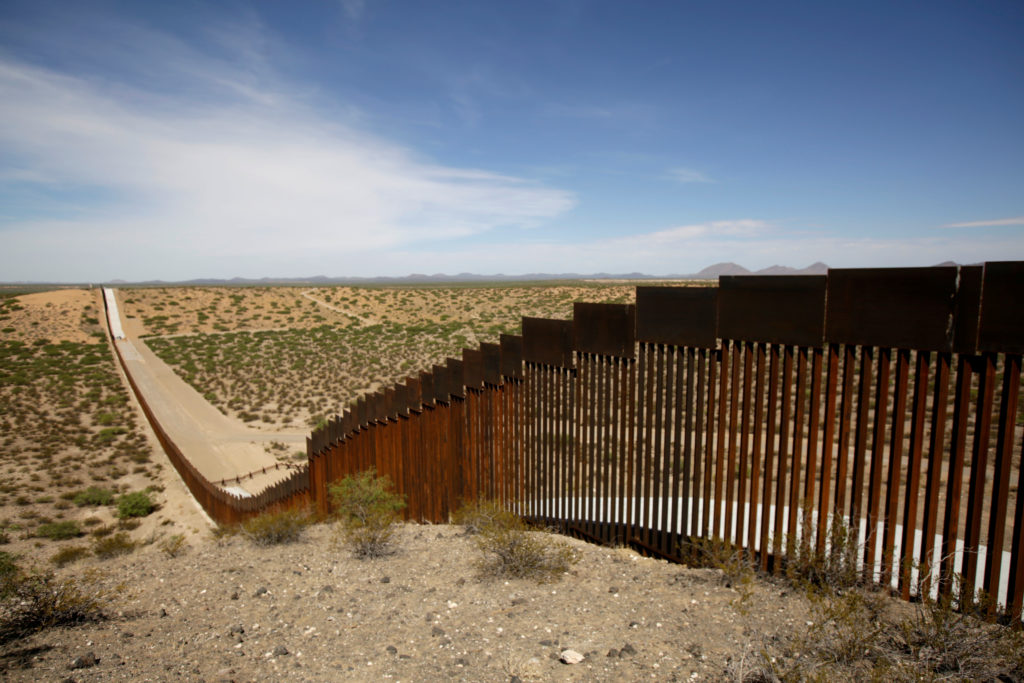
The (American) Migration Policy Institute have researched the question of anti-immigrant borders. They reckon that in 1989 there were 12 border walls, and there are now 74. The EU has increased its fenced length between 2014 and 2022 from 315km to 2,048 km. One of the results of this sort of growth has been the number of drownings at the US/Mexico border, up by 3,200% between 2020 and 2023. It was observed that tougher border policy has resulted in more seasonal migrants deciding to stay. Picture shows the wall between the US and Mexico.
UK situation
In the UK, the amount of legislation on immigration has now seen 6000 changes to the rules since 2010. The latest areas of conflict concern the 1 in 1 out arrangements with France, the prevention of family reunion, and the replacement of hotel accommodation for asylum seekers by use of military establishments. On the latter, the Institute for Public Policy Research has reported on the relations between claimants and the local community, and concludes that the main problem is the lack of transparency from government bodies, the absence of consultation and the lack of any obvious benefit from the newcomers’ arrival to the community. The IPPR support a community-based long-term social housing project that would be of benefit to all groups.
The Refugee Council has a briefing on how to respond to the government consultation on asylum support and family returns, which runs out on 28th May.
Other unhappy organisations include the Law Society (the new independent appeals body is not satisfactory) and 150 children’s’ social and legal organisations, who believe the latest changes in immigration rules amount to an attack on children’s rights.
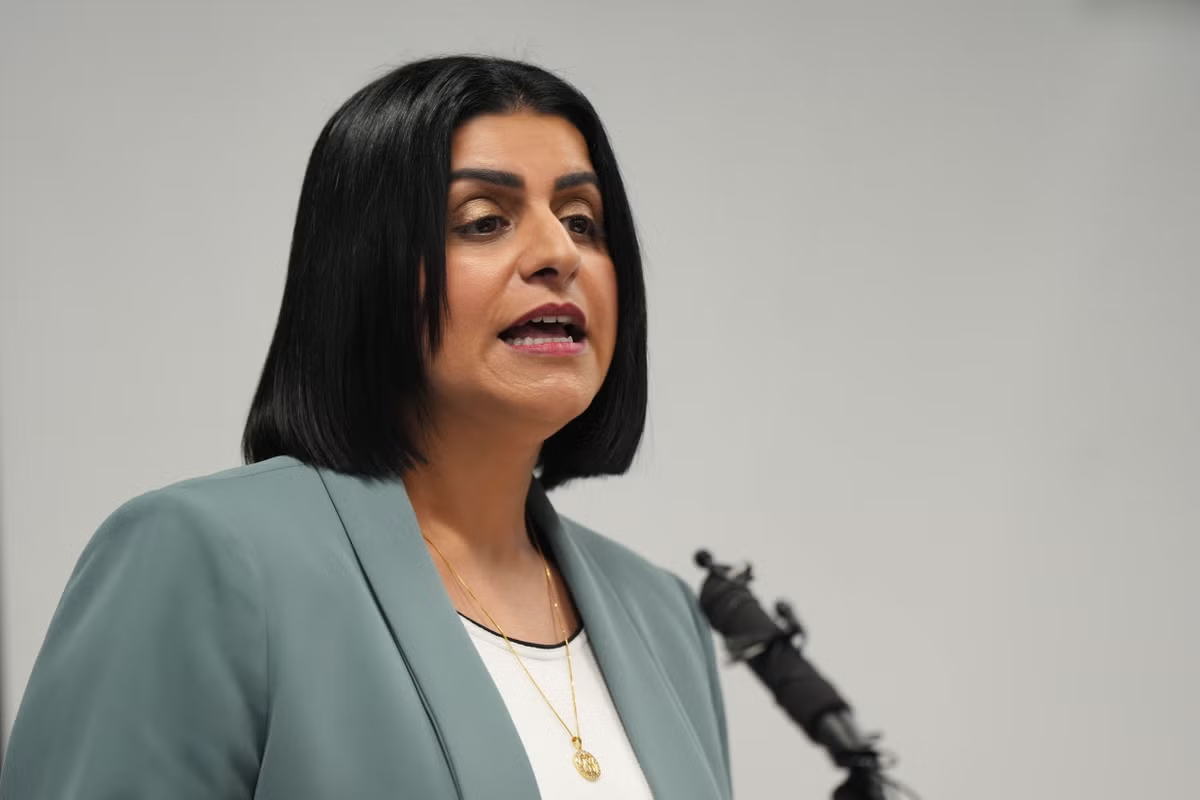
The government is withdrawing travel support for Afghans seeking to come to the UK, of which there are believed to be about 9,000. They will now have to make their own way vie third countries. The Home Secretary (pictured) has made a new agreement with France worth £662 million to provide more enforcement on the Channel coast beaches and better intelligence. The Home office say that 480 people smugglers were arrested in 2025. The Telegraph have quoted Ms Mahmood with saying that the crackdown on irregular migrants will give her room to allow more legitimate routes, but there is no detail on this as yet.
Reform’s claims
Other proposals in the air include Reform UK’s intention to deport migrants who have settled status if they arrived by non-legal means. This would amount to some 400,000 (and they claim would save £14.3 billion through 2029-34 (when they would presumably be in power). The (Reform) Lancashire County Council are withdrawing from the government’s resettlement scheme for accepted asylum seekers.
Nevertheless, the numbers of arrivals are down this year (by a third in the first quarter); the number of small boat arrivals in April 2025 was 11,000 against 7,000 this April. The net inflow (of all types of immigration) over the last three years has gone from 900,000 in 2023 to 400,000 in 2024 to 200,000 in 2025; obviously much of this is due to restrictions of work and student visas, but it remains striking. Next stats available 21st May
The Council of Europe are meeting on Friday in Moldova to discuss the issue of return hubs for refused asylum seekers. Various European countries have made bilateral arrangements and up to 12 countries have been named as possible recipients. The COE is the governing body for the European Convention of Human Rights, and possible changes to the ECHR will also be discussed.
Round up of the refugee situation around the world
April 2026
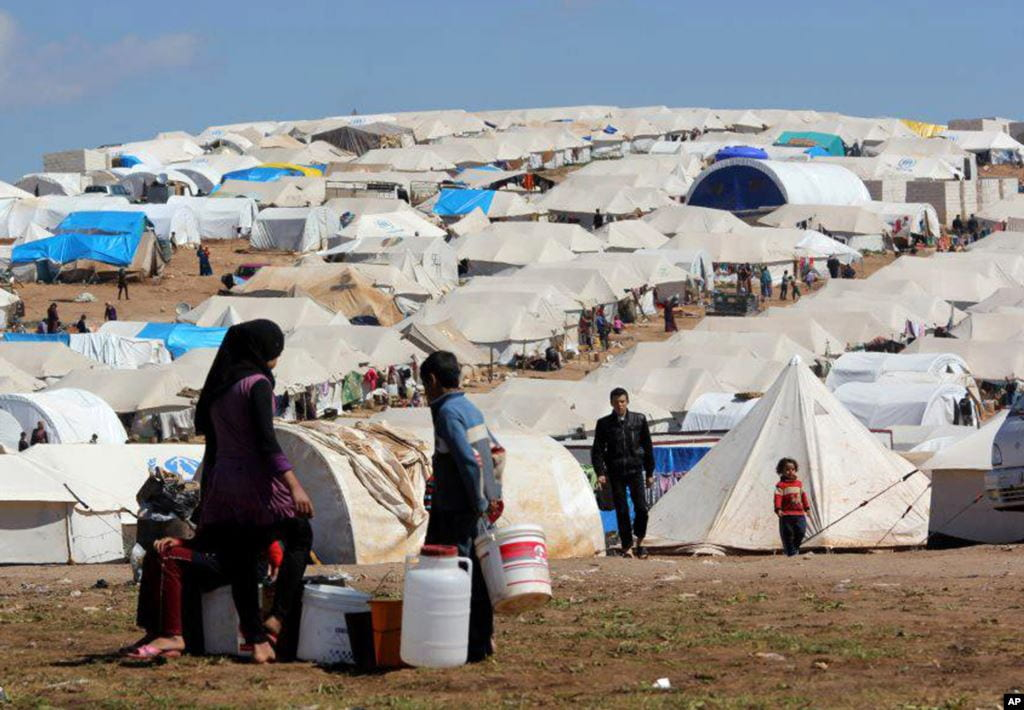
With the focus on the Channel crossings and refugees in hotels, there is a danger of overlooking the massive refugee issues around the world which are on a scale far larger than we experience in the UK. There are 117 million people who have been displaced due to violence, conflict, persecution or violation of human rights. There are over 42 million refugees according to the UNHCR. These people are often in countries unable to afford to look after them. The Middle East conflict continues to increase the number of refugees, notably from Southern Lebanon. It is reckoned that in 4 weeks a million Lebanese have been displaced, around one in 5 of the population.
A migration summit in Cairo to review trends prior to a global review to take place in New York has been overshadowed by the war; Egypt is home to a large number of refugees. The meeting, held in Egypt’s New Administrative Capital, brought together African ministers and stakeholders under the framework of the International Organization for Migration and the Global Compact for Migration, ahead of a global review forum in New York.
Small boats
Small boats continue to be in the news. In the Mediterranean 180 migrants were lost in the last week, mostly coming
from Libya. The UNHCR’s Institute of Migration estimate that nearly 1,000 lives have been lost in the Mediterranean since the beginning of the year.
The EU continues to struggle with new arrivals. The border between Croatia (in EU) and Bosnia (outside) has seen particularly violent clashes.
Backlash in UK
In the UK the backlash against the Government’s tightening of regulations on refugee status, asylum seekers support and family reunions continues. The Home Secretary, Shabana Mahmood, is under attack from her backbenchers, who may have enough support to raise their protest in the Commons. The House of Lords Secondary Legislation Scrutiny Committee has said of the Home Office that it ‘has not fully thought through the implications of the changes.’ Other bodies have pointed to crises in the system; Migrants Organise have noted a growing problem of access to justice for claimants, citing a collapse in legal aid provision and an increasing number of unrepresented claimants. The use of AI by the Home Office in its assessments may be unlawful.
With the local elections in view, the Scottish Greens are proposing to allow asylum seekers the right to work, the first party in the UK to do so.
The 1 in 1 out arrangement with France is said to be on the point of ending; many migrants, after being returned to France, have taken to lorries, as they did in the pre-small boats era.
The Congo has joined those countries prepared to take on asylum seekers deported from the UK. Details are not yet known.
In the United States the Supreme Court is likely to allow the administration to resume blocking asylum seekers physically from entering the country; much discussion has ensued on the meaning of ‘to arrive at/in’. The process (‘metering’) was stopped by Biden.
On the campaigning front, the Refugee Week organisers are planning a week of ‘A Million Acts of Hope’ from 13th to 20th May. Details to follow.
As a footnote, the first of the Afrikaner ‘refugees’ to be welcomed into the USA has now returned home.
Although war reporting generates a lot of commentary on the deaths of those caught up in the conflicts, the effects on refugees and those displaced receives much less attention. With the new war(s) in the Middle East, refugees are again in the news. So far, most displaced people have been moved within the countries of Iran and Lebanon, but Turkey in particular is being readied for an influx of refugees. The European Union Agency for Asylum thinks here will possibly be large numbers of displaced persons as a result of the conflict, many of them heading for Turkey. The Institute for Migration estimates that as of now there are 19 million internally displaced in the region; the UNHCR have calculated in the last few days that 667,000 Lebanese have registered as displaced.
Home Secretary’s refugee plans
At home, the big story is the Home Secretary, Shabana Mahmood’s plan to reduce the length of protected stay of refugees from 5 years to half of that, during which time they will only have temporary refugee status. This will be subject to review every 30 months for up to 20 years. During this period claimants may be deported if, in the opinion of the Home Office, their country of origin has become deemed “safe”. A large number of Labour backbenchers are opposing the move, and the Law Society has observed that it might not comply with international law. Other objections have been that the plan will be costly (£872 million over a decade, according to the Refugee Council) and impractical. On 5th March, the Home Secretary revoked the legal duty to provide destitute asylum seekers with support and accommodation while their claims are processed, often for months or years. The Home Office have been influenced by the so-called “Danish model”, which takes a hard line on immigration.
Among the latest statistics to be released, the Home Office received up to 23,000 referrals of alleged human trafficking in 2025 (the main sources were Eritrea and Vietnam). The backlog of cases has reduced, but there has been an increase in the number of reconsiderations. In 2025 about 100,000 claims for asylum were made in the UK. Of these, 41% were from small boat arrivals, 11% other irregular means, while 40% already had some form of leave before claiming. The level of grants continues to drop, at 42% in 2025 (it used to be over 80%). Syria has suffered particularly with levels of asylum grants down year-on-year from 88% to 9%. Claims from Eritrea and Somalia are mostly accepted.
The ban on family reunions instigated last autumn is being challenged in the courts by Safe Passage International. A High Court ruling is expected later this year.
Small boats in the Channel are now starting from further north, in Belgium, according to a BBC report.
The UN Missing Migrants Project, which records the number of deaths among attempted migrants globally, has designated three routes as particularly dangerous: from North Africa to the Central Mediterranean (esp. Libya); from Afghanistan to Iran (this was before the current conflict), and from West Africa to the Canaries (they note that migrants are coming from further south than they used to, with more risks attached).
Those politicians who seem keen on war and wanted the UK to adopt a more interventionist stance with the Israeli and US actions, seem not to be quite so aware of the knock-on effects. Many of those same politicians are to be heard railing against refugees. Wars generate refugees. A proportion end up at Calais.
The leader of the Reform party sets out his policy for handling immigrants and asylum seekers
August 2025
Nigel Farage made a speech yesterday (26th) setting out his ideas for handling the rising numbers of immigrants and asylum seekers many of whom arrived in boats across the Channel. Often termed ‘illegal’ immigrants although it is not illegal to come via this method if asylum is claimed. The whole issue of asylum seekers, boat crossings and hotels has become headline news in recent months and there have been protests outside some of them most notably in Epping. A case started today (26 August) concerning an Ethiopian man alleged to have sexually assaulted a 14 year old girl and this has added to the widespread sense of outrage.
Mr Farage in his speech promised to fix the problem in quick order if he became prime minister. His speech has made headlines because of his poll lead which if maintained, could conceivably mean he will be a prime minister after the next election. Some polls show a 15 point lead over Labour. He promised to launch ‘Operation Restoring Justice‘ which would involve leaving the European Convention on Human Rights (joining Russia and Belarus), repealing the Human Rights Act and disapplying the Refugee Convention. This is to enable the UK to detain every migrant arriving illegally. Countries will be persuaded by a mixture of ‘carrot and stick’ to take them back. These will include countries with poor human rights records such as Iran, Afghanistan and Sudan where the risk of torture or death is extremely likely. The detentions will include women and children he made clear. They ‘will never be allowed to stay’ he said.
Critical issues arose in the press conference and included the cost and where they will be housed while deportations are arranged. He was not able to answer these questions. By amending or abolishing the legislations and coming out of the ECHR etc, it will frustrate the ability of lawyers to prevent deportations largely because the majority do have asylum claims which are legitimate. Over the coming days, other criticisms will appear. For example, existing English law, upon which the ECHR was largely founded after the war, provides protections despite membership of the Convention. Will foreign countries be willing to accept the large numbers involved?
Human rights
The concern here though is the desire to rid us of the ECHR and to repeal the Human Rights Act. This has popped up as a policy in several Conservative manifestos but has never actually come to pass. Local MP Danny Kruger is an advocate of this policy. Mr Farage’s ideas gained favourable coverage in some of the newspapers with the Daily Mail saying in a headline ‘Finally a politician who gets it’ [26 August, accessed 27 August]. His indifference to those he proposes returning to countries where torture is routine was particularly noteworthy. It is interesting however, looking at the comments from readers many of which were not supportive of his comments despite the uncritical nature of the article. The extent to which Mr Farage and Reform are making the waves was clear from the responses from the two main parties. Kemi Badenoch complaining that Reform had stolen their policies and a No 10 statement merely saying that Labour could not rule out leaving the ECHR. There was strong condemnation from the Liberal Democrats.
Mr Farage couched his speech in terms of a public mood of ‘total despair and rising anger’. It is disappointing to note the feeble and pusillanimous nature of the responses in particular from No 10. Britain was in the lead in promoting a new world order after the war following the Atlantic Conference. The ECHR was based a lot on British principles of justice. We would join only Russia and Belarus if we left – neither country a ringing endorsement of rights and human dignity. It is also disappointing to see newspapers like the Daily Mail, the Daily Express and the Daily Telegraph (How Farage would kick 600,000 migrants out of Britain) seemingly to endorse Mr Farage with little sign of critical analysis. The Telegraph even had a story headed ‘We’re ready to work with Farage on migration says Taliban‘. The human rights situation in Afghanistan is abysmal.
How have we come to a situation where prejudice and a lack of critical reporting about the almost unworkable and hugely expensive proposals put forward by Reform are treated in this way? Instead of a robust response and clear statements of how to tackle problems, the two main parties seem to be falling over themselves to ape Reform policies. Partly it is because they confuse some newspaper reporting as reflective of the wider public’s feelings about immigration which are a lot less black and white. It may also be a reflection of years of negative articles by some newspapers about human rights – and by extension the Human Rights Act – claiming it is a criminal’s charter. It is perhaps not surprising that part of Mr Farage’s speech was about the HRA and he spoke of ‘removing the tools from our judiciary’ to prevent successful asylum claims.
A point he referred to several times was around ‘whose side are you on?’ This was in answer to a question from the BBC concerning the risk of returnees being tortured. His answer was ‘are you on the side of the safety of our women and children on our streets, or on the side of outdated treaties backed up by dubious courts’. Another quote was defending our borders and keeping our people safe. There is no evidence of women and children rendered unsafe on our streets disproportionately by immigrants (illegal or otherwise). The torture question was asked more than once.
The tone of the presentation was that immigrants are a threat to our society. That women and girls are unsafe despite the fact that many asylum seekers and others are in secured accommodation. By extension, many of our problems would be removed in short order if he became prime minister. The HRA and other laws and treaties are part of the problem he claims.
Reflections
Mr Farage, despite being a member of a party with only 4 MPs, is able to command a big audience from a speech and to be the lead item on many news channels.
He enjoys wide and largely uncritical support in chunks of the media.
Mr Farage himself (!) noted an interesting point, namely most of the press questions were about process. There was little of a moral or principled point of view.
A large part of his speech was based on dubious claims and unsubstantiated facts. There are problems surrounding immigration and he is correct that both parties have been ham-fisted in trying to deal with them and failing. But solutions are complex and the nation cannot simply step away from international treaties and agreements.
He does not discuss the reactions from other nations from his set of unilateral proposals to deport all illegal migrants. The question is – what if all countries decided to do the same? He spoke of return agreements and an expert from the Migration Observatory said in an interview that such agreements had a mixed history.
He speaks as though the UK is uniquely affected by these problems. The reality is that the scale of displaced people around the world is massive. There are 36.8m refugees worldwide and 123m displaced people according to UNHCR. The UK’s problems in comparison are miniscule. We are also a rich country better able than most to tackle the problem with capable leadership. Many of the millions are in, or adjacent to, countries which are among the world’s poorest. No part of his speech discussed what could be done to tackle the worldwide problem.
So whose side are we on to pose Mr Farage’s question? Not his.
Government attitudes to immigration still causing problems
March 2025
The Government’s Border Security Asylum and Immigration Bill is in its committee stage this week. Much interest has been shown by MPs in using the occasion to express opposition to the Home Office’s guidance on denying citizenship to “illegal” migrants, however long ago their arrival may have been. This guidance has been put forward as a gloss on the “good character requirement” for naturalisation, deeming those who arrive illegally via “dangerous journeys” to be ineligible. The SNP have put forward an amendment to obviate this ruling and the Home Affairs Select Committee have sought an explanation for the change in policy.
Brian Mathew, the Liberal Democrat MP for Melksham and Devizes, said asylum seekers should be given the ability and support to work “instead of leaving them in administrative limbo in hotels around the country costing the taxpayer millions”.
There has been concern amongst MPs also about the government’s decision to transfer some of the foreign aid budget to pay for increases in defence expenditure. This will obviously have a bearing on the amount of funding available for countries with refugee issues. According to the FT, presently it is believed that half the foreign aid budget will now go on migrant hotel accommodation.
The Home Secretary has been visiting Northern France, the first Home Secretary to do so in recent years. Yvette Cooper is bringing £172 million to aid the French authorities against people smugglers. The National Crime Agency believes that they now have a better understanding of how the boats and engines arrive on the Channel coast, mainly from Germany. Germany has now made it a crime to facilitate illegal migration to the UK.
The small boats continue; this year so far the numbers are 40% down on last year, but better weather will probably change the ratio. 2024 data indicate claims were up 18% on 2023, and grant rates were down from about 67% to about 47%. A particular drop in acceptances has been felt by Afghans: from around 90% agreement to around 50% (with legal routes barely used now); it has been suggested that the Home Office considers the Taliban no threat to a wide range of society now. The largest influx currently is from Sudan.
Other notes: The Guardian featured the immigration regime in Spain, where a less hostile attitude has brought economic results with arrivals able to work.The Home Office has been accused of failing to correctly assess the ages of child migrants by the Refugee and Migrant Children’s Consortium. And the UK is refusing to pay the £50 million compensation demanded by Rwanda for the collapsed migrant removal policy.
We are grateful to group member Andrew for producing this report.
This month’s refugee report on this vexed problemfocuses on political issues in the UK
February 2025
This month the concentration will be on the continuing situation in the UK, with legislation going through and much pressure from certain political parties on the issue.
The Government’s Border Security Asylum and Immigration Bill passed its second reading this month. This Bill repeals the previous government’s Safety of Rwanda Act and some of its Illegal Migration Act. As presented, the Bill has received a cautious response from refugee and asylum organisations, most taking the view that it could have been worse. The new offence of “supplying or handling ‘articles for use in immigration crime’” is expected to only be rarely used, despite the draconian punishment. The other main provision concerns applying anti-terrorist legislation to smuggling gang leaders when caught. Most organisations in the field point out that gang leaders rarely have assets in the UK and the National Crime Agency have said that most crime gangs are based in France, Belgium, Germany or Turkey, the success of this initiative is therefore to be doubted.
Blanket denial of citizenship
As of this week, the Home Office has been accused of a policy of denying citizenship to anyone who arrived by irregular means, however long ago, and despite being given leave to remain. This would appear to be in breach of Article 34 of the Refugee Convention. The issue is continuing.
Among the boat arrivals, the number of deaths recorded in transit was 78 in 2024, three times higher than the previous year. Pressure on the boat suppliers has led to more overcrowding, among other causes.
Within the European Union, irregular migration figures are down by 38% from 2023 to 2024, according to Frontex. Migration routes from Tunisia, Libya and the Western Balkans have been made more difficult, but the policy of the government of Belarus in pushing migrants to the west has added to the numbers from that source. Frontex are developing the use of AI on the borders.
The UK government has been publicising its deportation programme for unsuccessful claimants. Between 5 July 2024 and 31 January 2025, a total of 18,987 returns were recorded – an increase of 24%, the Home Office said. Removals of foreign national offenders were up by 21% and illegal working raids – on such places as nail bars and car washes – are up by 38% compared with the same period 12 months previously. Videos of people being put on planes* (for unknown destinations) have been put in the public arena. Of the total returns since 5 July 2024, 2,925 were of foreign national offenders – an increase of 21%.
The backlog of asylum cases continues to be a concern. In the last year, the proportion of asylum claims that have been accepted has dropped from 75% to 52% with a resulting increase in the number of appeals. So, although the initial backlog built up over years has fallen, it is constantly being topped up. The last available figure, for September, was 97,000, but the Home Office say it is reducing.
Criticism of language used
A report by the Runnymede Trust has noted the language of the immigration debate, particularly the widespread use of the word “illegal”, although governments have tended to avoid the word as immigration is not illegal, though it may be “irregular”. It blames media reporting for encouraging hostility towards migrants. In parliamentary debates and media reporting, negative terms like “illegal”, “flood” and “influx” are persistently used in association with migrants, posing them as a threat, dangerous and outsiders. The word “illegal” is in the top five most strongly associated words with ‘migrant’.
The pause in accepting Syrian refugees since the revolution is continuing despite urging from Damascus to process ongoing claims.
The Migration Advisory Committee has called for a change in the rules on working, asking for claimants to have the right to work after six months in the country.
The All-Party Parliamentary Group on Refugees issued a report this month on the working of the immigration system, and made some recommendations for improvement. Overall, the inquiry found that the current processes for safe and legal routes are overly complex, restrictive, and slow, leading to prolonged family separations and increased irregular migration. The report says UK governments since 2019 have adopted a “scattergun” approach to safe and legal routes.
“They have failed to effectively utilise the UK Resettlement Scheme (UKRS) and cooperate with the UNHCR to provide quotas for arrivals on this scheme. Instead, nationality specific schemes, each conferring differing entitlements, have been adopted, meaning that access to family reunion, immigration status and integration prospects are dependent on the scheme you arrived on which is unfair and inefficient.
“The refugee family reunion route was also highlighted as not operating effectively. Despite the number of visas issued increasing significantly in 2024, two-thirds of cases are failing to meet the Home Office’s own service standard of processing within 60 days. A backlog of family reunion cases has risen to at least 11,000 cases. The UK also operates one of the most restrictive refugee family reunion policies in Europe.“
The APPG makes three main recommendations. Firstly, it calls for improvements to refugee family reunion by processing cases within 60 days, allowing refugee children to sponsor their family members, and removing financial restrictions on UK-based sponsors. Secondly, it recommends restoring the UK Resettlement Scheme as the primary resettlement route and reaffirming the commitment to resettle 20,000 Afghans under the Afghan Citizens Resettlement Scheme. Thirdly, the report proposes introducing a pilot refugee visa scheme targeted at high grant rate countries, with a cap of 10,000 visas during the pilot period.
Finally, Amnesty are offering small grants for actions during Refugee Week in June details are available on the Local Groups email (but the final date is Monday!)