Refugee report


Refugee report for June. Rwanda policy abandoned

July 2024

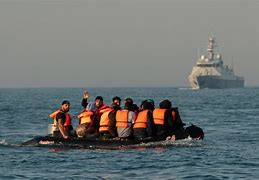
Following the General Election, a new approach to the issue of immigration and asylum seeking has been promised. Straight away the new government declared the policy to deport irregular immigrants to Rwanda would no longer be pursued. It is not known whether Rwanda will return the ยฃ270 million received in advance. The new Home Secretary, Yvette Cooper, will review the position by 1st October following complaints from asylum seekers rounded up in preparation for flights to Rwanda. It was also intimated that changes would be made to the Illegal Migration Act of 2023.

Also quickly out of the blocks was a group of some 300 refugee and human rights organisations who jointly wrote to the prime minister with a proposal for a new approach to the issue. And the IPPR have produced a plan for the first 100 days under the new government.

The letter writers set out nine key demands including:

  • Restoring the right to seek asylum by repealing the Illegal Migration and Nationality and Borders Acts
  • Safe routes including visa routes enabling families to reunite.
  • Housing applicants in communities rather than camps.
  • Restoring the right to work within six months of arrival.

The IPPR report notes the new governmentโ€™s plan to create a Border Security Command, essentially to deal with the people smugglers, but the Institute is looking for a more holistic approach to all aspects of boat crossings and border control. They also point out that the UK will be hosting the European Political Community meeting this month where, among other issues, the new Europe-wide Asylum and Migration Management Regulation will be on the agenda (the aim is to spread the application requirements more fairly.

The Institute also urges the government to expedite removing the backlog of applications (the new backlog, not the one the previous government claimed to have eliminated), offering various suggestions as to ways of doing this.

As a matter of record, the number of claimants crossing the Channel this year is, at over 13,000, a record for the equivalent period. The backlog is now at 120,000, and the number of cases gone to appeal is 27,000.

Andrew Hemming

Refugee report – May


Immigration, refugees and Rwanda still hot topics

May 2024

Immigration and asylum issues continue to exercise politicians and sections of the media and flights to Rwanda edge closer. We are grateful for this report produced by group member Andrew.

The Safety of Rwanda (Asylum and Immigration) Act finally became law on 25th April.  Since then, two pre-action letters have been sent (i.e. indicating intent to take the matter to court) from the FDA Union (on the grounds that civil servants cannot be expected to break international law) and Asylum Aid (claiming the legislation breaks with international law.)

It is reported that the Home Office is already rounding up refugees to send to Rwanda.  As a result many are going into missing or into hiding โ€“ or moving to Ireland.  It has also been said that countries under investigation as possible destinations include Armenia, Ivory Coast, Costa Rica and Botswana.  (Costa Rica has forcefully denied any such idea.)

A further aspect of the legislation is that Rwanda is a โ€˜monistโ€™ country, meaning that it takes international law directly into domestic law.  This could mean that, if it is recognised that the Act breaks international law, it will, therefore, break Rwanda domestic law. 

The Oslo Peace Research Institute has surveyed the effect of warnings about migration rules as they affect third world countries.  Knowledge of the situation to be faced in Europe varies, but most communities are aware of messaging not to travel.  The effect on young adults has been minimal; indeed in some cases a better understanding of the bar on migrants has tended to raise expectations.

There has been a big increase this year in arrivals from Vietnam, higher even than among Afghans.  Vietnam is known as one of the worst countries for modern slavery, so trafficking appears to be rife.

The All-Party Parliamentary Groups on Poverty and Migration combined this month to produce a report on the effect of recent migration laws.  They considered that it was hard not to conclude that pushing claimants into poverty was a deliberate attempt at a deterrent.  They recommended several changes to the processing of immigrants.  The view that deterrence is not working is endorsed by this weekโ€™s report by some Calais-based charities, who note that heavy-handed action by French police to prevent the boats has encouraged the migrants to take to the boats more recklessly so as to avoid them, with dangerous consequences.  This police action is funded by the British Government.

The latest numbers of arrivals have been reduced by bad weather โ€“ an increase is expected.  1st May saw 711 arrive by boat.  The backlog of claimants awaiting processing was 83,000 in mid-April; the rate of processing has slowed in the last six months (the pre-2022 backlog, which the Prime Minister claimed had been cleared, still contains 2,300 people.)  The Refugee Council anticipate that, under the new laws, 94,000 are likely to be in permanent limbo by the end of the year.  Homelessness is also on the increase as asylum seekers are ejected from hotels after their claim is accepted.  Finally, the conditions in the Bibby Stockholm have been described as โ€˜prison-likeโ€™ with severe overcrowding.  An FOI request this week revealed that 1,871 children, who may be victims of modern slavery, have dropped off the register meant to support them up to the age of 18.

A depressing picture.

It was agreed the Group would monitor events for information on any proposed flights to Rwanda with a view to taking action, as previously, should Boscombe Down be the chosen airfield for departure.

The Salisbury group was established 50 years ago this year

Rwanda bill passes


Government succeeds in getting the Rwanda bill passed

April 2024

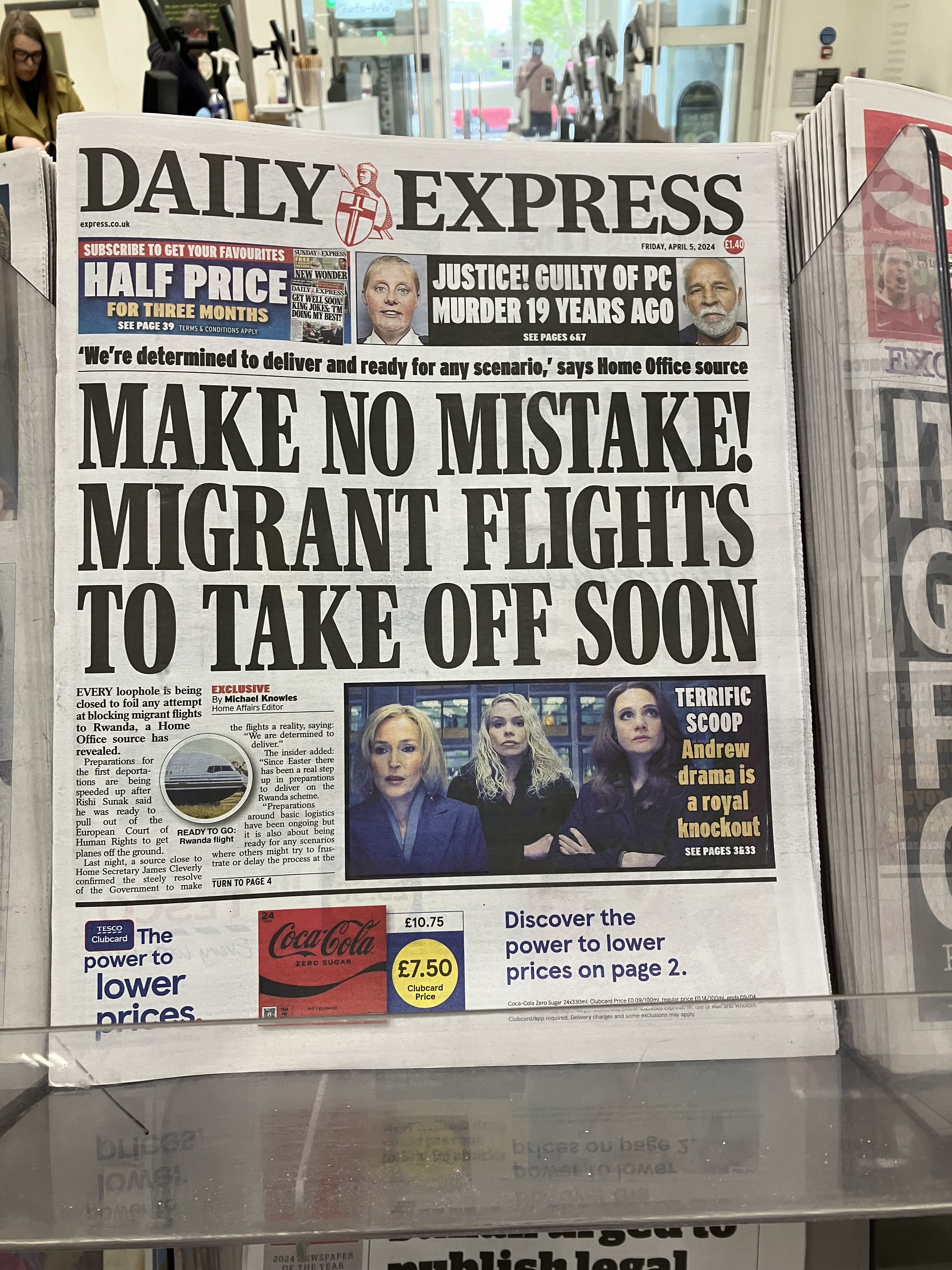
After what has seemed like a lifetime, the government has finally succeeded today, 23 April 2024, in getting its bill through both houses of parliament. The first flights are due to take off in 10 – 12 weeks that is in July. The airfield is as yet unknown but there is a possibility they will use Boscombe Down near Salisbury again as it is a military airfield surrounded by a high fence. There are some rumours to that effect.

Questions now are whether legal challenges will stand in the way. The government has declared Rwanda to be a safe country despite the evidence to the contrary. We do not know what the reaction of the European court will be. A robust challenge by them will renew calls by some politicians for us to depart from its jurisdiction.

This feels like a pivotal moment. Months have been spent on this problem and no doubt considerable civil service time has been spent on it as well. The cost has been considerable and the government has been reluctant to reveal the figures. An estimate is ยฃ370m with another ยฃ120m to come. There will be further sums for each asylum seeker despatched. There will be other administration and transport costs as well. The cost per person are difficult to estimate because it does depend on the numbers sent since some costs are fixed. As we move into what might be termed the ‘delivery’ phase of this project, issues of whether civil servants will be comfortable with the work they have to do and the response of the ECtHR are awaited.

The main purpose of the policy is to act as a deterrent. It is hoped – expected even – that news of the departures to Rwanda will deter those seeking to cross the Channel and seriously damage the business model of the smugglers. Whether this happens remains to be seen but with no end to wars and political instability in the world and the ease with which boats and outboard motors can be acquired from Turkey, suggests that this is a low risk, high reward activity unlikely to be deterred by a small percentage being sent to Rwanda.

Both local MPs, John Glen and Danny Kruger, voted for the bill.

Refugee report


April 2024

This month, the report starts with the EU. The Freedom United charity note that so far this year more than 200 people have died trying to leave Libya, many shot by the Libyan Coast Guard. The EU continues to help fund the LCG, and the Institute of Migration say that 600,000 people are trapped in Libya seeking to get to Europe. Needless to say, there are many allegations of breaking international law in this crisis.

Also beyond the UK, the latest news from Rwanda is that, following the lack of progress in deportations, 70% of the properties allocated to receive deportees have now been sold to local buyers. On this topic, the Rwanda Bill returns next week for more ping pong โ€“ it could yet go for the Royal Assent within a few weeks. Judges are being given โ€œspecial trainingโ€ to ensure speedy delivery of those to be deported to Rwanda, according to the Daily Express. The airline Air Tanker is reported to be in discussions with the government about providing the transport, although they withdrew from previous similar discussions. RwandAir has already declined for fear of reputational damage.

The Prime Minister has claimed that 24,000 irregular migrants were deported last year. Full Fact have checked this and argue that only about 25% were enforced returns, the rest being voluntary. The number of arrivals in small boats this year stands at 4,644 at the end of March โ€“ bad weather has reduced the number in the last few days, but the figure is still higher than last year.

Charities and law firms have sent a letter to the Home Secretary seeking a Ukraine-style visa scheme for Palestinians who have family in the UK. The Home Office has also refused to decide on whether to drop the need for biometric data for reuniting family

arrivals from Gaza, although obtaining such data is virtually impossible in the crisis; the Upper Tribunal ruled against the Home Office in two test cases.

In their annual report, the Office of the Immigration Services Commissioner note that the number of immigration advisers at the Home Office is growing, but not fast enough to keep up (and large numbers are leaving).

Finally, back to Europe, where the European Parliament has passed the Pact on Migration and Asylum today (Wednesday 10 April) against votes from the extreme right and extreme left. The 10 provisions of the pact cover issues like relocating from over-immigrated countries, financial allocation, fast-track routes and exchange of data.

A group of 22 NGOs has issued a statement arguing that โ€œwhile the adoption โ€ฆ is likely to lead to a detrimental degradation of peopleโ€™s access to protection in Europe, the new Union Resettlement Framework (URF) adopted alongside the Pact offers a glimmer of hope.

โ€œThe URF signals the EUโ€™s political support for global resettlement efforts and has the potential to be a step towards advancing solidarity, capacity-building and responsibility sharing. It must now be operationalised effectively to ensure that more people reach safety and find long-term solutions,โ€ the groups, which include the International Rescue Committee and Oxfam, said.

Andrew Hemming

Refugee News


March 2024

As usual, we lead with Rwanda. The Lords have been inflicting a number of defeats on the government over the provisions of the Bill, and the โ€œping pongโ€ between the two Houses will reach a climax next week, when we will know which, if any, amendments the government will accept. Further issues have arisen over the role of the civil service in the planned scheme, with the FDA union threatening legal action against the government in the event of a clash with the European Court.

The National Audit Office has calculated the cost of the first (total?) 300 deportees to Rwanda to be ยฃ541 million, at ยฃ1.8 million per person. Indeed, the cost to date is ยฃ20 million with no flights. Ian Dunt has calculated that the cost per asylum seeker generally in 2015/6 was ยฃ7062, whereas in 2022/3 it was ยฃ20921.

The latest wheeze, as revealed in The Times today (Wednesday) is simply to pay failed claimants ยฃ3000 for a  โ€œvoluntary returnโ€ โ€“ to Rwanda.

Figures released this month show that, as of 23 December 2023 the number of asylum seekers waiting for an initial decision was 128,000. The Government, of course, has claimed to have removed most of the legacy backlog, so most of these are new.

The sacking of the Independent Chief Inspector of Borders and Immigration has resulted in the sudden release of the plethora of reports he wrote, which had not previously been published. They mostly concern the implementation of the Nationality and Borders Act 2022 and are generally critical of the Home Officeโ€™s performance. It is unlikely that a replacement for Mr Neal will be found before the end of this parliament.

Refusal rates for asylum seekers went up in the last quarter of 2023, with a  third of applications refused. This is unusual, as most applications end up being accepted.

The rules on Ukrainian refugeesโ€™ visas changed last week (with 4 hours notice of implementation) โ€“ The Family Scheme was closed though the Homes for Ukraine scheme is extended, but will not be processed until 2025.

This week the Council of Europe Commissioner for Human Rights, Dunja Mijatovic, criticised the Rwanda scheme along with certain French actions as acting above the law. She was concerned that two large European nations were giving a bad lead to the rest.

A small boat arrival, Ibrahima Bah, was sentenced this month to 9 ยฝ years in jail for โ€œfacilitating illegal entry, gross negligence and manslaughter โ€œ following the deaths of fellow passengers. He is the first shipwreck survivor in the UK to face such charges and was not a people smuggler, but a refugee left in charge of the boat. The court concluded his age was 20, but he claimed to be 17.

Andrew Hemming


The Salisbury Group was established 50 years ago this year

Refugee report


Refugees News Summaryย 

February 2024

The egregious Rwanda Bill continues its course through the House of Lords. Their Lordships defeated the Government on one vote, to say that the treaty with Rwanda should not be ratified until the protections set out in it have been fully implemented. The Committee stage begins on Monday 12th February. The UN High Commissioner for Refugees has commented that the Governmentโ€™s plans are a โ€œfake responseโ€ to migration issues.

The small boat numbers in January were higher than last year at 1335 โ€“ this was no doubt due to milder weather.

Ukraine

The visas offered to Ukrainian exiles following the invasion will run out next month, leaving large numbers to their own devices in seeking accommodation. On a related topic, a consultation has begun to reform the allocation of social housing; it is proposed that there be a โ€œUK connection testโ€, only allowing allocations to those who have been lawfully resident here for 10 years. The increase in pressure on housing for migrants continues to ratchet up.

The question has been asked โ€œCan criminals be denied refugee status?โ€ The answer appears to be โ€œYes, but the crime has to be serious for this to apply.โ€

The Independent Chief Inspector of Borders and Immigration is looking into the Immigration Enforcement Competent Authority (sic), which decides claims of human trafficking.

Open Democracy are claiming that vulnerable people including torture victims are being housed on Bibby Stockholm in a potential breach of government guidelines.

Recommended reading: Hein de Haas: How Migration Really Works (Viking, 2024)

Recommended viewing: The Visual Politics of Refugeehood | Gresham College

By Nishat Awan

Refugee report: January


Latest report on this politically charged problem

January 2024

Refugees and in particular, those arriving via small boats across the Channel, continue to cause considerable concern among the political classes and in the media.โ€‚Overtaken in the past few days by the Post Office scandal, the matter will burst back into view next week when the Rwanda bill comes back to the Commons.

The total number of โ€œsmall boatsโ€ arrivals in 2023 was 29,437 which was 36% lower than the figure for 2022.โ€‚Bad weather in the latter part of the year has been a factor. Border Force expect the numbers to rise again in 2024. 20% of the arrivals were from Afghanistan.

On claims, of the 40,000 arrivals between July 2022 and May 2023, 90% applied for asylum. The PMโ€™s claim to have removed the legacy of pre-2022 cases is questionable. The Office for Statistics Regulation is investigating.

The Times reports that Home Office officials canโ€™t clear the rolling asylum backlog, because more than 50,000 claims are for people who are in the U.K. but barred from permanent settlement under new laws passed last year. The paper calls it โ€œindefinite limbo.โ€

The statistics summary states that of โ€œthe 112,138 initial asylum decisions made between January and 28 December 2023, 35,119 were non-substantive decisionsโ€. This includes withdrawals, and it seems reasonable to conclude that the vast majority of those 35,119 decisions were withdrawals given that the statistics to the end of September 2023 showed that 18,709 applications had been withdrawn since June 2022, most of these in 2023. It has been clear since last year that the government was using this as a tool to artificially reduce the number of cases.

This means that over 31% of โ€˜decisionsโ€™ that were made in 2023 were probably withdrawals. These are people who are still here and a large proportion of them are likely to be refugees.โ€‚All that has been achieved by removing them from the asylum system is an increase in the likelihood of them being subject to exploitation, as people who are left outside the system are far more vulnerable to this.

A report in the i (paywall) shows what has been happening with the withdrawal of asylum claims,  Apparently those decision makers who met targets received gift vouchers and those who didnโ€™t were subjected to performance management. In the meantime, those on the receiving end include people who do not speak English as well as those who were living in Home Office accommodation but have been accused of absconding from it.

In Parliament, the Safety of Rwanda Bill returns to its final debate stage next Tuesday and Wednesday (16th and 17th January), when there will be a large number of amendments, the majority of which will fail. The bill will be considered by a committee of the whole house, meaning all MPs can contribute to the committee stage debates which are normally limited to members of a bill committee, and these are the debates where Tory right-wingers will try to toughen the bill. For example, they may try to remove the clause in the bill allowing individuals to appeal against deportation, or to include provisions saying ministers should ignore European court of human rights injunctions stopping deportations flights. Tory centrists may also try to amend the bill to tighten the requirement on ministers to obey the European convention on human rights.

To end on some good news, the Dorset Echo has a report that some of the asylum seekers on the Bibby Stockholm have started working with local charities, particularly those concerned with the homeless. Being prevented from working has left them with lots of spare time and many of them have experience of charitable work in their former lives.

Andrew Hemming

Refugee report, December


Refugees and Rwanda continue to fill the headlines

December 2023

As the House of Commons debates the Governmentโ€™s latest attempt to make their Rwanda project fly, this monthโ€™s emphasis has been very much on the small boats. On the progress of the Bill over the next few weeks, anything might happen.โ€‚The government managed to get the second reading of their bill passed on 12th to clear the way for the plan to remove some people to Rwanda.โ€‚

As a topline figure, the number of arrivals by small boat this year has reached 29,000; this is about a third down on last year. It has been argued, however, that itโ€™s the number of boats that is down, not people โ€“ they are using bigger boats. We have no confirmation of this.

The Government has changed the rules for asylum seekers/refugees following their processing; they now have 28 days to leave the temporary hostels they have been confined in and to find their own accommodation.  As a result the level of homelessness among this community has increased dramatically.  The Evening Standard claims that the numbers of homeless in the migrant community has increased 39% in a month (presumably this is a London figure).

The big increase in the number of claimant withdrawals has been exercising the legal profession.  These are migrants who have claimed refugee or asylum seeker status, but have not turned up for interview.  As a result, 17,000 claimants who have apparently withdrawn their claim are now unaccounted for, though presumably they are still in the UK (the Home Office has no knowledge of their whereabouts).  On a similar topic, of the 154 unaccompanied child asylum seekers who went missing earlier this year, 132 are still missing.

While the number of legacy cases is being reduced, new claims are still keeping the total high.  The Governmentโ€™s aim of clearing the pre-June 2022 backlog has not yet been achieved (itโ€™s believed to be still about 10,000, and these are among the most complicated cases).  Meanwhile, new applications have amounted to 90,000, leaving the total figure at around 109,000 (less than the peak).  It should be noted that Home Office staff turnover is very high and it may well be that the 17,000 alluded to above include names taken off the backlog to reduce the figures.  Also the Home Affairs Committee this week elicited the information that approval levels went down to 38% in Q2 and back up to 67% in Q3 โ€“ the reason is unclear.

Small boats population accounts for around 6.6% of the total

It is worth pointing out, as part of the argument, that the small boats population amounts to about 6.6% of the net immigration numbers for the year (the 700,000 excess of arrivals v departures) figure) and half that for the gross total (incomers only)

Another problem area has been the gap between a claimant being granted leave and receiving a Biometric Residence Permit โ€“ the Home Office claim not to know how long the average wait in limbo is.

The apparent suicide of an asylum seeker on the Bibby Stockholm has drawn attention to the cost of the barge, currently estimated at ยฃ22 million.  The number of boat people on board is not known, but is believed to be around 200 currently.

On the issue of potential refugees from Gaza, the request in October from various refugee organisations in the UK to the Government to come up with a scheme for taking numbers on, as was done with Ukraine, does not appear to have been acted upon as yet.

Finally, a survey by Labour List this week invited respondents to say how many arrivals had actually been removed to Rwanda.  The percentage saying, correctly, none was 48%.

Andrew Hemming

Write for Rights


This Sunday, 10 December at the Cathedral

December 2023

Past event

Members of the Salisbury Group will be at the Cathedral cloisters from around 10 o’clock on Sunday for our annual Write for Rights and people in Salisbury are invited to come and sign. We must not forget that many people are in prison or at risk of execution often for no more than disagreeing with the powers that be in their country. They have committed no crime but have may said something disobliging or critical of a president, king or other leader and frequently without trial, can end up in prison for many years. Human Rights defenders, lawyers or journalists are all caught up in this activity.

United Kingdom

The situation in the UK is fast approaching a kind of crisis concerning the issue of deporting people to Rwanda. The government will be tabling a bill next week to disapply sections of the Human Rights Act to enable the deportation of immigrants to Rwanda. Previous plans were blocked by the Supreme Court because the human rights situation in Rwanda is unsatisfactory. Refugees sent there were at risk of refoulement that is being sent back to a country where they would be at risk of bad treatment of some kind. A plan last June to despatch a plane load from Boscombe Down, an airfield a mile or so from where this is being written, was halted by the European Court.

The issue of the ‘boat people’ has become a major issue for the government being one of the Prime Minister’s 5 objectives. Although only a small part of the overall level of immigration, it has assumed huge significance to the point where there might be a confidence vote next week if the bill is not passed. Ostensibly, it is partly due to anger around the gangs involved in organising the crossings. The hope is that if the Rwanda deportations can get underway, this will act as a disincentive to people wishing to cross the Channel. There are many who view this as wishful thinking.

Critics, including Conservative politicians, point out that the bill – even if it becomes law – will not prevent claimants appealing to Strasbourg thus delaying the deportation process until way beyond the likely date of the General Election. This is leading some politicians to demand that we leave the European Court as well.

A leading proponent of this is Danny Kruger the MP for Devizes in Wiltshire, who is co-founder of the ‘New Conservatives’ whose ten point plan is built around immigration matters.

The whole matter has reached almost absurd levels. The Supreme Court looked carefully at the evidence and concluded that Rwanda is not a safe country. Critics and journalists are frequently detained and tortured in detention. Opposition is effectively banned. There are disappearances. A new treaty has been signed between the UK and Rwanda a few days ago which claims to overcome these human rights problems identified by the Supreme Court and clear the way for deportations to take place.

It is almost an example of national hysteria combined with false promises coming home to roost. It was claimed that Brexit would enable the UK to regain its sovereignty a benefit of which was to stop boat crossings and reduce immigration generally. Yet recent figures show immigration at a record 745,000. The vast majority are here legitimately and are needed in a range of sectors such as health, horticulture and care homes. These organisations would find operating without them almost impossible. Yet hysteria has been ratcheted up by the media with its focus on the boat crossings. New proposals will prevent family members joining those already here which will cause great anguish in many, many cases.

We have now arrived at a situation where the government wished to disapply parts of the Human Rights Act and even contemplate departing from the European Convention to join Russia which was ejected in 2022. The statements around this matter by local MP Danny Kruger are to be regretted.

Refugee report: November


Reports focus on destitution and the need for cooperation concerning asylum

November 2023

We are grateful to group member Andrew for his work in compiling this report on the current state of affairs with refugees and asylum seekers. A quiet month on the legislative front, but much noise from certain quarters. It was noted that the Home Secretaryโ€™s complaint against โ€œtent-dwellersโ€ included the aside โ€œmany of them from abroadโ€, with its implication of illegal immigrants joining in the supposed lifestyle choice. This was roundly condemned by a number of refugee charities, along with homelessness support groups. 

The Joseph Rowntree Trust have published a report on destitution in the UK. Among its findings was the fact that 28% of destitute households were migrants, and rates for that group were 35% higher than the national figure. Such households also tend to have more children. 

The Institute for Public Policy Research (a centrist think tank) has also published a report, โ€œCharting New Watersโ€, on dealing with those crossing in small boats. Like the Safe Passage report mentioned last month it is concerned with developing safe routes, an organized Europe-wide system to share the responsibility, and a reform of the asylum processing system. The report does not give much detail, but reinforces the feeling that the government needs to engage with our neighbours in finding solutions to the issue. 

On that topic, the numbers of asylum seekers crossing the channel has been lower this month, mainly because of the weather 

We still await the High Court decision on the Rwanda plan, but the feeling is that the government is prepared to lose the case. This would, of course, put the European Court of Human Rights in the firing line, at least with the Home Secretary. The decision is expected in the first half of December. 

Many Afghans who were promised a safe passage to the UK after the Taliban takeover are still waiting; 3000 who have been promised asylum in the UK are in UK-funded hotels in Islamabad, but the Pakistan government is ejecting all Afghan refugees. There has been no government statement, as far as we know. 

The Home Office has rolled out a new โ€œasylum decision-making prioritisationโ€. This is really a pushing ahead in trying to reduce the backlog of cases awaiting decision. The government has argued that the backlog has been reduced, but in fact the total has increased due to new cases, while the โ€œlegacyโ€ cases from pre-2022 are indeed being reduced. 

Migration lawyers have noted with pleasure that the number of refusals of claims of trafficking by new arrivals has fallen, following a change in the regulations. 

The Home Office announced this week that the number of asylum seekers to be held on the barge Bibby Stockholm is to be reduced from 500 to 425, following a fire risk assessment. This would likely make the provision 10% more expensive than housing claimants in hotels. 

On the campaigning front, next yearโ€™s Refugee Week will be from 17th to 23rd June. The theme will be โ€œOur Home.โ€ 

AH

Blog at WordPress.com.

Up ↑