
Strong attendance at 121st vigil
March 2026
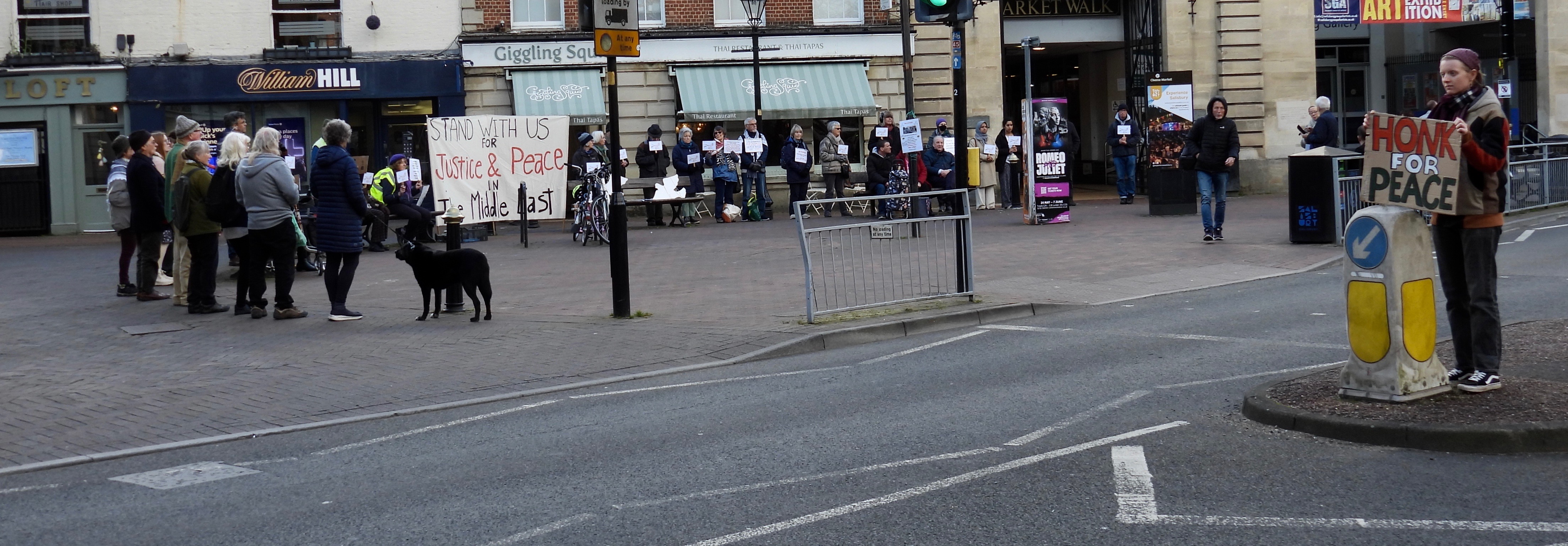
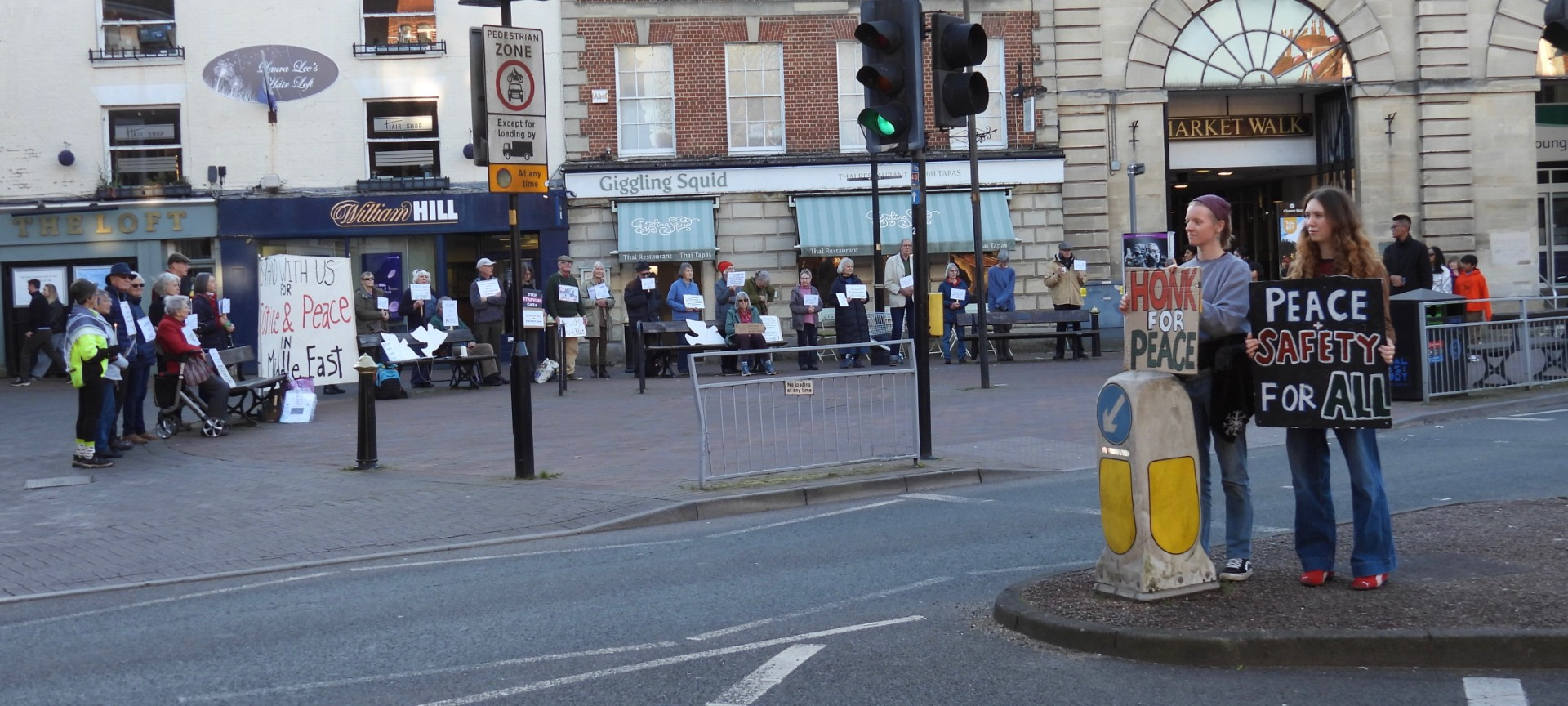
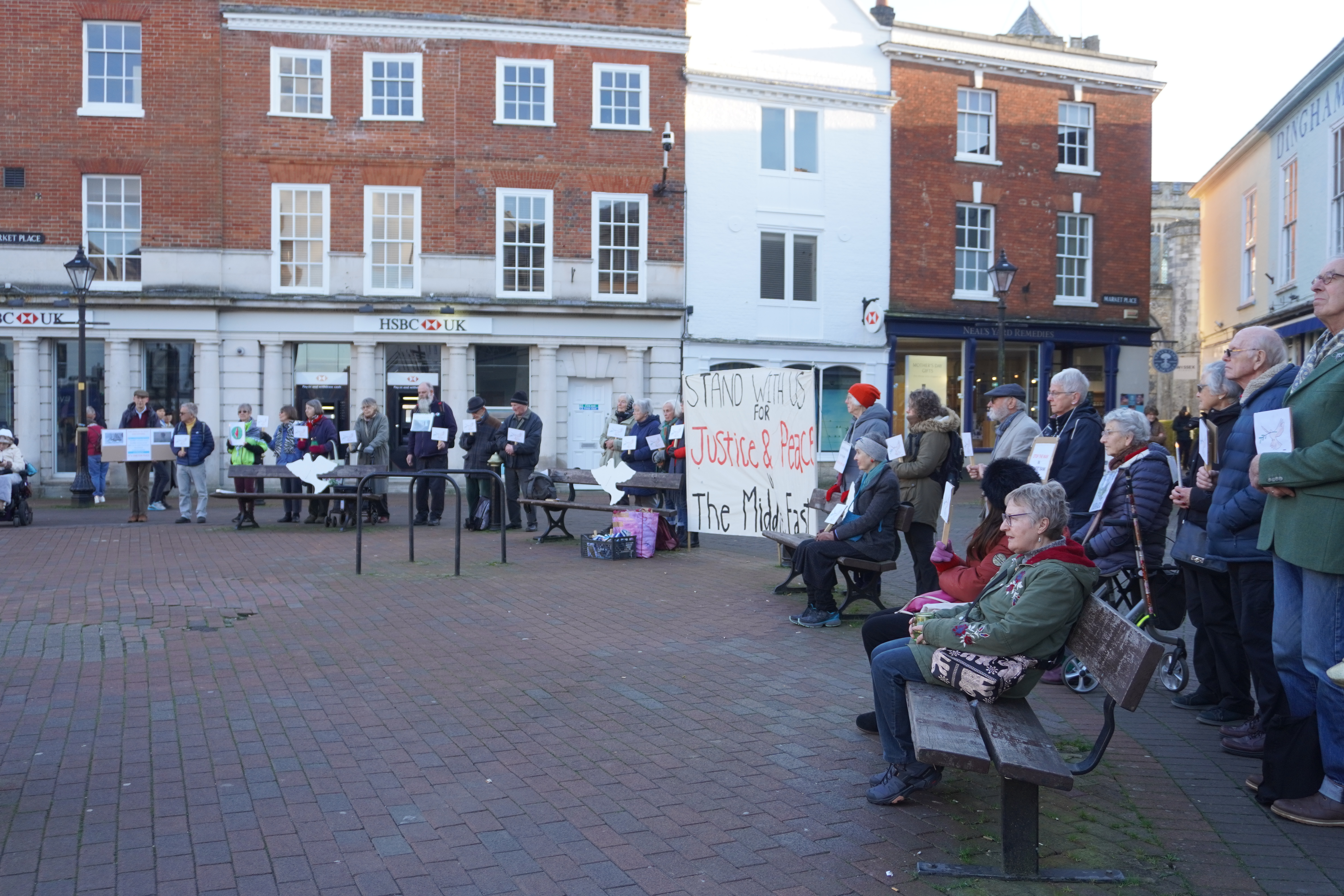
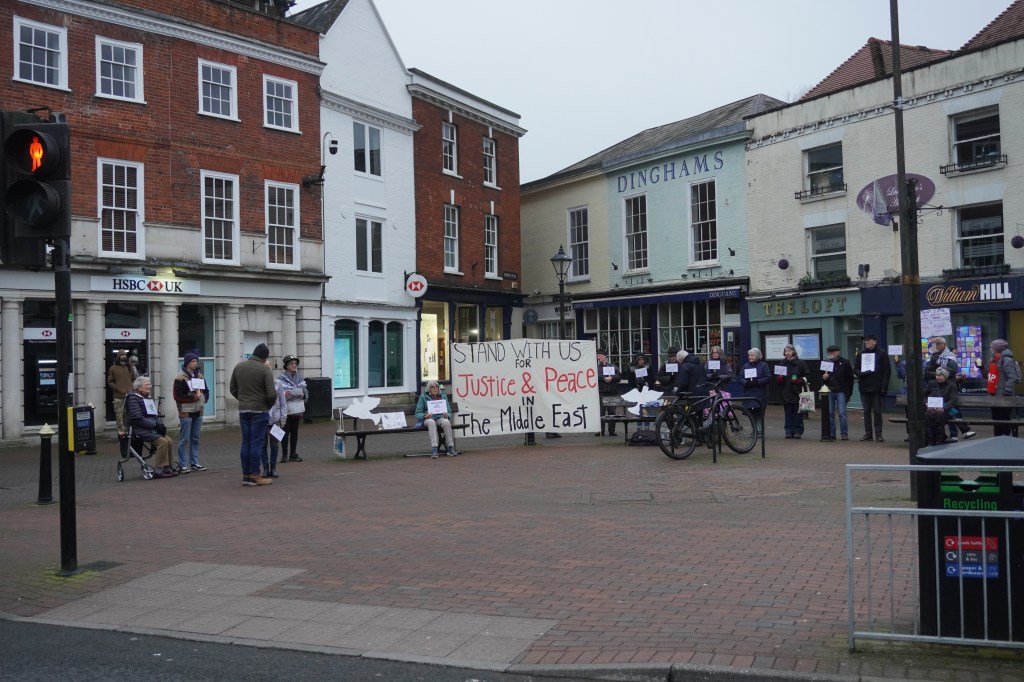
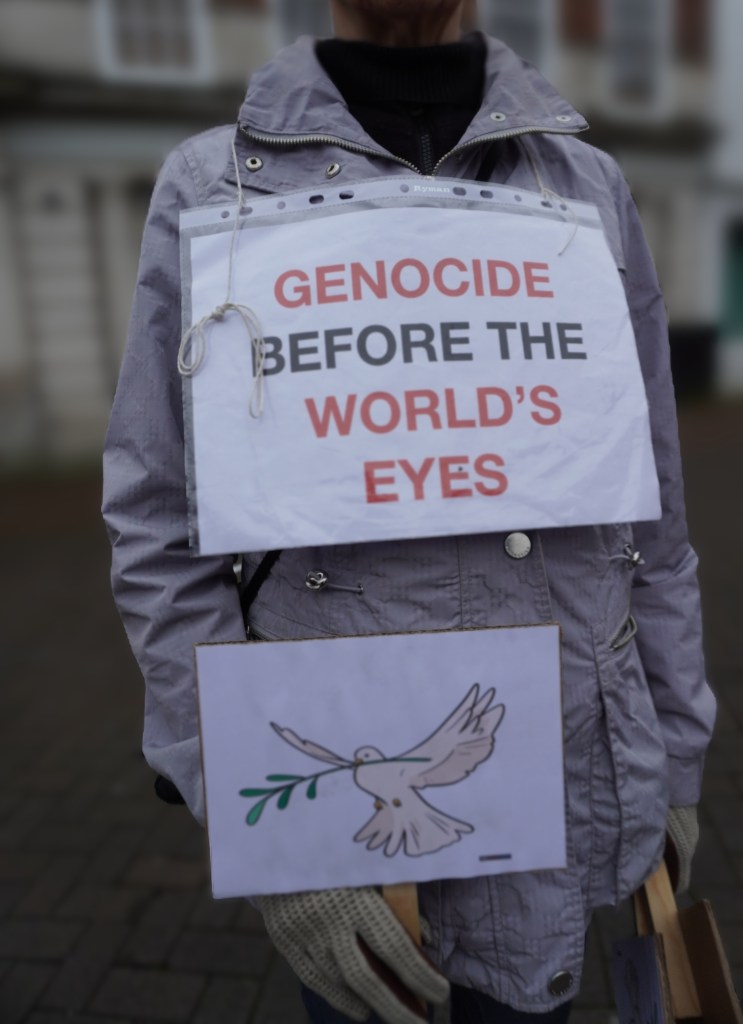
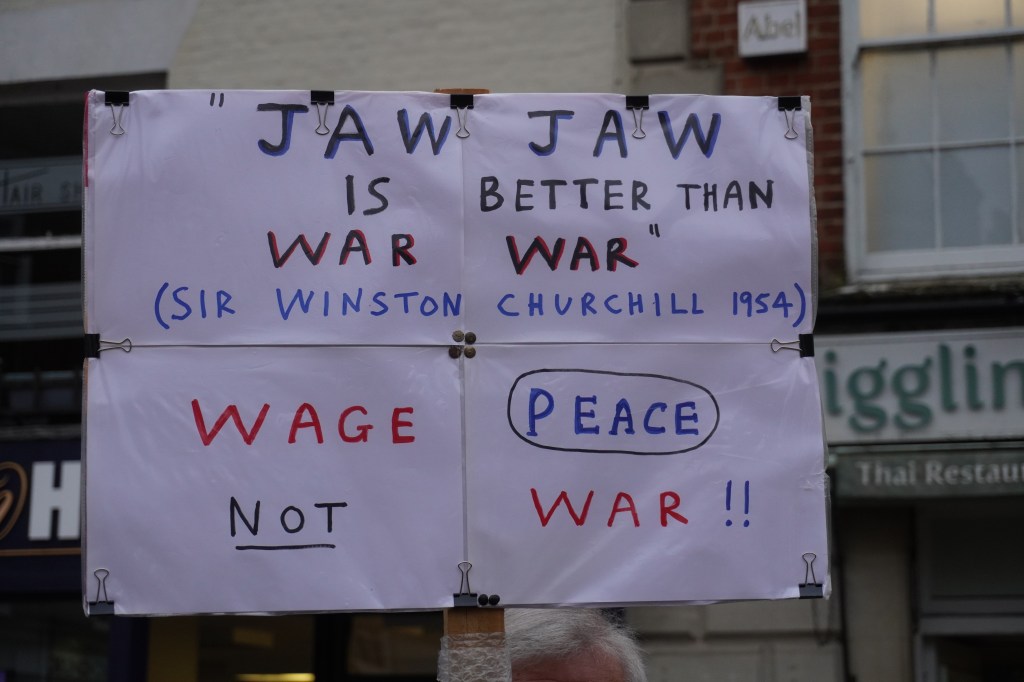
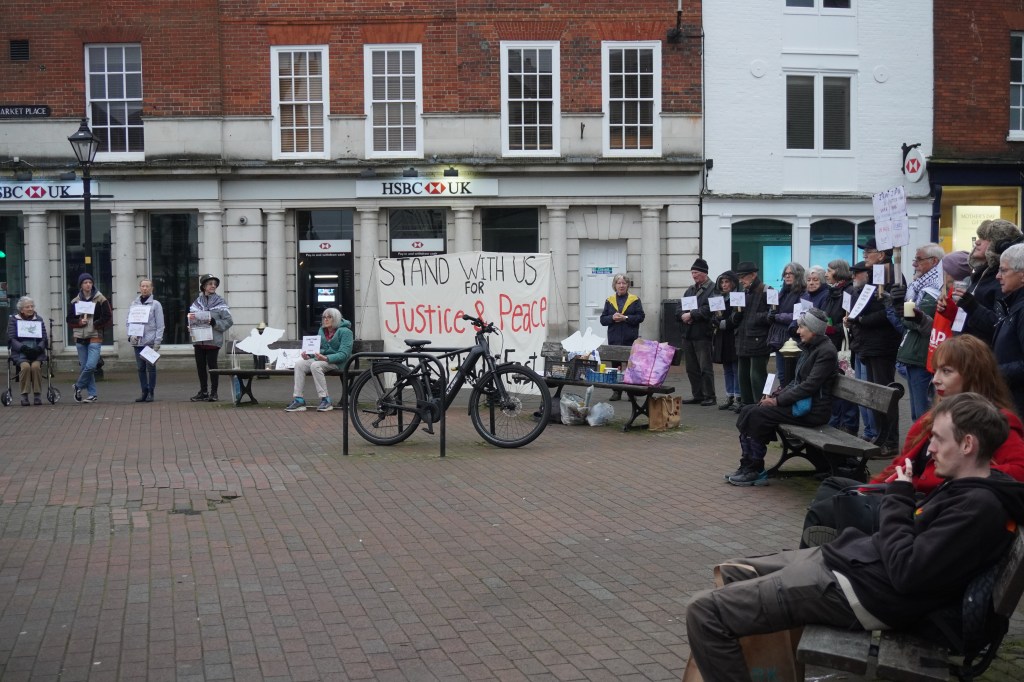
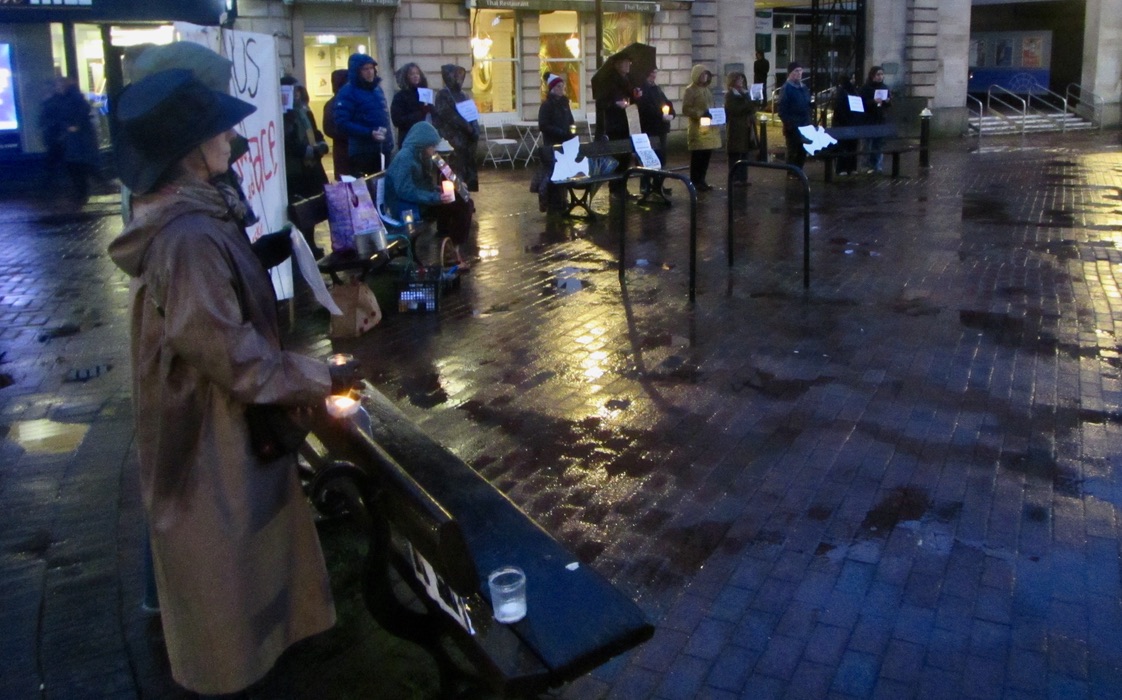
Around 36 attended the 121st vigil and it was pleasing to welcome some passers-by who stopped to join in. Nearly half the cars sounded their horns. Here is a video of the vigil. The vigils started because of the horrific events on October 7th and the ensuing violence in Gaza where the death toll stands at 72,267. The violence continues and around 4 weeks ago, both Israel and the US have started a bombing campaign in Iran and very recently, Israel has started a ground and bombing campaign in Lebanon. In the past few days, the Houthis in Yemen have recommenced their campaign sending missiles towards Israel.
There has never been a sign of the local MP Mr John Glen at any of the vigils nor any mention of them in his weekly column afforded to him by the Salisbury Journal. Mr Glen has claimed in the paper to be a proud member of the Conservative Friends of Israel group. Another member of the Labour party version is the Trade Minister highlighted in our previous post (see link below).
Use of white phosphorus
The violence seems set to continue with civilian casualties mounting on all sides but mostly in Iran and Lebanon. A particularly troubling development last week was a report by Human Rights Watch producing evidence that Israel is using white phosphorus in southern Lebanon. White phosphorus is a chemical substance dispersed in artillery shells, bombs, and rockets which ignites when exposed to oxygen. It can set homes, agricultural areas, and other civilian objects on fire. Technically, it is not a chemical weapon.
Under international humanitarian law, the use of airburst white phosphorus is unlawfully indiscriminate in populated areas and does not meet the legal requirement to take all feasible precautions to avoid civilian harm. The effects on humans is fearful. Biology Insights report ‘direct contact with white phosphorus leads to severe and immediate localized damage, primarily through chemical and thermal injuries. White phosphorus ignites spontaneously when exposed to air, typically at temperatures ranging from 30 to 50 degrees Celsius. This ignition initiates a highly exothermic reaction, releasing significant heat and causing the substance to burn fiercely at temperatures between 800 and 2500 degrees Celsius. The burning continues until the phosphorus is consumed or deprived of oxygen.
‘The resulting burns are profoundly painful and can be full-thickness, extending through all layers of the skin. White phosphorus particles readily adhere to skin and clothing. Because the substance is highly lipid-soluble, it can penetrate deeply into underlying fatty tissues, muscles, and even bone. This deep penetration leads to extensive tissue necrosis [death of cells] at the point of contact‘.
Inhalation is also extremely painful and causes lung damage and possibly renal failure.
‘Beyond horrific‘
A 2023 Amnesty report described its use then as ‘beyond horrific’. The weapon also contaminates the ground and makes its future use problematic for agriculture. Since most villages in the area are dependent on agriculture it has profound economic effects as well.
Hastings protest by Jewish people
This short moving video taken by Hastings Jews for Justice is a protest against Israel’s planned execution law for Palestinians only. Palestinians in Israeli prisons are already tortured, abused, starved and raped. They will be hanged if this law is enacted. There is no appeal. They claim it is state-sanctioned murder. HJJ calls on all MPs to condemn this vile law. Please add your name to the HJJ letter here: https://forms.gle/gnEgkRs553z5Yi617 HJJ Website: https://www.hastingsjewsforjustice.org/ This Guardian article provides an update on the progress through the Knesset.
Previous posts:
- Well attended vigil
- Trade Minister a member of Friends of Israel
- Palantir and the threats to our rights
- Is a two state solution possible?
- Vigil No 120 attracts strong support
Photo & video: Peter Gloyns







 Amnesty in Salisbury & South Wiltshire