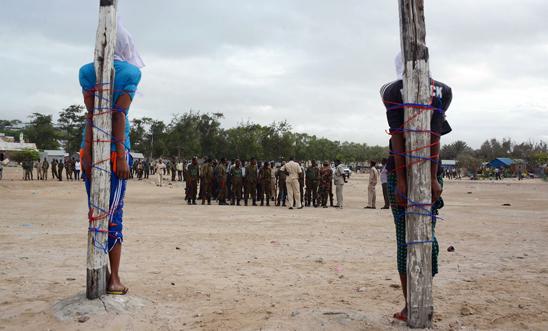
Kenneth Fults executed


WE are sad to report that on 12th April, Kenneth Fults was executed by lethal injection in Georgia texas executionUSA.  The United States is the only country in the Americas which still has the death penalty.  The case revealed the usual catalogue of dubious legal practice that is so common in these cases: a black defendant poorly represented by lawyers one of whom was allegedly asleep during part of the proceedings; a plea bargain and a juror who made derogatory racial remarks about Fults.  Other factors are set out in a previous blog.

Amnesty International’s senior death penalty campaigner Jason Clark said:

Those troubling factors are typical of Georgia’s use of the death penalty.

Virtually every execution that’s happened in Georgia has been emblematic of problems with the death penalty.

He noted that the 28 executions in the U.S. last year were carried out by just six states.

In states like Georgia that are still carrying on a lot of executions, it’s because they’re not implementing issues of fairness.

Amnesty is opposed to the death penalty in all cases.

A sad day…

No to the death penalty


Nineteen years on death row in Georgia USA


Has now been executed (12th)

Neglect, racial prejudice and a sleeping lawyer leaves a man on death row.  Execution imminent
Kenneth Fults and son

In May 1997, Kenneth Fults pleaded guilty to the murder of Cathy Bounds – shot at her home on 30 January 1996. After a three-day sentencing hearing, the jury voted to sentence Kenneth to death.

Eight years later, one of the jurors from the sentencing signed a sworn statement admitting that he voted for the death penalty out of racial prejudice:

I don’t know if he ever killed anybody, but that n***** got just what should have happened. Once he pled guilty, I knew I would vote for the death penalty because that’s what the n***** deserved.

When evidence of racist motivation among the jury was raised at an appeal hearing, the state argued that it was too late to review the issue and Kenneth’s death sentence should stand.  After 19 excruciating years on death row, Kenneth’s execution is now imminent. He is due to be executed on 12 April 2016.

Lawyer asleep during court

Former jurors on the case have since signed affidavits saying that Kenneth’s trial lawyer made little effort to save his client from the death penalty, and shockingly was seen to be asleep during the proceedings.

Mr Fults’s lawyer… was uninterested in what was happening, and it seemed like something was wrong with him. I saw him fall asleep repeatedly during the trial, and he would wake up, startled, when it was his turn to examine witnesses. I saw him sleeping off and on throughout the whole trial.   Former juror on Kenneth Fult’s case

A childhood of neglect

The jury heard some mitigating evidence – that Kenneth was a man with a very low IQ who suffered from depression and an inability to always understand the consequences of his actions – but not they did not get the full story.  His lawyer, Mr Mostiler, failed to give any background on Kenneth’s childhood of neglect and abandonment – born to a 16-year-old mother who later became addicted to crack cocaine.

I don’t believe he had a fair trial. Mr Fults’s current lawyers have told me about how Mr Fults was neglected and abandoned as a child and that he is mentally retarded. Mostiler didn’t bring this up at trial and he should have, so that we would have known more about Mr Fults before we talked about whether to give him the death penalty.

Another former juror on Kenneth Fult’s case In 2006 – a clinical psychologist assessed Kenneth as having an intellectual disability – with a low IQ.  International law bans use of the death penalty on people with mental or intellectual disabilities.

What we’re calling for

We are completely opposed to the death penalty – in all cases, with no exception. The death penalty violates the right to life and is the ultimate cruel, inhuman and degrading punishment.  We’re asking the State of Georgia authorities to stop the execution of Kenneth Fults and for his death sentence to be commuted.

Send your own appeal

If you would like to write your own appeal, please send via fax or email to ensure it reaches the Chairman of the Board of Pardons and Paroles by 12 April 2016.

Contact details:

Terry Barnard
Chairman, Georgia Board of Pardons and Paroles
Fax: +1 404-651-6670
Email: laqsmith@pap.state.ga.us
Salutation: Dear Chairman Barnard

And please send copies to:

Governor Nathan Deal
Office of the Governor
Fax: +1 404-657-7332
Email: Complete the form at http://gov.georgia.gov/webform/contact-governor-international-form or http://gov.georgia.gov/webform/contact-governor-domestic-form

Execution in the USA

Last year saw a dramatic rise in executions globally, with the highest number recorded in more than 25 few years.  However, the Americas is becoming a virtually death penalty-free region.

The USA is the only country in the region to still execute – and consistently one of the world’s top five executioners, behind only Saudi Arabia, Pakistan, Iran and China.

Last year 28 people were executed in the USA and almost 3,000 people remained on death row.

Racial inequality

In June 2015, US Supreme Court Justice Stephen Breyer noted that multiple studies have concluded that ‘individuals accused of murdering white victims, as opposed to black or other minority victims, are more likely to receive the death penalty’ in the USA.

African-American defendants receive the death penalty at three times the rate of white defendants in cases where the victims are white, according to a 2007 study in Connecticut conducted by Yale University School of Law.

From initial charging decisions to plea bargaining to jury sentencing, African-Americans are treated more harshly when they are defendants, and their lives are accorded less value when they are victims.

An irrevocable punishment

It may be an obvious point, but once somebody has been executed – there is no going back. And the risk of ending the life of an innocent person can never be overcome.  Over the last 46 years, 150 prisoners sent to death row in the USA have later been exonerated due to evidence of wrongful convictions.  The key factors leading to wrongful conviction include inadequate legal representation, police misconduct, racial prejudice and suppression of mitigating evidence.

China executes more people than all countries put together but the figures are a state secret.


Follow us on Twitter and Facebook

Death Penalty Report published


Dramatic rise in executions in 2015: the most in one year for a quarter of a century

To read the full report click here (pdf)


The past year has seen a horrific increase in executions around the world – the most we’ve recorded in a single year since 1989, and an increase of an astonishing 54% from the year before.

A few countries are executing prisoners by the hundreds, sometimes for crimes that aren’t serious, sometimes after trials and treatment that isn’t just or fair, and always violating the individual’s right to life and right to be free from torture.

From Australians Myuran Sukumaran and Andrew Chan shot by firing squad for drugs charges in Indonesia to Shafqat Hussein, hanged in Pakistan for a crime he confessed to after torture, aged just 14, over 1,634 individuals were put to death by state authorities last year.

Huge rise in executions

We recorded a huge increase in the death penalty, an increase of 54% compared with 2014. This is the largest number of state executions for a quarter of a century.

The number of countries that executed people rose – from 22 in 2014 to 25 in 2015. At least six countries resumed executions: Bangladesh, Chad, India, Indonesia, Oman and South Sudan.

Countries continued to flout other aspects of international law, putting to death people with mental or intellectual disabilities, as well as those charged with non-lethal crimes. Apart from drug-related offences, people were executed for crimes such as adultery, blasphemy, corruption, kidnapping and ‘questioning the leader’s policies’.

The death penalty is always a violation of human rights. We oppose it in every case.

The main executioners

A minority of countries are committing the majority of executions. 89% of executions in 2015 took place in just three countries: Iran, Pakistan and Saudi Arabia.

Iran

Iran continued to execute juvenile offenders like Shafqat – aged under 18 at the time of the alleged crime – in violation of international law. Authorities there sentencd juvenile offenders to death last year too.

Pakistan

Pakistan lifted its freeze on civilian executions in December 2014, and in the year that followed killed 326 people – the most we’ve ever recorded for that country in a single year.

An attack on a school in Peshawar prompted the government to start executing again, something it had not done since 2008. Initially, the freeze was lifted for those charged with terrorist-related offences, but in March 2015 the government resumed executions for all capital crimes, such as murder and blasphemy.

In a country where people are routinely denied the right to a fair trial, and evidence extracted through torture is used to seal convictions, hundreds of people are being sent to their deaths under the pretence of justice being served.

Saudi Arabia

Last year saw a huge surge in executions for an already prolific executioner. These figures don’t even include Saudi Arabia’s mass execution of 47 people at the start of this year.

The missing executioners

But these figures exclude China, where numbers remain a state secret, yet where we believe thousands of people are executed every year. We consider China to be the world’s top executioner, although the numbers are missing from this report.

We haven’t published figures for executions in China since 2008; we’re challenging the Chinese government to reveal their own figures and demonstrate that they really are limiting their use of the death penalty – something they have claimed to be doing since the country’s highest court began reviewing all death penalty cases back in 2007.

We also don’t publish figures for North Korea, a state shrouded in secrecy.

Execution sentences in 2015

At least 1,998 people were sentenced to death in 2015 and at least 20,292 prisoners remained on death row at the end of the year.

Some hope

Four countries abolished the death penalty for all crimes – the highest number to do so in the space of one year for almost a decade.

Madagascar, Fiji, Suriname and Congo all did away with the death penalty in the national laws once and for all.

Mongolia adopted a new Criminal Code outlawing the death penalty for all crimes in December which will enter fully into law in September 2016.

There is hope even in the USA, which continued to flout international law by executing people with mental disabilities.  Pennsylvania abolished the death penalty for all crimes in 2015 , bringing the total number of US states that have abolished the death penalty to 18.

We still hope for a world without the death penalty, and today half the world has abolished it for good. Add to this countries which have abolished this punishment in practice, as opposed to law, and the total comes to two-thirds of the world.

Group minutes


The minutes of the last meeting are here thanks to group member Lesley for writing them up.  We discussed North Korea and the forthcoming video planned with Clare Moody; the Death Penalty report which highlights the events in Saudi, Pakistan and elsewhere; plans for the Human Rights Act, forthcoming events such as the stall in the market, and social media statistics including the success of the post about the war in Yemen and our role in arming and supporting the carnage, and several other topics.  The next meeting is on 14 April.

March


We have just added a link to an organisation, based in the USA, which campaigns for human rights of those who work in sometimes appalling factories for a pittance to bring us cheap clothes.  Called The Institute for Global Labour (sic) and Human Rights, it came to light in an article on the German retailer Lidl and its latest offering of a pair of jeans called ‘jeggings’ for the princely sum of £5.99 ($8.62).  The article alleges that the factories that make them in Bangladesh do so by paying a pittance to their workforce.  Source: The Observer 13 March 16

It’s sometimes easy to forget that human rights can be infringed in clothing factories as well.

Follow us on Twitter

Death penalty report


Attached is the death penalty report compiled with thanks by group member, Lesley.No to the death penalty

Death penalty report


Follow us on Twitter and Facebook


Albert Woodfox freed


Today, Louisiana prisoner Albert Woodfox walked free, 44 years after he was first put into solitary confinement.

[We are publishing this case from Amnesty USA.  The Salisbury group has campaigned on behalf of this man so we are delighted to see his release after all this time.]

albert woodfoxHe was the United States’ longest serving prisoner held in isolation. Nearly every day for more than half of his life, Albert Woodfox woke up in a cell the size of a parking space, surrounded by concrete and steel. Tomorrow morning, for the first time in more than four decades, he will be able to walk outside and look up into the sky. Over the course of nearly five years working on Albert Woodfox’s case at Amnesty, I heard many times that the odds were insurmountable. But I always knew that Albert Woodfox would go home. I have seen the incredible power of our movement when we work together. I have seen the courage humility, and determination of so many of you who have played big and small roles to help this historic human rights victory come to fruition. I have seen the unbelievable strength of the Angola 3: Robert King, Herman Wallace, and Albert Woodfox himself—all three of whom endured nightmares but persevered with humor, dignity, and resolve to wage a relentless fight against the cruel, inhuman and degrading practice of prolonged solitary confinement in the United States. With the knowledge of his release, Albert had this message for those who have helped him secure his freedom:

I want to thank my brother Michael for sticking with me all these years, and Robert King, who wrongly spent nearly 30 years in solitary. I could not have survived without their courageous support, along with the support of my dear friend Herman Wallace, who passed away in 2013. I also wish to thank the many members of the International Coalition to Free the Angola 3, Amnesty International, and the Roddick Foundation, all of whom supported me through this long struggle. Lastly, I thank William Sothern, Rob McDuff and my lawyers at Squire Patton Boggs and Sanford Heisler Kimpel for never giving up. Although I was looking forward to proving my innocence at a new trial, concerns about my health and my age have caused me to resolve this case now and obtain my release with this no-contest plea to lesser charges. I hope the events of today will bring closure to many.

I’m carrying those words with me today as we celebrate this victory. Today Albert Woodfox walks free—February 19, 2016, his 69th Birthday. In Solidarity, Jasmine Heiss Senior Campaigner, Individuals at Risk Program Amnesty International USA

Death penalty summary


The death penalty summary for the last month is published below with thanks to group member Lesley forNo to the death penalty compiling it.  It contains some good news with four more abolitionist countries and modest progress in USA.  Set against that is the dire situation in Saudi, Iran and Pakistan.  China is the worlds leader in executions but the figures are a state secret.

Many of the items in the summary are covered in greater detail elsewhere on this blog.

Death penalty summary

Cluster weapons used in Yemen


Yemen: New evidence challenges coalition’s denial it used cluster munitions in recent attack
Cluster bombs used in Yemen

Evidence gathered by Amnesty International appears to confirm reports that the Saudi Arabia-led coalition forces dropped US-manufactured cluster munitions on the Yemeni capital, Sana’a, on 6 January 2016.  The attack killed a 16-year-old boy and wounded at least six other civilians, and scattered sub munitions in at least four different residential neighbourhoods.  Amnesty International is calling on the coalition to immediately stop using cluster munitions, which are inherently indiscriminate weapons and are internationally banned.

By Amnesty International, 15 January 2016, Index number: MDE 31/3208/2016

Urgent Action: Florida


This is the latest urgent action, this time for the ‘sunshine’ state of Florida.  Urgent Actions are a key part of Amnesty activity and we ask that people spare a moment or two to write a letter or letters to the people texas executionconcerned.  You can try emailing but these are frequently blocked.  You can read the details in the attachment below.  If you can write it would be appreciated.  Our monthly death penalty report is available.

Urgent Action


Death penalty report


No to the death penaltyThe latest death penalty report is now available and thanks to group member Lesley for assembling it.  The full year summary has already been posted.  It has been a particularly difficult month with a rash of executions in Saudi Arabia and Pakistan has been active as well.  In earlier posts we have discussed the feeble response by the Foreign and Commonwealth Office to the execution of 47 individuals in Saudi recently and we have argued that the government is more concerned with arms sales than with the human rights in that country.

We have a small team which responds to urgent actions many of which are connected to the death penalty.  You are welcome to join us and we will forward you details and cases from time to time.

Follow us on Twitter and on Facebook

Report


Blog at WordPress.com.

Up ↑