The Southampton group is hosting this talk on Monday 2nd March at the University and booking is advised. The subtitle is the impact of sport on human rights. The lecture is by Miguel Delaney, the chief sports writer for the Independent. Starts at 6 pm.
We have posted a number of pieces on the subject of sportswashing and the effects on human rights. Sport as we have said – not just football but tennis, golf, cycling, motor sport, athletics, boxing and others – are being used by various unsavoury regimes to promote their image. Fans seem not to be concerned about the fearful human rights issues taking place in those countries, the routine use of torture, the absence of a free press and the imprisonment of opposition leaders, human rights defenders and lawyers. Vast sums of money are expended in the activity and several despots now own British football clubs. So the talk should be an interesting one.
“Is football a net good for humanity? The impact of sport on human rights” Guest speaker: Miguel Delaney, chief football writer for The Independent Monday 2 March | 18:00 Avenue Campus & Online
The School of Humanities at the University of Southampton, in partnership with Amnesty International (Southampton group), is excited to present Miguel Delaney to deliver the 11th Human Rights Lecture.
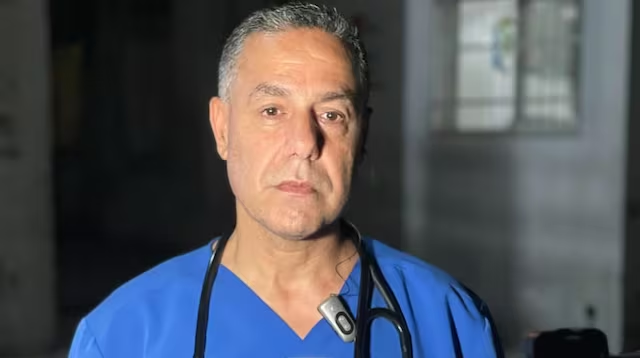
The group hosted a coffee morning at St Thomas’s church in the centre of Salisbury. We had a suggested action for people to take concerning a surgeon, Dr Hussam Abu Safiya (pictured), who was seized from a hospital in Gaza and who’s whereabouts in Israel are currently unknown. He has probably been severely mistreated. We are asking people to write to the IDF to ask for his whereabouts to be made known, for assurances that he is not being tortured, to have access to legal advice and to receive medical treatment. Disappointingly, only three handouts were taken.
Considerable international disquiet has been expressed about this man, and how he has been treated. The Israeli media are now saying, 14 months later, that he is a member of Hamas.
115th vigil took place following a momentous week in the courts
February 2026
We discussed in a previous post the High Court’s decision that the government’s decision to ban Palestine Action was disproportionate. The ban on them has not been lifted as the government seemed determined to appeal and some experts say the Appeal Court may overturn it. The government seem passionate about supressing dissent on this matter – obsessive even – and the possible reasons for this will be discussed in a future post.
Around 30 attended the 115th vigil yesterday and the ‘recognition factor’ by passers-by was higher than usual probably because it was light, Over 50 took note and a few took pictures. A video can be viewed here, with thanks to Peter Gloyns.
Once again we note that the local MP, Mr John Glen has failed to put in an appearance and despite 115 vigils attended by hundreds of his constituents, has never once mentioned them in his weekly Salisbury Journal column. He is a member of the Conservative Friends of Israel, thought to be the largest and best funded of all the lobby organisations in parliament. Although the Conservatives are the largest of such groups, other parties have members as well. It goes some way to explaining why there is silence on the question of genocide in Gaza and little noise about settler violence in the West Bank.
An interesting event took place on the BBC’s Any Questions? programme on Saturday 14th February. Perhaps the programme should be relabelled ‘Some Questions‘ because one audience member stood up and asked “What does the panel think about the BBC not expressing the truth about the genocide in Palestine?” This was not the question she had submitted on the card so it was hastily ignored and the original question about the High Court’s decision discussed instead. It seemed to reveal a BBC deeply nervous of the whole issue of Gaza. A question about the BBC’s poor record would almost certainly never have been allowed. There were a number of disturbances from the audience during the programme talked over by the presenter Alex Forsyth.
“Valentine’s gift to every thug and anti-Semite”
A large part of the ensuing Any Answers? focused on the Palestine Action decision. Most were in favour of the judgement and a handful not. Overall, it seems that the public finds the decision to call them a terrorist organisation over the top. This view is not supported by the Daily Mail among others who concludes that the decision is a ‘Valentine’s gift to every thug and anti-Semite who cheerleads for Palestine Action‘. It found the decision ‘baffling’ and quotes a government source saying it was ‘bonkers’ [accessed 15th February]. It correctly notes that the decision could go the the Supreme Court and take months to decide.
We attach the group’s minutes of its February meeting thanks to group member Lesley for the work in compiling them and for other members Fiona and Andrew for their contributions. We do not produce a newsletter so these minutes, although longer than normally the case with minutes, contain items of wider interest.
Human rights shot to the top of the agenda this week following the High Court’s decision concerning Palestine Action which has been another blow for the government.
High Court finds the ban on Palestine Action ‘disproportionate’
February 2026
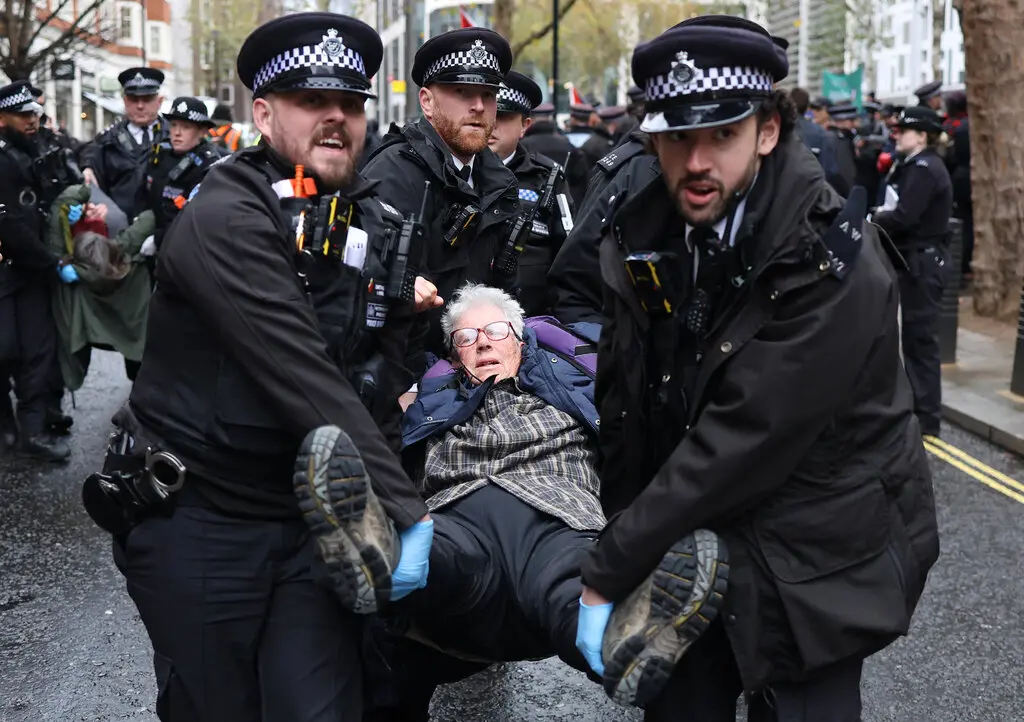
The High Court has ruled that the ban on Palestine Action is disproportionate and banning it unlawful. The ban remains in place however as the government is minded to appeal the decision which will take place later this month. The decision is a major victory for the right of free speech and the right of assembly. Liberty and Amnesty have both appealed to the Home Secretary, Shabana Mahmood, to respect the decision. It represents a severe blow to the government. Around 2,500 have been arrested during protests.
It is worth remembering the way PA was banned by the then Home Secretary, Yvette Cooper. Almost certainly she knew the likelihood of achieving a successful vote in parliament was unlikely, so they were lumped in with two extreme white supremacist groups, the Maniacs Murder Cult and the Russia Imperial Movement. Labour members were then whipped to pass the measure. Local MPs Sir Desmond Swayne and Danny Kruger both voted with the government. John Glen MP is not shown as voting. At one stage, the Home Office attempted to suggest they were funded by Iran, a story The Times and the Daily Telegraph fell for, but which they now no longer support.
The Board of Deputies for British Jews are reported to be extremely concerned by the ruling. Lord Sumption interview on the BBC’s PM programme thought the decision vulnerable on appeal. He thought the problem for the government was that the ‘overreach’ of the legislation which meant those holding banners or placards were arrested. He thought PA a ‘thoroughly nasty organisation’.
The government seems particularly determined to clamp down on this organisation and to continue its support for Israel despite the fearful loss of life in Gaza now put at over 72,000. Violence in the West Bank continues apace with estimates of over 1,000 deaths with many more driven from their homes by settler violence.
Elbit Systems, the Israeli arms firm with plants in the UK, has been at the centre of the protests. It manufactures drones which are alleged to be used in Gaza to commit war crimes, a claim Elbit denies.
This is undoubted good news but whether it will survive the Appeal Court remains to be seen. One way or another, by legislating against protest, arresting supporters doing no more than wave placards, and planting fake stories in gullible and compliant media, the government seems determined to support Israel whatever it does and how ever many people it kills or drives from their homes.
Sources: Sky News, Daily Telegraph, The Guardian, CAAT, Jewish Chronicle.
Refugees and immigration have dropped down the political agenda. Irregular arrivals to EU fall
February 2026
With nearly all the political attention focused on the future of the Labour government and Sir Keir’s likely survival together with the steady stream of resignations from No. 10 (soon be time for the old joke ‘will the last person to leave remember …’ etc) attention has shifted from the near constant focus on immigration and in particular the boat crossings.
This month the focus has been on Europe, specifically the EU, who are developing a 5-year strategy prioritising deterrence, deportation and cooperation with non-EU countries. In the words of Ursula von der Leyen, ‘Europe decides who comes to the EU’. The view of Amnesty International is that the EU risks demonstrating complicity in rights violations by its proposed dependency on third countries. So far deals have been made with Tunisia, Mauritania, Egypt and Morocco, none of which has blameless human rights records. It is worth noting that irregular arrivals in the EU are down by 25% in 2025. While many European countries are making conditions harder for irregular arrivals, Spain has decided to regularise the status of 500,000 undocumented migrants, emphasising their value to the country.
Deportation is also looming large in the UK. Under threat of shutting down their visas, Angola, Namibia and the DRC have agreed to take back migrants claiming asylum in the UK. Numbers of removals have been made, especially to Albania, Brazil and India. In 2024, 32% of enforced removals were asylum-related, 25% of voluntary removals. The voluntary return numbers are not only people agreeing to go back home, but include anyone not going through the application process properly for whatever reason (the number of these who actually leave the country is unknown, of course).
The ‘One in, one out’ arrangement with France has so far resulted in 281 people going to France and 350 coming the other way. The journal ‘Medical Justice’ says that a high proportion of those involved are survivors of trafficking and/or torture.
Reduced backlog
In Britain, the backlog of asylum cases is going down although, as notes before, the number of refusals has gone up (probably due to less care being taken in the interviewing) so that there is a bigger backlog of tribunal appeals (and fewer qualified staff to deal with them). Barrister Colin Yeo has observed, “The only group to benefit from these long waiting times are those whose cases will ultimately fail; by the time that happens they will have been living here for years and it will be even harder for the Government to remove them than would otherwise have been the case”. As of last September, 17,000 claimants had been waiting more than a year for a decision.
The UK Government has been publicising its plans for new ways of dealing with the immigrant issue. Among them is a plan for ‘Named Community Sponsorship’ whereby local communities take the responsibility for inviting and incorporating migrants into the community. This would create safe and legal routes into the UK, but leaves the onus on local private projects and may result in cherry picking. The Ukrainian process would be the template, but no timeline has been given.
The Home Office is also talking of trialling new ways of housing irregular migrants to replace hotels following Refugee Action’s suggestion that authority for asylum seekers’ accommodation should go to local councils, not the Home Office. Local councils are resisting for fear of hostile public reaction.
The BBC have reported that there has been a surge in the number of refugee households that are now homeless, up from 3,520 in 2021/2 to 19,310 in 2024/5. The increase in waiting times and shortening of time available to find accommodation post-assessment are blamed.
In the wider world, the Sudan conflict has had a profound effect on its neighbour countries with 14 million displaced persons. 1.2 million have moved to Chad, a country where 42% of the population live below the poverty line.
March for Refugees
Finally, for anyone eager for exercise, Refugee Action are organising a March for Refugees, sponsored walking 30, 60 or l00 miles through the month. Details at Sign up to March for Refugees.
Government making protesting more and more difficult
February 2026
Successive governments have taken more and more steps to limit the right to protest. More laws are planned and existing laws are used to prevent or obstruct the right to protest. The laws have been used particularly against Palestine Action which has been banned on spurious grounds. A recent Channel 4 programme Palestine Action: The Truth Behind The Ban (registration needed) exposes the shaky grounds for the ban with the government alleged to have planted stories willing printed by the Times and other right wing papers claiming Iranian funding. Further legislation is planned to prevent repeated protests. Scotland is to hold a judicial review in March over the ban on Palestine Action.
On 4 February a jury at Woolwich Crown Court acquitted all of the first six Palestine Action activists of charges of aggravated burglary or violent disorder at Elbit Systems Filton factory. None had been charged with terrorism offences.
After more mass arrests of peaceful protesters at Wormwood Scrubs, the hunger and thirst strikes have now ended with five members released on bail, although the health implications for them will continue into the future. The family and lawyer of thirst-striker Umer Khalid claim they have been denied access to him since his hospitalisation on 26 January. By the time the remaining prisoners are charged, some individuals will have been in pre-trial detention for 2 years which is well over the six-month limit. The actions of the Palestine Action group in sabotaging Israel-linked arms manufacture Elbit, have resulted in the closure of the factory. Elbit has lost a £2 billion training contract with the UK government but continues to supply other military equipment and services.
The Extinction Rebellion appeal, backed by Defend our Juries, which claimed that the jury’s right to vote according to their conscience had been interfered with in the judge’s summary at their trial, was dismissed in a Court of Appeal ruling. This, somewhat incongruously, recognised the validity of the conscience clause but denied their claim of judicial interference in this case.
Proposed changes to ECHR
David Lammy, Secretary of State for Justice, is seeking to limit access to rights in Article 8 of the ECHR for some violent prisoners. See a previous post for fuller discussion.
Liberty is joining forces with Amnesty International UK, Greenpeace, Palestine Solidarity Campaign, and Quakers in Britain, for a mass lobby of Parliament to defend our right to protest. Join us in London at Westminster Hall in Parliament from 2pm–5pm on Tuesday 17 March 2026.
The use of facial recognition technology advancing with few controls
February 2026
One of the features of the Chinese state is the massive use of facial recognition technology throughout China. It is a vast system with millions of cameras and is used to monitor every movement of its citizens. The system is used to control everyone and it means no one can move or meet someone without it being observed and logged by the state. It is the ultimate example of the panopticon in a modern setting.
Some are remarkably relaxed about its use in the UK believing claims made that it will be properly controlled and will be used to catch criminals, drug dealers and the like. So innocent people have nothing to fear. Read on …
Right to Privacy
The government’s Biometric Technology Consultation (to close on 12 February) aims to help develop a new legal framework for the use of facial recognition and similar technologies by law enforcement. Despite the landmark UK Court of Appeal ruling in 2020, that found the South Wales Police use of automated facial recognition (AFR) technology was unlawful, police forces in different parts of the country have increased their use of Live Facial Recognition (LFR). As these systems contain the biometric data of huge numbers of people, some concerns from human rights groups, including Amnesty and Liberty, are briefly summarised here.
The first concern is to ensure that a new legal framework should apply to all use of ‘biometric technologies’ by all law enforcement and other organisations and should be transparent. Complex mathematical processing is used to identify facial features and generate ‘similarity scores’ but the internal logic of how a match is calculated is hidden from both the police operators and the public. The authorities cannot explain the specific basis for an intervention nor account for why or if the technology produces biased or inaccurate results.
Second, it is concerning that the use of Facial Recognition Technology (FRT) is becoming widespread and easily accessible, with retail outlets taking on a quasi law enforcement role, aided and supported by the police, and drawing on the same or similar databases. It is becoming normalised in schools, in commercial and retail settings, with information flowing between sectors and under a patchwork of inconsistent laws which the public does not understand and find almost impossible to challenge.
This was demonstrated in a recent Guardian report (6th February) on the apprehension and removal from Sainsbury’s store in Elephant and Castle of a customer who had been wrongly matched by staff with a photo of a different customer flagged by their Facewatch camera. In order to prove his innocence he had to apply to the agency using a QR code and submit a photo and a copy of his passport to them before they declared him not on their blacklist.
The following is a list of factors of concern to human rights groups:
– Transparency – to include how and when the technology is being used and the clarity of accessible information about rights.
– Whether biometric data is acquired overtly or covertly.
– Whether it is collected voluntarily or involuntarily. Pervasive monitoring is leading to the normalisation of suspicion less surveillance.
-The subject’s status – whether or not someone is the intended subject of a police investigation or an innocent bystander walking past a camera.
– Who has access to the data and the results.
– The space, context and location of deployment. Expectations of privacy vary significantly between a quiet park and a busy thoroughfare.
– Whether the system is used to make inferences about a person’s internal state, their emotion or intent.
– Whether the interference is demonstrably ‘necessary’ and ‘proportionate’ to a legitimate aim, such as the prevention of serious crime.
– Whether assessments consider the Public Sector Equality Duty (PSED) to ensure the technology does not have a discriminatory impact.
– Algorithm bias: whether this performs differently based on race, gender, or age, which could lead to the over-policing of marginalised communities.
– Watchlist bias: whether scrutiny of criteria can ensure groups are not disproportionately targeted based on protected characteristics.
– Bias in interpretation of identification patterns claiming to provide predictive evidence.
Human Rights groups say that any new regulation should protect privacy and limit data-sharing between public authorities, law enforcement and private companies; and that as the state gains powerful new ways to monitor citizens, a strong and resilient oversight body with true independence is needed to protect human rights and dignity.
We are pleased to attach the latest monthly report on the state of the death penalty around the world thanks to group member Lesley for the extensive work in compiling it. Good and bad but mostly the latter, with Florida leading the charge in the US and Iran engaged in a continuing programme of executions. As ever we have no information on China which probably carries out more executions than the rest of the world combined but whose details are a state secret.
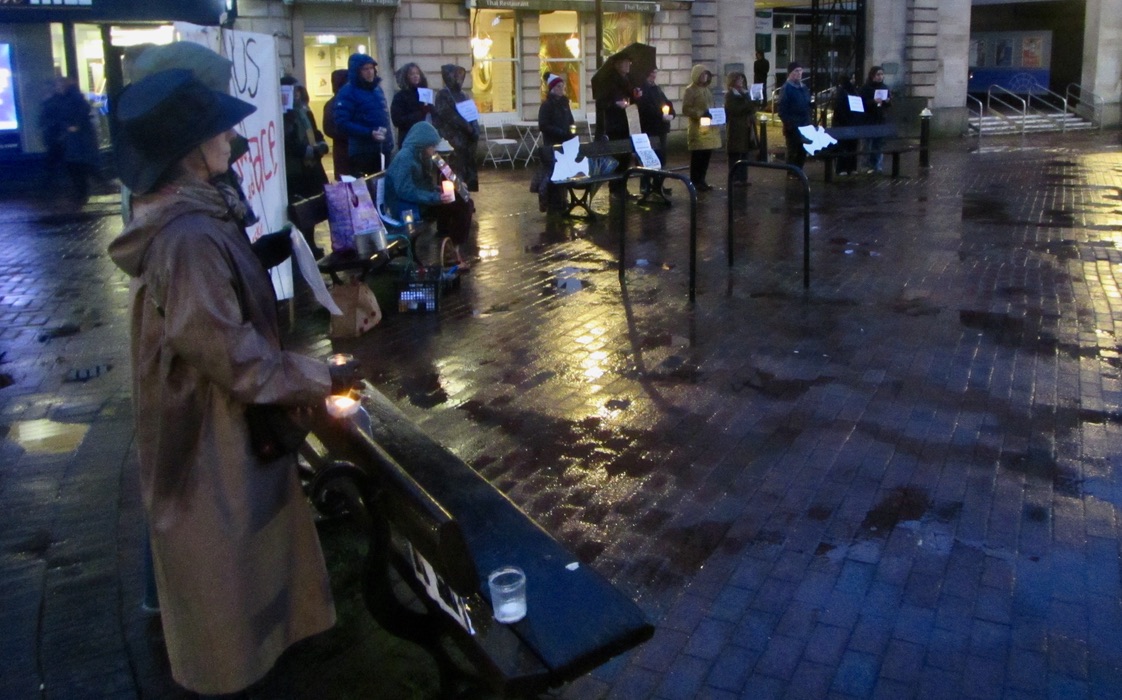
Around 25 turned out for the 114th vigil on a wet and cold evening in Salisbury. We continue because there is no sign of a real prospect of peace in the Middle East and people continue to die in Gaza. The death toll has risen to 72,027 according to the Peninsular with Israeli strikes continuing in the territory. The so called Board of Peace is to hold its next meeting in Washington on 19th of this month with no Palestinians present Al Jazeera reports. Over 500 have now been killed since the peace process began.
Attempts to allow foreign journalists into Gaza to document evidence there have failed yet again. The Foreign Press Association has been engaged in a fruitless campaign for around 4 years now and the Israeli Supreme Court has decided to defer a decision yet again. It has postponed making a decision 10 times and finally ran out of patience. However, it allowed the Israeli lawyer to present their evidence in closed session. There are criticisms of the FPA for endlessly pursuing these applications when it is clear an enfeebled court is never going to allow foreign journalists in.
Three journalists from the Egyptian Committee for Gaza Relief were possibly murdered by an IDF airstrike according to +972 despite being some distance from the yellow line and in a clearly marked car. The IDF claim that the ‘suspects were operating a drone affiliated to Hamas’ which seems extremely unlikely but without independent evidence it is hard to be sure.
“We will continue to kill the idea of a Palestinian state” Bezalel Smotrich Finance minister
This follows the recent decision by the Israeli cabinet to ease restrictions on Jewish people acquiring land on the West Bank in contravention of the Oslo Accords. The process of acquiring land by Jewish people will be governed by an element of the IDF and the need to go through the civil administration will no longer be necessary. The decision has drawn a rare condemnation from JD Vance.
A positive message to come out of the endless horror of death and destruction comes from the West England Bylines which is a citizen’s journalist outlet and contains a poem by Lama Kuhail:
In Gaza’s Streets, where pain does flow,
A wounded land, the world must know.
Through darkened skies and broken ground,
A son of courage still resounds.
With every tear and every fight,
They chase the dawn,
Defy the night.
A video of the vigil with thanks to Peter Gloyns for permission to post it. Picture shows wet attendees!












 Amnesty in Salisbury & South Wiltshire