Ruth Ellis was hanged in Holloway Prison in 1955 and was the last woman to receive this punishment. Hanging was abolished in 1969 but the execution of Ruth Ellis was one of the events which led to its abolition. The last execution was in 1964, that is 70 years ago. This week Ellis was given a conditional pardon by the government. The application was brought by four of Ellis’s grandchildren who said her action was profoundly shaped by domestic abuse, trauma and circumstances that were never properly recognised at her trial. It is likely that if her life of abuse was made known to the jury it is likely she would have been convicted of manslaughter.
The desire to restore the penalty emerges from time to time and ‘bring back hanging’ appears in some interviews especially after a terrible murder or a terrorist attack. A minor British political party, Restore, is campaigning for its return but it is not a policy of the major parties. The Daily Telegraph does not agree that she has been pardoned reflecting perhaps its older readership’s views about the penalty.
Amnesty believes it is wrong in all circumstances and campaigns for its abolition around the world. The US is the only country in the Americas to retain it in some states at least and in Florida, there has been an increase under Governor De Santis, it is suggested as part of his campaign to be President. Support in the States is slowly diminishing reflecting the views of younger Americans. China is the world leader in executions carrying out more than the rest of the world combined although exact figures are not known as they are a state secret.
There are many problems with the penalty the most obvious being that mistakes cannot be rectified once the execution has happened. And there are mistakes often because exculpatory evidence is sometimes withheld by police. Frequently, the defence is poor or because a key witness can lie to save their own skin. There is considerable racial bias. It does not deter crime as is often claimed: there are no significant differences in crime between states with the penalty and those without. It is very expensive especially in the US where prisoners live for years on death row waiting results of appeals. It is a barbaric practice and simply perpetuates the cycle of violence.
The steady decline in our rights in the UK continues
July 2026
For many years, Amnesty concerned itself with human rights overseas. There was an own country rule. There was a tinge of arrogance in that based as it was on the assumption that rights in the UK were perfectly all right – after all we had the Magna Carta, a democracy and parliament to look after us – it was people overseas that needed the help. Well they still do but here in the UK, there has been a steady stream of legislation with the intention of inhibiting protests. Governments do not like them and act after act has appeared both from Conservative and Labour governments and Home Secretaries, seeking to obstruct and make protests more and more difficult. Which is why we have initiated these posts.
In this 250th year of America Independence, and as we have many (very welcome) readers from over the pond, it is worth noting that the UK does not have a constitution nor the equivalent of the first amendment rights to free speech enjoyed by US citizens. Which is why the slow drift into authoritarianism by our government is so troubling. We have tended to rely on the courts to protect our rights. As you can see in the first item below, that reliance is extremely uncertain.
Right to peaceful Assembly and Protest
The Supreme Court has controversially overturned the High Court ruling that declared the ban on Palestine Action to be unlawful. This means that the ban on Palestine Action is restored and charges stand against the 700 plus people being charged under the Terrorism Act. Tom Southerden, Amnesty’s legal programme director, said that it was fundamentally disproportionate to treat direct action protest as terrorism and claimed that the images of people from all walks of life, from nurses and pensioners to military veterans, being bundled into police vans for peacefully holding placards would be long remembered as a deeply shameful chapter in our history.
Subsequently, on 12 June the four Palestine Action activists known as ‘the Filton 4’ were told by Judge Mr Justice Johnson they would be sentenced as having a ‘terrorist connection’ following convictions for criminal damage arising out of their direct action at the Elbit Systems arms factory in Filton, Bristol. Criticisms of these verdicts have been widespread in the UK and the UN.
Kerry Moscogiuri, Amnesty International UK’s Chief Executive, concluded:
“The defendants in this case were sentenced as terrorists because prosecutors want to make an example of them and set a precedent for how direct action protesters could be treated in the future. Criminal damage has never been treated as terrorism within the UK justice system before and it is dangerous to treat them as the same thing. We should all be worried about what this means for other individuals taking direct action in protest of a genocide or any other issue. The right to protest is one of the most effective tools we have to hold our leaders to account and today is another step in the ongoing crackdown in this country against it. The use of terrorism laws against direct action protesters must end”
Equality and Human Rights Commission Transgender guidance
A total of 135 MPs, 69 of them from Labour, have signed a Commons motion calling for the code of practice on transgender people, recently drafted by the Equality and Human Rights Commission, to be blocked, primarily because of worries about its impact on transgender people and also the possibility of legal challenges. It’s unlikely that the guidance will be stopped, as the government has declined to allow a vote, but there is pressure on ministers to listen, and possibly to consider new legislation to resolve the problem. The 40-day period for the code to be laid before parliament ends early next month, after which it will become law.
Right to privacy/freedom of information
The High Court has rejected attempts by Nigel Farage’s Reform party to dismiss the challenge from the Good Law Project that they must be more transparent in how they hold data of members of the public. Before the general election, Good Law Project supporters demanded that political parties reveal how personal data is held and used, as the law requires them to do. Notably most requests to Farage’s Reform party received no response.
It is legitimate for political parties to combine the electoral roll with other data they’ve captured to target people with tailored ads and messages. This itself raises questions in a democracy, but is particularly concerning when micro-targeting is done by a far-right party like Reform which currently is experiencing issues over transparency especially over their funding. The Good Law Project will now sue Reform.
Oversight for Police AI
Liberty is calling on the government to establish oversight for the increasing use of AI by police. They demand full transparency in response to public concern; binding rules on what data can be fed into police systems; independent testing and continuous monitoring; accountability to a designated human of decisions resulting from AI; training of officers in its use, limitations and their responsibilities; clear recording and auditing of how decisions are reached; and an independent regulator to enforce these standards.
Workplace rights
The Equality and Human Rights Commission (EHRC) has published new commissioned research on harassment in the workplace. The rapid evidence review shows how organisations can prevent problematic behaviours, fulfilling the legal obligations introduced by the Worker Protection Act.
The research highlights the importance of reporting mechanisms but warns that organisations should not rely on the number of harassment reports to determine if they have a problem. Low harassment reporting rates they say may indicate a workplace in which employees feel unable to report, rather than the absence of harassment.
The study also suggests that when employers are purely motivated by reputation management, policies often involve ineffective ‘box-ticking’ interventions which, in isolation, fail to prevent harassment or protect their employees. It concludes that to be effective, interventions need to be implemented consistently, reviewed regularly and involve multiple approaches to increase awareness of harassment through training and communication.
Transfer of jurisdiction under scrutiny
UK police forces have faced severe criticism for ceding jurisdiction to the US military for off-duty crimes committed by their personnel on British soil, preventing such cases from ever reaching the Crown Prosecution Service
Following the high profile challenge launched by the mother of Harry Dunn, in which only after a long legal battle the CPS succeeded in the prosecution of the American driver responsible for his death, a second instance of a failure of the British Government to protect its citizens has recently come to light. Sarah Steele, who was strangled by an American pilot, failed to have her case heard in a British court when the US military transferred the hearing and judgement to their own court. The defendant was subsequently expelled from the military but found guilty of only one of two charges. Justice Secretary David Lammy undertook to raise the case directly with the US government.
Refugees and asylum seekers remain a hot political issue
July 2026
With attention shifting to Andy Burnham and whether he will be the new prime minister in a matter of days, and the resignation of Nigel Farage from parliament resulting in a new by-election in his constituency, other topics like immigration have dropped – albeit temporarily – from the news. The latest effort by the Government to get a grip on the immigrant/asylum seeker issue, the Asylum and Immigration Bill, is now published, with the first debate to take place on July 13th. Much of this post will be related to the Bill.
As mentioned previously, the most contentious parts of the Bill are the amendment of the waiting period for prospective residents from 5 years with a promise of acceptance to 2½ years, to be reviewed every six months. Family reunions are also being more restricted, and the Home Secretary has mooted making immigrants pay up to £10,000 once they are in work. Meanwhile, the “one-in-one–out” scheme agreed with the French authorities for boat arrivals, is to be ended in October; about 900 exchanges have been made so far.
On a related topic, the Home Office state that successful claimants must move on from temporary accommodation within 42 days: as the backlog of cases falls, this has added to the number of migrants seeking accommodation quickly, and the IPPR say that this is increasing the number of homeless migrants (up to a quarter of rough sleepers are now non-UK nationals).
A new appeals body proposed by the Bill, the Independent Immigration Appeals Authority, would not require all panellists to be legally qualified. The Law Society has opposed the measure, and it has been said that the idea, originally tried in Australia, was not a success.
Also in the Bill, the contentious Article 8 (right to family life) defence against deportation is addressed. Little change to existing rules are proposed, but the impact is reckoned to be that 11,700 claimants per annum will be rejected. Nevertheless, 55% of those declined permission to stay will likely remain, due to technical issues. The Home Office reckon that overall 34,000 asylum seekers have been granted leave to remain under Article 8.
Separately, the Home Secretary has announced a new scheme to allow local communities and educational bodies to sponsor refugees to settle in their area. A refugee work route is also expected to open next year. These are concessions to the critique by the Refugee Council that the reason refugees make irregular journeys – including via small boat – is due to the lack of legal routes available. Prof. Sarah Singer notes that community sponsorship already exists, and that putting the responsibility on local communities might be seen as the Home Office avoiding responsibility.
Performance politics
Amnesty International’s response to the Bill was summarised by Steve Valdez-Symonds, Amnesty International UK’s Refugee and Migrant Rights Director:
“The introduction of yet more immigration legislation in the final days of Keir Starmer’s premiership, just before summer recess, will be a bitter disappointment for anyone hoping for a genuinely new direction from government. The Bill, and a series of recent immigration announcements, continue down a path laid by successive governments: reducing legal constraints on Home Office decision-making while making the immigration and asylum system increasingly punitive for migrants and refugees.
“Several proposals are deeply alarming: from attempts to weaken protections for families and sideline long-established human rights obligations, to plans for a Home Office-controlled appeals system without legally qualified judges, and proposals to warehouse people seeking safety in mass barrack-style accommodation centres, deny them the right to work, and then present them with a bill for it.
“Access to justice and the rule of law are not inconveniences to be worked around. Protections against torture, family separation and arbitrary state power are values this country has upheld for generations. Yet this government appears willing to cast them aside in pursuit of political headlines.
“This is politics as performance, not problem-solving. Abandoning principles that should never be negotiable, including by seeking to weaken the protections guaranteed by the European Convention on Human Rights, is weakness, not leadership.
“Whoever the new Prime Minister is, if they truly want a reset, then dignity, fairness and hope must be for everyone. Britain needs a new politics that rejects scapegoating and appeasement and returns to the values of justice, humanity and equal dignity.”
The House of Lords Justice and Home Affairs Committee has a new report on the proposed changes, which repeats the criticisms of other bodies and fears that impacts may be harmful.
The new Independent Commissioner for Immigration and Border Inspection has criticised the asylum team at the Home Office for poor initial decision- making and a consequent long appeals backlog. The backlog of asylum appeals is now up to 87,000. Twice as many appeals are coming in as going out. New appeals are not likely to be resolved for 3 years.
Migration Observatory have a report on the long-term jobs market for immigrants. As of 2023, 13% of those granted leave 5 years earlier were earning £20k+. Home Office have figures for 16-24 year-olds between 2015-2023, 24% had work within a year, 48% within two.
A new move is reported for improving the settlement of new arrivals, an asylum dispersal pilot scheme, reputedly being offered for the Autumn. 200 local authorities have expressed interest, but none have heard anything more. £500 million has reputedly been allocated, but no information on funding has been revealed.
Beyond the UK, UNHCR note a trend in global refugees. The number of forcibly displaced people was down in 2025, the first drop in a decade. They warn, however, of the dangers of returning home for many exiles..
Sea rescue has been reported as an issue. The law on rescuing victims comes under 4 separate international laws, making responsibilities and enforceability difficult. It is believed that between 2014 and 2020 some 83,000 deaths occurred among sea bound refugees.
Monthly report on the use of the penalty around the world
July 2026.
There is a lot of interest in this month’s report which covers the period mid-June to mid-July 2026 and is preprared by group member Lesley to whom we are grateful for the work in compiling it. There is more content in this report on conferences where the future of the penalty was discussed for example the Ninth World Congress Against the Death Penalty.
Israeli forces intensify killing of fishers off the coast of Gaza
Vigil No 135
Gaza is effectively surrounded and has no port or means of accessing neighbouring territory. It is an open air prison. With the tight restrictions of aid entering the territory and the annexation of nearly all the cultivable land by Israeli forces, one of the few means of livelihood is fishing. Gazans have been restricted to inshore fishing only, they cannot venture into the Mediterranean. Since October 2023, attacks on fishers have intensified with 238 killed since October 7th according to the Gaza Fishers Syndicate. Channel 5 News carried a report yesterday [we have been unable to locate a link]. It appears to add an element to the policy of starvation being meted onto the territory. [ADDITION 6 July]. We have been able to find a short film by the BBC which covers much the same ground.
‘This thematic note highlights the systematic attacks on fishers and fishing infrastructure in Gaza, which have had devastating consequences on local livelihoods and the fishing industry, driving expanding protection concerns and risk of famine for families across Gaza.
‘According to the Food and Agriculture Organization of the United Nations (FAO), Israeli military restrictions on fishing activities in Gaza significantly intensified after 7 October 2023, and fishers reported that they have been repeatedly attacked, onshore and at sea, by the Israeli military. In parallel, the Ministry of Agriculture (MOA) in Gaza has documented the destruction of key fishing infrastructure, including Gaza’s main port and several landing sites, along with extensive damage to landing sites and fishing vessels, rendering fishing operations off the coast of Gaza nearly impossible.
‘These attacks have resulted in the collapse of the fishing industry, which was once a main source of livelihoods and food for Gaza’s population. Combined with the destruction of agricultural land and other food production infrastructure, and severe restrictions on the entry of humanitarian aid and commercial goods and supplies, the targeting of Gaza’s fishers and fishing infrastructure by the Israeli military has contributed directly to risk of famine and growing protection concerns for vulnerable persons, creating conditions which threaten the survival of Gaza’s population’ [UN, May 2025]
The vigils continue
Number 135 yesterday with over 30 present with occasional ‘drop-ins’ by passers by which is encouraging. Recognition was very high with probably over 100 taking some kind of notice of our presence. In view of the continuing violence in Lebanon and the killing which continues to take place in Gaza, it is still a necessary action. Over 73,000 have been killed according to AP and nearly 1,000 since the ‘ceasefire’.
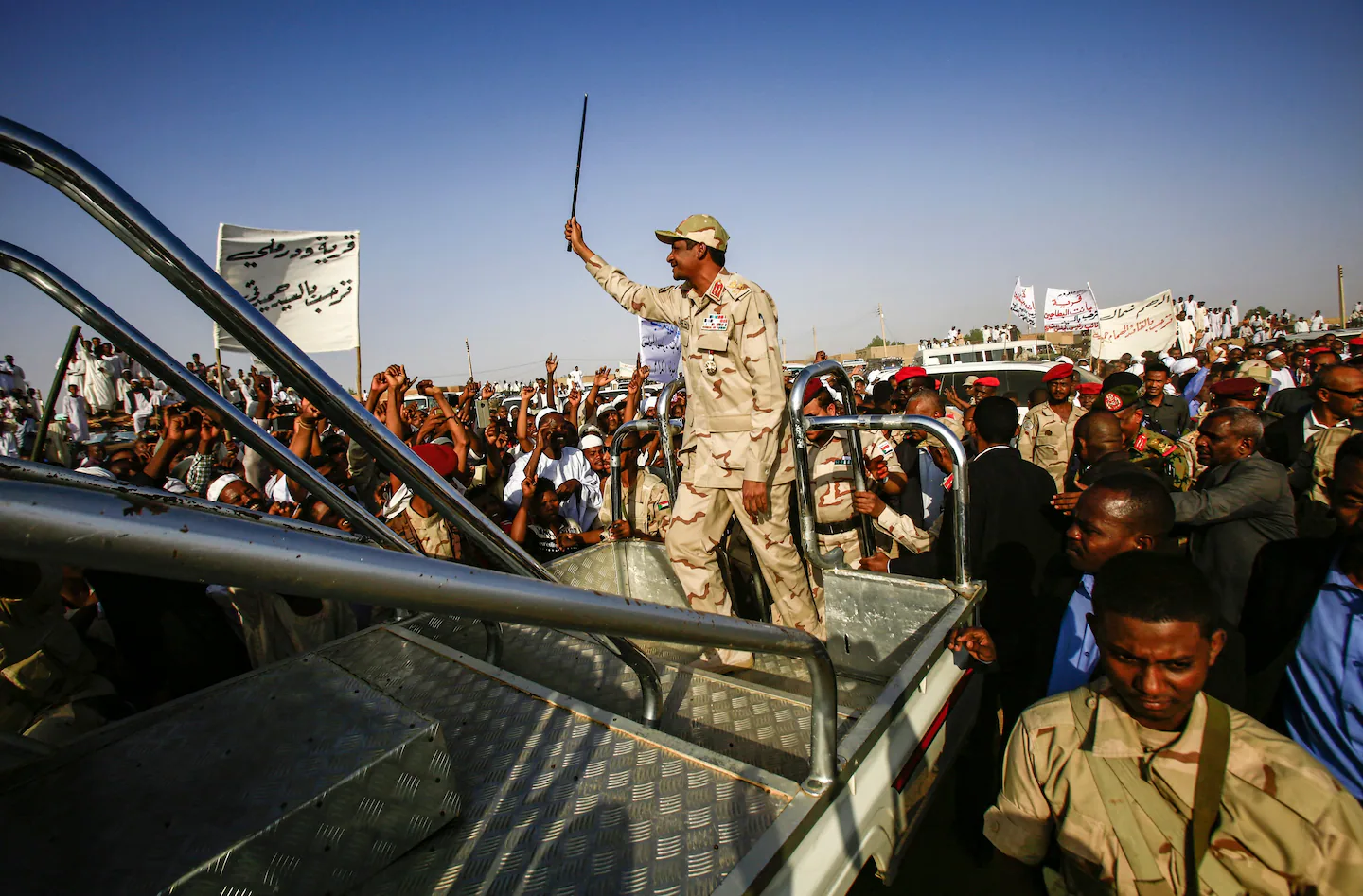
Amnesty publishes a detailed report on the war in Sudan
July 2026
Amnesty has just released a report on the appalling events taking place in Sudan, one of those conflicts that get very little coverage in the UK or the West generally. Called City under Siege, Children under Fire, in describes the scale of the atrocities which took place during the campaign to capture El Fasher in North Darfur. The full report can be accessed via this link.
Civilians were killed, injured, beaten, tortured and detained in terrible conditions between 2024 and October 2025. Crimes included rape, sexual slavery, enslavement and persecution. Hundreds of thousands of children have been displaced and kept in poor conditions where abuse, physical assaults and lack of food and water was common.
Agnès Callamard, Amnesty’s secretary general said ‘it was a war on civilians. The world was warned of the horrors that civilians in El Fasher confronted as the RSF laid siege to the city. It is a stain on the conscience of humanity’.
A UN fact finding mission said the seizure of El Fasher showed all the hallmark of genocide.
UK collusion
The situation is made worse by the cuts in aid by US principally but also by the UK. Another factor is the role of the UAE who are alleged to be supporters of the RSF and supplying them with weapons and other materiel. The UK has deep and historic relationships with the kingdom reaffirmed in a statement in April. The statement does refer to Sudan but very much in detached way giving the impression that they want the conflict to end but not admitting their role in its continuation.