A new feature on the site which will appear from time to time, is podcasts. The first is below. Note they are produced by AI but from texts written and researched by us not using any AI. It is an amalgamation of more than one text post. Feedback is welcome. We hope you enjoy listening! If you are not used to these, click on the heading and you will see a sound bar with the text displayed below it.
Glossip is interviewed after his release from prison
June 2026
After facing nine execution dates, and being given three last meals, Richard Glossip was released on bail on May 14, 2026 and set foot outside of prison walls for the first time in nearly three decades. In an interview with The Intercept, Mr. Glossip discusses adjusting physically and emotionally to his new life as he awaits a possible retrial for the 1997 crime that sent him to death row, despite his longstanding claims of innocence. Oklahoma County District Judge Natalie Mai ordered his release on a $500,000 bond, stating “The Court hopes that a new trial, free of error, will provide all interested parties, and the citizens of Oklahoma, the closure they deserve.”
“I tried never to let myself become institutionalized… But I mean it’s hard. You go through all these horrible things and all these different dates … and last meals and everything. And then it doesn’t look like this day will ever get here. But you always hope that it will“.
Mr. Glossip said of the widespread attention on his case, “It’s overwhelming but it’s amazing at the same time.” Since his release, he has been able to reunite with his wife Lea, with whom he first corresponded and later married while in prison. In a conversation with The Intercept, Mr. Glossip described initially having difficulty sleeping without the constant noise of prison, eating at a neighborhood Italian restaurant with his wife, and going food shopping. He also discussed feeling supported by his community in Oklahoma. He recounted several stories of being recognized, including by a barber who refused payment for his haircut, telling Mr. Glossip it was “an honor” to cut his hair.
“Once you’re out here and you see all the things that was taken away from you — and all the times they almost took everything away from me, my life and everything — you see all of it now… And it kind of still makes me angry at times because none of this should have ever happened. And this should have never been taken from me in the first place”.
Mr. Glossip is now awaiting a possible retrial for his alleged involvement in the 1997 “murder-for-hire” of Barry Van Trees, his boss at an Oklahoma City Motel. Oklahoma Attorney General Gentner Drummond, who previously confessed error in the prosecutions that ended in Mr. Glossip’s death sentence, announced that his office will not seek the death penalty in his new trial. The Supreme Court vacated Mr. Glossip’s conviction and death sentence in February 2025, finding that prosecutors allowed a key witness to lie in court and withheld crucial information from the defense about the same witness. AG Drummond, who supported Mr. Glossip’s appeal to the United States Supreme Court, now says “…my office will make sure Mr. Glossip receives a fair trial based on hard facts, solid evidence and truthful testimony.”
They’ll make the right decisions. I know they will. I wouldn’t be out here today if they wasn’t… So I’m just going to let them handle it. … I’m just gonna enjoy life.
Richard Glossip released after nearly three decades on death row
May 20
We are pleased to report the release on bail of Richard Glossip for whom we have campaigned for many years. His case is a long and tortuous one and he has been served ‘last meals’ on three occasions. He has been on death row for 27 years. In the endless series of trials and appeals it seems to be clear that the prosecution case was always weak. The crime was the murder of Barry van Treese in 1997 and Glossip was alleged to be the killer.
The prosecution allowed its key witness, Justin Sneed, to provide false testimony about his mental health and medical treatment. The new evidence showed that Sneed was diagnosed with bipolar disorder and prescribed lithium, facts that were withheld from the defence. At trial, Sneed falsely claimed he was never treated by a psychiatrist and received lithium mistakenly. This falsehood was material because Sneed’s testimony was the only direct evidence implicating Glossip, and impeachment of his credibility could have influenced the jury’s decision. The prosecution had prior knowledge of Sneed’s mental health treatment and still failed to correct the misstatement when it was made to the jury.
Correcting this false testimony would likely have changed the jury’s assessment of Sneed’s reliability. The prosecution is alleged to excluded exculpatory evidence, interfered with witness testimony, and allowed destruction of key physical evidence. Given these cumulative errors and their impact on the fairness of the trial, Glossip is entitled to a new trial. The Oklahoma Court of Criminal Appeals’ rejection of the attorney general’s confession of error was based on a misapplication of federal law.
Free for now
Richard Glossip walked out of an Oklahoma County jail Thursday with his wife, free on bond for the first time since his 1997 arrest, after a judge set his release terms ahead of a retrial the U.S. Supreme Court ordered last year. As Hannah Ziegler reported for the New York Times, Judge Natalie Mai set Glossip’s bond at $500,000, requiring an electronic monitoring device and prohibiting contact with witnesses or travel outside Oklahoma. A group of supporters helped raise the bond money.
Glossip was convicted in 1998 and again in 2004 of arranging the murder of his employer, Barry Van Treese, through motel handyman Justin Sneed. The state set execution dates for him nine times. Two independent investigations later found that critical evidence had been withheld and that Sneed’s testimony, the cornerstone of the prosecution’s case, was faulty.
Oklahoma Attorney General Gentner Drummond, who had previously asked the Supreme Court to throw out Glossip’s conviction, said he would retry the case but would not again seek the death penalty. Glossip’s attorney Donald Knight said the bond ruling was unexpected and marked a step forward after what he called a decades-long nightmare.
Judge Mai wrote that a new trial free of error would give all parties and Oklahoma citizens the closure they deserve. Knight said the court’s decision had rejected the state’s claim of a strong case for guilt. Glossip told reporters outside the jail Thursday that it was overwhelming but amazing.
The point here is that the case was weak and there are serious doubts about his guilt. Had he been executed in one of the three previous occasions there would be no coming back. It could not be undone.
Sources: MSN, Oklahoma Watch, The Oklahoman. Picture NBC.
Richard Glossip has been on death row in Oklahoma for 27 years and has been on the verge of execution nine times. His case went to the Supreme Court who found that a key witness had lied and that prosecutors had withheld information. The decision was vacated and Oklahoma’s Attorney General, Gentner Drummond, has ordered a new trial which is promised to be fair. He made clear however that he was not proclaiming his innocence.
The case illustrates a problem with the justice system if evidence which may cast a different light on a case is withheld by the police or prosecutors particularly evidence which is exculpatory. No one would pretend the UK system of justice is perfect but the system of discovery which demands that the defence team has access to relevant evidence before the trial, has been a key development in recent years. Too often in US trials by contrast, lack of this information or candour by the prosecutors has been a factor.
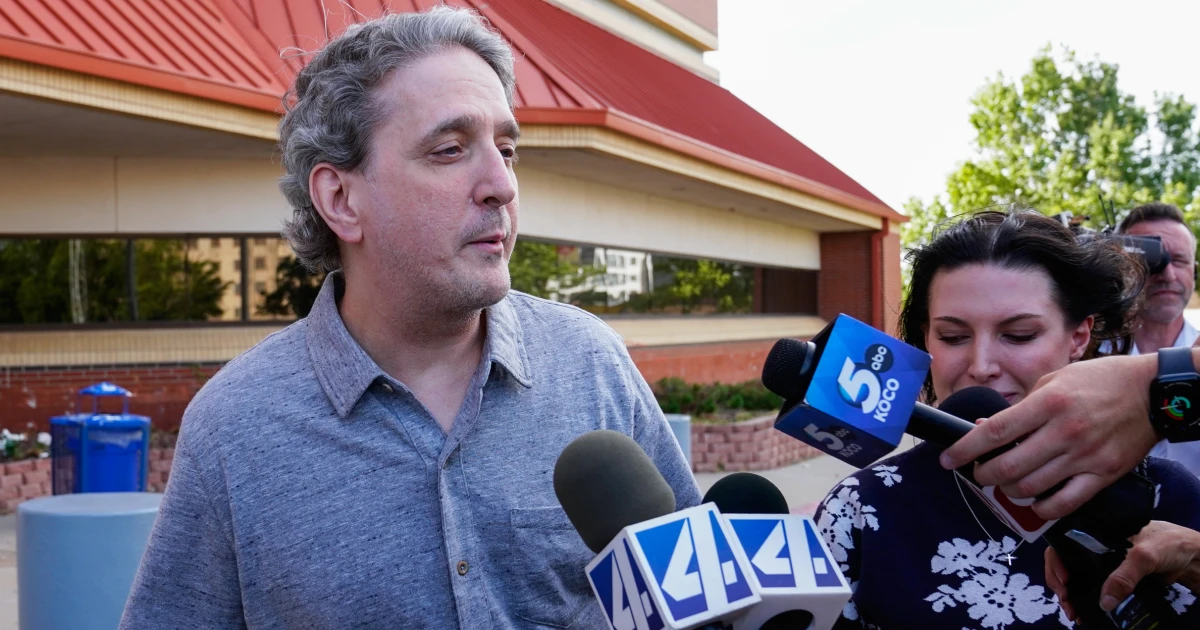
Richard Glossip (pictured, theintercept.com) may by now have been executed. At one planned execution it was discovered that the lethal drugs to be used did not match execution protocols which led to a suspension of executions in the state for seven years.
Glossip’s case is a clear example why capital punishment should not be used by a state. Simply put, mistakes cannot be rectified. Amnesty is against capital punishment in all circumstances. The US is the only state on the American continent to retain it. There is little evidence that it is effective. It brutalises the state. It is incredibly expensive. And as has been shown in the Glossip case, if false evidence was used to secure a conviction, then the mistake cannot be put right. In the USA around 130 people on death row have been found to be innocent since 1973. The country joins some reprehensible regimes such as China, Iran, Vietnam and Saudi Arabia which use the penalty against huge numbers of its citizens – in the case of China an unknown number since it is a state secret but it is believed to be thousands.
US Supreme Court rules that prosecutors violated ethical responsibilities
February 2025
The case of Richard Glossip in Oklahoma raises a number of interesting issues concerning the death penalty in the USA and in this case, the state of Oklahoma. In a 5-3 decision in Glossip v. Oklahoma issued on 25 February, the Supreme Court judges ruled that the prosecutors had ‘violated their duty to correct false testimony’. The prosecutors had also ‘suppressed material evidence concerning their star witness, Justin Sneed’ who actually committed the murder.
The case involved the murder in 1997 of Barry van Treese the owner of a motel. Sneed confessed to the killing and agreed a plea bargain claiming that Glossip had instructed him to carry out the murder. This saved him from execution. There are a number of factors which has made this a case attracting international attention.
There was very little corroboration evidence apart from the testimony of Sneed. Sneed’s mental state was not revealed to the defence (defense) team, nor was his untrustworthiness or that he had lied to the police. Glossip’s legal team has discovered that Sneed had discussed recanting his testimony before the original trial and since. This had not been revealed to them. Another not unusual factor is the doubtful quality of his defence counsel.
There is not doubt that Glossip has suffered much in the 27 years. He has had no less than nine execution dates and has eaten three ‘last meals’.
It is being said that this case will not have wider effects because so many elements are unusual. But it does highlight the problem of the death penalty. Had any one of the nine actually taken place, there would have been no chance of an appeal. If the criminal system has people willing to withhold evidence, then any chance of a fair trial is unlikely. It is also unwise to convict someone of the ultimate legal penalty without certainty which must mean at the very least, corroborative and trustworthy evidence. A defendant must also have first class attorneys to defend him. The testimony of an unreliable witness should be treated with great caution.
We are pleased to attach the latest report thanks to group member Lesley for the work in compiling it. Note that although China appears briefly, it remains the country thought to execute more of its citizens than the rest of the world combined but details are a state secret.
The execution of Richard Glossip in Oklahoma has been stayed by the Supreme Court
May 2023
Richard Glossip has been on death row in Oklahoma, USA, for 25 years for a murder it seems likely he did not commit. He was accused of the murder of motel owner Barry van Treese in 1997. The conviction was largely based on the plea bargain struck by Justin Sneed, who has a history of mental illness, in a deal which saved his own life.
Two independent investigations have cast doubt on the veracity of the trial. First the only evidence seemed to be the plea bargain by Sneed who in fact admitted committing the murder. Further testimony by prison inmates was not given to the jury. The State withheld evidence and other evidence was either lost or destroyed by the DA’s office.
As Mr Glossip’s execution date of May 18th draws near, there has been a flurry of activity to get it delayed or vacated. On April 7th, the Oklahoma Attorney General Gentner Drummond – a pro death penalty Republican – asked the state Court of Criminal Appeals to vacate the conviction. He said “the only witness to allege Mr Glossip was involved in this case cannot be believed, it is unconscionable for the State to move forward with his execution“.
On April 20th, the Oklahoma Court upholds the conviction. On 26th April the Board of Pardons and Paroles declined to recommend clemency on 2-2 vote which meant the Governor, Kevin Stitt, was unable to do so either.
On May 5th, the Supreme Court of the United States stays the execution pending the disposition of two writs of certiorari. Should they be denied this stay will terminate automatically.
So that is the current position. The case reveals some troubling aspects of the legal system in this instance. Relying on plea bargain evidence should not be the sole justification for a conviction let alone an execution. The failure to present all the evidence to court is also questionable and the loss or destruction of other evidence is also to be deplored. The fundamental problem with the death penalty is that mistakes cannot ever be rectified once the deed is done.
We must hope that the intervention of the Supreme Court will lead to the state authorities to think again.
UPDATE: 8 October. Richard Glossip has been given an indefinite stay of execution (Oklahoma)
We attach an urgent action on behalf of Richard Glossip with whom visitors to this site will be familiar with. He has won a temporary stay of execution. His legal team has presented new evidence to the appeal court. The evidence against him is weak as we have pointed out before and relies partly on a plea bargain by the man who committed the actual murder. Oklahoma is a hard line state as far as the death penalty is concerned.
Richard Glossip’s execution has been deferred by two weeks only hours before he was due to killed. This was an urgent action by Amnesty International and members of our group have written to the Oklahoma authorities. You can read the full report in the New York Times here.
There is no physical evidence linking Glossip to the scene and a major part of the evidence is a plea bargain by Sneed who admitted to the murder but escaped execution by implicating Glossip.
Amnesty is opposed to the death penalty and this case reveals one of the reasons: flimsy evidence combined with a plea bargain means the likelihood of a wrongful conviction leading to a man’s death with no prospect of putting it right in future if fresh evidence appears.
The group is holding a vigil against the death penalty on 17 October in Salisbury starting at 12.45. Further details here and on Twitter soon.
The minutes of the September meeting are now available thanks to Lesley. We discussed North Korea, the death penalty (see separate post on this), the forthcoming vigil on 17 October and agreeing to write to John Glen concerning his failure to reply to our letter of 5 August.