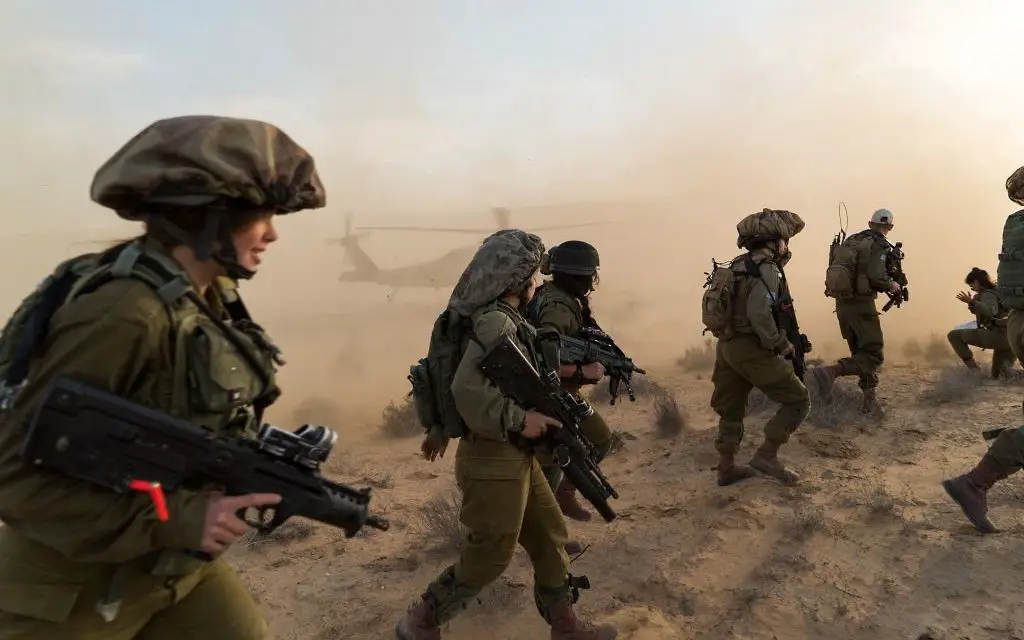
Reactions from an IDF soldier


Many IDF soldiers are troubled by what they see

August 2026

There is a danger when we see film of IDF soldiers who are all kitted up such that we cannot see their faces, in assuming they are unaffected by the carnage, death and destruction they witness. There is film of IDF soldiers gleefully smashing up Palestinian homes and no doubt filled with the propaganda of Arab malevolence, who are only too keen on their work. But not all are and our attention has been drawn to an article in Haaretz which describes the trauma of one Israeli soldier.

HAARETZ, August 06 2026


After helping direct artillery fire that claimed civilian lives in Gaza, former Israeli combat medic Yael is struggling with debilitating trauma and remorse. Her long wait for treatment highlights the military’s failure to care for soldiers scarred by war….
Yael, who asked not to use her real name, is 22 years old. She enlisted in the Israel Defense Forces in August 2022. She says she was highly motivated. She wanted to contribute, to do meaningful combat service.
The army listened and granted her wish.. “I left the army and saw the number of children killed, and I was shocked. I started searching obsessively for information online. I looked for the neighborhoods we attacked, the villages,” she recounts. “I saw that many innocent people were killed in these places, I saw pictures of dead children. In the army, they told us we only kill terrorists, but that’s a lie. Artillery fire is imprecise; the army considers a hit within a 50-meter radius to be a good hit.”..
“I have nightmares. I see inside my head dead children, crying mothers. I imagine how the bodies are removed. The guilt doesn’t leave me. How can it? I killed an innocent child, I was the one who fed the targets, it’s on me.”.. She was discharged from the IDF a year and a half ago…..


Since October 7, Haaretz has spoken with more than 300 people suffering from mental injuries caused by the war. Some of them reported suffering from PTSD due to exposure to intense combat experiences. Others described extreme guilt due to the deaths of their comrades in combat or of civilians on October 7. Recently, the barrier of shame has broken. More and more soldiers talk about moral injuries they suffer, often related to exposure to or participation in war crimes prevalent in the Gaza Strip.


The army prevented me from getting treatment,” she says. Only after her mother contacted the battalion commander did he meet with her for a conversation. “I told him I was harming myself and that I had suicidal thoughts,” she says. “I wasn’t exaggerating. I didn’t want to live this suffering anymore, this reality where 18-year-old children are killed, and I hear their last moments. I don’t agree with it. I don’t support it.” The mental health officer ordered her removed from combat duty. About two months later, in December 2024, the IDF discharged her….


When she returned home, the symptoms struck with intensity. She felt she was withering. “I became a shadow of a person. I didn’t see the beauty in life. I saw everything in gray,” she recalls. “Every day I had to cope with such severe panic attacks that I’d scratch myself, hit myself. I was depressed. ..
She felt not only pain in her heart but also anger towards her battery commander (“he’s a scumbag”), and, in fact, towards the entire system. “The state ruined my life, and after it ruined my life, it didn’t bother to give me the treatment I needed. It forced me to prove I was injured, to fight for recognition.” Today, she is in ongoing treatment, taking psychiatric medications, trying to alleviate the pain.


She finds a ray of light in the change in her values, in her moral compass. “Before the army, I was an extreme right-winger, one who would say ‘Death to Arabs.’ That was the myth in school that influenced me,” she explains. “But after the war, I understood that there’s a difference between Hamas terrorists and Palestinian civilians who want peace, who want life. I saw the conditions in which Gazans live. I realized there must be a change, that we must strive for equality, for peace. This is the only way to save the children, to save us all.”

Reading books can get you killed


Reading a Uyghur book can lead to serious punishment

August 2026

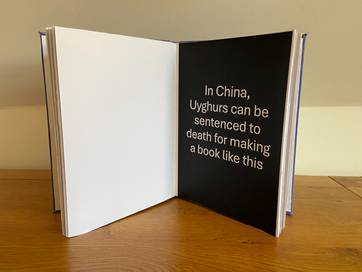
This is not the Middle Ages. This is the 21st Century. But the desire of the Chinese to extinguish Uyghur culture can lead to draconian consequences. This short piece and the book, were created by the Amnesty Death Penalty project.

So often, we take our books for granted. But if you are Uyghur, reading, promoting or writing books in the Uyghur language – even children’s text books – can land you in serious trouble. In fact it can and has on a number of occasions, resulted in a death sentence. This is all part of the Chinese government’s attempts to suppress the Uyghur language, culture and identity. Too many governments around the world use the death penalty as a means of intimidating ordinary people into compliance.  Books, things that we take for granted in the West, can be very dangerous for Uyghurs which is why the Anti-Death Penalty Project has created a book (كىتاب) to show our solidarity. ‘Thank you so much Death Penalty Network for such a beautiful and thoughtful project!  

The Salisbury group publishes a report each month on the use of the penalty around the world. It does not include China as executions are a state secret. The country is believed to execute more of its citizens than the rest of the world put together.


Uyghur solidarity month


Salisbury MP’s activity on this topic is poor

August 2026

It is often suggested we write to MPs on matters of concern and this can achieve something but too often it doesn’t. An MP receives a lot of messages from constituents most of which concern local matters. Indeed, it is a criticism of the system that much of their postbag are issues more properly the concern of local councilors. MPs feel obliged to engage in these matters however, because it is clearly the expectation of their constituents that they should.

Salisbury has two MPs, Mr Danny Kruger (Reform) who represents East Wiltshire which runs down to the northern part of the City, and Mr John Glen (Conservative) who represents the City itself and most of south Wiltshire. Their involvement in Chinese human rights issues is slight.

Mr Kruger asked the prime minister (then Sir Keir Starmer) the following question in February:

“The Prime Minister is very full of the abstract virtue of engaging with China and getting in the room with them. He used to say that Britain should not even sign a trade deal with China because of the persecution of the Uyghur people. Having now got into the room with the Chinese leader, can he tell the House a single thing that he achieved on behalf of the Uyghurs, or indeed on behalf of the security of this country?

“[Starmer] Yes. Engaging is really important for the security of this country. Just for clarity, we did not sign a trade deal on the visit; we simply looked at the ways in which we can open the opportunities for businesses. There were 60 big businesses with us on the visit, and they are absolutely clear about the advantages to them. I would much rather take their view on the advantages than the nonsense that is being spouted on the other side of this House”.

A good question receiving a complete non answer. The prime minister talks vaguely about engagement and then on to talk about the trade talks. He does not answer the Uyghur point at all. In the same session, Jim Shannon (DUP) also asks about, inter alia, the Uyghurs:

[…] what steps forward remain in terms of the Chinese treatment of Christians, Uyghur Muslims, Falun Gong and other religious minorities? Was the Prime Minister able to use diplomatic soft power to bring about the changes required to provide human rights protection, to stop religious persecution and to enable successful trade between the two nations?

“[Starmer] The hon. Gentleman is right to raise these really important issues. I raised them myself during the course of the visit, and I thank him”.

With what result we do not know. Danny Kruger asked again about the Uyghurs in March and a junior minister simply replied that “[the government] continues to engage with the Chinese on human rights and religious freedom”. The results do not look to be that impressive.

There is one speech by Mr John Glen which mentions the Uyghurs in part of a long speech much of which was devoted to the treatment of Christians. A mention of Uyghurs is as follows:

“[…] It is not a binary question; it is not that we cannot talk about what is happening with the Uyghur Muslims in China while recognising that China is an important economic actor in the world that needs to be respected. We need to find ways of interacting well together and respecting, as far as we can, what common ground exists. It troubles me sometimes that when we have statements in the House, we revert to a binary: “It’s all good or it’s all the opposite.” The hon. Member for North Northumberland [David Smith, Labour] grasps the right way to approach this”.

The full speech can be accessed on the They Work for You website. It is not clear what ‘common ground’ exists with repression, torture and cultural genocide or where we could find it. On the subject of China generally, Mr Kruger has mentioned it 14 times and Mr Glen on no less than 41 occasions. We can conclude that the issue of persecution of Uyghurs is not high on either MP’s concerns. Both are Christians and seem more concerned about how they are treated rather than Muslims. According to They Work for You, Mr Glen ‘generally votes against laws to promote human rights’ and Mr Kruger ‘consistently votes against equality and human rights’.

Overall, both MPs do not seem to concern themselves with human rights issues. They are concerned about problems experienced by Christians and about political issues to do with China with little recognition of the plight of Uyghurs. We were unable to find anything relevant on their websites.


Blog at WordPress.com.

Up ↑