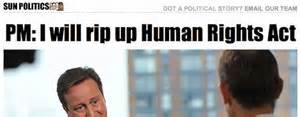
British Bill of Rights


Liz Truss announces that the British Bill of Rights is back on the agenda

The new Lord Chancellor, Liz Truss, said in an interview that the abolition of the Human rights Act and its replacement with the British Bill of Rights is back on the agenda.  On the 10 August, The Times had suggested that it was not going forward.  As we speculated on this blog a while ago, the sheer amount of work needed to negotiate new trade agreements with the world and our exit from the EU, is going to consume parliamentary effort and ministerial time on an enormous scale.  Will they have time and energy to spend time haggling with the Lords over a new bill with all the rest that is going on?  Then there are the complex relations with Scotland and Northern Ireland to consider.  This pledge has been around for 10 years now yet Liz Truss gives no timetable.

We are committed to [abolishing the Human Rights Act]. It is a manifesto pledge. We are looking very closely at the details but we have a manifesto pledge to deliver that   Liz Truss

Liz Truss – picture gov.uk

The result will at best be a modest change in the law unless we are going to withdraw from the European Court itself.  This will have widespread effects especially in eastern Europe where the Court’s activities has had a positive effect on human rights.

The shame of it is that the public anger about the ‘terrorist’s charter’ and other nonsenses are fostered by the media and few of our MPs and Ministers seem to have the courage to stand up to them.  The Daily Mail, the Sun and the Daily Express are often loud in their criticisms but connection to actual facts is often weak.  But even periodicals like the Spectator – a venerable political weekly – is not above publishing tendentious material.  The hostility to the act is in part we argue, due to the privacy clauses which give some protection to those who have suffered press intrusion for no good reason other than boosting newspaper sales.

Abu Qatada is frequently produced as evidence that the act doesn’t work and meant, allegedly, that we were not able to deport him.  Firstly, if he was such a terrible man, why was he not arrested and prosecuted here?  Secondly, the failure of the Home Office and the then Home Secretary Theresa May to deport him was not the HRA but treaties we have which prevent us returning people to countries where torture is routine (as well as the HRA).  Qatada would not have had a fair trial in Jordan because, at the time torture, was common there.

We often read that duties and responsibilities are to be added as there are many – not just on the Conservative back benches – who are unhappy with ‘rights’ and feel that such rights should only be available to those who act responsibility.  How this would work is not explained.  Who’s to judge what ‘responsible’ means?  A police officer at the time of arrest feels that the person behaved irresponsibly and therefore decides not to allow the person access to a lawyer – a provision in the HRA?  Some rights are absolute and do not depend on good behaviour.  Other rights are qualified anyway.

It is hard not to see a parallel with the Brexit debate.  Years were spend denigrating the EU and then when it mattered, those like the previous prime minister, David Cameron, wanted to persuade country to Remain, he lacked conviction.  He was hoist by his own petard, or more colloquially, ‘stuffed’.

A concerted campaign has been waged by the media against the act and stories produced which only occasionally have any relation to the truth.  We have suggested before to refer to Rights Info to get the background and a sober assessment of some of the fictions.

Whether the BBoR ever sees the light of day remains to be seen.  It is likely that this is a rash statement by the new Lord Chancellor which may quietly drift into the background when the difficulties and disadvantages are explained.  But it will continue to lurk until a sufficient number of MPs – like those in the Runnymede group – stand up and speak positively about the act and the benefits it has brought to thousands of ordinary citizens who have used it to secure basic rights, stories that rarely find their way into print.

Salisbury MP, John Glen is among those who have publicly called for the act to be abolished.


Follow us on Twitter

Sources: The National; The Times; http://www.parliament.co.uk; Spectator; Daily Express

What happens now?


The country (UK) has decided to leave the EU: so what next?

In the early hours of yesterday morning, the referendum was concluded and the country decided to leave the EU on a high turnout.  The Prime Minister is to resign and there may be an election by Christmas.

One of the key issues that decided the referendum was the question of immigration and the other was sovereignty.  While those politicians who were in favour of remaining in the EU, went on about the economy, security, jobs and so forth, it was obvious from interviews in the street (vox pops) that very many people were concerned about more basic matters.  As far as many of them were concerned, they were suffering from the effects of austerity and the people who were making matters worse were the immigrants.  They were ‘flooding’ into the country and were putting a strain on public services and bidding down wages (it was claimed) thus making their own lives a misery.  Membership of the EU made matters worse as we were unable to stem the tide because of their rules.  Coming out was clearly a solution to their woes.

Sovereignty also reared its head from time to time and a familiar line was taking back our sovereignty so that we can make our own laws and run our own affairs, free from interference by Brussels bureaucrats and unelected judges in Strasbourg.  The election of our own judges is something that must have passed us all by.

So what of the Human Rights Act?  The Conservative’s manifesto made clear their desire to scrap it and replace it with a British Bill of Rights.  Months have gone by since the election and no sign has been seen of this document.

But if anything is clear from yesterday’s events, it is that hatred of the EU and its alleged interference in our affairs – including our legal affairs – is very strong and was one of the deciding factors which enabled the Brexiters to win the referendum.  This has been whipped up by a right-wing press and not a little xenophobia.

The problem now for the new government – expected at the time of writing to be formed by Boris Johnson – is that they just cannot leave the BBoR to one side in view of the fervour generated and promises they have made to the electorate.  But, the EU will be wanting a speedy departure by the UK from the EU, and not on painless terms either, to prevent contagion spreading to other disaffected countries.  So considerable time will need to be spent by thousands of civil servants negotiating new terms, agreements and treaties to enable our new relationship with the EU to continue.  Enormous parliamentary time will be needed as well.  The question is therefore – will there be the time or energy for this battle?  Getting a diminished set of rules through the Lords will not be easy.

It is a great pity that so many politicians have allowed the untruths and exaggerations by the right-wing media to gain such traction and to go unanswered.  Many believe that all red tape and rulings from Brussels are automatically bad news and diminish our lives.  We would be so much better off without them they say.  The word ‘free’ is used a lot: free of such rules, free to trade where we will, free to rule our lives and free of encumbrances generally.   The HRA has been a lifeline for many, many people in the UK.  They have used it to secure redress against arbitrary decisions which affect their lives.  Public authorities have to be cognisant of the act in their policy making.  Is all this to go?

We may ask the question ‘free for whom?’  Axing the HRA will not provide ordinary people with more freedom, but less.

So whether we will see the end of the HRA remains to be seen.


Unpublished letter


Text of letter sent to Salisbury Journal

The following letter was sent to the Journal in Salisbury but regrettably for space or other reasons it was not published (14th April).  We do not know at present what the current situation is with the promised bill to abolish the Human rights Act and replace it with a British Bill of Rights (or whatever it is to be called).  It is a manifesto promise and a draft was to be published in the Autumn but has not yet appeared.  It is possible that the arrival of Michael Gove into the Justice Dept. had something to do with it.

Now that we are in full swing with the debate about leaving the European Union, it is possible that this has been shelved for the moment.  Mr Gove is a leading proponent for the Brexit camp who – if current polls are to be believed – are doing well at the moment.  The calculation may therefore be that if they win then the scene is set to dump the HRA as well.

On the other hand, there will be a heavy workload in managing our exit and carrying out the negotiations to secure access to the European market once we leave, so there will be limited civil service and parliamentary time to spend on a new Bill of Rights.

But back to the letter and our local MP John Glen is keen to abolish the HRA and it would be a pity if he is given space in the Journal again to put forward his views and the opportunity is not given to those who disagree with him.  The unpublished letter:

Britain has had a proud history of leading the charge on human rights progress from the aftermath of the Second World War when we were key drafters of the European Convention of Human Rights, to the suffragette movement, to gay rights and other equality legislation. We have often been champions of progress.
What a shame, then, that this year the UK was singled out for criticism in Amnesty International’s annual report on the state of the world’s human rights.  Amnesty is warning that the government’s plan to tear up the Human Rights Act is a gift to dictators all over the world.  Russia recently drafted legislation which allows it to ignore human rights rulings it doesn’t agree with. Far from being able to condemn that action and call on Putin to uphold basic human rights, the UK is actually talking about following suit.  Music to the Kremlin’s ears, no doubt.
Here in Salisbury, the local Amnesty group is campaigning to save the Human Rights Act.  Britain should be a world leader on human rights.  The Human Rights Act protects ordinary people – from the elderly to hospital patients, to domestic violence victims – and we want to see those protections spoken about with pride by our politicians.  We should be redoubling our commitment to enduring human rights principles in these troubling times, not undermining them.
Let’s hope next year’s annual report on the UK reads: “much improved”.

Follow us on Twitter and Facebook

Human Rights Act guide published


A useful guide to the Act has just been published by the British Institute of Human Rights and can be accessed here either in e-book form or as a video.

Human Rights Act


Expect an announcement soon
Tapestry illustrating the UN Convention

Things have gone quiet with the plans to abolish the HRA and the promise of something before Christmas has not come to anything.  There is a glimmer of hope in that Michael Gove has taken over as Justice Secretary and seems willing to modify or drop completely some of the worst excesses of his predecessor.  However, the negotiations currently coming to some kind of conclusion concerning our role in Europe are likely to see a fresh assault on the act emerging soon.  The watch word is ‘sovereignty’.  Parliament wants to be sovereign and this is being presented as a good thing and it is implied we will be the better for it.  The right wing press will delight at this and there will be many articles about ‘bringing power back to Westminster’ with the implication that this will result in better laws for us all.  Salisbury MP John Glen is a keen advocate for abolition.

A parallel story over the past couple of weeks has been the tax situation of Google and other American behemoths who so manage their affairs that they pay little or only derisory levels of tax.  Here, our sovereign parliament (since Brussels has little to do with tax collection) has failed.  Indeed, successive chancellors have made numerous announcements about ‘cracking down’ but almost nothing seems to happen.  Hardly surprising since accountants from the big four firms are actually in the Treasury ‘advising’ the chancellor on tax policy.  So the idea that sovereignty is key and is some kind of magic bullet is clearly illusory and does not lead to better outcomes.

A useful guide explaining the HRA and what it does has just been published by the British Institute of Human Rights and is worth a look.  There is a short video as well.  No doubt we will be returning to this topic when the announcements are made.

Follow us on Twitter and Facebook


Tapestry


December 2015

Tapestry on display

OLD POST

The tapestry assembled by members of the South Region of Amnesty International, is now on display at the entrance to the Chapter House in Salisbury Cathedral.  Each panel represents one of the clauses of the UN Convention on human rights which led ultimately to the Human Rights Act in the UK.  It is this act that the current Conservative government wants to abolish.  The Chapter house is where one of the surviving copies of Magna Carta is displayed.  We are extremely grateful to the Cathedral Authorities for giving us this space to display the tapestry.  It will be on display for a few months and then will go on display elsewhere in the south region.

Tapestry

Rightsinfo video on the Human Rights Act


The Human Rights Act is under threat and we await the current government’s plans for its replacement which must be due very soon.  Rights Info has produced a short video which is worth a look which you can access from their web site or from this link.

Rights info video

Government plans to modify the Ministerial Code


Government plans ‘seriously concerning’

Plans by the Conservative Government to modify the Ministerial Code are ‘seriously concerning’ according to Rights Watch.

The ministerial code issued in 2010 says;

Overarching duty on Ministers to comply with the law including international law and treaty obligations and to uphold the administration of justice and to protect the integrity of public life

The plan is to omit from the new code including international law and treaty obligations.  Phillippe Sands QC, a professor of law at University College London described the changes as ‘shocking’.  The government claim that this is merely a matter of simplification.

Why it matters

It matters because of the promise by the Conservatives in their text blockmanifesto to scrap the Human Rights Act and replace it with the British Bill of Rights a draft of which has yet to see the light of day.  Removing the international law will reduce the respect for judgements by international courts such as the European Court in Strasbourg.

Another aspect is that going to war and the use of things like drones are covered by international treaty and the UN Charter and not by UK laws.  Removing the international element therefore leaves ministers free to use this kind of weaponry unfettered.

In 2014, the government – then in coalition – wanted to remove what was termed an ‘ambiguity’ in the rules.  This has now been changed to simplification.

An observer of these events was Paul Jenkins who was a Treasury solicitor and he witnessed the intense irritation felt by the Prime Minister over our need to comply with foreign legal obligations.  This was largely in connection with the arguments over prisoner voting but the prolonged tussle over Abu Qatada was also likely to have been an irritant as well.

In a letter to the Guardian, the former legal adviser to the Foreign and Commonwealth Office Frank Berman QC said ‘it was impossible not to feel a sense of disbelief at what must have been the deliberate suppression of the reference to international law.’

What is troubling about these changes is that they have to be seen in context.  We have restrictions on Freedom of Information; reductions in the ability of people to receive legal aid; court charges; and the threat to the Human Rights Act.  We will soon have the ‘snooper’s charter’ which will enable the security services to eavesdrop communications however they wish.

All these changes add up to an assault on the ability of individuals to hold the executive to account.  Ministers were quick to celebrate the anniversary of Magna Carta when it suited them but now seem keen to reduce freedoms wherever they can.

Sources: The Guardian; Rights Watch; the BBC; Financial Times; Daily Mail

UPDATE

Further responses and condemnation of this change in the code

British Institute of Human Rights warning

Tapestry erected in Salisbury Playhouse


The tapestry – which has been put together by members of the southern region of Amnesty International – was erected today in the Playhouse.

Each panel illustrates one of the clauses of the UN Declaration of Human Rights.  It will be on display in the theatre for the next two weeks or so and while a series of plays are being performed on the subject of Magna Carta.

We hope to move it to the Cathedral, subject to their agreement, at the end of the theatre run.  The tapestry can be viewed on the first floor of the theatre.

Tapestry in the Playhouse

Scrapping the Human Rights Act HRA


The government is proposing to issue a public consultation on scrapping the Human Rights Act sometime in the autumn.

abolish hra

Blog at WordPress.com.

Up ↑