Refugee report


Europe still struggles to deal with refugees coming to its shores

November 2024

This month’s report is Eurocentric. Hopefully we can look at the wider aspects next time, as we become clearer about the new US President’s plans for widespread deportation (and also the Australian government’s battle with the courts).

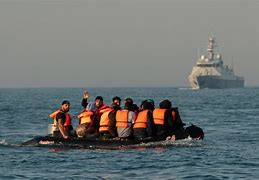
The government’s proposals on the small boats crisis remain unclear at the moment. Apart from the Prime Minister’s curious assertion that the people smugglers constitute a threat to national security, things continue much as before. The total number of arrivals so far this year is over 32,000, 22% up on last year (but still below 2022). Worse overcrowding on the boats is partly responsible for 64 migrants dying at sea this year (5 times last year’s total). The government has agreed improved intelligence exchange with three Balkan countries and has pledged £150 million for the proposed Border Security Command.

Within the Home Office It is suggested that there is some doubt as to how the new Command will work. Lizzie Dearden in the i reports that the fear is that the more the authorities clamp down the more risky the methods used by migrants and that a new approach is the best solution. Nevertheless, the Home Office is recruiting a head for the proposed National Returns Progression Command, a body intended to take control of deporting unsuccessful applicants for asylum status.

There has been much concern about the use of the term “illegal arrival” as per the 2022 Nationality and Borders Act. Anyone guilty of “facilitation” (which includes steering a boat) is liable to up to life imprisonment, and cases have been reported of this happening. Since the Act came into force there have been 471 arrests, 233 of them for taking the tiller.

An aspect of the difficulties within the system is the lack of available legal aid. The Joint Council on the Welfare of Immigrants is urging a reform of the legal aid system, arguing that a functioning system would be much cheaper for the public purse than the present approach.

According to the French charity Utopia 56 there are still some 2,000 migrants on the Channel coast in France.

The Institute for Public Policy Research have observed the need to consider the demand side of the equation, to see why so many are fleeing their countries of origin: ”In order to have an effective response you need to go beyond enforcement.”

Elsewhere possible solutions to the problem are being considered. In Switzerland, since 2019 a new approach has been tried: the main aim is to target a total of 140 days for the complete processing of applications, while not cutting corners. The three critical issues are:

1. to have enough decision makers

2. fast streaming easier cases and moving more difficult ones to a different process and

3. ensuring access to lawyers.

Meanwhile in Spain a more friendly attitude to arrivals is being pursued, both for the economy and to allow family reunions. The Spanish government is opposed to what it terms “Melonisation”, the Italian plan to offload migrant processing to Albania.

Human Rights Watch have a piece noting that discerning the popular attitude towards refugees very much depends on the question asked. People are more sympathetic when it is phrased in terms of what would happen to deported asylum seekers rather than immigrant numbers arriving here.

Finally, a success story of an “illegal” migrant:

An immigration lawyer reviews Paddington in Peru: A very British bear – Free Movement

Andrew Hemming

Refugee report – October


October 2024

The problem of boat crossings has largely dropped out of the news recently with the conflict in the Middle East soaking up media attention. The Conservative party’s leadership election is also a focus of interest particularly as the two remaining candidates have hard line opinions on immigration.

As the new government prepares to reveal its Border Security, Asylum and Immigration Bill (largely designed to replace the jettisoned Illegal Migration Act), it is worth looking at the current situation with the small boats. Under the IMA, all applications are deemed inadmissible. This has left us with a backlog of 33,000 claimants in limbo (mainly Afghans and Syrians). Before the IMA, 90% of claims had been accepted. This might not be the case in the future as the Home Secretary also wants enhanced return procedures.

The high levels of pending cases has been exacerbated by the lower levels of acceptance (down to about 60% of cases) with a resulting big increase in the number of appeals. In passing, the Independent notes that the oldest asylum claim at the Home Office was made nearly 17 years ago. Also, Switzerland has improved its processing, which used to take up to 4 years, but is now about 100 days, which may be a pointer for a way forward.

The charity Safe Passage sees signs of improvement  (e.g. now allowing children to join relatives who are not parents) but meanwhile the total number of arrivals this year is over 25,000 – slightly more than last year but fewer than 2022. The government is keen to align with European procedures on irregular arrivals, but within Europe itself cracks are showing. This week 17 EU countries pushed for more effective return procedures for rejected applicants under the new Asylum and Migration Pact. At present the actual return rate for those to be sent back is only around 30%. An amended return process is presently stuck in the European Parliament.

Following the Ukraine war, the percentage of the world’s refugees in Europe has increased to over 20%. New research this week suggests that the numbers of irregular migrants in Europe is not increasing substantially (still at around 1% of the population for most countries). The MIrreM project calculate that between 2.6 and 3.2 million irregular migrants are living in the 12 countries they researched, with 594,000 to 745,000 in the UK. Figures are not completely reliable owing to many arrivals staying under the radar.

While we concern ourselves with the relatively small number of refugees arriving on the south coast, it is worth looking at the worldwide situation. With war zones in the Middle East, Sudan and Myanmar, not to mention Ukraine, the number of displaced persons has mushroomed in the last year. Ten million Sudanese have been displaced, 2 million to another country, 4.5 million Yemenis are internally displaced, while in Gaza 90% of the population and in Lebanon 1 million out of 5 ½ have had to move under Israeli attack, in some cases many times. In the larger Palestine, plus Jordan, Lebanon and Syria, there are 58 recognised camps housing 1.5 million refugees (1 in 3 of all Palestinians, some dating back to 1948. The UN authorities in the area (UNRWA and UNIFIL) have pointed out that many of the displaced inhabitants may well choose to head for Europe, adding to the pressure on countries there.

In Myanmar, not only  those under threat from the military, but also many Rohingya have left the country, about 1.3 million, mostly to Bangladesh.

AH

Refugee report


September 2024

We are pleased to post the current month’s refugee report produced by group member Andrew.

Following the General Election, a new approach to the issue of immigration and asylum seeking has been promised. Straight away the new government declared the deportation of irregular immigrants to Rwanda would no longer be pursued. It is not known whether Rwanda will return the £270 million received in advance. The new Home Secretary will review the position by 1st October following complaints from asylum seekers rounded up in preparation for flights to Rwanda. It was also intimated that changes would be made to the Illegal Migration Act of 2023. On which topic, the House of Lords Secondary Legislation Scrutiny Committee has published a report noting that the Home Office has been trying to remove some barriers to the processing system under the Act, observing that it was “lamentable that the Home Office put forward an Act of Parliament that it has simply not been able to implement.”

The Prime Minister has announced the creation of a new Border Security Command designed to “smash the gangs” in some undisclosed fashion. The Command would be funded by money previously earmarked for the Rwanda plan and would be responsible for coordinating the activities of Immigration Enforcement, MI5, the Border Force and the National Crime Agency in tackling the gangs.

Latest statistics reveal that 22,000 migrants have arrived by boat this year so far, about the same as last year. The biggest numbers are from Afghanistan (despite some increase in the number of legal arrivals from there), Iran, Vietnam, Turkiye and Syria.

224,000 claimants are still in the system despite efforts to clear the backlog. 40% of them are still awaiting an initial decision (the total number is high because of lower levels of initial acceptance leading to a large number of appeals.)

These pieces have tended to concentrate on the people arriving in the UK on boats, but it is important to remember that the refugee crisis is worldwide. This is reflected in the sudden increase in numbers of refugees from the new hotspot of Sudan (mostly in the neighbouring parts of Africa but also 60% of the most recent boat arrivals here). This piece gives more information: The Sudan War has Been Dubbed the ‘Forgotten Crisis’ by the Same Media who Have ‘Forgotten to Report on it’ – Here’s Why – Byline Times.

Similarly, this recent article indicates that most displaced people stay close to their home area and don’t necessarily want to come to Europe, a fact that is often forgotten in the debate: Refuge in the Levant and Eastern Mediterranean: Spaces of containment or places of choice? | Journal of Refugee Studies | Oxford Academic (oup.com).

Also on a non-UK topic, the German government have instituted temporary controls on its borders to prevent the arrival of irregular migrants (and extremists) from other EU countries. This is contrary to the Schengen agreement on free movement within the Union.

BLOG

A most terrible prison


Channel 5 is allowed into CECOT – a prison from hell June 2026 Richard Madeley was allowed to film inside the most awful prison called CECOT – Centro de Confinamiento del Terrorismo – in San Salvador and the results were transmitted last week. Despite the restrictions placed on the programme makers, it showed a prison…

The tragedy only gets worse


The steady destruction of Lebanon continues while the world looks on May 2026 The systematic destruction of large parts of southern Lebanon continues apace and on Wednesday, Israel ordered the evacuation of the city of Tyre a city of 200,000 inhabitants. Beirut has be hit by multiple missile and drone strikes which the IDF claim…

Execution spree continues in Florida


Man on death row for 34 years due to be executed May 2026 The pace of executions in Florida continues and the latest is Dusty Ray Spencer who has been on death row since 1992. Gov. De Santis has signed the warrant and the due date is noon on June 25th. Florida accounts for 40%…

Vigil following a horrific week


Global outcry following appalling treatment of flotilla activists May 2026 The world was shocked this week by the appalling scenes and the treatment of activists seized by Israeli forces on the high seas. A BBC video shows some of what went on. Around 430 activists were seized in the operation and were shown with their…

Podcast Episode: Rights Trade And Sustainability


Pip: Amnesty Salisbury keeps showing up — in the rain, at the park, in the footnotes of trade agreements nobody else is reading. Mara: That's the thread running through welland2's recent posts: rights under pressure, from ECHR reforms to death row to a sustainability fair in a local park. Let's start with where the pressure…

Government signs trade deal


Sir Keir says deal with Gulf States a ‘huge win’ for British business but … May 2026 The government proudly announced a trade deal with the Gulf States this week which will increase trade with UK firms by many millions. The fly in the ointment however is the human and worker’s rights in those countries…

People in the Park


Salisbury group attends this event with its focus on sustainability May 2026 This event, organised by Salisbury Transition City each year with 75 exhibitors present this year. The theme is sustainability and with this in mind the Salisbury group focused on the abuse behind the manufacture an everyday item such as a pair of jeans.…

Good news from Oklahoma


Richard Glossip released after nearly three decades on death row May 20 We are pleased to report the release on bail of Richard Glossip for whom we have campaigned for many years. His case is a long and tortuous one and he has been served ‘last meals’ on three occasions. He has been on death…

A damp vigil


A reduced number at the latest vigil, No 128, held in the wet May 2026 Well it still goes on. There was a report on the Channel 4 news ostensibly about a ceasefire in Lebanon followed by footage of bomb damage from the latest raids. Surreal. One wonders if there ever will be a ceasefire…

Steady erosion of rights continues


Changes to the European Convention latest moves May 2026 The endless discussion about who shall be the leader of the Labour Party has meant the latest moves to whittle away rights has received little attention. The guiding influence is immigration, a factor which is a kind of idée fixe in our politics and seems to…

Minutes and newsletter


Contains a number of interesting items about human rights today May 2026 We are pleased to attach our latest minutes and newsletter. We do not publish a newsletter as such but the minutes double as one. They contain pieces about immigration, the death penalty and the slowly deteriorating state of rights in the UK. Towards…

78th anniversary of the Nakba


Terrible events of 1948 which continue to have an effect today May 2026 The Nakba took place in 1948/49 and resulted in vast number of Palestinians and Arabs being displaced from their homes or murdered by soldiers of the newly created Israeli state. Numbers vary but 750,000 is the approximate figure. Those who survived lived…

Risks to our rights steadily increasing


Our monthly report on trends in the UK is worrying May 2026 Government appeal against Palestine Action ban Good Law Project warns that if the Home Secretary Shabana Mahmoud wins her appeal against the lifting of the ban on Palestine Action th the combination of the Online Safety Act 2023 and the Terrorism Act 2000…

Global Trends in Refugees and Asylum Seekers 2024


Refugees and asylum seekers still generate a lot of political heat May 2026 The International Organisation for Migration has produced its latest World Migration Report, covering 2024/5.  It assesses the number of internally displaced people worldwide at 83 million, mostly due to environmental disaster, but about 20 million due to conflict.  In 2025 there were…

Refugee report


Refugee report for June. Rwanda policy abandoned

July 2024

Following the General Election, a new approach to the issue of immigration and asylum seeking has been promised. Straight away the new government declared the policy to deport irregular immigrants to Rwanda would no longer be pursued. It is not known whether Rwanda will return the £270 million received in advance. The new Home Secretary, Yvette Cooper, will review the position by 1st October following complaints from asylum seekers rounded up in preparation for flights to Rwanda. It was also intimated that changes would be made to the Illegal Migration Act of 2023.

Also quickly out of the blocks was a group of some 300 refugee and human rights organisations who jointly wrote to the prime minister with a proposal for a new approach to the issue. And the IPPR have produced a plan for the first 100 days under the new government.

The letter writers set out nine key demands including:

  • Restoring the right to seek asylum by repealing the Illegal Migration and Nationality and Borders Acts
  • Safe routes including visa routes enabling families to reunite.
  • Housing applicants in communities rather than camps.
  • Restoring the right to work within six months of arrival.

The IPPR report notes the new government’s plan to create a Border Security Command, essentially to deal with the people smugglers, but the Institute is looking for a more holistic approach to all aspects of boat crossings and border control. They also point out that the UK will be hosting the European Political Community meeting this month where, among other issues, the new Europe-wide Asylum and Migration Management Regulation will be on the agenda (the aim is to spread the application requirements more fairly.

The Institute also urges the government to expedite removing the backlog of applications (the new backlog, not the one the previous government claimed to have eliminated), offering various suggestions as to ways of doing this.

As a matter of record, the number of claimants crossing the Channel this year is, at over 13,000, a record for the equivalent period. The backlog is now at 120,000, and the number of cases gone to appeal is 27,000.

Andrew Hemming

Reblog on the Migration Act


Refugee report – May


Immigration, refugees and Rwanda still hot topics

May 2024

Immigration and asylum issues continue to exercise politicians and sections of the media and flights to Rwanda edge closer. We are grateful for this report produced by group member Andrew.

The Safety of Rwanda (Asylum and Immigration) Act finally became law on 25th April.  Since then, two pre-action letters have been sent (i.e. indicating intent to take the matter to court) from the FDA Union (on the grounds that civil servants cannot be expected to break international law) and Asylum Aid (claiming the legislation breaks with international law.)

It is reported that the Home Office is already rounding up refugees to send to Rwanda.  As a result many are going into missing or into hiding – or moving to Ireland.  It has also been said that countries under investigation as possible destinations include Armenia, Ivory Coast, Costa Rica and Botswana.  (Costa Rica has forcefully denied any such idea.)

A further aspect of the legislation is that Rwanda is a ‘monist’ country, meaning that it takes international law directly into domestic law.  This could mean that, if it is recognised that the Act breaks international law, it will, therefore, break Rwanda domestic law. 

The Oslo Peace Research Institute has surveyed the effect of warnings about migration rules as they affect third world countries.  Knowledge of the situation to be faced in Europe varies, but most communities are aware of messaging not to travel.  The effect on young adults has been minimal; indeed in some cases a better understanding of the bar on migrants has tended to raise expectations.

There has been a big increase this year in arrivals from Vietnam, higher even than among Afghans.  Vietnam is known as one of the worst countries for modern slavery, so trafficking appears to be rife.

The All-Party Parliamentary Groups on Poverty and Migration combined this month to produce a report on the effect of recent migration laws.  They considered that it was hard not to conclude that pushing claimants into poverty was a deliberate attempt at a deterrent.  They recommended several changes to the processing of immigrants.  The view that deterrence is not working is endorsed by this week’s report by some Calais-based charities, who note that heavy-handed action by French police to prevent the boats has encouraged the migrants to take to the boats more recklessly so as to avoid them, with dangerous consequences.  This police action is funded by the British Government.

The latest numbers of arrivals have been reduced by bad weather – an increase is expected.  1st May saw 711 arrive by boat.  The backlog of claimants awaiting processing was 83,000 in mid-April; the rate of processing has slowed in the last six months (the pre-2022 backlog, which the Prime Minister claimed had been cleared, still contains 2,300 people.)  The Refugee Council anticipate that, under the new laws, 94,000 are likely to be in permanent limbo by the end of the year.  Homelessness is also on the increase as asylum seekers are ejected from hotels after their claim is accepted.  Finally, the conditions in the Bibby Stockholm have been described as ‘prison-like’ with severe overcrowding.  An FOI request this week revealed that 1,871 children, who may be victims of modern slavery, have dropped off the register meant to support them up to the age of 18.

A depressing picture.

It was agreed the Group would monitor events for information on any proposed flights to Rwanda with a view to taking action, as previously, should Boscombe Down be the chosen airfield for departure.

The Salisbury group was established 50 years ago this year

Refugee report


April 2024

This month, the report starts with the EU. The Freedom United charity note that so far this year more than 200 people have died trying to leave Libya, many shot by the Libyan Coast Guard. The EU continues to help fund the LCG, and the Institute of Migration say that 600,000 people are trapped in Libya seeking to get to Europe. Needless to say, there are many allegations of breaking international law in this crisis.

Also beyond the UK, the latest news from Rwanda is that, following the lack of progress in deportations, 70% of the properties allocated to receive deportees have now been sold to local buyers. On this topic, the Rwanda Bill returns next week for more ping pong – it could yet go for the Royal Assent within a few weeks. Judges are being given “special training” to ensure speedy delivery of those to be deported to Rwanda, according to the Daily Express. The airline Air Tanker is reported to be in discussions with the government about providing the transport, although they withdrew from previous similar discussions. RwandAir has already declined for fear of reputational damage.

The Prime Minister has claimed that 24,000 irregular migrants were deported last year. Full Fact have checked this and argue that only about 25% were enforced returns, the rest being voluntary. The number of arrivals in small boats this year stands at 4,644 at the end of March – bad weather has reduced the number in the last few days, but the figure is still higher than last year.

Charities and law firms have sent a letter to the Home Secretary seeking a Ukraine-style visa scheme for Palestinians who have family in the UK. The Home Office has also refused to decide on whether to drop the need for biometric data for reuniting family

arrivals from Gaza, although obtaining such data is virtually impossible in the crisis; the Upper Tribunal ruled against the Home Office in two test cases.

In their annual report, the Office of the Immigration Services Commissioner note that the number of immigration advisers at the Home Office is growing, but not fast enough to keep up (and large numbers are leaving).

Finally, back to Europe, where the European Parliament has passed the Pact on Migration and Asylum today (Wednesday 10 April) against votes from the extreme right and extreme left. The 10 provisions of the pact cover issues like relocating from over-immigrated countries, financial allocation, fast-track routes and exchange of data.

A group of 22 NGOs has issued a statement arguing that “while the adoption … is likely to lead to a detrimental degradation of people’s access to protection in Europe, the new Union Resettlement Framework (URF) adopted alongside the Pact offers a glimmer of hope.

“The URF signals the EU’s political support for global resettlement efforts and has the potential to be a step towards advancing solidarity, capacity-building and responsibility sharing. It must now be operationalised effectively to ensure that more people reach safety and find long-term solutions,” the groups, which include the International Rescue Committee and Oxfam, said.

Andrew Hemming

Refugee News


March 2024

As usual, we lead with Rwanda. The Lords have been inflicting a number of defeats on the government over the provisions of the Bill, and the “ping pong” between the two Houses will reach a climax next week, when we will know which, if any, amendments the government will accept. Further issues have arisen over the role of the civil service in the planned scheme, with the FDA union threatening legal action against the government in the event of a clash with the European Court.

The National Audit Office has calculated the cost of the first (total?) 300 deportees to Rwanda to be £541 million, at £1.8 million per person. Indeed, the cost to date is £20 million with no flights. Ian Dunt has calculated that the cost per asylum seeker generally in 2015/6 was £7062, whereas in 2022/3 it was £20921.

The latest wheeze, as revealed in The Times today (Wednesday) is simply to pay failed claimants £3000 for a  “voluntary return” – to Rwanda.

Figures released this month show that, as of 23 December 2023 the number of asylum seekers waiting for an initial decision was 128,000. The Government, of course, has claimed to have removed most of the legacy backlog, so most of these are new.

The sacking of the Independent Chief Inspector of Borders and Immigration has resulted in the sudden release of the plethora of reports he wrote, which had not previously been published. They mostly concern the implementation of the Nationality and Borders Act 2022 and are generally critical of the Home Office’s performance. It is unlikely that a replacement for Mr Neal will be found before the end of this parliament.

Refusal rates for asylum seekers went up in the last quarter of 2023, with a  third of applications refused. This is unusual, as most applications end up being accepted.

The rules on Ukrainian refugees’ visas changed last week (with 4 hours notice of implementation) – The Family Scheme was closed though the Homes for Ukraine scheme is extended, but will not be processed until 2025.

This week the Council of Europe Commissioner for Human Rights, Dunja Mijatovic, criticised the Rwanda scheme along with certain French actions as acting above the law. She was concerned that two large European nations were giving a bad lead to the rest.

A small boat arrival, Ibrahima Bah, was sentenced this month to 9 ½ years in jail for “facilitating illegal entry, gross negligence and manslaughter “ following the deaths of fellow passengers. He is the first shipwreck survivor in the UK to face such charges and was not a people smuggler, but a refugee left in charge of the boat. The court concluded his age was 20, but he claimed to be 17.

Andrew Hemming


The Salisbury Group was established 50 years ago this year

Rwanda report


Cross party committee on human rights criticizes the government’s Rwanda policy

February 2024

The Rwanda (Asylum and Immigration) Bill ends its House of Lord’s stage today (12 February) and returns to the Commons. The Bill has been roundly condemned by many human rights and other organisations and the committee said that it is ‘fundamentally incompatible with Britain’s human rights obligations’.

The Supreme Court has already ruled that Rwanda is not a safe country and the government’s attempt to pass a law simply saying it is is bit like passing a law saying water can run uphill. The Committee went on to say ‘the Bill disapplies laws that might prevent and individual’s removal to Rwanda including many of the key provisions of the Human Rights Act.

‘It might also impact on Northern Ireland, that it would both undermine the Windsor Framework and the Belfast (Good Friday) Agreement’.

It also raises the point about UK’s reputation. We have they say, a reputation for respect for human rights of which ‘we should be proud’. 

Immigration, and most recently the Channel crossings, have generated a considerable degree of angst and hostile media coverage. This is not recent and goes back many years and started to emerge as a political force during the Blair years. In many respects it goes back further to various waves of immigrants such as the Huguenots from France, Flemings from the low countries and Jews fleeing Russia. All have been met with hostility of some degree. 

Recent immigrants are cast as not really refugees at all but economic migrants, are cheating the system, are living off benefits and so forth. Newspapers – and not just tabloids but the Daily Telegraph and the Independent – have carried hundreds of negative stories and helped keep the temperature high. The Sun even ran a story that swans were being stolen from the London parks and eaten by immigrants (invented). The raised media attention has increased public concern to which the politicians are obliged to reflect. 

Watch the Amnesty video

Anomaly

A curious anomaly is that people who’s offspring emigrate to live and work overseas (as ‘economic migrants’ no less) are spoken of in terms of pride. Emigrants good: immigrants bad. 

Another curiosity is that many of the politicians leading the hostility and proposing ever harsher measures including deportation to Rwanda, are themselves sons or daughters of immigrants. Priti Patel, Kwasi Kwarteng, Suella Braverman, Rishi Sunak, Danny Kruger and going back further, Michael Howard (Romania). 

The benefits of immigration to this country almost don’t get a look in. In November last year, the government’s own statistics show that around one in 5 of people working in the health service were not born in the UK. Indeed, the service would struggle to survive (even more than now) if these people were not working here. 

The entire debate is based on hysteria. Boat people have assumed a disproportionate sense of anger and fear even though they represent a small proportion of all immigrants to this country. The majority do go on to claim asylum. The hysteria and media mis- and disinformation has resulted in the plan to deport a few hundred to Rwanda, a policy which is performative rather than likely to be effective. 

Sources: Daily Mail, FullFact; Liberty; Hansard, Guardian (accessed 12 February 2024)


The Salisbury Amnesty group celebrates 50 years of existence this year

Refugee report, December


Refugees and Rwanda continue to fill the headlines

December 2023

As the House of Commons debates the Government’s latest attempt to make their Rwanda project fly, this month’s emphasis has been very much on the small boats. On the progress of the Bill over the next few weeks, anything might happen. The government managed to get the second reading of their bill passed on 12th to clear the way for the plan to remove some people to Rwanda. 

As a topline figure, the number of arrivals by small boat this year has reached 29,000; this is about a third down on last year. It has been argued, however, that it’s the number of boats that is down, not people – they are using bigger boats. We have no confirmation of this.

The Government has changed the rules for asylum seekers/refugees following their processing; they now have 28 days to leave the temporary hostels they have been confined in and to find their own accommodation.  As a result the level of homelessness among this community has increased dramatically.  The Evening Standard claims that the numbers of homeless in the migrant community has increased 39% in a month (presumably this is a London figure).

The big increase in the number of claimant withdrawals has been exercising the legal profession.  These are migrants who have claimed refugee or asylum seeker status, but have not turned up for interview.  As a result, 17,000 claimants who have apparently withdrawn their claim are now unaccounted for, though presumably they are still in the UK (the Home Office has no knowledge of their whereabouts).  On a similar topic, of the 154 unaccompanied child asylum seekers who went missing earlier this year, 132 are still missing.

While the number of legacy cases is being reduced, new claims are still keeping the total high.  The Government’s aim of clearing the pre-June 2022 backlog has not yet been achieved (it’s believed to be still about 10,000, and these are among the most complicated cases).  Meanwhile, new applications have amounted to 90,000, leaving the total figure at around 109,000 (less than the peak).  It should be noted that Home Office staff turnover is very high and it may well be that the 17,000 alluded to above include names taken off the backlog to reduce the figures.  Also the Home Affairs Committee this week elicited the information that approval levels went down to 38% in Q2 and back up to 67% in Q3 – the reason is unclear.

Small boats population accounts for around 6.6% of the total

It is worth pointing out, as part of the argument, that the small boats population amounts to about 6.6% of the net immigration numbers for the year (the 700,000 excess of arrivals v departures) figure) and half that for the gross total (incomers only)

Another problem area has been the gap between a claimant being granted leave and receiving a Biometric Residence Permit – the Home Office claim not to know how long the average wait in limbo is.

The apparent suicide of an asylum seeker on the Bibby Stockholm has drawn attention to the cost of the barge, currently estimated at £22 million.  The number of boat people on board is not known, but is believed to be around 200 currently.

On the issue of potential refugees from Gaza, the request in October from various refugee organisations in the UK to the Government to come up with a scheme for taking numbers on, as was done with Ukraine, does not appear to have been acted upon as yet.

Finally, a survey by Labour List this week invited respondents to say how many arrivals had actually been removed to Rwanda.  The percentage saying, correctly, none was 48%.

Andrew Hemming

Blog at WordPress.com.

Up ↑