UK Refugee Crisis: Strategies to Address Small Boat Arrivals


Refugees and boat crossings still making political waves

July 2025

With the state visit of President Macron this week, the small boats are back in the headlines. As Macron and Starmer try to thrash out a deal to reduce the numbers arriving in the UK, the UK has been pressuring the French police to use new tactics against the irregular immigrants, allowing them to stop boats from up to 300 meters from the shoreline rather than only dealing with them on land. Presently they can only intervene if there is danger to life. The police are, in any event accused of puncturing inflatable boats as well as more heinously using tear gas and pepper spray on children.

An agreement between the UK and France on a “one in one out” basis, so that any arrival can be sent

back to France if replaced by a candidate deemed more worthy by dint of family connection, has been mooted, but the press conference will be on Thursday afternoon, so we will not know just yet. At all events, other EU nations are complaining about a possible deal which will make it more likely that arrivals in Europe will end up on their shores.

‘we have to make migration boring again’

Meanwhile, Amy Pope, the CEO of the (UN’s) International Organisation for Migration, has suggested any proposed changes will be unlikely to work, bearing in mind the level of commitment the migrants have already put in before reaching the English Channel. She is also in favour of de-politicising the debate. Her comment “We have to make migration boring again” is clearly  the most valuable contribution from anyone so far.

Arrivals

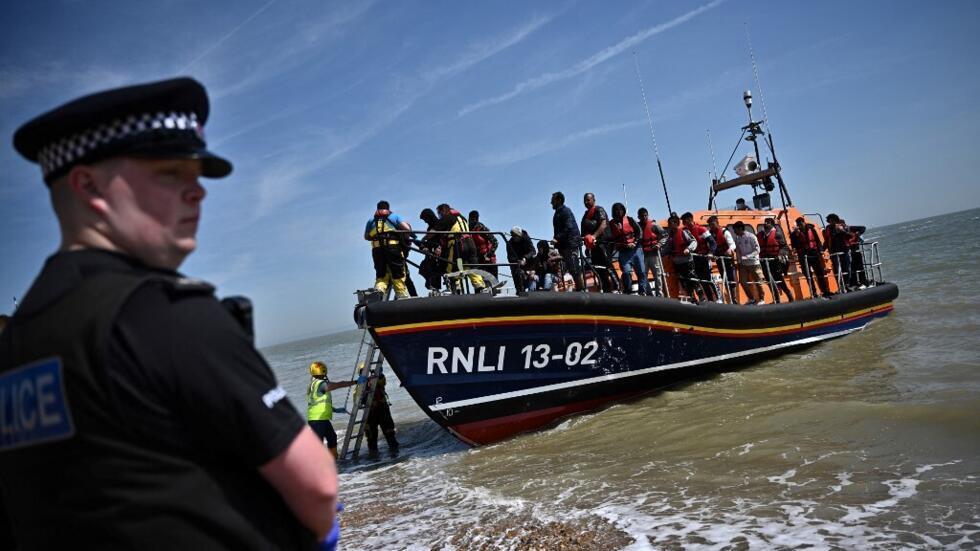
As noted last month, the number of arrivals in the UK on small boats continues to break records (20,000 by the end of June). This has been put down to good weather, smugglers’ new techniques and increasing conflicts around the world (the largest number of hopeful asylum seekers in Calais are from Sudan).

The Government is hoping to save up to £1 billion by speeding up backlog processing. However, the backlog is now 90,000 rather than 50,000 in 2024. In 2024, there were84,000 asylum claims – In the EU as a whole there were nearly a million – 997,000.

With much discussion on what legal routes immigrants can take, here is a summary of the current situation in the UK: there are presently 7 options.

  1. UNHCR can select people it thinks appropriate to send (the places cannot be applied for, and amount to only 1% of all refugees).
  2. UK Resettlement Scheme. The status of this is unclear; it includes community sponsorship and accounts for about 700 arrivals last year.
  3. Mandate Scheme. This is for people with relatives in the UK. 23 cases were reported in 2024.
  4. Family Reunions. Applies after refugee status has been agreed by the UK.

Mostly Syrians , Iranians and Eritreans. 5000 in quarter 1 2025.

  • Hong Kong. Numbers low now as most cases already settled.
  • Afghanistan. ACRS and ARAOP have now been closed, with virtually no explanation. “Further measures…[will be] announced later this year.” More Afghans have been arriving by boats than under these arrangements anyway.
  • Ukraine. Numbers also down now to about 4000 a month. Only 1698 asylum claims since 2022.

The Refugee Council have a new report New Roots, New Futures, arguing for a national integration strategy for refugees in the UK. They are particularly exercised by the need for new arrivals to have access to help in obtaining work and housing once they have been given right to remain.

The Green Party have put forward a plan for the Home Office to be split, with various options for the immigration departments.

By way of context, it should be noted that 73% of the world’s refugees are in Low/Middle Income countries, 67% of them are in countries neighbouring the one they are fleeing. Per head of population the countries with the highest number of refugees are Lebanon (1 in 8 of the population), Aruba and Chad.

The European Convention on Human Rights has become an issue again with questionable claims being made about possible unfair exploitation of loopholes. It should be stated that the Convention does not affect individual countries’ immigration policy, and that it is rare for claimants to a right of “family life” and such to win their case. The ECHR has ruled against the UK twice in the last two years, in neither case about immigration/deportation issues. They have generally prevented removals from the UK about once every 4.5 years since 1980. Leaving the Convention over this issue would seem rather unnecessary.

Andrew Hemming


Recent posts:

Political Waves: The Crisis of Refugee Boat Crossings in 2025


Refugees and the boat crossings still making political waves

June 2025

This month we are back to the small boats.  So far in 2025 some 15,000 arrivals have been recorded (1,100 on one day).  The Home Office say this is due to better weather and more people crammed in to boats.  In quarter 1 numbers were up by 20% on last year – mainly from the usual places – Eritrea, Afghanistan, Sudan.

The asylum backlog is down to 78,000, but with a lower grant rate (49% over the last year) the improvement may not be maintained.  The number of claimants jailed for “illegal arrival” has doubled in the last year.  Between 2022 and 2024, 556 arrivals were prosecuted under the Illegal Migration Act and 455 convicted (half of them were said to be piloting the boats, willingly or otherwise, and were therefore “facilitators”). In the latter half of last year, 53 people were arrested for people smuggling including many who happened to be steering the boats and many of them children.

Plans for removing arrivals to third countries for processing have made little progress ; Albania said no, North Macedonia & Kosovo have not been asked  but say they are open to discussion.

3,800 Afghans are currently awaiting homes (who came under the ARS scheme and were left unsupported). Also it has been claimed that an unnamed Special Forces officer blocked the entry of 1585 Afghans (it has been suggested this might be related to potential war crimes revelations).

Mary Bosworth (Oxford Professor of Criminology) has an interesting piece on the outsourced immigration detainee escorting system Mary Bosworth (@mfbosworth.bsky.social) — Bluesky

7000 Syrians are still in limbo awaiting a UK decision on processing their claims after a pause (the new regime is still being monitored, though presumably it will eventually be possible for many to return there).

The US has taken on “refugees” from South Africa, white residents supposedly under threat.  So far there have been 50,000 enquiries and 68 actual moves.

The Home Secretary has said she is working on a “fast-tracking” removal system for migrants from “safe” countries; these have not yet been named.

Of the 108,000 claimants for asylum status in the last year 16,000 were from holders of student visas. The government is likely to address this question soon.

Immigrant-focused group British Future have polled the public on attitudes to the word “immigrant”.  For 70% of respondents this conjured up people on small boats, while 46% thought of imported workers.  Of those who wanted to see a reduction in immigration, 49% prioritised the boats, very few mentioning worker or student arrivals.  The research also finds that 59% of the public, and 64% of 2024 Labour voters, agree that migrants living in the UK and paying taxes should be eligible to apply for citizenship after five years or less.

Polling organisation More in Common found that 51% thought a fall in immigration a good thing, 57% opining that the level was still too high.

One of the more interesting ideas for Refugee Week is that of Lancaster, where an exhibition, Escape to Safety, will give visitors an interactive view of the refugee experience.  More on that here

Finally, the Government’s Spending Review this week had a couple of points on the immigration/asylum seekers question.  Chancellor Rachel Reeves says the new Border Security Command will receive up to £280m more a year by the end of the spending-review period.  She also promises that all spending on hotels for asylum seekers waiting for their cases to be heard will stop by the end of this parliament.

Andrew Hemming

Refugee report


Monthly report on this politically toxic topic

April 2025

The Government’s Border Security Asylum and Immigration Bill has now completed its report stage and will next go to the Lords.  While this is going on, an update on the numbers shows that the number of small boat arrivals this year so far has exceeded 6000, the highest yet.  Meanwhile the backlog of pending asylum cases has increased to 41,000 in December.

The PM has drawn together 40 nations for his Organised Immigration Crime summit last week.  A press release went without much comment, containing the usual statements about agreeing to enhance border security and dismantle the criminal networks.  One item which did emerge was an agreement with Serbia to exchange intelligence about what is now known as the Western Balkans route into Europe.

Following this event, some 136 organisations under the umbrella of Together with Refugees wrote to the Government, unhappy about the language used by the Prime Minister, which they described as “demonising.”  The PM had claimed: “There is little that strikes working people as more unfair than watching illegal migration drive down their wages, their terms and their conditions through illegal work in their community.”

New research from the European University has suggested that attitudes in Europe to irregular migration are more nuanced and varied than previously supposed.  This was from a survey which covered 20,000 people across Austria, Italy, Poland, Sweden, and the UK designed to understand their preferences on policies regarding access to healthcare, social welfare and labour protections, as well as the obtainment of regular legal status or “regularisation” for irregular migrants. The results challenge the idea that public attitudes toward irregular migrants’ rights are simply “for” or “against”.  Instead, they found that variations in policy design matter – and when policies include both migration controls and protections for migrants, public support often increases.

Unusually, there is some emphasis this month about campaigning.  Refugee Week (third week in June) is this year under the theme of Community as a Superpower with its customary emphasis on small actions. The group might consider an action (s) which might include:

Following our action against denying asylum seekers the right to work pushing for a change in the law. Refugee Action have a petition to sign here and, for more information, you can Read the coalition’s report here. We could arrange our own petition using the Lift the Ban coalition’s resources.

  • Pressing for Salisbury to be a City of Sanctuary (Winchester and Swindon are)
  • A letter writing workshop for supporting asylum seekers (maybe using the Salisbury Ecohub)
  • A vigil for small boat arrivals (as we did a few years ago)
  • Safe Passage want us to write to our MPs about government  policy and the new bill

(They have a standard email, but this could be enhanced).

Also Refugee Action are offering speakers for local groups – they admit they would mostly be online, but they can make visits.

Finally, a recommended read is Labour’s Immigration Policy by Daniel Trilling (who many will remember gave a talk to us some years ago) in the London Review of Books for March.

Andrew Hemming

Refugee report: March


Government attitudes to immigration still causing problems

March 2025

The Government’s Border Security Asylum and Immigration Bill is in its committee stage this week. Much interest has been shown by MPs in using the occasion to express opposition to the Home Office’s guidance on denying citizenship to “illegal” migrants, however long ago their arrival may have been. This guidance has been put forward as a gloss on the “good character requirement” for naturalisation, deeming those who arrive illegally via “dangerous journeys” to be ineligible. The SNP have put forward an amendment to obviate this ruling and the Home Affairs Select Committee have sought an explanation for the change in policy.

Brian Mathew, the Liberal Democrat MP for Melksham and Devizes, said asylum seekers should be given the ability and support to work “instead of leaving them in administrative limbo in hotels around the country costing the taxpayer millions”.

There has been concern amongst MPs also about the government’s decision to transfer some of the foreign aid budget to pay for increases in defence expenditure. This will obviously have a bearing on the amount of funding available for countries with refugee issues. According to the FT, presently it is believed that half the foreign aid budget will now  go on migrant hotel accommodation.

The Home Secretary has been visiting Northern France, the first Home Secretary to do so in recent years. Yvette Cooper is bringing £172 million to aid the French authorities against people smugglers. The National Crime Agency believes that they now have a better understanding of how the boats and engines arrive on the Channel coast, mainly from Germany. Germany has now made it a crime to facilitate illegal migration to the UK.

At the same time as immigration is being targeted, the Government is increasing its deportation levels. This post by Prof. Mary Bosworth is worth reading.

The small boats continue; this year so far the numbers are 40% down on last year, but better weather will probably change the ratio. 2024 data indicate claims were up 18% on 2023, and grant rates were down from about 67% to about 47%. A particular drop in acceptances has been felt by Afghans: from around 90% agreement to around 50% (with legal routes barely used now); it has been suggested that the Home Office considers the Taliban no threat to a wide range of society now.  The largest influx currently is from Sudan.

Other notes: The Guardian featured the immigration regime in Spain, where a less hostile attitude has brought economic results with arrivals able to work.The Home Office has been accused of failing to correctly assess the ages of child migrants by the Refugee and Migrant Children’s Consortium. And the UK is refusing to pay the £50 million compensation demanded by Rwanda for the collapsed migrant removal policy.

We are grateful to group member Andrew for producing this report.

February minutes and newsletter


February 2025

We have pleasure in attaching the minutes and newsletter of our last meeting thanks to group member Lesley for the work in preparing them. We say ‘newsletter’ because they are more than just minutes of the meeting as they contain reports on the refugee and immigration system, a report on the death penalty and a list of future activities.

Recent posts:

UK Refugee Report: Political Issues and Policy Changes


This month’s refugee report on this vexed problem focuses on political issues in the UK

February 2025                                                        

This month the concentration will be on the continuing situation in the UK, with legislation going through and much pressure from certain political parties on the issue.

The Government’s Border Security Asylum and Immigration Bill passed its second reading this month. This Bill repeals the previous government’s Safety of Rwanda Act and some of its Illegal Migration Act. As presented, the Bill has received a cautious response from refugee and asylum organisations, most taking the view that it could have been worse.  The new offence of “supplying or handling ‘articles for use in immigration crime’” is expected to only be rarely used, despite the draconian punishment.  The other main provision concerns applying anti-terrorist legislation to smuggling gang leaders when caught.  Most organisations in the field point out that gang leaders rarely have assets in the UK and the National Crime Agency have said that most crime gangs are based in France, Belgium, Germany or Turkey, the success of this initiative is therefore to be doubted.

Blanket denial of citizenship

As of this week, the Home Office has been accused of a policy of denying citizenship to anyone who arrived by irregular means, however long ago, and despite being given leave to remain.  This would appear to be in breach of Article 34 of the Refugee Convention.  The issue is continuing.

Among the boat arrivals, the number of deaths recorded in transit was 78 in 2024, three times higher than the previous year. Pressure on the boat suppliers has led to more overcrowding, among other causes.

Within the European Union, irregular migration figures are down by 38% from 2023 to 2024, according to Frontex.  Migration routes from Tunisia, Libya and the Western Balkans have been made more difficult, but the policy of the government of Belarus in pushing migrants to the west has added to the numbers from that source.  Frontex are developing the use of AI on the borders.

The UK government has been publicising its deportation programme for unsuccessful claimants. Between 5 July 2024 and 31 January 2025, a total of 18,987 returns were recorded – an increase of 24%, the Home Office said.  Removals of foreign national offenders were up by 21% and illegal working raids – on such places as nail bars and car washes – are up by 38% compared with the same period 12 months previously.  Videos of people being put on planes* (for unknown destinations) have been put in the public arena.  Of the total returns since 5 July 2024, 2,925 were of foreign national offenders – an increase of 21%.

The backlog of asylum cases continues to be a concern.  In the last year, the proportion of asylum claims that have been accepted has dropped from 75% to 52% with a resulting increase in the number of appeals.  So, although the initial backlog built up over years has fallen, it is constantly being topped up. The last available figure, for September, was 97,000, but the Home Office say it is reducing.

Criticism of language used

A report by the Runnymede Trust has noted the language of the immigration debate, particularly the widespread use of the word “illegal”, although governments have tended to avoid the word as immigration is not illegal, though it may be “irregular”.  It blames media reporting for encouraging hostility towards migrants. In parliamentary debates and media reporting, negative terms like “illegal”, “flood” and “influx” are persistently used in association with migrants, posing them as a threat, dangerous and outsiders. The word “illegal” is in the top five most strongly associated words with ‘migrant’.

The pause in accepting Syrian refugees since the revolution is continuing despite urging from Damascus to process ongoing claims.

The Migration Advisory Committee has called for a change in the rules on working, asking for claimants to have the right to work after six months in the country.

The All-Party Parliamentary Group on Refugees issued a report this month on the working of the immigration system, and made some recommendations for improvement. Overall, the inquiry found that the current processes for safe and legal routes are overly complex, restrictive, and slow, leading to prolonged family separations and increased irregular migration. The report says UK governments since 2019 have adopted a “scattergun” approach to safe and legal routes.

“They have failed to effectively utilise the UK Resettlement Scheme (UKRS) and cooperate with the UNHCR to provide quotas for arrivals on this scheme. Instead, nationality specific schemes, each conferring differing entitlements, have been adopted, meaning that access to family reunion, immigration status and integration prospects are dependent on the scheme you arrived on which is unfair and inefficient.

“The refugee family reunion route was also highlighted as not operating effectively. Despite the number of visas issued increasing significantly in 2024, two-thirds of cases are failing to meet the Home Office’s own service standard of processing within 60 days. A backlog of family reunion cases has risen to at least 11,000 cases. The UK also operates one of the most restrictive refugee family reunion policies in Europe.“

The APPG makes three main recommendations. Firstly, it calls for improvements to refugee family reunion by processing cases within 60 days, allowing refugee children to sponsor their family members, and removing financial restrictions on UK-based sponsors. Secondly, it recommends restoring the UK Resettlement Scheme as the primary resettlement route and reaffirming the commitment to resettle 20,000 Afghans under the Afghan Citizens Resettlement Scheme. Thirdly, the report proposes introducing a pilot refugee visa scheme targeted at high grant rate countries, with a cap of 10,000 visas during the pilot period.

Finally, Amnesty are offering small grants for actions during Refugee Week in June details are available on the Local Groups email (but the final date is Monday!)

*the video is embedded in this LBC post.

AH

Refugee report


Channel crossings still a political problem

January 2025

While we continue to await the details of the government’s proposed Border Security, Asylum and Immigration Bill, the arrivals continue on small boats. The total for 2024 was 36,816 (compared to 29,000 in 2023, but lower than 2022). 69 migrants lost their lives in the Channel over the year. It is also noted that 270 claimants died while awaiting the results of their applications since 2015. The National Crime Agency is predicting large numbers of arrivals this year.

UK Government activity in the last month include a Home Office declaration that people smugglers will face immediate travel bans, social media blackouts and phone restrictions when caught. This morning (Thursday) the Foreign Secretary has joined in with a piece insisting that the FO is part of this push. How this will develop is unclear, but he speaks of using “our sharpest diplomatic weapons.”

There has also been a marked increase in the number of removals (voluntary or otherwise), amounting to 13,500 since the election, and the speeding up of the application process may have led to a loss of accuracy in the decision making. It is likely that talk of removing people “who have no right to be here” will increase.

Meanwhile, Ukrainian refugees, here under the visa scheme, are concerned that the 3 year visas will expire soon. They can be extended, but it is feared that the process may take so long that the right to remain will have gone before completion.

Charities the Refugee Council and Safe Passage have both produced reports in the last month. Safe Passage is primarily concerned with child refugees and is urging the government to provide safe routes and enable families to reunite without hindrance. The Refugee Council is campaigning for a “fair and humane asylum system” with a six-point plan including piloting a visa scheme for anyone seeking refuge in the UK and a hearing process that takes no account of the means by which applicants arrived here. It is not expected that the government will take these suggestions up.

As an international comparison, the number of boat arrivals on the Canary Islands in 2024 was 46,000. Spain has been following a comparatively liberal approach to immigration, but it is feared this may change.

As a tailpiece, an article on the experiences of those migrants who ended up on the now abandoned Bibby Stockholm can be read here.

AH

Review of the year


Review of the year by Each Other

December 2024

A useful review of the year as far as human rights in the UK is concerned has just been produced by Each Other. They point to a number of human rights concerns in the UK. One issue were the calls for the country to leave the European Convention of Human Rights (ECHR). A leading proponent of this was the East Wiltshire MP Danny Kruger. According to Politics he says the ‘Conservatives will not get back into power unless they make a commitment to leave the Convention’. The anger felt by Kruger and some of his colleagues concerns the issue of immigration and how we deal with people arriving here.

Immigration has indeed been one of the hot political topics during the year and was a key feature during the July election. There was a long drawn out proposal to send people to Rwanda and the first flight with the first of the deportees was due to leave from nearby Boscombe Down airfield. At the last moment, the European Court stepped in. It said more time should be allowed to consider the issue. It was this intervention which angered so many in the then government. Rwanda was abandoned by the Labour government.

Another important development during the year was the effects of the Police, Crime, Sentencing and Courts Act 2022 which increased police powers to prevent or limit protests. We have the right to free speech and to assembly. Protests frequently anger governments of all stripes and it does not seem the Labour government is in any rush to repeal the act. The act has a deadening effect on protests – at least that was its intention. Protests have taken place with climate and the Palestine issue chief among them.

The Online Safety Bill is another contentious issue. It pits the right to free expression against guarding against hate speech. The murder of three little girls in Southport brought the issue to a head. Social media accounts alleged the alleged murderer was a Muslim and had arrived by boat. He is neither. It sparked widespread rioting and attacks on police and asylum hotels.

However, although most of the opprobrium was directed at social media, legacy media have maintained a prolonged campaign against immigrants, the boat people and Muslims. The Media Diversity Institute provides a number of examples and others are not difficult to find. They laid a groundwork for demonising ‘others’ and the response to the murders in Southport was arguably a result. Blame focused almost entirely on the rioters (correctly) and social media. The role of print media largely escaped censure.

Democracy and human rights are under threat in the UK. Elon Musk’s alleged major investment in a party in the UK will distort our politics if it happens. Musk is strongly against trade unions, for example. He has turned his X platform into a mouthpiece of far-right views. He regards the UK as a ‘tyrannical police state’. The point is not the expression of his views, which are shared by many, but that he has enormous wealth to put them into action.

Seasons greetings to our readers.

Refugee report


Europe still struggles to deal with refugees coming to its shores

November 2024

This month’s report is Eurocentric. Hopefully we can look at the wider aspects next time, as we become clearer about the new US President’s plans for widespread deportation (and also the Australian government’s battle with the courts).

The government’s proposals on the small boats crisis remain unclear at the moment. Apart from the Prime Minister’s curious assertion that the people smugglers constitute a threat to national security, things continue much as before. The total number of arrivals so far this year is over 32,000, 22% up on last year (but still below 2022). Worse overcrowding on the boats is partly responsible for 64 migrants dying at sea this year (5 times last year’s total). The government has agreed improved intelligence exchange with three Balkan countries and has pledged £150 million for the proposed Border Security Command.

Within the Home Office It is suggested that there is some doubt as to how the new Command will work. Lizzie Dearden in the i reports that the fear is that the more the authorities clamp down the more risky the methods used by migrants and that a new approach is the best solution. Nevertheless, the Home Office is recruiting a head for the proposed National Returns Progression Command, a body intended to take control of deporting unsuccessful applicants for asylum status.

There has been much concern about the use of the term “illegal arrival” as per the 2022 Nationality and Borders Act. Anyone guilty of “facilitation” (which includes steering a boat) is liable to up to life imprisonment, and cases have been reported of this happening. Since the Act came into force there have been 471 arrests, 233 of them for taking the tiller.

An aspect of the difficulties within the system is the lack of available legal aid. The Joint Council on the Welfare of Immigrants is urging a reform of the legal aid system, arguing that a functioning system would be much cheaper for the public purse than the present approach.

According to the French charity Utopia 56 there are still some 2,000 migrants on the Channel coast in France.

The Institute for Public Policy Research have observed the need to consider the demand side of the equation, to see why so many are fleeing their countries of origin: ”In order to have an effective response you need to go beyond enforcement.”

Elsewhere possible solutions to the problem are being considered. In Switzerland, since 2019 a new approach has been tried: the main aim is to target a total of 140 days for the complete processing of applications, while not cutting corners. The three critical issues are:

1. to have enough decision makers

2. fast streaming easier cases and moving more difficult ones to a different process and

3. ensuring access to lawyers.

Meanwhile in Spain a more friendly attitude to arrivals is being pursued, both for the economy and to allow family reunions. The Spanish government is opposed to what it terms “Melonisation”, the Italian plan to offload migrant processing to Albania.

Human Rights Watch have a piece noting that discerning the popular attitude towards refugees very much depends on the question asked. People are more sympathetic when it is phrased in terms of what would happen to deported asylum seekers rather than immigrant numbers arriving here.

Finally, a success story of an “illegal” migrant:

An immigration lawyer reviews Paddington in Peru: A very British bear – Free Movement

Andrew Hemming

Refugee report – October


October 2024

The problem of boat crossings has largely dropped out of the news recently with the conflict in the Middle East soaking up media attention. The Conservative party’s leadership election is also a focus of interest particularly as the two remaining candidates have hard line opinions on immigration.

As the new government prepares to reveal its Border Security, Asylum and Immigration Bill (largely designed to replace the jettisoned Illegal Migration Act), it is worth looking at the current situation with the small boats. Under the IMA, all applications are deemed inadmissible. This has left us with a backlog of 33,000 claimants in limbo (mainly Afghans and Syrians). Before the IMA, 90% of claims had been accepted. This might not be the case in the future as the Home Secretary also wants enhanced return procedures.

The high levels of pending cases has been exacerbated by the lower levels of acceptance (down to about 60% of cases) with a resulting big increase in the number of appeals. In passing, the Independent notes that the oldest asylum claim at the Home Office was made nearly 17 years ago. Also, Switzerland has improved its processing, which used to take up to 4 years, but is now about 100 days, which may be a pointer for a way forward.

The charity Safe Passage sees signs of improvement  (e.g. now allowing children to join relatives who are not parents) but meanwhile the total number of arrivals this year is over 25,000 – slightly more than last year but fewer than 2022. The government is keen to align with European procedures on irregular arrivals, but within Europe itself cracks are showing. This week 17 EU countries pushed for more effective return procedures for rejected applicants under the new Asylum and Migration Pact. At present the actual return rate for those to be sent back is only around 30%. An amended return process is presently stuck in the European Parliament.

Following the Ukraine war, the percentage of the world’s refugees in Europe has increased to over 20%. New research this week suggests that the numbers of irregular migrants in Europe is not increasing substantially (still at around 1% of the population for most countries). The MIrreM project calculate that between 2.6 and 3.2 million irregular migrants are living in the 12 countries they researched, with 594,000 to 745,000 in the UK. Figures are not completely reliable owing to many arrivals staying under the radar.

While we concern ourselves with the relatively small number of refugees arriving on the south coast, it is worth looking at the worldwide situation. With war zones in the Middle East, Sudan and Myanmar, not to mention Ukraine, the number of displaced persons has mushroomed in the last year. Ten million Sudanese have been displaced, 2 million to another country, 4.5 million Yemenis are internally displaced, while in Gaza 90% of the population and in Lebanon 1 million out of 5 ½ have had to move under Israeli attack, in some cases many times. In the larger Palestine, plus Jordan, Lebanon and Syria, there are 58 recognised camps housing 1.5 million refugees (1 in 3 of all Palestinians, some dating back to 1948. The UN authorities in the area (UNRWA and UNIFIL) have pointed out that many of the displaced inhabitants may well choose to head for Europe, adding to the pressure on countries there.

In Myanmar, not only  those under threat from the military, but also many Rohingya have left the country, about 1.3 million, mostly to Bangladesh.

AH

Blog at WordPress.com.

Up ↑