There has been a great deal of coverage in the last few days concerning legal actions against British soldiers. Mr Cameron – the British Prime Minister – wants to put an end to them. This is an edited version of the sermon given by the Reverend Lieutenant Colonel N J Mercer at the Amnesty International service held on Thursday 17 October 2013 at Salisbury Cathedral. It was first published two years ago.
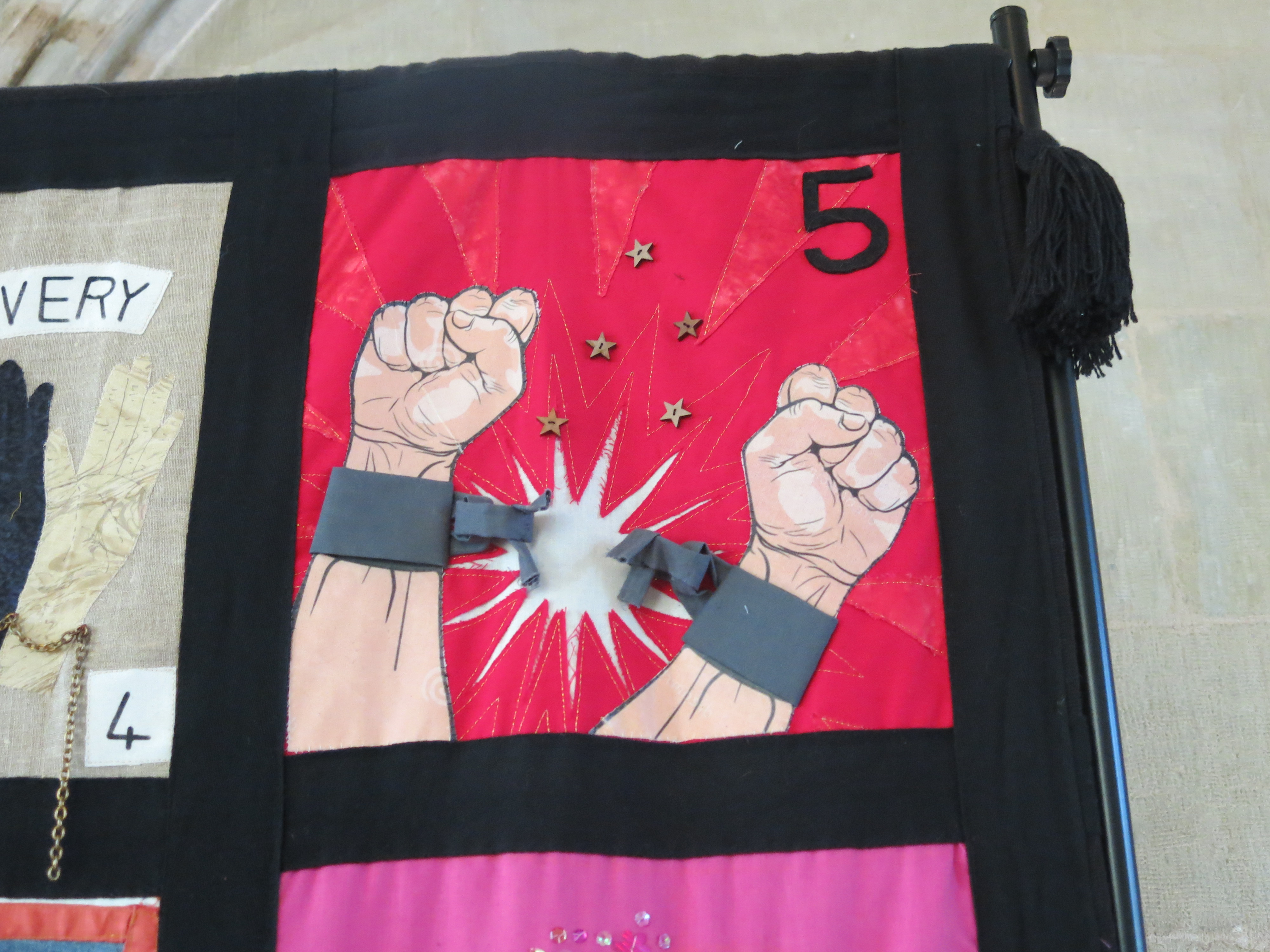
Two weeks ago in our Benefice we had a week of fasting for “Stand Fast For Justice.” Stand Fast for Justice is a campaign which is currently being sponsored by the Charity Reprieve. In this week of Benefice Fasting, parishioners – aged 12 to 90 – fasted in sympathy with the prisoners at Guantanamo who are currently on hunger strike and being force fed. In particular we remembered Shaker Aamer. Shaker Aamer is British and has been cleared twice by the Guantanamo authorities for release. Once by George Bush and once by Barak Obama. Yet he remains in custody. It appears that he was nothing more than an innocent bystander, caught up in the fog of war, for which he has lost eleven years of his life.
Most alarming is his claim that he was tortured at Bagram Airbase and at Guantanamo and that MI5 have been complicit in his torture. The reason for his delay – some allege – is that if he is released he will reveal details of his treatment. The authorities want him sent back to Saudi Arabia even though he is British Resident. His family live in South London and he has a son whom he has never seen
My background
The service this evening is the Amnesty International Service which remembers, in particular, prisoners of conscience. These are individuals who are held in prison for their conscientiously held beliefs and who lose their liberty for no other reason than holding the wrong opinions or beliefs. They are wholly innocent of any crime. And it this category of wholly innocent prisoner which is my own nexus for me being asked to preach this evening.
For there is another category of wholly innocent prisoner, and that is the prisoner of war. As their title suggests, these individuals are imprisoned for no other reason that they were on the opposing side in an armed conflict. As the Geneva Conventions state, they become prisoners of war when they fall “into the power of the enemy” and for no other reason (Art 5 1949 GCIII).
Some of you may know my background, but I was the senior legal adviser in Theatre for the Iraq War in 2003. I had legal responsibility for all operations in the field, and this included the difficult issue of prisoners of war. I became embroiled with this issue which arose quite by chance whilst visiting the Prisoner of War camp in Um Qsar in March 2003. I went down to visit the camp – on a totally unrelated matter – and as I entered the facility, I glanced down a hessian corridor at the entrance. Unknowingly, I was looking at the Joint Force Interrogation Unit and to my horror, I saw about thirty – forty Iraqi prisoners, hooded and in stress positions, kneeling in the sand in 40% heat and with a generator running outside the interrogation tent
As a soldier, I knew exactly what was going on. The interrogators were trying to intimidate the prisoners. I intervened and demanded to know what was going on. The Officer Commanding replied that he didn’t take his orders from me but “direct from London”. I was told that such practises were “in accordance with UK doctrine”. Needless to say, I was unable to change the situation there and then but I reported matter to the British Commander that evening. It led to an unseemly row between lawyers the interrogators and higher Headquarters. It was only the intervention of the Red Cross which turned the tide in my favour.
The ‘5 techniques’
There was, as many have remarked, a general indifference to prisoners. Six months later however, a prisoner called Baha Mousa was beaten to death during tactical questioning. The whole episode was examined first at Court Martial and then in the Public Inquiry that followed. It was revealed that not only were prisoners hooded and in stress positions, but were also being deprived of food and sleep and were probably being subjected to what is termed “white noise”. Indeed, one prisoner had been chained to a generator whilst it was running and belching out carbon monoxide.
These so called 5 techniques were banned in 1978 after the United Kingdom was taken to the European Court of Human Rights (Ireland v UK) – yet somehow they had remained in use.
This episode was to have a profound effect on my life. Like so many pivotal moments in our lives, it set me on a journey that I neither expected nor desired. I left the Army in 2011. Not long afterwards however, a book called “Cruel Britannia” dropped through my letter box. The publishers (Portobello Books) asked me to review the book and I felt flattered as I had never been asked to review a book before. The book horrified me. It revealed a catalogue of torture by the British from the end of the Second World War and throughout the colonial campaigns of Malaya, Kenya, Cyprus and Aden. Then onto Northern Ireland and Iraq and to the episodes which are described above.
There was one particular quote I want to share with you about the treatment of Mau Mau prisoners in Kenya:
Men were whipped, clubbed, subjected to electric shocks, mauled by dogs and chained to vehicles before being dragged around. Some were castrated. The same instruments used to crush testicles were used to remove fingers. It was far from uncommon for men to be beaten to death (Cruel Britannia p 81)
The assistant chief of police in Kenya at that time (Duncan MacPherson) said that:
The conditions I found existing in some camps were worse, far worse, than anything I experienced in my four and a half years as a prisoner of the Japanese
The British myth
The British narrative is that we are a people who pride themselves on decency and fair play, except it is a myth. We have been unspeakably cruel to our prisoners in the post war period and that includes Iraq and Afghanistan.
I recently spoke at a dinner hosted by the Tablet where I met a young SAS Trooper called Ben Griffin. You may or may not have heard of him. But he was first in the Parachute Regiment and then the SAS and a thoroughly decent soldier. However, he was so appalled by the treatment of prisoners in Iraq and Afghanistan that he refused to soldier on. He said that Coalition Forces were treating prisoners as “sub-humans” and that we were “accepting illegality as the norm.” Rather than Court Martial him, he was discharged honourably from the SAS. His Commanding Officer described him as a “balanced and honest soldier who possesses the strength and character to genuinely have the courage of his convictions.”
He now lives under a High Court injunction. If he reveals what he knows about prisoners and he will go to jail. But he is not the only one whose silence has been wrought. Those former prisoners, like Shaker Aamer, who seek to bring a claim against the British Authorities, now have to do so in a secret court where they can neither have their own lawyer, see the evidence against them nor challenge the witnesses or judgement against them. This is thanks to the “Justice and Security Act” which was skilfully managed through Parliament this year.
I recently preached on the Roman Persecutions in the Early Church where the historian Tertullian – a lawyer and a priest – wrote in his Apology (197) how the Roman Authorities similarly rigged the trials of the early Christians. Now we rig the trials of prisoners and silence those who seek to speak out on their behalf.
As an Army Officer, I expected the State to behave honourably. What I stumbled upon was what one commentator described as “Britain’s dirty little secret”. What the Telegraph journalist Peter Oborne recently described as a “ghastly cloud” which overshadows this country. We have as a nation kidnapped innocent men and women and we have been complicit in their torture. Then we have covered it up; wholly innocent prisoners, be they prisoners of war or prisoners of conscience, it amounts to the same thing.
In this service, in this beautiful Cathedral, in this rural idyll of Salisbury, most are oblivious to our own sordid history. The psalmist tells us that God “hears the groans of the prisoners” (Psalm 102:20). The United Kingdom still actively supresses those groans on threat of imprisonment or injunction. This, of course, happens all over the world, but if it can happen so easily in one of the world’s oldest democracies – on our watch – just think how easily it can flourish elsewhere.
 You can follow us on Twitter and Facebook.




 Follow us on