Newcastle United and sports wash


Plans by a consortium funded by Saudi Arabia to purchase Newcastle United come under attack

Anyone who has followed the Yemen conflict or is the least bit aware of human rights around the world, will know of Saudi Arabia’s dismal record on this front.  For five years they have waged a brutal war in Yemen leaving the country a wreck and many thousands dead.  We have frequently described their activities in previous blogs on this site. Their bombing of civilian targets is a disgrace as is the process of what is called ‘double tapping’ that is, circulating round after an attack on a hospital, school or wedding, and returning for a second round of bombing to kill the rescue workers.  That the RAF is involved in this activity – supposedly ‘advising’ the Saudis – is a stain on the UK’s international reputation.

Their human rights record is appalling.  Torture is common and confessions extracted using the process used to justify executions.  Death by beheading in public displays are the norm.  Women’s rights are severely restricted despite the promised reforms.  Human rights activists are regularly targeted and of course there is the murder of Adnam Kashoggi who was almost certainly dismembered after his death by Saudi personnel.

Now they want to purchase Newcastle United football club via the Public Investment Fund chaired by Crown Prince Mohammed bin Salman and the sum of £500m is mentioned in a deal.

Kate Allen, Amnesty’s Director said:

Amnesty UK director Kate Allen said in a separate letter to Masters [chief executive of the Premier League]: “So long as these questions [about Saudi Arabia’s human rights record] remain unaddressed, the Premier League is putting itself at risk of becoming a patsy of those who want to use the glamour and prestige of Premier League football to cover up actions that are deeply immoral, in breach of international law and at odds with the values of the Premier League and the global footballing community”.

She suggests that Newcastle fans to familiarise themselves with the human rights situation in Saudi Arabia before the deal goes ahead.  For many fans, their chief desire is to see a new owner to replace Mike Ashley, the current one.

Saudi Arabia has been trying, unsuccessfully so far, to improve its image and using ‘sports wash’ is part of that plan.  The sums of money are huge and it appears that sports people are unconcerned at the source of the money or how tainted it is before accepting and cashing in the cheques.

The country is the major overseas purchaser of our arms exports.  Royalty have been frequently pressed into service as part of the charm offensive.  Unsurprisingly, the culture secretary, Oliver Dowden MP said it was a ‘matter for the Premier League’ and the government is unlikely to intervene.

Football is big business and the sums paid to players and their transfer fees can be stratospheric.  Players are hugely influential and many young people see them as heroes.  Although players are not involved in this transaction directly, they will ultimately benefit from it financially.

To quote Jonathan Lieu writing in the Guardian:

And so, welcome to the new orthodoxies of English football.  Saudi Arabia is good.  Amnesty International is bad.  New signings are more important than murder, broadcast rights more important than women’s rights, and a basic sense of humanity is ultimately expendable if you can scrape into next season’s Europa League.  It’s a manifesto, to be sure.  Just don’t expect anyone with a scintilla of decency to feel warmly about it.  (23 April 2020)

Sources: Guardian, BBC, CNN


Anniversary of Saudi execution


Zakia’s husband was one of the 37 people killed in a mass execution in Saudi Arabia on April 23, 2019

Saudi Arabia has taken my husband, and now won’t let us grieve. My children and I want to bury him and pay our respects. We deserve that much. Zakia Albakheet

These executions happened without warning, so Zakia and other families never had the chance to say goodbye.  Now, Zakia is fighting for the right to bury her husband, Abbas al-Hassan, whose body was never returned. Together, we can help.

Will you share Zakia and Abbas’s story from Newsweek with your friends and family, marking the anniversary of Saudi Arabia’s 37 illegal executions one year ago today

The Saudi government beheaded Zakia’s husband despite multiple protests from the United Nations.  It was an injustice – and it continues so long as the Saudi authorities prevent her from burying her husband, and mourning his death.  Abbas deserved a fair trial and a fair chance at justice. He didn’t get it. Now, a year after his execution, his wife Zakia deserves the chance to say goodbye. With your help, we can make sure her story is known and that Saudi authorities are held to account.

The Reprieve community has shown that the Saudi government is sensitive to its image on the international stage.  Together, we have kept the stories of Ali al-Nimr, Dawood al-Marhoon and Abdullah al-Zaher in the public eye and continue to push British politicians to speak up for them.

Together, we can fight for Zakia to have the chance to say goodbye to Abbas.  Please share their story in Newsweek with your friends and family.

Source: Reprieve

Ali al-Nimr: Saudi Arabia


Reprieve have highlighted again the plight of Ali al-Nimr in Saudi Arabia
Arrested as a minor and confession achieved through torture

Ali al-Nimr was 17 years old – a minor – when he was arrested on 14 February 2012 in Qatif, a town in Saudi Arabia known to be a centre for pro-democracy demonstrations.  After his arrest, officers of Saudi Arabia’s General Intelligence Directorate interrogated and tortured him.  Ali signed a confession that one of his interrogators wrote for him, even though he did not understand what he was signing. Throughout his interrogation and prior to his trial Saudi authorities denied Ali the right to speak with a lawyer.

Reprieve, in a recent communication say:

Ali has spent the last 6 years on death row with the threat of execution hanging over him.  A threat made worse by coronavirus.  Our investigators, lawyers and campaigners are working hard to free Ali and others who were sentenced to death as children in Saudi Arabia.

With your help, we’ve made sure Ali’s life has been protected so far by making sure British politicians speak up for him. But this is not an easy campaign – and it’s not one we can pause for a moment, even during this pandemic.  20 April 2020

Amnesty has campaigned on his behalf and a post with the mother’s story can be read here.

When Ali’s story first surfaced, the UK’s shameful role in promoting Saudi Arabia’s membership of the UN’s human rights council was revealed via Wikileaks.

Reprieve notes that Saudi has executed its 800th individual in 5 years.   Since King Salman bin Abdulaziz came to power five years ago, the execution rate has doubled from the previous 5 years.

We urge you to take action and this can simply done via the Reprieve site the link for which is below:

https://reprieve.org.uk/take-action/

Picture: Amnesty

Sources: Reprieve; Amnesty International; American for Democracy and Human Rights in Bahrain; Independent

[update 22 April with different picture]


Sportswash


Use of sport to promote interests of unsavoury regimes on the rise

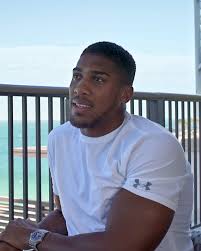
The latest example is the heavyweight fight in Saudi Arabia involving Anthony Joshua.  The fight was approved by the WBA, the World Boxing Organisation and International Boxing Federation.

Readers of this site need no introduction into the unpleasantness of the Saudi Regime.  Its activities in Yemen we have featured many times on these pages.  With British and American support

Anthony Joshua (Wikipedia)

and armaments, it has carried out a bombing campaign in that country with little regard to international human rights law.  Schools, hospitals, wedding ceremonies and civilian areas generally have been bombed sometimes using what is called ‘double tap’ that is, going in for a second time when the aid workers arrive causing extra mayhem.

Human rights are low on the agenda with floggings, torture, amputations and executions the norm.  There have been 148 executions so far this year.  Women’s rights activists, lawyers and members of the Shia minority have all been targeted.  But never mind, there’s money to be made in them there dunes so lets go for it.

There has been a wide range of criticism of the boxer himself and the promoters, Matchroom Sport for taking the Saudi shilling for this event thus taking part in an attempt to sanitise the regime.  They denied the charge that they were sportswashing.

Never mind the stonings, public executions, or human rights, Eddie Hearn is more than happy to follow the money

Daily Telegraph, 16 August (Eddie Hearn is Joshua’s promoter)

What does Anthony Joshua himself say?  He is reported not to have known who Amnesty International was saying in a BBC interview that he spent most of his time in Finchley training.

I appreciate them [Amnesty] voicing an opinion.  And it’s good to talk about issues in the world.  But I’m there to fight.  If I want to put on my cape where I’m going to save the world, we all have to do it together.  The questions and the things that are happening in the world in general can’t be left to one man to solve.  We all have to make a difference.”

I’ve actually been to Saudi Arabia and I’m building a relationship,  Some of the questions that the world has to ask, maybe I could be a spokesman?  It’s a blessing and they can speak back.  And that’s relationship building, rather than just accusing, pointing fingers and shouting from Great Britain.  In order to ask questions, and people that may want to make change, you have to go and get involved.  Daily Telegraph 6 September 2019

Matchroom’s site makes only scant mention of the human rights aspect.  “We are an independent company of passionate individuals” it tells us on its site: presumably the passion is confined to sport.

Of course, Joshua is not the first and certainly not the last to be involved in the process of sportwashing regimes such as Saudi Arabia.  His ‘crime’ of agreeing to fight in the kingdom does not compare with the UK government’s support and agreeing to the supply of arms to this regime over many years.  Members of the Royal Family have been happy to get engaged with a fellow royal family.

The difference is that this fight will have been seen by millions hence the purse of £40 million that Joshua will earn (there are other higher figures).  Those millions of viewers are likely to be left with an impression that it is all right to engage with such a regime.  But they have been willing stooges in the process of trying to sanitise them and its attempts to make a comeback after the murder of Khashoggi.

Sport has had its fair share of scandals.  Doping, cheating, bribery: a seemingly endless stream of less than salubrious behaviour.  FIFA and the Olympics are replete with corruption.  To many, Joshua is a hero and on the sporting front he no doubt is.  But as a hero he has a responsibility, as do those behind him, to recognise the influence he has on followers.  Some day, the sporting fraternity are going to have to recognise the role they play in shaping people’s – particularly young people’s – minds and the influence they have.  And that may mean saying ‘no’ to performing in a country where women have few rights and are imprisoned for seeking them, where torture is a way of life, and hacking off heads and limbs part of the legal system.  Good way to earn £40 million.

Last word to Matchroom:

We got criticized for coming here but these people have been amazing. The vision they have for boxing in this region is incredible and they delivered.  [Accessed 8 December]

Sources: Guardian, Daily Telegraph, Amnesty

World Day Against the Death Penalty


The death penalty in Saudi Arabia: Salisbury group action
Thursday 10th October 2019 will be the 17th World Day Against the Death Penalty so we are writing to invite you to take part in our Group Action.
This year we are focusing on the practice of the death penalty in Saudi Arabia.  A report by Baroness Kennedy, presented to the 42nd session of the UN Human Rights Council, has highlighted the ‘alarming’ rise in state executions, including crucifixions.  It states that more than 134 people have been executed this year, with at least 24 more prisoners at imminent risk, including three children.
We are asking supporters to write to John Glen MP on 10th October, drawing his attention to the report, and calling on him to make representations to the Government to support its recommendations and to condemn Saudi Arabia’s use of the death penalty.
I have attached a copy of a suggested letter to Mr Glen (the member of parliament for Salisbury), which you are welcome to use, or to adapt into your own words.  The letter contains a link to Baroness Kennedy’s report.
If you are able to help, many thanks.


Yemen arms ruling


Good news today that the Court of Appeal has upheld the appeal by the Campaign Against the Arms Trade who are trying to stop the British government supplying lethal weapons to the Saudis who are using them to cause terrible death and destruction in Yemen.

There will be more about this in future posts.  A previous post on this subject can be read here.


Boy at risk of execution in Saudi


Saudi Arabia: boy arrested aged 13 at risk of execution

Murtaja Qureiris was held in solitary confinement and subjected to beatings during his interrogation.  Murtaja Qureiris faces possible execution for offences which date back to when he was just ten years old.  CNN footage shows him taking part in bike protest with other young boys in Shi’a Eastern Province in 2011.

Amnesty International is calling for the Saudi Arabian authorities to rule out the use of the death penalty against a teenager arrested at the age of 13 for participating in anti-government protests.  CNN this week revealed he was facing the death penalty and published video footage showing Murtaja Qureiris participating in bike protests in Saudi Arabia’s Eastern Province as a young boy in 2011.

Amnesty has confirmed that Saudi Arabia’s Public Prosecution sought the death penalty for Murtaja Qureiris last August for a series of offences, some of which date back to when the teenager was just ten years old.  Qureiris, now aged 18, was arrested in September 2014 and detained in a juvenile detention centre in al-Dammam city.  He was held in solitary confinement for a month, and subjected to beatings and intimidation during his interrogation.  His interrogators promised to release him if he confessed to charges against him.  In May 2017, he was moved to al-Mabaheth prison in al-Dammam, an adult facility, even though he was still only 16.

Throughout his detention, Qureiris was denied access to a lawyer until after his first court session in August 2018. This was held at the country’s notorious Specialised Criminal Court, an anti-terrorism court set up in 2008 and increasingly used for cases involving human rights activists and protesters.

The charges against Murtaja Qureiris include participating in anti-government protests; attending the funeral of his brother Ali Qureiris who was killed in a protest in 2011; joining a “terrorist organisation;” throwing Molotov cocktails at a police station, and firing at security forces.  He is currently awaiting his next trial session.  Lynn Maalouf, Amnesty International’s Middle East Research Director, said:

It is appalling that Murtaja Qureiris is facing execution for offences that include taking part in protests while he was just ten years old.
The Saudi Arabian authorities have a chilling track record of using the death penalty as a weapon to crush political dissent and punish anti-government protesters – including children – from the country’s persecuted Shi’a minority.
Instead of stepping up their use of the death penalty to silence critics.
There should be no doubt that the Saudi Arabian authorities are ready to go to any length to crack down on dissent against their own citizens, including by resorting to the death penalty for men who were merely boys at the time of their arrest.”

Persecution of Shi’as in the Eastern Province

Since 2011, the authorities have cracked down on successive waves of protests by the Shi’a minority in the country’s Eastern Province.  In April this year, Amnesty confirmed the execution of Abdulkareem al-Hawaj, a young Shi’a man arrested aged 16 and convicted of offences related to his involvement in anti-government protests.  He was among 37 men put to death in one day as part of a gruesome execution spree.  Three other Shi’a men – Ali al-Nimr, Abdullah al-Zaher and Dawood al-Marhoon, who were arrested in 2012 aged 17, 16 and 17 respectively in connection with their involvement in anti-government protests – are at risk of being executed at any time.

Since 2014, more than 100 Shi’a Saudis have been tried before the Specialised Criminal Court on vague and wide-ranging charges arising from their opposition to the government, including peaceful criticism of the authorities.  Amnesty has documented that a number of these have involved grossly unfair trials, with defendants convicted and – in many cases – sentenced to death on vague charges that criminalise peaceful opposition, and on the basis of “confessions” extracted through torture or other coercive means.

Appalling record
Saudi Arabia has an appalling record of using the death penalty – including against children – after grossly unfair trials that rely on confessions extracted through torture. The use of the death penalty for offences allegedly committed by people under 18 is strictly prohibited by international law. Amnesty opposes the death penalty in all circumstances without exception.


Source: Amnesty press release.

Amnesty is hosting a talk by Paul Mason on 24th June.  If you want to join us, this would be a good time to make yourself known.  UPDATE: We regret to say this event has been cancelled.

Death penalty report


The most recent death penalty report on the use of the death penalty around the world is now available thanks to group member Lesley for compiling it.

Report (Word)

37 beheaded in execution spree in Saudi


Shocking news of a beheading spree in Saudi Arabia.  Allegations of a crucifixion

It has been widely reported that Saudi Arabia executed 37 individuals on Tuesday 23 April 2019 in what was the biggest mass execution since 2016.  The executions have been widely condemned around the world and mark an alarming increase in the use of the death penalty by the regime.  Any hope that the rise to power of Mohammad bin Salman (pictured) marked a more liberal regime seem well and truly to be finished.

The UK government is usually quite reticent in these matters claiming to make its views known behind the scenes.  However, in this instance, diplomatic language seems to be set to one side following an urgent statement in the House of Commons:

The Foreign Office minister Sir Alan Duncan, answering an urgent question in the Commons, spurned the usual diplomatic niceties, saying the mass executions were “a deeply backward step which we deplore”. He added it was “deplorable and totally unacceptable” that at least one of those executed had been a minor at the time of the arrest.
He highlighted reports that one of those executed was displayed on a cross, saying that anyone in the House, just two days after Easter, would find “more repulsive than anything we could picture.  Parliament site [accessed 24 April 2019]

In response, Sir Vince Cable said:

We are in urgent need of a reappraisal of our relationship with Saudi Arabia given that the continued medieval barbarism of the regime does not constitute the basis for a friendly alliance, and indeed makes it an enemy of our values and our human rights.  Ibid

The executions follow sham trials and according to Amnesty International, involve confessions achieved through the use of torture.  The families of those executed were not told of the executions in advance.  It has been reported that one head was displayed on a pole and that one man was crucified.

Juvenile

One individual, Abdulkareem al-Hawaj was arrested at the age of 16 and the execution of people under the age of 18 at the time of their arrest is against international law.

So far this year, Saudi has executed 104 people and if the current rate continues, will exceed last year’s total of 149 for the whole year.

Saudi Arabia is a major customer for our arms industry and our weapons are among those being used in the devastating war currently being waged in Yemen

Sources:  Parliament site; CNN; Guardian


Yemen: new developments


Congress votes to end military aid to Saudi

In our last post two days ago, we highlighted the Dispatches programme which described in graphic detail the role our weapons supplies were having in Yemen.  The Saudis, using jets supplied by us, were creating suffering on an almost unimaginable scale with tens of thousands of deaths, a cholera outbreak and starvation of its people.

Today, 4 April 2019, the US Congress has voted 247 to 155 to end military aid to Saudi Arabia.  Further votes are planned to stop weapons supplies as well.  It is expected that President Trump will veto the actions but nevertheless, it sends a strong message of what Americans think of this terrible regime and its countries continuing military support for it.

This puts the UK in a tricky position.  A chief ally stepping back leaves this country somewhat exposed.  We shall have to see over the coming days what feeble excuses are trotted out to justify our support and role in the killing.

Sources: The Nation, Washington Post, the Guardian


Blog at WordPress.com.

Up ↑