Iran: forced virginity test


Woman at risk of a forced virginity test in Iran

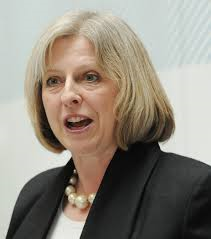
Atena Farghadani
Atena Farghadani

On 1 June, Atena Farghadani, a 29-year-old painter and activist, was sentenced to 12 years and nine months in prison simply because she was seen to be critical of the Iranian regime in her art and in her peaceful activism.

Atena had used her right to freedom of expression to show her dissent at a new government Bill in a cartoon she’d drawn; she associated with the families of political prisoners; she posted anti-government messages on Facebook.

Atena’s peaceful activism led to her arrest in August 2014, a period of detention and release before being rearrested in November.

In June 2015, she was prosecuted by the Iranian state and found guilty of charges including:

  • Gathering and colluding against national security
  • Insulting members of parliament through paintings
  • Spreading propaganda against the system
  • Insulting the President and insulting the Supreme Leader.

Atena’s trial lasted just half a day. The ‘evidence’ against her relied on Atena’s answers under long stretches of interrogation, while she was held in solitary confinement without access to a lawyer or her family.

Atena is now imprisoned for 12 years and nine months, simply for being seen to be critical of the authorities.

Now facing adultery charges for shaking hands with her lawyer

Atena’s lawyer, Mohammad Moghimi, visited Atena in prison after her trial and shook her hand. The handshake led to charges of ‘illegitimate sexual relationship short of adultery’ and ‘indecent conduct’ being brought against both Atena and her lawyer, Mohammad Moghimi, who will be tried for those charges in due course.

Mohammad was arrested on 13 June for shaking Atena’s hand, and released three days later after he’d paid a bail amounting to around $60,000.  Both Mohammad and Atena will be tried for indecent conduct and illegitimate sexual relationship for shaking hands in prison.

On 9 October we saw a note leaked from prison by Atena that said ahead of her trial for this ‘crime’ she was forced to have a virginity and pregancy test – apparently to investigate the charge against her. Such virginity testing is internationally recognised as a form of violence and discrimination against women and girls.

Iran’s judicial authorities really have reached a new low.  Tell them they must immediately release Atena and investigate the mistreatment she says she’s experienced.

Prisoner of conscience

Atena has effectively been punished for her cartoons with a sentence that is itself a gross caricature of justice. No one should be in jail for their art or peaceful activism”
Hassiba Hadj Sahraoui, Amnesty Deputy Director, Middle East and North Africa

Atena is a prisoner of conscience – she has committed no real crime. She is being unfairly punished simply for exercising her right to free speech, association and assembly.  Iran has pledged to protect free speech, including through artistic activities, as a signatory of the International Covenant on Civil and Political Rights.

Please sign the petition and call on Iran’s Supreme Leader and the Head of the Iranian Judiciary to release Atena immediately.

Beaten in detention, punished for speaking out

Last August, 12 members of the Revolutionary Guards came to Atena’s house.  They confiscated her personal belongings, blindfolded her and took her to Tehran’s notorious Evin Prison.  Atena was released in November last year, but rearrested just six weeks later. In the time that she was released, she gave media interviews and posted a video on YouTube describing how the prison guards had interrogated her for 9 hours every day for six weeks.  She said that female prison guards had beaten her and subjected her to degrading body searches.

Just weeks after posting her YouTube video, Atena was once again arrested – possibly as reprisal for speaking out.

Hunger strike in protest at prison conditions

Atena was kept in solitary confinement for over two weeks when she was detained last year in Tehran’s notorious Evin prison.  During that time she was denied access to her lawyer or family.  After her release from detention, she said that she’d been beaten by prison guards.

Three weeks after she was rearrested in January this year, Atena went on hunger strike to protest that she was being held in extremely poor prison conditions, in a jail that does not have a section for political prisoners.  Atena’s health suffered considerably as a result; her lawyer told us that Atena had suffered a heart attack and briefly lost consciousness in late February as a result of her hunger strike.

Call on Iran to release Atena and reunite her with her family immediately: she has committed no crime.


If you are moved to sign the petition, please go to:

Amnesty article with petition

Urgent Action: Saudi Arabia


Two Saudi Arabian Shi’a activists, arrested when they were under 18 years old, risk being executed as soon as the King ratifies their death sentences.  They were moved to solitary confinement on 5 October and have been held incommunicado since then.  

We attach this month’s urgent action which highlights the case of two men (boys) arrested when they were under the age of 18, tortured into signing a confession and now risk execution.

If you are new to Amnesty urgent actions, they highlight injustices around the world.  You are invited to read the case notes below and write to the addresses provided.  Even if you only write to one, it can help.

Does it work?  Sometimes it does and we have recently celebrated the release of another young man held in Nigeria for the alleged theft of three mobile phones, tortured and was due to be executed.  So it can work …

Urgent action: Saudi Arabia

Group meeting


The group met last night to review campaigns and ahead of the minutes here is a brief resume:

  • Discussed North Korea and the idea for a YouTube video.  Next meeting at the Red Lion
  • Received the death penalty report
  • Citizenship went well and two teams members will be at the Shaftesbury School today (13th)
  • Film Timbuktu on 3 December at the Arts Centre
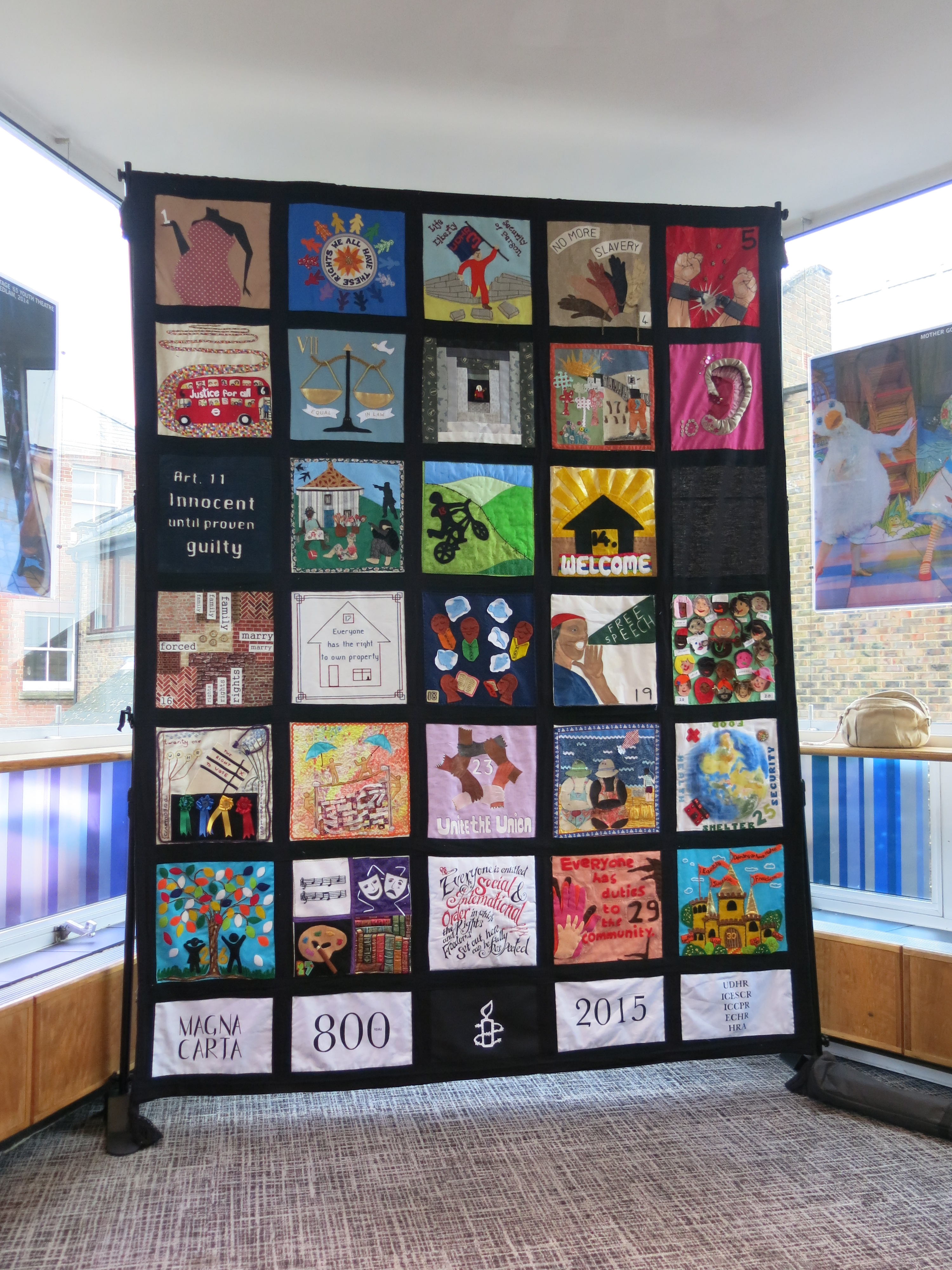
  • Tapestry to be moved to the Cathedral in the next week or so
  • HRA. Watching brief ahead of government plans to scrap/alter it.  We will get materials from AIUK.  It is likely to be a major part of our activities next year if the government do go ahead with either abolition or a major overhaul
  • Discussed Write for Rights and the four people we will campaign for agreed
  • Carol signing will take place on 21 December (photo of last year)

    Farrant Singers in Park Street
    Farrant Singers in Park Street
  • Statistics on website hits and social media were presented (see statistics tab for the report)
Tapestry in the Playhouse


China torture report


No end in sight

November 2015

This is the title of a report produced by Amnesty International concerning the use of torture in China.  It was only last month that China’s president received a red carpet treatment on his visit to Britain with smiles all round.  The subject of human rights was taboo and was not to be mentioned during the course of his visit.  The aim was to boost trade and to secure deals such as the nuclear power plant investment.

Human rights infringements are a major issue for China and there is always the hope that there will be a steady improvement over time.  Indeed, it is a favourite argument by politicians that engagement – whether through trade, culture, sport or otherwise – is the best way to effect improvements in countries still practising torture or other cruel, inhuman or degrading punishments.

Only it doesn’t seem to be working in places like Saudi Arabia or China despite the huge effort put into engagement with their leaders.  Amnesty has just published No End in Sight which shows that if anything, it is getting worse.  Despite having signed up to UN Charter against torture, it is still widely practised in all its medieval brutality.

Tiger bench
Tiger bench

The rot seems to start in police stations and the system of securing confessions acts as an incentive to extract one, by force if necessary.  The methods are extremely unpleasant and the least graphic (though no lest brutal) is the ‘tiger bench’ illustrated left.

The report explains the weak nature of the justice system which means no meaningful enquiries are made and that lawyers are themselves coerced or threatened if they try too hard to stop it.

It is alarming that this major nation, which is a member of the Security Council and is thus in a position to influence a lot of what happens in the world, should be steadily getting worse not better as far as human rights are concerned.  It is disappointing that the opportunity to express our concerns was apparently not taken during President Xi’s visit.


Sources

The Independent;

The Guardian;

Amnesty report

Regulatory Powers bill


Why we should be concerned

The revised Regulatory Powers bill has now been published and has been debated in parliament.  It is better known as the ‘snoopers’ charter’ and tries to put the interception activities of the security services on a sound legal footing.  The previous act, RIPA, was clearly inadequate and revelations by Edward Snowden revealed that it was being widely circumvented and ignored.

It has to noted that the public at large is mostly relaxed about the degree of intrusion into their electronic activity.  The wholesale interception of emails, phone calls, Skype, Facebook and the like arouses no great passions.  The general view can be summed up as ‘I’ve got nothing to hide so they’re welcome to look at my emails if they want to.’

The line put across by politicians is that these powers are needed to defeat the activities of terrorists; international criminals; people smugglers and the like is widely accepted and seen as a price worth paying if we are to remain safe and such people are to be put behind bars.  The paradox however is that if you ask people the question ‘do you trust politicians?’ you are likely – indeed almost certain – to receive a very dusty or robust answer.  They are seen  – often unfairly – as untrustworthy, interested in their own careers, acting as lobby fodder or simply being out of touch.  So allowing these individuals additional powers does seem to be something of a contradiction.

So what are the arguments about the Regulatory Powers Bill and why does it all matter?  First is the issue of trust to which we have already alluded.  Before Snowden, many of the same politicians were telling us that matters were under control and that warrants and searches were only used when strictly necessary.  It was then revealed that comprehensive snooping was underway and that the ministers concerned – including those on the select committee – had little or no idea of the scope of the activity.  GCHQ was hoovering up large quantities of information seemingly without any oversight.

David Davis MP with Kate Allen, Salisbury Cathedral
David Davis MP, 3rd from left

… and they still don’t.  Only a very few individuals get to see the core information since most of it is presented in terms of briefings.  This goes back to the war when the JIC was set up to look at all the information and then put it together to inform the cabinet committee.  Very few MPs have any serious experience of intelligence matters and the nature and sensitivity of the information they receive makes it difficult for them to find out.  David Davies MP says we have a ‘comforting illusion’ about our intelligence services which leads to complacency.

There is a natural tendency for all organisations to talk up the issues they deal with.  By highlighting risks it enables them to win resources in Whitehall battles and in battles with sister agencies.  This needs to be remembered when blood-curdling threat assessments are issued.

There is a belief that more is better.  By simply amassing more and more information using ever more powerful computers it is argued this will enable the intelligence services to protect us better.  The only problem is that time after time it has been found to be wanting.  The 45 minute claim is the most famous but there are others.  Only this week we read of the death of Ahmed Chalabi who misled the USA in many different ways over Iraq.  So despite the massive scale of the American intelligence system, the billions of dollars spent on the CIA and NSA, one man comprehensively fooled the State Dept. over a period of several years.

A fundamental issue at stake is one of power.  It was not so long ago, following the collapse of East Germany, that the scale of their intelligence activities by the Stasi were revealed.  Miles and miles of underground corridors existed with hundreds of thousands of files on almost every citizen in the state.  Children informed on their parents; brother informed on brother; neighbour on neighbour.  All typewriter fonts were recorded so that any typed samizdat could be traced.  It was a nightmare world of paranoia and poisoned a generation.  People in the West were horrified when this was revealed.  That was clumsy by comparison to what the agencies can do today in the internet era.  Yet we seem relaxed, not horrified.

The issue of power and who has it is central to the debate.  Our society is based on division of powers in part going back to Magna Carta.  For one group to have too much power is recognised as dangerous.  We have the Lords (however imperfect) and the Commons.  We have a separate judiciary.  We have a reasonably independent media.  These divisions prevent despotism or at least make it exceedingly hard to achieve.  In addition there are elections every 5 years.

By allowing the intelligence agencies, to pry into every communication, to intercept communications between lawyer and client; to intercept emails of human rights groups such as Amnesty and to tap into the phones of journalists, is extremely dangerous and alters the balance of power significantly.  All these things have happened.

It is also dangerous because of the frailty of the people in power.  Lord David Owen in his books has investigated the mental capacity of various leaders in times of stress particularly war.  In both The Hubris Syndrome (Politico) and in In Sickness and In Power (Methuen) he shows that senior politicians can be unstable and suffer from hubris.  This led for example, Tony Blair and George W Bush to ignore or manipulate intelligence to fit their beliefs and with disastrous results.

The thirst for power can itself be dangerous.  Obtaining it, holding on to it, fighting off those who want to take it from them, and wielding it, can be the all consuming passion for a politician.  It is for these very reasons we should be extremely wary of granting them the advantage of even more intrusion.

It might reasonably be asked however, what about terrorist activity and especially a group like ISIS (or whatever we agree to call them)?  They are undoubtedly a cruel and dangerous organisation.  But they are not an existential threat to the UK.  Even if they manage to pull off some outrage in this country, it cannot be argued that they will change our way of life.  Giving up our liberties and our right to privacy is a heavy price to pay on the uncertain promise of greater security.

Our freedoms and liberties have been acquired over many centuries and we should be extremely wary at giving them up.  Vague promises of judicial oversight – which are empty since they will only oversee the process not the actual decision – should not blind us to the fundamental risk this bill will pose if it gets enacted.  Combined with the intention of scrapping the Human Rights Act, this is something to be worried about.

Draft_Investigatory_Powers_Bill


Sources

Guardian, 9 Nov 2015 ‘We haven’t had a Stasi or Gestapo, so we are intellectually lazy about surveillance‘  Interview with David Davis MP

Shami Chakrabarti, On Liberty Penguin Politics 2015.  Discusses threats to liberty generally.

FH Hinsley British Intelligence in the Second World War HMSO 1979.  Discusses how intelligence was organised and presented during the war.

Stop torture campaign – Minister’s letter


Arms-Fair---share-assets-email-Sep-2015Amnesty has been pursuing the ‘stop torture’ campaign for some time now and expressed concern a few months ago at the DSEI exhibition.  Amnesty was barred from entering and there were concerns that torture equipment makers would be present.

Large numbers of people wrote to the Minister and we are pleased to note she has responded.  A copy of her reply is below.

Minister’s letter

Death penalty report


We attach our latest report into the use of the death penalty around the world thanks to group member Lesley for compiling it.

November

Correction: the Death Penalty Vigil took place on 17 October and not November as stated in the report

No to the death penalty

Rightsinfo video on the Human Rights Act


The Human Rights Act is under threat and we await the current government’s plans for its replacement which must be due very soon.  Rights Info has produced a short video which is worth a look which you can access from their web site or from this link.

Rights info video

Letter to the UN concerning North Korea


The situation in North Korea remains dire as far as human rights are concerned and a number of NGOs have written to the Security Council asking for action to be taken

North Korea letter.


Drone attacks to be scrutinised


It is reported today that the government’s use of drones to kill people overseas is to be reviewed by the Human Rights Committee.  This is welcome news.  Clearly, ISIS is an unpleasant organisation and is acting in a brutal and uncivilised way.

When it was revealed that a drone was used to kill two people in Raqqa in August, David Cameron said it was done as an act of ‘self defence’.  Quite how someone in Syria was a threat to the UK was not explained and seemed very unlikely.

Earlier this week is was reported that the government was removing adherence to international treaties from the ministerial code.  It is these treaties which prevent use of force without UN sanction or because there is a genuine need for purposes of self defence.

The Raqqa attack was the first case in the modern era that such an attack took place in a country with whom we were not at war.  Caroline Lucas – the Green party MP – was reported as saying the use of a drone in this case was done ‘with a complete absence of parliamentary scrutiny or approval.’

We look forward to some serious questions being asked of ministers.

Blog at WordPress.com.

Up ↑