The April meeting minutes are here thanks to Karen. They contain a lot of useful information about the death penalty and North Korea in particular. There is a group meeting this Thursday 14th

Promoting human rights from Salisbury UK

The April meeting minutes are here thanks to Karen. They contain a lot of useful information about the death penalty and North Korea in particular. There is a group meeting this Thursday 14th

Willie Manning who has been on death row awaiting execution, has been exonerated. He was convicted of a murder in 1992 in #Mississippi but has protested his innocence ever since. There is a familiar story here in states such as Mississippi where to be poor and black is likely to lead to a conviction. It starts with jury rigging and a series of peremptory challenges to exclude black people from the jury. The jailhouse (prison) informant who alleged that Manning confessed to the murders has since recanted saying he was offered favourable treatment in return for the evidence. This is also an example of unreliable hair evidence being used to secure a conviction.
 Officials refused to retest DNA and fingerprint evidence using modern techniques. Evidence favourable to his defence was withheld from the jury.
The Death Penalty Information Center in Washington DC is listing Manning as the 153rd death row inmate to be exonerated since 1973. They also note that the average time on death row to exoneration s 11.3 years.
One has to ask when it will be that it is realised the scale of mistakes will cause authorities and states to question the use of this penalty which cannot of course be undone. Amnesty is opposed to the use of the death penalty in all cases.
For British readers of this site, the constant tide of misinformation and one-sided commentary on the Human Rights Act will be familiar. It forms part of the anti-European opinions of the majority of our media owners who do not like the idea of a ‘right to privacy’ for the citizens of the UK. A new web site which seeks to counter the myths is very welcome therefore. Produced by the newly launched Rights Info, you can access the site from the bottom of this page.
Each of the 14 examples gives the headline story as featured in one or more of our newspapers such as the Daily Mail or the Sun, then an explanation of the facts including the legal judgement in some cases.

On a visit to Saudi Arabia, the French President #FrancoisHollande, called for a ban in the use of the death penalty AFP reports. This is significant because Saudi is in the top three countries in the world to use the penalty often carried out in public. It is also significant because it was done reasonably publicly. Our own UK government is shy of making public statements about the barbaric activities in Saudi and the reason is likely to be trade and in particular weapons sales which are huge. France is equally a big supplier of weapons and yet feels able to speak out.
Human rights issues are not confined to the use of the death penalty. Torture is routine. Many are arrested arbitrarily and  held incommunicado for months and in some cases years. There is no free press and there are many, many restrictions on women who are not able to travel unaccompanied or to drive for example.
The issue of what goes on in Saudi exploded earlier this year surrounding the case of Raif Badawi who was to receive 1000 lashes and fined a million Riyalls for the crime of insulting Islam. Thousand lashes is effectively a death sentence. Following an international outcry after the first 50 lashes – given in front of a cheering crowd – the sentence was suspended, reportedly on medical grounds, and he languishes in prison.
The second event that caused an outcry was the wish to lower our flags to half-mast following the death of King Abdullah. This caused widespread concern – revulsion even – and put our government in a spot. The Independent newspaper in the UK reported a meeting David Cameron, the Prime Minister, had with some young people who questioned him about this. He is reported to have said:
We have a long-standing relationship between the Kingdom of Saudi Arabia and our United Kingdom here, a relationship between our two monarchs and between our governments. We don’t agree with a lot of things that the Saudi do – we don’t agree with the way they treat people for instance criminals – and we make it very clear [what] those differences [are]. Independent February 2015
Interesting the use of the phrase ‘the way they treat criminals’ here implying that the justice regime is too harsh on them and moreover, is just limited to criminals. Since torture is routine, arrests are arbitrary, people are not allowed access to lawyers, and people are flogged and executed publicly, it does seem a bit limp .
The close relationship with the royal families is also a sensitive one. Prince Charles went to the funeral of King Abdullah and the issue of the sentence on Badawi was a live one. Amnesty International said in a statement in February:
From the various briefings from the Palace this week, we’re cautiously optimistic the Prince Charles would raise Mr Badawi’s outrageous case.’
 That was three months ago and no doubt the optimism was real. However, Mr Badawi is still in prison even though he hasn’t been flogged since. The contrast between the French President’s statement and our own government’s statements – or lack of them – is marked. When ISIS carried out beheadings, our politicians were falling over themselves in outrage. So far this year Saudi has executed 78 people in comparison with 87 in the whole of 2014.
The media has devoted considerable space to the #executions of five people in #Indonesia. It has been on the main news and in all of the main papers in the UK to a greater or lesser extent. There is a general sense of outrage that the execution and the manner of its doing – that is by firing squad – are barbaric. One would be forgiven for thinking that Indonesia is the only place where people are being executed.
It isn’t. We must not forget that China continues to execute more than the rest of the world put together although the precise number is not known because it is a state secret. Executions continue at a faster rate than previously in Iran. Public beheadings still continue in Saudi Arabia. And in the southern states of USA, many are executed after spending years and years on death row. Pakistan has been busy too. The list is a long one.
Amnesty is opposed to the death penalty in all cases. We should be outraged wherever it happens not just in one country such as Indonesia. If you feel outraged at the use of this penalty, why don’t you join us and write letters or send emails? Follow this site or the Amnesty site for urgent actions.
The arms trade is deadly corrupt business. It supports conflict and human rights abusing regimes while squandering vital resources. It does this with the full support of governments around the world.’ Campaign Against the Arms Trade [see link at the bottom of the home page]
A fuss broke out today in the UK election campaign about who said what and who did what concerning the invasion of Libya. The argument is that by attacking Libya and not sorting out a stable regime after the fall of Gadhafi, we laid the foundations for the thousands of refugees who attempt to reach Italy from its shores.
Not for the first time in this election, the arguments seems to swirl around everything other than the real one. We have commented before in the role arms have to play in the Middle East and elsewhere. Figures from Janes reveal that the trade is now worth $64bn up from $54bn in 2013. Total Global military expenditure is said to worth around $1,776bn (SIPRI).
UPDATE: May 2015. Transparency International has produced a new anti-corruption index for defence companies. Local companies like Chemring and QinetiQ feature in it.
Articles about the defence industry tend to discuss sales of helicopters, aircraft, ships, tanks and the like – that is big items of military hardware. While these weapons can be deadly, in fact most people suffer from the sale of small arms. It is guns and grenades that are the biggest killers of ordinary people.
The plain fact is that the biggest sellers of arms are 1. USA, 2. Russian Federation; 3. France; 4. UK; 5. Germany (2014). The first four are permanent members of the UN security council. The arms trade supplies the arms which fuels the many wars and conflicts in the Middle East and elsewhere. When thousands are displaced from these wars and attempt to flee to somewhere where they can lead a peaceful life, we then refuse to deal with the problem. There is a kind of disconnect between the causes of these conflicts and the inevitable results. We get excited and argue over images of laden vessels in the Mediterranean, and we get upset when one capsizes and hundreds die, but we do not seem to get at all upset over the role of arms companies, dealers and brokers who provide the means for the conflict in the first place.
It has been revealed in the last week or so that FBI analysis of hair samples is seriously flawed and that as many as 32 people have been sentenced to death based on this evidence, of whom 14 have been executed or have died in prison . The problem has arisen because of sloppy work by FBI examiners who have made claims about the ability to identify people from hair samples that are scientifically unsound. It is, according to the Washington Post, possibly the largest forensic science scandal in America’s history. Another 1,200 cases remain to be investigated.
Our view of the American justice system is strongly influenced by programmes like CSI and NCIS where clean cut, young, handsome and amazingly certain forensic examiners solve cases by clever scientific means. Stories often centre (or should we say ‘center’ for our American readers) around one of them poring over a crime scene and finding a tiny piece of evidence. Then back to the lab where they announce that said tiny piece of evidence is crucial in identifying the killer. Forensic scientist and police officers dash about the place and sure enough, find the killer who has a matching piece of evidence tying him to the scene. There seldom seems to be any doubt in what they say and we are left at the end of the episode with the right man or woman ‘going down’.
The problem is that not all science is like that. There is not always that degree of certainty, merely probabilities. When it comes to condemning a person to death – the ultimate penalty from which there is no retreat – then it is necessary to be certain. The problem is made worse because defendants who are poor are not able to employ lawyers able to challenge the evidence properly. Some lawyers may be doing their first capital trial and have little relevant experience.
You might think that having admitted a major flaw in the evidence given by FBI experts, speedy reviews would be underway to put matters right. Well no, not in every state there isn’t. Appeal courts often refuse to look at newly discovered evidence because claims of actual innocence are never grounds for habeas corpus relief.
The USA is the only country in the Americas with the death penalty and the southern states are the keenest users of it. As we have commented before, it may seem unfair that we frequently highlight the use of the death penalty in the States: China is the worlds biggest user of the death penalty, the precise number is unknown because it is a state secret, but it runs into thousands. Iran is close behind. The difference is that the States is the de facto leader of the free world. But there is a point here that China is a closed society which severely limits access to the internet and curtails a free press. America by contrast is a more open society and newspapers like the Washington Post are able to publish this information. So we can read about it and comment on what we see.
Amnesty is opposed to the use of the death penalty in all circumstances. It is the ultimate cruel and degrading punishment. It is not a deterrent and there is plenty of evidence to show that it acts against the poor and those least able to defend themselves. That one of the main methods of condemning people is flawed is yet another plank in the argument to end the use of this penalty in the USA.
Sources:
Washington Post: 18 April
Guardian: 23 April
Wikipedia
Social Science Research Network The Shifted Paradigm: Forensic Science’s Overdue Evolution from Magic to Law. William Tucker Carrington, University of Mississippi and M Chis Fabricant, Innocence Project Inc.

We today erected the display in the cloister at Salisbury Cathedral to celebrate the signing of Magna Carta and to illustrate the #StopTorture campaign.
It will remain in place for many weeks. There is also a panel on the Human Rights Act.

Reading this blog can sometimes seem depressing as we highlight individuals imprisoned for their beliefs; the widespread use of torture around the world; the use of the death penalty and recently, a desire by some of our (UK) politicians to abolish the Human Rights Act.
Successes
There are successes however, some of which have been a long time in the making. After six years of legal proceedings and campaigning by Amnesty members around the world, Shell Oil have at last been made to pay for the devastation caused by oil spills in the Niger Delta.
 Others successes have been unprecedented. For the first time ever, the Investigatory Powers Tribunal ruled that UK secret services acted illegally in their surveillance activities.
And that’s not all. Because of you Guadalupe found justice in El Salvador. With a window of just 48 hours, we asked you to tweet El Salvador’s members of parliament calling for a pardon for Guadalupe – a young woman imprisoned after suffering a miscarriage. Every tweet counted: her pardon was granted by a majority of just one vote. Thank you. We’re continuing our work to ensure Salvadoran women are not criminalised by the total abortion ban in the country
Burma has dropped off the radar in the last couple of years and things have improved there. But not totally and there are still prisoners of conscience. For example, long-standing prisoner of conscience Dr Tun Aung has recently secured release.
February saw two historic victories in the age-old battle for the right to privacy and free expression. The USA and UK’s past intelligence-sharing on Communications surveillance was ruled illegal and the Security Services conceded their current regime for intercepting legally privileged communications is also unlawful. These landmark rulings, in which Amnesty were co-claimants, should mean there are more significant positive changes ahead.

A great step towards justice was made in January when three journalists imprisoned in Egypt had their sentences overturned on the basis of a flawed trial. Peter Greste was allowed to return home to Australia but Mohamed Fahmy and Baher Mohammed are awaiting a retrial in Egypt, currently set for 22 April. Egypt must now drop all charges against them and free, not retry these prisoners of conscience.
Forced to sign a confession after being kidnapped and tortured by marines, Claudia Medina Tamariz has had the last of the charges against her dropped, and she is now a free woman. Claudia thanked the 300,000 Amnesty members around the world who demanded justice. We continue to call for an investigation into the torture she suffered, and for the perpetrators to be brought to justice.
A month after Claudia’s release, the Mexican president came to the UK and we delivered your Stop Torture petition signatures to him – in a giant piñata. Ahead of the visit you called on the UK representatives meeting him to raise the issue of torture. Guess what? They did. Thanks to Amnesty supporters campaigning, the Prime Minister, Deputy Prime Minister and Secretary of State for Scotland all helped send a strong message: it’s time for Mexico to respect human rights.
So campaigning does sometimes work.


UPDATE: 28 APRIL
Human rights myths Thanks to http://www.RightsInfo.org – see link at the bottom of this site.
As we pointed out in our previous blog, the Conservatives, if they form an administration after the election, want to abolish the Human Rights Act #HRA. Amnesty has launched a campaign with a link to KeeptheAct spelling out the benefits of the act for everyone in the UK. For example:
These are some of the day to day stories of the HRA and how it helps ordinary people in their daily lives. But it is a story a lot of our newspapers do not tell, preferring to peddle disinformation and myths. The act protects ordinary people and means that public bodies like the police and local authorities must respect our basic human rights. 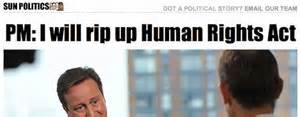 It does seem strange that we are celebrating 800 years since the signing of Magna Carta with politicians waxing lyrical over that document whereas its modern version is derided and is under threat, often for quite spurious reasons. Go to KeeptheAct and add your voice.

 Amnesty in Salisbury & South Wiltshire