China successfully threatens university


China forces a British university to stop Uyghur research

November 2025

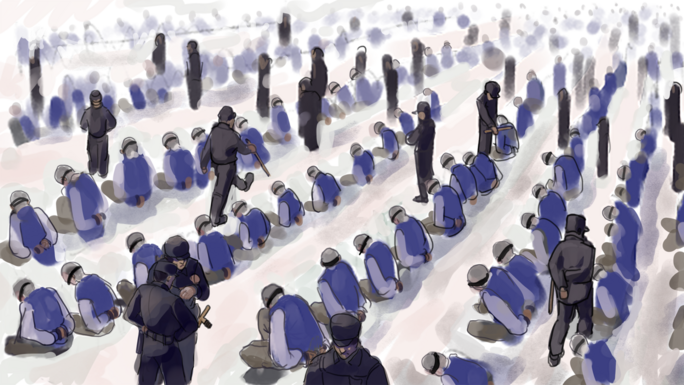
There is considerable evidence that around one million Uyghurs in China are subject to forced labour and people trafficking on a massive scale. It is thought that around one fifth of all textiles are now the product of coercive practices. Garment firms show little inclination to check sources beyond what is called the ‘first tier’ even though they could do so easily. Australian research shows that approximately 100 major consumer brands are sourcing their materials from this region. There are some 380 camps surrounded by razor wire and armed guards. The treatment of such large numbers of people in ways almost amounting to slavery is a matter of major concern. The complicity of many Western garment firms in these crimes is a disgrace.

One of the centres producing the research is based in Sheffield Hallam under prof. Laura Murphy. She has produced many reports and her work has been widely cited. The University congratulated her on this work and her research. Until that is the Chinese complained when everything changed. Her website was taken down and it decided not to publish her latest research. It amounted to a flagrant example of a breach of academic freedom. University staff based in China received threatening visits from security services.

The university said they stopped publication because they could not gain the indemnity insurance for her work mindful of possible lawsuits. Documents released under freedom of information laws showed that the University ‘had negotiated directly with a foreign intelligence service to trade [her] academic freedom for access to the Chinese student market‘. The point being that universities are so cash-strapped these days they have to recruit foreign students to balance their books. In other words, we (China) will not allow our students to come to your University unless you stop publishing material about the Uyghurs. China denies all claims but will not allow foreign observers into the region.

Clearly embarrassed the University has apologised and restored her work.

The story reveals how easy it is for China to intimidate those it dislikes or who comment negatively on their various activities. It also reveals how quickly and tamely a British University agreed to censor an academic’s work. Troubling is that this is an example of something which has come to light. Which other universities are quietly agreeing not to rock the boat and not even allow researches to get underway for fear of losing a contingent of Chinese students? The last two weeks have seen the government tie itself in knots over two alleged Chinese spies and whether or not to prosecute them. China’s increasing power is more and more troubling. Meanwhile, a million or so Uyghurs are virtual slaves.

Detailed work produced by Prof Murphy can be accessed here. It will be interesting to see if China’s heavy-handed efforts to threaten a British University will backfire.

Sources: BBC, China Star, Guardian, Sheffield Hallam University.

Photo: satellite picture of one of the Uyghur camps.

Trade Talks with China: Ethical Dilemmas Ahead


Government has to decide: rights or trade?

June 2025

It is reported today that the government is engaged in a range of talks with Chinese officials to improve trade and political relations. The Chinese Embassy is quoted as saying that relations have ‘positive momentum’. Elsewhere, relations are described as ‘warming’. Of course both countries are suffering from the Trump tariff war and so a degree of mutual comfort is to be expected.

The fact remains that human rights in China are dire across a very wide spectrum, almost too long to describe in fact. They include no freedom of expression; atrocious and genocidal behaviour towards the Uyghurs and other Turkic peoples; Human Rights defenders who face long prison terms and torture; continuing repression in Tibet; the crackdown in Hong Kong and the execution of large numbers of its citizens – possibly equal to all the rest of the world put together. It is also aggressively pursuing overseas Chinese who criticise the country and persecutes any of their family members in China. Restrictions are getting steadily worse over time.

Azeem Ibrahim, speaking at the Humanist Convention this month, described the multi-pronged approach

adopted by the Chinese. It was a talk about the rising threat of autocracies which included Russia and Turkey. He pointed out that the country leads the world in surveillance and it has a massive programme using facial recognition technology. It is also working hard to gain access and control to international agencies in the UN for example. The Warsaw Institute describes how they use their commercial power and investments to shut down any Security Council criticisms of their human rights infringements. His basic message was that China in particular has an organised and well-funded programme to attack western values by any and all means available. He added that the West has been complacent in thinking that western values are a settled state of affairs.

So where does that leave the Labour government? It is reported to be softening its position now it is in government. Nine individuals have travel restrictions placed on them including 5 Conservatives: Ian Duncan Smith being one and Tom Tugendhat another. All because they criticised the treatment of Uyghurs. These restrictions might be lifted. The concern is that the government is desperate to achieve growth and seems willing to abandon all principles to achieve it although a trade deal is not on the cards. This site is concerned with human rights but the wider issue is western governments – like the UK – who seem very slow to wake up to the organised threat posed by autocracies like China who are determined to pursue their view of the world by all means possible.

Sources include: Human Rights Watch, Amnesty, Guardian, US Department of State, New China Human Rights.

Death penalty report


Report for April – May

May 2025

We are pleased to attach the monthly death penalty report thanks to group member Lesley for the work in compiling it. As ever we remind our readers that China is believed to execute more of its citizens than the rest of the world combined but information is a state secret.

Amnesty publishes Death Penalty report


Report for 2024 published

April 2025

The report highlights a sharp increase in numbers executed – the highest level since 2015 – but the number of countries holds steady. Amnesty has recorded 1,518 executions in 2024 a 32% increase over the previous year. A problem with producing statistics of this nature is that countries who are major users of the penalty, keep their figures a secret. China for example, believed to be the world’s largest executioner with thousands of its citizens executed each year – does not publish figures regarding them as a state secret. Another secretive nation is Vietnam where, similarly, the numbers are a state secret, and Belarus and Laos who release limited information. The figures are accordingly a minimum estimate of the actual numbers executed. The full report can be accessed here (pdf).

The penalty is not solely used to put to death people who have committed serious crime, but is used as a repressive tool. Saudi Arabia (image), and Iran, for example use the penalty to stifle dissent, targeting human rights defenders, protestors, dissidents and political opponents. There is also a disproportionate use of the penalty against minorities particularly religious minorities. Iran, which executed no less than 972 individuals last year, uses the penalty to execute those who challenge, or who are perceived to challenge, the Islamic Republic. It is also noted that these regimes have poor levels of justice. Defendants are often tortured to secure confessions and are denied access to lawyers. It is highly likely, not to say probable, that many wholly innocent people lose their lives.

Another trend is the use of the penalty as part of drugs programmes against dealers and users.

There is little sign, and very little evidence, that the penalty is some kind of deterrent, an argument frequently put forward for its retention or return. The leader of UK’s Reform party for example recently called for its reintroduction following the dreadful murder of three little girls which took place in Southport*. YouGov surveys show mixed views among Britons about the penalty. Generally, people are opposed but there is more support for its use among Conservative voters. The strongest support comes from the 65+ age group. Attitudes do change however, following a particularly unpleasant murder of a child, a policeman or as a result of terrorist activity. It was last used in 1964, suspended in 1965, abolished in 1969 and completely abolished in 1998 when treason was removed (different dates in Northern Ireland).

The group publishes a report on its use each month and last month’s report is available here.

*Town in northern England

Death penalty report


Report for mid December to mid January 2025

January 2025

We are pleased to attach the latest death penalty report thanks to group member Lesley for the work in compiling this. Iran features in this report with the suspension of its draconian legislation on women who do not dress appropriately. As ever, we note that China is believed to be the world’s largest executioner of its citizens but details are a state secret.

Exeter event


Film being hosted by the Exeter Amnesty group subject: China

On Saturday 18th January at 1pm, Exeter Amnesty group hosts the film, All Static and Noise, at Exeter Phoenix, followed by a Q&A session with Nabila Hanson, AIUK China Coordinator. The plight of Uyghurs in China does not receive the attention it deserves. Governments are keen to forge relationships with the country for commercial reasons. Little attention is paid for example to the scandal of cotton produced using forced or slave labour in the region which finds its way into clothes sold on our high streets.

In the film, All Static & Noise, by David Novack, survivors and their families risk everything to expose the truth of China’s Uyghur detention and ‘re-education’ camps. Jewher, a Uyghur teen from China, lands in the US after she is violently separated from her father at the Beijing airport. Abduweli, a linguist and poet imprisoned and tortured for teaching Uyghur language, leaves for Istanbul upon his release. Together, they join survivors of China’s “re-education camps” and their families, in Turkey, Kazakhstan, Europe and the United States to expose atrocities with the hope that global awareness brings change.

Saturday 18th January 2025 1pm Tickets £7 www.exeterphoenix.org.uk 01392 667080 https://exeterphoenix.org.uk/events/all-static-and-noise/

Image from the film site.

Death penalty report


Death penalty report for June – July

July 2024

We are pleased to attach the latest report on this topic thanks to group member Lesley for the work involved in its preparation. Although China is mentioned in the report, details of the numbers executed are a state secret. It is believed they execute more of its citizens than the rest of the world combined.

Rights Lawyers in China: 9 Years after 709 Crackdown


Taking the shine off Shein


Test for new Labour government over listing of Shein on LSE

July 2024

The new government – likely to be Labour after the election tomorrow – will have an early test in connection with the Chinese clothing firm Shein which wishes to list on the London Stock Exchange. Both Conservative and Labour politicians have been keen to support the bid whereas Wall Street declined for a variety of reasons and doubts about the firm.

Shein has grown at a phenomenal pace but there are many doubts about its finances. LSE is keen to list the firm and there are a range of banks including Goldman Sachs and JP Morgan ready and willing to assist. Today, it was announced the EU is changing the rules which enabled the firm to import millions of pounds of clothing yet avoid duties because each was individually packed thus taking them under the £135 rule.

But the main problem is how the raw material is sourced and the use of sweat shops via sub-contractors in Bangladesh and Vietnam. As we have noted before, about three quarters of the cotton produced by China comes from Xinjiang where there are credible reports of the use of forced labour. In addition is the appalling treatment of Uyghurs where nearly a million are being persecuted and whose culture is being systematically destroyed. It has been described as a crime against humanity and genocide. Shein rejects these allegations and says it is committed to good governance.

Another problem is that the firm is likely to be audited by one of the big four accountancy firms who have a dismal record when it comes to Chinese firms and have been fined on several occasions for accounting scandals.

The Labour party has been keen to court the City as part of its business friendly policy. Three shadow ministers have met Shein’s chairman. Will they play their part in welcoming Shein to the LSE to keep the city bankers happy or will they look closely at their labour practices, lack of transparency and the probable use of cotton from Xinjiang? Amnesty have said to allow them to list will be a ‘badge of shame’. It will be an early test for the new government: money v. morals.

Sources: Private Eye ; Guardian; Amnesty International; Stop Uyghur Genocide

Uyghurs win important case


World Uyghur Congress wins important Appeal Court case concerning cotton produced in Xinjiang

June 2024

The dreadful treatment of Uyghurs in Xinjiang province in China is well established and around one million of them are kept in 380 internment camps. They are also used as forced labour in the production of cotton and 85% of China’s cotton comes from this region. This cotton finds its way into western markets and is used to produce clothing on sale in UK shops and elsewhere.

The WUC tried to get the National Crime Agency to carry out an investigation which the declined to do saying that they needed details of specific contracts. This was overturned at the Appeal Court in what is being described as a ‘watershed moment‘ ([2024] EWCA Civ 715). The court said the decision by NCA was ‘illegal’. The cotton produced using forced labour infringes the Proceeds of Crime Act. This is the first successful action in the world and is being regarded as a landmark decision. If a company knowingly uses, or which they suspect to be using, forced labour, then a prosecution can be initiated under POCA.

Needless to say the Chinese are angry and the Chinese Embassy said it was ‘an enormous lie by anti-Chinese elements to smear China’. The problem for the Chinese is that it is a closed region and journalists are not allowed in. Footage that has emerged has been shot clandestinely. There seems little doubt however that the scale of the repression, the attempted destruction of the Uyghur culture including banning the language, and the demolition of hundreds of mosques, represents a major crime taking place in the twenty first century. It is variously described as a crime against humanity and genocide.

A lawyer from the Global Legal Action Network said ‘this litigation has been critical in recognising the mass atrocities being committed against Uyghur and other Turkic Muslim people by the Chinese government, and holding to account those complicit in, or profiting from, these crimes.’ Producers of clothes using Chinese cotton will now have to take extra care that it does not use forced labour. Major high street names are involved.

Sources: Binman’s, Reuters, The Guardian, Law Society Gazette

Blog at WordPress.com.

Up ↑