
Year of achievement
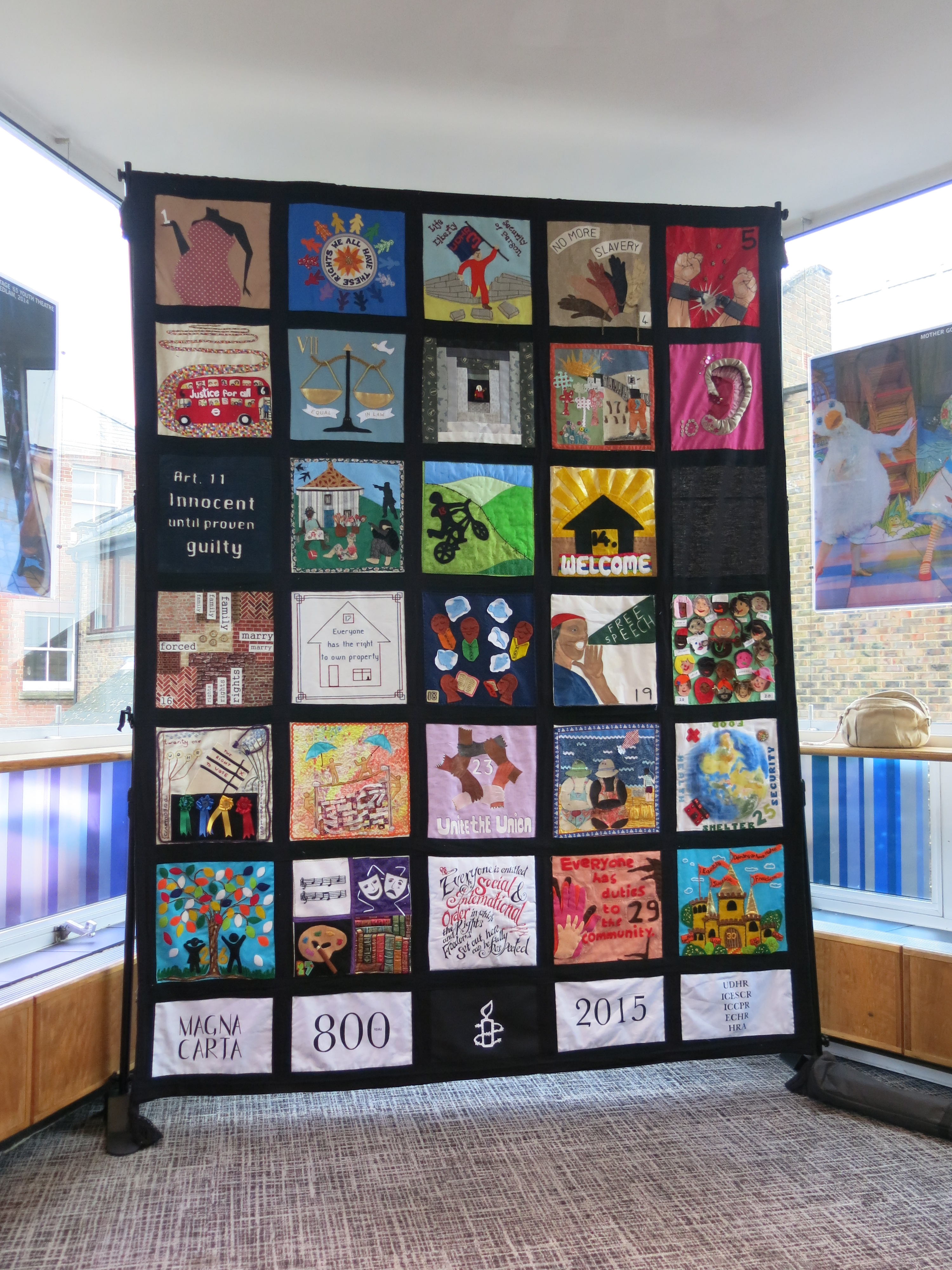
This has been a busy year for the group. A prevailing theme has been the Magna Carta celebrations and we enjoyed a fruitful relationship with the Cathedral where one of the extant copies of the charter is displayed. We organised a talk in the Cathedral by Dominic Grieve – the former Attorney General – and 160 attended to hear him speak in favour of the Human Rights Act. Kate Allen, Director of Amnesty, spoke at the Sixth Form Conference also at the Cathedral. We mounted a display in the cloisters and we ended the year by displaying the tapestry, assembled by members of Amnesty groups in the south region, with two contributions from refugee groups. Another event was at the Playhouse where we hosted a discussion with Kate Allen; Prof Guy Standing and Ben Rawlence – a first for us. The Playhouse agreed to display the tapestry ahead of it moving to the Cathedral.
Films
For several years we have held a film night at the Arts Centre and this year we managed two, the first being the documentary Bastards. Set in Morocco, this moving film showed an illiterate woman’s struggles with her family and the justice system on behalf of her illegitimate son. We were delighted to welcome the director of the film, Deborah Perkin, to introduce it. After the showing, we asked people to sign cards for Ali Aarrass who was returned to Morocco from Spain, held incommunicado, denied access to a lawyer and tortured for 12 days. An enquiry into his allegations was promised but has not happened. He still seeks justice and has recently ended a prolonged hunger strike. Campaigning for Prisoners of Conscience like Ali are a core aspect of Amnesty’s work.
The second film was Timbuktu which was timely in view of the problems with terrorism and Islamic extremism. We are grateful for the continuing support of the Salisbury Arts Centre in this enterprise and to the many people stopped after the showings to sign cards.
Saudi Arabia and arms sales

Saudi Arabia formed a backdrop during the year with their continuing and increasing use of the death penalty and a host of human rights violations. In July, we wrote to our local MP, Mr John Glen, to urge his government to take a more robust line with the Saudis. We received a reply from him and a minister in the Foreign and Commonwealth Office assuring us that diplomacy was proceeding behind the scenes. We had not long received the letter when it was revealed that the FCO had just removed references to the abolition of the death penalty from its policy. It was also revealed that the requirement to adhere to international law and treaty obligations had been removed from the ministerial code. We then discovered the astonishing news that the UK government had been active in securing a seat for a Saudi man on the UN’s Human Rights Council. Together with the continuing support the government offers to sellers of arms to Saudi Arabia, this shows that claims to be interested in better human rights in countries like Saudi was a sham. It was depressing to note the new college in Salisbury being supported by a range of arms companies.
Economic prosperity was further up my list of priorities than human rights
Sir Simon Mc Donald, head of the Foreign and Colonial Office in evidence to the Foreign Affairs sub-Committee
Our all too close relationship with the Saudi government was exposed at the end of the year when the Independent revealed details of the secret security pact signed between the two governments. Human rights groups, the Independent reported, expressed alarm at the secretive nature of the deal with a regime which has been condemned for its human rights record. Kate Allen, Amnesty’s Director, called it a ‘murky deal’.
Yemen
Later in the year there was a great deal of interest in Syria and the decision to bomb ISIS. A major debate was held in Parliament with impassioned speeches on both sides. We noted that no such passion was evident in the case of Yemen where British arms supplied to Saudi are being used to bomb civilians and kill children. The government remains to keen to sell arms to whoever seemingly unconcerned where they end up. They support the annual arms fair in London and, no doubt mindful of previous revelations about the sale of torture equipment, banned a representative from Amnesty attending.
It is extraordinary that so much heat and righteous indignation is engendered by the barbaric activities carried out by ISIS, but beheadings, crucifixions, floggings and torture carried out on an increasing scale in Saudi Arabia result not in condemnation, but visits by ministers and by members of the royal family.
Good news

But is was not all bad news. The Salisbury group, in common with others around the world, campaigned for the Nigerian man Moses Akatugba who was brutally tortured by the Nigerian police and forced to sign a confession to murder. We are pleased to note that many Salisbury people signed our petitions and cards with the result (with world wide campaigning as well) that Moses was released after 10 years on death row. This was a notable success. Over 34,000 people around the world signed petitions. Amnesty have received a letter of thanks from Moses describing his feelings on learning of his imminent release and describing Amnesty activists as his ‘heroes’.
Another success was the decision by the state authorities in Missouri to give Reggie Clemons a retrial. After a long wait for a decision from the Court following the report of the Special Judge, Reggie’s conviction and sentence for first degree murder were ‘vacated’. The Court had upheld his right to a fair trial which was all that he had sought from the beginning. This is a campaign which the local group has been pursuing actively for many years and again we are pleased to record our thanks to many hundreds of Salisbury people who signed cards and petitions.
Locally, the group undertook two Citizenship talks, one at South Wilts and one at the Shaftesbury School. These are popular with young people and well attended.
Death penalty
Campaigning against the Death Penalty has continued to be a major focus for the Salisbury Group. Regrettably, there has been no national campaign coordinated by Amnesty International in London. We hope this might change in 2016 as we have taken part in a Survey currently being carried out by HQ confirming that we would like this important aspect of Amnesty’s work to be taken up again – particularly in the light of the recent changes in the priorities of the Foreign and Colonial Office.
In the meantime, we have identified particular issues around the Death Penalty on which we have campaigned. Throughout the year we have responded to all the Urgent Actions received in respect of individuals under threat of execution – 31 in total. The majority of these have been for prisoners in Saudi Arabia, Iran and the USA. We have worked on the cases of individuals sentenced to death within Amnesty’s Campaign against torture – most notably Moses Akatugba and Saman Naseem (see below), including them in letter writing, card signings and petitions, and have also continued to campaign on behalf of Reggie Clemons (see above). In partnership with St Thomas’s Church, we held a Vigil as part of the World Day Against the Death Penalty. This was our first such venture, and it has to be said that public support was disappointing, but the Group felt it had been very worthwhile.
One of our concerns are the numbers of being sentenced to death and executed for alleged crimes committed when children. Countries with the worst records for this are Saudi Arabia, Iran and Pakistan. This issue was taken up by the Salisbury group and it was the focus of the Vigil for this year’s World Day Against the Death Penalty. We highlighted the case of Saman Naseem, a Kurd, arrested aged 17, tortured and sentenced to death for being a member of a banned organisation.
The group continues to publish a monthly death penalty report which collects information from around the world on the use of this barbaric and ineffective practice. At the bottom of this blog you will find other sites which provide information. While countries like the USA, Saudi and Iran feature frequentlyy in these reports, it has to be recognised that China executes more than the rest of the world put together but keeps the statistics a state secret.
A full report on the death penalty is on a later blog.
China
This year saw the state visit by the Chinese president to these shores. There was considerable discussion about human rights in China – or the lack of them – including the denial of free speech, the use of torture, thousands executed after brief trials and continued suppression in Tibet. It was revealed by the Chinese media that George Osborne – who is keen to replace David Cameron as Prime Minister – on his visit to China, failed to mention human rights at all to the surprise of his hosts. What was said to the president on his visit here, if anything, is unknown. Protestors in London were mysteriously kept well away by armies of Chinese. This was a clear demonstration that the current government is almost exclusively concerned with economic matters and not about human rights.
North Korea

During the year we continued to highlight where we can, the continuing state of human rights abuses in North Korea. The situation there remains dire and the role of the Chinese is crucial. People fleeing the country are frequently handed back to face a terrible future in a forced labour camp the condition of which are unimaginable. They also try and obstruct efforts by the UN. Their fear is that instability in North Korea could be the trigger for unrest in China itself. There is now greater awareness of what is going on the country and the story has moved away from border skirmishes to the appalling human rights situation: progress of sorts. Clip from the video made in 2014 available on YouTube. The message reads ‘Close the Camps’
Stop torture
We have campaigned throughout the year on behalf of individuals who have been subjected to torture. This abhorrent practice is still very common around the world with an estimated 141 countries still practising it. This is despite signing various UN protocols to the contrary.
Human Rights Act
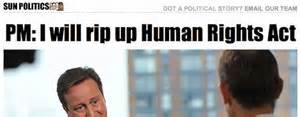
We have reported on many occasions the desire by the government to do away with, scrap or abolish the HRA. Our local MP, Mr John Glen is on record as wanting this. Part of the reason – perhaps the major part – is the continuing dislike of things European. ‘Brussels’ has become shorthand for anything bad and for interference in our affairs and the HRA is caught up in that. It doesn’t help that the majority of newspapers publish seemingly endless stories of dubious decisions which are the result – it is claimed – of the workings the act. Stories about benefits for ordinary people almost never make it onto a tabloid page.
 A second reason (we have speculated) is that much press activity nowadays involves the intrusion into the private lives of celebrities and politicians using hacking, buying information from the Police and other sometimes illegal means. Article 8 of the HRA includes a right to privacy which would seriously curtail this activity. We are currently awaiting the review of the act (promised in the Autumn) and how the government proposes to change it. Perhaps we can be encouraged by the appointment of Michael Gove MP as Justice Minister, who has shown himself willing to overturn some of the worst excesses of his predecessor such as iniquitous court fees and banning books from prisons.
During the year we were pleased to welcome the formation of Rights Info which was established to counter the misinformation regularly pumped out by our media. It analyses the various cases and stories which make the news and presents the facts.
Snoopers’ charter
The investigatory powers bill is currently in the report stage. It proposes giving increased powers to the security services to intercept private messages, phone calls, Skype, emails and social media. People are rightly concerned and fearful of terrorist activity and mostly take the view that as I’ve got nothing to hide, losing a bit of liberty is a price I’m willing to pay for greater security. There is a trade off here: we give up some liberty and the right to our privacy to enable the security services to invade emails and the like in their hunt for terrorists, drug smugglers and people traffickers. But we expect our politicians to exert oversight and to ensure the security services are properly accountable. The revelations by Edward Snowden exploded that and showed that the relevant parliamentary committee had little or no idea of what was happening. We have also noted the strange dichotomy between the publics’ distrust of politicians on the one hand and trusting them when it comes to intruding into our private lives on the other.
Peter Wright’s book Spycatcher (Viking Penguin) first revealed the inside story of the MI5 which he alleged had burgled its way around London. More recent books such as Seamus Milne’s The Enemy Within (Verso) revealed the underside of the security services and their (successful) attempts to undermine the miners’ strike and Nick Davies’s Hack Attack (Chatto and Windus) which told the story of the media’s involvement with politicians, senior Metropolitan Police officers and the security services. All these books, and others, show the importance of strong independent control of what these services are up to. Unfortunately, the unholy link between some newspaper groups, politicians and the police makes achieving this very difficult.
 So although we do not mind the security services penetrating terrorist cells, we might mind them listening in to solicitors discussing their client’s cases, journalists’ phone calls and bugging human rights groups, all things they have been shown to do. Liberty is a precious thing and we need to be ever vigilant that their activities are closely monitored and are appropriate. With the politicians we have today we cannot be sure of this. One of the few exceptions is David Davis MP (seen here third from left at the Sixth Form Conference at the Cathedral, next to Kate Allen) who has regularly highlighted the dangers of this bill and of the creeping nature of intrusion being planned by the Home Office.
Conclusions
This has been a busy year for us with many achievements. However, we look forward to next year with some forboding. The desire to promote economic interests almost at any cost and the near abandonment of overseas human rights issues is a worry. We want to go on selling arms to highly unstable regimes like the Saudis, seemingly with no concern with how or where they use them. Claims of ‘quiet diplomacy’ are a sham when you are promoting one of their number onto the UN’s Human Rights Council. At home, the combination of the ‘snoopers’ charter,’ a desire to end or abolish the Human Rights Act and to curtail the Freedom of Information Act are all steps in the wrong direction.
This has been an exceptionally busy year, as the report notes. We have succeeded in holding major headlining events, around the Magna Carta celebrations, while still carrying on our usual campaigning, and keeping awareness of Amnesty high in the city, all with a relatively small activist base. Our visits to schools have been valuable in this respect too, and thanks are due to all who have helped over the last year to keep us in the public eye and assisted in the success of the achievements noted here. I would conclude by wishing our readers an supporters a happy New Year, and hopes for freedom for those we are supporting.
Andrew Hemming, Chair of the Salisbury group
We continue to be heartened by the warm support we get at signings from people in the Salisbury area. The support of the Cathedral in this Magna Carta anniversary year has also been particularly valued.
You can follow us on Twitter – http://www.twitter.com/salisburyai
peter curbishley




 Amnesty in Salisbury & South Wiltshire
