Magna Carta Now – panel discusssion with readings by Edward Fox OBE


A PANEL DISCUSSION WITH READINGS BY EDWARD FOX, OBE

MAIN HOUSE

Monday 15 June at 2pm

MAGNA CARTA

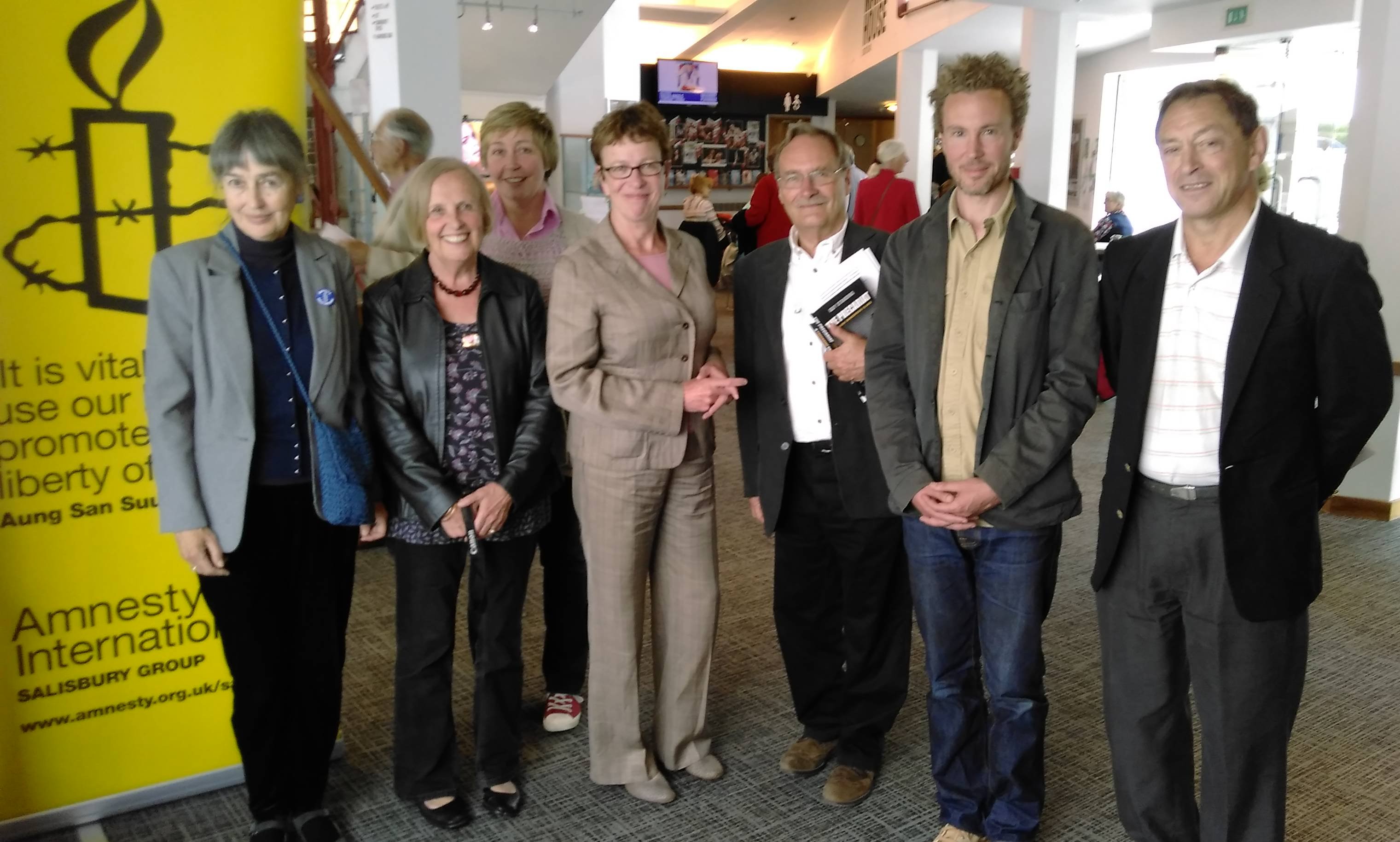
Magna Carta’s importance meant that it was traditionally read out at the opening sessions of Parliament and in English cathedrals. This panel discussion about its relevance today will include Kate Allen, Director of Amnesty International UK, Professor Guy Standing, author of The Precariat: The Dangerous New Class and Ben Rawlence, formerly of Human Rights Watch. Excerpts from the charter will be read by one of our most celebrated actors, Edward Fox OBE.

Chaired by Peter Curbishley.

Presented in partnership with the Playhouse and Amnesty International.  Tickets from Salisbury Playhouse http://www.salisburyplayhouse.com or 01722 320333

Repeal of the Human Rights Act HRA and a new Communication Bill both put pressure on human rights in the UK


Great was the joy among those who want to see an end to the ‘hated’ Human Rights Act when it was announced that Michael Gove is the new Justice Secretary and Theresa May – no longer hampered by Lib Dems – will be able to introduce a new Communication Bill commonly called the ‘snoopers’ charter’.

Details will be in the Queen’s Speech at the end of the month and the act might be gone by Christmas.  We look forward to seeing the British Bill of Rights when it is finally published and there is press comment that it has gone through eight drafts in an attempt to sort out the complexities.

There will be many who will be delighted by these moves such has been the press campaign waged against it.  We have noted in a previous blog that a web site called Rights Info has been launched to try and counter the avalanche of negative reporting.  As the debate goes by it would be worthwhile catching up with this site which seeks to set out the true story in each case.  Few will read it unfortunately.  The case of Abu Qatada has become to epitomise the (alleged) failings of the act and the fact that Jordan used torture was conveniently overlooked.

In common with almost any act of parliament you care to mention, the Human Rights Act is capable of improvement or reform and few would argue with that.  For years the problem was individuals who had a problem had to make their way to Strasbourg to seek justice.  The HRA was passed with a lot of cross party support to enable these sorts of cases to be heard in the UK.  Such has been the hysteria and miss-reporting that a calm look at the act does not seem to be possible and in any event the die has now been cast.  The benefits that many ordinary people derive from the act rarely get a mention.

We shall follow events with interest.

UPDATE: 16 May Message from Kate Allen

Over the last few months we have been calling on all our political leaders to keep the Human Rights Act. Tens of thousands of you have taken action, held hustings, and discussed human right issues directly with your prospective parliamentary candidates. 
With the election results now in it is likely that the Human Rights Act is will be under threat like never before.

Over the next few days and weeks we will be carefully analysing the results and planning our next steps. Together we face a huge challenge and you have a vital role to play in the next phase of our campaign if we are to be successful. We will be in touch with more information about the campaign and how you can get involved soon.

Thank you,

Kate Allen
Director, Amnesty International UK 

Human rights myths explained HRA


For British readers of this site, the constant tide of misinformation and one-sided commentary on the Human Rights Act will be familiar.  It forms part of the anti-European opinions of the majority of our media owners who do not like the idea of a ‘right to privacy’ for the citizens of the UK.   A new web site which seeks to counter the myths is very welcome therefore.  Produced by the newly launched Rights Info, you can access the site from the bottom of this page.

Each of the 14 examples gives the headline story as featured in one or more of our newspapers such as the Daily Mail or the Sun, then an explanation of the facts including the legal judgement in some cases.

French President in #Saudi Arabia calls for death penalty ban


On a visit to Saudi Arabia, the French President #FrancoisHollande, called for a ban in the use of the death penalty AFP reports.  This is significant because Saudi is in the top three countries in the world to use the penalty often carried out in public.  It is also significant because it was done reasonably publicly.  Our own UK government is shy of making public statements about the barbaric activities in Saudi and the reason is likely to be trade and in particular weapons sales which are huge.  France is equally a big supplier of weapons and yet feels able to speak out.

Human rights issues are not confined to the use of the death penalty.  Torture is routine.  Many are arrested arbitrarily and No to the death penaltyheld incommunicado for months and in some cases years.  There is no free press and there are many, many restrictions on women who are not able to travel unaccompanied or to drive for example.

The issue of what goes on in Saudi exploded earlier this year surrounding the case of Raif Badawi who was to receive 1000 lashes and fined a million Riyalls for the crime of insulting Islam.  Thousand lashes is effectively a death sentence.  Following an international outcry after the first 50 lashes – given in front of a cheering crowd – the sentence was suspended, reportedly on medical grounds, and he languishes in prison.

The second event that caused an outcry was the wish to lower our flags to half-mast following the death of King Abdullah.  This caused widespread concern – revulsion even – and put our government in a spot.  The Independent newspaper in the UK reported a meeting David Cameron, the Prime Minister, had with some young people who questioned him about this.  He is reported to have said:

We have a long-standing relationship between the Kingdom of Saudi Arabia and our United Kingdom here, a relationship between our two monarchs and between our governments.  We don’t agree with a lot of things that the Saudi do – we don’t agree with the way they treat people for instance criminals – and we make it very clear [what] those differences [are].  Independent February 2015

Interesting the use of the phrase ‘the way they treat criminals’ here implying that the justice regime is too harsh on them and moreover, is just limited to criminals.  Since torture is routine, arrests are arbitrary, people are not allowed access to lawyers, and people are flogged and executed publicly, it does seem a bit limp .

The close relationship with the royal families is also a sensitive one.  Prince Charles went to the funeral of King Abdullah and the issue of the sentence on Badawi was a live one.  Amnesty International said in a statement in February:

From the various briefings from the Palace this week, we’re cautiously optimistic the Prince Charles would raise Mr Badawi’s outrageous case.’ 

saudi floggingThat was three months ago and no doubt the optimism was real.  However, Mr Badawi is still in prison even though he hasn’t been flogged since.  The contrast between the French President’s statement and our own government’s statements – or lack of them – is marked.  When ISIS carried out beheadings, our politicians were falling over themselves in outrage.  So far this year Saudi has executed 78 people in comparison with 87 in the whole of 2014.

Display goes up today in the Cathedral


We today erected the display in the cloister at Salisbury Cathedral to celebrate the signing of Magna Carta and to illustrate the #StopTorture campaign.

Display in the cloister

It will remain in place for many weeks.  There is also a panel on the Human Rights Act.

Some human rights success stories


Reading this blog can sometimes seem depressing as we highlight individuals imprisoned for their beliefs; the widespread use of torture around the world; the use of the death penalty and recently, a desire by some of our (UK) politicians to abolish the Human Rights Act.

Successes

There are successes however, some of which have been a long time in the making. After six years of legal proceedings and campaigning by Amnesty members around the world, Shell Oil have at last been made to pay for the devastation caused by oil spills in the Niger Delta.

wire tap imageOthers successes have been unprecedented. For the first time ever, the Investigatory Powers Tribunal ruled that UK secret services acted illegally in their surveillance activities.

And that’s not all. Because of you Guadalupe found justice in El Salvador. With a window of just 48 hours, we asked you to tweet El Salvador’s members of parliament calling for a pardon for Guadalupe – a young woman imprisoned after suffering a miscarriage. Every tweet counted: her pardon was granted by a majority of just one vote. Thank you. We’re continuing our work to ensure Salvadoran women are not criminalised by the total abortion ban in the country

Burma has dropped off the radar in the last couple of years and things have improved there.   But not totally and there are still prisoners of conscience. For example, long-standing prisoner of conscience Dr Tun Aung has recently secured release.

February saw two historic victories in the age-old battle for the right to privacy and free expression. The USA and UK’s past intelligence-sharing on Communications surveillance was ruled illegal and the Security Services conceded their current regime for intercepting legally privileged communications is also unlawful. These landmark rulings, in which Amnesty were co-claimants, should mean there are more significant positive changes ahead.


A great step towards justice was made in January when three journalists imprisoned in Egypt had their sentences overturned on the basis of a flawed trial. Peter Greste was allowed to return home to Australia but Mohamed Fahmy and Baher Mohammed are awaiting a retrial in Egypt, currently set for 22 April. Egypt must now drop all charges against them and free, not retry these prisoners of conscience.

Forced to sign a confession after being kidnapped and tortured by marines, Claudia Medina Tamariz has had the last of the charges against her dropped, and she is now a free woman.  Claudia thanked the 300,000 Amnesty members around the world who demanded justice.  We continue to call for an investigation into the torture she suffered, and for the perpetrators to be brought to justice.

A month after Claudia’s release, the Mexican president came to the UK and we delivered your Stop Torture petition signatures to him – in a giant piñata. Ahead of the visit you called on the UK representatives meeting him to raise the issue of torture. Guess what? They did. Thanks to Amnesty supporters campaigning, the Prime Minister, Deputy Prime Minister and Secretary of State for Scotland all helped send a strong message: it’s time for Mexico to respect human rights.

So campaigning does sometimes work.

Keep the Human Rights Act


UPDATE: 28 APRIL

Human rights myths  Thanks to http://www.RightsInfo.org – see link at the bottom of this site.

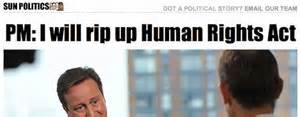
As we pointed out in our previous blog, the Conservatives, if they form an administration after the election, want to abolish the Human Rights Act #HRA.  Amnesty has launched a campaign with a link to KeeptheAct spelling out the benefits of the act for everyone in the UK.  For example:

  • An elderly couple faced separation after 65 years of marriage – until their local authority finally allowed the wife to move in into her husband’s care home to be with him.  Thanks to the HRA
  • When a woman had to flee a violent husband, social services said she’d made herself ‘intentionally homeless’, refused to house her and tried to put her children into foster care.  But she was able to keep her family together – thanks to the Human Rights Act
  • Families of British soldiers killed in Iraq were able to call the government to account for failing to protect them properly – thanks to the human rights Act
  • A woman with multiple sclerosis got her local council to increase the amount of care she receives – thanks to, well you know the story.

These are some of the day to day stories of the HRA and how it helps ordinary people in their daily lives.  But it is a story a lot of our newspapers do not tell, preferring to peddle disinformation and myths.  The act protects ordinary people and means that public bodies like the police and local authorities must respect our basic human rights. abolish hraIt does seem strange that we are celebrating 800 years since the signing of Magna Carta with politicians waxing lyrical over that document whereas its modern version is derided and is under threat, often for quite spurious reasons.  Go to KeeptheAct and add your voice.

Amnesty award


It was announced in the Salisbury Journal this week that a group of students at Burgate School in Fordingbridge, Hampshire has won the Amnesty International Youth award for the ‘most committed’ category.  Every congratulations from the Salisbury Group.


New link added to the list: Globalconsilium

Magna Carta and Human Rights Today


Around 160 people attended the Cathedral this evening to hear Dominic Grieve QC MP give a brilliantly lucid lecture in support of the Human Rights Act.  He traced some of the key clauses of the Magna Carta and showed how they had continuing relevance today.  We hope to include a transcript of his lecture soon.  His lecture followed the annual Amnesty evensong which also was very well attended with around 120 people.

Afghanistan


Britain’s role in Afghanistan is coming to an after over a decade of bloodshed and war.  It is doubtful that the country is in a fit state to function effectively since the Taliban and the warlords are still very much in evidence and there are reports of ISIS being present in the country as well.  After all this time it is easy to forget some of the original aims which were defeating terrorism and the Taliban.  We can also forget that it was the CIA who helped establish, arm and train the Taliban in order to assist them in their fight with the Russians.

One of the major victims of the years of war is women.  It has turned thousand of Afghan women into refugees and widows – or both – and made it dangerous for them to seek schooling, go out to work, get healthcare or secure paid employment.  Before the arrival of the Taliban in 1996, women’s rights had steadily improved and indeed, there are many photographs from that era women and girls in schools and university with not a burqa or veil in sight.  Improving the rights of women became one of the additional aims of the invasion and it will be recalled that Cherie Blair – wife of the then Prime Minister, Tony Blair – hosted an event in 10, Downing Street in 2001 with this aim in mind.  Kofi Annan said:

There cannot be true peace and recovery in Afghanistan without a restoration of the rights of women.

Similar sentiments were expressed by the then secretary of state Colin Powell:

The recovery of Afghanistan must entail a restoration of the rights of women, indeed it will not be possible without them.

Abdul Hakim Hashemi  Hademi
Abdul Hakim Hashemi Hademi

At the South West regional conference of Amnesty International it was heartening to hear from someone who has worked to improve the status of women through theatre and artistic groups in the countryside.  The speaker was Abdul Hakim Hashemi Hamidi who set up the Simorgh Film Association of Culture and Art, SFACA.  Unlike many aid programmes which tend to stay in Kabul or the main cities, SFACA goes out into the countryside and to the villages.

He has organised educational theatre workshops in prisons, juvenile correction centres, drug addiction rehabilitation centres, in schools and with the police.  He has produced films with an emphasis on human rights and the role of women.

Not all the problems faced by women are solely to do with the Taliban. Another factor is honour killings which are at a very high rate in the country.  57% are identified as the responsibility of a family member and 21% by the husband.  The perpetrator of 43% killings is unclear however.  A telling quote from the PowerPoint display was:

A problem with women [is] because men don’t accept women have rights

He went on to discuss the problems of human rights defenders in Afghanistan. These included difficulty in

Delegates at the South West Region conference

travelling to some areas combined with a lack of government control in some parts of the country, traditional beliefs and illiteracy.  Religion was a main cause he said and human rights are seen as a western construct.  He urged that the UK government consider the role of human rights defenders in their discussions with the Afghans.

It was an interesting and uplifting talk by someone who has taken risks to go into the Afghanistan countryside to promote the rights of women.  Abdul is a visiting fellow on the Protective Fellowship Scheme for Human Rights Defenders at York UniversityThere is a permanent link to the York University Centre for Applied Human Rights at the bottom of the main page.

Sources:

Watson Institute

Global Research

Amnesty International

Blog at WordPress.com.

Up ↑