Andy Burnham’s Apology: A Shift in Labour’s Gaza Stance?


Andy Burnham apologises for Labour’s stance on Gaza

July 2026

In numerous posts we have commented on the war in Gaza and more recently in Lebanon, and noted the shameful approach by the British government under Sir Keir Starmer the departing prime minister. We commented on the arms sales which continued despite the terrible events, the diplomatic support for Israel, the hundreds of overflights of Gaza by the RAF, the continued support for Elbit Systems and prosecution of those who call out this support and call for the recognition of Palestine.

It now seems that the likely new prime minister, Andy Burnham (image: Middle East Eye), has recognised these errors and has announced that the party ‘didn’t get it right’ and ‘we need to do better’. If this is carried through into policy then it will be very welcome. What no one has picked up in the media is the timing of this announcement which came on the day that nominations closed for the leadership election. Could this be a fear of the hundreds of MPs who are members of the Friends of Israel groups?

Sir Keir Starmer alienated many of his supporters by his approach to Israel. His statement that Israel had every right to cut off water and power shocked many and attempts to back track never really healed the damage. It showed a politician desperate to shake off the ‘anti-Semitic’ criticism more or less at all costs. Many were doubly shocked because of his human rights background. It was one of the factors which led to his defenestration. Criticism of Israel is not anti-Semitic.

We have to be wary of course since many politicians make statements like this. He has to face a massive and well funded lobby in parliament, a media much of which is supportive of the Israelis and a BBC which even today (10 July) was quibbling on the Today programme whether it is a genocide or not because it hadn’t been legally decided yet.


Latest posts:

Thought of subscribing?

Death penalty report


Monthly report on the use of the penalty around the world

July 2026.

There is a lot of interest in this month’s report which covers the period mid-June to mid-July 2026 and is preprared by group member Lesley to whom we are grateful for the work in compiling it. There is more content in this report on conferences where the future of the penalty was discussed for example the Ninth World Congress Against the Death Penalty.

Disappointing debate about lobby influence


Debate about Israel’s extensive lobby activities in parliament unenlightening

June 2026

When we vote for someone to become our member of parliament, there is an understanding – not always spelled out in so many words – that MPs are there to represent us, their constituents, and once in parliament, to represent the interests of the country.  If they assume office of some kind, they will of course have many meetings with interested parties and discussions with other countries.  But all along is the principle that it is our nation which is being represented and the public at large being protected.

In recent years there has been a rising tide of concern about outside influence and role of think tanks and lobbyists. Basically the system is not working according to Transparency International and only 4% of lobbyists are registered making the legislation meaningless.  Collectively, they spend millions of parlaying their influence and often the question is who is funding them? Much of their funding is opaque but is believed to be American commercial interests pushing against climate change, fighting hard not to see controls on their media platforms and for us to leave the European Convention.  The egregious payment of £5m to Nigel Farage (which is being investigated) has attracted much media attention but we should not lose sight of the drip, drip of smaller sums into the pockets of our representatives. 

Israeli lobbying

Another worry has been the influence of the largest and best funded lobby organisation funded by Israel to promote its interests. They have created a series of ‘Friends of Israel’ groups in all the main parties. There are believed to be 200 such MPs across parties with the predominant membership being Conservative. Over 60 are on the Labour benches.  

Many in the public are concerned at the extent of this influence and a petition attracted 118,000 signatures leading to a debate in Westminster hall on 22 June.  They called for ‘an inquiry into pro-Israel influence on politics and democracy’. The debate can be read here.

Their influence was immediately felt in the debate.  ‘Why is Israel singled out for this kind of enquiry?’ it was asked.  Why not the Gulf states for example? 

Another line of argument was that it echoed historical tropes of hidden Jewish control and allegations of poisoning wells during the time of the Black Death for example and the infamous ‘blood libel’.  Needless to say, the anti-Semitism allegation was made by Richard Tice among others. The frightening effect of these allegations on Jewish people was also mentioned. 

This motion is antisemitic in its very motivation and at its core. As such, we should utterly reject it”

Richard Tice (Reform).

A consistent problem has been the confusion between anti-Semitism and legitimate criticism of Israel.  It has been argued that there is a degree of overreach as far the former is concerned.  Much use has been made of the International Holocaust Remembrance Alliance (IHRA) definition.  As the Jewish academic Omer Bartov explains in his book Israel: What Went Wrong? (Fern Press, 2026) ‘The IHRA definition was the product of a European effort to promote Holocaust remembrance and education: it was never meant to serve as a basis for legislation and enforcement, but it has nonetheless morphed into an instrument for silencing criticism by law and duress’ (p58).

Anti Semitism definition criticised

The IHRA provides 11 examples of what might be termed ‘anti-Semitic’ but as Bartov points out, however objectionable some of such statements [in the IHRA list] may be ‘they are not, in and of themselves’ antisemitic (ibid).’  Herein lies the problem seemingly swallowed by several of the MPs making their speeches: legitimate criticism of Israel and their disproportionate destruction of Gaza and south Lebanon, and their policy of killing children, is by this definition, anti-Semitic. We argue it is not.

The Debate

The debate itself was disappointing for its lack of any kind of forensic analysis or the setting out of facts about the terrible events which took place on October 7th and subsequently.  Absent were any references to the bloodthirsty comments by leading Israeli politicians – not extremist firebrands – but members of the Knesset and Likud politicians.  The deputy Speaker of the Knesset Nissim Vaturi for example, suggested ‘we need to separate the children of the women and kill the adults in Gaza’ (ibid p128).  There are many such repulsive statements from politicians like Ben Gvir, Bezalel Smotrich and others. 

‘Why only Israel’ was the cry from several MPs?  We can sympathise to an extent with this question which is probably due to our short attention spans and a media which finds it hard to fund overseas reporters.  Little is heard about the fearful abuse of Uyghurs in China, or the continuing persecution being carried out by the Junta in Myanmar, and Sudan has quietly slid out of the news.  Ukraine is in and out of the news. 

Circular argument

There is a degree of circularity in the argument however. Because Israel is seen as some kind of beacon of Western values in the Middle East, the only democracy it is claimed and an example of a brave little country surrounded by Moslem states some bent on its destruction: when it is seen to violate those norms of behaviour, there is a reaction. The demolition of entire apartment blocks because they claim there is a Hamas control centre within, or a member of Hezbollah in south Lebanon (a policy even President Trump is finding hard to accept) the seizing and confinement, torture and mistreatment of medical staff and hundreds of children, the destruction – the wanton destruction – of water treatment and other infrastructure like hospitals and schools and the deliberate policy of withholding food aid and medical supplies, the seizure of all cultivable land in Gaza, even with the enfeebled reporting by British media, some of this has seeped into the consciences of the British people.  Which has led over a hundred thousand to ask has our political class been corrupted by an Israel lobbying organisation?  In short, if you want to be regarded as a beacon of Western values then you must behave like one.   

One issue which emerged, albeit briefly, was the question of Elbit Systems a firm based in Britain with 16 facilities.   It has considerable support from the British government and the firm is engaged in joint ventures with UK firms to build drones. It is these drones which inflict such damage on people in the area and our continued support for the firm, the political cover given them and the draconian treatment of protestors which has caused resentment among many.   It was noted that the firm has easy access to ministers and civil servants, ‘in and out like a cat flap’ someone said.  

An issue not debated was the funding of trips to Israel.  As Declassified has revealed these are considerable in number. Conservative Friends of Israel has funded no less than 155 trips in a decade more than any other government. What are the MPs seeing and been shown?  It is not clear.  The prisons where boys are badly treated?  Unlikely.  The ruins of hospitals, schools and the like in Gaza?  Probably not.  The villages attacked and burned by settlers on the West Bank?  Improbable.

Was the debate enlightening?  Yes and no.  About the issue in question and the undue influence on policy and support for Israel which seems unconditional and not influenced in any meaningful way by the atrocities carried on there, the answer is ‘no’.  A debate built around the never-ending anti-Semitism claims about any or all criticism of Israel the state and the IDF was never going to enlighten us or them. 

About the lack of transparency and the role played by powerful and well-funded lobby organisations of which Israel is thought to be the largest and best funded, the answer is ‘yes’.  It has enabled the government to continue its support for Israel unimpeded by much in the way of questioning or obstruction from its back benchers or the opposition significant numbers of whom are members of one or other of the Friends groups. It was David Cameron, the ex-prime minister who, after the Greensill scandal that ruined his reputation, said Lobbying was the ‘next big scandal waiting to happen’. It is continuous and is in fact a perma scandal. The debate is but another example of how our parliamentary system has been corrupted by outside influence.  The very lack of insightful debate and lack of facts was revealing in itself.  Only one MP in the debate declared his interest as a member of the Conservative Friends of Israel.

The ending

The end was interesting: Richard Tice MP again ‘Now that we have debated this appalling motion, is there a minimum timeframe before we have to debate it again?‘ To which the reply was in part ‘When reflecting on how this debate has gone, and more widely on how the Jewish community in particular has reacted to the petition, I would certainly argue that it should not come back for another debate, even if it reached that threshold. We have had an opportunity to air our views, and we have collectively called it out for what it is’ (John Lamont MP). Mr Lamont is a member of the CFI which he did not declare and does not appear on the They Work For You website under ‘Register of Interests’ [accessed 27 June 2026].

The tragedy of all this is that these ‘friends’ are not in the final analysis, doing Israel any favours. Peace and stability will only come to the region and to Israel if it can live and work with its neighbours. Simply arming and supporting a thuggish regime bent on war, destruction and killing is not in its best interests. Unless it completely destroys the entire population of Gaza – total genocide that is – there will be a residue of bitter resentment of a people treated so harshly and so cruelly that revenge inevitably will be a prime motive. Those parliamentarians are thus twice guilty: allowing themselves to beguiled into an uncritical support of a brutal regime and secondly, not in fact acting as they should as honest critics to the Israeli government to counsel a non lethal approach to every problem.

[letter in the Guardian, 29th June]

Israel’s actions are fuelling antisemitism around the world | Israel | The Guardian

We are shortly to have a new prime minister and one hopes that he or she will address the issue of corruption and undue influence head on.  Trust in our politicians will only be reclaimed if the issue of lobbying and its pernicious effects are forcefully tackled.  Meanwhile, Israel if free to continue its violent actions safe in the knowledge that the UK parliament has been successfully tamed. John Glen, the Conservative member of parliament for Salisbury, is a member of the Conservative Friends of Israel (CFI). Full list of all MPs believed to be members of Friends of Israel.

An Israeli and a Palestinian debate


Debate between the two at the Festival of Humanism over the weekend

June 2026

So popular was this debate that many couldn’t get in so it was repeated the following day in a bigger hall. The two speakers were Yaniv Aknin who is a British-Israeli software engineer currently working in London. He was born and raised in Israel but left in 2013. Jasr Kawkby is a British-Palestinian paediatrician currently working in East London. He was raised as a Muslim in Palestine.

It would be usual in a write-up of this kind to discuss what A said then to discuss B, making clear thereby who said what. We will not do this in this instance and just discuss what was said by both. These are some of the points made:

  • It was pure chance where you were born and whether you were Moslem, Christian or Jew.
  • Language was important. To call what happened a ‘war of independence’ was quite wrong. It was a colonial war. To live in a land where the ‘natives’ were expelled and prevented from returning was morally wrong.
  • Armed resistance has made life more difficult for those it seeks to support. It has alienated foreign support.
  • Suffering has been inflicted on those with no responsibility for the plight of Jews [in history].
  • Israel must stop its barbaric actions [for example] denying food aid in Gaza and must respect the rights of Palestinian prisoners in Jewish gaols.
  • [In answer to a question] the conflict was about land: religion was very much a secondary factor. It was however a complicating factor.
  • Zionism was a wrong ideology.
  • Most destruction of human life was by Israeli forces [meaning the IDF from other comments he made].
  • Pressure should be applied to Israel until it complies with human rights. We must recognise the oppression of Palestinians.
  • The lack of unconditional support from the West seen as a betrayal or anti-Semitism.
  • Religion was a catalyst for violence: how can we spread non-religious ideas? [This was a Humanist conference].
  • We should not be selling arms to Israel.

You might believe some of the answers are obviously from one ‘side’ or the other. You may well be wrong. There were in fact some surprises. This is to illustrate that there are those from the region – whether Jew or Moslem – who see both sides and recognise some of the wrongs that are committed. Because so much air time is given to extremists, we can be led to believe that they are representative of the population as a whole. It demonstrates that perhaps there is some chance in the future for some kind of reconciliation. The interference by outside forces – discussed in our last post in relation to the Gulf – is a factor in the perpetuation of violence.

Images: Yaniv (top); Jasr (lower)


Recent posts:

UN rapporteur sanctioned by the US


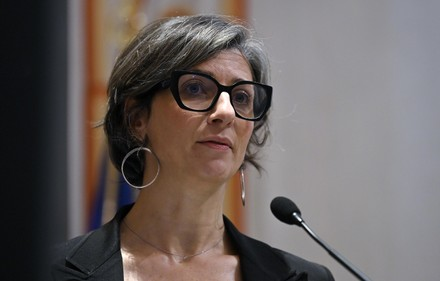
The UN rapporteur Francesca Albanese sanctioned and subject to death threats

April 2026

Francesca Albanese is the UN Special Rapporteur on the situation of human rights in the Palestinian territories since 1967. She has documented the extreme violence meted out on the Palestinians by Israel settlers and the IDF and for her pains has been sanctioned by the US President Donald Trump as a ‘specially designated national’. She is the first UN to have received this designation which puts her alongside drug traffickers and dictators. This has had serious consequences for her including the seizure of her Washington apartment and not being able to use a credit card anywhere in the world because they are all processed by American firms. There was considerable lobbying for this to happen.

She has received this treatment because of her reporting on the extreme violence used against Palestinians by Israel and by calling their behaviour genocide.

We are currently witnessing the invasion of southern Lebanon and the demolition of many villages.

In the West Bank, settler violence in 2026 so far, has displaced more Palestinians than in the whole of 2025. Around 1,000 have been killed since 2023 a quarter of whom were children. This is part of a pattern of violent displacement, demolition, evictions and crippling movement and access restrictions. The UN reports that ‘Israeli authorities directed, participated in or enabled settler violence’.

Albanese was interviewed recently in a Guardian piece and expands on her role and the politicians around the world who have been complicit in the violence. She has little time for Sir Keir Starmer and the aid and cover he has given Israel describing him as a ‘monster’ for arguing in 2023 that Israel ‘has the right’ to cut off electricity and gas to Gaza. “You’re not a human rights person at all” she says “if you say such a monstrosity. And the university who gave you your law degree should take it away from you.” [In the subsequent furore Sir Keir claimed he was “questioned by members” and he “made it clear it is not and has never been my view that Israel had the right to cut off water, food, fuel or medicines. International law must be followed.”]

Exceptionally ruthless physical and psychological abuse

This March, the UN published its latest report on the treatment and torture of hundreds of Palestinians and an extract says:

“In custody, Palestinian captives have been subjected to exceptionally ruthless physical and psychological abuse, on a scale and with an intensity without precedent in the history of Palestine/Israel. Brutal beatings, sexual violence, rape, lethal mistreatment, starvation and the systematic deprivation of the most basic human conditions have inflicted profound and lasting scars on the bodies and minds of tens of thousands of Palestinians and their loved ones. These practices demonstrate that the detention system of Israel has descended into a regime of systemic and widespread humiliation, coercion, and terror, aimed at stripping Palestinians not only of their liberty but of their dignity, identity and even the most basic sense of humanity. Far from isolated excesses, such conduct has been institutionalized within detention structures, politically endorsed by Israeli authorities and publicly justified, or even celebrated, by segments of society”. [para 84]

A report by UN Watch repudiates all of Albanese’s conclusions. The organisation is affiliated to the American Jewish Committee.

Peace of any kind seems a long way off in the region. The bombing and assassinations in Iran, the massive death toll in Gaza, increasing violence in the West Bank and now the invasion of southern Lebanon seems to show a pattern of violence as a kind of first port of call for the nation. Assisted by the US they are immensely powerful militarily and seem to have no real wish to compromise and certainly not recognise a Palestinian state. The tragedy is that it will not bring them the security they so desperately desire. A new generation of people with hatred towards Israel is in the making and will come to haunt them in years to come.

The treatment of Albanese is wholly unjustified and vindictive. Her reports can be criticised and errors pointed out in the normal way. But the death threats to her and her family, the seizing of her apartment and other coercive measures are wholly unacceptable.


Monthly death penalty report


Report for mid-March to mid-April

April 2026

We are pleased to attach this month’s report thanks to group member Lesley for the work in compiling it. Featured this month are Florida with Governor De Santis’ spate of executions – the highest in the State’s history – the disturbing number of executions in Iran to add to the slaughter of its citizens in the streets, and the discriminatory bill passed by the Knesset in Israel for the execution of Palestinians in the West Bank.

As ever we note that China does not feature despite executing more of its citizens than the rest of the world combined.


Petition reaches major milestone


Petition to the UK government passes the critical 100,000

April 2026

The Israeli Knesset has just passed a bill which will permit the speedy execution of Palestinian prisoners. A petition has passed the crucial 100,000 mark which means the UK parliament must consider the issue. Human rights organisations and governments around the world have condemned the legislation which quite openly singles out Palestinians for execution without appeal. The trials will take place in a military court in the West Bank. Many will have been severely tortured and badly mistreated.

“We believe that such a law would constitute a complete violation of the Geneva Convention and International Human Rights Law. UN experts have called for these proposals to be dropped,” the petition reads. Human rights organisations, including Amnesty, have condemned the legislation, which has been described as ”one of the world’s most extreme death penalty laws,” over its design to target Palestinians, as it would exclude Israelis.

The petition shows the degree of concern that many have with this legislation and its brazen one-sidedness. To reach more than 100,000 is a measure of the public’s concern. It poses a problem for the government however which has supported Israel during the recent hostilities. Weapons, intelligence and overflights from Cyprus are part of its support.

It also puts in the spotlight the large numbers of MPs who are members of the various party’s Friends of Israel groups including the local MP for Salisbury Mr John Glen.

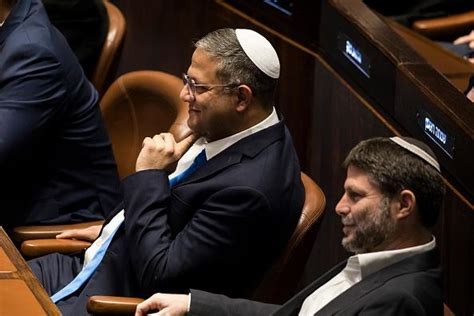
Ben Gvir and Bezalel Smotrich, two members of Knesset who promoted this bill.


Israel passes death penalty bill for Palestinians


The Knesset passes a highly discriminatory law

March 2026

The Israeli Knesset has just passed by a majority of 62 a bill which will allow the executions of Palestinians convicted of fatal attacks in the West Bank. The executions will take place by hanging and do so it is planned, 90 days after conviction or in some cases 180 days. The law is nakedly discriminatory and is a piece with the apartheid policy which exists in the country. No appeals will be allowed and legal contact with the convicted person is via video link only. The Knesset erupted into loud cheers and Ben Gvir was seen waving a champagne bottle in celebration. An illustration of the lapel badge he wears is below.

It has brought a wide range of condemnation from around the world. It will do nothing for Israel’s somewhat battered reputation internationally. A statement by Amnesty International said:

‘Today, Israel’s parliament, the Knesset, adopted the first in what threatens to be a series of laws facilitating the use of the death penalty, in a public display of cruelty, discrimination and utter contempt for human rights. The amendment added to Israel’s Penal Law, known as the ‘Death Penalty for Terrorists’, expands the scope and facilitates the use of capital punishment, at a time when there is a global trend towards abolishing it. It also dismantles fundamental safeguards to prevent the arbitrary deprivation of life and protect the right to a fair trial, and further empowers Israel’s system of apartheid, which is maintained by scores of discriminatory laws against Palestinians.’ Erika Guevara-Rosas, Amnesty International’s Senior Director of Research, Advocacy, Policy and Campaigns.

The Palestinian Prisoner’s Society called it a ‘historic escalation – a new phase of openly sanctioned [and] politically motivated executions of Palestinian prisoners’.

Torture and mistreatment

A particular problem is that Palestinians are imprisoned and subject to considerable mistreatment. This can include starvation, physical assaults of various kinds and lack of medical attention. The Times of Israel among others have reported on the inhuman conditions. Testimony and confessions therefore, produced under this system of abuse and torture, will have little credence. Some of the descriptions are horrific and there is a WARNING about the following link.

The problem here is that violence begets violence. An almost ceaseless tide of violence in Gaza, southern Lebanon, parts of Syria, the West Bank and now Iran, has bred into the society that yet more violence is the answer to the security of the state.

Large numbers of British MPs from all parties are members of the Friends of Israel groups, funded by the Israeli government, including the Trade Minister, Peter Kyle. The Salisbury MP, Mr John Glen is a member of this lobby group.

Amnesty is opposed to the death penalty in all circumstances. Mistakes cannot afterwards be corrected. It is not a deterrent and it imposes huge stresses on those who carry out the punishment. The local group publishes a report each month on its use around the world.

Sources: Times of Israel, BBC, Guardian, Palestine Prisoner’s Society, Al Jazeera


Is a two state solution possible?


Talk at the Exeter conference

March 2026

This was the title of one of the talks at the Exeter conference organised by the local Amnesty group. Answer: no. The talk was given by Abdullah al Anjari (pictured) who is a doctoral researcher in Palestine studies at the Institute of Arab and Islamic Studies, University of Exeter, and a member of the European Centre for Palestine Studies. His talk focused on three key elements of the problem: Jerusalem, the refusal to allow Palestinians to return and the actions of the West Bank. Together they meant the prospects for a Palestinian state near impossible. He might have added a general lack of support by other countries for this cause and the unqualified support by the US of Israel.

The removal of large numbers of Palestinians from Jerusalem began in 1948 and has continued sporadically since. It was important to realise that it was Christians who were expelled not just Arabs and Palestinians. Only two weeks previously the Church of the Holy Sepulchre was closed. This is a rarity in the 1,700 year history of the building.

Palestinians do not have the right to return to the lands they previously lived in. It is often forgotten that a significant number of those living in Gaza are themselves refugees.

Thirdly he said, there is the West Bank where around 700,000 Jewish people are now living. A further nineteen new settlements are currently being established. Far-right Finance Minister Bezalel Smotrich, a settler who proposed the move alongside Defence Minister Israel Katz, said the decision was about blocking the establishment of a Palestinian state. Alongside the settlement push has been a steady increase in violence against Palestinians and Arabs living there with no protection offered by the army or police. Abdullah called this ‘settler colonialism’.

Apartheid state

There have been many UN resolutions on this matter which have been ignored. What can we do? He focused on the Apartheid state operated by Israel. There have been a number of detailed reports setting out the mechanics of the state and how Palestinians are second class citizens in their own land. The Israeli human rights organisation B’Tselem, Human Rights Watch, and Amnesty International have all produced extensive reports on the system. These have been variously dismissed by Israel and anti-Semitic and anti-Israel. The world took comprehensive action against Apartheid in South Africa and eventually the system was unsustainable. So far there is no move to apply those principles to Israel.

South Africa became a pariah state and its sports teams were boycotted and foreign companies were eventually persuaded to disinvest or stop trading. Writing to MPs was suggested. However a significant number of MPs are members of the Friends or Israel groups so are unlikely to support any action to boycott Israeli goods for example. Pressure could be applied to local government pension schemes not to invest in arms companies dealing with the country. The powerful Zionist influence in both the US and UK was noted.

Keeping up the momentum of vigils and campaigning was important in raising awareness and not allowing the injustice to continue. The prospects for a Palestinian state are almost nil was the gloomy conclusion. The seeming endless violence against its neighbours, the uncritical support of the US and other countries and a supine media landscape were all facts acting against some kind of peaceful solution for the region.


Middle East ‘forever’ wars


Iran, Lebanon join victims in the forever war. Vigils continue

March 2026

The 119th vigil took place in Salisbury with over 25 in attendance, as the war intensified in the Middle East. We are in the third week of attacks on Iran as Israel and the US are bombing large areas of the country. Israel has resumed attacking Lebanon with over 800 dead. Israel seeks to destroy Hezbollah who are firing rockets into northern Israel. With Iran significantly weakened, the IDF regard now as a key opportunity finally to destroy the organisation’s activities in the Lebanon. Reporting on Gaza has been overlooked recently where the death toll now stands at 72,000 plus.

This new development has resulted in consequences which do not seem to have been anticipated. The response from Iran has massively affected the Gulf states and the movement of oil. The impact on western economies is only just starting. Some UK politicians were all for the Israeli/US action urging Sir Keir Starmer to be more pro-actively involved. There seems to be some rowing back from that as its effects became apparent. The bombing of the Shajareh Teyyabeh girl’s elementary school in, Minab, Iran killing around 170 – mostly children – has had an effect on public opinion.

The war, only three weeks old in its current manifestation, has led to a massive displacement of people around the region running into hundreds of thousands. The glee with which Pete Hegseth has spoken about the destruction of Iran is especially alarming. The objectives and timescale remain unclear.

Sources: Independent, CBS, Al Jazeera, Haaretz, Guardian


Recent posts:

Become a subscriber?

Blog at WordPress.com.

Up ↑