Disappointing debate about lobby influence


Debate about Israel’s extensive lobby activities in parliament unenlightening

June 2026

When we vote for someone to become our member of parliament, there is an understanding – not always spelled out in so many words – that MPs are there to represent us, their constituents, and once in parliament, to represent the interests of the country.  If they assume office of some kind, they will of course have many meetings with interested parties and discussions with other countries.  But all along is the principle that it is our nation which is being represented and the public at large being protected.

In recent years there has been a rising tide of concern about outside influence and role of think tanks and lobbyists. Basically the system is not working according to Transparency International and only 4% of lobbyists are registered making the legislation meaningless.  Collectively, they spend millions of parlaying their influence and often the question is who is funding them? Much of their funding is opaque but is believed to be American commercial interests pushing against climate change, fighting hard not to see controls on their media platforms and for us to leave the European Convention.  The egregious payment of £5m to Nigel Farage (which is being investigated) has attracted much media attention but we should not lose sight of the drip, drip of smaller sums into the pockets of our representatives. 

Israeli lobbying

Another worry has been the influence of the largest and best funded lobby organisation funded by Israel to promote its interests. They have created a series of ‘Friends of Israel’ groups in all the main parties. There are believed to be 200 such MPs across parties with the predominant membership being Conservative. Over 60 are on the Labour benches.  

Many in the public are concerned at the extent of this influence and a petition attracted 118,000 signatures leading to a debate in Westminster hall on 22 June.  They called for ‘an inquiry into pro-Israel influence on politics and democracy’. The debate can be read here.

Their influence was immediately felt in the debate.  ‘Why is Israel singled out for this kind of enquiry?’ it was asked.  Why not the Gulf states for example? 

Another line of argument was that it echoed historical tropes of hidden Jewish control and allegations of poisoning wells during the time of the Black Death for example and the infamous ‘blood libel’.  Needless to say, the anti-Semitism allegation was made by Richard Tice among others. The frightening effect of these allegations on Jewish people was also mentioned. 

This motion is antisemitic in its very motivation and at its core. As such, we should utterly reject it”

Richard Tice (Reform).

A consistent problem has been the confusion between anti-Semitism and legitimate criticism of Israel.  It has been argued that there is a degree of overreach as far the former is concerned.  Much use has been made of the International Holocaust Remembrance Alliance (IHRA) definition.  As the Jewish academic Omer Bartov explains in his book Israel: What Went Wrong? (Fern Press, 2026) ‘The IHRA definition was the product of a European effort to promote Holocaust remembrance and education: it was never meant to serve as a basis for legislation and enforcement, but it has nonetheless morphed into an instrument for silencing criticism by law and duress’ (p58).

Anti Semitism definition criticised

The IHRA provides 11 examples of what might be termed ‘anti-Semitic’ but as Bartov points out, however objectionable some of such statements [in the IHRA list] may be ‘they are not, in and of themselves’ antisemitic (ibid).’  Herein lies the problem seemingly swallowed by several of the MPs making their speeches: legitimate criticism of Israel and their disproportionate destruction of Gaza and south Lebanon, and their policy of killing children, is by this definition, anti-Semitic. We argue it is not.

The Debate

The debate itself was disappointing for its lack of any kind of forensic analysis or the setting out of facts about the terrible events which took place on October 7th and subsequently.  Absent were any references to the bloodthirsty comments by leading Israeli politicians – not extremist firebrands – but members of the Knesset and Likud politicians.  The deputy Speaker of the Knesset Nissim Vaturi for example, suggested ‘we need to separate the children of the women and kill the adults in Gaza’ (ibid p128).  There are many such repulsive statements from politicians like Ben Gvir, Bezalel Smotrich and others. 

‘Why only Israel’ was the cry from several MPs?  We can sympathise to an extent with this question which is probably due to our short attention spans and a media which finds it hard to fund overseas reporters.  Little is heard about the fearful abuse of Uyghurs in China, or the continuing persecution being carried out by the Junta in Myanmar, and Sudan has quietly slid out of the news.  Ukraine is in and out of the news. 

Circular argument

There is a degree of circularity in the argument however. Because Israel is seen as some kind of beacon of Western values in the Middle East, the only democracy it is claimed and an example of a brave little country surrounded by Moslem states some bent on its destruction: when it is seen to violate those norms of behaviour, there is a reaction. The demolition of entire apartment blocks because they claim there is a Hamas control centre within, or a member of Hezbollah in south Lebanon (a policy even President Trump is finding hard to accept) the seizing and confinement, torture and mistreatment of medical staff and hundreds of children, the destruction – the wanton destruction – of water treatment and other infrastructure like hospitals and schools and the deliberate policy of withholding food aid and medical supplies, the seizure of all cultivable land in Gaza, even with the enfeebled reporting by British media, some of this has seeped into the consciences of the British people.  Which has led over a hundred thousand to ask has our political class been corrupted by an Israel lobbying organisation?  In short, if you want to be regarded as a beacon of Western values then you must behave like one.   

One issue which emerged, albeit briefly, was the question of Elbit Systems a firm based in Britain with 16 facilities.   It has considerable support from the British government and the firm is engaged in joint ventures with UK firms to build drones. It is these drones which inflict such damage on people in the area and our continued support for the firm, the political cover given them and the draconian treatment of protestors which has caused resentment among many.   It was noted that the firm has easy access to ministers and civil servants, ‘in and out like a cat flap’ someone said.  

An issue not debated was the funding of trips to Israel.  As Declassified has revealed these are considerable in number. Conservative Friends of Israel has funded no less than 155 trips in a decade more than any other government. What are the MPs seeing and been shown?  It is not clear.  The prisons where boys are badly treated?  Unlikely.  The ruins of hospitals, schools and the like in Gaza?  Probably not.  The villages attacked and burned by settlers on the West Bank?  Improbable.

Was the debate enlightening?  Yes and no.  About the issue in question and the undue influence on policy and support for Israel which seems unconditional and not influenced in any meaningful way by the atrocities carried on there, the answer is ‘no’.  A debate built around the never-ending anti-Semitism claims about any or all criticism of Israel the state and the IDF was never going to enlighten us or them. 

About the lack of transparency and the role played by powerful and well-funded lobby organisations of which Israel is thought to be the largest and best funded, the answer is ‘yes’.  It has enabled the government to continue its support for Israel unimpeded by much in the way of questioning or obstruction from its back benchers or the opposition significant numbers of whom are members of one or other of the Friends groups. It was David Cameron, the ex-prime minister who, after the Greensill scandal that ruined his reputation, said Lobbying was the ‘next big scandal waiting to happen’. It is continuous and is in fact a perma scandal. The debate is but another example of how our parliamentary system has been corrupted by outside influence.  The very lack of insightful debate and lack of facts was revealing in itself.  Only one MP in the debate declared his interest as a member of the Conservative Friends of Israel.

The ending

The end was interesting: Richard Tice MP again ‘Now that we have debated this appalling motion, is there a minimum timeframe before we have to debate it again?‘ To which the reply was in part ‘When reflecting on how this debate has gone, and more widely on how the Jewish community in particular has reacted to the petition, I would certainly argue that it should not come back for another debate, even if it reached that threshold. We have had an opportunity to air our views, and we have collectively called it out for what it is’ (John Lamont MP). Mr Lamont is a member of the CFI which he did not declare and does not appear on the They Work For You website under ‘Register of Interests’ [accessed 27 June 2026].

The tragedy of all this is that these ‘friends’ are not in the final analysis, doing Israel any favours. Peace and stability will only come to the region and to Israel if it can live and work with its neighbours. Simply arming and supporting a thuggish regime bent on war, destruction and killing is not in its best interests. Unless it completely destroys the entire population of Gaza – total genocide that is – there will be a residue of bitter resentment of a people treated so harshly and so cruelly that revenge inevitably will be a prime motive. Those parliamentarians are thus twice guilty: allowing themselves to beguiled into an uncritical support of a brutal regime and secondly, not in fact acting as they should as honest critics to the Israeli government to counsel a non lethal approach to every problem.

[letter in the Guardian, 29th June]

Israel’s actions are fuelling antisemitism around the world | Israel | The Guardian

We are shortly to have a new prime minister and one hopes that he or she will address the issue of corruption and undue influence head on.  Trust in our politicians will only be reclaimed if the issue of lobbying and its pernicious effects are forcefully tackled.  Meanwhile, Israel if free to continue its violent actions safe in the knowledge that the UK parliament has been successfully tamed. John Glen, the Conservative member of parliament for Salisbury, is a member of the Conservative Friends of Israel (CFI). Full list of all MPs believed to be members of Friends of Israel.

Trade Minister a member of Friends of Israel


Peter Kyle declines to answer any questions

March 2026

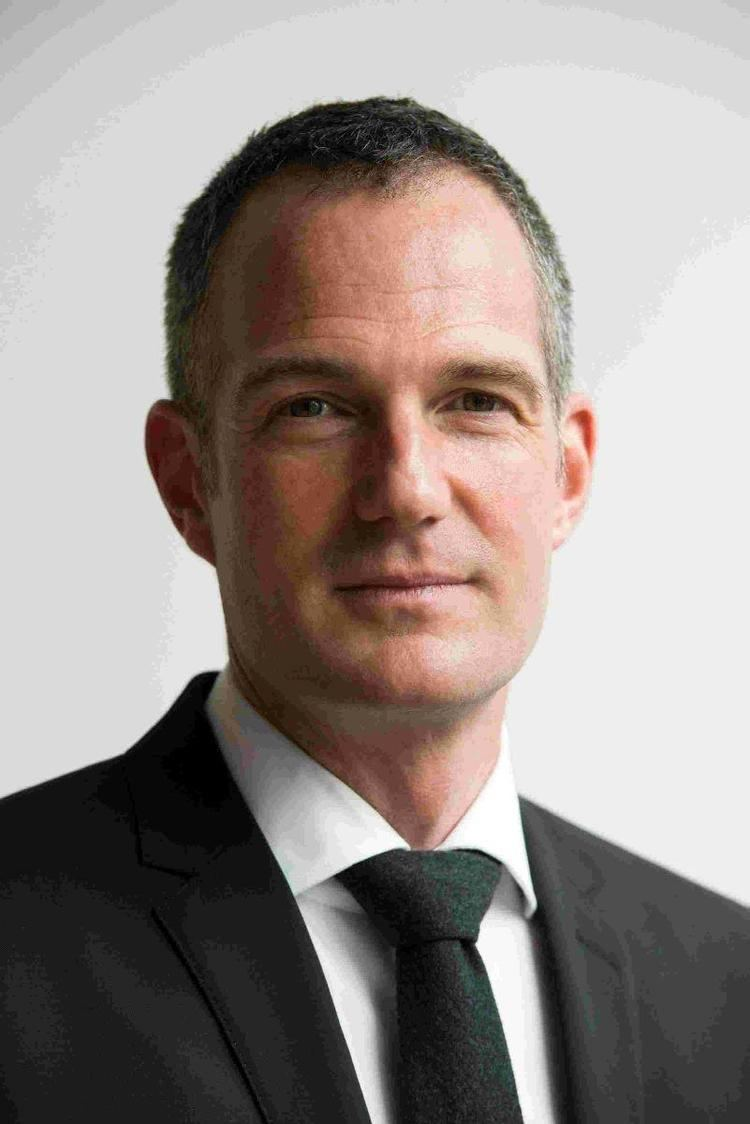
The Rt Hon Peter Kyle MP is the Secretary of State for Business and Trade and in the interview clip below, he is repeatedly asked why he has not declared his membership of the Labour Friends of Israel group. As the interviewer points out, his is the key ministerial position when it comes to arms exports and yet he is a supporter of one of the warring parties. The Register of Interests makes no mention of this membership [accessed 27 March].

Facebook film

He is but one of a large number of members of this powerful and well-funded lobby organisation. It must be questioned whether it is appropriate for a minister to a) be a member in the first place and b) why he has not declared it. His voting record displays a distinct pro-Israel and ‘anti-Palestinian’ stance according to the MP War Crimes web site. Further background is provided on the CAAT site.

As we have noted on several occasions before, the Salisbury MP, Mr John Glen is also a member, indeed a ‘proud member’ of the Conservative version of the lobby group and the same site lists his voting record.

It is reported today (27th March) that it is not safe for anyone in Beirut due to Israeli bombing. Israel is engaged in a plan to clear most of Lebanon up to the Litani river. Human Rights Watch have reported that Israel is using white phosphorous in southern Lebanon providing compelling evidence. The use of this weapon which causes severe injuries, is banned under International Humanitarian law in cases where there are civilians. The IDF claim they are: “currently unaware and cannot confirm use of shells that contain white phosphorous in Lebanon as claimed. The IDF did not watch the visuals supposedly relied on by Human Rights Watch in making its claims, and therefore cannot currently comment on them.”

Sources: HRW, Independent, Guardian, Declassified, Salisbury Journal, CAAT.

Rise in authoritarianism


Worrying increase in authoritarianism both sides of the Atlantic. Talk at the Exeter conference

March 2026

Our rights are hard won. Britain still has elements of its feudal past. We think of ourselves as a democracy and great fuss is made of elections and polls but in many respects power is not with the majority or the people. Governments have steadily attempted to reduce the ability to protest and have passed legislation to make demonstrations harder and harder. At the Exeter conference there were two presentations on the rise in authoritarianism on both sides of the Atlantic. In the US, President Trump has carried out a large number of attacks on the press, the judiciary, universities, opposition politicians and more or less anyone who disagrees with him.

What happens in America quickly crosses the pond and so it is with the rise of authoritarianism in the UK. The form may be different and it is less raucous but the erosion of rights continues steadily. The presentation gave some examples. A report by US Amnesty goes into a lot more detail.

Legislation is passed which is vague and allows for considerable interpretation by the police and others. There is an increased reliance on secondary legislation. This means important measures are placed in statutory instruments not in the acts themselves thus permitting unscrutinised measures to become law. Surveillance powers have increased. This has included the use of facial recognition technology now being introduced more widely. Failure to properly fund agencies meant to control corporations. An extreme example is the almost complete failure to control the water companies which have neglected to invest in infrastructure, have extracted billions in dividends which were offshored and have allowed rivers to become seriously polluted and open sewers.

Anti-protest

Governments do not like protest and never have throughout our history. Reforms have seldom come from the power holders but wrested from them by protest. Witness enfranchisement which has had a long and troubled history. One of the more fearful examples was the 1819 Peterloo massacre in Manchester at which 14 were killed and hundreds injured when they were attacked. There has been a succession of Reform Acts – in 1832, 1867 and 1884 for example – after long periods of unrest, marches and mass protests. Each reform gave more people the vote. After decades of campaigning and violent protest, women achieved the vote in the late 1920s.

In modern times the growth of the ‘think tanks’ has become a major issue. Millions are spent by them on lobbying ministers and MPs. David Cameron recognised this was a growing problem when he was prime minister. He subsequently became ensnared in a lobbying scandal. Often opaquely financed they are able to suggest legislation and argue against better climate legislation for example. The biggest and best funded of the lobby organisations are the Friends of Israel groupings to ensure Israel’s position is powerfully put.

Key to the rise in authoritarianism is the need to denigrate and stigmatise those who question it or government policies. They are called ‘woke’, ‘lefty lawyers’, ‘disruptors’ or ‘extremists’ and large parts of the media are happy to promote these assaults.

Control of information is key and the secretive company Palantir was mentioned which is almost by the day, increasing its reach into the British state with few effective controls. We shall be commenting on this dangerous organisation in a subsequent post. UPDATE, 24 March. Warnings about Palantir and a contract with the Financial Conduct Authority. Later post on Palantir.

What can done?

Such is the power and reach of the various organisations, from government down through well-funded lobby organisations, American platforms including AI, and large elements of the media, that opposition is difficult. Even raising awareness is a challenge. Another problem is apathy. Many are simply unaware of the creeping authoritarianism around them. Some approve of curbs on protests. A number of people at Exeter had never heard of Palantir for example. The emotional power of the right wing is not to be overlooked.

As we learned from the Brexit campaign, simple slogans and emotional appeals are what cut through not factual presentations. Creeping authoritarianism and the steady loss of power will need to make emotional connections with people, to point out in simple language and images, the steady risks of allowing these powerful organisations, most of whom are based in America, to gain more and more influence and control over our organisations such as the NHS.


Recent posts:

Thought of subscribing? It’s free.

The State v. Trudi Warner


Interesting and troubling webinar by the Good Law Project on the case of Trudi Warner

June 2024

Readers will recall that earlier in the year, Trudi Warner stood outside the Inner London Criminal Court and held up a placard telling passers by that juries had the right to vote on their conscience. The trial was taking place of several climate activists and a key issue was that the judge in the case, Judge Silas Reid, prevented the defendants from mentioning that they were campaigning for action on the climate. The worry was that if the jury realised that this was what the defendants were doing, there was a probability that they would acquit. Many websites commenting on this case allege that the judge is against people protesting (which we cannot verify) hence his aggressive threats to defendants and others.

Trudi Warner was then arrested for contempt of court by displaying her placard which states a fact, long established in English law, that juries can indeed vote on their consciences. This was established in the Bushell (sometimes Bushel) case of 1670, where a judge locked up a jury and deprived them of food and water for disobeying his directions.

Jolyon Maugham of the Good Law Project, said that people had a ‘sweet notion’ of the law which this case cast into doubt. It was one of the factors in the Brexit debate where people often spoke of sovereignty and an aspect of that was hostility to Brussels (actually Strasbourg) telling us what to do. ‘We should have our own laws’ was a frequent refrain. This has re-emerged with the proposed Rwanda flights and a desire by some politicians to come out of the European Convention. There is a deep belief in the primacy of British Justice with its ancient traditions going back to Magna Carta. This and other cases demonstrate that this sanguine view of our justice system is misplaced.

Climate protests

The state has the power to lock people up and juries are a means of tempering this power he said. The plain fact was that the fossil fuel companies mounted well-funded campaigns to promote their activities and frustrate governments trying curb fossil fuel use. There is a close association between government, Big Oil and the media. Sections of the media refer to protestors as an ‘eco-mob’, ‘zealots’ or a ‘rabble’ among other epithets. Fossil fuel companies fund several Tufton Street think tanks with millions, yet TV companies, including the BBC and Channel 4, fail to ask interviewees from them, ‘who funds you?’

The various protest organisations including XR and Just Stop Oil angered government ministers by highlighting the shortcomings of government actions in dealing with the climate crisis. Their activities had also angered members of the public who were sometimes inconvenienced. As ever, a totally peaceful protest is ignored but glue yourself to the pavement and you achieve some publicity.

Arrest

So Trudi Warner was arrested for contempt of court and ended up in the Old Bailey for trial 8 days later. At a permission hearing which establishes whether there is an arguable case, it was thrown out by the judge who said that the ‘government had mischaracterised the evidence‘ and that it was ‘fanciful to suggest that Ms Warner’s actions fall into the category of contempt‘. The government said it is to appeal the decision [before the election was called]. It is ironic to note that a plaque celebrating the seventeenth century Bushell case is fixed to a wall in … the Old Bailey. To remind ourselves – the placard merely pointed out the plain fact that a jury has the right to decide a matter according to its conscience and to disagree with the judge’s direction.

Conclusion

The government has introduced a range of bills which all have an effect of making protest more difficult and risky. Police have been given more powers which they have used in preventing protests from taking place including, for example, at the Coronation. There is a kind of cosy alliance between Big Oil with its range of well-funded lobbyists; a government all too keen to restrict protest, and some media organisations who eagerly demonise protestors and deny climate science. In the process, rights and justice are trampled on. If, as is being predicted, a Labour government comes into power on 5th July, it will be interesting to see if they pursue the appeal. It will a quick test on whether they will follow in the authoritarian footsteps of their predecessors or adopt a more permissive regime. Early signs are not promising as they do not have plans to annul any of the existing legislation.


During the webinar, we saw clips of film of the protests prepared by Page 75 Productions who will be hosting a showing of the full film in September. A video can be accessed here.

Sources: Good Law Project; The Guardian; The Canary; Christian Climate Actions

Lobbying – the hidden scandal


Lobbying and business influence in government at a high level.  MPs receive millions for lobbying

We have frequently drawn attention to the issue of corporate influence on our political process and in particular, the role of oil and arms companies.  We have recently seen three leaders from China, Egypt and India, visit the UK and be given the red carpet treatment.  Each has – to put it mildly – a poor human rights record.

In the case of China it includes the use of torture, shutting down the freedom of speech and more executions than the rest of the world put together.  Egypt has been involved in mass arrests and torture and President Modi of India has a dubious record in terms of the treatment of Muslims.

It seems as though the ‘prosperity agenda’ is eclipsing all else and the only thing that matters seemingly, is the pursuit of business and contracts.  No one is arguing for boycotts but that the issue of human rights be brought up in discussion with these leaders.

A factor in this is the role of lobbyists and a recent analysis by Transparency International is worrying and should receive wider coverage.

Analysing the new UK Register of Lobbyists and data from Parliamentary registers of interests, their new research has found:

  • Less than 4% of lobbyists are covered by the Government’s new lobbying register – almost all lobbyists are completely unaccountable.
  • 8/10 of the most frequent lobbyists are from FTSE 100 companies – lobbying is dominated by the corporate world.
  • £3.4 million paid to 73 MP’s last year for external advisory roles – a significant risk of conflicts of interest.
  • Payments for Parliamentary advice is still allowed in the House of Commons, but prohibited in the House of Lords, Scotland and Wales – a major loophole in the rules (TI’s emphasis)

The findings come after detailed analysis of research across Westminster, Scotland, Wales and Northern Ireland.  The report can be read on their web site or can be accessed here[There is also a permanent link to their site at the bottom of our page under ‘Links‘]

With such a high level of corporate lobbying and with the substantial level of fees MPs are earning, it is perhaps not surprising that business interests get such a high profile and human rights issues so low.

It appears from the report that the situation has got worse under the new government.  There were some publications of meetings with lobbyists concerning the previous year but that now seems to have stopped.  Most of the lobbying it seems is around domestic matters for example, firms trying to get a slice of the health service.

Business is important and of course companies should be free to lobby.  But it should be transparent and registered.  More importantly, business interests should not trump all else.  The government is not after all some kind of selling operation for FTSE 100 companies.

UPDATE: 16 NOVEMBER

It’s not about human rights but as if to illustrate the point, it’s just been reported the ex Health Minister, Lord Lansley, is to take up posts with firms hoping to profit from the NHS. 

Andrew Lansley and the revolving door

Blog at WordPress.com.

Up ↑