UK aid to Saudi Arabia


UK has funnelled £2.4m to the Saudis to help them comply with humanitarian law

Last year, there was a political fuss when the Department for International Development was merged with the Foreign Office and subsequently, its budget cut from 0.7% of GDP to 0.5%.  David Cameron, when prime minister, had kept to the higher level despite a fierce campaign and a string of exaggerated stories by the tabloid press, principally the Daily Mail.  DFID had a good reputation and with broadly favourable audit reports on how and where the money was spent and its effectiveness.

A number of prominent Conservatives, including Andrew Mitchell, Tobias Ellwood and others, opposed the move.  The pledge to keep the 0.7% was in the last party manifesto.  There were many Conservatives however who were in favour of the cuts saying that the aid was best spent at home especially with the money needed for Covid.  The arguments against the aid were that it was wasted and one example quoted was India which can afford nuclear weapons and has a space programme.

It is more than a little surprising therefore to discover that HMG has been quietly funding the Saudi government to the tune of £2.4m over a 4 year period to help them with meeting international humanitarian law requirements.  In view of the Saudi regime’s continuing activities, it doesn’t seem like it is money well spent.  Opposition to the regime is ruthlessly crushed.  The women who argued for the right to drive languish in prison.  Executions continue apace with a record 184 in 2019.  Torture is routine.  And then there is the bombing of Yemen where there have been 8,758 civilian deaths and 9,810 injured.  During the period of this funding, the regime murdered and then dismembered the body of Adman Khashoggi.

So while aid will be cut – not just the reduction in the percentage itself but the reduction in our GDP because of the pandemic – money continues to flow to one of the richest countries in the world.

Sources: Human Rights Watch; Guardian; al Jazeera; Yemen Data Project


Sport and human rights


The use of sport to sanitise regimes with atrocious human rights records may be increasing

The use of sport and ‘sports wash’ to give favourable publicity to regimes engaged in a range of human rights abuses is probably on the increase and has been particularly noticeable this year.  Sport is now a major international business and involves huge amounts of money.  Some sport is international in scope and has audiences numbered in the millions.  With such a captive audience, it is small wonder that countries who want to sanitise their reputations and present wholesome images of themselves, turn to sport to deliver those images.

Sport is also closely connected with the media and there are sometimes frenzied negotiations to get rights to publish or transmit sporting events.  With so much invested in securing rights and harvesting the advertising which goes with it, there is little time, space or inclination to question too much what goes on behind the scenes.  Sports pages live at the back of most newspapers and exist in a kind of private world.  Pages of dramatic photos of footballers, cricketers, rugby players and others are displayed seemingly detached from the rest of the world.

Abuses are many and include the terrible conditions workers endure building stadia in the Gulf for the football world cup.  Athletes themselves are subject to abuse by their trainers and coaches and British Cycling has been subject to allegations of this kind by a whistle-blower.  Drugs have been a perennial problem and infect many sports.

In recent years, we have seen more examples of sports wash.  We featured the attempt by Saudi Arabia to fund the Newcastle Football Club as part of its campaign to present a better image of the country.  A feature of that campaign was the encouragement it received from the the club’s supporters.

Holding this rally is ‘grotesque’


Today (6 January 2021), attention has focused on the Dakar rally which will pass close to the prison where Loujain al-Hathloul is held for campaigning for the right of women to drive.  The regime has been going through some contortions to get itself out of a PR mess of its own making.  The threat to imprison her for a lengthy jail term were dropped and with suspended sentences she should be released in a few months.  Loujain was kidnapped, held without access to a lawyer and tortured.  The rally is organised by the Amaury Sports Organisation whose website does not appear to make claims about human rights adherence.

A tweet from Grant Liberty says:

It is utterly grotesque that at the same time Saudi authorities will host a motor sport event — including women drivers — the heroes that won their right to drive languish in jail.  5 January 

Loujain’s sister said in a tweet:

No-one should be fooled by the Saudi regime’s attempts at sportswashing … Racers might not know it, but their participation there is to hide and whitewash the host’s crimes.  Lina al-Hathloul, Loujain’s sister 5 January

These trends suggest that sport needs to take greater interest in human rights and what is happening in the countries they compete in.  If they are being used to sanitise the reputation of regimes who torture, arrest opposition leaders, human rights defenders, lawyers and generally ignore the human rights of their citizens, they must ask themselves ‘is this what sport is for?’  Huge interest was generated when the footballer Marcus Rashford was influential in forcing the government to change its mind over school meals.  In some areas therefore, sport is beginning to use its power and its huge following to effect change.

But all too often, the lure of big money and a willingness to look the other way, seems to be the prevailing ethos.


Human rights activist faces lengthy jail term in Saudi


The human rights activist, Loujain al-Hathloul, faces a lengthy jail term in Saudi Arabia for advocating the right of women to drive a car and for campaigning for the end of the male guardianship system.

In 2018, she was abducted and arrested for defying the ban on women driving and for her campaigning against the male guardianship system.  She was held for many months incommunicado, and in prison was beaten, sexually assaulted, tortured with electric shocks and waterboarded.  Human rights groups, including Amnesty, and the UN Human Rights Committee, have urged for her to be released.

The latest news is that at a hearing in a terrorism court, the judge said the sentence would be announced on Monday.

Prince Mohammed bin Salman claimed when he first assumed power, that he would reform the justice system in that country.  There has been little sign of that since with arrests of opponents, routine use of torture, harsh crackdowns on anyone opposing the monarchy and widespread use of the death penalty.  He faces little pressure to change however, with the UK and other western countries all too ready to fawn over the prince in their desire to secure lucrative arms deals.  Astonishingly, the UK government was active behind the scenes in securing a place for Saudi on the UN’s Human Rights Council.

See also the Grant Liberty website.


Death penalty Report: Nov- Dec


This months Death Penalty report is now available thanks to group member Lesley for putting it together.  Two cases in particular are noted and links to those can be found below.  Note that China executes more of its citizens than the rest of the world put together but details are a state secret.

Report: Nov – Dec (Word)

Ali al Nimr

Kris Maharaj

Tree featuring Human Rights Defenders

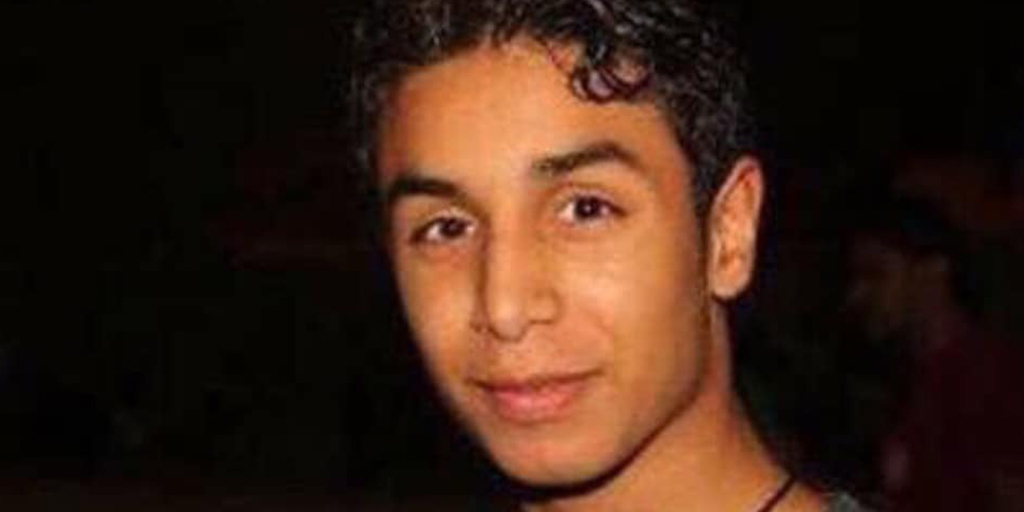
Birthday greetings to Ali al Nimr


Saudi Arabia: Send a message to Ali al Nimr for his birthday

This is a post from Reprieve.

Ali al-Nimr will turn 26 years old on December 20, 2020.

He’s been locked away from his family for seven years, and on death row in Saudi Arabia for five.

His so-called ‘crimes’ include “explaining how to give first aid to protesters.” For that, Ali was tortured until he signed a ‘confession’.

Ali shouldn’t be on death row. He shouldn’t be alone on his birthday.  For further details see this link to a previous post.

Will you write a message to Ali for his birthday and remind him that he is not alone?

This the link to send a message.

Death Penalty report: Oct – Nov


We attach this months DP report thanks to group member Lesley for compiling it.  It is full report this month with a wide range of countries to report on.

Report (Word)

Arms sales to Saudi – latest


Campaign Against the Arms Trade launches legal challenge

CAAT has launched a legal challenge after the UK government decided to resume arms sales to the Saudis for use in their bombing campaign in Yemen.  We discussed the flimsy grounds and shaky reasoning for this decision in a previous post.  The CAAT post can be accessed here.

Saudi promises shown to be false


Solemn promises by Saudi authorities about ending the death penalty for minors may not be true

Reprieve reports that a promise by the Saudi authorities to end the death penalty for minors does not look it is going to happen.  A juvenile sentenced to death for trivial offences could still take place.  See the full story published by Reprieve.

Arms sales to Saudi resume


The UK has resumed arms sales to the Saudi regime

In 2019 the Court of Appeal ruled that the UK government had acted unlawfully by licensing weapons to the Saudi armed forces for use in the Yemen conflict without assessing whether incidents had occurred in breach of International Human Rights law.  Our weapons – along with those supplied by other countries principally the USA – have cause immense damage and suffering to the people of Yemen.  The UN has estimated around 7,700 dead since beginning of the conflict in 2015.  To that must be added the thousands of injured and the destruction of major parts of the country.  The effects on the civilian population have been devastating. 

Hospitals, schools, market places, residential areas, agricultural areas and production facilities have all been bombed using our planes and weapons.  Although mistakes do happen in war and the wrong thing is bombed, the extent of these ‘mistakes’ leads one to assume that there is a deliberate attempt to bomb civilian targets.  We must also note that UK personnel – including people from the RAF – are involved in advising the Saudis so something is going seriously wrong.

The British government maintains – against all the evidence – that there is no risk of IHL violations.  In a Commons statement on 7 July justifying setting aside the Court’s judgement, the minister, Liz Truss MP said:

[…] I have assessed that there is not a clear risk that the export of arms and military equipment to Saudi Arabia might be used in the commission of a serious violation of IHL.  (House of Commons written statement 7 July 2020)

It is worth reading the key passage in this statement which purports to give a justification for this decision:

This analysis has not revealed any such patterns, trends or systemic weaknesses.  It is noted, in particular, that the incidents which have been assessed to be possible violations of IHL occurred at different times, in different circumstances and for different reasons. The conclusion is that these are isolated incidents.

This reasoning is tenuous in the extreme.  Because violations ‘occurred at different times, in different circumstances and for different reasons’ the minister concluded that they are ‘isolated incidents’.  Surely a key factor is the frequency of these incidents especially if your argument is based on the numbers?  The sheer number of civilian targets is way beyond what anyone could describe as ‘isolated’.   The Oxford dictionary describes isolated to mean ‘untypical, unique’: these bombings are neither untypical nor unique.  Another curious aspect of this statement is the phrase ‘for different reasons’ implying knowledge of what the purpose of the raid was yet the statement is full of uncertainties and the difficulty of assessing the incidents.  

Kate Allen, director of Amnesty international said:

How the Government can seriously describe a five-year Saudi-led aerial assault on Yemen which has seen numerous examples of civilians killed in schools, hospitals, funeral halls and market places as a set of ‘isolated incidents’ is almost beyond comprehension.

This seems like an attempt to rewrite history and disregard international law. The UK is bypassing its obligations under the international arms control framework. Its approach to this decision has effectively rendered our own protections meaningless.  (New York Times, 7 July 2020)

It is small wonder that human rights organisations have reacted with horror at the decision and the speed with which the minister set about reinstating arms shipments to Saudi.  The Campaign Against the Arms Trade described the decision as ‘rank hypocrisy’.

The government is determined to sell arms to the Saudi and seems genuinely unconcerned at the fate of those on the receiving end.  Liz Truss’s argument about isolated incidents is almost insulting.  So great is the scale of the business that stopping it or seriously scaling it back is economically impossible.  Truly it is the tail which wags the dog.

Sources: BBC, CAAT; New York Times; Human Rights Watch; Independent; The Guardian


Death penalty report: August – September


Our latest monthly death penalty report is available thanks to group member Lesley for the work in compiling it.  Note that China is the world’s largest executioner but the details are a state secret.

Report, August- September (Word)

Blog at WordPress.com.

Up ↑