Possible execution of someone a juvenile when offence committed
We enclose an urgent action concerning a man who was a juvenile when the alleged offence was committed. If you are able to write this would be appreciated.
Amnesty in Salisbury & South Wiltshire
Promoting human rights from Salisbury UK
We enclose an urgent action concerning a man who was a juvenile when the alleged offence was committed. If you are able to write this would be appreciated.
Amnesty’s annual report contains elements which will be very familiar to readers of this blog. Overall the picture is bleak. The use of torture and other forms of ill-treatment is still used in 122 countries around the world many of which will have signed the UN convention against its use.
Countries are using the threat of terrorism to clamp down on free speech and to arrest those who disagree or oppose them. A culture of impunity is developing where human rights infringements go unpunished and have no effects on trade or government dealings.
Grim reading.

UPDATE: 12 March
A fuller version of the talk is now to hand and can be accessed here:
soton talk (pdf)
On Friday 19 February, the Southampton and Romsey groups of Amnesty hosted a debate on the HRA. The speakers were Dr Clare Lougarre of Southampton University and Dr Alan Whitehead, the MP for Southampton Test. A representative from the Conservatives was invited but did not take up the invitation.
Clare began by placing the HRA in its context as a natural consequence of the Euroean Convention on Human Rights [1950]. In the context of the debate on the current government’s manifesto commitment to annul the HRA, articles 2, 3 and 4 were significant.
She said there were two options for the government: they repealed the act but we stayed within the convention or, it withdraws its signature from the convention altogether. In the first case, there would be little difference as we would ultimately be bound by the European Court. In the second instance however there would be no recourse to the EC and the most likely affected by this are the vulnerable in society.
Dr Whitehead said he was puzzled by what the government wanted to do. The animus against the HRA was based on myth, semi-truths and half truths he said. One myth was that it was ‘Labour’s Human Rights Act.’ This was a frequent phrase used by conservative critics. It simply wasn’t true he said, it was a cross party bill supported by many conservatives. He was moved to ask ‘what part of the act don’t you like?’ He reminded the audience that it was a conservative – Winston Churchill – who was one of the prime movers in creating the ECHR in 1950.
One of the charges against it was that the court had ruled on areas which were never intended by the original convention, in other words there was ‘mission creep.’ This was inevitable since the articles were widely drawn and also, attitudes had changed over time with, for example, our approach to abortion.
The case that is frequently brought up is Abu Qatada. This was presented as a failing of the HRA. It was not. The Home Office had made mistakes in its original paperwork and the reason he could not be sent back [to Jordan] was because either he, or the witnesses, would be subject to torture. [He might have added that abolition of torture was subject to another treaty altogether.]
A further point made by Dr Whitehead was that it should not be for a single government to make law on something as important as this. He did not think we would see anything before the end of the parliament and what would emerge would be a ‘mouse’ of a bill.
It was a lively and informed debate and all credit to the two Amnesty groups for organising it. For further information on the HRA go to (among other sites) British Institute for Human Rights and Rights Info. Now that the movement to come out of the EU is getting underway, the HRA will be a whipping boy for those that want us to leave the union. Both these sites help counter the frequent flow of misinformation by some sections of the media and some politicians.

Today, Louisiana prisoner Albert Woodfox walked free, 44 years after he was first put into solitary confinement.[We are publishing this case from Amnesty USA. The Salisbury group has campaigned on behalf of this man so we are delighted to see his release after all this time.]
I want to thank my brother Michael for sticking with me all these years, and Robert King, who wrongly spent nearly 30 years in solitary. I could not have survived without their courageous support, along with the support of my dear friend Herman Wallace, who passed away in 2013. I also wish to thank the many members of the International Coalition to Free the Angola 3, Amnesty International, and the Roddick Foundation, all of whom supported me through this long struggle. Lastly, I thank William Sothern, Rob McDuff and my lawyers at Squire Patton Boggs and Sanford Heisler Kimpel for never giving up. Although I was looking forward to proving my innocence at a new trial, concerns about my health and my age have caused me to resolve this case now and obtain my release with this no-contest plea to lesser charges. I hope the events of today will bring closure to many. I’m carrying those words with me today as we celebrate this victory. Today Albert Woodfox walks free—February 19, 2016, his 69th Birthday. In Solidarity, Jasmine Heiss Senior Campaigner, Individuals at Risk Program Amnesty International USA |


The death penalty summary for the last month is published below with thanks to group member Lesley for compiling it. It contains some good news with four more abolitionist countries and modest progress in USA. Set against that is the dire situation in Saudi, Iran and Pakistan. China is the worlds leader in executions but the figures are a state secret.
Many of the items in the summary are covered in greater detail elsewhere on this blog.


Evidence gathered by Amnesty International appears to confirm reports that the Saudi Arabia-led coalition forces dropped US-manufactured cluster munitions on the Yemeni capital, Sana’a, on 6 January 2016. The attack killed a 16-year-old boy and wounded at least six other civilians, and scattered sub munitions in at least four different residential neighbourhoods. Amnesty International is calling on the coalition to immediately stop using cluster munitions, which are inherently indiscriminate weapons and are internationally banned.
By Amnesty International, 15 January 2016, Index number: MDE 31/3208/2016
A useful guide to the Act has just been published by the British Institute of Human Rights and can be accessed here either in e-book form or as a video.


Things have gone quiet with the plans to abolish the HRA and the promise of something before Christmas has not come to anything. There is a glimmer of hope in that Michael Gove has taken over as Justice Secretary and seems willing to modify or drop completely some of the worst excesses of his predecessor. However, the negotiations currently coming to some kind of conclusion concerning our role in Europe are likely to see a fresh assault on the act emerging soon. The watch word is ‘sovereignty’. Parliament wants to be sovereign and this is being presented as a good thing and it is implied we will be the better for it. The right wing press will delight at this and there will be many articles about ‘bringing power back to Westminster’ with the implication that this will result in better laws for us all. Salisbury MP John Glen is a keen advocate for abolition.
A parallel story over the past couple of weeks has been the tax situation of Google and other American behemoths who so manage their affairs that they pay little or only derisory levels of tax. Here, our sovereign parliament (since Brussels has little to do with tax collection) has failed. Indeed, successive chancellors have made numerous announcements about ‘cracking down’ but almost nothing seems to happen. Hardly surprising since accountants from the big four firms are actually in the Treasury ‘advising’ the chancellor on tax policy. So the idea that sovereignty is key and is some kind of magic bullet is clearly illusory and does not lead to better outcomes.
A useful guide explaining the HRA and what it does has just been published by the British Institute of Human Rights and is worth a look. There is a short video as well. No doubt we will be returning to this topic when the announcements are made.
Follow us on Twitter and Facebook

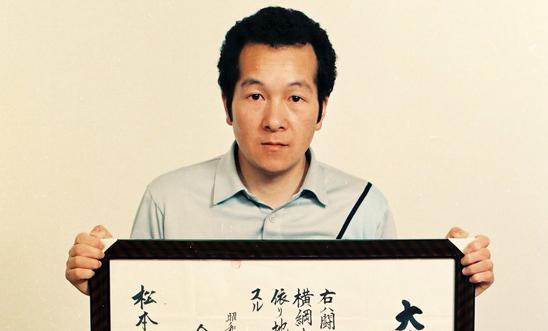 Matsumoto Kenji © Private
 Well, if you’ve been watching the Netflix documentary ‘Making a Murderer’ you may be thinking of the case of Brendan Dassey who, at the age of 16, confessed to assisting his uncle in a rape and murder after hours of intense police questioning. No lawyer was present during the interrogation, nor was his mother, despite the fact that he was a minor.
Dassey later recanted his confession and one Wisconsin lawyer who assisted on the case on seeing the video of the ‘confession’, described “feeling physically sick as I watched it (sic), he just didn’t understand what was going on”. No physical evidence linked him to the crime and jurors have stated that his conviction was heavily influenced by the confession.
Brendan Dassey is not the only young man spending a very long time in prison after being convicted of a crime following a confession extracted in contentious circumstances.
In 1993 Matsumoto Kenji – along with his older brother – was arrested and charged with a double murder in Japan. Kenji has an IQ of between 60 and 70, allegedly caused by Minamata disease (mercury poisoning) which was common in the prefecture in which he was born, around the time he was born. As a result of the condition Kenji suffered from seriously hampered cognitive function.
Amnesty has serious concerns about Kenji’s treatment at the hands of the police. His interrogation has been described at coercive, as officers offered him food if he talked and told him to “be a man” during the interrogation.
Upon learning of a warrant being issued for his arrest, his brother killed himself and Kenji was left to face trial alone. During his trial it was accepted by the court that he was totally dependent upon his brother and was unable to stand up to him. Following his conviction he was sentenced to death, a sentence which has been repeatedly upheld in subsequent appeals.
In Japan, death row patients are held in solitary confinement and are not allowed to speak to other inmates, only receiving occasional visits from family or lawyers. When they are in their cells they are forbidden from moving, being punished severely if they do. They are also given no prior warning before they are executed, leaving death row patients suspended in an endless state of anxiety.
Unfortunately, Kenji’s mental health has deteriorated significantly on death row, to the point that he has developed a delusional disorder. His lawyers have argued that he is currently unable to communicate or understand information pertinent to his case and they further believe that his isolation has contributed significantly to his deteriorating mental health condition.
These two cases, so similar, illustrate the vulnerability of individuals with serious learning difficulties in the face of major criminal charges, and the difficulty they face in ensuring their right to fair treatment at the hands of authorities in the criminal justice system.
Under international laws around use of the death penalty, it is illegal to execute someone with serious mental or intellectual disabilities. At Amnesty, we continue to oppose the death penalty in all instances and in all cases as it’s a violation of the right to life and to be free from torture.
Today is Kenji’s 65th birthday. It’s the 16th birthday he has spent on death row.Kenji’s case is currently under review for appeal and the Minister of Justice will be the key decision-maker. If you have a moment, please write to him and call for him not to execute Kenji.
Please write to Justice Minister Matsuhide Iawki, urging him:
You can also write to Health Minister Yasuhisa Shiozaki and ask him to:
Minister of Justice, Matsuhide Iawki
Ministry of Justice
1-1-1 Kasumigaseki
Chiyoda-KU
Tokyo 100-8977
Japan
Twitter: @MOJ_HOUMU
Minister of Health, Yasuhisa Shiozaki
1-2-2 Kasumigaseki
Chiyoda-ku
Tokyo, 100-8916
Japan


 He was the United States’ longest serving prisoner held in isolation. Nearly every day for more than half of his life, Albert Woodfox woke up in a cell the size of a parking space, surrounded by concrete and steel. Tomorrow morning, for the first time in more than four decades, he will be able to walk outside and look up into the sky. Over the course of nearly five years working on Albert Woodfox’s case at Amnesty, I heard many times that the odds were insurmountable. But I always knew that Albert Woodfox would go home. I have seen the incredible power of our movement when we work together. I have seen the courage humility, and determination of so many of you who have played big and small roles to help this historic human rights victory come to fruition. I have seen the unbelievable strength of the Angola 3: Robert King, Herman Wallace, and Albert Woodfox himself—all three of whom endured nightmares but persevered with humor, dignity, and resolve to wage a relentless fight against the cruel, inhuman and degrading practice of prolonged solitary confinement in the United States. With the knowledge of his release, Albert had this message for those who have helped him secure his freedom:
 Follow us on
