Key Changes in UK Asylum Seekers’ Rights


Refugees and asylum seekers remain a hot political issue

July 2026

With attention shifting to Andy Burnham and whether he will be the new prime minister in a matter of days, and the resignation of Nigel Farage from parliament resulting in a new by-election in his constituency, other topics like immigration have dropped – albeit temporarily – from the news. The latest effort by the Government to get a grip on the immigrant/asylum seeker issue, the Asylum and Immigration Bill, is now published, with the first debate to take place on July 13th.  Much of this post will be related to the Bill.

As mentioned previously, the most contentious parts of the Bill are the amendment of the waiting period for prospective residents from 5 years with a promise of acceptance to 2½ years, to be reviewed every six months.  Family reunions are also being more restricted, and the Home Secretary has mooted making immigrants pay up to £10,000 once they are in work.  Meanwhile, the “one-in-one–out” scheme agreed with the French authorities for boat arrivals, is to be ended in October; about 900 exchanges have been made so far.

On a related topic, the Home Office state that successful claimants must move on from temporary accommodation within 42 days: as the backlog of cases falls, this has added to the number of migrants seeking accommodation quickly, and the IPPR say that this is increasing the number of homeless migrants (up to a quarter of rough sleepers are now non-UK nationals).

A new appeals body proposed by the Bill, the Independent Immigration Appeals Authority, would not require all panellists to be legally qualified.  The Law Society has opposed the measure, and it has been said that the idea, originally tried in Australia, was not a success.

Also in the Bill, the contentious Article 8 (right to family life) defence against deportation is addressed.  Little change to existing rules are proposed, but the impact is reckoned to be that 11,700 claimants per annum will be rejected. Nevertheless, 55% of those declined permission to stay will likely remain, due to technical issues.  The Home Office reckon that overall 34,000 asylum seekers have been granted leave to remain under Article 8.

Separately, the Home Secretary has announced a new scheme to allow local communities and educational bodies to sponsor refugees to settle in their area. A refugee work route is also expected to open next year.  These are concessions to the  critique by the Refugee Council that the reason refugees make irregular journeys – including via small boat – is due to the lack of legal routes available.  Prof. Sarah Singer notes that community sponsorship already exists, and that putting the responsibility on local communities might be seen as the Home Office avoiding responsibility.

Performance politics

Amnesty International’s response to the Bill was summarised by Steve Valdez-Symonds, Amnesty International UK’s Refugee and Migrant Rights Director:

“The introduction of yet more immigration legislation in the final days of Keir Starmer’s premiership, just before summer recess, will be a bitter disappointment for anyone hoping for a genuinely new direction from government. The Bill, and a series of recent immigration announcements, continue down a path laid by successive governments: reducing legal constraints on Home Office decision-making while making the immigration and asylum system increasingly punitive for migrants and refugees.

“Several proposals are deeply alarming: from attempts to weaken protections for families and sideline long-established human rights obligations, to plans for a Home Office-controlled appeals system without legally qualified judges, and proposals to warehouse people seeking safety in mass barrack-style accommodation centres, deny them the right to work, and then present them with a bill for it.

“Access to justice and the rule of law are not inconveniences to be worked around. Protections against torture, family separation and arbitrary state power are values this country has upheld for generations.  Yet this government appears willing to cast them aside in pursuit of political headlines.

“This is politics as performance, not problem-solving.  Abandoning principles that should never be negotiable, including by seeking to weaken the protections guaranteed by the European Convention on Human Rights, is weakness, not leadership.

“Whoever the new Prime Minister is, if they truly want a reset, then dignity, fairness and hope must be for everyone.  Britain needs a new politics that rejects scapegoating and appeasement and returns to the values of justice, humanity and equal dignity.”

The House of Lords Justice and Home Affairs Committee has a new report on the proposed changes, which repeats the criticisms of other bodies and fears that impacts may be harmful.

The new Independent Commissioner for Immigration and Border Inspection has criticised the asylum team at the Home Office for poor initial decision- making and a consequent long appeals backlog.  The backlog of asylum appeals is now up to 87,000.  Twice as many appeals are coming in as going out.  New appeals are not likely to be resolved for 3 years.

Migration Observatory have a report on the long-term jobs market for immigrants.  As of 2023, 13% of those granted leave 5 years earlier were earning £20k+.  Home Office have figures for 16-24 year-olds between 2015-2023, 24% had work within a year, 48% within two.

A new move is reported for improving the settlement of new arrivals, an asylum dispersal pilot scheme, reputedly being offered for the Autumn. 200 local authorities have expressed interest, but none have heard anything more. £500 million has reputedly been allocated, but no information on funding has been revealed.

Beyond the UK, UNHCR note a trend in global refugees.  The number of forcibly displaced people was down in 2025, the first drop in a decade.  They warn, however, of the dangers of returning home for many exiles..

Sea rescue has been reported as an issue.  The law on rescuing victims comes under 4 separate international laws, making responsibilities and enforceability difficult.  It is believed that between 2014 and 2020 some 83,000 deaths occurred among sea bound refugees.

AH

War crimes and atrocities in Sudan: report


Amnesty publishes a detailed report on the war in Sudan

July 2026

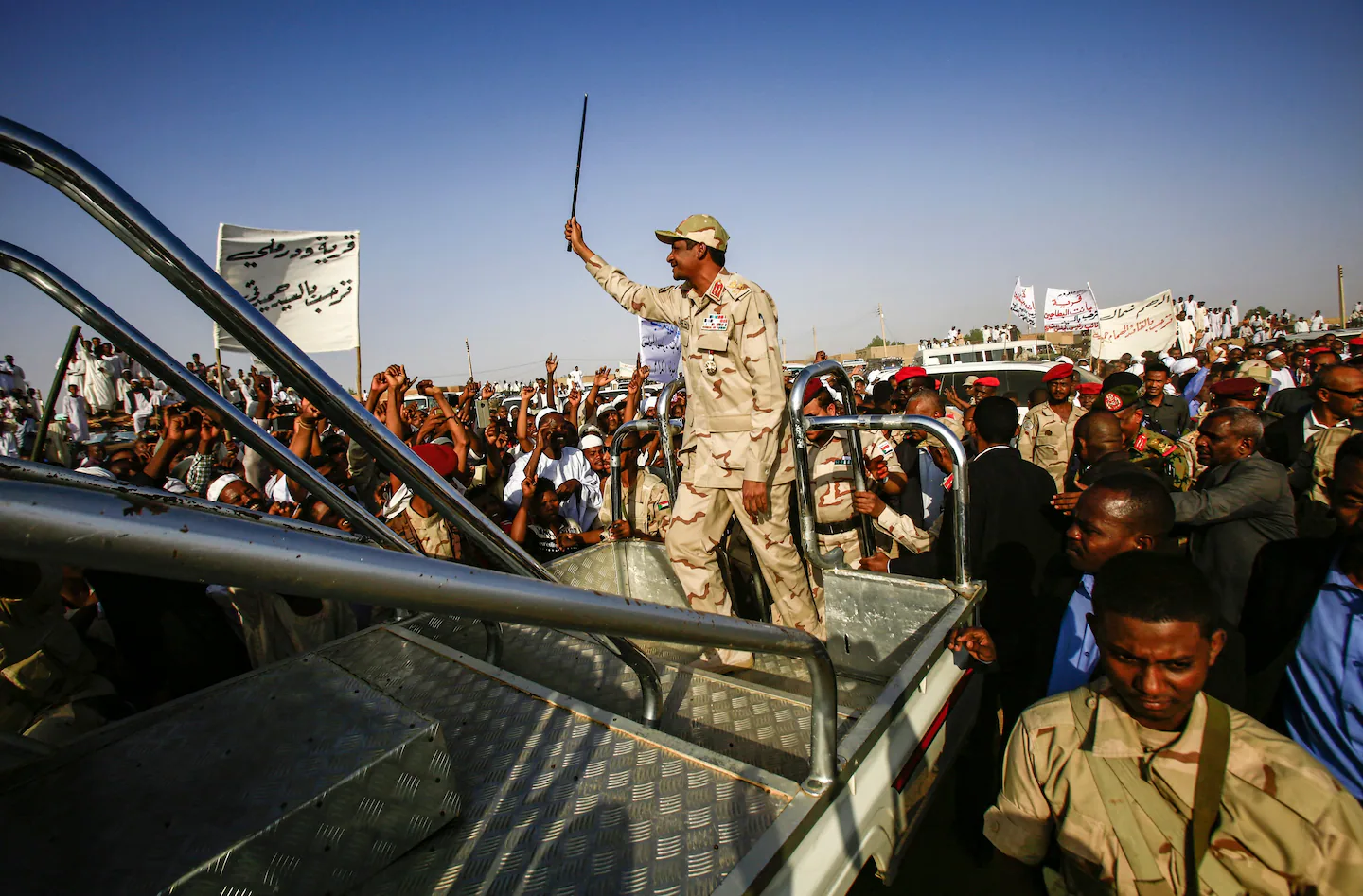
Amnesty has just released a report on the appalling events taking place in Sudan, one of those conflicts that get very little coverage in the UK or the West generally. Called City under Siege, Children under Fire, in describes the scale of the atrocities which took place during the campaign to capture El Fasher in North Darfur. The full report can be accessed via this link.

Civilians were killed, injured, beaten, tortured and detained in terrible conditions between 2024 and October 2025. Crimes included rape, sexual slavery, enslavement and persecution. Hundreds of thousands of children have been displaced and kept in poor conditions where abuse, physical assaults and lack of food and water was common.

Agnès Callamard, Amnesty’s secretary general said ‘it was a war on civilians. The world was warned of the horrors that civilians in El Fasher confronted as the RSF laid siege to the city. It is a stain on the conscience of humanity’.

A UN fact finding mission said the seizure of El Fasher showed all the hallmark of genocide.

UK collusion

The situation is made worse by the cuts in aid by US principally but also by the UK. Another factor is the role of the UAE who are alleged to be supporters of the RSF and supplying them with weapons and other materiel. The UK has deep and historic relationships with the kingdom reaffirmed in a statement in April. The statement does refer to Sudan but very much in detached way giving the impression that they want the conflict to end but not admitting their role in its continuation.


Minutes and newsletter


Contains a number of interesting items about human rights today

May 2026

We are pleased to attach our latest minutes and newsletter. We do not publish a newsletter as such but the minutes double as one. They contain pieces about immigration, the death penalty and the slowly deteriorating state of rights in the UK. Towards the end you will find details of forthcoming activities if you were interested in making contact.


Latest posts:

Rise in authoritarianism


Worrying increase in authoritarianism both sides of the Atlantic. Talk at the Exeter conference

March 2026

Our rights are hard won. Britain still has elements of its feudal past. We think of ourselves as a democracy and great fuss is made of elections and polls but in many respects power is not with the majority or the people. Governments have steadily attempted to reduce the ability to protest and have passed legislation to make demonstrations harder and harder. At the Exeter conference there were two presentations on the rise in authoritarianism on both sides of the Atlantic. In the US, President Trump has carried out a large number of attacks on the press, the judiciary, universities, opposition politicians and more or less anyone who disagrees with him.

What happens in America quickly crosses the pond and so it is with the rise of authoritarianism in the UK. The form may be different and it is less raucous but the erosion of rights continues steadily. The presentation gave some examples. A report by US Amnesty goes into a lot more detail.

Legislation is passed which is vague and allows for considerable interpretation by the police and others. There is an increased reliance on secondary legislation. This means important measures are placed in statutory instruments not in the acts themselves thus permitting unscrutinised measures to become law. Surveillance powers have increased. This has included the use of facial recognition technology now being introduced more widely. Failure to properly fund agencies meant to control corporations. An extreme example is the almost complete failure to control the water companies which have neglected to invest in infrastructure, have extracted billions in dividends which were offshored and have allowed rivers to become seriously polluted and open sewers.

Anti-protest

Governments do not like protest and never have throughout our history. Reforms have seldom come from the power holders but wrested from them by protest. Witness enfranchisement which has had a long and troubled history. One of the more fearful examples was the 1819 Peterloo massacre in Manchester at which 14 were killed and hundreds injured when they were attacked. There has been a succession of Reform Acts – in 1832, 1867 and 1884 for example – after long periods of unrest, marches and mass protests. Each reform gave more people the vote. After decades of campaigning and violent protest, women achieved the vote in the late 1920s.

In modern times the growth of the ‘think tanks’ has become a major issue. Millions are spent by them on lobbying ministers and MPs. David Cameron recognised this was a growing problem when he was prime minister. He subsequently became ensnared in a lobbying scandal. Often opaquely financed they are able to suggest legislation and argue against better climate legislation for example. The biggest and best funded of the lobby organisations are the Friends of Israel groupings to ensure Israel’s position is powerfully put.

Key to the rise in authoritarianism is the need to denigrate and stigmatise those who question it or government policies. They are called ‘woke’, ‘lefty lawyers’, ‘disruptors’ or ‘extremists’ and large parts of the media are happy to promote these assaults.

Control of information is key and the secretive company Palantir was mentioned which is almost by the day, increasing its reach into the British state with few effective controls. We shall be commenting on this dangerous organisation in a subsequent post. UPDATE, 24 March. Warnings about Palantir and a contract with the Financial Conduct Authority. Later post on Palantir.

What can done?

Such is the power and reach of the various organisations, from government down through well-funded lobby organisations, American platforms including AI, and large elements of the media, that opposition is difficult. Even raising awareness is a challenge. Another problem is apathy. Many are simply unaware of the creeping authoritarianism around them. Some approve of curbs on protests. A number of people at Exeter had never heard of Palantir for example. The emotional power of the right wing is not to be overlooked.

As we learned from the Brexit campaign, simple slogans and emotional appeals are what cut through not factual presentations. Creeping authoritarianism and the steady loss of power will need to make emotional connections with people, to point out in simple language and images, the steady risks of allowing these powerful organisations, most of whom are based in America, to gain more and more influence and control over our organisations such as the NHS.


Recent posts:

Thought of subscribing? It’s free.

New trial for Richard Glossip


Death row inmate of 27 years to receive new trial

June 2025

Richard Glossip has been on death row in Oklahoma for 27 years and has been on the verge of execution nine times. His case went to the Supreme Court who found that a key witness had lied and that prosecutors had withheld information. The decision was vacated and Oklahoma’s Attorney General, Gentner Drummond, has ordered a new trial which is promised to be fair. He made clear however that he was not proclaiming his innocence.

The case illustrates a problem with the justice system if evidence which may cast a different light on a case is withheld by the police or prosecutors particularly evidence which is exculpatory. No one would pretend the UK system of justice is perfect but the system of discovery which demands that the defence team has access to relevant evidence before the trial, has been a key development in recent years. Too often in US trials by contrast, lack of this information or candour by the prosecutors has been a factor.

Richard Glossip (pictured, theintercept.com) may by now have been executed. At one planned execution it was discovered that the lethal drugs to be used did not match execution protocols which led to a suspension of executions in the state for seven years.

Glossip’s case is a clear example why capital punishment should not be used by a state. Simply put, mistakes cannot be rectified. Amnesty is against capital punishment in all circumstances. The US is the only state on the American continent to retain it. There is little evidence that it is effective. It brutalises the state. It is incredibly expensive. And as has been shown in the Glossip case, if false evidence was used to secure a conviction, then the mistake cannot be put right. In the USA around 130 people on death row have been found to be innocent since 1973. The country joins some reprehensible regimes such as China, Iran, Vietnam and Saudi Arabia which use the penalty against huge numbers of its citizens – in the case of China an unknown number since it is a state secret but it is believed to be thousands.

Sources: Death Penalty Information Center; NBC News; The Attorney General’s office; AP News; The Oklahoman.

Recent posts:

Россия запрещает Амнистию


Russia bans Amnesty International

May 2025

The Prosecutor General’s Office announced on 19 May that Amnesty would be closed in Russia. It claimed it was ‘promoting Russophobic projects’ and that it was an ‘undesirable organisation’. Amnesty thus joins many other organisations both within Russia and outside which have been banned, marginalised or forced to toe the party line.

“You must be doing something right if the Kremlin bans you,” Amnesty International Secretary General

Agnès Callamard said in a statement. “This decision is part of the Russian government’s broader effort to silence dissent and isolate civil society.” Scores of activists and dissidents have been imprisoned, killed or exiled, where independent media has been smeared, blocked or forced to self-censor, and where civil society organizations have been outlawed or liquidated. Navalny was just one of many who tried to highlight the corruption which is rampant in the state and who died in questionable circumstances in a remote prison camp in February last year.

The closure will not hinder efforts to highlight the civil and human rights issues in Russia.

Picture – Prosecutor General, Moscow, kremlin.ru

Appeal case – arms to Israel


Update on the case from Amnesty and Human Rights Watch

May 2025

Amnesty has issued an update on this case which is currently before the Appeal Court. There is a video clip attached.

See also a post from Human Rights Watch;

“How could they have allowed that to happen? This is the question everyone asks, years later, when looking back at mass atrocity crimes in the past. Everything’s so clear when it’s described in history books – war crimes, crimes against humanity, genocide…  

It’s not that these things aren’t clear at the time exactly. In fact, in recent decades, they have often been well-documented in excruciating detail more or less as they happen. Yet, somehow, when these things are unfolding in real time, some folks seem unable – maybe, more often, unwilling – to accept the evidence of their eyes and ears. Various considerations distract international leaders in particular: prejudices, alliances, politics…  

There can never be any justification for the worst kinds of crimes known to humanity, but that doesn’t keep leaders from trying to offer some. And with that, you move toward the future answer to the future question: The world at the time had leaders who refused to take a stand and defend humanity when it mattered most.  

Today, everyone can see Israel has been committing atrocities in Gaza during hostilities since October 7, 2023. We’ve seen systematic destruction of homes, apartment buildings, orchards and fields, schools, hospitals, and water and sanitation facilities. Israel has also openly used starvation as a weapon of war.  

These actions amount to war crimes, crimes against humanity including extermination, and acts of genocide. Now, the Israeli government’s latest plan has made its intentions even clearer. They want to demolish what remains of Gaza’s civilian infrastructure and concentrate the Palestinian population (about 2 million people) into one tiny area. 

Israeli government ministers couldn’t make things any more obvious. They say Israel is “finally going to conquer the Gaza Strip.” They threaten that Gaza will be “completely destroyed” and say its Palestinian population will “leave in great numbers to third countries.”  

Some Israeli officials say the Palestinian exodus will be “voluntary.” However, it’s hard to call it voluntary, when Israel has deliberately destroyed the area’s ability to sustain human life. 

If implemented, the plan would amount to an abhorrent escalation of extermination. In fact, Israel’s plan is so obviously extreme and has been made so extremely obvious, it should trigger international action under the Genocide Convention’s “duty to prevent.” 

The 1948 Genocide Convention is an international agreement that embodies the spirit of “never again.” It says a “duty to prevent” genocide arises as soon as a state learns, or should normally have learned, of a serious risk that genocide may be committed.  One hundred and fifty-three countries have signed up to the Convention. These include the United States, the United Kingdom, France, and Germany. 

Yet, these are some of the very countries that have been supporting the government of Israel most throughout its carnage in Gaza, not least by continuing to provide Israel with weapons even after the atrocities were undeniable. 

Israel’s latest plan should finally, at long last, shake London, Brussels, Berlin, Paris, and Washington to their core. It should make them see beyond everyday politics, to their responsibility to humanity and history – and to their legal obligation to act. 

Without that, the question one day may indeed be, “How could they have allowed that to happen?” And everyone will know the answer.” Human Rights Watch

May 15th

Benefit cuts


Government plans for significant cuts to welfare payments

March 2025

The government is planning on ‘significant’ cuts to the benefit system which will affect many people who currently rely on them for their wellbeing. Cuts to benefits are popular among many people who believe that those who receive them are underserving, shirking or not really suffering from a disability. Article 22 of the Universal Declaration says that everyone has the right to social security.

The question for government, faced with funding challenges, is how to manage the ever increasing cost of the social security budget. How it is managed is a political judgement and the government has decided not to cancel the ‘triple lock’ as it’s known (a guaranteed rise in pension incomes) for example, but is planning to cut payments to those with disabilities. Many people in receipt of benefits are in work. The tone of the statements seem to be based on punitive ideas: people need to be, in this view, coerced into work. While it is true that there will be people who are ‘underserving’ of help or cheating the system, many, and probably the majority, would like to work – desperate to do so even – but health or social factors mitigate against them.

The letter below, published in the Guardian (14 March) is from the Chief Executive of Amnesty UK.

“The prime minister is right about Britain’s broken benefits system, but if the country does need to reboot the system, the government needs to respect rights while it does so. Adequate social security is not a political gift, it is a human right. Ensuring people can eat and live safely with their families and in communities is a right that the UK has committed to. However, successive governments have failed to respect and enforce those rights.

“And now, instead of using this moment to address the root causes of out-of-control costs of housing and essentials, and the resulting reliance on food banks and debt for so many people, it looks like this government is playing to the gallery and selling its reform credentials by making threats to reduce the “burden” on society of people who are ill or disabled. For so many in the UK, poverty is a political choice forced upon them. The prime minister can choose to end it”.

Sacha Deshmukh
Chief executive, Amnesty UK

Group celebrates 50 years!


Salisbury Group was established half a century ago

October 2024

The Salisbury Amnesty group was established 50 years ago this year and some of the current members met briefly for a photo in the Market Square. It was probably not imagined in those distant days that we would still be active. After all, the purpose of a charity is to work itself out of existence. Unfortunately, human rights are in a fairly parlous state in many parts of the world. Almost wherever you look, people are imprisoned for their political beliefs. Media organisations are tightly restricted or banned. Journalists are murdered, with three quarters of recent murders in Gaza alone. Terrible events are taking place in the Middle East. Atrocities continue in Burma, almost completely unreported. Individuals are tortured and justice is denied for millions. The post-war hope ushered in by the Universal Declaration has had only mixed results.

Depressingly, it is not just foreign countries where human rights are under threat. In the UK there has been a prolonged campaign to repeal the Human Rights Act led by a vocal section of the press. Several acts have been passed making protest harder and reducing access to judicial review. Police powers have been increased. Facial recognition technology does not seem to be far away. One of the leadership contenders for the Conservative party wants the UK to leave the European Convention of Human Rights.

Sadly, we are the only extant group in Wiltshire. So the next 50 years begins …

Members and supporters outside the Guildhall on 3 October. We were particularly pleased that one of the founder members from 50 years ago was able to attend. (Picture: Salisbury Amnesty)

50 years! Don’t forget!


October 2024

Don’t forget that we shall be in the Market Square, Salisbury today, Thursday, at 2:30 for a photo to celebrate the 50 years since the formation of the Salisbury Amnesty group. If you are able to spare half an hour or so, that would be wonderful. Whether you are a member, supporter or want to celebrate with us – doesn’t matter.

Blog at WordPress.com.

Up ↑