Letter in the Observer (19 February) from a group of lawyers stressing the importance of ECHR
Theresa May has repeatedly stated her feelings that Britain would be better served by leaving the European convention on human rights than it would leaving the European Union. As we enter Brexit negotiations, there is now every possibility that both these scenarios could easily come to pass. The ECHR has been the bedrock of peace in Europe since the Second World War and was instrumental in the remarkable growth of democracy in Eastern Europe after the fall of the Berlin Wall. It is no coincidence that the one state that is not part of the convention, Belarus, is known as “Europe’s last dictatorship”. The withdrawal of Britain from the EU and the ECHR in succession could embolden populist leaders in countries such as Hungary and Poland to abandon domestic and international commitments to human rights.
We face the threat of a human rights crisis with the UK trading away protections against torture for grubby trade deals with foreign tyrants. We are calling for the EU to make Britain’s membership of the ECHR a legally binding requirement for any future free trade deal with the UK. The rule of law and human rights are non-negotiable when new countries join the EU; they should be non-negotiable when countries leave and desire a free trade deal.
As parliament scrutinises the bill on withdrawing from the EU and further legislation on Brexit, MPs, peers and the EU itself must make sure that Britain’s membership of the ECHR is a requirement of any future trade deal with the EU.
Signed Sashy Nathan, Baroness Kennedy QC, Lord Lester QC, Sir Geoffrey Bindman QC, Alex Bailin QC, Alex Grigg, Ali Naseem Bajwa QC, Alistair Polson, Amos Waldman, Anya Lewis, Ben Cooper
Caoilfhionn Gallagher QC, Celia Graves, David Jones, Dr Leslie Thomas QC, Grainne Mellon, Top of Form
Greg Ó Ceallaigh, Harriet Johnson, Helen Foot, James Wood, Jelia Sane, John Halford
Jules Carey, Keir Monteith, Louise Hooper, Malcolm Hawkes, Mark Stephens CBE, Navita Atreya, Nerida Harford-Bell, Paramjit Ahluwalia, Patrick O’Connor QC, Phil Haywood
Prof. Fergal Davis, Prof. Francesca Klug OBE, Professor Steve Peers, Ravi Naik, Sadat Sayeed, Sally Ireland, Sarah Forster, Sean Horstead, Sir Paul Jenkins KCB QC, Stephen Lue
We should add that our MP Mr John Glen, is in favour of this policy.
Members of the group took part in the London Refugee march last year
Minutes of the February meeting are now available thanks to group member Lesley for compiling them. It was a full agenda and we have a lot going on and planned at present. If you live in the Salisbury area and would like to help that would be appreciated. If you go to the end of the minutes you will see the list of events and activities. If you are interested in becoming involved, then come along to one of those and make yourself known. Follow this site or twitter or Facebook if you prefer those.
The Campaign Against the Arms Trade CAAT, has finally managed to get the problem of our massive sale of arms to the Saudi regime into court – a process which has taken a considerable degree of legal wrangling.
At issue is our arms sales, put at £3.3bn to the Saudis, and the use of these weapons to bomb a wide range of civilian targets in Yemen. This has caused untold distress with thousands killed and injured, and there are distressing scenes of malnutrition and dying children. The Saudis have bombed schools, hospitals, weddings and funerals, sometimes returning to bomb the rescue workers causing further mayhem. An estimated 6,000 have been killed.
They have also been shown to use cluster weapons which have been banned.
In today’s hearings correspondence was revealed from the Foreign Secretary, Boris Johnson in which he says:
The issue is extremely finely balanced, but I judge at present the Saudis appear committed both to improve processes and to taking action to address failures/individual incidents.
Picture: MSF
We will of course have to see what the judges decide in this case but in the debate in the House of Commons, one of the key matters discussed was what was described as ‘glacial’ progress by the Saudi government. Although there are disagreements about the number of incidents, they number around 100 and yet the number investigations have been eight. A wide range of agencies have criticised the government and the Saudis for the raids including Oxfam, Amnesty, WWF and MSF.
It seems clear that the arms sales tail is wagging the ministerial dog. It is a real stretch to say ‘the issue is finely balanced.’ If we did not have so much tied up in these arms sales with money, jobs and local economies in the UK dependent on them, it is doubtful we would continue with such clear breaches of international humanitarian law.
We shall no doubt be returning to this topic in due course.
The latest death penalty report covering the period 13 January to 9 February is attached and thanks to group member Lesley for compiling it. The report notes that many of the countries which feature in the report have close links with the UK as we have described in previous posts.
Amnesty publishes a report today on the programme of mass executions in Syria
A terrifying and sickening report on the execution of possibly 13, 000 Syrians is published in a major report by Amnesty. The report makes chilling reading as testimony from survivors and guards describe the horrific process of killing and disposal of bodies by the regime. A summary of the report is published in the Guardian today. There is also a piece by Kate Allen, director of Amnesty describing the prison as a slaughterhouse.
On Friday 3rd February the group hosted a showing of the film Fire at Sea in the Arts Centre in Salisbury. This film won the Golden Bear award at the Berlin film festival and tells the story of immigrants seeking to reach Europe, in this case the island of Lampedusa. There are in effect two parallel story lines: one involving a small boy of around 12 who spends his time, with a friend, making and shooting a catapult and on his father’s fishing boat. The other involves the immigrants packed onto boats bobbing about for days in the Mediterranean in their desperate efforts to reach Europe. Some die of dehydration and others get burned by diesel fuel splashes as they refill the engines. These burns can be serious and even fatal. There are harrowing scenes of bodies being retrieved from the boats.
Picture: Spindle magazine
The feature of the film is that the two stories never overlap. The islanders carry on their lives completely divorced from the drama that is taking place in the sea around them and in the holding centre where the immigrants are looked after. The doctor is featured who is involved with vetting the immigrants and speaks matter of factly about the dire state of their health and how some of them die. He is then shown treating the boy who is concerned about his breathing difficulty, which we are led to believe is imaginary. These two contrasting scenes seem to sum up the theme of the film.
We took the opportunity to ask people to sign a petition on the refugee situation in Greece.
We are grateful to the Arts Centre for hosting this event.
We attach a link to the Guardian‘s obituary of Sir Nigel Rodley who was a key member of Amnesty and did so much to get the legal tools enacted in the anti-torture campaign and also worked hard to end the death penalty.
Imminent execution of a young man convicted whilst a juvenile and by the alleged use of severe torture. This is an update of an earlier UA but there have been recent significant developments and his execution is now more probable. The full details are attached. If you can find time to write or send emails this would be appreciated. Thank you
Donald Trump’s favourable comments on the use of torture have put this topic back on the agenda
As early as the third century A.D, the great Roman Jurist Ulpian noted that information obtained through torture was not to be trusted because some people are “so susceptible to pain that they will tell any lie rather than suffer it”.
President Trump said last week that ‘torture absolutely works’ and threatened its use at Guantanamo. I want to do everything within the bounds of what you’re allowed to do legally but do I feel it works? Absolutely I feel it works.” It now seems he is resiling from this after an outcry.
Amnesty disagrees that torture works. And here’s five reasons why…
1: Torture is illegal under international law. It reflects the widespread belief that torture is cruel, inhumane and morally wrong. The physical and psychological damage it causes is often permanent. Even if it was effective, it would still be wrong.
2: No ends justify torture as a means. You might be able get useful information out of torture in the short term, but in the long term it’s counter-productive. It does more damage to the reputation of the country that commits torture than any criminal or terrorist. Statistics prove that American use of torture is Al Qaeda’s number one recruiting tool.
3: Torture produces false intelligence. Some victims will say anything to make the torture stop. At best this wastes only time and resources. At worst people may be implicated and even convicted for crimes they did not commit, on the basis of false evidence.
4: While it remains illegal, information extracted through torture cannot be used as evidence in court of law. It actually makes it harder to bring people to justice for any crime they have committed.
5: You can’t condone torture even in ‘special cases’, otherwise it becomes normalised and a “torture culture” emerges across the chain of command. In the USA the CIA used waterboarding on Khalid Sheikh Mohammed 183 times, and low-ranking soldiers tortured for sport in grotesque ways in Abu Ghraib prison, in Iraq.
Of the more than 700 men held at Guantanamo Bay since 2002, many are now acknowledged as ‘merely guilty of being in the wrong place at the wrong time.’ Originally described as “the worst of the worst,” by Vice President Cheney, many were subjected to torture particularly waterboarding. More than 400 of these men have now been released or cleared for release (Center for Constitutional Rights, 2009).
A common justification for the use of torture is the implausible ticking-time-bomb scenario. This is beloved by Hollywood and was the opening scene in the TV series 24 staring Kiefer Sutherland. It rests on several questionable assumptions: that a specific piece of “actionable” information could be used to avert the disaster; that somehow interrogators know for certain that the suspect possesses specific information about the location of the bomb; that the threat is imminent; that only torture would lead to disclosure of the information; and that torture is the fastest means of extracting this valid, actionable information.
Of course, part of the appeal of this scenario is that it also portrays the torturer as a principled, heroic figure who reluctantly uses torture to save innocent lives. This carefully rigged, forced-choice scenario pits the temporary pain of one evil person against the deaths of thousands (or even millions) of innocent people. And, once we have acknowledged that there might possibly be a situation where torture could yield precious, life-saving information, it is then a small step to conclude that we are sometimes morally obliged to use torture. While this scenario might provide a useful stimulus for discussion in college ethics courses, or an interesting plot device for a television drama, there seems no evidence that it has ever occurred. As one scholar put it, “Even though torture is not, on balance, effective or rational, it persists through its deep psychological appeal, to the powerful and the powerless alike, in times of crisis. The reality of torture is unpleasant as one FBI agent put it:
On a couple of occasions, I entered interview rooms to find a detainee chained hand and foot in a fetal position to the floor, with no chair, food or water. Most times they had urinated or defecated on themselves, and had been left there for 18 to 24 hours or more. FBI agent on visiting Guantanamo
CIA report
Picture: Washington Post
The Inspector General of the CIA conducted a review in 2004 and although great chunks of the report were redacted, they found that interrogators assumed detainees were withholding valuable information but this was not always supported by objective evaluation of available information. Guilt was assumed despite the dubious nature of their capture. Very little actionable information was obtained and there was little evidence to show that it could not have been got by ordinary means.
Morality
Setting aside its effectiveness – or rather lack of it – the main objection is morality. Around the world governments and the various agencies working for them, use torture sometimes routinely to brutalise, suborn, humiliate and coerce their citizens. Amnesty has credible evidence that it is used by 141 countries. As the leader of the free world, America should be setting an example not joining with the sordid list of countries still carrying out this barbaric practice.
We hope President Trump’s change of mind is permanent.
Sources: Amnesty International; CIA, Inspector General Report, 2004; New York Times
The Effects and Effectiveness of Using Torture and an Interrogation Device: Using Research to Inform the Policy Debate Costanzo, Mark, Gerrity Ellen, in Social Issues and Policy Review, Vol 3, No: 9 2009
Good news on cluster bombs
Just before the Christmas holidays, the Government finally admitted that Saudi Arabia had indeed dropped UK cluster bombs in its bombing campaign in Yemen and in doing so, confirmed that our research was entirely correct. When we alerted the UK government to this in May 2016, the Government strongly denied it, as did Saudi Arabia. This is a major victory for our research work and campaigning to keep the government under pressure on this issue.
Amnesty joined with 100s of other organisations around the world to campaign to ban cluster bombs because of the risks they pose to civilians. Cluster bombs scatter 100s of lethal bomblets that can continue to kill and cause horrific injuries long after the conflict has ended. The UK rightly banned these horrific weapons and their use in Yemen provides yet more evidence of indiscriminate nature of the Saudi Arabian led coalition’s bombing campaign.





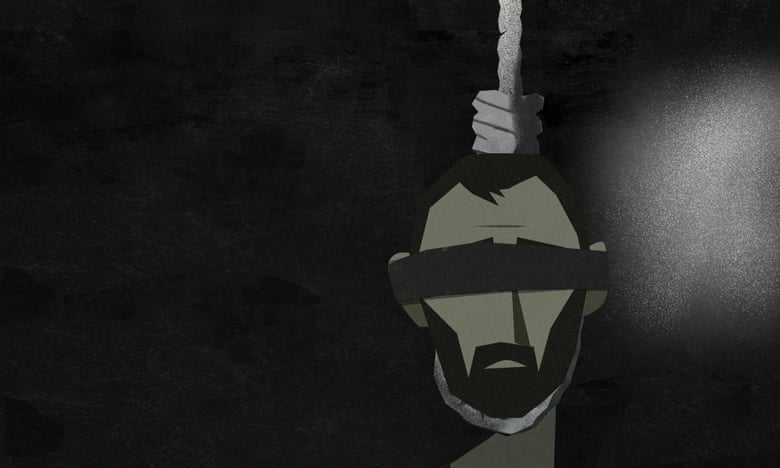

 Imminent execution of a young man convicted whilst a juvenile and by the alleged use of severe torture. This is an update of an earlier UA but there have been recent significant developments and his execution is now more probable. The full details are attached. If you can find time to write or send emails this would be appreciated. Thank you


 Amnesty in Salisbury & South Wiltshire