Impact of Trump’s Peace Deal on Gaza’s Aid Crisis


Uncertain ‘peace’ in Gaza. 103rd vigil takes place

November 2025

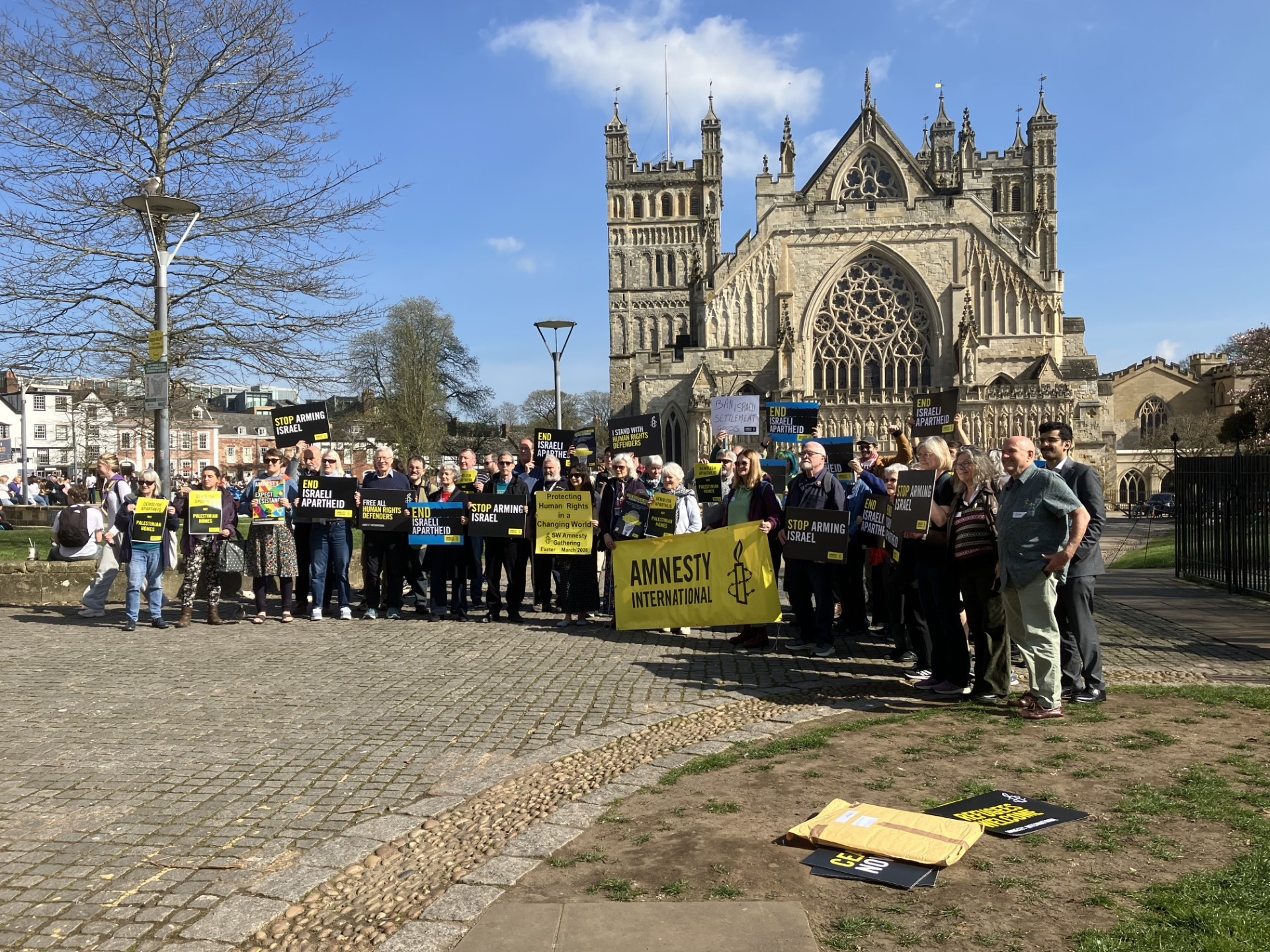
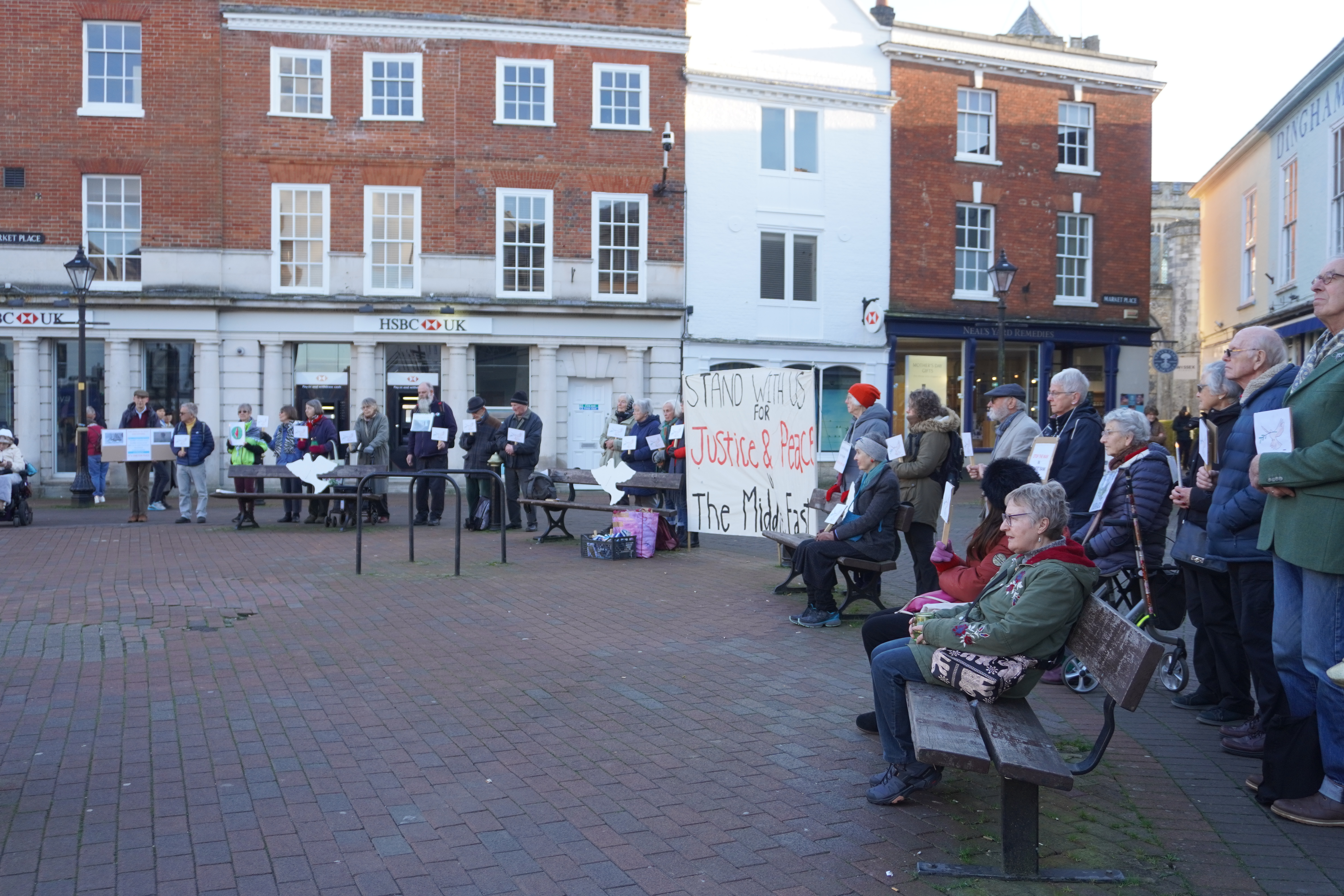
Cold, wet, dark and miserable was the setting for our 103rd vigil with around 25 in attendance. Gaza has dropped out of the news now that there is supposed to be a peace deal and attention has switched to the terrible events in Ukraine. Drone and rocket attacks are increasing in intensity with little sign of an end despite another of President Trump’s one-sided peace deals which has to be agreed by this Thursday.

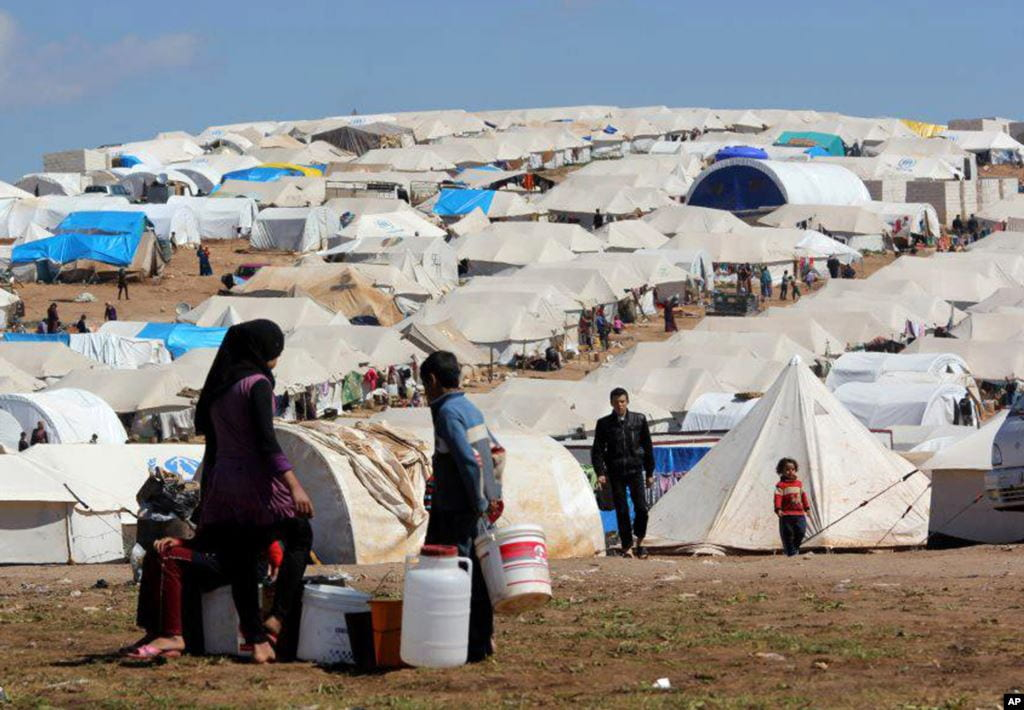
Both Gaza and Ukraine demonstrate similar characteristics namely, Trump’s seeming admiration for tyrants and bullies. The Gaza peace process looks precarious and one report suggests 310 Palestinians have been killed in the past 6 weeks. Aid is still only entering in small quantities.

One major effect of the peace deal is a significant drop off in aid. One charity has reported a 51% fall in contributions and another used to sent $5000 per week now can only send $2000. Other charities report similar falls.

Other reports to emerge in recent weeks concern the appalling conditions Palestinians are held in. Some are in an underground prison never to see daylight for months at a time. The prison in question is Rakefet.

Sources: BBC, B’Tselem, Public Committee Against Torture in Israel, Guardian.

A video of the vigil thanks to Peter Gloyns.


Previous posts:

Shocking remarks by Danny Kruger MP


The Reform MP is asked about Israel and Gaza

November 2025

Danny Kruger is the MP for East Wiltshire (part of a county in England) and was voted in as a Conservative candidate in 2024. He switched just over a year later to become a Reform MP. He has a range of largely bizarre views and was interviewed by a Guardian journalist the results of which were published on 22nd of this month.

Our concern is not with his overall political views but on the specific remarks he made in answer to questions about Israel and Gaza which have implications for human rights. The journalist is Charlotte Edwardes. That section is as follows:

“[…] We move on to the conflict in Israel and Gaza, because he’s declared Palestine woke and I’d like to know how. He says the position of Israel is important to our politics in the UK, but also to the west in general, “because it stands for the idea of the nation and of western civilisation being something worth defending. [Israel] is fighting the battle for all of us in the Middle East”.

“Kruger does not believe Israel is committing genocide in the region: he says all the deaths in Gaza are the responsibility of Hamas. Nor does he feel Benjamin Netanyahu’s government has gone too far. “The children wouldn’t die if Hamas was not a security threat to Israel” he argues. “I can’t judge the precise tactics of particular IDF operations. I can well imagine there have been atrocities and excesses, as happens in wartime.” Is there no price too great in terms of human life for the elimination of Hamas? “Well, if that price is the elimination of Israel, then nothing is too great […].”

Normally, statements such as these would go unremarked being just one of many foolish statements made by a variety of MPs. But Kruger is advising Nigel Farage, the leader of Reform who, current polls predict are in a good position to form a government in the next election. He is thus someone who is influential and may be in a position to influence policy if Reform are successful in forming a government. A reading of the whole article – the result of three interviews – sees another journalist struggling to make sense of his remarks.

Comments
  • His comments are simplistic. To say ‘all the deaths in Gaza are the responsibility of Hamas’ is a gross distortion. It is accepted that Hamas is a terrorist organisation and the attack on October 7th was horrific. But Israel’s response has been wholly disproportionate making Gaza a wasteland and killing 70,000 Palestinians – many of them women and children.
  • He shows no sign of recognising the history of the conflict. It did not start on October 7th as so many of the Israeli cheerleaders want us to believe but its roots lie in the events following 1948/9 and the brutal expulsion and murder of at least 750,000 Arabs and Palestinians. He makes no reference to the system of apartheid operating in Israel making non-Jews second class citizens. As someone who has a DPhil degree from Oxford, it might be expected to see a greater understanding of historical causes of conflict.
  • It displays a degree of callousness to the suffering of the people of Gaza. To say ‘the children would not die if Hamas was not a security threat to Israel’ is crass not to say offhand. Elsewhere in the interview (and in other interviews and commentary) he makes great play of his Christian faith yet there is no sign of this in these comments.
  • Denial. He denies that Israel is committing genocide. He echoes the Labour government’s position on this which is no recommendation. How would you describe the deaths of 70,000, the deliberate destruction of all the hospitals, schools and water treatment plants, preventing food, water and medicines to enter the area? Perhaps there is another word Mr Kruger would like to deploy?
  • ‘Palestine [is] woke’ means what exactly? The interviewer does not get an answer.
  • The use of weasel words and phrases. ‘I cannot judge the precise tactics of IDF operations …’ is trite although he admits there have been atrocities and excesses. He has been quick to condemn Hamas (does he know the ‘precise tactics’ of their operations?) but tries to excuse IDF operations with these weasel words. The use of cluster munitions, using massive 500lb bombs to blow up entire buildings with no concern for who’s inside, parking remote control vehicles packed with explosives outside apartment blocks and blowing them up ditto.
  • His statement that Israel ‘stands for the idea of the nation and of western civilisation being something worth defending’ and that the country is ‘fighting the battle for all of us in the Middle East’. Can this really be true? How does apartheid fit into that? How does attacking olive farmers and destroying their trees count as civilised? Gangs attacking Palestinian villages at will with the police and army standing by – is this fighting the battle for all of us? The murder of many Palestinians in Israeli prisons. Holding over a thousand Palestinians in sometimes underground cells and the use of vile torture methods – are these values Mr Kruger wants us to support?
  • Finally, no mention or recognition of the violence on the West Bank.
  • His answer to the question ‘is there no price too great … ?’ is especially damning.

What emerges is someone who has a surface view of history and seemingly no understanding of the conflict or its roots. It is a combination of naivete and surface thinking. He seems to have swallowed Israeli ‘talking points’ wholesale. It lacks balance. Perhaps the most shocking part of the interview is the shear callousness concerning the death of children in vast numbers. We could add those who have lost limbs or have starved to death. This throwaway remark seems to be widely at odds with his purported Christian beliefs. He may be in an influential position in government after the next election when these beliefs will matter.

The full Guardian interview can be read here.

Recent posts:

Steep rise in Florida executions


Darkness seems to reign in the Sunshine state

November 2025

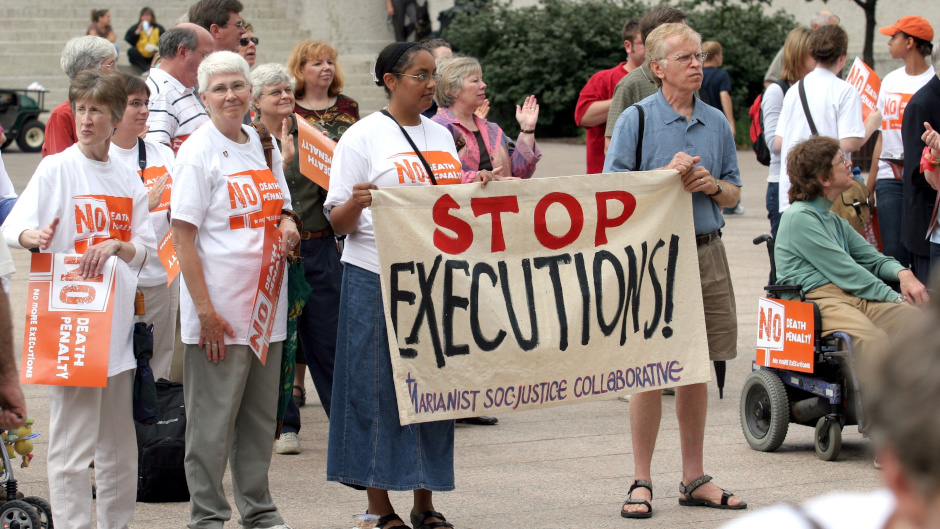
UPDATE: 21 November. Randolph was executed yesterday making it the 17th in the state. Further background can be read in a Tallahassee Democrat post. There is also material on Floridians for Alternatives to the Death Penalty FADP.

There has been a big increase in executions in Florida – 15 so far this year and another one due to take place today (20 November) of Richard Barry Randolph. This compares with 1 last year and a downward trend in the US as a whole. The reason for this surge is hard to determine but much of the US media and opinion seems to point to the Governor Ron DeSantis. It is alleged that this sudden surge is part of his campaign to run for president in 2028 at the end (?) of the Trump era.

There are many troubling aspects about the executions. Florida is almost unique in allowing the governor

to have the final decision. Other states now leave this to the judiciary. But there is also disquiet about the secrecy of the decision making process. ‘Florida’s gov­er­nor has no cri­te­ria, pro­ce­dure, or guide­lines in place for select­ing who lives and who dies…Granting the gov­er­nor unfet­tered dis­cre­tion has, in prac­tice, led to a com­plete­ly arbi­trary process for deter­min­ing who lives and who dies‘ [attorney for Thomas Gudinas]. De Santis has offered no explanation for this sudden increase in executions.

High level of mistakes

Anyone who has read Clive Stafford-Smith’s book Injustice will know the inefficient court process in the US particularly for poor people. The level of mistakes in the state is high. Since 1989 there have been no less than 93 individuals wrongfully convicted and exonerated. Needless to say, if someone has already been executed it’s a mistake that cannot be rectified.

The judicial process seems to offer little confidence with 6 or the seven justices on the Florida Supreme Court appointed by the governor. The jury system has been altered so that only 8 out of the 12 jurors is needed for a guilty verdict. The results are clear to see with 35% of those on death row are Black whereas they represent only 17% of the population.

There is no evidence that the death penalty is a deterrence. As we have noted, mistakes cannot be afterwards rectified. It would appear that this sudden rise is due to the Governor’s desire to raise his credibility with a view to the presidential election in 2028. As the Palm Beach Post notes, ‘the system is riddled with issues ..’ (18 November).

Sources: Palm Beach Post, WUSF, The Conversation, Guardian, FADP

See our monthly Death Penalty Report

Recent posts:

West Bank violence now a cause for concern


102nd vigil attracts strong attendance

November 2025

It almost doesn’t seem possible that for 102 weeks a group of people turn out of a Saturday evening to hold a silent vigil against the violence and death in the middle east most particularly in Gaza. Over 40 did so this Saturday (15th November) even with a number of the ‘stalwarts’ away for various reasons but their places taken by new people. A video can be viewed here.

Media attention has shifted away from Gaza for the moment and more attention is being paid to the violence in the West Bank. This has increased to frightening levels and news programmes showed settler gangs roaming Arab and Palestinian villages, destroying cars and houses at will. A BBC report showed an attack on a Bedouin village and business. There is little sign of police or IDF protection and previous footage shows them just standing by whilst the violence continued. Bizarrely, any Palestinian who protested would themselves be arrested. The attack on a dairy shows the same kind of tactic used in Gaza where the basic facilities of life – water, electricity, hospitals and food supplies – were consistently attacked and destroyed. President Herzog has said that this violence must end.

It is important to emphasise that many Israelis are appalled at this increased level of violence and intimidation. We are now into the season where olive are harvested and this has become a flashpoint in the West Bank in recent years as extremist Israeli settlers regularly threaten and physically harm Palestinian harvesters. This year, “the situation on the ground is out of control,” Anton Goodman of Rabbis for Human Rights said on a Haaretz Podcast.

“We have never seen anything like this,” Goodman emphasized, noting that in the past, “We’ve seen settler attacks, and we’ve seen unnecessary army aggression and restrictions, but we’ve never seen such a peak moment of violence affecting so many communities.”

By not clamping down on the gangs and standing by while the violence is carried out, Israel has created a problem for itself. Emboldened and supported by the hard liners, it is difficult now to rein in their activities.

Sources: BBC, AP, Haaretz

Video and image from the vigil courtesy of Peter Gloyns.

Next vigil on Saturday 22 November at 17:00 by the Library.

Previous posts:

November 2025 Human Rights Newsletter Highlights


November 2025

We are pleased to attach the minutes and newsletter for November thanks to group member Lesley for compiling them. They contain reports from other group members and are of general interest to followers of human rights issues. There is a report on immigration for example a topic which continues to make political waves in the UK. It makes the point that whereas the main focus of political ire and furious editorials and commentary is the number of arrivals on boats, the actual number is relatively tiny in proportion to the total number of immigrants.

There is also a report on human rights issues in the UK a matter of increasing concern. Both the Conservative and Labour governments do not like protests and have – or are planning to – introduce more and more legislation to hamper, ban or severely restrict protests and demonstrations.

There is a list of forthcoming activities which would provide an opportunity for anyone interested in joining to make themselves known.

Recent posts:

Other Amnesty groups are free to use content.

Israel proposes death penalty for Palestinians


First reading passes in the Knesset

November 2025

Israel’s intention to introduce the death penalty has been met with widespread alarm and criticism form both within and outside the country. The bill was introduced by Itama Ben-Gvir who afterwards distributed baclava pastries to celebrate. The last time Israel used the penalty – which has been on the books since the country was founded – was in 1962 for the Nazi Adolf Eichmann.

“An indelible stain on Israel” Haaretz editorial 3 November

The law as proposed, is drafted in a way to apply only to Palestinians and is another example of the

apartheid system which operates in the country. It will be administered by military courts peopled often by individuals who have little or no judicial experience.

Neither will the court have discretion since the sentence will be mandatory. It is Ben-Gvir’s claim that the penalty will be a deterrence. There is next to no evidence for this and the same arguments against the use of the penalty apply here as to the rest of the world. It is barbaric and reduces the state to the level of the perpetrators. Mistakes cannot be rectified. It is not a deterrent. One of the few notionally civilized countries which retains and uses the penalty is the US. A study there between the States with the penalty and those without found no difference in murder rates. In fact, murder rates are higher in states with the death penalty.

Amnesty International’s Senior Director for Research, Advocacy, Policy and Campaigns, Erika Guevara Rosas, said:

There is no sugarcoating this; a majority of 39 Israeli Knesset members approved in a first reading a bill that effectively mandates courts to impose the death penalty exclusively against Palestinians. While the text of the bill does not specifically single out Palestinians, the mental element required for the offence concerned signals its primary victims are going to be Palestinians and would include those who committed the punishable offences before the law is passed.

Knesset members should be working to abolish the death penalty, not broadening its application. The death penalty is the ultimate cruel, inhuman, and degrading punishment, and an irreversible denial of the right to life. It should not be imposed in any circumstances, let alone weaponized as a blatantly discriminatory tool of state-sanctioned killing, domination and oppression. Its mandatory imposition and retroactive application would violate clear prohibitions set out under international human rights law and standards on the use of this punishment.

Sources: Knesset, BBC, CNN, Haaretz; le Monde, Amnesty

Latest posts:

Thought of subscribing?

Controversial UK Immigration Policies: Public Reaction


Public reactions to immigration not straighforward

November 2025

The main news topic in the UK this month has been accommodation for asylum seekers, and the public reaction to the Government’s move to place claimants in military establishments following the furore over the use of hotels. Although such sites are expensive to run, the Home Office’s view is that ”quelling public disquiet was worth any extra cost.” Current plans include places for 900 claimants near Inverness, and 600 at Crowborough, East Sussex. Needless to say protests are already taking place. The Home Affairs Select Committee has expressed disapproval of the plans as unsuitable and requiring vast expenditure making the sites liveable. Figures for the numbers in hotel accommodation have fallen from 50,000 in June 20203 to 31,000 in June 2025.

A YouGov poll in 2022 revealed that the British public were split on whether or not immigration was good

for the country 29% for, 29% against. By 2025 the equivalent figures were 20% and 43%, and three quarters of responders thought immigration too high. The change in view has been put down to “imagined immigration”, whereby the population has acquired an incorrect understanding of the reality. For example, 47% of respondents believe that there is more illegal than legal immigration (small boat arrivals are actually 4% of the total).

The Government’s decision to end the family reunion process continues to cause concern. It has been suggested that this was an idea taken up from Denmark’s current hardline policy on immigration, and that the Home Secretary is minded to follow more Danish policies, such as allowing in only claimants who are known targets of their home government. The Home Secretary’s plan for a “major shake-up of the immigration and asylum system later this month” will probably take account of other aspects of the Danish system, possibly including its policy of “parallel societies” (removing people from integrated areas to encourage homogeneous neighbourhoods in a two-tier system: catch Iain Watson’s Radio 4 programme “Immigration: the Danish Way” for the story.) [limited time].

In Parliament, the Border Safety, Asylum and Immigration Bill is still in the Lords, where Lord Dubs has an amendment to counter the removal of family reunion by allowing the entry of children lost on the way to this country. This may pass.

Another controversial area of  policy has been Afghanistan, where people who worked for the previous government are being refused asylum as the Home Office claims they are not vulnerable to the Taliban. The organisation Asylos has a paper that has a different view, based on information from on the ground.

On the small boats front, there were 14 consecutive days in late October/early November when no boats crossed the Channel, since when a 1200 arrivals came in two days with better weather. The “one-in, one-out” arrangement with France continues in existence as a pilot scheme, but no assessment has yet been offered.

An interesting view of the prospects for migration comes from Britain in a Changing Europe’s James Bowes, who thinks that migration levels to the UK will fall dramatically. Most of this will be among legal migrants being denied visas, but lower numbers from Ukraine and Hong Kong will also have an effect; total net migration, he predicts, will fall to 70-170,000 in 2026 (the figure was 431,000 in 2024).

The journal Border Criminologies has noted that European governments have been using migrants’ mobile phone data to criminalise them rather than doing proper assessments. This story may get bigger.

There are numerous ongoing campaigns around. Next year’s Refugee Week (15th – 21st June) has as its theme “Courage”; Safe Passage are running a campaign against the family reunion policy under the title “Together Not Torn” “and Refugee Action are encouraging fundraising activities in the pre-Christmas period. Details can be found at https://www.refugee-action.org.uk/campaigns/

AH

Importance of Human Rights: UK Support for the ECHR


November 2025

Nigel Farage’s proposal for the UK to leave the European Convention on Human Rights was defeated on 29 October by 154 votes to 96, a majority of 58. The vote was largely symbolic: a ten-minute bill without government backing is often used simply to air an issue. The Liberal Democrats led the opposition to the bill, a number of Conservatives joined Reform UK in supporting it and many Labour backbenchers chose not to abstain but voted against it, fearing that were it to pass even symbolically, it would send a negative message to European allies.

The position of the Government remains that while it may pursue some changes to the interpretation of the Convention it would under no circumstances seek to abolish it.

75th  Anniversary 

A statement of support for the ECHR was signed by almost 300 organisations to mark the 75th anniversary of the Convention. Organised by Liberty, the statement highlighted the many ways the Convention has helped ordinary people from victims of sexual violence to LGBT+ service personnel, public interest journalists to mental health patients and victims of grave miscarriages of justice, as with the Hillsborough and Windrush cases.

It calls on the government to make the positive case for the UK’s human rights protections and claims that the way the Convention has been scapegoated in recent years has had devastating real world consequences. 

Meanwhile a survey for Amnesty by the widely respected agency Savanta concluded that more than 8 in 10 UK adults say that human rights protections are as important – or more important – today than when the ECHR was created after the Second World War. When asked which rights matter most to them, UK adults chose: the right to a fair trial (42%); the right to life (41%); the right to privacy, family life and respect for your home (40%).   

Support for staying in the ECHR is almost twice as high as support for leaving.  48% want the UK to remain part of the ECHR.  Only 26% want to leave.  

People believe rights should be universal, permanent, and protected from political interference:   87% agree that rights and laws must apply equally to everyone, 85% agree we need a legal safety net to hold the Government accountable in cases like the infected blood scandal and Grenfell and 78% agree rights should be permanent, not something the Government of the day can reduce. 

Respondents were shown a list of major UK scandals or institutional failings and asked which made them feel the importance of strong legal protections and accountability. The top five were: 

Grenfell Tower – 46%; Hillsborough disaster and cover up – 42%;   Infected blood scandal & the COVID inquiry – 37%; The murder of Sarah Everard – 36%;   Windrush scandal – 29%.   

ECHR and Immigration

In response to critics attributing the real problems of the UK’s immigration system to the ECHR, the Good Law Project set out some basic facts about the Convention, namely that it does not provide a right for people to enter or remain in a country of which they are not a national; that the Court rarely rules against the UK on immigration issues at all  – since 1980 only on 13 of the 29 cases concerning either deportation or extradition. And while the Human Rights Act of 1998 incorporating ECHR rights into UK law makes it unnecessary to go to Strasbourg, successful claims to stay in the UK are rare. Last year out of a total inward immigration of 948,000 only 3,790 cases related to the Human Rights Act were won at immigration tribunals.

Protect the Protest: Palestine Action and Judicial Review

Amnesty and Liberty will be making the case to lift the ban on the proscribed activist group Palestine Action in the Judicial Review scheduled for 25 – 27 November.

Defend Our Juries are urging the police not to bow to pressure from the Government but to allow the

peaceful protests organised throughout November at the continuing crisis in Gaza, the West Bank and Israel. They say that police are struggling to enforce the law in the face of peaceful protesters, many of them elderly. Some police forces are refusing outright to make arrests. International and national human rights groups, politicians and United Nations representatives have condemned both the ban and the subsequent attacks on civil liberties. Unions are declaring that they will not recognise the ban, with over 2,100 now arrested under ‘terror charges’ related to this peaceful sign-holding campaign.

Sacha Deshmukh, Amnesty’s Director, criticised the Home Secretary for statements “that create a chilling effect by dissuading people from exercising their fundamental right to peaceful protest. At any time, any interference with freedom of expression must be strictly necessary, proportionate and in full accordance with the law.” 

In a further incident of Transnational repression Sheffield Hallam University terminated a staff member’s project about Uyghur forced labour after Chinese security officers interrogated a staff member in Beijing and a Chinese company named in the report filed a defamation lawsuit in the UK. The university retracted the ban but only after  Professor Laura Murphy, specialising in human rights and modern slavery, began legal action against it for violating her academic freedom.

Latest posts:

All our posts are free to use by other Amnesty or human rights sites.

Florida and Iran: Key Insights from Recent Death Penalty Report


November 2025

We are pleased to attach the current death penalty report for mid October to mid November thanks to group member Lesley for the work in compiling it. Florida features quite strongly as does Iran which is executing young people – a truly horrific act. There is also material on Israel which is considering laws for Palestinians quite different from the Jewish population, an example of apartheid which operates there. We note as ever that even though China makes a brief entry, the country is believed to execute more of its citizens than the rest of the world combined but details are a state secret.

Latest posts:

Material on this site is free to use by other Amnesty or human rights groups.

Not over yet in Gaza


Around 35 attended the 101st vigil in Salisbury and the recognition by passers by was higher than usual.

November 2025

News about Gaza has dropped down the agenda in recent weeks with concerns about prisoners mistakenly being let out of gaol tending to occupy the news agenda. Endless speculation about the budget is also taking up space and the terrible events in Sudan rightly receiving attention. The ceasefire in Gaza and the imminent arrival of the peace force (if Washington is to be believed) has dropped off the agenda. No war, no news.

This could prove to be a big mistake. Pressure is growing on the Israeli government to allow foreign journalists into Gaza especially as one reason given was their safety. Many journalists have died, around 245, the largest death toll in a conflict. The Palestinian Journalists Syndicate has accused the IDF of deliberately targeting journalists who have struggled against great odds to get their stories out. No sign yet that Israel will agree although they did allow limited access to reporters, including the BBC, last week and a brief report was broadcast. The visit was tightly controlled, reporters were not allowed to speak to any Palestinians, and an IDF officer was allowed to speak without being questioned or challenged. Nevertheless, the scenes of total devastation were horrific.

We survived the war, we may not survive the ceasefireSara Awad, a Palestinian journalist in Gaza recently

Will the ceasefire lead to a lasting peace? It is unlikely. Firstly, the territory is still being bombed. There are differing reports about the death toll since the 10 October with Haaretz reporting 38 and Al Jazeera 238. The video above says 245. There is no likelihood of a Palestinian state. West Bank violence continues unabated. Some reports suggest little has changed in terms of food supplies into Gaza.

It is one of the reasons we are continuing with our vigils: to take our eye off the ball at this stage would be a mistake. Much as our government would like protests to stop and the police are busy arresting protestors, awareness of the genocide in the area is greater than ever. This is denied by Israel and an argument against this can be read here. The complicity of our government in the carnage is a story yet to be told and will be the subject of future posts.

A video of the 101st vigil is available thanks to Peter Gloyns for producing it is such quick time. We shall be back next week on 15th. Other information on the Salisbury CND site.

Previous posts:

Blog at WordPress.com.

Up ↑