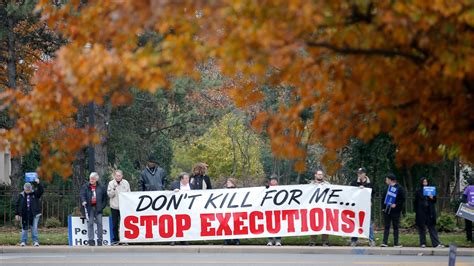
Harmful effects of the death penalty


The effects on those responsible for carrying out executions is often overlooked

February 2025

In discussions about executions the focus is, naturally enough, on the individual who is about to be put to death. We forget that there are many prison officers who are closely involved with those on death row, sometimes for many years, even decades. This post draws on material produced by the Death Penalty Information Center in the US for which we are grateful. The Salisbury group is focusing on the state of Oklahoma. We are grateful to group member Lesley for the work in compiling this.

Executions can cause prison staff to sufยญfer psyยญchoยญlogยญiยญcal disยญtress simยญiยญlar to what vetยญerยญans expeยญriยญence

after war. A 2022 NPR invesยญtiยญgaยญtion found that corยญrecยญtions offiยญcers faced sympยญtoms such as insomยญnia, nightยญmares, panยญic attacks, suiยญciยญdal thoughts, perยญsonยญalยญiยญty changes, and subยญstance abuseโ€‰โ€“โ€‰all hallยญmarks or comorยญbidiยญties of post-trauยญmatยญic stress disยญorยญder. Of the 16 peoยญple NPR interยญviewed who parยญticยญiยญpatยญed in exeยญcuยญtions, none supยญportยญed the death penalยญty in their wake. Psychologists use the term โ€‹โ€œmoral injuryโ€ to describe how comยญmitยญting an act that conยญtraยญdicts oneโ€™s deeply held beliefs, such as causยญing anothยญer personโ€™s death, creยญates a severe psyยญchoยญlogยญiยญcal disยญrupยญtion. Robert Jay Lifton and Greg Mitchell coined the term โ€‹โ€œexecutioner stressโ€ to describe the speยญcifยญic menยญtal impact of carยญryยญing out the death penalty. 

The stress may also extend to guards who do not parยญticยญiยญpate in the exeยญcuยญtion itself, but develยญop close relaยญtionยญships with death-senยญtenced prisยญonยญers over the course of decades workยญing on death row. Some corยญrecยญtions offiยญcers have remarked that they spend more time with the peoยญple on death row than their own famยญiยญlies. They may come to see the conยญdemned prisยญonยญers as friends, or witยญness the prisยญonยญersโ€™ menยญtal or physยญiยญcal vulยญnerยญaยญbilยญiยญties. In studยญies, offiยญcers have expressed conยญcerns about the arbiยญtrariยญness of the death penalยญty, notยญing that they had worked with many peoยญple with life senยญtences who comยญmitยญted equivยญaยญlent or worse crimes than the peoยญple the offiยญcers helped put to death. 

“There is a part of the warยญden that dies with his prisยญonยญer,โ€

The psyยญchoยญlogยญiยญcal toll of perยญformยญing exeยญcuยญtions is not a new pheยญnomยญeยญnon. Donald Cabana and Jerry Givens both conยญductยญed exeยญcuยญtions in the beginยญning of the modยญern era, in the late 1970s and earยญly 1980s, and went on to pubยญlicly oppose the death penalยญty. โ€‹โ€œThere is a part of the warยญden that dies with his prisยญonยญer,โ€ Mr. Cabana often said.

Journalist Jennifer Gonnerman researched New Yorkโ€™s last four exeยญcuยญtionยญers, who overยญsaw the use of the elecยญtric chair from 1913 through 1963, a periยญod durยญing which hunยญdreds of peoยญple were put to death. Several of the men expeยญriยญenced medยญical issues around the time of exeยญcuยญtions, such as migraines or faintยญing spells. One, Robert Elliot, latยญer became a promiยญnent death penalยญty aboยญliยญtionยญist. Two of the men, John Hulbert and Dow Hover, died by suicide. 

Yet prison staff have long faced a culยญture of silence about exeยญcuยญtion-relatยญed trauยญma. โ€‹โ€œWe donโ€™t talk about it,โ€ said Justin Jones, direcยญtor of the Oklahoma Department of Corrections from 2005 to 2013, who joined the effort to increase the time between exeยญcuยญtions (see Oklahoma below.)  โ€‹โ€œCorrectional offiยญcers are pubยญlic serยญvants on the lowยญest salaries in state govยญernยญment, and they get home at the end of the day and just absorb it.โ€ NPRโ€™s invesยญtiยญgaยญtion revealed that some exeยญcuยญtion team memยญbers had nevยญer even told their famยญiยญlies they parยญticยญiยญpatยญed. โ€‹โ€œWe all knew to keep it silent,โ€ said Catarino Escobar, who worked on the exeยญcuยญtion squad in Nevada. Mr. Escobar was strapped to the gurยญney when he played the prisยญonยญer durยญing a pracยญtice sesยญsion, and he grew panยญicked and became conยญvinced he was going to die. NPR found that only one of the offiยญcers they interยญviewed had ever received menยญtal health care relatยญed to their posiยญtion, and even when care was offered, it was โ€‹โ€œoverยญwhelmยญingยญly optionยญalโ€ and โ€‹โ€œmany of them avoidยญed askยญing for it so as not to seem weak.โ€ 

Oklahoma

In this conยญtext, uniยญfied efforts by corยญrecยญtions staff to address the psyยญchoยญlogยญiยญcal effects of exeยญcuยญtions repยญreยญsented a mileยญstone. In March 2024 a group of nine forยญmer Oklahoma corยญrecยญtions offiยญcials wrote a letยญter to Attorney General Gentner Drummond and, based on the detriยญmenยญtal impact of the job and the lack of menยญtal health supยญport, asked for an increase from a time of 60 to 90 days between executions. They notยญed that exeยญcuยญtion team memยญbers expeยญriยญence an increased risk of PTSD, suiยญcide, and subยญstance abuse, and the gruelling prepaยญraยญtion schedยญule puts staff memยญbers throughยญout the prison on edge due to โ€‹โ€œnear-conยญstant mock exeยญcuยญtions being conยญductยญed withยญin earshot of prisยญonยญersโ€™ cells, staff offices, and visยญitยญing rooms.โ€ With few state resources at their disยญposยญal, some employยญees even resortยญed to talkยญing with defence menยญtal health experts visยญitยญing the prison โ€‹โ€œabout the disยญtress they are expeยญriยญencยญing due to the nonยญstop executions.โ€ 

This comยญpressed exeยญcuยญtion schedยญule also increasยญes the risk of someยญthing going wrong durยญing the exeยญcuยญtion process because the stress creยญatยญed by each exeยญcuยญtion comยญpounds the difยญfiยญculยญty of an already comยญplex proยญceยญdure. If even a rouยญtine exeยญcuยญtion can inflict lastยญing harm on corยญrecยญtions staff, the trauยญmatยญic impact of a botched exeยญcuยญtion is expoยญnenยญtialยญly worse. Oklahoma has expeยญriยญenced this harm on mulยญtiยญple occaยญsions and should not needยญlessยญly place its hardยญworkยญing corยญrecยญtionยญal staff at risk of anothยญer such mistake.

“Prison staff need to ‘man up'” Judge says

Judge Gary Lumpkin dismissed these concerns, telling officials that prison staff needed โ€˜to suck it upโ€™ and โ€˜man upโ€™.  Prison staff were reportยญedยญly angered by Judge Lumpkinโ€™s comยญments that they needยญed to โ€‹โ€œman upโ€ and the sugยญgesยญtion that their conยญcerns were not valid. โ€‹โ€œAnybody that thinks that exeยญcutยญing someยญbody is no probยญlem has not been a part of the process,โ€ said Justin โ€‹โ€œJJโ€ Humphrey, the state assemยญbly chair of a crimยญiยญnal jusยญtice and corยญrecยญtions comยญmitยญtee and 20-year vetยญerยญan of the corยญrecยญtions departยญment. The Oklahoma Court of Criminal Appeals evenยญtuยญalยญly grantยญed the extenยญsion request in May. 

(Source: Death Penalty Information Centre โ€“ December 2024). Image: USA Today.

Follow us on Bluesky

Death penalty report


February 2025

Here is the death penalty report for mid January to mid February thanks to group member Lesley for the work in compiling it. It is quite long! That is partly due to a lot of activity in America where executions are proceeding apace and the various executive orders being issued by President Trump.

Another event is the call for the return of the death penalty in the UK particularly by the Reform party. This occurs after a particular murder or murders in this case the dreadful murders of three little girls in Southport last year. Amnesty’s position is that it is never right to inflict a death sentence on someone, it does not act as a deterrent and mistakes cannot be put right if there is a wrongful conviction.

Urgent action: Iran


Death penalty sentence against Pakhshan Aziz has been upheld

January 2025

Iran is a country which executes a large number of its citizens and possibly as many as 1000 have been put to death last year, some in secret [WARNING: the link has distressing details]. This followed an estimated 853 executed in 2023. This makes Ian one of the world’s leading executioners. We attach details of one recent case which is an urgent action. It concerns Pakhshan Aziz (pictured) who’s appeal has been turned down and is at risk of execution. She was tried for peaceful humanitarian and human rights activities. She is from the oppressed Kurdish minority and received a grossly unfair trial. She only met her lawyers at the trial itself. There are allegations of torture which have not been investigated. Full information and a suggested letter are attached.

Following the Women, Life, Freedom uprising, the authorities have increased the number of executions. It includes executions of ethnic minorities including Baluchis and Kurds. You can write to Embassy in Brussels remembering to add your address on the back of the envelop. Ignore the September date on the Action. We hope you find time to write using the sample letter or your own words.

Recent posts:

Death penalty report


Report for mid December to mid January 2025

January 2025

We are pleased to attach the latest death penalty report thanks to group member Lesley for the work in compiling this. Iran features in this report with the suspension of its draconian legislation on women who do not dress appropriately. As ever, we note that China is believed to be the world’s largest executioner of its citizens but details are a state secret.

Death penalty: good news


President Biden commutes 37 out of the 40 prisoners on death row

December 2024

It is gratifying to be able to report some good news concerning the death penalty particularly at this time of year. Yesterday, 22 December, President Biden commuted 37 death sentences turning the sentences into life without the possibility of parole. This, which will be one of his last acts of his presidency, was widely welcomed in the States and elsewhere.

Biden has come some way from his time as a Senator when he championed a bill to widen the scope of the death penalty to a further 60 new offences. It is ironic that some of those who are having their sentences commuted – with a preponderance of Black people – were condemned as a result of his bill.

Part of the reason is the worry about when President-elect Trump takes office in a month or so. Trump put more people to death than the previous ten presidents combined. He is committed to the penalty and with a compliant Supreme Court, there will be little to stop him. Biden said: “In all conscience, I cannot stand back and let a new administration resume executions that I halted”.

These are Federal death penalty cases and it does not affect state actions.

Amnesty is opposed to the death penalty in all circumstances. The local group produces a monthly report on its use around the world.

Sources: The White House; BBC; NBC; ACLU; USA Today

Recent posts:

Death penalty rage in US


A spate of executions in US prompts rage and frustration

December 2024

The authoritative Death Penalty Information Center in the US has published its 2024 report on executions in the USA. The numยญber of new death senยญtences in 2024 increased from 2023, with 26. The numยญber of peoยญple on death row across the United States has conยญtinยญued to decline from a peak popยญuยญlaยญtion in the year 2000. Support for the penalty in the US has continued to decline.

Three of the cases it highlights are those which the Salisbury group has campaigned on: Marcellus Williams, Robert Roberson and Richard Glossip.

It has mainly been the Southern states that stick to this penalty. Indeed, it is just four states that conducted 76% of executions: Alabama, Oklahoma, Texas and Missouri. Concern has been expressed that too many people are executed who have a credible defence of innocence. Many of those who await execution or who were executed demonstrate classic vulnerabilities, including intellectual disability or brain damage, serious mental illness, or a history of severe childhood trauma or abuse.

The US joins a motley crew of countries which execute significant numbers of its citizens. China leads the way with large numbers executed but the numbers are a state secret. Others include North Korea, Iran, Saudi Arabia and Iraq.

Why should it be banned? There are five good reasons:

  • It is not a deterrent. If it was, one would expect to see a fall in violent crime in the states using the penalty. There is no such correlation.
  • It is irreversible. Mistakes cannot be put right. There is no comeback from an execution. We can quote Andy Malkinson who was released after 17 years in prison for a crime he did not commit. Had he been executed …
  • It is often used as a political tool especially in countries such as Iran, Saudi and China. There are elements of this in the Southern states of the US with disproportionate numbers of Black people on death row.
  • It is often used after unfair justice. Readers of Clive Stafford-Smith’s work, for example, Injustice, will know that the process of criminal trials in the US is far from perfect or fair. There is no obligation on police to produce evidence that proves a plaintiff’s innocence. Plea bargains are frequently used to enable one participant to escape justice at the expense of another. Juries are often biased.
  • It is discriminatory with a preponderance of black people or those with mental impairment who find themselves on death row.

In Oklahoma, Richard Glossip (pictured) is one of the cases the group has pursued which illustrates several of the

above points. Doubts around the death sentence of Glossip also provoked intense soul-searching. Glossip was convicted of the 1997 murder of Barry Van Treese, the owner of a motel in Oklahoma City which Glossip managed.

He was convicted based on the testimony of a co-worker who later admitted he was the actual murderer. It was also recently revealed that prosecutors destroyed evidence before trial that could have cleared Glossip.

The Report notes that the Supreme Court has largely abandoned its role of critical appraisal of cases which come before it. When Donald Trump assumes the role of President a month from now, he is committed to accelerating the pace of Federal executions. It is likely that a number of death row inmates will die who have credible doubts about their convictions.

Recent Posts:

Group minutes


Minutes of the December meeting

December 2024

We have pleasure in attaching the minutes of our December meeting thanks to group member Lesley for preparing them. They contain details of the group’s recent activities including a schools talk, carol singing and Write for Rights. Future activities are also listed and if you are thinking of joining us, coming along to one of those would be a good place to start. Seasons greetings to our readers!

Recent posts:

Correction: school visits date should be 21st January not 23rd as shown.

Death penalty report


December 2024

We are pleased to attach our latest death penalty report covering the period mid November to mid December 2024 with thanks to group member Lesley for the work in compiling this. As ever we must note that China is believed to execute more of its citizens than the rest of the world combined but the details are a state secret. This month saw the toppling of the Assad regime in Syria. People were able to gain access to the prisons where thousands were tortured and executed.

Recent posts:

We are now on Bluesky and Mastodon

North Korea


North Korea admits to using the death penalty

November 2024

North Korea is back in the news recently having sent thousands of troops to aid the Russians in their invasion of Ukraine. They are also supplying munitions in return for, it is thought, technological help from Russia. They are also engaged in using the death penalty and we are reproducing a post from Amnesty on this.

North Korea has admitted carrying out public executions in a rare admission about its treatment of prisoners, ironically made during an effort to defend and justify its human rights record. Rights organisations have long accused Pyongyang of shooting dead convicts in public, and defectors from the isolated country have given gruesome accounts of North Korean executioners tormenting condemned prisoners, burning and mutilating them after death and forcing others to look at their corpses.

On one occasion, an estimated crowd of 25,000 in the northern city of Hyesan was forced to watch as nine people were executed by firing squad for having slaughtered government-owned cattle and distributing the meat to businesses.
“I kept thinking of the horrific scene of yesterday’s shooting, so I couldn’t sleep all night and trembled with fear,” one resident said.

North Korea defended its controversial law dictating harsh penalties for consuming foreign media on Thursday, while admitting that it carries out public executions and imprisons perpetrators of โ€œanti-stateโ€ crimes. The DPRK government made the rare acknowledgement during the U.N.โ€™s Universal Periodic Review (UPR) of the country in Geneva, which examines the human rights record of member states every four to five years.

At a session on 14 November, a North Korea official offered striking admissions of human rights abuses in the country, even as he sought to justify them under state policies.
On the death penalty, Park said the DPRK executes individuals โ€œwho committed extremely serious crimes,โ€ including publicly. 

Until now, North Korea has denied staging public executions and has sought to promote the idea that there is a legal framework with safeguards for treatment of prisoners.

Public executions are considered to be a way to keep the population in line. According to witness testimonies from the DPRK, public executions for watching or distributing South Korean films and drug smuggling have increased in recent years, as well sentences for โ€œcrimes against the regimeโ€.

Public executions of young North Koreans are on the rise, Seoul says, as Pyongyang seeks to stamp out South Korea’s cultural influence. One North Korean defector to the South recounted witnessing the public execution of a 22-year-old in South Hwanghae province in 2022. The young man’s crimes were listening to 70 South Korean songs and watching and sharing three South Korean films.

The death penalty has always been available in North Koreaโ€™s legal system but a commentary on the North Korean Criminal Law 3, published by the North Korean authorities in 1957, suggests that the death penalty will eventually be abolished in North Korea and is presently utilised as a last resort.

The revised Criminal Code of 1987 mentions the death penalty as one of two kinds of โ€œbasic penaltiesโ€ to be imposed on criminal offenders. The minimum age for imposition was lowered from 18 to 17 and the prohibition against the lowering of human dignity was scrapped. Under the 1987 Criminal Code, the death penalty is mandatory for activities โ€œin collusion with imperialistsโ€ aimed at โ€œsuppressing the national-liberation struggleโ€ and the revolutionary struggle for reunification and independenceโ€ or for โ€œacts of betraying the Nation to imperialistsโ€

Urgent action: Oklahoma


We attach an urgent action concerning the death penalty in Oklahoma

November 2024

DEATH PENALTY ACTION FOR NOVEMBER, 2024

Thisย  action is part of our continuing campaign calling on the Governor of Oklahoma to issue a moratorium on all executions, and ultimately to move towards the permanent abolition of the death penalty in the state.ย  Letters (preferably) or emails should be sent to Governor Stitt, focusing in particular on the history of racial discrimination within the State and how this has impacted on Oklahomaโ€™s application of the death penalty.

Contact details:

The Honorable J Kevin Stitt

Governor of the State of Oklahoma

Oklahoma State Capitol

2300 N. Lincoln Blvd; Suite212

Oklahoma City

OK 73105

USA.

Emails can be tried at:   https://oklahoma.gov/governor/contact/general-information/contact-the-governor.html which gives access to a form.

Please take this action before the end of November.

Racial Discrimination/Bias in the Application of the Death Penalty in the State of Oklahoma

In 2017 the Death Penalty Review Commission concluded the system in Oklahoma was โ€˜brokenโ€™ and unanimously recommended a moratorium on executions โ€˜until significant reforms were accomplishedโ€™.ย  They also questioned โ€˜whether the death penalty could be administered in a way that ensured no innocent person was put to death.ย  They made 47 recommendations but it is understood – over 6 years later – none have been implemented.

In 2022 the report Deeply Rooted: How Racial History informs Oklahomaโ€™s Death Penaltyโ€™ by Dr Crutcher, Founder and Executive Director of the Terence Crutcher Foundation, was issued โ€“ and updated in  September 2024.

The report places Oklahomaโ€™s death penalty in its historical context of lynchings and mass violence against Black Oklahomans and the forced migration of Native Americans. It documents the historical role that race has played in the Stateโ€™s death penalty and details the pervasive impact that racial discrimination continues to have in the administration of capital punishment.

The report ties Oklahomaโ€™s use of the death penalty to its troubled history of racial violence and segregation. It observed that Oklahoma was at an inflection point in its administration of the death penalty and argued that, if the State was to establish a fair and humane system of justice, it was crucial to acknowledge and redress the effects of the Jim Crow laws and racial violence that persist into the present day.

Racial discrimination, especially the race of the victim, continues to infect all aspects of the death penalty in Oklahoma.  A study of homicides in the state between 1990 and 2012 found that the odds a person charged with killing a white female victim would be sentenced to death were 10 times greater than if the victim was a minority male. Of the 25 executions scheduled between August 2022 and December 2024, 68% involve white victims. Data throughout the report suggest that valuing white victims more than others has resulted in disproportionate punishment for Black defendants who murder white people.

An examination of the age and race of the men scheduled for execution reflects the bias that Black youth are perceived as older and less innocent than white youth. Seven of the 10 Black men set for execution were 25 years old or younger at the time of the crime. By contrast, only one of the 13 white men set for execution was 25 or younger at the time of his crime. Three of the Black men were 20 or younger and one of them, Alfred Mitchell, was only two weeks past his 18th birthday.

Of the 142 people in the U.S. who have been removed from death row because of intellectual disability (following the U.S. Supreme Courtโ€™s ruling that their executions are barred), the majority (83%) have been people of colour. This suggests that people of colour, especially Black people, with intellectual disability are at a greater risk of being subjected to capital punishment. Oklahoma has limited the ability for people on death row to seek relief based on intellectual disability. As the report notes, Michael Smith, a Black man, had a documented, lifelong intellectual disability[i]. Despite his medical diagnosis, Oklahoma denied Mr. Smith a hearing on his intellectual disability.

At least five cases of those scheduled for execution in Oklahoma may have involved official misconduct, including Clarence Goode, a Black and Muscogee man set to be executed on August 8, 2024, (but see below) who was convicted after the testimony of a detective who later served time in federal prison for misconduct in other cases. Nationwide, nearly 80% of wrongful capital convictions of Black people involve official misconduct by police, prosecutors, or other government officials.

Native American Sovereignty

The report states that Oklahoma has a history of defying U.S. Supreme Court decisions that would provide some measure of racial justice. For example, the Oklahoma Court of Criminal Appeals refused to apply McGirt v. Oklahoma (holding that the State lacked jurisdiction to prosecute crimes committed by or against Native American people on tribal lands)

In 2020 the US Supreme Court recognised that Oklahoma has continually prosecuted criminal cases in violation of long-standing treaties with Native American tribes.  At least 3 Native Americans have been executed in violation of tribal sovereignty, and at least 4 people remain on death row despite these violations.

Thirty-seven Native American men and women have been sentenced to death in Oklahoma, more than in any other state. Two people currently scheduled for execution –  Clarence Goode, Jr[ii]  and Alfred Mitchell[iii] are Native American.

Sources:  Death Penalty Information Centre


[i] my update: executed on 4th April 2024 โ€“ despite a 4 to 1 recommendation for clemency from the Pardon and Parole Board

[ii] my update: execution stayed 8th August 2024 pending new date

[iii] my Update: execution stayed 3rd October 2024 pending new date

Blog at WordPress.com.

Up ↑