Death penalty report


Attached is the death penalty report compiled with thanks by group member, Lesley.No to the death penalty

Death penalty report


Follow us on Twitter and Facebook


Security and Policing Exhibition


Secretive Security and Policing Exhibition this week

This week, in Farnborough, the secretive Security and Policing Exhibition takes place behind closed doors.  On the face of it, the event, organised by the Home Office, is innocent enough.  It brings together firms providing security equipment with police and other security personnel who might have an interest in purchasing it.   The UK has a high-profile in this industry.

The first puzzle however, is why the taxpayer is funding this exhibition?  The current government is extremely keen on the private sector and in promoting free enterprise.  It has a distaste for the public sector and seeks every opportunity to outsource or privatise services previously provided by them.  So why, may one ask, is the Home Office organising and sponsoring this event?  Surely since these are profit-making enterprises – some hugely so – can they not organise their own event without subsidy from the taxpayer?

But the bigger concern is the use some of this equipment is put to and the customers being invited to the exhibition.  The list of countries include many well-known abusers of human rights and include Brunei; Indonesia, Saudi Arabia; Bahrain, Egypt, Israel and UAE.  The equipment being sold is likely to be used to violently and brutally repress individuals or groups of protestors who may be carrying out perfectly lawful demonstrations.  Once arrested, many will be tortured, mistreated and in some cases ‘disappeared.’  The UK will be complicit in this activity.

There is clearly some sensitivity around this exhibition – which as we’ve noted, is not open to the public – and its website says:

Established as one of the most important events in the security calendar, this unique event is aimed at police, law enforcement and offender management professionals who are tasked with security, civil protection and national resilience.
Security & Policing enables those with operational needs to meet companies with the relevant solutions. Exhibitors get the opportunity to display products that would be too sensitive to show in a more open environment. Visitors get to see the very latest products, services and technologies available – all within a secure environment. (emphasis added)

Reading some of the exhibitors’ websites is quite chilling with descriptions of real-time interception, harvesting millions of communications a minute and access to the ‘dark web.’  Clearly, if the public were to see some of the equipment it would be alarming so making the exhibition closed gets over that.

In addition to the Home Office, the Department for Business, Innovation and Skills will be attendance to show the delegates round and make them welcome.  John Glen MP is PPS to the Minister and will no doubt be taking part.  We look forward to his piece in the Salisbury Journal telling us about this.  UPDATE 17 March – no mention in the Salisbury Journal (17th March) so perhaps he didn’t attend.

We have previously commented on Britain’s role is supplying weapons and service personnel in various countries and in particular Yemen, where civilians and hospitals are being bombed using our equipment.  In addition to selling weapons, we sell repressive regimes the means to crack down on their citizens and we seem to be quite proud to do so as well.  Claims by the Prime Minister, other ministers and Mr Glen to be promoting human rights seem quite hollow in the light of these activities.


Follow us on Facebook and Twitter


The hidden war …


British involvement in the war in the Yemen

News programmes and newspapers generally are currently filled with arguments over Brexit, the American primaries, Syria and immigration.  Only occasionally does the war in Yemen and our involvement in it get a mention.  An exception was an interview by Frank Gardner [FG], the BBC’s Security correspondent, with Michael Fallon [MF] the Defence Secretary on Wednesday 2 March on the BBC’s Today programme.  It is worth reproducing most of it as it lays bare the thinness of the arguments deployed by Mr Fallon and also its inconsistencies.

Gardner introduces the piece by referring to the ‘unseen war’ which has waged for 5 years and the involvement by western powers in supplying the munitions to enable it to be carried on.  Indeed, Mr Cameron recently backed what he termed the ‘brilliant’ arms sales to Saudi Arabia only a matter of hours after the European Union voted to ban further supplies.  More arms firms are cashing in on the Yemen conflict and sales have surged to £2.8bn since the conflict began.

Michael Fallon said ‘British officers are offering training and advice to the Saudi armed forces, they are not involved in advising selection or the approval of targets in the war in Yemen.  On the contrary [they] are there to support the equipment we have supplied.’

FG: ‘You must be feeling a bit uneasy that some of that equipment, or the aircraft used to deliver it, is the Saudis have admitted, hitting hospitals and civilian targets?’

MF: We have some of the strictest arms control criteria in the world.  Before we supply equipment to anyone including obviously our key allies such as Saudi Arabia, we insist that they not only comply with international humanitarian law and the law of armed conflict …’ [interview ends]

FG said that he had spoken to a senior Saudi spokesman who denied that civilian targets were being bombed.  He then spoke to a Yemeni researcher about what ordinary Yemeni’s think of western, and in particular US and UK involvement, in this war.  She said that people on the ground are definitely aware of the involvement of the US and UK in the bombing.  What, asked Gardner, was the likely long-term effects of this?  She said:

The long-term effect is not only civilians dying and that the country is at a standstill, [but] what we are seeing is youth joining al-Qaeda in the Arabian peninsular and the Islamic State.

Gardner wound up by saying that the longer this war goes on without a result and the continued absence of the rule of law then the greater the risks that terrorist groups will profit from the chaos and build a ‘mini-state.’

Conclusions

There is no doubt that we are helping to fuel this conflict.  If our service personnel are there to ‘support the equipment we have supplied’ why was it all kept a secret until blurted out by a Saudi spokesman?  And what does ‘supporting equipment we have supplied’ mean anyway?  If weapons are being used to kill civilians does our ‘support’ make it better or worse?  The statement is meaningless.

But the big political error is to be involved at all and it could be laying the foundation stones of the next stage of ISIS’s development.  His statement that we have some of the ‘strictest arms control criteria in the world’ verges on the bizarre if the criteria are not being applied.

Our passion for arms sales has blinded politicians to the risks being run.  It’s all very well for the Prime Minister to be praising aircraft builders for their ‘brilliant’ achievements but if those planes are used to kill civilians, where does it take us?

In 2011, the then Foreign Secretary William Hague made a speech on human rights in which he said:

and how we are seen to uphold our values is a crucial component of our influence in the world.

He went on to say:

If change can be achieved peacefully in the Middle East it will be the biggest advance of democratic freedoms since the collapse of communism in Eastern Europe.  If it cannot, we are likely to see turmoil and unrest which sets hack the cause of democracy and human rights

It would seem these ideas have been forgotten.


Follow us on Twitter and Facebook

Our next meeting is on10 March at 7.30


Amnesty’s Annual Report


Amnesty publishes annual review of human rights around the world

Amnesty’s annual report contains elements which will be very familiar to readers of this blog.  Overall the picture is bleak.  The use of torture and other forms of ill-treatment is still used in 122 countries around the world many of which will have signed the UN convention against its use.

Countries are using the threat of terrorism to clamp down on free speech and to arrest those who disagree or oppose them.  A culture of impunity is developing where human rights infringements go unpunished and have no effects on trade or government dealings.

Grim reading.


February meeting minutes


The minutes of the meeting held on Thursday 11th February are available thanks to Lesley.

February (pdf)

twitter image Follow us on Twitter and Facebook


Human Rights Act


Expect an announcement soon
Tapestry illustrating the UN Convention

Things have gone quiet with the plans to abolish the HRA and the promise of something before Christmas has not come to anything.  There is a glimmer of hope in that Michael Gove has taken over as Justice Secretary and seems willing to modify or drop completely some of the worst excesses of his predecessor.  However, the negotiations currently coming to some kind of conclusion concerning our role in Europe are likely to see a fresh assault on the act emerging soon.  The watch word is ‘sovereignty’.  Parliament wants to be sovereign and this is being presented as a good thing and it is implied we will be the better for it.  The right wing press will delight at this and there will be many articles about ‘bringing power back to Westminster’ with the implication that this will result in better laws for us all.  Salisbury MP John Glen is a keen advocate for abolition.

A parallel story over the past couple of weeks has been the tax situation of Google and other American behemoths who so manage their affairs that they pay little or only derisory levels of tax.  Here, our sovereign parliament (since Brussels has little to do with tax collection) has failed.  Indeed, successive chancellors have made numerous announcements about ‘cracking down’ but almost nothing seems to happen.  Hardly surprising since accountants from the big four firms are actually in the Treasury ‘advising’ the chancellor on tax policy.  So the idea that sovereignty is key and is some kind of magic bullet is clearly illusory and does not lead to better outcomes.

A useful guide explaining the HRA and what it does has just been published by the British Institute of Human Rights and is worth a look.  There is a short video as well.  No doubt we will be returning to this topic when the announcements are made.

Follow us on Twitter and Facebook

 

Britain’s role in the Yemen war


Britain’s involvement in Yemen war described in detail

February 2016

In this blog – our longest yet – we reproduce an article published in Dissident Voice which discussed in detail the role the British government is playing in supporting the Saudi government, by supplying arms and providing personnel, in its war in the Yemen.   Most of the material here will be familiar to readers but it is useful to have a separate voice.  Our local MP Mr John Glen has, so far, been silent on these matters. 

It is more than possible to speculate why Prime Minister David Cameron has declared it his mission to scrap the Human Rights Act – which is incorporated into the European Convention on Human Rights – it appears he simply does not believe in human rights.

For example, the fact that Saudi Arabia executed – including beheadings – forty seven people in one day last month, displaying their bodies from gibbets, failed to deter him from having British military experts to work with their Saudi counterparts, advising on which targets – and which people, it seems – to bomb in Yemen. Parliament has not been consulted, thus, without a chance to debate and vote, democracy too has been suspended.

The fact that in May 2013 Saudi also beheaded five Yemenis, then used cranes to display their headless bodies against the skyline (Al-Akhbar, May 21st, 2013) also did not trouble him.  Neither did that by November 10th, 2015, the year’s total executions had already reached one hundred and fifty one, the highest for twenty years, in what Amnesty International called “a bloody executions spree.”

But why care about human rights or outright savagery when there are arms to be sold?  As written previously, in one three month period last year UK arms sales to Saudi soared by 11,000%.  From a mere nine million pounds the preceding three months: “The exact figure for British arms export licences from July to September 2015 was £1,066,216,510 in so-called ‘ML4’ export licenses, which relate to bombs, missiles, rockets, and components of those items.”

Priority Countries

Cameron’s government treats such barbarism with astonishing sanguinity.  For instance, it has come to light that in 2011 the UK drew up a list of thirty: “‘priority countries’ where British diplomats would be ‘encouraged’ to ‘proactively drive forward’ and make progress towards abolishing the death penalty over five years.’ “

Saudi Arabia was not on the list, an omission which Amnesty International’s Head of Policy, Alan Hogarth called “astonishing.” (Independent, January 5th, 2016.)  However, a Foreign Office spokeswoman told the Independent that: “A full list of countries of concern was published in March 2015 in the (UK) Annual Human Rights Report and that includes Saudi Arabia and its use of the death penalty.”

Wrong.  In the Report under “Abolition of the Death Penalty”, there is much concentration on countries in the (UK) “Commonwealth Caribbean” and a casual, subservient nod at the US, but no mention of Saudi. Under “The Death Penalty”, Jordan and Pakistan, were mentioned, as was the “particular focus on two … regions, Asia and the Commonwealth Caribbean.”  Singapore, Malaysia, China and Taiwan, Japan (the latter, three executions in 2014) Suriname and Vietnam are cited. Saudi Arabia is nowhere to be found.

Under the heading Torture Prevention, there is a quote by David Cameron: “Torture is always wrong” (December 9th, 2014). Paragraph one includes: “The impact on victims, their families and their communities is devastating. It can never be justified in any circumstance.”  A number of countries are listed.  No prizes for guessing, in spite of medieval torture practices, which is not.

However, under “Criminal Justice and the Rule of Law” there is:

The Foreign & Commonwealth Office (FCO) issued revised guidance on the human rights aspects of OSJA (Overseas Security and Justice Guidance) in February 2014.  The guidance ensures that officials do their utmost to identify risks of UK actions causing unintended human rights consequences.

What an irony as David Cameron is currently moving heaven and earth to halt legal action against British soldiers accused of acts of extreme human rights abuses in Iraq.  As Lesley Docksey has written:

The said ‘brave servicemen’ are in danger of being taken to Court over their abusive treatment, and in some cases murder, of Iraqi detainees during the invasion of Iraq.  Hundreds of complaints have been lodged with the Iraq Historic Allegations Team (IHAT), which was investigating between 1,300 -1,500 cases.  Many are simple complaints of ill treatment during detention, but some are far more serious:

  • Death(s) while detained by the British Army
  • Deaths outside British Army base or after contact with British Army
  • Many deaths following ‘shooting incidents’.

Worse, the British government is considering taking action against one of the law firms dealing with some of the cases, Leigh Day, with another, Public Interest Lawyers, in their sights. When it comes to hypocrisy, David Cameron is hard to beat.

Arms sales

Worth noting is that in the UK government’s own list of “countries of humanitarian concern”, according to the Campaign Against the Arms Trade (CAAT), the UK has sold weapons to twenty four out of twenty seven of them, with Saudi Arabia in a deal to purchase seventy two Eurofighter Typhoon aircraft in a deal worth an eventual £4.5 Billion.

Aside from the purchase of the Typhoon jets, major deals between Saudi Arabia and British companies include a £1.6bn agreement for Hawk fighter jets and bulk sales of machine guns, bombs and tear gas.  [We can add here that Salisbury firm Chemring’s accounts show a high level of sales to Saudi sufficient to be separately identified under company law]

In fact, Saudi Arabia have access to twice as many British-made warplanes as the RAF does, while bombs originally stockpiled by Britain’s Armed Forces are being sent to Saudi Arabia” – to currently decimate Yemen.

The overriding message is that human rights are playing second fiddle to company profits,

said CAAT spokesperson Andrew Smith, adding:

The Government and local authorities up and down the country are profiting directly from the bombing of Yemen. Challenging them to divest from Saudi Arabia … is something people can do directly.

In the light of a fifty one page UN Report on the bombing of Yemen obtained by various parties on January 27th, Labour Leader Jeremy Corbyn called for an immediate suspension of arms sales to Saudi, pending the outcome of an independent Inquiry.  David Cameron stated, farcically, that: “Britain had the strictest rules governing arms sales of almost any country, anywhere in the world.”

However, in one of the key findings, the UN Report says:

The panel documented that the coalition had conducted airstrikes targeting civilians and civilian objects, in violation of international humanitarian law, including camps for internally displaced persons and refugees; civilian gatherings, including weddings; civilian vehicles, including buses; civilian residential areas; medical facilities; schools; mosques; markets, factories and food storage warehouses; and other essential civilian infrastructure, such as the airport in Sana’a, the port in Hudaydah and domestic transit routes.

It adds:

The panel documented 119 coalition sorties relating to violations of international humanitarian law.  It also reported cases of civilians fleeing and being chased and shot at by helicopters.  Moreover it stated that the humanitarian crisis was compounded by the Saudi blockade of ships carrying fuel, food and other essentials that are trying to reach Yemen.

The panel said that: “civilians are disproportionately affected” and deplored tactics that: “constitute the prohibited use of starvation as a method of warfare.” (Emphasis added.)

David Mepham, UK Director of Human Rights Watch commented:

For almost a year, Foreign Secretary Philip Hammond has made the false and misleading claim that there is no evidence of laws of war violations by the UK’s Saudi ally and other members of the coalition.

The UK Ministry of Defence, declining to say how many UK military advisers were in Saudi Command and Control Centres, said that the UK was: “… offering Saudi Arabia advice and training on best practice targeting techniques to help ensure continued compliance with International Humanitarian Law.” (Guardian, January 27th, 2016.)  Yet another quote from the “You could not make this up” files.

It has to be wondered whether the Ministry’s “best practice targeting techniques” includes the near one hundred attacks on medical facilities between March and October 2015, a practice which compelled the International Committee of the Red Cross, in November, to declare the organization: “appalled by the continuing attacks on health care facilities in Yemen …”

They issued their statement after:

Al-Thawra hospital, one of the main health care facilities in Taiz which is providing treatment for about fifty injured people every day was reportedly shelled several times …)

It is not the first time health facilities have been attacked … Close to a hundred similar incidents have been reported since March 2015. (Emphases added.)

Deliberate attacks on health facilities represent a flagrant violation of international humanitarian law (IHL).”

An earlier attempt to have the UN Human rights Council establish an Inquiry failed due to objections from Saudi Arabia, who, with help from Britain, currently Chairs an influential panel on the same Human Rights Council.  Farce is alive and well in the corridors of the UN.

Attacks on medical facilities

The repeated attacks on a targeted medical facility and other IHL protected buildings and places of sanctuary is a testimony to the total disregard for International Humanitarian Law, by the British, US and their allies and those they “advise”, from the Balkans to Afghanistan, Iraq, Syria, Libya and now Yemen.

However, in spite of the horrors under which Yemenis are suffering and dying, and Saudi’s appalling Tobias Ellwwod MPhuman rights deficit, UK Foreign Office Minister Tobias Ellwood, an American-born former soldier, in a visit to Saudi Arabia last month was quoted in the country’s Al Watan newspaper as revealing:

the ignorance of the British to the notable progress in Saudi Arabia in the field of human rights, confirming throughout the visit of a British FCO delegation… that he had expressed his opinion regarding the human rights situation in Saudi Arabia before the British Parliament, and that the notable progress in this area has been obscured.

The Foreign Office strongly denied that Ellwood had expressed such a view.

The Saudi led, British advised and US ”intelligence” provided coalition is reported to have formed “an independent team of experts” to assess “incidents” (which should be described as outrages and war crimes) in order to reach “conclusions, lessons learned …” etc. Thus, as ever, the arsonist is to investigate the cause of the fire.

Amnesty, Human rights Watch, Médecins Sans Frontières (who have had three medical facilities bombed) and The Campaign to Stop Bombing in Yemen have all called for an independent Inquiry with the power to hold those responsible for atrocities to account.  None of which, however, would bring back the dead, restore the disabled, disfigured, limbless, or beautiful, ruined, ancient Yemen – another historical Paradise lost.


Felicity Arbuthnot is a journalist with special knowledge of Iraq. Author, with Nikki van der Gaag, of Baghdad in the Great City series for World Almanac books, she has also been Senior Researcher for two Award winning documentaries on Iraq, John Pilger’s Paying the Price: Killing the Children of Iraq and Denis Halliday Returns for RTE (Ireland.) Read other articles by Felicity.

This article was posted on Wednesday, February 3rd, 2016 at 11:30am and is filed under Death Penalty, Human Rights, Militarism, Saudi Arabia, United Kingdom, United Nations, War Crimes, Weaponry, Yemen.

Follow us on Twitter and Facebook

Saudi Arabia and Yemen


Further extraordinary developments
Tobias Ellwwod MP
Tobias Ellwood MP

Last year we wrote to our local MP Mr John Glen to ask his government to be more assertive with the Saudi government in view of their appalling human rights record.  This was prompted by the death penalty group which was concerned by the mounting tide of executions in that country.  We received a bland reply from both Mr Glen and from Mr Tobias Ellwood of the Foreign Office (FCO) saying that behind the scenes, representations were being made.

No sooner had we posted details of the letters from the two politicians, when news was received of plans to drop the requirement of ministers to obey foreign treaties.  Also, explicit reference to the abolition of the death penalty was removed from government policy.  We have in previous blogs pointed to the continuing sale of arms to Saudi Arabia despite their role in the war in Yemen.  Then came the astonishing news that British and American service personnel were present in the control centre for Saudi military actions.

All the while, the human rights record in Saudi remains dire and the year started with the mass execution of 47 people.  When Mr Ellwood was asked in Parliament to condemn the mass execution he declined to do so.  Today, we learn from the Independent newspaper that Mr Ellwood is reported in various Saudi and middle eastern newspapers as having urged Saudi Arabia to ‘do a better job at trumpeting its human rights successes’.  He was addressing the Saudi Arabian National Society for Human Rights [an English version is available] in Riyadh and added that ‘British people were unaware of the notable progress being made.’  Many human rights groups have said that Mr Ellwood’s remarks are astonishing.  FCO has denied that such remarks were made by him and the matter could easily be cleared up by publishing his speech.

Today, the Guardian newspaper published extracts from a leaked UN report into the airstrikes carried out by the Saudis on Yemen.  The report said that:

…many of the attacks involved multiple civilian objects [and that] of the 119 sorties the panel identified 146 targeted objects. There were three alleged cases of civilians fleeing residential bombings and being chased and shot at by helicopters.

So far, 5,800 people have been killed in the conflict.  On Wednesday, the leader of the opposition Mr Jeremy Corbyn asked the Prime Minister for an independent inquiry into the policy on arms exports to Saudi Arabia in view of the UN report.  As the weeks have gone by, the drip, drip of revelations, the continued sale of arms to the Saudis, the presence of our military personnel in the control centre of the Saudi operations, our help in getting a Saudi to get onto the UN’s Human Rights Council, and speeches by a FCO minister, has painted a picture of complicity in a brutal conflict in Yemen and connivance in the politics of repression in Saudi itself.

From Mr Glen there has been silence.  His column in the Salisbury Journal this week refers to the Maldives [YouTube] and his involvement and concern about human rights abuses there is of course to be welcomed and applauded.  But when, we may ask, is he going to express concern about the much greater level of human rights violations and killings taking place in Saudi Arabia and Yemen?


Follow us on Twitter and Facebook.  If you would like to join us, go to the ‘Joining’ tab at the top of the home page.  twitter image

Sources: The Independent; Belfast Telegraph; Amnesty International; Guardian

Urgent Action: Belarus


Death sentence in Belarus
President Lukashenko

We are highlighting the case of Gennadii Yokovitskii in Belarus and asking that you find time to write to the relevant authorities please.  Belarus is the last country in Europe which exercises the death penalty and as much of what goes on is secret, there is a lack of an informed debate within the country.

The justice system is flawed with many convictions based on forced confessions.

When the executions actually happen is unknown to the victim, his or her family or their legal representative which adds considerably to the stress the family is suffering.  After the executions have taken place, the authorities will not release the body or even say where it is buried.

Amnesty is opposed to the death penalty in all cases.  There is no available image of Gennadii.

Urgent Action

twitter imageFollow us on Twitter and Facebook
 

No to the death penalty

Legal action against soldiers


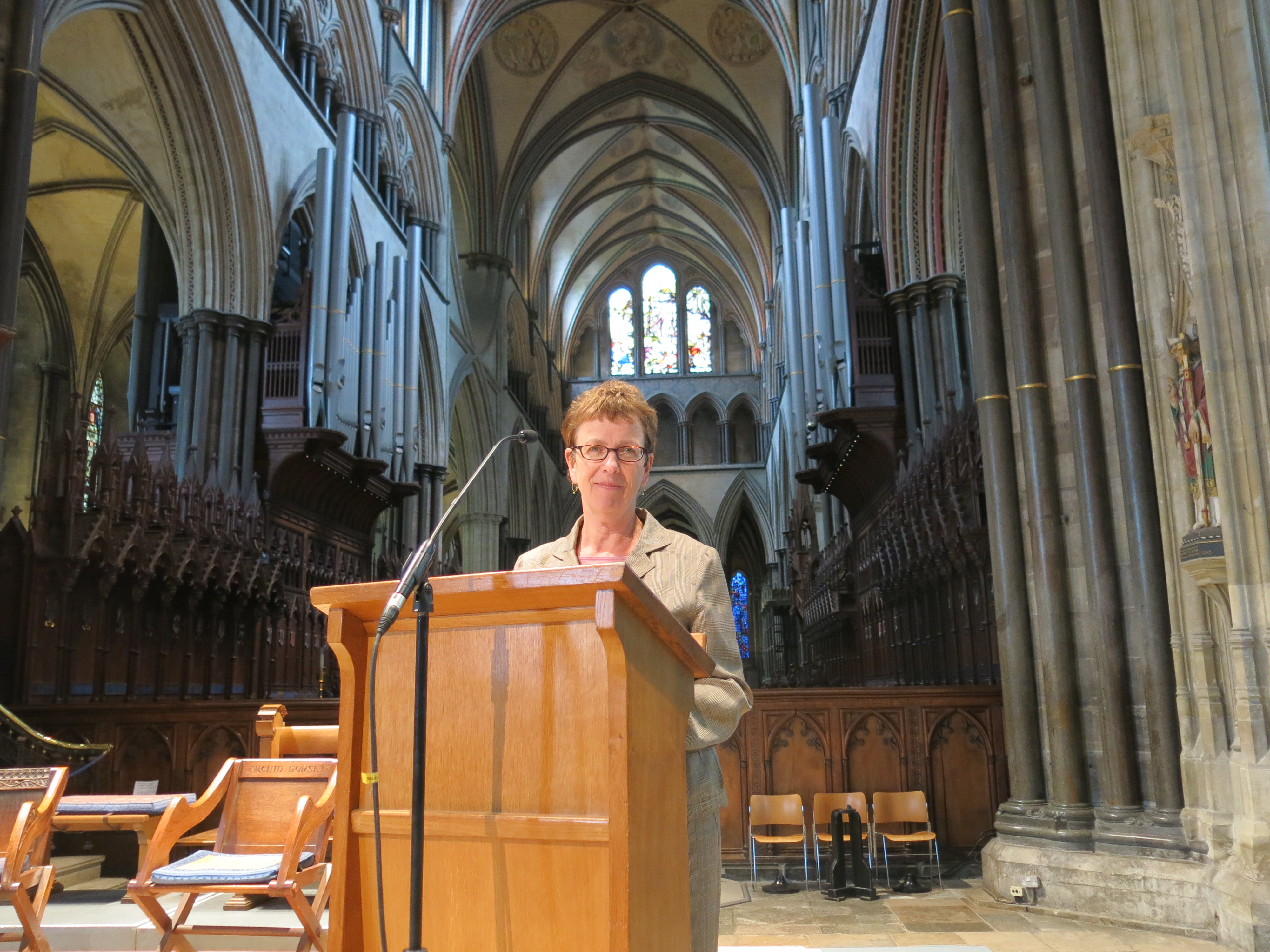
There has been a great deal of coverage in the last few days concerning legal actions against British soldiers.  Mr Cameron – the British Prime Minister – wants to put an end to them.   This is an edited version of the sermon given by the Reverend Lieutenant Colonel N J Mercer at the Amnesty International service held on Thursday 17 October 2013 at Salisbury Cathedral.  It was first published two years ago.


Two weeks ago in our Benefice we had a week of fasting for “Stand Fast For Justice.”  Stand Fast for Justice is a campaign which is currently being sponsored by the Charity Reprieve.  In this week of Benefice Fasting, parishioners – aged 12 to 90 – fasted in sympathy with the prisoners at Guantanamo who are currently on hunger strike and being force fed.  In particular we remembered Shaker Aamer.  Shaker Aamer is British and has been cleared twice by the Guantanamo authorities for release.  Once by George Bush and once by Barak Obama.  Yet he remains in custody.  It appears that he was nothing more than an innocent bystander, caught up in the fog of war, for which he has lost eleven years of his life.

Most alarming is his claim that he was tortured at Bagram Airbase and at Guantanamo and that MI5 have been complicit in his torture.  The reason for his delay – some allege – is that if he is released he will reveal details of his treatment.  The authorities want him sent back to Saudi Arabia even though he is British Resident.  His family live in South London and he has a son whom he has never seen

My background

The service this evening is the Amnesty International Service which remembers, in particular, prisoners of conscience.  These are individuals who are held in prison for their conscientiously held beliefs and who lose their liberty for no other reason than holding the wrong opinions or beliefs. They are wholly innocent of any crime.  And it this category of wholly innocent prisoner which is my own nexus for me being asked to preach this evening.

For there is another category of wholly innocent prisoner, and that is the prisoner of war.  As their title suggests, these individuals are imprisoned for no other reason that they were on the opposing side in an armed conflict.  As the Geneva Conventions state, they become prisoners of war when they fall “into the power of the enemy” and for no other reason (Art 5 1949 GCIII).

Some of you may know my background, but I was the senior legal adviser in Theatre for the Iraq War in 2003.  I had legal responsibility for all operations in the field, and this included the difficult issue of prisoners of war.  I became embroiled with this issue which arose quite by chance whilst visiting the Prisoner of War camp in Um Qsar in March 2003.  I went down to visit the camp – on a totally unrelated matter – and as I entered the facility, I glanced down a hessian corridor at the entrance. Unknowingly, I was looking at the Joint Force Interrogation Unit and to my horror, I saw about thirty – forty Iraqi prisoners, hooded and in stress positions, kneeling in the sand in 40% heat and with a generator running outside the interrogation tent

As a soldier, I knew exactly what was going on.  The interrogators were trying to intimidate the prisoners.  I intervened and demanded to know what was going on.  The Officer Commanding replied that he didn’t take his orders from me but “direct from London”. I was told that such practises were “in accordance with UK doctrine”.  Needless to say, I was unable to change the situation there and then but I reported matter to the British Commander that evening.  It led to an unseemly row between lawyers the interrogators and higher Headquarters.  It was only the intervention of the Red Cross which turned the tide in my favour.

The ‘5 techniques’

There was, as many have remarked, a general indifference to prisoners.  Six months later however, a prisoner called Baha Mousa was beaten to death during tactical questioning.  The whole episode was examined first at Court Martial and then in the Public Inquiry that followed.  It was revealed that not only were prisoners hooded and in stress positions, but were also being deprived of food and sleep and were probably being subjected to what is termed “white noise”.  Indeed, one prisoner had been chained to a generator whilst it was running and belching out carbon monoxide.

These so called 5 techniques were banned in 1978 after the United Kingdom was taken to the European Court of Human Rights (Ireland v UK) – yet somehow they had remained in use.

This episode was to have a profound effect on my life.  Like so many pivotal moments in our lives, it set me on a journey that I neither expected nor desired.  I left the Army in 2011.  Not long afterwards however, a book called “Cruel Britannia” dropped through my letter box.  The publishers (Portobello Books) asked me to review the book and I felt flattered as I had never been asked to review a book before.  The book horrified me.  It revealed a catalogue of torture by the British from the end of the Second World War and throughout the colonial campaigns of Malaya, Kenya, Cyprus and Aden.  Then onto Northern Ireland and Iraq and to the episodes which are described above.

There was one particular quote I want to share with you about the treatment of Mau Mau prisoners in Kenya:

Men were whipped, clubbed, subjected to electric shocks, mauled by dogs and chained to vehicles before being dragged around.  Some were castrated.  The same instruments used to crush testicles were used to remove fingers.  It was far from uncommon for men to be beaten to death (Cruel Britannia p 81)

The assistant chief of police in Kenya at that time (Duncan MacPherson) said that:

The conditions I found existing in some camps were worse, far worse, than anything I experienced in my four and a half years as a prisoner of the Japanese

 The British myth

The British narrative is that we are a people who pride themselves on decency and fair play, except it is a myth.  We have been unspeakably cruel to our prisoners in the post war period and that includes Iraq and Afghanistan.

I recently spoke at a dinner hosted by the Tablet where I met a young SAS Trooper called Ben Griffin.  You may or may not have heard of him.  But he was first in the Parachute Regiment and then the SAS and a thoroughly decent soldier.  However, he was so appalled by the treatment of prisoners in Iraq and Afghanistan that he refused to soldier on.  He said that Coalition Forces were treating prisoners as “sub-humans” and that we were “accepting illegality as the norm.”  Rather than Court Martial him, he was discharged honourably from the SAS.  His Commanding Officer described him as a “balanced and honest soldier who possesses the strength and character to genuinely have the courage of his convictions.”

He now lives under a High Court injunction.  If he reveals what he knows about prisoners and he will go to jail.  But he is not the only one whose silence has been wrought.  Those former prisoners, like Shaker Aamer, who seek to bring a claim against the British Authorities, now have to do so in a secret court where they can neither have their own lawyer, see the evidence against them nor challenge the witnesses or judgement against them.  This is thanks to the “Justice and Security Act” which was skilfully managed through Parliament this year.

I recently preached on the Roman Persecutions in the Early Church where the historian Tertullian – a lawyer and a priest – wrote in his Apology (197) how the Roman Authorities similarly rigged the trials of the early Christians.  Now we rig the trials of prisoners and silence those who seek to speak out on their behalf.

As an Army Officer, I expected the State to behave honourably.  What I stumbled upon was what one commentator described as “Britain’s dirty little secret”.  What the Telegraph journalist Peter Oborne recently described as a “ghastly cloud” which overshadows this country.  We have as a nation kidnapped innocent men and women and we have been complicit in their torture.  Then we have covered it up; wholly innocent prisoners, be they prisoners of war or prisoners of conscience, it amounts to the same thing.

In this service, in this beautiful Cathedral, in this rural idyll of Salisbury, most are oblivious to our own sordid history.  The psalmist tells us that God “hears the groans of the prisoners” (Psalm 102:20).  The United Kingdom still actively supresses those groans on threat of imprisonment or injunction.  This, of course, happens all over the world, but if it can happen so easily in one of the world’s oldest democracies – on our watch – just think how easily it can flourish elsewhere.


twitter imageYou can follow us on Twitter and Facebook.

Blog at WordPress.com.

Up ↑