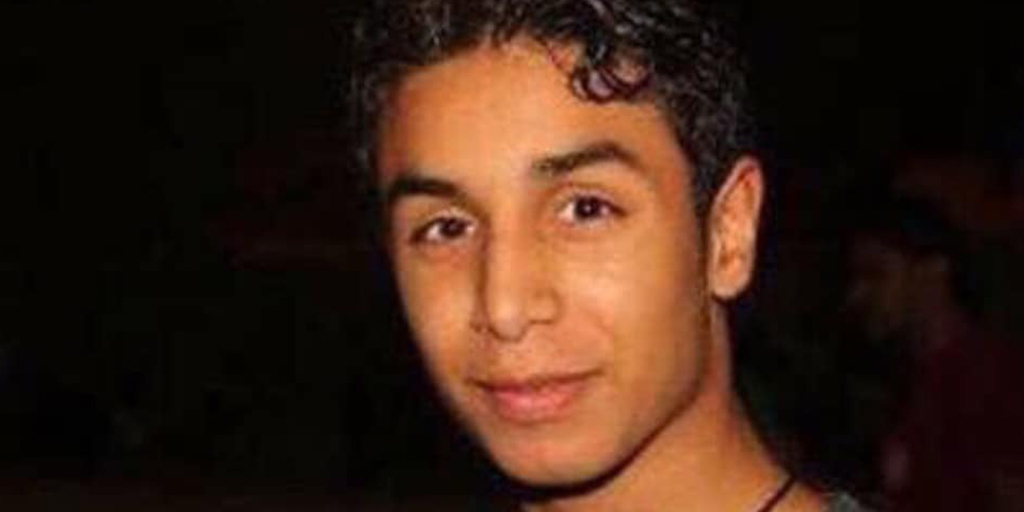
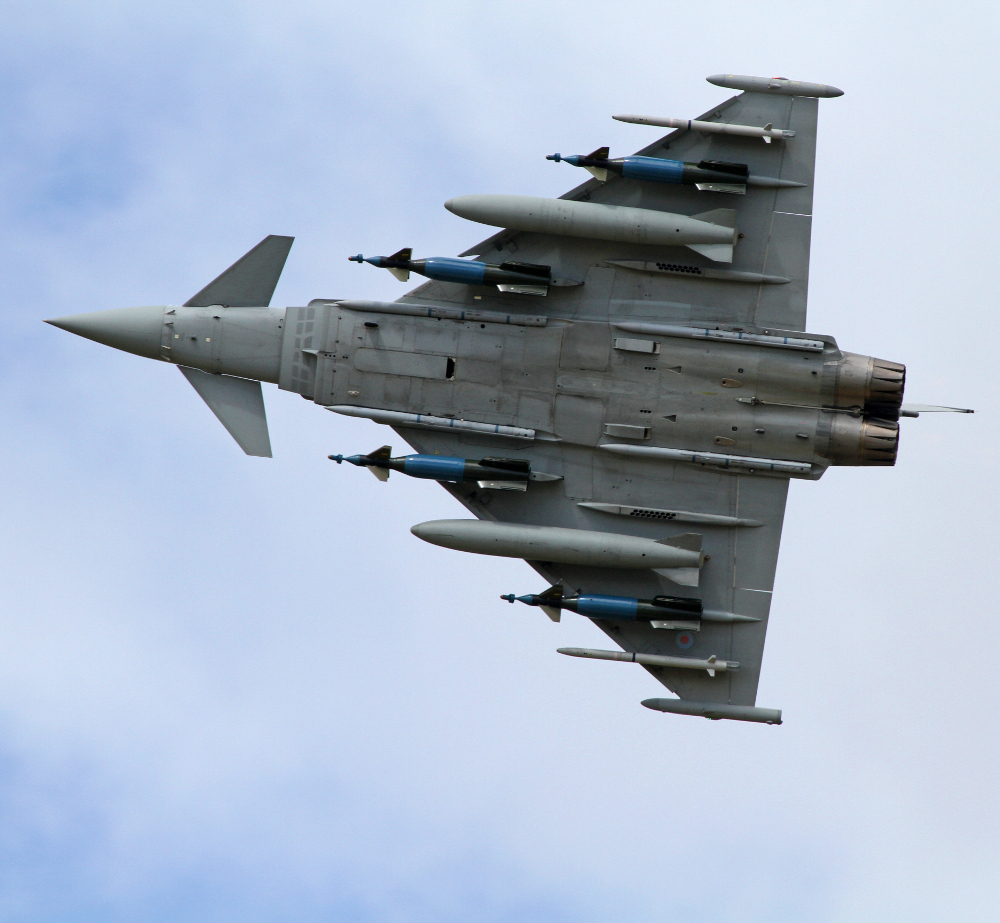
Birthday greetings to Ali al Nimr


Saudi Arabia: Send a message to Ali al Nimr for his birthday

This is a post from Reprieve.

Ali al-Nimr will turn 26 years old on December 20, 2020.

He’s been locked away from his family for seven years, and on death row in Saudi Arabia for five.

His so-called ‘crimes’ include “explaining how to give first aid to protesters.” For that, Ali was tortured until he signed a ‘confession’.

Ali shouldn’t be on death row. He shouldn’t be alone on his birthday.  For further details see this link to a previous post.

Will you write a message to Ali for his birthday and remind him that he is not alone?

This the link to send a message.

Death Penalty report: Oct – Nov


We attach this months DP report thanks to group member Lesley for compiling it.  It is full report this month with a wide range of countries to report on.

Report (Word)

Arms sales to Saudi – latest


Campaign Against the Arms Trade launches legal challenge

CAAT has launched a legal challenge after the UK government decided to resume arms sales to the Saudis for use in their bombing campaign in Yemen.  We discussed the flimsy grounds and shaky reasoning for this decision in a previous post.  The CAAT post can be accessed here.

Saudi promises shown to be false


Solemn promises by Saudi authorities about ending the death penalty for minors may not be true

Reprieve reports that a promise by the Saudi authorities to end the death penalty for minors does not look it is going to happen.  A juvenile sentenced to death for trivial offences could still take place.  See the full story published by Reprieve.

Arms sales to Saudi resume


The UK has resumed arms sales to the Saudi regime

In 2019 the Court of Appeal ruled that the UK government had acted unlawfully by licensing weapons to the Saudi armed forces for use in the Yemen conflict without assessing whether incidents had occurred in breach of International Human Rights law.  Our weapons – along with those supplied by other countries principally the USA – have cause immense damage and suffering to the people of Yemen.  The UN has estimated around 7,700 dead since beginning of the conflict in 2015.  To that must be added the thousands of injured and the destruction of major parts of the country.  The effects on the civilian population have been devastating. 

Hospitals, schools, market places, residential areas, agricultural areas and production facilities have all been bombed using our planes and weapons.  Although mistakes do happen in war and the wrong thing is bombed, the extent of these ‘mistakes’ leads one to assume that there is a deliberate attempt to bomb civilian targets.  We must also note that UK personnel – including people from the RAF – are involved in advising the Saudis so something is going seriously wrong.

The British government maintains – against all the evidence – that there is no risk of IHL violations.  In a Commons statement on 7 July justifying setting aside the Court’s judgement, the minister, Liz Truss MP said:

[…] I have assessed that there is not a clear risk that the export of arms and military equipment to Saudi Arabia might be used in the commission of a serious violation of IHL.  (House of Commons written statement 7 July 2020)

It is worth reading the key passage in this statement which purports to give a justification for this decision:

This analysis has not revealed any such patterns, trends or systemic weaknesses.  It is noted, in particular, that the incidents which have been assessed to be possible violations of IHL occurred at different times, in different circumstances and for different reasons. The conclusion is that these are isolated incidents.

This reasoning is tenuous in the extreme.  Because violations ‘occurred at different times, in different circumstances and for different reasons’ the minister concluded that they are ‘isolated incidents’.  Surely a key factor is the frequency of these incidents especially if your argument is based on the numbers?  The sheer number of civilian targets is way beyond what anyone could describe as ‘isolated’.   The Oxford dictionary describes isolated to mean ‘untypical, unique’: these bombings are neither untypical nor unique.  Another curious aspect of this statement is the phrase ‘for different reasons’ implying knowledge of what the purpose of the raid was yet the statement is full of uncertainties and the difficulty of assessing the incidents.  

Kate Allen, director of Amnesty international said:

How the Government can seriously describe a five-year Saudi-led aerial assault on Yemen which has seen numerous examples of civilians killed in schools, hospitals, funeral halls and market places as a set of ‘isolated incidents’ is almost beyond comprehension.

This seems like an attempt to rewrite history and disregard international law. The UK is bypassing its obligations under the international arms control framework. Its approach to this decision has effectively rendered our own protections meaningless.  (New York Times, 7 July 2020)

It is small wonder that human rights organisations have reacted with horror at the decision and the speed with which the minister set about reinstating arms shipments to Saudi.  The Campaign Against the Arms Trade described the decision as ‘rank hypocrisy’.

The government is determined to sell arms to the Saudi and seems genuinely unconcerned at the fate of those on the receiving end.  Liz Truss’s argument about isolated incidents is almost insulting.  So great is the scale of the business that stopping it or seriously scaling it back is economically impossible.  Truly it is the tail which wags the dog.

Sources: BBC, CAAT; New York Times; Human Rights Watch; Independent; The Guardian


Death penalty report: August – September


Our latest monthly death penalty report is available thanks to group member Lesley for the work in compiling it.  Note that China is the world’s largest executioner but the details are a state secret.

Report, August- September (Word)

Death penalty report July – August


We attach the latest monthly death penalty report compiled by group member Lesley.

Report (Word)

Majai Matiop Ngong who’s death penalty has been suspended is featured in the report 

Edited: 13 August

Saudi Arabia:


Juvenile under sentence of death

[This is a post from Reprieve]

Mohammed al-Faraj was 15 when he was arrested while leaving a bowling alley in Medina, Saudi Arabia.  He was tortured into confessing to ‘crimes’ linked to non-violent protesting, including attending a funeral at the age of 9.
By any measure he was a child when these so-called ‘crimes’ took place.

He should not have been arrested and he certainly should not be facing a death sentence today.  On April 26, Saudi Arabia announced a royal decree that would end the use of death sentences for children like Mohammed.  Yet, a loophole in this decree means that the judge in Mohammed’s case will still be able to sentence him to death. [1]
Reprieve has just taken on Mohammed’s case.  We are going to need to build up his campaign for justice quickly.

Reprieve needs your help to make sure the international spotlight is on Saudi Arabia.  We know they are sensitive to their public image right now, and we can use that to make sure they do not sentence Mohammed to death.

Please share Mohammed’s story today Facebook link or Twitter link

Together, the Reprieve community brings hope to people like Mohammed who have no one else to turn to.  Thank you for being a part of this community.

[1] “Saudi Arabia Says It Will Stop Executing Children. But Read the Small Print | Opinion,” Newsweek (May 18, 2020).  See below:

Newsweek link

See our monthly death penalty report

Resumption of arms sales to Saudi Arabia


Minister announces resumption of arms sales to Saudi Arabia used to cause so much misery in Yemen

It is sometimes difficult to keep up with government announcements.  On Monday 6 July, the Foreign Secretary Dominic Raab announced that a number of individuals would be subject to sanctions and banned entry to the UK.  Their assets would be frozen as well.  The UK is one of the major centres for money laundering and the City is the centre of a web of tax havens around the world.  City institutions are specialists in moving huge sums into secrecy jurisdictions thus enabling a range of criminal activities to go undetected.  Dominic Raab’s announcement was a welcome first step in clamping down on some of this activity therefore and has cross-party support.  In his statement he said:

He outlined human rights violations as those that contradict the right to life, the right not to be subject from torture and the right to be free from slavery, but said they were exploring adding other human rights and looking into including those guilty of corruption.

The Foreign Secretary outlined the individuals who will be sanctioned first.  These include those involved in the torture and murder of Russian lawyer, Sergei Magnitsky (who the Minister concluded his statement by paying tribute to), and Saudi Arabian journalist, Jamal Khashoggi, as well as those responsible for the genocide of the Rohingya population in Myanmar and for North Korea’s gulags.  Statement in the House of Commons Website (extract)

All those countries named have been subject of Amnesty and other human rights organisation’s campaigns.

THEN on the following day, we have an announcement by the Secretary of State for International Trade Liz Truss, (pictured) resuming arms sales to Saudi Arabia.  The contrast is astonishing as one of the countries included in the Foreign Secretary’s announcement was – Saudi Arabia for the murder of Khashoggi.  The announcement followed a legal case last year mounted by a number of human rights organisations, who claimed that the weapons – especially jets – were being used by the Saudis to bomb civilian targets in the war in Yemen.  The destruction there has been horrific with thousands of deaths.  Hospitals, schools, clinics and wedding ceremonies have all been attacked.  Saudi Arabia’s human rights record is dire with torture common, religious persecution rife and the dreadful treatment of women.

The Court of Appeal found against the government because it did not show, in the Court’s judgment, the question of whether there was an historic pattern of breaches of International Humanitarian Law was a question which required to be faced.  Even if it could not be answered with reasonable confidence for every incident, at least the attempt had to be made.  It was because the government had not reached findings on whether specific incidents constituted breaches of IHL as part of an assessment of clear risk, under Criterion 2c that the Court of Appeal concluded that their decision-making process was irrational and therefore unlawful.

Liz Truss’s argument is that they have sought to determine whether these “violations” are indicative of:

(i) any patterns of non-compliance;
(ii) a lack of commitment on the part of Saudi Arabia to comply with IHL; and/or
(iii) a lack of capacity or systemic weaknesses which might give rise to a clear risk of IHL breaches.

We have similarly looked for patterns and trends across the incidents which have been assessed as being unlikely to be breaches of IHL and those for which there is insufficient information to make an assessment.

This analysis has not revealed any such patterns, trends or systemic weaknesses. It is noted, in particular, that the incidents which have been assessed to be possible violations of IHL occurred at different times, in different circumstances and for different reasons. The conclusion is that these are isolated incidents

The decision to resume supplies has been roundly criticised.  Kate Allen of Amnesty said:

This is a deeply cynical move to restart business as usual when it comes to Saudi arms sales.  How the Government can seriously describe a five-year Saudi-led aerial assault on Yemen which has seen numerous examples of civilians killed in schools, hospitals, funeral halls and market places as a set of ‘isolated incidents’ is almost beyond comprehension.  This seems like an attempt to rewrite history and disregard international law.  The UK is bypassing its obligations under the international arms control framework. Its approach to this decision has effectively rendered our own protections meaningless.

Deeply cynical move – AIUK


Andrew Smith of the Campaign Against the Arms Trade in a statement said:

This is a disgraceful and morally bankrupt decision. The Saudi-led bombardment of Yemen has created the world’s worst humanitarian crisis, and the government itself admits that UK-made arms have played a central role on the bombing.  We will be considering this new decision with our lawyers, and will be exploring all options available to challenge it.

The evidence shows a clear pattern of heinous and appalling breaches of International humanitarian law by a coalition which has repeatedly targeted civilian gatherings such as weddings, funerals, and market places.  The government claims that these are isolated incidents, but how many hundreds of isolated incidents would it take for the Government to stop supplying the weaponry?

This exposes the rank hypocrisy at the heart of UK foreign policy.  Only yesterday the government was talking about the need to sanction human rights abusers, but now it has shown that it will do everything it can to continue arming and supporting one of the most brutal dictatorships in the world.


Criterion 2c.  Criterion 2c of the Consolidated EU and National Arms Export Licensing Criteria – which requires the Government to assess Saudi Arabia’s attitude towards relevant principles of international law and provides that the Government will not grant a licence if there is a clear risk that the items might be used in the commission of a serious violation of international humanitarian law.

Picture credit: Pink News


We are not meeting at present but hope to resume activities in the Autumn.

Arms sales to Saudi


UK government continues to sell arms to Saudi in violation of court ruling

June 2020

This post is almost entirely based on a post by the Campaign Against the Arms Trade CAAT, concerning the continuing sale of arms to the Saudi regime despite a court decision telling them to stop and the devastating effects these weapons are having on the people of Yemen.

It’s one year since CAAT won a landmark victory at the Court of Appeal challenging the UK’s arms sales to Saudi Arabia.  As a result of that ruling, we have stopped the export of new weapons for use in the war in Yemen.  A multi-billion pound deal to sell more fighter jets to Saudi Arabia remains on hold.

This is significant progress, but there is more to do.  The government is fighting every step of the way to continue the arms sales.  It is appealing to the Supreme Court for a final decision, with the hearing scheduled for 23-25 November.  Meanwhile the government has still not complied with the Court of Appeal ruling that it should retake its previous decisions to allow weapons sales, and it is continuing to supply the war in Yemen.  It’s not just CAAT lawyers who are demanding answers; in today’s Observer (21 June 2020) all of the Opposition parties have united to call for urgent action.

We must end UK complicity in the war in Yemen.  Thousands of people have been killed by five years of bombing, many more by hunger and disease, and now Yemen is facing a dual threat of cholera and COVID-19 with a health system shattered by war.  One estimate is around 8,000 have died.  There seems no end in sight to the conflict.

Shamefully, UK-made fighter jets, bombs and missiles have played a central role in this destruction.  CAAT’s case challenges the sale of these weapons.  UK rules state that weapons should not be sold where there is a “clear risk” that they might be used in violations of international humanitarian law.  Yet the UK government has continued to support the supply of weapons to the Saudi-led coalition, even as it has bombed schools, hospitals and food supplies.  If the government won’t follow its own rules, we need to make it do so.

In last year’s ruling, the Court of Appeal found that that the government had failed to properly assess the risk of weapons exported from the UK being used in violations of international humanitarian law.  The government was ordered to retake all its previous decisions to export arms to Saudi Arabia and its coalition partners, in a lawful way.  New arms sales were put on hold until this review is complete.  The government agreed to undertake the review as a matter of priority.  Yet, one year on, it has still not completed the review ordered by the Court.  All the time that review has not been completed, weapons sales can continue under pre-existing licences – and BAE Systems can still maintain the warplanes bombing Yemen.

So we must keep the pressure on. The government was ordered to retake its decisions, not just carry on with business as usual.

Sources: Amnesty International; Observer; Global Conflict Tracker, CAAT

Blog at WordPress.com.

Up ↑