Latest Death Penalty Report


Report for mid – July to mid – August

August 2026

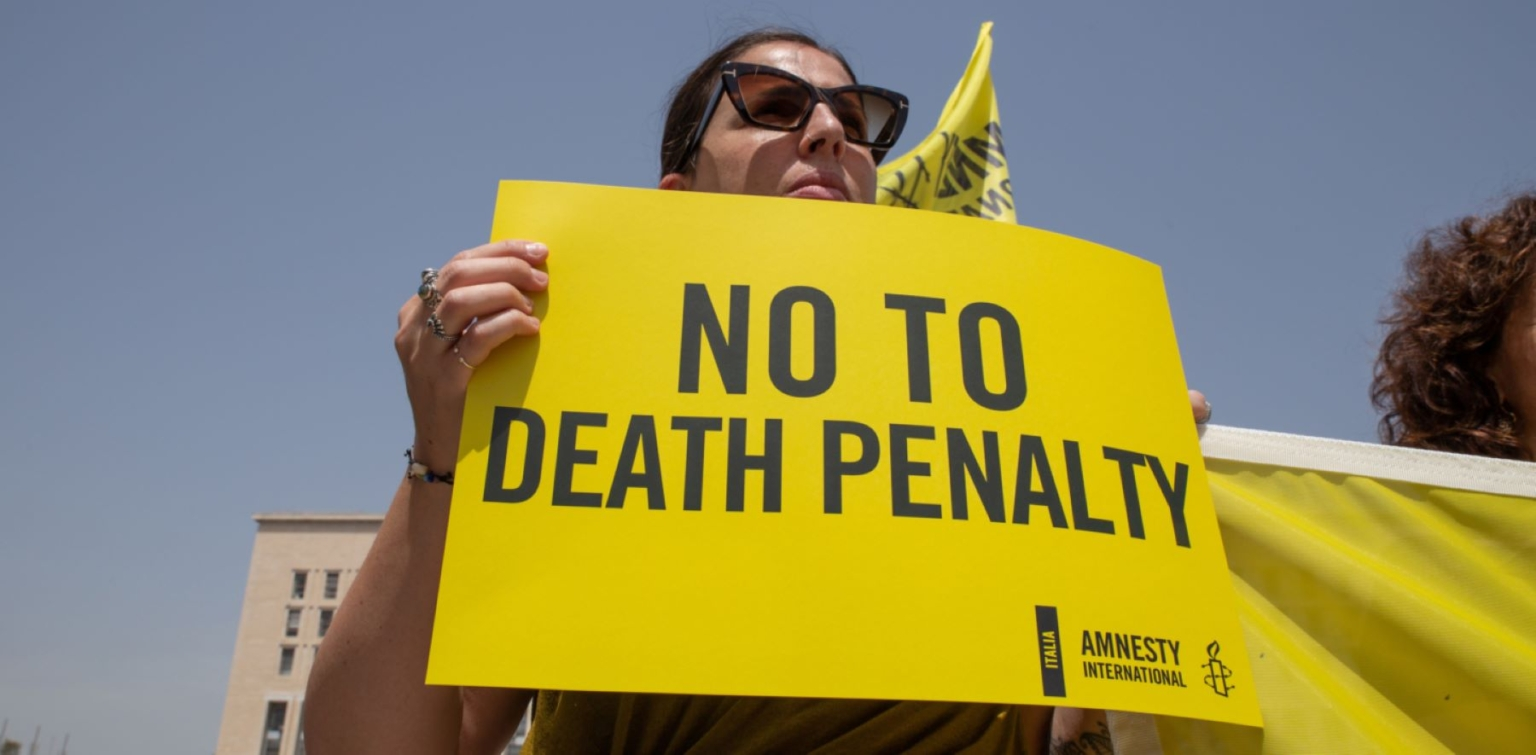
We are pleased to attach the latest report with thanks to group member Lesley for the work in compiling it. The highlights in the report are

  • Conditional pardon offered to Ruth Ellis who was the last person to be hanged in Britain
  • In Lebanon aย law has been passed abolishing the death penalty.ย  It will be the only country in the Middle East formally to end the penalty
  • Florida continues with its spate of executions including two on one day and Governor DeSantis is busy signing fresh warrants
  • Jermaine Wright, Delaware, becomes the 203rd person exonerated since 1973 and is declared innocent after 34 years on death row.

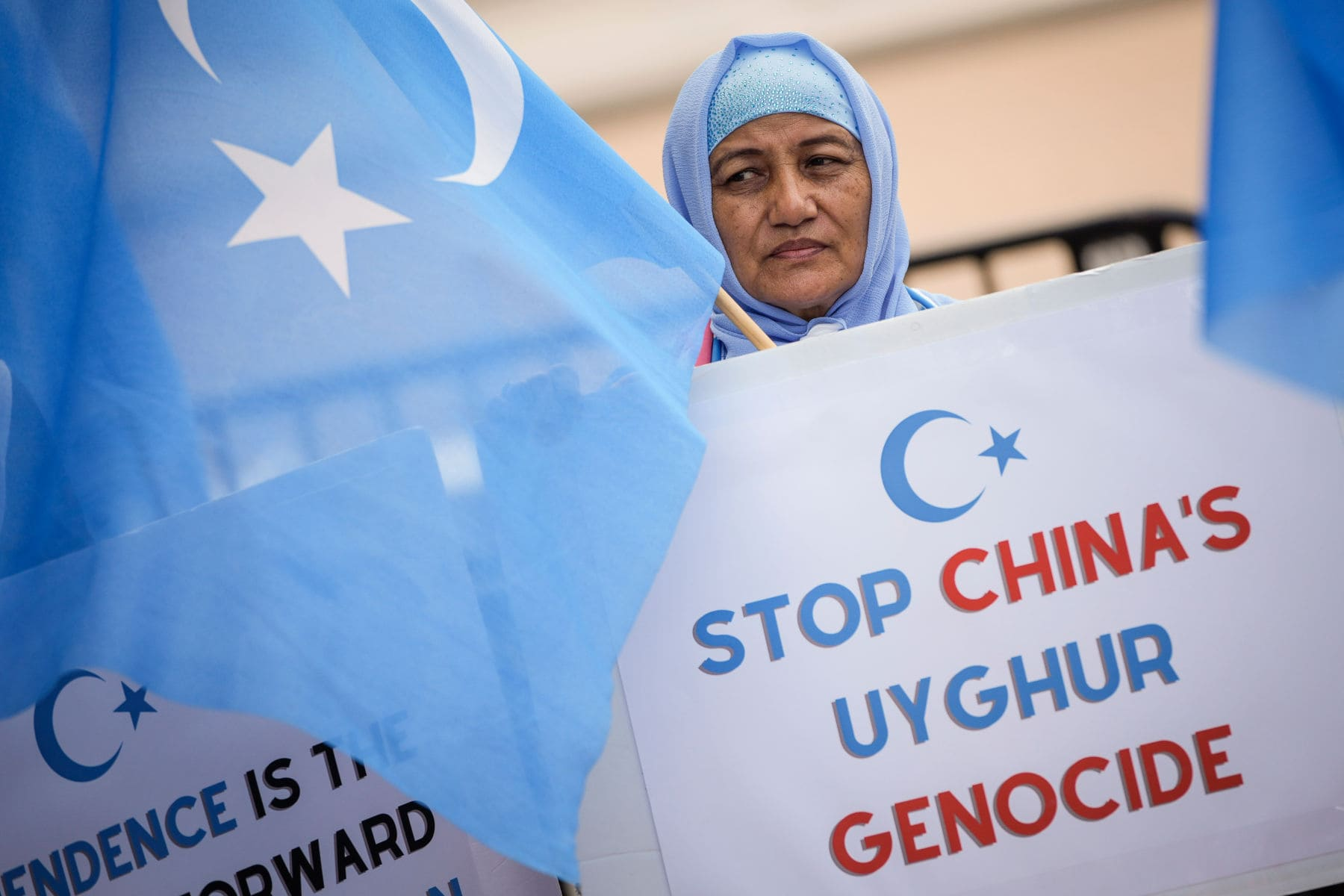
As ever we note that there is no data from China – believed to execute more of its citizens than the rest of the world put together – because they are a state secret. It is another aspect of the persecution of the Uyghurs the subject of a series of posts elsewhere on this site.


Uyghur campaign: letter


Group members publish letter in local paper

August 2026

Two members of the local group have their letter published today (13th) on the Uyghur campaign in the Salisbury Journal:

“DURINGย  August, the local Amnesty group is taking part in the Uyghur Solidarity Month to highlight the dire human rights situation in that part of China.

“The UN Commissioner for Human Rights said there were credible allegations that the Chinese government had carried out arbitrary detention, torture, forced labour, family separation and severe restrictions on religious and cultural freedoms on a vast scale.ย ย  Reading a book in their language is punished and might result in execution.

“Despite these findings, the suffering of the Uyghur people continues while the world looks on.ย More than a million Uyghurs have been detained and countless families have been torn apart.ย 

“Survivors describe detention camps where torture, rape, forced labour and coercive birth control measures are carried out by the Chinese. Whether one views this issue through the lens of International law, religious freedom human rights or human dignity, the plight of these people deserves continued public attention.ย 

“Further background can be found on the Salisbury Amnesty siteย www.salisburyai.com

Lesley and Peter Curbishley”

The letter was modelled on one suggested by the campaign team which had to be shortened because of the paper’s word limit.


Uyghur campaign – day 11


Latest action in relation to the persecution of the Uyghurs

August 2026

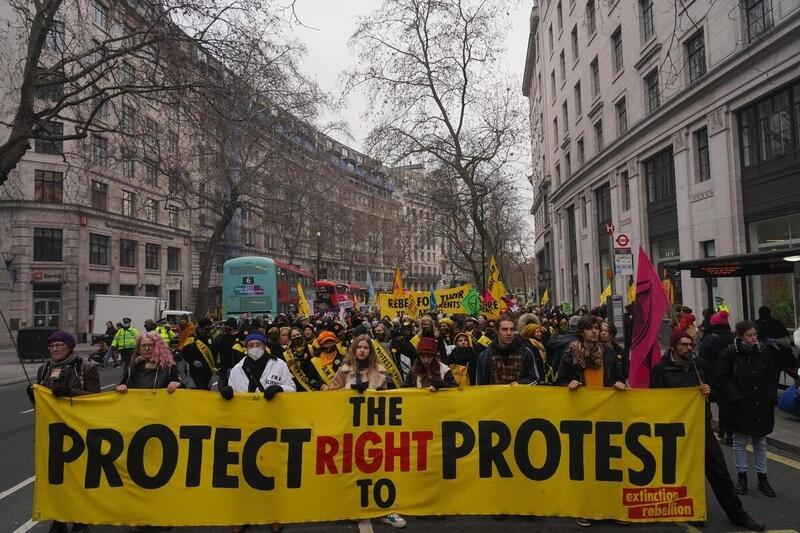
Today’s action is a little bit different, as we will focus on issues closer to home rather than exclusively on the rights of the Uyghurs.ย  We are asking you to sign the Amnesty petition to ‘protect the protest’ – something that we feel is ultimately essential to the future of all human rights campaigning.ย 

In some of our recent posts, we have started to include issues concerning the UK with successive attempts by governments to clamp down on unwelcome protests. In the UK, new laws are constraining our ability protest peacefully, which is an attack on our political rights. It risks creating a precedent and mark the beginning of more infringements on our ability to campaign on human rights. The UK is not of course in the same league as China where repression and stifling of rights is on a massive scale.

However, governments are dilatory about climate actions, are determined to assist Israel overtly and covertly in their violence, and are happy to support and allow arms sales to a wide variety of obnoxious regimes with poor human rights records. Voluble protests against these actions are unwelcome.

We want to protect our ability to run campaigns such as this one on the Uyghurs. In the end, protecting our political rights means protecting the future work we will do for human rights globally.ย The current laws that impact our ability to protest peacefully, which infringes not only on basic human rights to assembly, association, and expression (Articles 10 and 11, Human Rights Act), also createsย nearly 7,000 climate protesters were arrested in the UK between 2019 and mid-2025.

Since 2021, the government has proposed four different anti-protest laws in four years. Police have arrested 3,300 people for peaceful protest against the proscription of Palestine Action. The actual prosecution of peaceful protesters in the UK threatens our ability to raise our voices for human rights around the world. It is also an infringement on political rights that limits a human rights response in any instance of further infringement.

For the health of our human rights futures (and therefore, our ability to campaign for others) please sign this petition:ย https://www.amnesty.org.uk/issues/authoritarianism/protect-the-protest/

Although this is not directly related to the Uyghurs as part of the Uyghur Solidarity Month, we did suggest in our last post on this topic an action to speak to a friend or colleague.


Thought of subscribing?

Risks of University Partnerships with Arms Firms and Israel


Report by Southampton University into tensions and risks in dealing with Israel and Palestine

August 2026

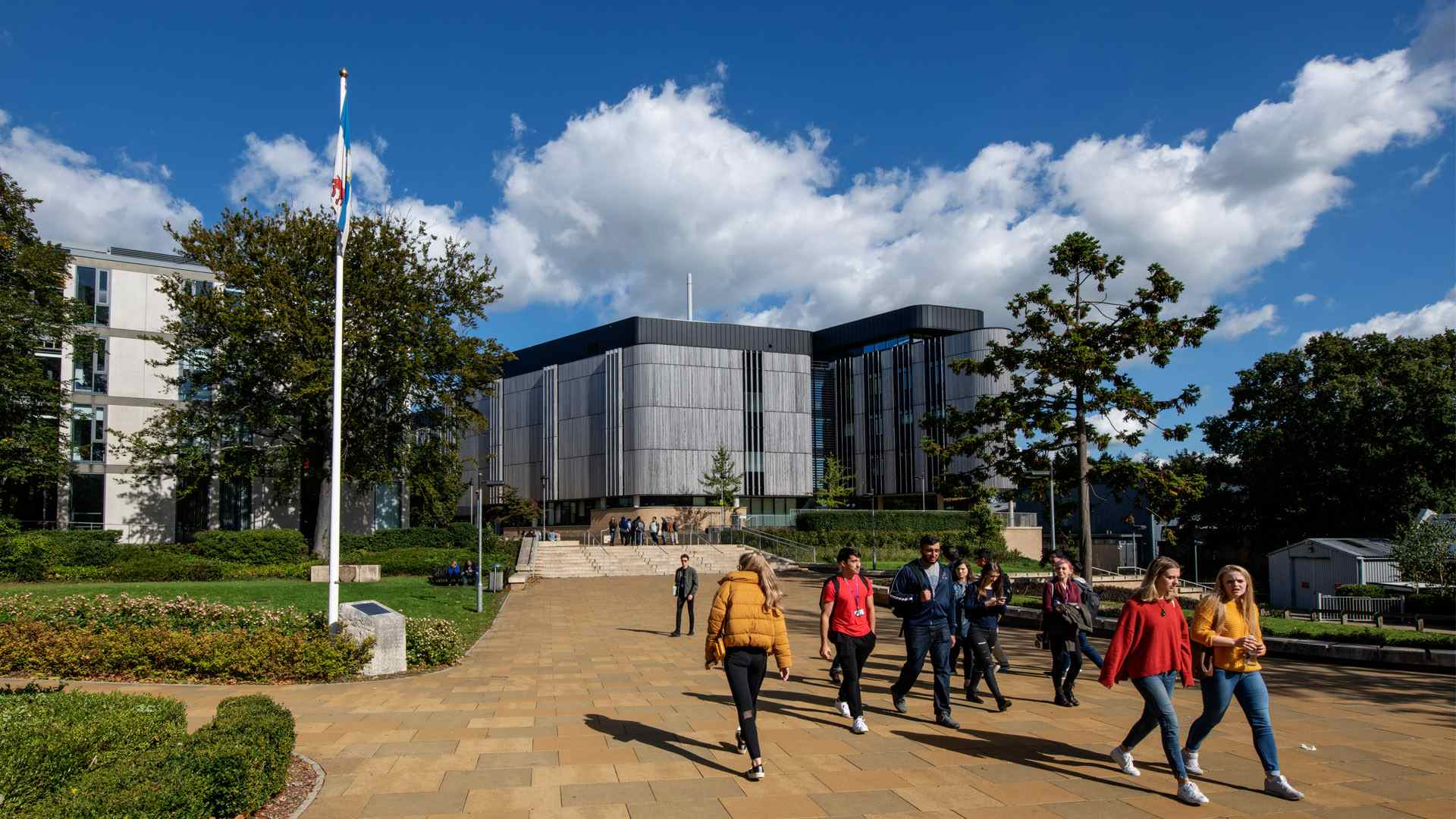
The latest edition of the Campaign Against the Arms Trade’s News (Issue 277, Summer 2026) contains an article discussing links with universities and arms companies in the context of relations with Israel and Palestine. The report Aligning Policy with Practice: Tensions and Risks in the Context of Israel and Palestine, February 2026 analyses these tensions in relation to Southampton but it is clear the issues apply to many universities in the UK. The full report can be accessed here. It is the product of work carried out by the Palestinian Solidarity Network in the University (pictured) and the lead author is Irene Ruiz Espejo.

Essentially, the report analyses the various principles which the University has concerning transparency, sustainability, ethics and EDI and matches that against what happens, the links they have with arms firms and their support for research, and also the links with Israeli universities. They suggest that sometimes matters of governance, partnerships and approaches to free speech can exert a chilling effect as has been seen at other academic institutions.

Risks

They identify several risks: legal, financial, reputational and wellbeing in the report. Official communications do not reference the historical and legal realities of military occupation in Gaza, settler colonialism on the West Bank, apartheid, or the longstanding siege of Gaza. They also do not engage with international legal developments and findings, including United Nations and international and Israeli civil society organisations, which have raised serious concerns that Israelโ€™s conduct in Gaza may amount to grave breaches of international law, including acts that violate the Genocide Convention.

In addition, University statements do not situate events in Gaza within the wider regional context of Israeli military aggression, including the bombing of Lebanon, Syria, Yemen, Qatar, and Iran, which have resulted in additional civilian deaths and escalating regional and global instability. Instead, communications tend to frame events primarily as a bilateral conflict and to address Palestinian deaths, displacement, and civilian harm largely through the language of humanitarian crisis.

This framing obscures a central and well-documented reality: the โ€œconflictโ€ is characterised by profound asymmetries in power, control, and vulnerability, including Israelโ€™s effective control over borders, airspace, and key conditions of civilian survival in Gaza, including access to humanitarian aid. In this context, large-scale civilian harm is not only the outcome war, but it is shaped by Israelโ€™s political and military decisions that have driven mass displacement, civilian targeting, severe restrictions on essential supplies, the use of starvation as a method of war , bombardment, and the destruction of critical civilian infrastructure in Gaza, including all twelve universities.

Power of money

They maintain this bias is not accidental but managed, where money and and power repeatedly take precedence over stated values. Students and staff who raise concerns about arms partnerships, or who engage in Palestinian solidarity, face ‘scrutiny, marginalisation or silencing’ – a direct threat to freedom of speech.

Money has become an existential issue for universities and many are struggling. The drop in foreign students has been a severe blow. The suggestion, implicit in the report, that the desire to secure research funding from arms firms has led to threat to their core values. Links to Israeli universities are not inherently wrong but the nature of the research might be.

The CAAT piece ends “our report is an attempt to interrupt that silence resisting erasure – of lives, of knowledge and our ability to name what is happening requires more than critique. It requires cultivating the capacity to see clearly even when language obscures: to think critically even when institutions reward compliance and to remain connected to our sheared humanity, to people, to place and to the consequences of what is doe with our knowledge our research and our labour”.

Some content from the report.


Obituary: Daphne White


Long standing member of the local group. Born 1933 – died 2026

We are sad to record the death of Daphne White who was a stalwart member of the Salisbury group who died on 19th July. Her funeral was held today 11 August at Salisbury crematorium attended by relatives, friends and former pupils.

Daphne was of the generation who lived their early lives through the war years, years of hardship and making do and mending. An evacuee from Portsmouth came to stay with the family and came to be almost a sister to her. After St Marks Junior School she went to South Wilts Grammar School. She was brought up in a Methodist family and after school, she attended a Methodist Teacher Training college in Scotland. She became a teacher of geography.

She travelled widely despite her dislike of flying working for a while in Cyprus. She returned and taught for a while at Durrington Secondary Modern and then became Deputy Head of Wilton Middle School before retiring.

It was this interest in the world and geography which led her to take an interest in human affairs and thence to become active in Amnesty International, both in the national organisation and with the local group. She took great interest in the plight of others including that of political prisoners. Amnesty became a great passion for her and she was a regular attendee at the monthly group meetings. One prisoner of conscience Daphne worked on was Dr Raul Lombardi who, with his family, came to visit Salisbury following his release. Work with PoCs is a key element of Amnesty’s work. Daphne was the county coordinator for Peru for many years. She is bottom left in the picture (picture credit needed).

We are grateful to the celebrant, Helen George, for this extract from her celebration of Daphne’s life and her work in speaking to those who knew Daphne to describe her life story. Helen can be contacted on helenislageorge@gmail.com. We hope to add to this obituary if further material comes to light including adding a photo. So please view this as a first draft.

She will be missed.


Uyghurs: getting the word out


Try telling a friend or neighbour about how the Uyghurs are treated

August 2026

Bringing back media and governmental attention on the Uyghurs is an essential step in ensuring that the current crisis is not simply ignored and forgotten. But these actions are only as strong as the wider support from the population. The more people know, care, and act for the Uyghurs, the stronger the influence we can have will be.ย That is why we are asking you today to simply talk to someone you know – a friend, a neighbour, or a colleague for example – about the Uyghur crisis.

Earlier posts will give you a flavour of the issues, the cruelty and repression these people are experiencing so we hope that with the information we have shared this far you will feel empowered to discuss the issue if in simple terms.

Nobody has all the answers to all the questions that may be asked, but creating that spark of curiosity within someone, who may learn more on their own, is so important and powerful. A simple conversation can make all the difference. You may get a response that it has little to do with us. It is sad and terrible that these things are happening but what can we do? Some points to consider:

  • You are involved. If you have cotton garments in your wardrobe, there is a 25% chance that the cotton was harvested by Uyghurs using forced labour.
  • Repression and denial of free speech is not confined to the Uyghurs. Mongolia and Tibet has also suffered and more recently Hong Kong. Britain has taken in many thousands of people fleeing the territory. There is great anxiety about immigration and considerable political and media attention to the Channel crossings. The thousands of Chinese who have come here receive little attention.
  • We discussed the new China Unity Law in our last post and this has incorporated repression and discrimination into all of China’s minorities.
  • As China becomes ever more powerful, Xi Jinping’s ambitions increase. Taiwan is in his sights and he is fomenting unrest in Japan and elsewhere in Asia
  • China is providing massive weapons assistance to Russia in its war with Ukraine. The war has resulted in many thousands of Ukrainians coming to Britain as well.
  • China is demanding a massive embassy be allowed in Britain which is almost certainly to be used for espionage it is alleged.

Although the Uyghurs may seem a long, long way away, they are but the latest victims of China’s relentless desire for power and commercial domination. The effects of this will increasingly be felt in the UK. Regrettably, it does not get the attention it deserves and governments are keen to pursue trade interests. China is said to be sensitive to criticism and claims that human rights and other matters are raised behind the scenes are to be questioned. They certainly had little or no effect in Hong Kong.

So please mention the Uyghurs to your friends and add that China is becoming ever more important in our lives and it is beginning to affect all of us.


Uyghurs part of repression of all minorities in China


The China Unity law is an act of cultural genocide

The China Unity Law came into force in July and is intended to establish Chinese dominance over all its ethnic minorities. Mandarin will become the dominant language and all 51 of China’s minorities will be affected, around 9% of the total population. We are focusing on the Uyghurs who are being persecuted as part of Amnesty’s Uyghur Awareness Month. The law will be used to justify ever more repression and discrimination over its minorities.

We have to be aware of the wider context however and the threat to human rights inside and outside China. An article By Simon Tisdall in the Guardian (8th August) discusses these wider issues. The new law has been condemned but not too loudly by western governments but more loudly by Amnesty. We must not forget the repression which went on Tibet and also Mongolia: the Uyghurs are just the latest in a line of minorities persecuted by an increasingly authoritarian Xi Jinping.

Tisdall argues that a kind of ‘debilitating fatalism’ has taken hold of the western powers who just watch the ever increasing exercise of power by China. They are threatening Taiwan and with US military stocks reported to be much reduced by the Iran excursion, is now the time when an assault is right for them? They also threaten Japan.

Hong Kong is another example and thousands left the former colony to come to the UK. Free speech is no longer possible. The publisher Jimmy Lai was sentenced in December to 20 years in prison and is in solitary confinement and in poor health. His family say he is denied medical attention which is denied by the Chinese but they do not allow independent verification.

The sad fact is that the cause of human rights in that country and those of its minority populations in particular is bleak. As China becomes more economically and politically powerful and western countries more divided, China is able to pursue its plans with ever greater vigour. Its desire to build the biggest embassy in the west in London seems unstoppable. It is almost certainly to be used for espionage and to exert control over Chinese people living in the UK. Donald Trump’s divisive policies against US allies plays into China (and Russia’s) hands.


Thought of subscribing?

Israel ‘concealing evidence of genocide’


140th vigil well attended. Need to maintain the spotlight on genocide and war crimes

August 2026

Around 35 turned out this week (8th) and this number swelled at times to over 40 with people stopping for a while. The need is still there with killings going on despite the so-called ceasefire. There were scarcely credible reports of a more permanent ending which almost certainly will come to nought. [UPDATE: Israel rejects Trump’s plan today 9th]. Israel is reported to be engaged in a process of concealing evidence of the genocide.

Destroying the evidence

One event beginning to happen is Israel is now busy trying to clear away the evidence of genocide. Euro-Med Human Rights Monitor reports that around 10 million tonnes of material has been cleared away from Gaza. They report:

“The Israeli forces, along with Israeli civilian contractors, are conducting a wide and organised operation to process and clear the rubble from neighbourhoods and facilities they have destroyed in the Gaza Strip and relocate it from areas under their military control to outside the Strip.

“This is occurring without any official record of the quantities removed or independent oversight, and before international and local investigative committees have had the chance to survey, examine, and document the sites. This risks destroying crucial evidence of genocide and the remains of victims still unaccounted for under the rubble.

“These operations are not part of organised humanitarian efforts to rescue the missing, open roads, or prepare for reconstruction. Instead, Israel is acting unilaterally within closed areas under its military control by demolishing remaining buildings and then crushing, mixing, and transporting the rubble before forensic teams, evidence experts, and unexploded ordnance specialists can examine, document, and preserve the sites, along with the evidence and human remains […]”.

Since thousands of remains of Palestinians lie buried in this rubble, this represents a dreadful and unfeeling extension to the genocidal crimes Israel has already committed. The full story can be read here. A search of this topic was carried out and there is no sign of it being reported in any UK news outlet [accessed 9th].

Mass burial

Last week, a mass burial took place of 112 Palestinians, 40 of whom were children, killed in one of the deadliest strikes which took place since October 7th. An entire apartment block was demolished in November 2023 and 157 people are still missing. Their bodies could not be recovered until now.

No sign of the local MP Mr John Glen who despite the genocide and continuing killings is a ‘proud member’ of the Friends of Israel lobby group along with around 140 other MPs of all major parties.

Photo. Two members standing by a traffic island which attracted a good level of response from motorists. Photo courtesy of Peter Gloyns.


Sources: Euro-Med, Kuwait Times, Eupal, The Canary. No UK media could be found.

Thought of subscribing?

Reactions from an IDF soldier


Many IDF soldiers are troubled by what they see

August 2026

There is a danger when we see film of IDF soldiers who are all kitted up such that we cannot see their faces, in assuming they are unaffected by the carnage, death and destruction they witness. There is film of IDF soldiers gleefully smashing up Palestinian homes and no doubt filled with the propaganda of Arab malevolence, who are only too keen on their work. But not all are and our attention has been drawn to an article in Haaretz which describes the trauma of one Israeli soldier.

HAARETZ, August 06 2026


After helping direct artillery fire that claimed civilian lives in Gaza, former Israeli combat medic Yael is struggling with debilitating trauma and remorse. Her long wait for treatment highlights the military’s failure to care for soldiers scarred by warโ€ฆ.
Yael, who asked not to use her real name, is 22 years old. She enlisted in the Israel Defense Forces in August 2022. She says she was highly motivated. She wanted to contribute, to do meaningful combat service.

The army listened and granted her wish.. “I left the army and saw the number of children killed, and I was shocked. I started searching obsessively for information online. I looked for the neighborhoods we attacked, the villages,” she recounts. “I saw that many innocent people were killed in these places, I saw pictures of dead children. In the army, they told us we only kill terrorists, but that’s a lie. Artillery fire is imprecise; the army considers a hit within a 50-meter radius to be a good hit.”..
“I have nightmares. I see inside my head dead children, crying mothers. I imagine how the bodies are removed. The guilt doesn’t leave me. How can it? I killed an innocent child, I was the one who fed the targets, it’s on me.”.. She was discharged from the IDF a year and a half agoโ€ฆ..


Since October 7, Haaretz has spoken with more than 300 people suffering from mental injuries caused by the war. Some of them reported suffering from PTSD due to exposure to intense combat experiences. Others described extreme guilt due to the deaths of their comrades in combat or of civilians on October 7. Recently, the barrier of shame has broken. More and more soldiers talk about moral injuries they suffer, often related to exposure to or participation in war crimes prevalent in the Gaza Strip.


The army prevented me from getting treatment,” she says. Only after her mother contacted the battalion commander did he meet with her for a conversation. “I told him I was harming myself and that I had suicidal thoughts,” she says. “I wasn’t exaggerating. I didn’t want to live this suffering anymore, this reality where 18-year-old children are killed, and I hear their last moments. I don’t agree with it. I don’t support it.” The mental health officer ordered her removed from combat duty. About two months later, in December 2024, the IDF discharged herโ€ฆ.


When she returned home, the symptoms struck with intensity. She felt she was withering. “I became a shadow of a person. I didn’t see the beauty in life. I saw everything in gray,” she recalls. “Every day I had to cope with such severe panic attacks that I’d scratch myself, hit myself. I was depressed. ..
She felt not only pain in her heart but also anger towards her battery commander (“he’s a scumbag”), and, in fact, towards the entire system. “The state ruined my life, and after it ruined my life, it didn’t bother to give me the treatment I needed. It forced me to prove I was injured, to fight for recognition.” Today, she is in ongoing treatment, taking psychiatric medications, trying to alleviate the pain.


She finds a ray of light in the change in her values, in her moral compass. “Before the army, I was an extreme right-winger, one who would say ‘Death to Arabs.’ That was the myth in school that influenced me,” she explains. “But after the war, I understood that there’s a difference between Hamas terrorists and Palestinian civilians who want peace, who want life. I saw the conditions in which Gazans live. I realized there must be a change, that we must strive for equality, for peace. This is the only way to save the children, to save us all.”


Reading books can get you killed


Reading a Uyghur book can lead to serious punishment

August 2026

This is not the Middle Ages. This is the 21st Century. But the desire of the Chinese to extinguish Uyghur culture can lead to draconian consequences. This short piece and the book, were created by the Amnesty Death Penalty project.

So often, we take our books for granted.ย But if you are Uyghur, reading, promoting or writing books in the Uyghur language – even childrenโ€™s text books – can land you in serious trouble.ย In fact it can and has on a number of occasions, resulted in a death sentence.ย This is all part of the Chinese governmentโ€™s attempts to suppress the Uyghur language, culture and identity.ย Too many governments around the world use the death penalty as a means of intimidating ordinary people into compliance.ย ย Books, things that we take for granted in the West, can be very dangerous for Uyghurs which is why the Anti-Death Penalty Project has created a book (ูƒู‰ุชุงุจ) to show our solidarity. ‘Thank you so much Death Penalty Network for such a beautiful and thoughtful project!ย ย 

The Salisbury group publishes a report each month on the use of the penalty around the world. It does not include China as executions are a state secret. The country is believed to execute more of its citizens than the rest of the world put together.


Blog at WordPress.com.

Up ↑