From Gaza to Yemen: How UK Arms Exports Fuel Endless War


September 2026

In the previous post we discussed the recent report Dead Letter published by the Campaign Against the Arms Trade, the webinar held by them, and the Channel 4 Despatches programme, which all described in some detail the contortions carried out by successive governments to justify the selling of arms to murderous regimes. Also discussed was the involvement in the legal system in some of the bizarre reasoning employed to fight off claims by human rights groups such as Al Haq and others that what they were doing was contrary to international human rights law.

The shear extent of what can only be described as lying is staggering.  Despite copious evidence of death of civilians and the destruction basic infrastructure such as schools, hospitals and mosques, the bombing of water treatment plants and a deliberate policy of ethnic cleansing, successive governments have clung on to arguments such as a lack of evidence, a few incidents do not a pattern make, and the motives of those doing the killing cannot be known.  Anything in fact to justify the continuation of arms sales.

Why?

Which prompts the question why?  Why are politicians of both main parties so desperately keen to maintain these fictions?  Why have they watered down regulations of what can or cannot be sold?  Why do they persist in the argument that we have one of the more robust export regimes in the world when patently it is not?

In this essay we want to suggest some reasons.  Necessarily, it cannot always be evidenced as efforts are made to conceal anything which might compromise the government or ministers.  It is largely speculative therefore.  We suggest there are seven major reasons why we have the system we have.

Economic and the need for jobs

The arms industry employs large numbers of people many of whom are in marginal constituencies [it was always argued thus but in view of recent political upheavals, what is or is not a marginal is now somewhat questionable].  There are around 300,000 people employed.  Further, it is one of the few sectors in the economy which has seen significant growth. Adopting some kind of moral policy and concerning itself with the rights of those at the receiving end of weaponry, would have a serious effect on these numbers.

Post war effects

After the war, Japan and Germany were unable to develop their arms firms which provided an opportunity for the UK to shine.  Whereas those two countries modernised and produced a range of products which steadily ended many UK firmsโ€™ ability to compete (cars and electronic goods for example), arms were not among them.  Considerable support was provided by the UK government to the industry.  However, claims of job creation and economic value are considerably weakened when the degree and scale of โ€˜corporate welfareโ€™ is taken into account.  York University has produced a number of studies showing the net value is nowhere near the headline claims by politicians.

Nevertheless, it is an area where British firms do have a presence on the world stage, despite its questionable economic value.

Close links to the US

It is interesting to reflect on the enormous fuss made at the time of Brexit where โ€˜take back controlโ€™ and โ€˜regain our sovereigntyโ€™ were two of the key messages.  Yet we have lost these to the Americans.  Witness the F-35 arguments where it is claimed the 15% made in the UK cannot be tracked.  They are a key weapon in the destruction of Gaza, bombing of Lebanon and the attack on Iran. The tracking claim is to insult the British people who know full well that goods nowadays are tracked electronically. The reason is not being able to stand up to the Americans and the likely threat to future partnership deals. If our sovereignty was ever lost it has been to the US not Brussels. It is even claimed that the moment the items are manufactured, ownership passes immediately to the US so we cannot embargo their sale to Israel.

Anti-Semitic and anti-Israel claims

Any or all criticism of Israel and its actions are deemed anti-Semitic. These claims seem to have struck fear into the heart of the British political establishment.  They were a powerful force in the removal of Jeremy Corbyn.  Sir Keir Starmer worked hard to โ€˜rip out anti-Semitism by its rootsโ€™ as he put it.  The nature of the anti-Semitism under Corbyn is difficult to bottom out.  A lengthy BBC report delves into it in some detail and some of the evidence seem tenuous to say the least.  It does appear that the party was slow to take disciplinary action where there were incidents but Corbynโ€™s stance against anti-Semitism seemed clear. Inevitably, as in any organisation, there are going to be individuals who are anti-Semitic. 

What is important is the perception but it does seem clear that the policy of claiming that any or all criticisms of Israel has taken root.  It has been effective and has percolated into the BBC and other parts of the media.  We reported on the Centre for Media Monitoringโ€™s report into BBC reporting in an earlier post. They describe the double standards, muffling of Palestinian voices and language issues amounting to severe bias.   For example, they frequently reported that Hamas seized โ€˜hostagesโ€™ whereas Israelis took โ€˜prisonersโ€™.  Both were hostages and both were kept incommunicado and badly treated. The word โ€˜prisonerโ€™ suggested some kind of judicial process had taken place. Evidence of an Apartheid state has almost never been mentioned by BBC commentators despite the copious evidence produced by Amnesty, Human Rights Watch and Israeli human rights groups.

Slowly, things seem to be changing however and the recent statement and actions by Ed Miliband the Foreign Secretary are a welcome if belated sign. Israel is losing the moral high ground and is fast becoming an international pariah.  Witness the huge walkout of delegates at the UN when Benjamin Netanyahu rose to speak.  

MPs easily manipulated

That around 150 members of parliament are members of their partyโ€™s Friends of Israel groups is shocking.  In a previous post we discuss how easy Israel seems to find engaging impressionable and naรฏve newbie MPs to their point of view with cleverly crafted visits to Israel and other financial support.

Any question of curbing sales of arms has to overcome this quiet army of closet supporters of the regime. The question has to be asked: how can an MP properly act dispassionately in deciding what is in Britainโ€™s and Palestinianโ€™s or even Israelโ€™s best interested if they are members of what is believed to be the best funded parliamentary lobby group?  Both Sir Keir Starmer and David Lammy were staunch members and so is Andy Burnham the new prime minister.

Further, when one or other of these MPs are interviewed, their membership is only rarely mentioned by interviewers. 

The Revolving Door

This is the deeply corrupting matter of senior military staff, senior civil servants and ex-ministers, heading off to take up lucrative directorships or consultancies with arms companies.  Both Transparency International and CAAT have criticised this. CAAT terms it โ€˜open officeโ€™ corruption. 

The numbers are quite staggering.  No less than 604 individuals moved from ministry or military roles into arms firms between January 2017 to June 2022. Quite apart from the undue influence taking place, it has led to poor scrutiny, delivery failure and massive budget overruns.  The suspicion is that with a promise of a lucrative post retirement appointment, awkward or challenging questions are not asked.  Proper scrutiny is not carried out. Neither are questions asked about moral or humanitarian issues arising from the use of the weapons. The now abolished ACOBA controls were widely condemned as toothless.

Racism

Underpinning much of the attitudes and biased media reporting is racism.  Arabs and Palestinians are regarded as untrustworthy and uncivilised (algebra?). This appears in claims of Britain being overrun by Moslems and London becoming โ€˜Londonistanโ€™ subject to Sharia Law: Islamophobia in other words.

Whereas anti-Semitism receives a great deal of coverage (rightly) and necessary police action, anti-Palestinian attitudes do not get the same attention. ย British politicians like the local MP, Danny Kruger, can quite casually claim that ‘all the deaths in Gaza are the fault of Hamas‘.ย  It is difficult to believe this blanket statement of blame would be applied to an attack on another racial group.ย  There, cries of โ€˜indiscriminateโ€™ would be heard. The different treatment of Palestinian deaths in comparison with Israeli has been a feature of criticisms of media coverage.

Security

A frequent reason which crops up is security.  This argument seems to hinge around the role Israel plays as a source of information about the Middle East. Israel has a fearsome reputation in the field of intelligence and western powers including the UK are keen to avail themselves of it. 

Conclusions

To many, the continuing and obdurate policy of successive British governments has been baffling.  In the face of mounting evidence, the continued support for arms sales seems insupportable and unconscionable.  In this essay, we attempted an explanation based on a variety of factors we have discussed. Essentially they are about money, jobs dependant on the sales, corruption and a willingness of the political elite to follow the Israeli line.  Fear of the anti-Semitism tag is also a factor.

It hasnโ€™t just been Israel: a similar pathology has been witnessed in the Yemen conflict. There, unqualified support for the Saudi bombing of multiple civilian targets was seen.  Arms are still being supplied to UAE despite strong evidence that they are passed on to the RSF in Sudan.

The public approaches this from having witnessed terrible scenes on the news despite the banning of independent news media into Gaza and the steady murder or assassination of journalists by the IDF.  (More have been killed than in any other comparable conflict). Many feel deeply that this isnโ€™t right and the UK should have no part of it.

These views find few favours in Westminster for the reasons we have suggested. Their answer is to erect ever more contorted arguments in support of an indefensible position.  This is more than speculative as the Despatches programme revealed.  They showed that great efforts were made by the Foreign Office to conceal details and not to leave a paper record. It is a cover for political cowardice, greed and some perverse thinking around supporting Israel and the arms industry generally.

The ultimate tragedy is that it wonโ€™t.  Supporting a thuggish regime to carry on a programme of violence and ethnic cleansing creating along the way an entire new generation of young people bent on revenge, merely postpones the ultimate reckoning. Israel is a superpower in the region and giving them more and more weapons is merely to pour petrol on a fire.  Years of bombing Yemen and a massive death toll has solved nothing.

British involvement in this activity destroys any hope born of the post war Universal Declaration with its claims of โ€˜never againโ€™.  Our role should be to support moderation, dialogue and actively to support the creation of a viable Palestinian state (which the UK is now committed to).  Our political class is profoundly letting the nation down.  It represents a massive political failure for a range of unworthy reasons.   


Latest Death Penalty report


September 2026

We are pleased to attach the latest report thanks to group member Lesley for the work in putting it together. Few items of good news this month and Iran continues with its atrocious level of executions. To note as usual that China is thought to execute more of its citizens than the rest of the world combined but details are state secret.


Podcast Episode: Humanism And Middle East Debate


Pip: If you’ve ever wondered how a government squares “we stand for democracy and the rule of law” with “also, here are some more weapons” โ€” welland2 has been to a festival that asked exactly that question.

Mara: This episode covers talks from the Festival of Humanism: UK foreign policy in the Gulf, and a debate between an Israeli and a Palestinian that was so in demand it had to be repeated in a bigger hall. Let’s start with what those festival talks said about conflict, hypocrisy, and who gets a seat at the table.

Festival Talks On Conflict

Pip: The through-line across both festival sessions is a single uncomfortable question: when Western governments talk about human rights and the rule of law, are they describing a principle or a brand?

Mara: Dr David Wearing’s talk at the Festival of Humanism set that up directly. The post captures his framing of Britain’s governing class this way: he made “the distinction between ‘we’ meaning them and ‘we’ meaning the population at large.”

Pip: That distinction does a lot of work. It means the arms sales, the training of security forces, the quiet financial entanglement with Gulf monarchies โ€” none of that was put to a public vote. It happened in the gap between those two “we”s.

Mara: Wearing traced the history back to oil โ€” Britain establishing protectorates around the Arabian peninsula primarily to secure supply โ€” and argued the logic never really changed. The post notes he pointed out that “we would find it difficult to support our arms industry without the sales to the Gulf states.” The economic interdependence runs deeper than arms: legal services, accountancy, sovereign wealth funding the UK deficit.

Pip: The self-deception angle is what lands hardest. He describes RAF personnel actively involved in supporting Saudi forces during Yemen, while a senior army figure talked about the “rules based international order maintaining peace and prosperity.” That’s not a gap between rhetoric and reality โ€” that’s a chasm.

Mara: The post calls it “an almost baffling lack of awareness.” And Wearing connects it explicitly to a colonial mindset โ€” one that made it easy to view the region as backward, which in turn made it easier to look past the death penalty, the imprisonment of journalists and activists, the denial of women’s rights.

Pip: His book AngloArabia is flagged for anyone who wants the full argument in print.

Mara: The second session โ€” the Israeli-Palestinian debate โ€” and drew such a crowd it had to be repeated the following day in a larger hall. A British-Israeli software engineer and a British-Palestinian paediatrician spoke together, and the post deliberately doesn’t attribute individual points to individual speakers. The point being that some of the positions would surprise you about who held them.

Pip: One of those positions: “the conflict was about land โ€” religion was very much a secondary factor.” Another: “armed resistance has made life more difficult for those it seeks to support.” Neither of those is a fringe view from outside โ€” they came from inside the room, from people with direct stakes.

Mara: The post closes on a note that connects back to Wearing’s argument: outside interference โ€” the Gulf dynamics, the arms flows โ€” is “a factor in the perpetuation of violence.” The two sessions sat together, and they did.

Pip: And if the governing class won’t have the conversation, apparently a humanist festival in Bournemouth will.

Mara: The same logic โ€” who gets heard, who gets excluded โ€” runs straight into the questions the group is raising closer to home.


Pip: Two festival sessions, one through-line: the distance between what governments say they stand for and what the money actually does.

Mara: And the argument that ordinary voters are largely excluded from that gap. Worth watching what the group surfaces next.

Podcasts


New feature on this site

June 2026

A new feature on the site which will appear from time to time, is podcasts. The first is below. Note they are produced by AI but from texts written and researched by us not using any AI. It is an amalgamation of more than one text post. Feedback is welcome. We hope you enjoy listening! If you are not used to these, click on the heading and you will see a sound bar with the text displayed below it.


Recent posts:

Podcast Episode: Prisons, Punishment, And Survival


Pip: Nearly three decades behind bars, nine execution dates, three last meals โ€” and the first thing Richard Glossip does on the outside is go to an Italian restaurant. There's something both devastating and deeply human about that.

Mara: welland2 has been covering the territory where criminal justice, human rights, and detention conditions intersect โ€” and this episode moves through wrongful conviction and release, then into what imprisonment can look like at its most extreme.

Pip: Let's start with Richard Glossip and what it means to walk out after all of that.

Richard Glossip: Nine Dates, One Release

Pip: The Glossip case sits at the intersection of wrongful conviction, prosecutorial misconduct, and the death penalty โ€” and his release in May 2026 raises the question of what justice even looks like after nearly thirty years on death row.

Mara: The interview with The Intercept captures the disorientation of that transition directly. Glossip says: "I tried never to let myself become institutionalizedโ€ฆ But I mean it's hard. You go through all these horrible things and all these different dates โ€ฆ and last meals and everything. And then it doesn't look like this day will ever get here. But you always hope that it will."

Pip: That's someone who kept himself psychologically intact across nine execution dates โ€” which is an almost incomprehensible act of endurance โ€” and is now readjusting to sleeping without prison noise and eating pasta in a neighborhood restaurant.

Mara: The Supreme Court vacated his conviction in February 2025, finding prosecutors allowed a key witness to lie in court and withheld crucial information from the defense. Oklahoma County District Judge Natalie Mai ordered his release on a five-hundred-thousand-dollar bond, stating the court hopes "a new trial, free of error, will provide all interested parties, and the citizens of Oklahoma, the closure they deserve."

Pip: The Attorney General who previously confessed error in the prosecution has now said his office won't seek the death penalty in any retrial. That's a significant shift in posture from the state.

Mara: Glossip himself seems to be holding that carefully. He says: "Once you're out here and you see all the things that was taken away from you โ€” and all the times they almost took everything away from me, my life and everything โ€” you see all of it nowโ€ฆ And it kind of still makes me angry at times because none of this should have ever happened."

Pip: Anger seems like the precise and correct response.

Mara: He also describes being recognized in public โ€” a barber refused payment, telling him it was "an honor" to cut his hair. And he's reunited with his wife Lea, whom he first corresponded with and later married while incarcerated.

Pip: His closing note in the interview is striking โ€” he says he's going to trust the process and "just enjoy life." After everything, that reads less like naivety and more like a deliberate choice.

Mara: The retrial date hasn't been set. The case that put him on death row โ€” alleged involvement in a 1997 murder-for-hire โ€” still has to be resolved. The release is real, but it isn't the end.

Pip: Which raises a harder question about what systems produce these situations in the first place โ€” and what happens when those systems operate without any oversight at all.

CECOT: When the Prison Is the Punishment

Mara: The post on CECOT โ€” El Salvador's Centro de Confinamiento del Terrorismo โ€” documents what Channel 5 filmed when Richard Madeley was granted access: cells of a hundred men, steel racks three tiers high, lights on twenty-four hours a day, no reading materials, no contact with family or lawyers.

Pip: Madeley's own summary lands the dilemma squarely: "It's obvious that CECOT breaches human rights as we currently understand. It's a shocking, extreme corner of humanity, but El Salvadorians were writhing under the thumb of psychotic, psychopathic sadists. I wonder if sacrificing civil liberties for the common good is something others would ever be prepared to embrace."

Mara: The post doesn't resolve that question โ€” it holds it open. San Salvador's murder rate was around sixteen a day before President Bukele's crackdown. That rate has dropped dramatically. The post notes the prison has a capacity for forty thousand, and that trials happen on screen with up to a hundred defendants at a time.

Pip: The question of what detention is actually for doesn't get easier the closer you look.


Mara: From Glossip rebuilding a life outside to the conditions inside CECOT โ€” both stories are really asking what accountability and punishment are supposed to achieve.

Pip: And whether the systems designed to deliver justice are capable of honest answers to that. More from Salisbury and South Wiltshire next time.

Podcast Episode: Rights Trade And Sustainability


Pip: Amnesty Salisbury keeps showing up โ€” in the rain, at the park, in the footnotes of trade agreements nobody else is reading.

Mara: That's the thread running through welland2's recent posts: rights under pressure, from ECHR reforms to death row to a sustainability fair in a local park. Let's start with where the pressure is heaviest โ€” the slow dismantling of civil liberties.

Rights eroding in plain sight

Pip: The headline concern here is a pattern, not a single event โ€” each new policy framed as a border measure or a public-order fix, but adding up to something larger when you step back.

Mara: The post "Steady Erosion of Rights Continues" puts it directly: "It is not even true to say 'by stealth' as it is done in plain sight."

Pip: That's the part that should unsettle people. The argument isn't that rights are being quietly stolen โ€” it's that they're being removed openly, and we've stopped noticing.

Mara: The context is the ECHR declaration giving European governments more power to deport migrants, even where there's a risk of mistreatment on return. Yvette Cooper called it permission for countries to "take action on illegal immigration." Amnesty International's response was that it risks creating a "hierarchy of people" โ€” those protected under Article 3 against torture, and those who are not.

Pip: And the post notes that the UK sells arms to countries that practice torture while turning away people fleeing it. That tension doesn't get much airtime.

Mara: The post also flags the Police, Crime, Sentencing and Courts Act 2022 and the Public Order Act 2023 as part of the same drift โ€” limits on protest, expanding police powers, and now pressure on jury trials. Local MPs John Glen and Danny Kruger are recorded by They Work for You as voting against equality and human rights legislation.

Mara: Then there's the vigil โ€” post number 128, held in the rain, documented in "A Damp Vigil." Around twenty people attended. Omer Bartov's book is quoted there, asking how Israel, founded the same year as the genocide convention, now conducts what he calls a genocidal undertaking with near-total impunity.

Pip: And the minutes and newsletter post pulls these threads together โ€” immigration, the death penalty, the state of rights in the UK โ€” for anyone who wants the fuller picture.

Mara: The Oklahoma piece is the counterweight. Richard Glossip, after twenty-seven years on death row and three last meals, walked out of jail after a judge ordered his release ahead of retrial. The prosecution had withheld evidence about its key witness's mental health. As the post puts it: had he been executed on any of those three occasions, it could not be undone.

Pip: The good news from Oklahoma is real. It's just that it took nearly three decades to arrive. On to the trade deal that skipped the values entirely.

A trade deal without the values

Pip: The Gulf States agreement is being sold as a win for British business โ€” but the post "Government Signs Trade Deal" asks what got left out of the small print.

Mara: Sir Keir told his biographer "There is no version of my life that does not largely revolve around me being a human rights lawyer." The post's response is pointed: being a lawyer is not the same as having principles and acting on them.

Pip: The TUC called it a "values free agreement." The UAE's record โ€” the kafala system tying workers to single employers, mass trials, solitary confinement, allegations of arming Sudan's RSF โ€” none of it made it into the text.

Mara: Which sets up exactly what the Salisbury group was raising at the park.

Sustainability is also about the clothes you wear

Pip: "People in the Park" is the annual Salisbury Transition City event โ€” seventy-five exhibitors, sustainability focus โ€” and the local Amnesty group brought a different angle to it.

Mara: The post describes the group highlighting Amnesty International's report "Stitched Up," which details abuses in the global jeans industry: "health hazards, physical and sexual abuse of the mainly female workforce, wage theft and the denial of union and collective bargaining rights."

Pip: The response was muted. The post's honest read is that people associate sustainability with the environment, not with the supply chain behind a pair of jeans.

Mara: Around a quarter of the cotton comes from Xinjiang, where forced labour is documented and the region is closed to outside observers. The post's conclusion: retailers can claim humanitarian credentials on their websites while the exploitation continues.


Pip: Rights in the courtroom, rights at the border, rights in the fabric of your jeans โ€” it's the same argument in different registers.

Mara: And the vigil keeps going. Next episode, we'll see what else is accumulating.

Latest Death Penalty report


May 2026

We are pleased to attach the latest report for mid-April to mid-May thanks to group member Lesley for the work in compiling it. It contains details of the penalty around the world including a massive number of executions in Iran and how Saudi has executed large numbers in recent years. Singapore is mentioned with its policy of executing individuals involved in the drugs trade. Florida continues to feature with the Governor signing warrants for executions.

Israel’s proposals to re-introduce the penalty and to hold public trials for those held following the 7th October massacre is discussed and the responses to the change from countries around the world. Israel seems to be sliding ever backwards with its genocide, apartheid, violence and now the reintroduction of the death penalty last used on Adolph Eichmann.

As ever, we have to note that China is thought to be the world’s largest executioner but details are a state secret. There is a disturbing report from Australia however with some details but there is a warning about its content.

Will peace talks succeed?


Peace negotiations unlikely to bear fruit

April 2026

This is being written while negotiations are taking place in Islamabad to see if a solution can be found to the war between the US, Israel and Iran. It does not look hopeful but maybe we will be writing a post soon to record a successful conclusion, let us hope so. UPDATE 13th April: talks fail.

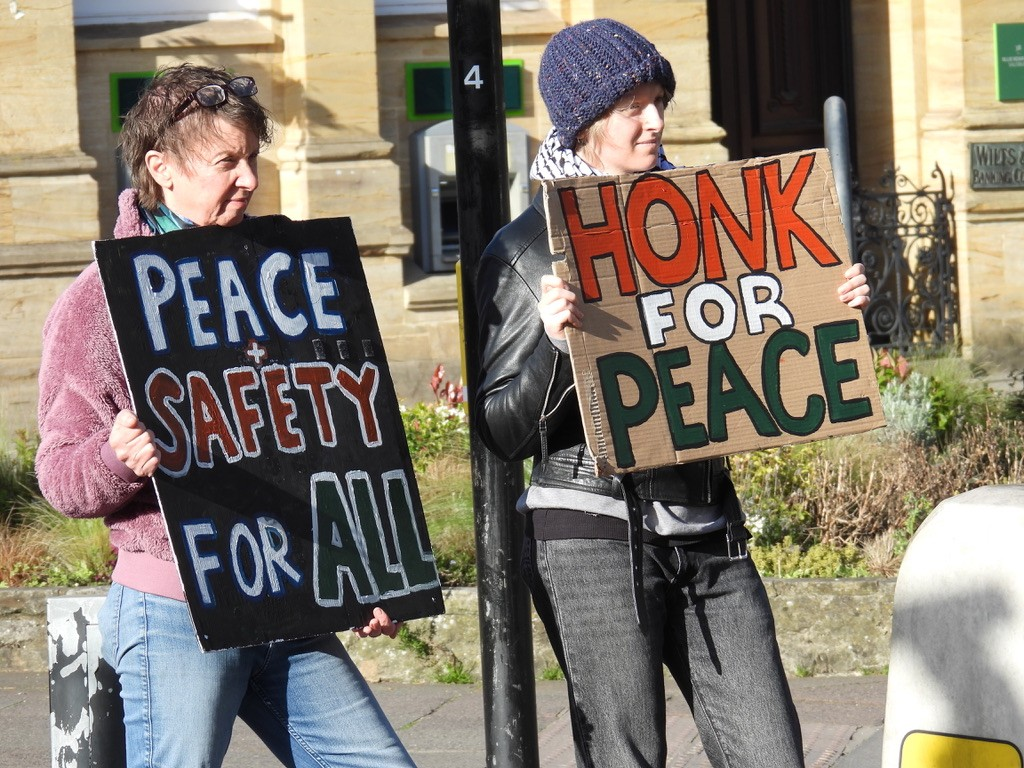
The 123rd vigil took place in Salisbury this Saturday ((11th) and was well attended as usual. Two groups joined us at various times which is always nice to see. There were many motorists who sounded their horns. There is a video of the event.

There was a protest which took place in London with over 500 arrested despite the peaceful nature of the event. It was in aid of Palestine Action organised by Defend our Juries. Under the guise of shortening the waiting lists for trials, the government is proposing to end jury trials in certain circumstances. One reason might be that juries have a habit of acquitting people in cases involving protest and climate actions.

The High Court has ruled that the prescription is ‘disproportionate and unlawful’. The Home Secretary Shabana Mahmood is appealing this decision which will be heard in two weeks time.

Killing continues in Gaza

Meanwhile, the killing continues. Gaza has dropped out of the news with the war in Iran and the partial closure of the Straight of Hormuz taking the attention. But since the ceasefire, 749 have lost their lives which makes it a peculiar kind of ceasefire. Supplies of food and other necessities are still being restricted by the Israelis. The death toll stands are 72,328 with around 172,000 injured. 2,000 have now been killed in Lebanon.

There is a kind of paradox with the government keen to support Israel who are in the process of attacking Lebanon and continuing to allow arms sales to take place. Israel is using white phosphorus in Lebanon, a dreadful weapon. It is accused of genocide in Gaza and has occupied nearly all the agriculturally valuable land. Settlers have stepped up their attacks on Palestinians living in the West Bank and destroying their property with impunity. Apartheid is practised. They have led the US into an unwinnable war in Iran. The Knesset has just passed a law which will lead to the execution of Palestinians in the West Bank, probably following confessions or evidence achieved using torture. On these matters the government are largely silent whereas they take resolute action against hundreds of those who peacefully protest. A bizarre contradiction.

As usual there was no sign of the local MP Mr John Glen who announced in the Salisbury Journal he was ‘proud’ to be a member of the Conservative Friends of Israel organisation. He has never mentioned the vigils in his weekly Journal column. In a Bylines piece, membership of this organisation is questioned asking how is it possible for MPs and ministers to accept the hospitality and to remain impartial and act on behalf of those who voted them in? Israel has invested around ยฃ1m in this lobbying – evidently money well spent. Mr Glen clearly does not represent the views of those attending the vigil and probably other constituents as well. The Trade minister Peter Kyle is a member of the Labour equivalent.


Sources: Guardian, Independent, Declassified, Salisbury Journal; Haaretz.

Video and photo courtesy of Peter Gloyns. See also the SCIP website for two events of interest.

;

Gay rights in Malawi


Speaker at the Exeter conference on the problems of LGBTQ+ rights in Malawi

March 2026

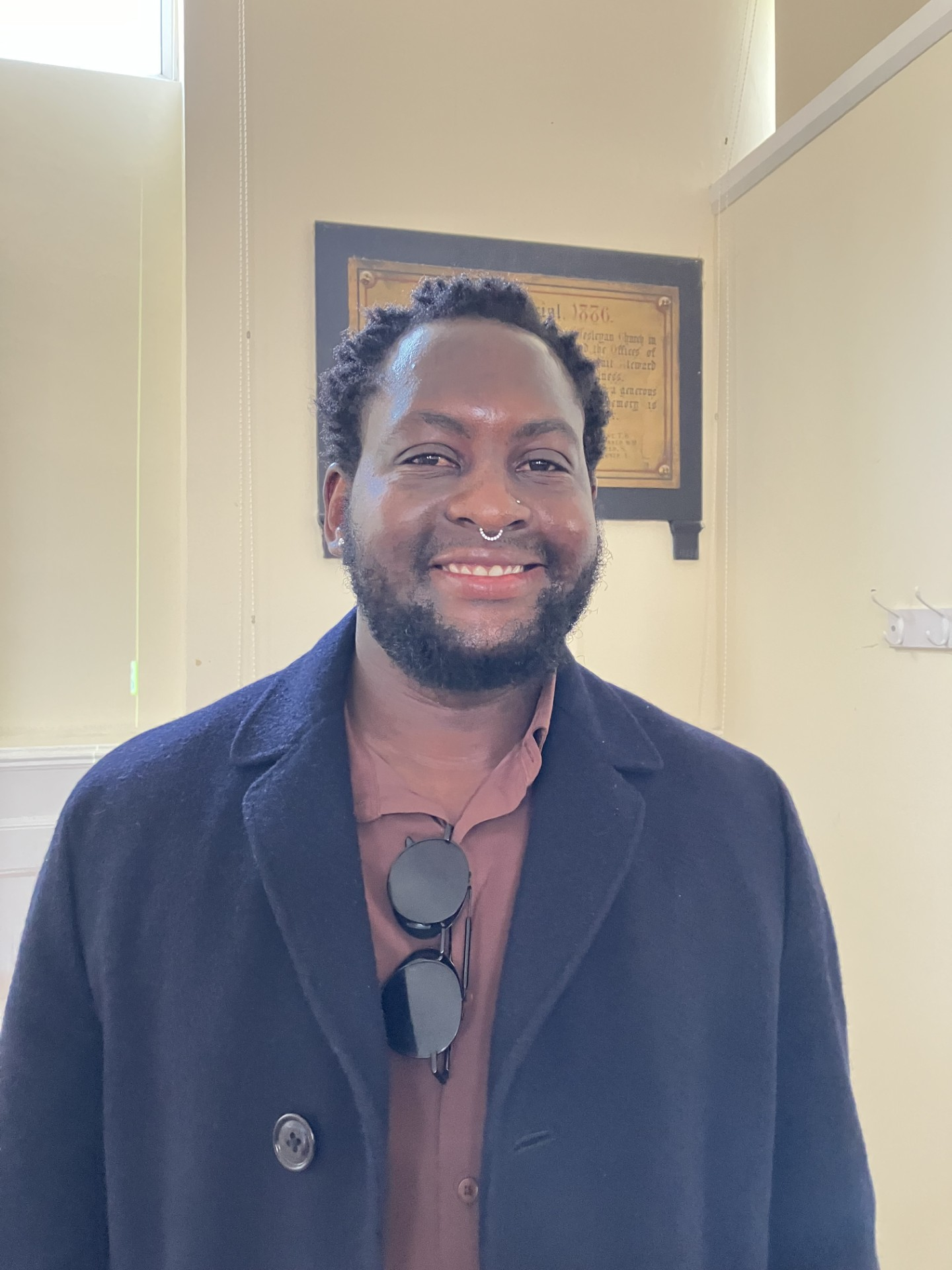
We were delighted to hear first hand of the continuing problems being experienced by LGBTQ+ people in Malawi. Eric Sambisa (pictured), who is currently at the Dundee Human Rights Centre, gave a talk at the Exeter conference on these problems. Eric is the founder of Nyasa Rainbow Alliance and was the first to come out on TV as gay is his country in 2016. Currently, he is focusing on women’s rights.

He explained that section 153 of the country’s penal code prohibits sex between consenting adults, a provision which derives from the time when it was a colony of the British. Up until the ’60s such activity was illegal in the UK. To be open in this way in Malawi has its risks and individuals have suffered violence. The offices have been attacked and laptops and files taken.

He mentioned the case of Jana Gonani who was arrested and imprisoned in December 2021. Gonani, a 29-year-old Malawian trans woman, is currently serving an eight-year sentence at Chichiri menโ€™s prison in Blantyre City for two counts of โ€œfalse pretenceโ€ โ€“ for presenting as a woman โ€“ and one count of โ€œunnatural offenceโ€ โ€“ both crimes under the countryโ€™s colonial era penal law. With help of the Rainbow Alliance, an appeal was mounted to the High Court.

There have been many attempts to change the law in Malawi, so far unsuccessfully. Sambisa was not expecting a change ‘any time soon’ he said. Unlike Uganda and Kenya, there are no attempts at a legislative change. Religious interests and pressure is quite strong. An interesting side note is that prior to becoming a colony, names in Malawi were not gendered.

‘Legal provisions are reinforced by social attitudes. A large proportion of Malawians oppose same-sex relationships. Religious and traditional leaders have been vocal in their opposition to LGBTQI+ rights, organising protests and reinforcing discriminatory attitudes. As a result, many LGBTQI+ people face significant challenges: they are often disowned by their families, lose their jobs or are evicted from their homes. The recent Constitutional Court decision to uphold the criminalisation of homosexuality will only exacerbate the situation, because many will interpret it to mean thereโ€™s no place for LGBTQI+ people in Malawi’ (Civicus.org). Sambisa pointed out it is the state which loses out by denying the rights of such people.

Picture: Salisbury Amnesty. This was one of the talks at the Exeter conference organised by the Exeter Amnesty group.


Recent posts:

Why not become a subscriber? It’s free.

Talk about ‘Complicit’


Past event

January 2026

THIS EVENING

This evening, Wednesday the 21st, we shall be welcoming Peter Oborne, the journalist and author, who will be discussing his new book ‘Complicit’ which discusses the role successive British governments have played in the destruction of Gaza. A review of the book by Byline Times explains the main arguments in it and for those used to getting their news from mainstream media and the BBC, it will come as something of a shock the extent to which the facts have been seriously distorted by misuse of language and highly selective reporting. The book has not been reviewed by mainstream media.

It takes place in the Methodist Church in St Edmund’s Church Street tomorrow, 21st, starting at 7pm. It is free with a parting collection.

A report about this event appeared in the Salisbury Journal on 15th.

Copies of the book will be on sale at the discounted price of ยฃ10. We can only take cash unfortunately or a cheque.

Article about the talk is in the Salisbury Journal online

Previous posts:

Blog at WordPress.com.

Up ↑