We held a stall in the Library tunnel on Saturday 11 October in aid of the #stoptorture campaign and in particular, to highlight the case of
Moses Akatugba in #Nigeria. He was arrested for allegedly stealing mobile phones, shot in the hand and tortured by the Nigerian Army. He has been in prison now for eight years and is on death row awaiting execution. Torture is routine in Nigeria and it is reported that police stations even have a ‘torture officer’.
We collected 189 signatures in three hours which is a good haul for a difficult subject which has received next to no publicity. We shall be sending the cards in two batches to the Governor of Delta state in Nigeria where Moses is being held. We have sent a report of the signing to the Nigerian Embassy in London (see under Update below).
If you would like to know more about this case then you can find it here: Nigeria fact sheet
We are grateful to all those who stopped to sign a card. The great majority of passers-by did not to sign it has to be noted for
Moses Akatugba
reasons that are never clear or revealed. 155 countries around the world have signed the UN protocol against the use of torture but according to Amnesty International figures, it is still practised in 141 of them. In other words, they sign treaties to end it but continue to use it.
Thanks to all the Salisbury Group’s team for taking part and their help in making this a success: Michael; Jonathan; Andrew; Lesley; Peter; Fiona; Eddie; Cynthia; Tony and Karen.
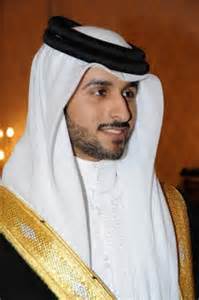
An interesting decision was made by the courts this week that Prince Nassser bin Hammed Al-Khalifa (pictured) is liable for prosecution for his alleged role in the torture of FF a torture survivor from the kingdom. Up to now the prince has claimed immunity. The case is important because several of the gulf states regularly use torture yet prosecutions never happen because of claimed immunity.
This is an embarrassment to the UK government as it has welcomed members of the ruling family to Downing St and is keen to promote greater ties with the kingdom. Indeed the New Statesman remarked that ‘the more desperate the situation in Bahrain becomes, the closer Britain ties itself to the ruling family.’
Behind it all is an arms deal of £1bn for the sale of Tornado jets.
This is the monthly death penalty report thanks to Lesley.
General
UK
19th Sept – A Death Row Pop Up Restaurant offering a ‘last meal without the nasty execution bit’ was due to open in Hoxton, London. Condemned by Amnesty as ‘in appallingly bad taste’, the owners initially issued an apology but later withdrew it, saying ‘all over the world there are attractions that have the potential to offend’
LC spoke with Kate Allen at the recent Stop Torture Campaign Skills Day and raised the Group’s concern that the Death Penalty was no longer a distinct campaign. Kate noted our concern, but said AI needed to look more to local groups to take the campaign forward.
Pakistan – Mohammed Asghar, the British Pakistani 70 year old with paranoid schizophrenia, sentenced to death for ‘blasphemy’ was shot and badly injured in his prison cell by a prison guard. There is an on-line 38 Degrees Petition calling on David Cameron to press his case with the Pakistan Government.
USA
21st September – the third anniversary of the execution of the execution of Troy Davis. An excerpt from the statement issued by the National Coalition for the Abolition of the Death Penalty reads: ‘……. I am Troy Davis. And we are 90 million strong. You, Xxxxx, are Troy Davis, and we are 90 million stronger – because of you. Together we are building the ground-game state by state and nationwide to fulfil Troy’s wishes: to keep fighting this battle until we end the death penalty once and for all.’
Texas – News today (9 October) that Manuel Velez was released from prison following 6 years on Death Row and 9 years in prison. Convicted and sentenced to death in 2008 for the killing of his girlfriend’s child, in 2012 his death sentence was thrown out because of false testimony during the sentencing phase. A new trial was ordered because of inadequate legal assistance in his original trial. The DA’s office continue to maintain, however, that he contributed to the child’s death. See a separate post on this subject.
Afghanistan – Despite attempts by AI and other Human Rights Organisations to persuade the new President, Ashraf Ghani, to stop the execution of 5 men convicted of rape, they were hanged on 8th October. There were accusations of a lack of evidence and forced confessions.
Death Penalty Statistics for 2013
778 executions were known to have been carried out in 22 countries
1,925 people in 57 countries were known to have been sentenced to death
23,392 people were known to have been on death row world-wide
These figures do not include the thousands of executions likely to have taken place in China where they are a state secret.
Urgent Actions
Iran – UA 85/14 – (update) Reyhaneh Jabbari – her execution date of 30th September was deferred, but she remains at risk as the family of the man killed (who Reyhaneh claims sexually assaulted her) could request her execution at any time. David Cameron has spoken out on her behalf to President Rouhani, and been criticised for ‘unacceptable remarks’. Circulated to DPLWG; posted on the Group’s blog – 1.10.14. This month’s Group Urgent Action.
Bahrain – UA 252/14 – Maher Abbas Ahmad – sentenced to death in February for the premeditated murder of a policeman at a ‘gathering’, has lodged his final appeal and could be at risk of execution. He told his lawyer he was tortured into making a confession. Circulated to DPLWG 9.10.14.
Campaigning
World Day Against the Death Penalty – 10th October. The Group are asked to sign cards to be sent to Reggie Clemons
Death Penalty Stall – A signing event will take place on Saturday ll1th October from 9.00-12..00 mid-day in the Library Covered Way. We will be asking the public to sign cards calling for justice for Moses Akatugba, the young Nigerian tortured and sentenced to death for the alleged theft of three mobile phones.
On Wednesday, Manuel Velez was released from prison having served 9 years in prison, 5 of them on death row. The case reveals yet again the biased and unsatisfactory nature of the justice system in the #USA, and in particular the southern states such as #Texas. He was sentenced to death for allegedly killing a 1 year old who was partially in his care.
The case against him collapsed when the blood clot was found to have been established around 2 weeks before the child’s death but the jury was told that it occurred hours before thus putting Velez at the scene. The case has all the familiar signs of previous miscarriages in the USA namely: partial evidence put to the court; evidence demonstrating innocence withheld by the police, and a plea bargain by the person likely to have committed the crime which incriminates the wrong person. Also Velez is Hispanic and is described as ‘intellectually disabled’. Finally, he was poorly served by his defence team who the court said ‘provided inadequate assistance to Velez’.
Governor Rick Perry is a strong believer in the death penalty and the following extract from an interview in Texas gives a flavour of that belief;
Like the vast majority of Texans, I believe the death penalty is an appropriate response for the most violent of crimes against our fellow human beings. In fact, I believe capital punishment affirms the high value we place on innocent life because it tells those who would prey on our citizens that you will pay the ultimate price for their unthinkable acts of violence.
For those who head our criminal courts, serve on appellate bodies and the board of pardons and parole, and for the individual who occupies the office of governor, the power to make life and death decisions is the most sobering responsibility imaginable.
Both as acting governor and in my current capacity, I have always exercised this power with the gravity due such a life and death decision. And I will continue to review each capital punishment case brought before me to ensure that due process has been served.
This presents a comforting picture not supported by the facts of this and other cases. Once the deed is done of course, it cannot be undone. If you are poor and black in states like Texas you will not be able to hire a top team of lawyers or any lawyer with trial skills. Juries may be stacked.
One of the problems with the issue of torture and its use is that many countries have signed up to abolish its use but nevertheless continue to practise it. Another speaker pointed out that 155 countries have signed the protocol but as far as is known there are credible reports of its use in 141 countries around the world. It’s easy when reading statistics sometimes for one’s eyes to glide over such figures. But just ponder that figure -141 countries.
SPT gives the right of the UN to go to any country, which has signed the optional protocol, without prior warning. It is the only UN body able to do this. They are not there to investigate individual instances but to ‘get ahead’ of violations and to stop something from happening rather than holding individuals to account.
Their purpose is to get preventative safeguards established which include issues of legality, and knowing who is in detention. They work alongside authorities and discussions are held, sometimes with people one would rather not have discussions with.
He made the point that it wasn’t just dictatorial regimes who engaged in this activity but that it was more a matter of how it has always been done. There was a kind of routineness to it. It was as much to do with corruption as anything else. In trying to advance change, you have to work with what is practical to achieve and to establish relationships to achieve momentum.
He also raised the intriguing point that it was all very well writing to presidents and the like asking them to stop this practice, but since most of them had signed up not to do it anyway, how effective is that as a campaign method?
There will be much more on the plan by the Conservatives to abolish the #HRA if they get re-elected. But for now, just a single thought. The whole exercise is predicated on sovereignty. Allegedly, Strasbourg is preventing our parliament and its MPs from doing what they are elected to do, thus denying it sovereignty. But the proposal is to abolish the act. So they can either abolish the act, that is they have sovereignty, or they cannot because the don’t. It seems they are going to abolish it so they do. So why do they need to abolish it? Answers on a postcard please.
We attach a case raising a number of concerns in #Iran. Iran is one of the world’s leading countries in the use of the death penalty, second to China. This case involves a woman, Reyhaneh Jabbari who was arrested for murder but her trial was seriously flawed, she was denied legal help, kept in solitary confinement and ill-treated and possibly tortured. She was due for execution yesterday but following an outcry, it has been delayed for 10 days.
If you can find time to write that would be appreciated.
In his speech to the Tory party conference today, the prime minister David Cameron pledged to get rid of the Human Rights Act #HRA and replace it with a British Bill of Rights. Problem? Where is it? A bit like Lewis Carroll’s snark, it is often spoken of but never actually seen. It has been talked about off and on for around 7 years now but it still hasn’t seen the light of day.
David Cameron Photo, BBC
Second problem: how will it be any different to the HRA it will replace? It will presumably contain many of the clauses about fair trials, no torture, knowing what one is accused of, no slavery, arbitrary arrest etc. etc. that are contained in the HRA.
It is likely that the ire is directed at some individual cases which get the tabloid press in a stew such as Abu Qatada. The issue here of course was that he could not be deported because it was likely that either, he would be tortured or, evidence gained by torture would be used against him.
The problem is the same as it always has been with the act. It is European and in the fevered atmosphere of anti-Europeanism stoked up by Ukip, anything from Europe is a bad thing. The second problem is the media – or sections of it – who dislike the act and print all manner of misinformation and disinformation about its rulings. They don’t like it because the question of privacy has a higher standing under the act than they would like. As we have seen with News International – and are beginning to see with the Mirror Group newspapers – newspapers are sold by penetrating the private lives of the famous by a variety of dubious and illegal means.
The benefits of the act, such as that reported today of people in Essex who were able to use it to take action against the police, are seldom reported.
Unless we pull out of the Council of Europe, we will still be subject to the rulings of the European Court. It is strange to report that with all the venom and anger directed against Strasbourg nearly 99% of cases applications against the UK are struckout. That is because we have good legal systems here. The HRA was brought in to stop the trail of people having to go to Europe to get justice.
Note added in April 2026.
This post was written 12 years ago and a lot has happened since. David Cameron resigned as PM following the ‘no’ vote in the Referendum to leave the EU. The Conservatives had a long and tortuous relationship with the EU (and still do). Many believe in human rights but are fearful of the right wing press which – as discussed – do not like it. They were then and still are, frightened of he popularity of UKIP which is now the Reform party.
Immigration still makes waves and is often a deciding factor in our politics.
Interesting to note that this speech was in all likelihood written by one Danny Kruger who is now the MP for East Wiltshire where this is being typed. Kruger left the Conservatives last year and is now a Reform MP. He is still anti the EU and was on the BBC radio programme only a few days ago speaking against it.
We are delighted that this post still is attracting views after 12 years so thank you for those who landed here.
The local group will be manning a stand on 15 November to highlight the #stoptorture campaign which was launched by Amnesty in May this year. The practice is alive and well throughout the world and Amnesty has recently ramped up its campaigning to stamp out the practice with the Stop Torture campaign.
‘Waiting for the guards’
Ahead of its launch, Salil Shetty, Amnesty International’s Secretary General said governments around the world are “two-faced on torture” – prohibiting it in law, but facilitating it in practice”.
He added: “Torture is not just alive and well – it is flourishing in many parts of the world. As more governments seek to justify torture in the name of national security, the steady progress made in this field over the last thirty years is being eroded.”
Stop torture will be a key part of the Amnesty display as part of the Magna Carta events at the Cathedral next year.
Dominic Grieve was sacked by David Cameron in the last reshuffle and it was widely interpreted as a clearing of the decks by the prime minister of supporters of the Human Rights Act #HRA. Grieve has now spoken on the issue and below is a link to the interview in the Guardian newspaper.
In an earlier piece, Dominic Grieve expressed his dismay that David Cameron had narrowed the range of views held by his senior team. The attorney general sacked by David Cameron over his dogged support for the European convention on human rights (#ECHR) says he fears the prime minister will use this week’s party conference to dilute the UK’s commitment to the international treaty.
The Conservatives have misgivings about the act partly because of their distaste for things European. There has been a concerted tabloid campaign against the act and the ECHR because allegedly it gives rights to criminals and terrorists. The benefits of the act to ordinary people is rarely given a mention however. They also publish a great deal of misinformation which is seldom corrected.
Readers may like to look at an earlier post following a meeting the group had with the Salisbury MP, John Glen. He has said he wants to see the HRA abolished but after some of the benefits of the act for ordinary people – including some of his constituents – were explained, he did agree to be more balanced in future.