The Death Penalty Debate: Kamala Harris and Executions


Five executed in one week. Kamala Harris silent

September 2024

After spending one and a half hours unsuccessfully trying to find a vein, sticking the needle into various parts of his body including arms, neck and feet, they suspended the prisoner upside down for 20 minutes in the hope of finding one but failed to execute him and returned him to his cell. Two years later they used nitrogen hypoxia after which he shook for 2 minutes and after six minutes of gulping, he died. Thus ended the life of Allan Eugene Miller on Thursday last week (26th September).

This is not a description of an execution from some barely civilised country but in USA in the state of Alabama. It was one of 5 executions last week the others being Emmanuel Littlejohn; Travis Mullis; Marcel Williams and Freddie Owens.

The case of Marcel Williams, 55, is particularly troubling since he was almost certainly innocent. Despite copious blood at the scene, none matched his DNA. Key evidence was either lost or destroyed. Witnesses had an incentive to give false evidence to receive a $10,000 reward.

Republican prosecutors seemed to have become more aggressive in pushing for the ultimate penalty. This may be linked to current politics and ‘Make America Great Again‘ rhetoric from Donald Trump. During his time as president, he altered the composition of the Supreme Court which now has an ultra-right super-majority.

Anyone who has followed Clive Stafford-Smith or read his books will know the process is far from perfect in many states in the Union. Poor trial procedures, withheld evidence, packed juries and defendants represented by inexperienced lawyers are not at all unusual. Many states have abandoned the death penalty but a number still keep it of which Alabama is one. It is no accident that despite only representing 13% of the population, 34% of black people are on death row.

There are many who believe the penalty is a deterrent. The problem of course is that mistakes cannot be put right. As the Death Penalty Information Center points out, since 1973, 200 former death row prisoners have been found innocent of all charges.

The issue has become a political one. It has been noted that Kamala Harris, the deputy president standing for election to become the president this November, makes no mention of abolition in her speeches or literature. She opposed the penalty in 2019. However, the promise to do so has not survived. This shift partly results from a change of mood following some high profile police murders. Trump is solidly in favour as part of his ‘tough on crime’ policy. There is a lot of discussion in the American press and there are suggestions that such a principled stand was not popular even with fellow Democrats.

Sources: Death Penalty Information Center; Washington Post; The Guardian; NBC; Amnesty International; Mother Jones.

Celebration – of sorts


Hakamada Iwao acquitted after 56 years in prison

September 2024

We tend to think of Japan as a modern democracy and a sophisticated society having cast off the problems of its warlike past. It is a G7 nation and enjoyed a post war boom leading to considerable commercial success. But there are elements of the society which have not changed one of which is the legal system.

Japan still has the death penalty a particular cruel feature of which is that prisoners do not know of their execution until a few hours before it takes place.

The news that the Appeal court in Japan has declared Hakamada Iwao as innocent has been a long time in coming – 56 years in fact. Hakamada was convicted of murdering his boss in 1966. He spent a staggering 46 years on death row. Much of it was in solitary. The only problem was that he is almost certainly innocent. Key evidence was fabricated. He was forced to sign a confession after 20 days of intense interrogation and beatings by the police. He was not allowed a lawyer.

Bloodstained clothing – a key element in the prosecution’s case – turned out not to be Hakamada’s blood. It may have been planted. There are many things wrong with the whole process and further details can be found on the background provided by Amnesty. The role of the police was a key part of the miscarriage of justice. This led to probably the longest death sentence ever. Historically, this was a familiar story in the UK with forced confessions after long hours of interrogation. It led to the introduction of PACE which has led to improvements in police practice here.

One of the problems is the attitude of the Japanese public. It is reported that 80% of the Japanese are in support of the penalty. It is unlikely therefore that change will happen quickly.

Although it is encouraging to see Hakamada exonerated from this crime, the case raises several concerns. The use of the death penalty which, had he been executed, would have resulted in the state killing an innocent man. As in all these cases of police coercion, the real killer(s) have never been found or prosecuted. It also reveals a legal system which seems amazingly slow both to act and ultimately acquit. It also seems reluctant to admit mistakes. Finally, his treatment in prison with years spent in solitary confinement are unreasonably cruel. Altogether, this does not reflect well on the Japanese state.

The local group has campaigned for many years and it is gratifying to see some kind of justice at last for this man.

Sources: Amnesty, Guardian, BBC

Refugee report


Refugee report for June. Rwanda policy abandoned

July 2024

Following the General Election, a new approach to the issue of immigration and asylum seeking has been promised. Straight away the new government declared the policy to deport irregular immigrants to Rwanda would no longer be pursued. It is not known whether Rwanda will return the £270 million received in advance. The new Home Secretary, Yvette Cooper, will review the position by 1st October following complaints from asylum seekers rounded up in preparation for flights to Rwanda. It was also intimated that changes would be made to the Illegal Migration Act of 2023.

Also quickly out of the blocks was a group of some 300 refugee and human rights organisations who jointly wrote to the prime minister with a proposal for a new approach to the issue. And the IPPR have produced a plan for the first 100 days under the new government.

The letter writers set out nine key demands including:

  • Restoring the right to seek asylum by repealing the Illegal Migration and Nationality and Borders Acts
  • Safe routes including visa routes enabling families to reunite.
  • Housing applicants in communities rather than camps.
  • Restoring the right to work within six months of arrival.

The IPPR report notes the new government’s plan to create a Border Security Command, essentially to deal with the people smugglers, but the Institute is looking for a more holistic approach to all aspects of boat crossings and border control. They also point out that the UK will be hosting the European Political Community meeting this month where, among other issues, the new Europe-wide Asylum and Migration Management Regulation will be on the agenda (the aim is to spread the application requirements more fairly.

The Institute also urges the government to expedite removing the backlog of applications (the new backlog, not the one the previous government claimed to have eliminated), offering various suggestions as to ways of doing this.

As a matter of record, the number of claimants crossing the Channel this year is, at over 13,000, a record for the equivalent period. The backlog is now at 120,000, and the number of cases gone to appeal is 27,000.

Andrew Hemming

Impactful Lancet Study: Up to 186,000 Dead in Gaza, alarming Figures


Study by the Lancet estimates as many as 186,000 dead in Gaza.

July 2024

The figures previously quoted by many (and reproduced on this site) are of just under 38,000 dead in Gaza. The figures are produced by the Gaza Health Ministry and the way they are reported by British media implies that they are not necessarily true and may be exaggerated. It now appears from this study that they are far from being exaggerated and are a considerable underestimate and that the true figure may be an astonishing, not to say shocking 186,000. Claims that the figures are ‘fabricated’ are implausible and are accepted by the UN, WHO and the Israeli intelligence services.

The Lancet study explains in detail the problems in producing a reliable figure in a war zone. The previous data came from hospitals but with almost all of them destroyed this is no longer reliable. Thousands remain buried in the rubble of destroyed buildings and others are dying for want of medical attention or starvation. About the only agency able to deliver aid is UNWRA and they have been subject to considerable restrictions.

These figures have intensified calls on the (new) government to stop further aid going to Israel. Private Eye (No: 1627 p41) reports the closeness between the (previous) government and the Israel arms firms Elbit which has plants in the UK. They reveal undisclosed meetings between Professor Julia Sutcliffe, appointed by Kemi Badenoch, and the firm in an attempt to encourage them to invest £100m in the UK. The article ends by saying “The enthusiasm of the UK government departments for Elbit not only raises ethical issues – Elbit’s chief executive told investors it was “very much involved” in Gaza and was going to build weapons with “lessons learned from the war” – but also puts extra pressure on the UK not to limit arms exports to Israel of arms purchases from it”. The firm has previously been quoted as saying that drones built in the UK are not being used in Gaza.

Sources: The Lancet, al Jazeera, Private Eye

Alabama’s third execution this year


Many troubling aspects to this case. Urgent action with full details available here

July 2024

Keith Gavin is scheduled to be executed in Alabama next week on 18 July 2024. He was convicted in 1999 of a murder committed in 1998 and sentenced to death on a jury vote of 10-2 for the death penalty. In 2020, a federal judge found that his legal representation at the sentencing phase had been constitutionally inadequate, but in 2022 the Court of Appeals reversed this decision. International legal standards require that anyone facing the death penalty be provided effective legal assistance at all stages of the case. This standard was not met. We urge the Governor to commute this death sentence.

There are a number of troubling aspects to this case not least the poor and ill-prepared defence (defense) he received. After the trial, appeal lawyers discovered much mitigation evidence not heard by the jury, including multiple psychological risk factors from Keith Gavin’s childhood and adolescence, including his exposure to violence at home and in the community. He was one of 12 siblings growing up in a dilapidated apartment in Chicago’s notorious public housing projects; his closest siblings all had histories of incarceration and drug dependencies. He was subjected to more paternal beatings than the others because he “accepted responsibilities for things he had not done because he felt he was strong enough to accept the whippings”. Outside the home, the exposure to violence took the form of pervasive gang activity. Seven of the 12 children ultimately joined gangs, and several became victims of gang violence.

The Governor of Alabama said “Although I have no current plans to grant clemency in this case, I retain my authority under the Constitution of the State of Alabama to grant a reprieve or commutation, if necessary, at any time before the execution is carried out,” Ivey said in her letter to Alabama Department of Corrections Commissioner John Hamm. (Source: Montgomery Advertiser)

Full details of this case can be accessed here and we urge those reading this to write to the Governor (model letter available) as soon as you can. The US is the only country in the Americas to retain the death penalty.

1721170800

  days

  hours  minutes  seconds

until

Execution

"Amnesty International" "Human rights" Amnesty Arms arms sales Arms trade Bahrain Belarus Cathedral China conservatives Death penalty death row ECHR Egypt FCO film Gaza Group news HRA Human rights Human Rights Act immigration India Indonesia Iran Israel Japan John Glen MP minutes North Korea Oklahoma Pakistan Palestine refugees Reggie Clemons Salisbury Saudi Saudi Arabia Texas UK urgent action USA vigil Yemen

Vigils continue


31st Vigil on 6 July. Labour’s relations with Israel now significant following the general election

July 2024

UPDATE 2: The new government has announced (8 July) that it is to drop its bid to delay the ICC’s intention to issue an arrest warrant for Netanyahu for alleged war crimes in Gaza.

UPDATE: It is rare for us to update a post only hours after its publication but we have mentioned the prime minister’s uncertain history in relation to Israel and today, 7 July, he has made a statement committing his party, and now the government, in support of a two state solution. This is to be welcomed.

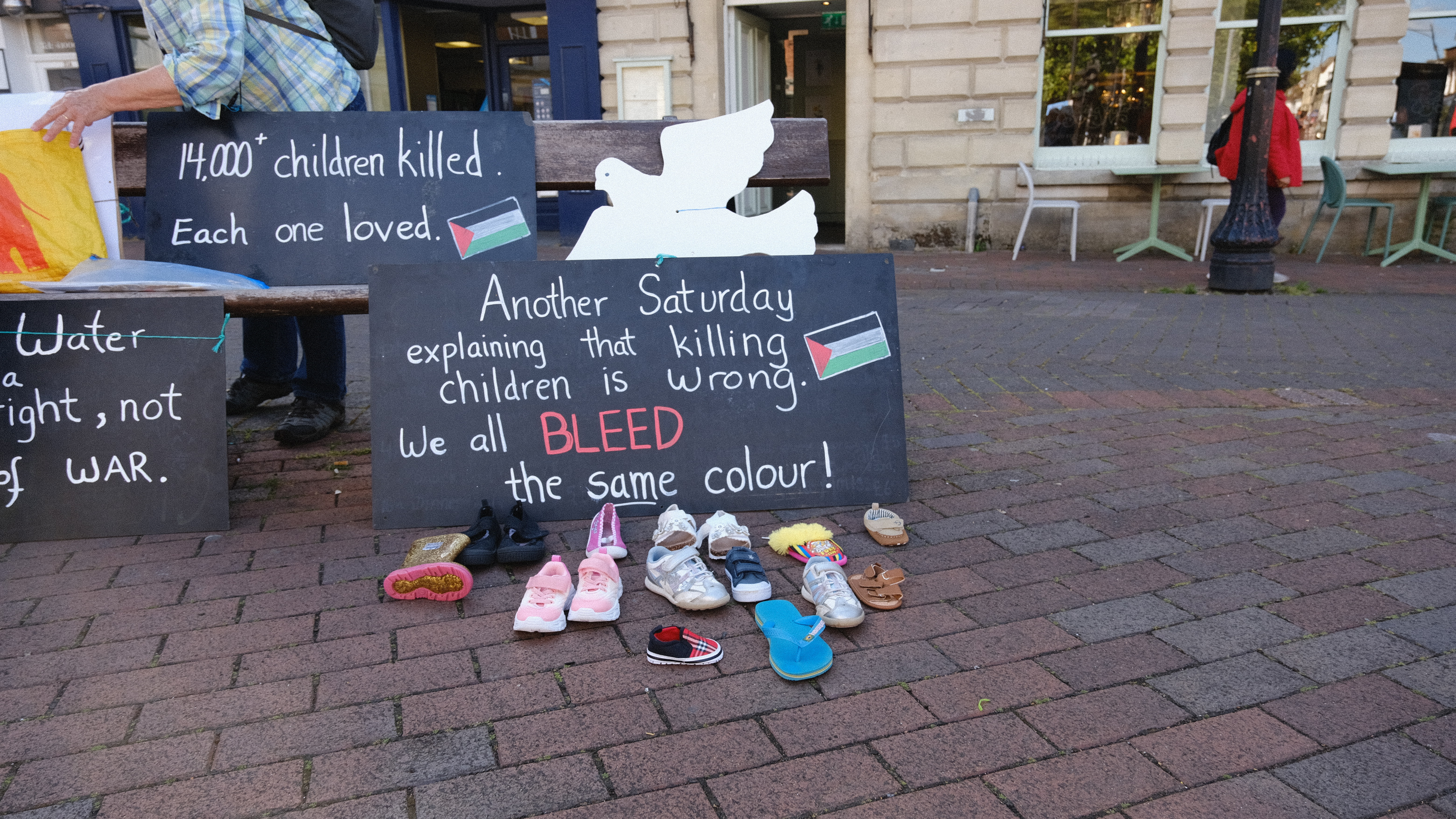
The vigils continue in Salisbury market place although attendance down to around 25. The conflict continues and although there are reports of peace talks, there is little confidence they will lead to a successful result. Around 38,000 Palestinians have now died including thousands of children.

The conflict spilled into the General Election which was held in the UK last week on 4 July and led to a landslide victory for the Labour party. However some seats were lost and others came close to being lost because of Sir Keir Starmer’s remark early in the election where he said that “Israel has the right to withhold power and water from the Palestinian people” then going on to say that “obviously, everything should be done within International law”. The problem is that collective action against civilians is against international law so the two comments contradict each other. Another, less noticed interview was with the Jewish Chronicle where Starmer was asked about apartheid in Israel and, despite the overwhelming evidence produced by a number of human rights organisations from both within Israel and outside the country that Israel was indeed running an apartheid system, said that Israel was not an apartheid state.

Arms to Israel

It is going to be interesting to see how the new administration handles the arms question and whether it allows further exports going to Israel. The problem for the party is that they struggled for some time to shake off the ‘anti-Semitic’ accusation following Jeremy Corbin’s time as leader. Arguably, this has led them to become fearful of making any criticism of Israeli actions and to become unquestioning supporters.

The Salisbury Amnesty group is 50 this year

Another problem for Israel – and by extension the western countries still continuing to support it – are credible reports of the widespread use of torture by the Israelis. These reports are from the UN; the International Center for Transition Justice; Middle East Monitor; Voice of America; al Jazeera and many others. In the current edition of Private Eye (No: 1627) in its ‘Gaza Watch’ column, is a report of the death in custody of Dr Iyad al-Rantisi in November last year. He was held in a Shin Bet interrogation facility. He was moving south with his family as directed by the IDF and was detained at a checkpoint. Six days later he was dead. A gag order forbade all publication of details of the case and the family have not been provided with an explanation.

He was not alone and a large number of other health care workers have also died. According to Health Care Workers Watch Palestine, 541 such workers have died at the hands of IDF to date, the highest number in any conflict in UN history. Other agencies report comparable numbers. Private Eye also quotes the EU’s European Civil Protection and Humanitarian Operations directorate which reports that 31 out of 36 hospitals in Gaza have been destroyed.

The next vigil will take place on Saturday 13th at 5pm and people concerned about the conflict are welcome to come along.

Protests

It’s perhaps also interesting to note that our protest is entirely silent and there are no loud-hailers. We undertake no violent actions and we do not chain ourselves to railings or other similar activities. We do not therefore infringe the previous government’s laws designed to limit protest. As a result we are ignored and we will not be reported on by local media. A matter on which to reflect for those who say they do not mind protests as long as they’re peaceful.

1720887540

  days

  hours  minutes  seconds

until

Salisbury Vigil

Good attendance at vigil


December 2025 UPDATED A good attendance at the 106th vigil in Salisbury with around 40 of us there. We were joined by some by some passers-by which is always encouraging. News about Gaza has been eclipsed by the continuing war in Ukraine and the appalling attack on Jews on Bondi Beach killing 15 people on…

Minutes and Newsletter, December


Minutes of our December meeting December 2025 We are pleased to attach our minutes and newsletter for the December group meeting thanks to group member Lesley for compiling them. They include several reports some of which appear elsewhere on this site with links to other sites of interest. Item 12 refers to upcoming events which…

UK Human Rights Report: Current Threats and Government Actions


Monthly report on human rights in the UK December 2025 Amnesty has for many years, focused its efforts on human rights issues overseas. Recent actions by governments of both persuasions have meant a greater focus on the threats to rights here in the UK. Only this very week, the prime minister and other ministers are…

The State v. Trudi Warner


Interesting and troubling webinar by the Good Law Project on the case of Trudi Warner

June 2024

Readers will recall that earlier in the year, Trudi Warner stood outside the Inner London Criminal Court and held up a placard telling passers by that juries had the right to vote on their conscience. The trial was taking place of several climate activists and a key issue was that the judge in the case, Judge Silas Reid, prevented the defendants from mentioning that they were campaigning for action on the climate. The worry was that if the jury realised that this was what the defendants were doing, there was a probability that they would acquit. Many websites commenting on this case allege that the judge is against people protesting (which we cannot verify) hence his aggressive threats to defendants and others.

Trudi Warner was then arrested for contempt of court by displaying her placard which states a fact, long established in English law, that juries can indeed vote on their consciences. This was established in the Bushell (sometimes Bushel) case of 1670, where a judge locked up a jury and deprived them of food and water for disobeying his directions.

Jolyon Maugham of the Good Law Project, said that people had a ‘sweet notion’ of the law which this case cast into doubt. It was one of the factors in the Brexit debate where people often spoke of sovereignty and an aspect of that was hostility to Brussels (actually Strasbourg) telling us what to do. ‘We should have our own laws’ was a frequent refrain. This has re-emerged with the proposed Rwanda flights and a desire by some politicians to come out of the European Convention. There is a deep belief in the primacy of British Justice with its ancient traditions going back to Magna Carta. This and other cases demonstrate that this sanguine view of our justice system is misplaced.

Climate protests

The state has the power to lock people up and juries are a means of tempering this power he said. The plain fact was that the fossil fuel companies mounted well-funded campaigns to promote their activities and frustrate governments trying curb fossil fuel use. There is a close association between government, Big Oil and the media. Sections of the media refer to protestors as an ‘eco-mob’, ‘zealots’ or a ‘rabble’ among other epithets. Fossil fuel companies fund several Tufton Street think tanks with millions, yet TV companies, including the BBC and Channel 4, fail to ask interviewees from them, ‘who funds you?’

The various protest organisations including XR and Just Stop Oil angered government ministers by highlighting the shortcomings of government actions in dealing with the climate crisis. Their activities had also angered members of the public who were sometimes inconvenienced. As ever, a totally peaceful protest is ignored but glue yourself to the pavement and you achieve some publicity.

Arrest

So Trudi Warner was arrested for contempt of court and ended up in the Old Bailey for trial 8 days later. At a permission hearing which establishes whether there is an arguable case, it was thrown out by the judge who said that the ‘government had mischaracterised the evidence‘ and that it was ‘fanciful to suggest that Ms Warner’s actions fall into the category of contempt‘. The government said it is to appeal the decision [before the election was called]. It is ironic to note that a plaque celebrating the seventeenth century Bushell case is fixed to a wall in … the Old Bailey. To remind ourselves – the placard merely pointed out the plain fact that a jury has the right to decide a matter according to its conscience and to disagree with the judge’s direction.

Conclusion

The government has introduced a range of bills which all have an effect of making protest more difficult and risky. Police have been given more powers which they have used in preventing protests from taking place including, for example, at the Coronation. There is a kind of cosy alliance between Big Oil with its range of well-funded lobbyists; a government all too keen to restrict protest, and some media organisations who eagerly demonise protestors and deny climate science. In the process, rights and justice are trampled on. If, as is being predicted, a Labour government comes into power on 5th July, it will be interesting to see if they pursue the appeal. It will a quick test on whether they will follow in the authoritarian footsteps of their predecessors or adopt a more permissive regime. Early signs are not promising as they do not have plans to annul any of the existing legislation.


During the webinar, we saw clips of film of the protests prepared by Page 75 Productions who will be hosting a showing of the full film in September. A video can be accessed here.

Sources: Good Law Project; The Guardian; The Canary; Christian Climate Actions

Celebrate protest


Amnesty webinar on the state of protest in Europe

May 2024

It seems that the UK is not alone in its attempts to stifle protest and passing laws to restrict individual’s abilities to protest. Recent tensions with ministers and some of their media supporters concerned Extinction Rebellion, Rwanda and the related issue of the boat people and more recently, the events in Gaza and the treatment of the Palestinians. Amnesty International recently hosted a webinar to look at the issue of protest and some of the points made are discussed below.

Protest has a curious position in British culture and law since there is no direst right to protest: it is not a specific human right. There is a right to free speech and a right of assembly and these combine to enable people to come together to protest.

The value of protest is something that seems to be forgotten. The anger at the noise of disruption of a protest march overshadows the fact that this is a means to enable people to highlight a cause of concern. There are some who complain about the disruption and who say that they would not mind a peaceful protest, it’s the noisy and disruptive ones they object to. The problem with a peaceful and noiseless protest which causes no disruption is that no one takes any notice. Many people report that visiting one’s MP or writing letters to them is largely a waste of time. It is also forgotten that nearly all social reforms in the UK have come as a result of protest, some lasting decades. The positive history of protest is not generally known or recognised. It is seen as a nuisance and something to be curtailed or even better, stopped.

Webinar

The results of the survey will be published on July 9th and it will show some regional trends which include casting protest as a threat, claiming it is a privilege rather than a right and the increasing use of supposed public safety measures to curtail them. They conclude it is generally getting worse with a heavy police presence used to intimidate. Complaints against the police and the use of excessive force are difficult because of the lack of identification.

A lot depends on language and protestors are frequently described as ‘rioters’ with no justification. There are also attempts to cast protestors as ‘illegitimate’.

One speaker from Clidef – with a focus on climate protest – spoke about the ‘pincer movement’. This includes new legislation introduced by government together with the stretching of old laws. Police action and powers have been strengthened as already mentioned together with the greater use of prison sentences against alleged offenders: 138 Just Stop Oil protestors have been imprisoned for example. They are also trying to use conspiracy laws.

Secondly, private actors and the use of SLAPP actions [Strategic Litigations Against Public Protest] which are a means to use the law to intimidate those seeking to take action against wrongdoers. They are a means by the wealthy to use the law to silence critics since they can afford to effectively bankrupt them with costs.

Thirdly, the judiciary and he might have mentioned the legal system itself. Judges have been in the firing line for not allowing those on trial to say why they were protesting, fearful no doubt that once a jury realises that they were promoting a climate action, they would acquit. The final speaker asked ‘who are they protecting? The activists or the companies?’

The theme of the webinar and the speaker contributions was that governments are increasingly dumbing down on protest whether it be the climate, Palestine or anything else. They give the impression of not liking dissent in any form and are using increasingly draconian tactics to inhibit, arrest and imprison those to engage in it.

Media

A theme not explored was the role of the tabloid media who almost without fail demonise protestors calling them things like ‘eco-zealots’, ‘eco-mob’, ‘a rabble’, and their actions amounting to ‘mob rule’. Article after article describes protests in entirely negative terms and seldom give readers much (in fact next to nothing) in the way of an explanation of why they are protesting and the nature of their cause. It is to be presumed that they are reflecting public opinion and the views of their readers. Recent reports on the climate are extremely worrying. The fossil fuel companies are able to mount expensive lobbying campaigns to ensure their interests are looked after and extraction can continue. Protestors do not enjoy this privileged access to those in power and taking to the streets is the only way they can be heard. It is a shame that sections of the media are not able – or are disinclined – to reflect this imbalance of power and the inevitable effects it will bring to the climate.

Our right to protest is precious and should be defended.

The Salisbury group was established 50 years ago

The European Court


Seminar asking ‘what’s at stake?’ with the threat to leave the European Court

May 2024

Following the last minute reprieve last year by the European Court for the asylum seekers on their way to be deported to Rwanda, many politicians and a large section of the media are campaigning for Britain to leave the jurisdiction of the Court and resign from the European Council. The MP for Devizes, Danny Kruger, is a prominent member of this group. It has become a political issue, one likely to crop up in the current election. This webinar by the European Movement UK discussed the history of the court and the institution and what some of the implications might be if we did leave.

The Court has been subject to much abuse and is generally and disparagingly referred to as a ‘foreign court’ and together with Strasbourg, has almost become a term of abuse. Although nothing to do with the EU which Britain has left, it is confused with that entity and it is possible that many people thought that when we left the EU we had left all things European including the Court.

The webinar started with some history including the key fact that it was Britain and in particular Winston Churchill, who were instrumental in getting the European Council established at the Treaty of London after the war. The UK was the first country to ratify the treaty. It is an irony that it was Conservatives who led the way in the post-war years yet it is members of the same party who are now keen to see us depart.

From the rhetoric and press reporting one might gain the impression that the Court is a regular thorn in the exercise of law in this country and frequently interfering in the exercise of justice. The reality is quite the opposite. The UK has the lowest number of applications and out of 38,000 applications from member states in 2023, only 176 relate to the UK. There have been 3 judgements and one violation. There are issues still outstanding concerning Northern Ireland however. The main point being made was that on the whole, the UK has a reasonable judicial system and most matters are resolved within the country without need to go to Strasbourg.

As far as being a ‘foreign court’, only France has more nationals working there and the British presence is strong and influential.

False promise

Another speaker referred to the main reason for the current desire to leave is the Rwanda issue. The promise of leaving the jurisdiction of the Court overlooks other conventions we have signed up to including the Refugee Convention. The consequences of us leaving were discussed and these included the negative effects on human rights in the UK if the ultimate backstop was removed. There will be consequences for the Good Friday agreement in Northern Ireland. It will undermine UK’s standing in the world as a country which stands by its international agreements. It will reduce our influence, which, as already mentioned, is considerable.

Dominic Grieve, the final speaker, said it ‘has been the best example of soft-power exercised by the UK since the second world war’. He repeated that the UK was hardly ever in violation. The Court had brought about positive change for example by overturning the decision by a local authority to house an elderly couple in separate care homes brought about by the family life provision in the Convention. He noted that the obsession by some politicians was not reflected by the public at large.

Success

The success of the Court in the post war world should be a matter of celebration rather than the subject of 15 years of denigration. Recent government legislation to inhibit demonstrations and the actions of judges in preventing protestors explaining why they were protesting are examples of how fragile our rights are. The combination of government laws, increased police powers, media disinformation around human rights and demonising protestors as ‘rioters’ and ‘eco-zealots,’ has cast a chilling effect over attempts to bring concerns to public attention via protests. It is forgotten that a huge range of social reforms have almost always resulted from protest. It will be interesting to see what appears in the parties’ election manifestos on this subject.

The Vigils go on


Eighteenth vigil held on Saturday and show no sign of ending

April 2024

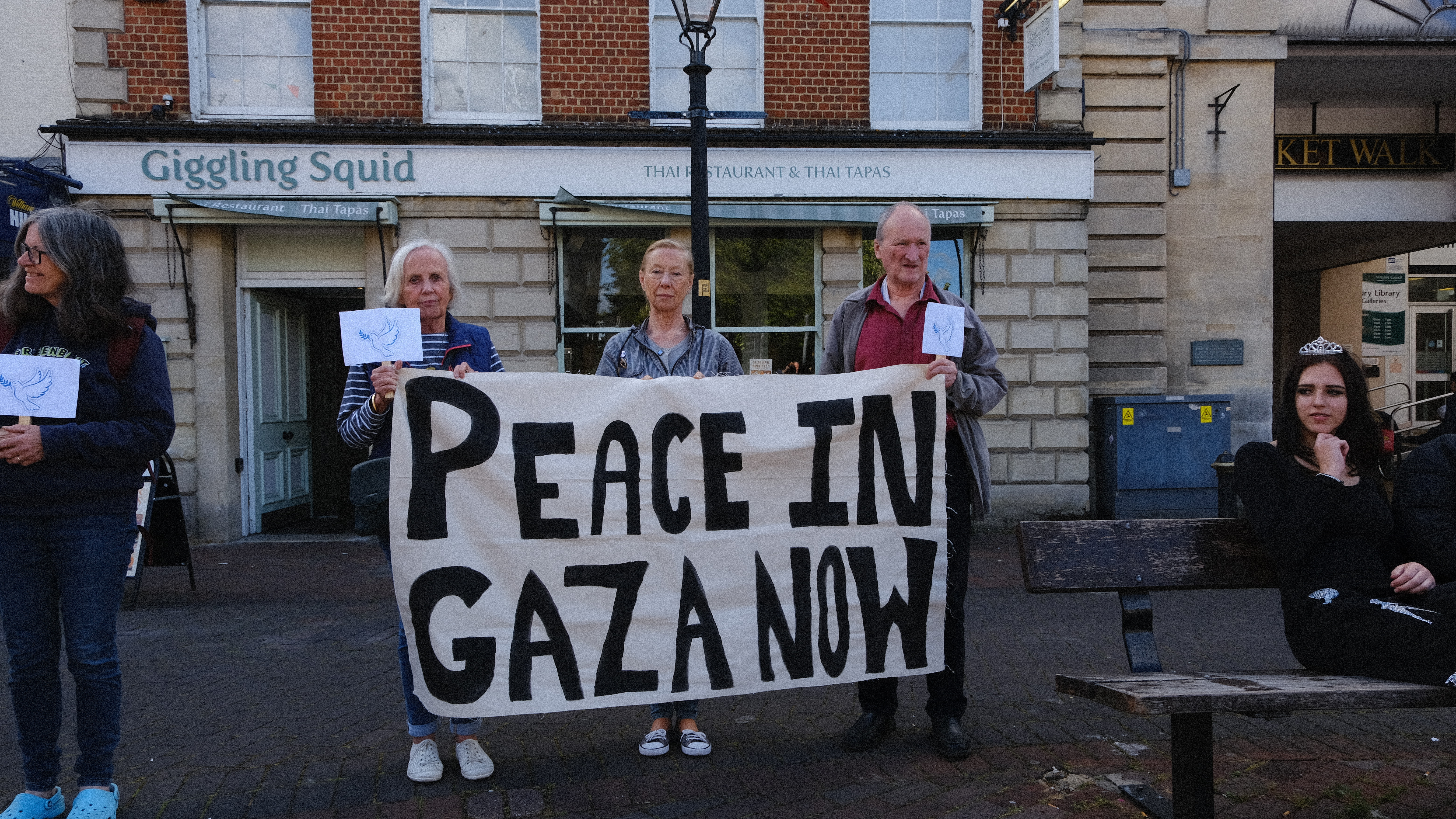
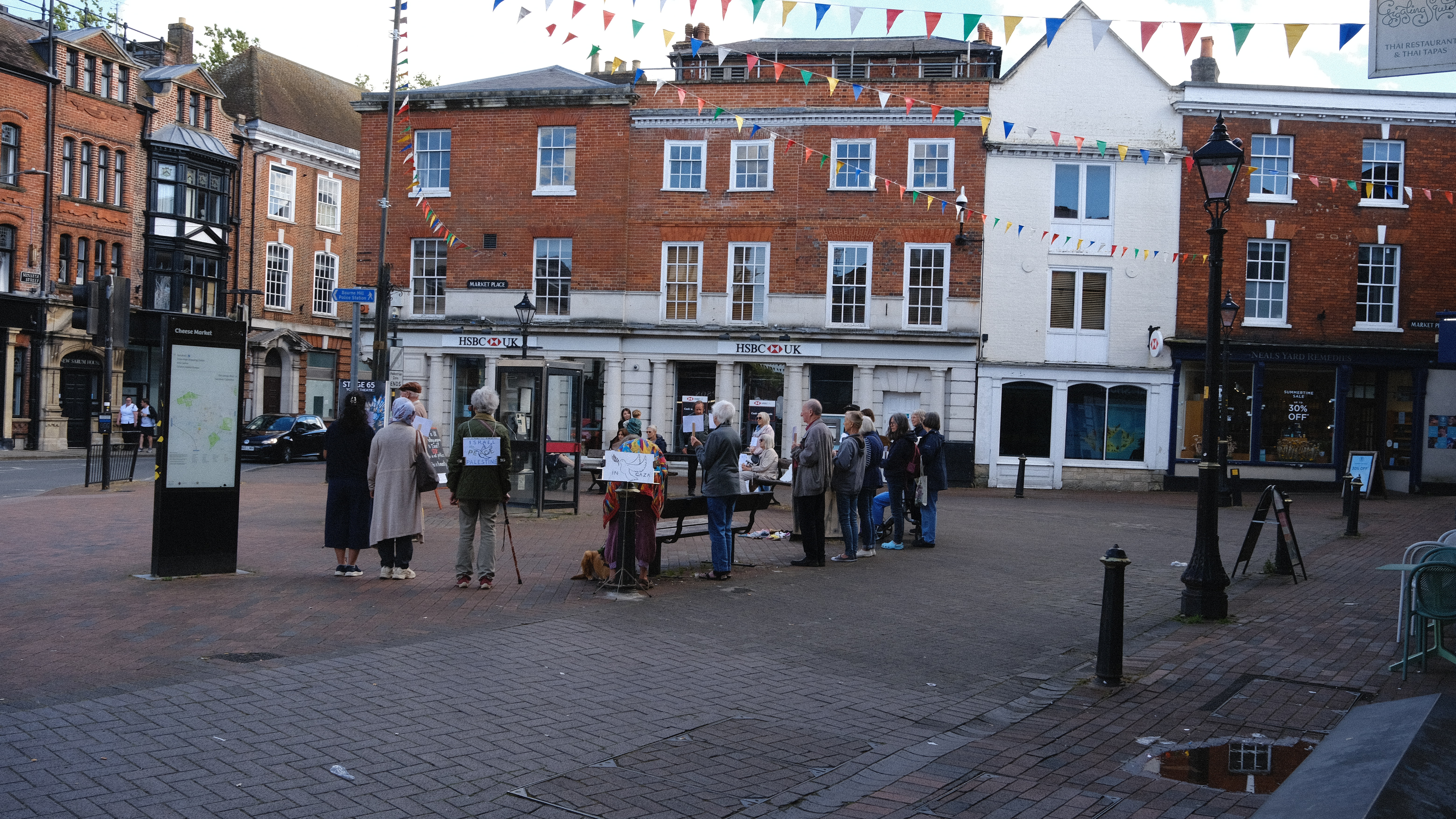
The eighteen vigil for peace in Gaza was held on Saturday 6th April and they do not show signs of coming to an end. Indeed, with the events of last week, they could be continuing for some while yet. Over 40 turned up to this one and numbers have never been below 30 and sometimes over 50.

Last week’s attack on aid worker vehicles and the death of 7 aid workers, three of them British, seems to have been something of a defining moment in this war in Gaza. Around 33,000 have now lost their lives and many thousands lie buried the the bombed buildings. Thousands of them are women and children. There is now a real risk of famine if it isn’t already underway.

Many have been outraged to discover that Britain is supplying arms to Israel although we are a small supplier in comparison with the US and Germany. There are calls for an embargo of these sales although several argue that we must honour our agreements and stopping the supply is giving aid to Hamas.

It has taken the death of aid workers – and the manner of their deaths – to effect a change in attitudes among the public and the commentariat. People were deeply shocked by the needless savagery committed by Hamas on Israeli people living near to Gaza. There was immense sympathy for the country and support for actions to curb or eliminate Hamas from operating. Israel’s subsequent actions and the scale of killing however, has led many people to feel at the very least disquiet at IDF actions in the territory.

Amnesty argues that all parties must adhere to International Humanitarian law and Israel must address the system of Apartheid it has in in place in the occupied territories. For decades Israel has ignored UN resolutions and has largely acted with impunity.

Members of various local groups and none at the Vigil on Saturday

Pic: Salisbury Amnesty

There is also a short video

The Salisbury group was established 50 years ago this year

Blog at WordPress.com.

Up ↑